




 Save
Save Copy
Copy Add to Collection
 Export to Google Docs
 Share
Share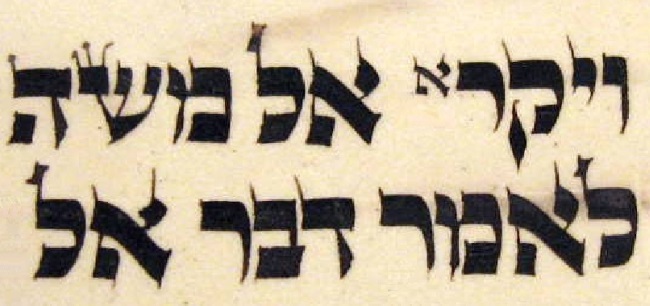
(א) וַיִּקְרָ֖א אֶל־מֹשֶׁ֑ה וַיְדַבֵּ֤ר יהוה אֵלָ֔יו מֵאֹ֥הֶל מוֹעֵ֖ד לֵאמֹֽר׃
(1) The LORD called to Moses and spoke to him from the Tent of Meeting, saying:
וְיִזָּהֵר בָּאוֹתִיּוֹת הַגְּדוֹלוֹת וּבָאוֹתִיּוֹת הַקְּטַנּוֹת וּבָאוֹתִיּוֹת הַנְּקֻדּוֹת וְאוֹתִיּוֹת הַמְשֻׁנּוֹת כְּגוֹן הַפֵּאִי״ן הַלְּפוּפוֹת וְהָאוֹתִיּוֹת הָעֲקֻמּוֹת כְּמוֹ שֶׁהֶעְתִּיקוּ הַסּוֹפְרִים אִישׁ מִפִּי אִישׁ.
[A scribe] should pay careful attention to the letters that are written large or small, to the letters that are punctuated with dots above them, to the letters that are written differently to the others, such as the letter Pé and the letters that are curved, in the way the scribes have carried on the tradition.
- the small letters hint at an alternative textual tradition
- the letters were intended to serve as a commentary, but the meaning may have been forgotten.
(ד) וַיִּקָּ֥ר אֱלֹהִ֖ים אֶל־בִּלְעָ֑ם וַיֹּ֣אמֶר אֵלָ֗יו אֶת־שִׁבְעַ֤ת הַֽמִּזְבְּחֹת֙ עָרַ֔כְתִּי וָאַ֛עַל פָּ֥ר וָאַ֖יִל בַּמִּזְבֵּֽחַ׃
(4) God manifested Himself to Balaam, who said to Him, “I have set up the seven altars and offered up a bull and a ram on each altar.”
(יג) מַה בֵּין נְבִיאֵי יִשְׂרָאֵל לִנְבִיאֵי אֻמּוֹת הָעוֹלָם, רַבִּי חָמָא בַּר חֲנִינָא וְרַבִּי יִשָּׂשׂכָר דִּכְפַר מַנְדִּי, רַבִּי חָמָא בַּר חֲנִינָא אָמַר אֵין הַקָּדוֹשׁ בָּרוּךְ הוּא נִגְלָה עַל אֻמּוֹת הָעוֹלָם אֶלָּא בַּחֲצִי דִּבּוּר, כְּמָה דְּתֵימַר (במדבר כג, ד): וַיִּקָּר אֱלֹהִים אֶל בִּלְעָם, אֲבָל נְבִיאֵי יִשְׂרָאֵל בְּדִּבּוּר שָׁלֵם, שֶׁנֶּאֱמַר: וַיִּקְרָא אֶל משֶׁה.
What's the difference between the prophets of Israel and the prophets of the rest of the nations of the world? . . . . Rabbi Chananyah says that when God appears to the other nations of the world, God does so with partial speech. As it says in Numbers: "God spok* to Balaam." But to the prophets of Israel, God speaks in complete speech, as it's written, "And God spoke to Moses"
אנוכי אני

(א)אָדָ֥ם שֵׁ֖ת אֱנֽוֹשׁ׃(ב) קֵינָ֥ן מַהֲלַלְאֵ֖ל יָֽרֶד׃(ג) חֲנ֥וֹךְ מְתוּשֶׁ֖לַח לָֽמֶךְ׃(ד) נֹ֥חַ שֵׁ֖ם חָ֥ם וָיָֽפֶת׃ (ס)(ה) בְּנֵ֣י יֶ֔פֶת גֹּ֣מֶר וּמָג֔וֹג וּמָדַ֖י וְיָוָ֣ן וְתֻבָ֑ל וּמֶ֖שֶׁךְ וְתִירָֽס׃ (ס)
(1) Adam, Seth, Enosh;(2) Kenan, Mahalalel, Jared;(3) Enoch, Methuselah, Lamech;(4) Noah, Shem, Ham, and Japheth.(5)The sons of Japheth: Gomer, Magog, Madai, Javan, Tubal, Meshech, and Tiras.
(ה) רִבִּי יִצְחָק פָּתַח, (ויקרא א׳:א׳) וַיִקְרָא אֶל מֹשֶׁה וַיְדַבֵּר יהוה' אֵלָיו מֵאֹהֶל מוֹעֵד לֵאמֹר. וַיִקְרָא אָלֶף זְעֵירָא, אֲמַאי. אֶלָּא בְּגִין לְאַחֲזָאָה מַאן הוּא הַהוּא דְּקָרָא, הַהוּא דְּשָׁרֵי בְּמַקְדְּשָׁא, וּכְדֵין זַמִּין לְמֹשֶׁה, כְּמַאן דְּזַמִּין אוּשְׁפִּיזָא. הָכָא א' זְעֵירָא, הָתָם א' רַבְּתָא, אָדָם שֵׁת אֱנוֹשׁ. (ס''א אדם) דָּא שְׁלִימוּ דְּכֹלָּא.
Rabbi Yitzchak opened [his discourse] with the verse: "And G‑d called to Moses, and spoke to him from the tent of meeting, saying." (Lev. 1:1) Why is the word "called" [in Hebrew, 'vayikra', spelled with] a small Aleph? The one who dwells in the sanctuary [the Shechinah, represented by small letters] is the one who called and invited Moses as one invites a guest. Here with a small Aleph and in another verse, "Adam, Seth, Enosh" (Chron. 1:1) ['Adam' is spelled with] a big Aleph, for Adam was the completion of all [creation].
א' דויקרא זעירא שמשה לא רצה לכתוב אלא ויקר כדרך שנא' בבלעם כאלו לא נראה לו השם אלא במקרה ואמר לו הקב''ה לכתוב גם באל''ף וכתבה קטנה.
Baal Turim
Moses wanted to write it without an aleph to hide, [out of humility,] the fact that G-d called him [warmly, with affection and love,] contrarily to the manner in which He called non Jewish prophets such as Bil'am [and Hagar], expressing that prophecy to them was just "an accidental event". The Torah wrote "called/encountered/appeared" for them without an aleph. Calling [with love] should be written with an aleph. G-d ordered Moses to write it with an aleph. [Out of humility] Moses wrote it with a small aleph.
(ג) וְהָאִ֥ישׁ מֹשֶׁ֖ה ענו [עָנָ֣יו] מְאֹ֑ד מִכֹּל֙ הָֽאָדָ֔ם אֲשֶׁ֖ר עַל־פְּנֵ֥י הָאֲדָמָֽה׃ (ס)
(3) Now Moses was a very humble man, more so than any other man on earth.
Moreover, if we remember the small alef, we, too, will merit to be called by God, and this revelation will provide us with the strength to answer God's call, drawing ourselves and the world at large closer to Him. This is the true essence of the sacrifices, whose laws are introduced by the lesson of the small alef.
