




 Save
Save Copy
Copy Add to Collection
 Export to Google Docs
 Share
Share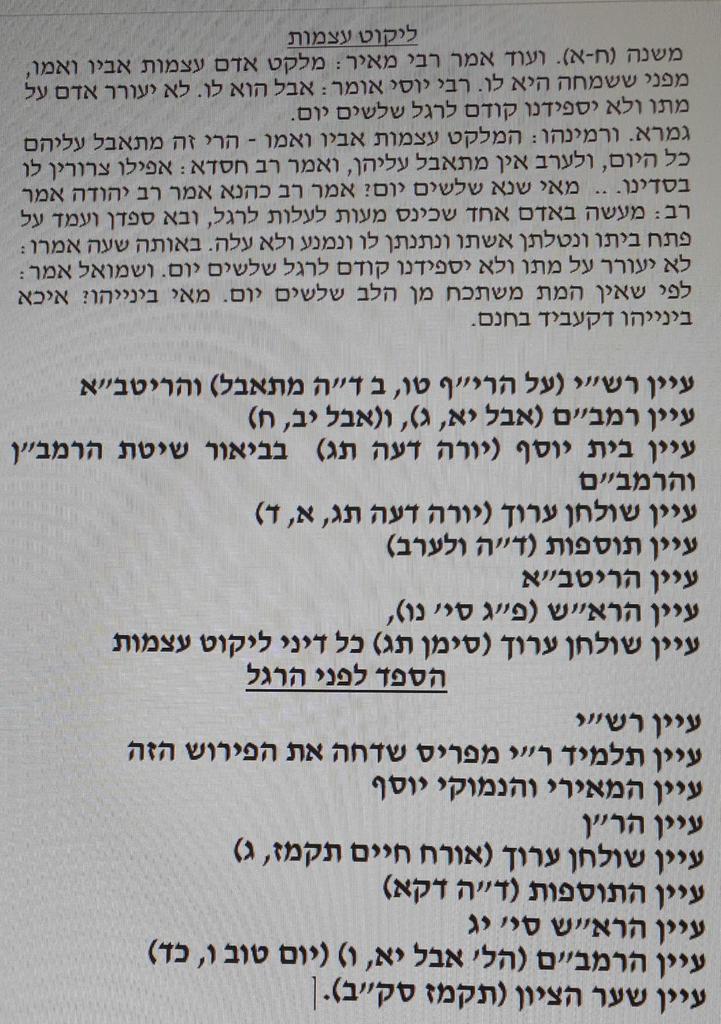
מַתְנִי׳ וְעוֹד אָמַר רַבִּי מֵאִיר מְלַקֵּט אָדָם עַצְמוֹת אָבִיו וְאִמּוֹ מִפְּנֵי שֶׁשִּׂמְחָה הִיא לוֹ רַבִּי יוֹסֵי אוֹמֵר אֵבֶל הוּא לוֹ לֹא יְעוֹרֵר אָדָם עַל מֵתוֹ וְלֹא יַסְפִּידֶנּוּ קוֹדֶם לָרֶגֶל שְׁלֹשִׁים יוֹם: גְּמָ׳ וּרְמִינְהוּ הַמְלַקֵּט עַצְמוֹת אָבִיו וְאִמּוֹ הֲרֵי זֶה מִתְאַבֵּל עֲלֵיהֶם כׇּל הַיּוֹם וְלָעֶרֶב אֵין מִתְאַבֵּל עֲלֵיהֶן וְאָמַר רַב חִסְדָּא אֲפִילּוּ צְרוּרִין לוֹ בִּסְדִינוֹ... מַאי שְׁנָא שְׁלֹשִׁים יוֹם אָמַר רַב כָּהֲנָא אָמַר רַב יְהוּדָה אָמַר רַב מַעֲשֶׂה בְּאָדָם אֶחָד שֶׁכִּינֵּס מָעוֹת לַעֲלוֹת לָרֶגֶל וּבָא סַפְדָן וְעָמַד עַל פֶּתַח בֵּיתוֹ וּנְטָלָתַן אִשְׁתּוֹ וּנְתָנָתַן לוֹ וְנִמְנַע וְלֹא עָלָה בְּאוֹתָהּ שָׁעָה אָמְרוּ לֹא יְעוֹרֵר עַל מֵתוֹ וְלֹא יַסְפִּידֶנּוּ קוֹדֶם לָרֶגֶל שְׁלֹשִׁים יוֹם וּשְׁמוּאֵל אָמַר לְפִי שֶׁאֵין הַמֵּת מִשְׁתַּכֵּחַ מִן הַלֵּב שְׁלֹשִׁים יוֹם מַאי בֵּינַיְיהוּ אִיכָּא בֵּינַיְיהוּ דְּקָעָבֵיד בְּחִנָּם:
(א) דיני המלקט עצמות. ובו י' סעיפים:
המלקט עצמות אביו או של שאר קרובי' שמתאבלים עליהם מתאבל עליהם כל היום כולו בכל הדברים הנוהגים באבל בכפיית המטה ועטיפת הראש ונעילת הסנדל ותשמיש המטה ורחיצה וסיכה ולערב אין מתאבל עליהם אפילו צרורים לו בסדינו היה עומד ומלקט וחשכה לו מותר ביום שלאחריו לפיכך אין מלקטין אותם סמוך לחשכה כדי שלא יהיה נמצא שלא התאבל על ליקוט עצמות אביו. (ואין אנינות בליקוט עצמות רק חל עליו אבלות מיד) (טור בשם הרא"ש):
(ב) כל שקורע עליו בשעת מיתתו קורע עליו בשעת ליקוט עצמות וכל שאינו מתאחה בשעת מיתתו אינו מתאחה בשעת ליקוט עצמות:
(ג) עצמות אין עומדין עליהם בשורה אבל אומרים תנחומין לעצמם ואין מברין עליהם בחבר עיר אבל מברין עליהם בביתו ואין אומרים עליהם קינה ונהי אבל אומרים עליהם קילוסין: (דהיינו שבחו של מת ומשבחין להקב"ה שממית ומחיה) (בטור תמצא מבואר):
(ד) אין מלקטין עצמות אביו במועד ואין צריך לומר עצמות שאר קרובים:
(1) One who collects his father's [or his mother's] bones or [the bones] of other near-of-kin for whom one observes mourning rites, mourns for them all day in [that he observes] all matters which apply to a mourner, [viz.,] by over-turning the couch, muffling the head, [by debarring himself from] wearing shoes, [from] using the conjugal couch, [from] bathing and annointing himself. However, in the evening one does not observe mouring rites for them, even if he had them by him tied up in a sheet. [If] he was standing and collecting [the bones] and night fell, he is permitted [the aforementioned matters which are forbidden to a mourner], on the following day. Therefore, one should not collect them close to nightfall so that it should not turn out that he observed no mourning rites for the collection of his father's [or mother's] bones. Aninuth does not [take effect] in [the case of] a collection of bones [for final burial]; only mourning rites become effective forthwith.
(2) Whosoever rends [garments] for him at the time of his death, rends [garments] for him at the time of [his] bone-collection; and every [rent] which is not resewn at the time of his death, is not resewn at the time of [his] bone-collection.
(3) [With respect to] bones [which are collected for final burial], one does not stand for them in the line [of comforters], but one says words of comfort on their own account. One does not provide the mourner's meal for them in the town-group, but one provides the mourner's meal for them in his house. One does not recite for them lamentations and elegies, but one says for them [words of] praise, [i.e.,] the praise of the departed [whose bones were collected] and one praises the Lord who puts to death and makes alive.
(4) One may not collect his father's [or mother's] bones on [Hol-] ha-Moed, and needless to say, the bones of other near-of-kin.
