Save
Save Copy
Copy Add to Collection
 Export to Google Docs
 Share
Share
(ה) תינוק שמת קודם שיגיע להיות בן ח' מלין אותו על קברו בצור או בקנה ואין מברכין על המילה אבל משימים לו שם לזכר שירחמוהו מן השמים ויחיה בתחיית המתים:
(5) ה A baby that died before his eigth day you circumcise him before burial with a reed of a knife. You don't make a blessin on the circumcision but you give him a name to the boy so that Hashem will have mercy and that he will be resurected at the end of days.
Another matter to consider:
מאימתי בא לעוה"ב ר' חייא ור"ש בר ר' חד אמר משעה שנולד וחד אמר משעה שסיפר מ"ד משעה שנולד שנא' (תהלים כב, לב) יבואו ויגידו צדקתו לעם נולד כי עשה ומ"ד משעה שסיפר דכתיב (תהלים כב, לא) זרע יעבדנו יסופר לה' לדור אתמר רבינא אמר משעה שנזרע דכתיב זרע יעבדנו...
משעה שנזרע - משעה שנקלט הזרע במעי אשה אפילו הפילה אמו ונמחה יש לו חלק לעתיד דכתיב זרע יעבדנו והכי אמר בכתובות בפרק בתרא (דף קיא.) נבלתי יקומון לרבות נפלים:
תָּא שְׁמַע: גָּדוֹל כְּבוֹד הַבְּרִיּוֹת שֶׁדּוֹחֶה [אֶת] לֹא תַעֲשֶׂה שֶׁבַּתּוֹרָה.
(כב) וְכִֽי־יִנָּצ֣וּ אֲנָשִׁ֗ים וְנָ֨גְפ֜וּ אִשָּׁ֤ה הָרָה֙ וְיָצְא֣וּ יְלָדֶ֔יהָ וְלֹ֥א יִהְיֶ֖ה אָס֑וֹן עָנ֣וֹשׁ יֵעָנֵ֗שׁ כַּֽאֲשֶׁ֨ר יָשִׁ֤ית עָלָיו֙ בַּ֣עַל הָֽאִשָּׁ֔ה וְנָתַ֖ן בִּפְלִלִֽים׃
(22) When [two or more] parties fight, and one of them pushes a pregnant woman and a miscarriage results, but no other damage ensues, the one responsible shall be fined according as the woman’s husband may exact, the payment to be based on reckoning.
ר' יעקב בר אחא דהוה כתיב בספר אגדתא דבי רב בן נח נהרג בדיין א' ובעד אחד שלא בהתראה מפי איש ולא מפי אשה ואפילו קרוב משום רבי ישמעאל אמרו אף על העוברין מנהני מילי אמר רב יהודה דאמר קרא (בראשית ט, ה) אך את דמכם לנפשותיכם אדרוש אפילו בדיין אחד (בראשית ט, ה) מיד כל חיה אפילו שלא בהתראה (בראשית ט, ה) אדרשנו ומיד האדם אפילו בעד אחד (בראשית ט, ה) מיד איש ולא מיד אשה אחיו אפילו קרוב משום רבי ישמעאל אמרו אף על העוברין מאי טעמיה דרבי ישמעאל דכתיב (בראשית ט, ו) שופך דם האדם באדם דמו ישפך איזהו אדם שהוא באדם הוי אומר זה עובר שבמעי אמו
Rabbi Ya’akov bar Aḥa found that it was written in a book of Aggadot in the study hall of Rav: a descendant of Noah is executed on the basis of one judge, and by one witness, and without being given forewarning. By the mouth of a man and not by the mouth of a woman; but even a relative. The Sages said in the name of Rabbi Yishmael that a descendant of Noah is executed even for killing fetuses... From where are these matters derived?... It is stated in that book of Aggadot that the Sages said in the name of Rabbi Yishmael: A descendant of Noah is executed even for killing fetuses. The Gemara asks: What is the reason/source of Rabbi Yishmael? The Gemara answers: It is derived from that which is written: “One who sheds the blood of a person, by a person [ba’adam] his blood shall be shed” (Genesis 9:6). The word ba’adam literally means: In a person, and is interpreted homiletically: What is a person that is in a person? You must say: This is a fetus that is in its mother’s womb.
(ד) בֶּן נֹחַ שֶׁהָרַג נֶפֶשׁ אֲפִלּוּ עֵבָּר בִּמְעֵי אִמּוֹ נֶהֱרָג עָלָיו. וְכֵן אִם הָרַג טְרֵפָה אוֹ שֶׁכְּפָתוֹ וּנְתָנוֹ לִפְנֵי אֲרִי אוֹ שֶׁהִנִּיחוֹ בָּרָעָב עַד שֶׁמֵּת. הוֹאִיל וְהֵמִית מִכָּל מָקוֹם נֶהֱרָג. וְכֵן אִם הָרַג רוֹדֵף שֶׁיָּכוֹל לְהַצִּילוֹ בְּאֶחָד מֵאֵיבָרָיו נֶהֱרָג עָלָיו. מַה שֶּׁאֵין כֵּן בְּיִשְׂרָאֵל:
(4) A non-Jew who kills someone, even a fetus in its mother’s womb, is executed. Even if he kills someone who has an incurable, terminal illness, or tied someone up and placed him in front of a lion or he let him starve until he died is liable since he caused someone to die. Similarly, if he killed a Pursuer when he could have saved his friend by merely injuring one of the Pursuer’s limbs, is also executed. This is not the case with a Jew.
...לבני נח ולא נשנית בסיני לישראל נאמרה ולא לבני נח: אדרבה מדלא נישנית בסיני לבני נח נאמרה ולא לישראל ליכא מידעם דלישראל שרי ולעובד כוכבים אסור ולא והרי יפת תואר...
...It is further stated in the baraita that a mitzva that was stated with regard to the descendants of Noah and was not repeated at Sinai was stated for the Jewish people and not for the descendants of Noah. The Gemara raises an objection: On the contrary, from the fact that it was not repeated at Sinai, clearly it can be derived that it was stated for the descendants of Noah and not for the Jewish people. The Gemara answers: There is nothing that is permitted to a Jew and forbidden to a gentile.
ליכא מידעם דלישראל שרי בדבר - שהוא מצוה לישראל לא אמרינן הכי העובד כוכבים ששבת חייב ולישראל מצוה...מיהו קשה דאמרינן בפרק בן סורר ומורה (לקמן סנהדרין דף עב:) יצא ראשו אין נוגעין בו דאין דוחין נפש מפני נפש אבל קודם שיצא ראשו החי' פושטת ידה וחתכתו לאברים ומוציאה כדי להציל את אמו וכה"ג בעובד כוכבים אסור כיון שהוזהרו על העוברים וי"ל דהא נמי בישראל מצוה כדי להציל ואפשר דאפילו בעובד כוכבים שרי:
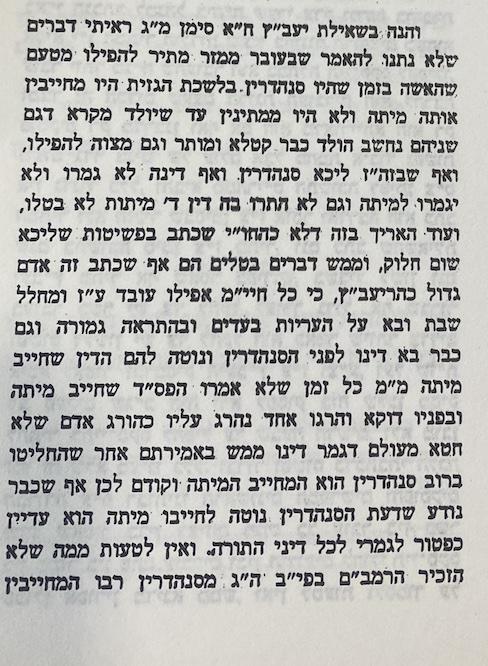
To this point, Rav Shlomo Zalman Aurbach posits that Abortion must still be a biblical Issur for a Jew. For, THAT far of a distinction between Jew and Gentile we would not find (Nishmat Avraham p. 278 at top, English Ed.)
Tosphos also indicates that perhaps even for a Gentile, the life of the mother comes first.
Let us see the Gemara he quotes inside:
איתיביה רב חסדא לרב הונא יצא ראשו אין נוגעין בו לפי שאין דוחין נפש מפני נפש ואמאי רודף הוא שאני התם דמשמיא קא רדפי לה
Rav Ḥisda raised an objection to Rav Huna from a baraita: If a
woman was giving birth and her life was being endangered by the fetus, the life of the fetus may be sacrificed in order to save the mother. But once his head has emerged during the birthing process, he may not be harmed in order to save the mother, because one life may not be pushed aside to save another life. If one is permitted to save the pursued party by killing the minor who is pursuing him, why is this so? The fetus is a pursuer who is endangering his mother’s life. The Gemara answers: This is not difficult, as it is different there, with regard to the woman giving birth, since she is being pursued by Heaven. Since the fetus is not acting of his own volition and endangering his mother of his own will, his life may not be taken in order to save his mother.
יצא ראשו - באשה המקשה לילד ומסוכנת וקתני רישא החיה פושטת ידה וחותכתו ומוציאתו לאברים דכל זמן שלא יצא לאויר העולם לאו נפש הוא וניתן להורגו ולהציל את אמו אבל יצא ראשו אין נוגעים בו להורגו דהוה ליה כילוד ואין דוחין נפש מפני נפש ואם תאמר מעשה דשבע בן בכרי (שמואל ב כ׳:כ״א) הנה ראשו מושלך אליך דדחו נפש מפני נפש התם משום דאפילו לא מסרוהו לו היה נהרג בעיר כשיתפשנה יואב והן נהרגין עמו אבל אם היה הוא ניצול אע"פ שהן נהרגין לא היו רשאין למסרו כדי להציל עצמן אי נמי משום דמורד במלכות הוה והכי מפרש לה בתוספתא (דתמורה):
...וההורגו חייב דכתיב (ויקרא כד, יז) ואיש כי יכה כל נפש...
§ The mishna teaches: And one who kills a one-day-old baby is liable for his murder. The Gemara explains that the reason for this is as it is written: “And he who smites any man mortally shall be put to death” .
(ו) הָאִשָּׁה שֶׁהִיא מַקְשָׁה לֵילֵד, מְחַתְּכִין אֶת הַוָּלָד בְּמֵעֶיהָ וּמוֹצִיאִין אוֹתוֹ אֵבָרִים אֵבָרִים, מִפְּנֵי שֶׁחַיֶּיהָ קוֹדְמִין לְחַיָּיו. יָצָא רֻבּוֹ, אֵין נוֹגְעִין בּוֹ, שֶׁאֵין דּוֹחִין נֶפֶשׁ מִפְּנֵי נָפֶשׁ:
(6) If a woman is having trouble giving birth, they cut up the child in her womb and brings it forth limb by limb, because her life comes before the life of [the child]. But if the greater part has come out, one may not touch it, for one may not set aside one person's life for that of another.
(ט) אַף זוֹ מִצְוַת לֹא תַּעֲשֶׂה שֶׁלֹּא לָחוּס עַל נֶפֶשׁ הָרוֹדֵף. לְפִיכָךְ הוֹרוּ חֲכָמִים שֶׁהָעֻבָּרָה שֶׁהִיא מַקְשָׁה לֵילֵד מֻתָּר לַחְתֹּךְ הָעֵבָּר בְּמֵעֶיהָ בֵּין בְּסַם בֵּין בְּיָד מִפְּנֵי שֶׁהוּא כְּרוֹדֵף אַחֲרֶיהָ לְהָרְגָהּ. וְאִם מִשֶּׁהוֹצִיא רֹאשׁוֹ אֵין נוֹגְעִין בּוֹ שֶׁאֵין דּוֹחִין נֶפֶשׁ מִפְּנֵי נֶפֶשׁ וְזֶהוּ טִבְעוֹ שֶׁל עוֹלָם:
(ב) לפיכך העוברת שהיא מקשה לילד מותר לחתוך העובר במעיה בין בסם בין ביד מפני שהוא כרודף אחריה להרגה ואם הוציא ראשו אין נוגעין בו שאין דוחין נפש מפני נפש וזהו טבעו של עולם:
Some, like Rav Chaim, prove from here that Rambam (and perhaps Gemara San. 72b) hold that a fetus IS a Nefesh. Rather, due to its Rodeif status only may it be killed.
(One final note: The question of why -if the Halacha is based on Rodeif -it should matter if the head is in or out is discussed at length, but beyond the our deep scope this eve.
Here is one approach:
R' Chaim Soloveitchik on this רמב"ם;
שו"ע חו"מ תכה:ב – If you are in a boat and there is a donkey in a boat zipping by your boat and the donkey jumps into your boat and you are going to capsize if you don't get rid of the donkey, מדין רודף you can kill it.
- Why is a donkey a רודף, it doesn't know what its doing? Since its not a full being you can use the דין of רודף to kill it. Therefore, a foetus isn't fully formed, so its like the donkey and you can apply the דין of רודף, however once it emerges its considered a fully formed being, so since its not its fault that its killing the mother you can no longer use רודף to kill it.
...א"ר נחמן אמר שמואל האשה שישבה על המשבר ומתה בשבת מביאין סכין ומקרעים את כריסה ומוציאין את הוולד פשיטא מאי עביד
... § Rav Naḥman says that Shmuel says: In the case of a woman who sat on the travailing chair in the throes of labor, and died on Shabbat, one brings a knife, and tears open her abdomen, and removes the fetus, as it might still be alive, and it could be possible to save its life. The Gemara asks: But isn’t it obvious that this is permitted? After all, what is the person who cuts her abdomen doing?
(ה) היושבת על המשבר ומתה מביאים סכין בשבת אפי' דרך רשות הרבים וקורעים בטנה ומוציאים הולד שמא ימצא חי: הגה ומה שאין נוהגין עכשיו כן אפילו בחול משום דאין בקיאין להכיר במיתת האם בקרוב כל כך שאפשר לולד לחיות: (איסור והיתר):
(5) 5. If she dies while in labor, we bring a knife even through the public domain on Shabbat and cut open her stomach to remove the fetus, in case it is found to be alive. Rem"a: We do not even do this on weekdays because we are not skilled at identifying the mother's death soon enough such that it is possible that fetus can be alive (Issur v'Heter).
n example of such a division of law is food on Yom Kippur. Food of ANY ammount is Assur from the Torah, but only of a certain size -and eaten in a certain timeframe- brings the Onesh.
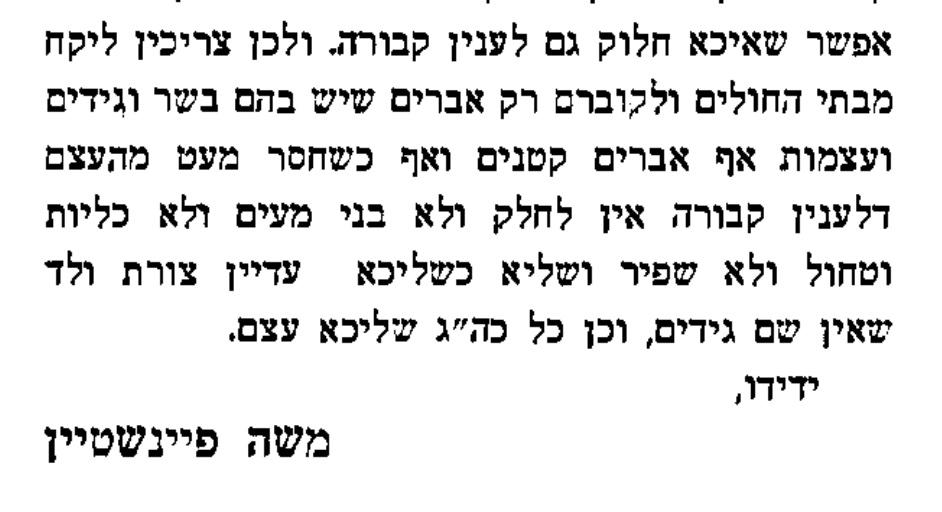
Rav Feinstein seems to take this Rotzeich at Chazti Shiur approach
(22) When [two or more] parties fight, and one of them pushes a pregnant woman and a miscarriage results, but no other damage ensues, the one responsible shall be fined according as the woman’s husband may exact, the payment to be based on reckoning.
וכי ינצו אנשים זה עם זה. במכילתא לא שניהם אם האשה דא"כ מאי איריא שניהם אפילו אחד נמי ועוד ונתנו מיבעי ליה אלא עכ"ל זה עם זה שנתכוון להכות את זה והכה את האשה ומפני זה נחלקו החכמים בדבר במה שאמר ואם אסון יהיה ונתת נפש תחת נפש י"א נפש ממש מפני שנתכוון להרוג אדם אע"פ שלא נתכוון לאשה וי"א ממון כדלקמיה וכדאיתא במכילתא:
מתני׳ האשה שיצאה ליהרג אין ממתינין לה עד שתלד האשה שישבה על המשבר ממתינין לה עד שתלד האשה שנהרגה נהנין בשערה בהמה שנהרגה אסורה בהנאה:גמ׳ פשיטא גופה היא איצטריך ס"ד אמינא הואיל וכתיב (שמות כא, כב) כאשר ישית עליו בעל האשה ממונא דבעל הוא ולא ליפסדיה מיניה קמ"ל
MISHNA: In the case of a pregnant woman who is taken by the court to be executed, the court does not wait to execute her until she gives birth. Rather, she is killed immediately. But with regard to a woman taken to be executed who sat on the travailing chair [hamashber] in the throes of labor, the court waits to execute her until she gives birth.
as it might enter your mind to say that since it is written: “And if men strive together, and hurt a woman with child, so that her offspring depart…he shall be fined, as the woman’s husband shall place upon him” (Exodus 21:22), the fetus is considered to be the property of the husband. If so, the court should wait until she gives birth before executing her, and not cause him to lose the fetus. Consequently, the mishna teaches us that the court does not take this factor into account.
-We must note that the above Gemara is speaking of a 'Gerama' abortion, and not a direct killing. For some, we arelimited in application to a regular abortion. As we often say, "There is no Kula or Chumra, only consistency". If we wish to see Gerama as a weakening agent on Yom Tov (and to a lesser extent, Shabbos), then we must also eccept the limiting nature of the Death Penalty example.
-For more on Gerama see #3 in the list of 'Sundry Items' below (in the high 60's of sources, following exerpt from Igros Moshe below)
Abortion is forbidden for Jews.
We do not yet have a certain source, or level of prohibition.
We find a debate as to the status of a Fetus
At what point is all of the above even activated?
מתני׳ המפלת ליום מ' אינה חוששת לולד ליום מ"א תשב לזכר ולנקבה ולנדה
MISHNA: A woman who discharges on the fortieth day since she immersed herself and engaged in intercourse with her husband need not be concerned that it might have been an offspring and she became impure with its miscarriage, as the formation of the offspring in the womb occurs only forty days after conception. But in the case of a woman who discharges on the forty-first day after immersion, there is concern that perhaps it was an offspring. Since its sex is unknown, she shall observe the period of impurity for a woman who gave birth to a male and for a woman who gave birth to a female; and for any blood that she sees, she observes the halakhot of a menstruating woman
Here are tow examples:
Rav Ḥisda said: She immerses and partakes of teruma only until forty days after her husband’s death, when there is still no reason for concern, as if she is not pregnant then she is not pregnant. And if she is pregnant, until forty days from conception the fetus is merely water. It is not yet considered a living being, and therefore it does not disqualify its mother from partaking of teruma.
(ב) עוברה שהריחה (ופניה משתנים אע"פ שלא אמרה צריכה אני) (רי"ו נכ"ז) לוחשין לה באזנה שיום הכפורים הוא אם נתקררה דעתה בזכרון זה מוטב ואם לאו מאכילין אותה עד שתתיישב דעתה:
(2) A pregnant woman who smells (food and her face changes even though she did not say “I need it”) we wisper in her ear that it is Yom Kippur and if she quiets down when this is mentioned it is fine, but if not, then we feed her (until) she is satisfied.

These sundry questions apply accd to either view, whether abortion is Biblically or Rabbincally Assur:
1 - Accd. to those who say abortion is biblical, and MURDER (see below), is there an Issur of Harag V'lo Yaaver?
-Chazon Ish (to Rambam Rotzech 1:9) says NO. THis would. be no different than a mother who aborts to save her own life. We see, then, that even according to the strictest view there is impt nuance. That nuance may be hard for us to define.
2 - Is there a view that completely allows abortion (for Jews)?
To this, some bring the following Tosphos:
(The Gemara there taught that a mother who dies BEFORE giving birth doen not bequeth to that child Yerusha)
Now, were you to ask – if it is permissible to kill a fetus in the mother’s womb [even after the mother has died], and it is not considered to just be placed in a box, then why can we violate Shabbat for him? For we bring a knife by way of the public domain to surgically remove him from the mother, as it is stated in Arakhin (7a). One can say: that nevertheless, for the sake of saving a life, we violate Shabbat even though it is permissible to kill him. For behold for a gosses by human hands, one who kills him is exempt… and we can nevertheless violate Shabbat to save his life…
While some, like the Mahritz Chiyus, read Tosphos simply, most do not.
Rav Chaim Ozer (Achiezar 3:65;4) explains that Tosphos was discussing the view in Chazal that holds -yet we do not follow -abortion is allowed.
Rav Moshe Feinstein (CM 2:69) goes one step further:

Let us continue with sundry items:
3 - Rav Ovadia Yosef posits that even accd to the stric views, this would be true only with direct abortion. When done, say, with a pill, or the like it would only be a Derabanan (Yabia Omer EVHE 4:1)
4 - As to what all agree on -Abortion being allowed to save the mother: What if the fetus will kill the mother due to another illness that the mother knew about before becoming pregnant. Meaning, can one Lechatchila enter into this issue (say, severe heart disease)? Many discuss, and still allow an abortion (even the Machmirim above -see ibid. p. 285-286).
Others, like Maharash Engle (d. 1935) forbids it. Indeed, we see that the Chachmas Shlomo already rules that Shabbos is not set aside for those who needlessly put themselves into that situation.
5 -What about Sakanas Eiver (say, a leg would need to be amputated should the mother go to full term?
Even accd to the strict view, some would allow an abortion (shu't Toras Chesed EVHE 42:32).
They prove this from the Gemara above in Eiruchin that continues to rule on the matter (below is Rambam codification of this amazing Halacha):
מִשֶּׁנִּגְמַר דִּינוֹ אֵין מַשְׁהִין אוֹתוֹ אֶלָּא יֵהָרֵג בְּיוֹמוֹ. אֲפִלּוּ הָיְתָה עֻבָּרָה אֵין מַמְתִּינִין לָהּ עַד שֶׁתֵּלֵד. וּמַכִּין אוֹתָהּ כְּנֶגֶד בֵּית הַהֵרָיוֹן עַד שֶׁיָּמוּת הַוָּלָד תְּחִלָּה. אֲבָל אִם יָשְׁבָה עַל הַמַּשְׁבֵּר מַמְתִּינִין לָהּ עַד שֶׁתֵּלֵד. וְכָל אִשָּׁה שֶׁתֵּהָרֵג מֻתָּר לֵהָנוֹת בִּשְׂעָרָהּ:
We see from this that certain Kavod Habrios are considered (at least by a Gerama, and certainly when the mother will anyway have to die).
They therefore posit that this would apply to a loss of hearing, and an abortion may be allowed.
5 -On this note, what about if the mother's mental state is at risk?
The Levushei Mordechai (d. 1932) would allow an abortion.
6 -Would Chazal's cases of allowance be activated for Chayay Sha'ah?
The answer is yes, accd to most. This is another 'Kula' that reminds us of the 'Chumra' of Chayay Sha'ah relating to End-of-Life issues.
All of the above were sundry cases about applying Halachos whose sources and are not disputed.
HOWEVER, ALL OF THE POSKIM, ON ALL SIDES, WARN OVER AND OVER AGAIN THAT ONE SHOULD NOT SIMPLY TRUST THE WORDS OF ANY DOCTOR. (Share story)
Let us now delve into the actual understanding of Abortion according to the modern Poskim.
For, depending on how we view abortion, rulings in cases such as Rape etc. could change.
If from the Torah:
The Rogotzhver in צפנת פעניח חלק א סימן נט – Its an אסור of חבלה.
(This Teshuva was written to a husband who wanted to know f he should dovorce his wiofe after she had an abortion. An aside: he proves from the fact that a husband must support his murderous wife in Arei Miklot that he should not divorce!)
R' Shlomo Zalman Auerbach – It's either גזלה,iלא תעמוד על דם רעך, or a ביטול עשה of הצלה.
R' Ben-Zion Uzziel in משפטי עוזיאל חלק ג חו"מ מו – Its השבת אבדה.
R' Aharon Lichtenstein – Its "וחי בהם".
זוהר to Shmos 3 – You are diminishing the צלם אלוקים.
If from Chazal:
R' Lichtenstein – All the reasons we said above could be the basis for the דרבנן or, alternatively, it could be the תורה is against this, however its only vague ethic without a particular אסור, and the רבנן crystallized it and gave it a definite אסור.
(last paragraph taken in the format found on Stack Exchange, by 'Shmuel')
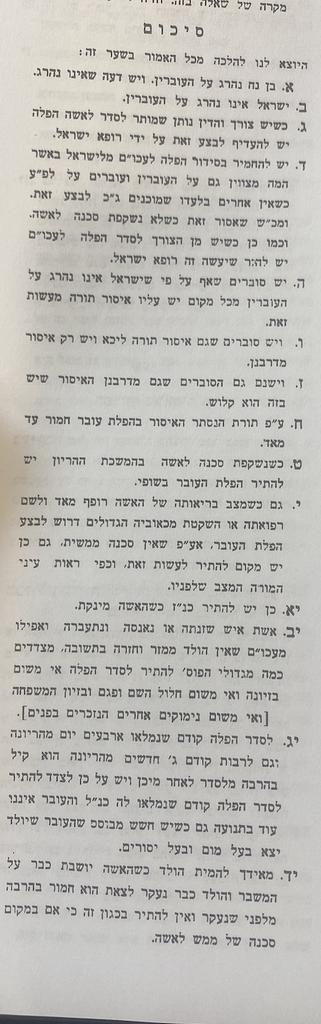
Summary of the halakhot that emerge from the preceding section:
1. A Noahide is executed for aborting a fetus. There is an opinion that he is not executed.
2. A Jew is not executed for aborting a fetus.
3. When there is a need, and the law determines that it is allowed to arrange for an abortion, it is preferable to have it done by a Jewish doctor.
4. One should be stricter regarding arranging an abortion for non-Jews than for Jews, since they are prohibited regarding aborting a fetus and one would transgress putting a stumbling block before the blind if there is no one else to do the abortion… Similarly, when there is a need to arrange for an abortion for a non-Jew, one should attempt to have a Jewish doctor perform it.
5. Some are of the opinion that even though a Jew is not executed for aborting a fetus, there is nevertheless a Biblical prohibition against him doing such.
6. Others hold that there is no Biblical prohibition, only a Rabbinic one.
7. Still others hold that even Rabbinically, the prohibition is a weak one.
8. Kabalistically, the prohibition regarding aborting a fetus is very severe.
9. When there is a danger to the mother in continuing the pregnancy, one can allow an abortion easily.
10. Even when there is no danger, but the mother’s health is very delicate, and for the sake of her health or to relieve her of severe pain, it is advised to perform an abortion, even though there is no real risk of life, even here one can allow this, according to the judgment of the decisor, as he sees the case.
11. One can also allow, as above, when the woman is nursing.
12. A married woman who committed adultery or was raped and became pregnant, even from a non-Jew, where the child would not be a mamzer, and she has now repented (in the case of adultery), a number of great decisors are inclined to allow for an abortion, either because of her shame or because of desecration of the divine name, and the shame and stigma to the family [and other reasons, as mentioned above].
13. To have an abortion before 40 days from conception, and also before 3 months from conception, is much more lenient than to do so after these periods. It is thus preferable to arrange for the abortion prior to these periods, while the fetus has not begun to stir, when there is a well-based concern that the fetus that will be born deformed and beset by afflictions.
14. At the other extreme, to kill a fetus once the woman is in the process of giving birth and the fetus has already been “uprooted to emerge”, it is much stricter than before this moment, and one cannot allow in such a case, save when there is a direct threat to the mother’s life.
15. Even in cases where the law would allow for an abortion, nevertheless, one should get the husband’s permission, since it is his property.
16. It is also preferable to have an abortion by drinking a medicine than by direct surgical means.
17. A woman who has a terminal illness, and if she continues her pregnancy continues it will hasten her death, and the woman is beseeching not to have the abortion, and she does not care that the pregnancy will hasten her death, as long as she leaves behind a child, one can allow such a pregnancy to continue, on the basis of “sit and be passive.”
18. All Jews are commanded with a strict decree not to deal lightly regarding ending a pregnancy, and there is a great responsibility in such a case, both on the one asking to have the abortion and on the decisor being asked. Not to mention that there is in such decisions the fencing in of the breaches made by the wanton women and those who would fornicate after them , that even the nations of the world have fenced themselves regarding this, and established laws and strict punishments on the violators and those who assist them, and behold Israel are a holy people.
(translations found online by R. Linzer)
The question is regarding terminating a pregnancy because of the Tay-Sachs disease… The technology today which allows testing for this disease cannot giver reliable results prior to three months into the pregnancy. Thus his question is if one can view such a disease with such severe and certain consequences, sufficient severity to allow for a termination of the pregnancy even after three months, or if the period of three months is absolute, and there is no justification, short of direct risk to the life to the mother, that would allow for a termination of pregnancy after three months.
Behold after investigation into the matter with great seriousness, and with consideration of all the relevant circumstances, it seems in my humble opinion, on the basis of the analysis that I wrote in my responsa, 9:51.3… that in a case such as this, in which the consequences are so grave if the pregnancy and childbirth are allowed to continue, it is permissible to terminate the pregnancy until 7 months have elapsed, and in a way in which no danger will befall the mother. Beyond 7 months the issue is more serious (and the stringency here is more based on how the matter seems and the “knowledge of the gut”, to use the phrase of the Havot Yair) since at the end of 7 months the fetus is often fully developed.
It is clear that capital punishment is not prescribed for abortion, and with the exception of a single opinion, the decisors conclude that there is nevertheless some form of a prohibition. But the opinion of most rabbis is that the prohibition is only of Rabbinic origin, or that it is in the category of the well-being of the world, but that there is not even the slightest element of destroying a life. Therefore, Maharit, in his responsum, permitted abortion for a Jewish woman whenever the matter was necessary for her health even when her life was not at stake.
Like this, and even to a greater degree, was it argued to be permissible in Responsa Yavetz, 1:43… And therefore ask yourself where is there a great need regarding pain and suffering greater than the woman in our case which will be inflicted upon her if she gives birth to such a creature whose very being is one of pain and suffering and his death is certain within a few years… and added to that is the pain and suffering of the infant.
(7) I will add that, to do it in the best possible way, it would be ideal if the operation could be performed by a woman doctor, for in such a case there would be another aspect of leniency, according to Havot Yair and Yavetz in their responsa. For they are of the opinion that the prohibition for a Jew to kill a fetus is because of wasting of seed, see there, and women are not prohibited in doing such according to most decisors.
Ibid. 14:101
Therefore, it would seem that we cannot issue a general permission to terminate a pregnancy in a case of Tay-Sachs. However, when the results of the examination are known, the doctor must send the woman (and the hospital administration must issue an order in this regard) to a posek, providing the specifics of the results of the test, and the rabbi who is a posek will pay close attention to the emotional state of the couple in regards to this, and will decide with his halakhic judgment whether to allow the termination of the pregnancy. Only upon receipt of a qualified posek permit may the hospital management agree to do so in its facility.
I have emphasized that it is impossible issue a general permission… for according to the halachic sources and arguments that I have detailed and explained in my two previous responsa, in the course of my discussion of termination of pregnancy in the case of Tay-Sachs disease, there is a wide space (a strong basis) to conclude that it is permitted based on those same sources and reasons, even in the case of a fetus with Down’s syndrome...These realities have the ability, in many cases, to destroy the emotional/mental state of both the wife and the husband, including the ability to cause them to come down with a serious or not-so-serious illness, and also to destroy the health of the couple’s family life.
Let me give an example from a case that came before me in a couple of ultra-Orthodox Jews (from the old yishuv) who had already been born to them – it shouldn’t happen to us – two children who had Down’s syndrome who died a little more than a year after their birth. As a result, the wife was struck with an anxiety attack, and this expressed itself in her refusal to have marital relations with her husband for fear of becoming pregnant and again becoming pregnant with such a fetus. The husband waited a year, then two, and frequently implored his wife to return to a normal marital life, and the woman turned her back to him and remained adamant in her refusal. The situation came to my attention when they were already on the verge of divorce. When I saw what the situation was, I gave the woman permission to undergo the appropriate tests in case she got pregnant. She resumed martial relations with her husband, she became pregnant, she underwent the test, the test showed that everything was fine, and she gave birth to a sound and healthy child. Peace in their house was restored to its proper place, and they continue to live a happy life together.
In another case, I was asked by a certain Torah-scholar – scientist, regarding his wife, who was over forty and pregnant, and the doctor advised her to do the test. I tried to influence him that there was no need for an examination and to behave like our forbearers did who had faith in God that everything would turn out alright. He responded to me that from the moment his wife learned from the doctor about the concern (regarding Down’s syndrome) and the possibility to determine this through this recently developed test, she is not able to sleep at night, and she is deeply distressed to the point that he fears for her health. In this way, this knowledge has brought women into a state of “one who adds knowledge adds pain.”
Therefore, regarding such cases, and similar ones, it seems that we can certainly base a permission (for termination of pregnancy) one the rulings of the great poskim that we cited in our earlier writings (see Tztitz Eliezer, vol. 9, 13:102, and the previous responsum in this volume). In other words, whether based on the opinion of many poskim who hold that the prohibition against abortion for a Jew is only a rabbinic violation, for a fetus is not considered a life; or based on the opinions of the poskim who believe that it is not even an appurtenance to the sin of murder, but rather an offense like any other offense, add to this the fact that we don’t even violate Shabbat to save such a fetus (according to these opinions) as long as the woman is not in active childbirth; or based on Maharit and the many who are in his camp who permit an abortion whenever it is required for the health of the mother, even when there is no risk to life, and this is even if the prohibition is a Biblical one inasmuch as the fetus does not yet have a presumption of being alive; or based on the opnions that are mentioned in Havot Yair; or based on Yavetz and those in his camp who are of the opinion that there is a basis to be lenient as long as the child has not begun to leave the mother’s womb, even if there is no risk to life of the mother, but only to save her from the fact that the child will cause her great pain; or based on the author of Rav Paalim who is of the opinion that when dealing with these cases, a great need is defined not only in terms of one’s physical health needs, but also in terms of one’s spiritual and emotional needs, in accordance with how I explained and gave backing to this position; or explain and substantiate this; and so on, everything as I wrote and explained with great depth with God’s help in our earlier writings.
(D) I would also add that in a case where an abortion is permitted, in addition to the need and obligation to obtain the consent of the woman to terminate the pregnancy (as his honor wrote in his letter, which is included in the standard that you have prepared in this regard), there is also a need and an obligation to receive the husband’s consent, in accordance with the well-known halakha regarding damages when someone causes a woman to miscarry, that such damages are paid to the husband (Shemot 21:22, Baba Kama 42 and 49, Rambam, Hovel u’Mazik 5:1-2, and Hoshen Mishpat 423:1).
In conclusion:
...
(c) An additional consideration to permit such an abortion would be if there was the possibility to terminate the pregnancy through drinking some medicine or through giving an injection (i.e., non-surgical means).
(d) In addition to the need to obtain the consent of the woman to terminate the pregnancy, the consent of the husband must also be obtained.With great honor and blessing, Eliezer Yehuda Waldenberg
Regarding Killing a fetus…
And in Maimonides it is even more explicit that killing a fetus is actual murder…
Therefore, regarding the law, it is prohibited under the prohibition of “Thou shalt not murder” to abort a fetus, with the single exception that one who kills it is exempt from the death penalty… And because of this I ruled that even if the doctors are saying that there is a possibility that the mother may die if the fetus is not killed – although for desecrating Shabbat and violating other commandments one would do so in such a case, even for a small concern of life – nevertheless, to kill a fetus it would be forbidden until the doctors assess that the likelihood of her death is almost definite…
And even if the doctor is being forced by threat of death to perform an abortion, it would appear that he must give up his life rather than do so [although an argument could be made to the contrary]… Therefore, this ruling requires greater thought, whether one must give up his life rather than perform an abortion…
I have written all this because of the great calamity in the world that many governments have allowed the killing of fetuses, among them political leaders in the State of Israel, and countless of fetuses have already been killed, and in these days the greatest need is to make a fence around the Torah, how much more so not to make leniencies regarding the prohibition of murder that is so severe. Thus, I was appalled by the responsa of a learned man in Israel written to the director of Shaarei Tzedek Hospital who permits the abortion of a Tay-Sachs fetus even beyond 3 months. And he ruled such by prefacing that the prohibition was, according to many decisors, only rabbinic… It is clear and simple as I wrote, the law which is made clear by the early rabbis and the decisors of Jew law, that abortion is prohibited as it is considered actual murder, whether the fetus is legitimate or illegitimate, regular fetuses or those which are suffering from Tay-Sachs. It is strictly prohibited, and do not err and rely on the responsum of that learned man…
[Parenthetically, I understand that according to the Kabbalah it can be seen that everything is a decree from Heaven that these parents should have such children, either as a punishment for parents, or as a “fixing” (tikkun) of the soul, it is returned to the world of “action” (assiyah). And based on this, there are those who could say (and I imagine that there are already those who actually do say) that it is not our business to try to outsmart this decree, and therefore one should not perform any action that can get in the way of the process which is unfolding.
But, as is well known, one should not bring Kabbalah into Halakhah. As is written in Responsa Hatam Sofer, OH 51. Other poskim write similarly. Therefore, wherever there is a basis for permitting a certain action based on the Halakha, a counter-explanation of the situation based on Kabbalah should not act as any obstacle to performing the halakhically-permitted action, especially in cases where this kabbalistic explanation is not explicitly stated in kabbalistic sources.
I will also add that in general there is a way to reconcile (the decision to take such an action) with a kabbalistic approach which takes the perspective that “it is a decree that has issued from Me (and you may not question it).” This is based on what I saw in Hidushei Hatam Sofer of the Torah, (Tinyana) [Riviai], Parashat Mishpatim. Hatam Sofer states that “There are many who wonder about the Rabbis’ interpretation of “and he shall surely be healed,” (Ex. 21:9) that “from this you can derive that a doctor was given permission to heal.” (Berakhot 60a). People ask: what good does a doctor do? If a person’s merits or God’s mercy determine that the sick person will be cured, who needs the doctors? And if, Heaven forbid, the opposite is the case, then again, what good will the doctor do? To answer this, Hatam Sofer writes along the following lines. It is known that God created the laws of Nature, and it is His desire that the world should follow these laws of Nature. Now, consider a patient who, based on the doctor’s instructions, takes drugs which, according to the laws of the physical world, have the ability to heal and cure him, To alter the nature of such drugs so that they do not heal the person would be a miraculous act, and this person’s sins are not so great that God should perform a miracle to go against the laws of Nature and to prevent these drugs from being effective. Similarly, if someone does not merit that he should be healed via a miracle, nevertheless if he acts according to the laws of the natural world to heal himself, here his merits, and in particular God’s mercy, can help him to be cured. Moreover, as long as someone is operating according to the laws of nature, there is not such a need for his merits, and his reward for his good deeds will not be deducted from as a result of his recovering from his illness.” These are the amazing words of Hatam Sofer.
Therefore, according to these words of Hatam Sofer, one can explain the cases we are dealing with in a similar matter. We can say that if those who are “being punished” [the parents and the newborn] do not merit that a miracle should remove this suffering from them, and that the judgments that have been issues against them will be mitigated[, they can themselves, following the laws of the natural world, act to alleviate their suffering]. In this sixth millennium (from Creation) the gates of wisdom have been opened (as is known from the Zohar), we now have the ability to save them from their suffering, by following the laws of nature and the wisdom of medicine. When, in addition, doing such is not in opposition to halakha...