Save
 Copy
 Add to Collection
 Export to Google Docs
 Share
With this new edition, Sefaria invites all interested learners to incorporate this vital work of Jewish thought into their studies.
- "Intimidated by the Jerusalem Talmud? There's now a more 'accessible' translation."The Forward. December 14, 2021
- "New online translation by Sefaria may be the Jerusalem Talmud's 'Cinderella moment.'"The Times of Israel. January 7, 2022
- "Revival of the Forgotten Talmud."Lehrhaus. January 13, 2022
וְאִידַּךְ — הַבּוֹצֵר לַגַּת, שַׁמַּאי אוֹמֵר: הוּכְשַׁר, הִלֵּל אוֹמֵר: לֹא הוּכְשַׁר. אָמַר לוֹ הִלֵּל לְשַׁמַּאי: מִפְּנֵי מַה בּוֹצְרִין בְּטָהֳרָה וְאֵין מוֹסְקִין בְּטָהֳרָה?
And another of those decrees is the matter of one who harvests grapes in order to take them to the press. Shammai says: It has become susceptible, and Hillel says: It has not become susceptible. Hillel said to Shammai: If so, for what purpose do they harvest grapes in purity, i.e., utilizing pure vessels, as in your opinion, since the grapes are susceptible to impurity by means of the juice that seeps from them, care must be taken to avoid impurity while gathering; and, however, they do not harvest olives in purity? According to your opinion that liquid that seeps out renders the fruit susceptible to impurity, why is there not a similar concern with regard to the liquid that seeps out of olives?
אָמַר לוֹ: אִם תַּקְנִיטֵנִי, גּוֹזְרַנִי טוּמְאָה אַף עַל הַמְּסִיקָה. נָעֲצוּ חֶרֶב בְּבֵית הַמִּדְרָשׁ, אָמְרוּ: הַנִּכְנָס — יִכָּנֵס, וְהַיּוֹצֵא — אַל יֵצֵא. וְאוֹתוֹ הַיּוֹם הָיָה הִלֵּל כָּפוּף וְיוֹשֵׁב לִפְנֵי שַׁמַּאי כְּאֶחָד מִן הַתַּלְמִידִים. וְהָיָה קָשֶׁה לְיִשְׂרָאֵל כַּיּוֹם שֶׁנַּעֲשָׂה בּוֹ הָעֵגֶל. וּגְזוּר שַׁמַּאי וְהִלֵּל וְלָא קַבִּלוּ מִינַּיְיהוּ, וַאֲתוֹ תַּלְמִידַיְיהוּ גְּזוּר וְקַבִּלוּ מִינַּיְיהוּ.
Shammai said to him: If you provoke me and insist that there is no difference between gathering olives and grapes, then, in order not to contradict this, I will decree impurity on the gathering of olives as well. They related that since the dispute was so intense, they stuck a sword in the study hall, and they said: One who seeks to enter the study hall, let him enter, and one who seeks to leave may not leave, so that all of the Sages will be assembled to determine the halakha. That day Hillel was bowed and was sitting before Shammai like one of the students. The Gemara said: And that day was as difficult for Israel as the day the Golden Calf was made, as Hillel, who was the Nasi, was forced to sit in submission before Shammai, and the opinion of Beit Shammai prevailed in the vote conducted that day. And Shammai and Hillel issued the decree, and the people did not accept it from them. And their students came and issued the decree, and the people accepted it from them.
תָּנוּ רַבָּנַן: עֲלוּבִין וְאֵינָן עוֹלְבִין, שׁוֹמְעִין חֶרְפָּתָן וְאֵינָן מְשִׁיבִין, עוֹשִׂין מֵאַהֲבָה וּשְׂמֵחִין בְּיִסּוּרִין — עֲלֵיהֶן הַכָּתוּב אוֹמֵר: ״וְאֹהֲבָיו כְּצֵאת הַשֶּׁמֶשׁ בִּגְבֻרָתוֹ״.
And the Sages taught: About those who are insulted and do not insult, who hear their shame and do not respond, who act out of love and are joyful in suffering, the verse says: “And they that love Him are as the sun going forth in its might” (Judges 5:31).
(לא) כֵּ֠ן יֹאבְד֤וּ כׇל־אוֹיְבֶ֙יךָ֙ יהוה וְאֹ֣הֲבָ֔יו כְּצֵ֥את הַשֶּׁ֖מֶשׁ בִּגְבֻרָת֑וֹ וַתִּשְׁקֹ֥ט הָאָ֖רֶץ אַרְבָּעִ֥ים שָׁנָֽה׃ {פ}
(31) So may all Your enemies perish, O LORD! But may those who love God be as the sun rising in might!
And the land was tranquil forty years.
(ג) תֻּמַּ֣ת יְשָׁרִ֣ים תַּנְחֵ֑ם וְסֶ֖לֶף בֹּגְדִ֣ים (ושדם)[יְשָׁדֵּֽם]׃
(3) The integrity of the upright guides them;
The deviousness of the treacherous leads them to ruin.
משנה: אֵילּוּ מֵהֲלָכוֹת שֶׁאָֽמְרוּ בַעֲלִײַת חֲנַנְיָה בֶן חִזְקִיָּה בֶן גָּרוֹן כְּשֶׁעָלוּ לְבַקְּרוֹ. נִמְנוּ וְרַבּוּ בֵּית שַׁמַּאי עַל בֵּית הִלֵּל וּשְׁמוֹנָה עָשָׂר דָּבָר גָּֽזְרוּ בוֹ בַיּוֹם:
MISHNAH: These are of the practices which were pronounced at the upper floor of Ḥananiah ben Ḥizqiah ben Garon, when they came to visit him. They voted and the House of Shammai had the majority over the House of Hillel; eighteen items they decided on that day.
הלכה: אֵילּוּ מֵהֲלָכוֹת שֶׁאָֽמְרוּ בַעֲלִײַת חֲנַנְיָה בֶן חִזְקִיָּה בֶן גָּרוֹן כְּשֶׁעָלוּ לְבַקְּרוֹ כול׳. אוֹתוֹ הַיּוֹם הָיָה קָשֶׁה לְיִשְׂרָאֵל כַּיּוֹם שֶׁנַּעֲשֶׂה בוֹ הָעֶגֶל. רִבִּי לִיעֶזֶר אוֹמֵר. בּוֹ בַיּוֹם גָּֽדְשׁוּ אֶת הַסְּאָה. רִבִּי יְהוֹשֻׁעַ אוֹמֵר. בּוֹ בַיּוֹם מָֽחֲקוּ אוֹתָהּ. אָמַר לוֹ רִבִּי לִיעֶזֶר. אִילּוּ הָֽיְתָה חֲסֵירָה וּמִילְאוּהָ. יְאוּת. לְחָבִית שֶׁהִיא מְלֵיאָה אֱגוֹזִין. כָּל־מַה שֶׁאַתָּה נוֹתֵן לְתוֹכָהּ שׁוּמְשְׁמִין הִיא מְחַזֶּקֶת. אָמַר לוֹ רִבִּי יְהוֹשֻׁעַ. אִילּוּ הָֽיְתָה מְלֵיאָה וְחִיסְּרוּהָ. יְאוּת. לְחָבִית שֶׁהָֽיְתָה מְלֵיאָה שֶׁמֶן. כָּל־מַה שֶׁאַתָּה נוֹתֵן לְתוֹכָהּ מַיִם הִיא מְפַזֶּרֶת אֶת הְשֶּׁמֶן.
HALAKHAH: Mishnah: “These are of the practices which were pronounced at the upper floor of Ḥananiah ben Ḥizqiah ben Garon, when they came to visit him,” etc. “This day was hard for Israel like the day on which the Golden C alf was made. Rebbi Eliezer said, on that day they filled the bushel to overflow. Rebbi Joshua said, on that day they filled the bushel to the rim. Rebbi Eliezer said to him, if it was deficient and they filled it it would have been reasonable, as with an amphora full of nuts; if you fill it with sesame seeds it will be strengthened. Rebbi Joshua said to him, if it had been full and they diminished it, it would have been reasonable, as with an amphora filled with oil; if you add water to it it dilutes the oil.”
תַּנָּא רִבִּי יְהוֹשֻׁעַ אוֹנָייָא. תַּלְמִידֵי בֵית שַׁמַּי עָֽמְדוּ לָהֶן מִלְּמַטָּה וְהָיוּ הוֹרְגִין בְּתַלְמִידֵי בֵית הִלֵּל. תַּנֵּי. שִׁשָּׁה מֵהֶן עָלוּ וְהַשְּׁאָר עָֽמְדוּ עֲלֵיהֶן בַּחֲרָבוֹת וּבִרְמָחִין.
Rebbi Joshua from Ono stated: The students of the House of Shammai were standing downstairs and killing the students of the House of Hillel. It was stated, six of them went up; the rest were standing around them with swords and lances.
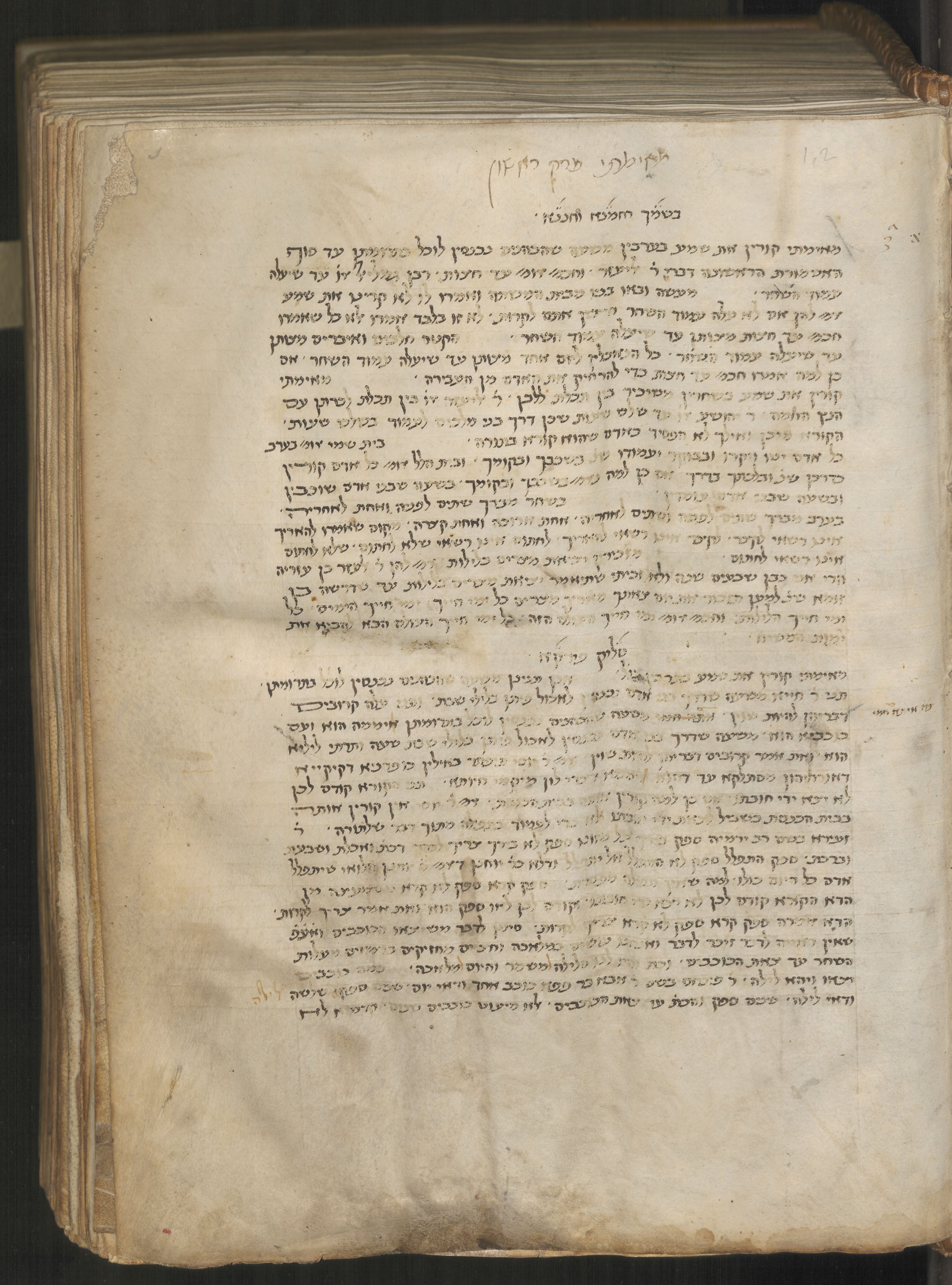
We know very little about what happened to Yerushalmi for the first 500 years after its completion. Unlike the Babylonian Talmud, about which we have the rich letter of Rav Sherira Gaon (987), we have barely any information about the nature of learning in the land of Israel in late antiquity. The oldest extant piece of Yerushalmi is a seventh-century synagogue mosaic in Rehob, near Beit She’an. The document contains the Beraita de-Tehumin, the list of the borders of the land of Israel found in YerushalmiShevi’it (6:1), and a selection from Yerushalmi Demai (2:1). It indicates that some communities used Yerushalmi as a source of Halakhah in this period...[14]