




 Save
Save Copy
Copy Add to Collection
 Export to Google Docs
 Share
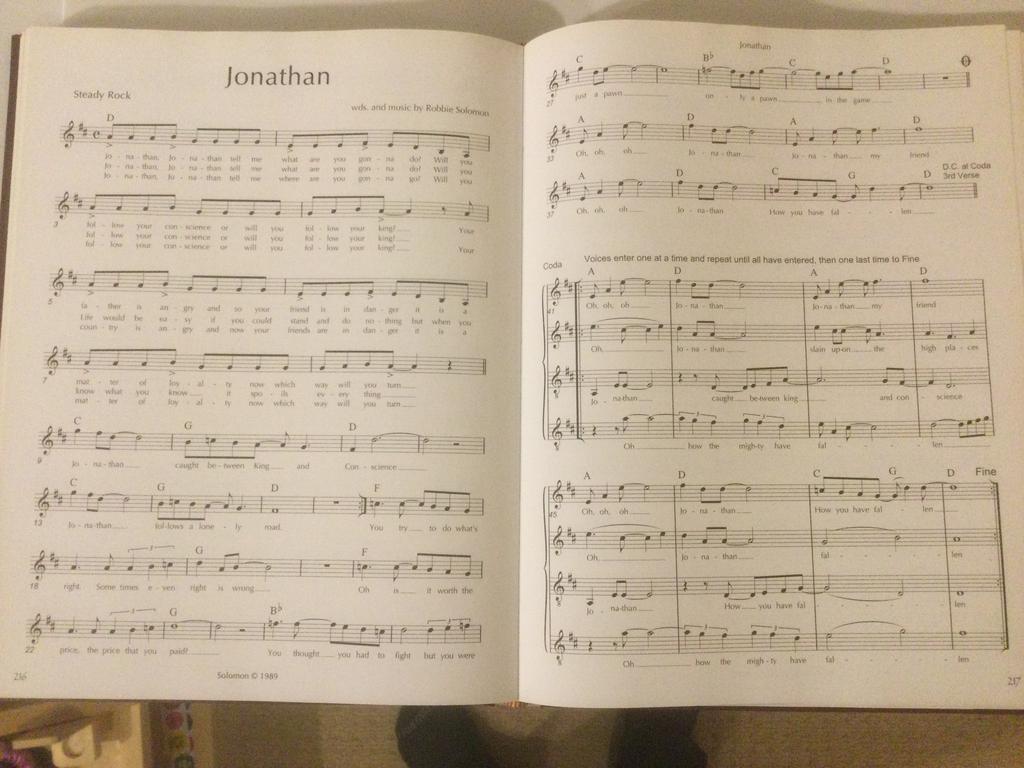
ShareWords and Music by Robbie Solomon ©1989
Will you follow your conscience or will you
Follow your king?
Your father is angry and so your friend is in danger
It is a matter of loyalty
Now which way will you turn?
Jonathan follows a lonely road.
Will you follow your conscience or will you
Follow your king?
Life would be easy if you could stand and do nothing
But when you know what you know, it spoils
Everything
Jonathan follows a lonely road.
Sometimes even right is wrong
Oh, is it worth the price
The price that you paid?
You thought you had to fight
But you were just a pawn
Only a pawn in the game
Jonathan my friend
Oh, Jonathan,
How you have fallen!
Oh, Jonathan,
Slain upon the high places
Oh Jonathan fallen!
Jonathan, caught between king and conscience
Jonathan, how you have fallen!
Oh, how the mighty have fallen!
2. King Saul disappoints G-d, so Samuel anoints David secretly.
3. Saul gets depression, and David is brought to the palace to play music for Saul.
4. David kills Goliath, the Philistine.
5. Jonathan and David become very good friends (or possibly lovers).
6. Saul puts David in charge of the troops and David is very successful.
7. People start liking David more than Saul.
8. Saul gets jealous of David and tries to kill him with a spear.
9. Saul offers his daughter Merav to David if David will lead the troops against the Philistines (so they will kill him).
10. Saul then gives Merav to somebody else to marry.
11. Michal, Saul’s other daughter, falls in love with David.
12. Saul offers David that he can marry Michal if he kills 100 Philistines.
13. David kills 200 Philistines without dying in the process, so Michal and David get married.
14. Saul urges his servants and Jonathan to kill David.
15. Jonathan tips off David, who hides, and then intercedes with Saul on David’s behalf.
16. Saul promises to not kill David.
17. David goes back to playing music for Saul and leading Saul’s army. All is well.
18. “An evil spirit” grips Saul and he tries to kill David with a spear while David is playing music for him.
19. That night, Saul sends messengers to kill David while he’s sleeping.
20. Michal tips David off and David escapes out a window.
21. Saul asks Michal why she helped David escape and she claims that David forced her to.
22. David hides with Samuel for a bit, then talks to Jonathan.
23. David and Jonathan make a plan for Jonathan to find out Saul’s thinking.
(יח) וַיֹּאמֶר־ל֥וֹ יְהוֹנָתָ֖ן מָחָ֣ר חֹ֑דֶשׁ וְנִפְקַ֕דְתָּ כִּ֥י יִפָּקֵ֖ד מוֹשָׁבֶֽךָ׃(יט) וְשִׁלַּשְׁתָּ֙ תֵּרֵ֣ד מְאֹ֔ד וּבָאתָ֙ אֶל־הַמָּק֔וֹם אֲשֶׁר־נִסְתַּ֥רְתָּ שָּׁ֖ם בְּי֣וֹם הַֽמַּעֲשֶׂ֑ה וְיָ֣שַׁבְתָּ֔ אֵ֖צֶל הָאֶ֥בֶן הָאָֽזֶל׃(כ) וַאֲנִ֕י שְׁלֹ֥שֶׁת הַחִצִּ֖ים צִדָּ֣הֿ אוֹרֶ֑ה לְשַֽׁלַּֽח־לִ֖י לְמַטָּרָֽה׃(כא) וְהִנֵּה֙ אֶשְׁלַ֣ח אֶת־הַנַּ֔עַר לֵ֖ךְ מְצָ֣א אֶת־הַחִצִּ֑ים אִם־אָמֹר֩ אֹמַ֨ר לַנַּ֜עַר הִנֵּ֥ה הַחִצִּ֣ים ׀ מִמְּךָ֣ וָהֵ֗נָּה קָחֶ֧נּוּ ׀ וָבֹ֛אָה כִּי־שָׁל֥וֹם לְךָ֛ וְאֵ֥ין דָּבָ֖ר חַי־יהוה׃(כב) וְאִם־כֹּ֤ה אֹמַר֙ לָעֶ֔לֶם הִנֵּ֥ה הַחִצִּ֖ים מִמְּךָ֣ וָהָ֑לְאָה לֵ֕ךְ כִּ֥י שִֽׁלַּחֲךָ֖ יהוה׃(כג) וְהַ֨דָּבָ֔ר אֲשֶׁ֥ר דִּבַּ֖רְנוּ אֲנִ֣י וָאָ֑תָּה הִנֵּ֧ה יהוה בֵּינִ֥י וּבֵינְךָ֖ עַד־עוֹלָֽם׃ {ס}
(18) Jonathan said to him, “Tomorrow will be the new moon; and you will be missed when your seat remains vacant [At the festal meal].(19) So the day after tomorrow, go down all the way to the place where you hid the other time, and stay close to the Ezel stone.(20) Now I will shoot three arrows to one side of it, as though I were shooting at a mark,(21) and I will order the boy to go and find the arrows. If I call to the boy, ‘Hey! the arrows are on this side of you,’ be reassured and come, for you are safe and there is no danger—as the LORD lives!(22) But if, instead, I call to the lad, ‘Hey! the arrows are beyond you,’ then leave, for the LORD has sent you away.(23) As for the promise we made to each other, may the LORD be [witness] between you and me forever.”
(כד) וַיִּסָּתֵ֥ר דָּוִ֖ד בַּשָּׂדֶ֑ה וַיְהִ֣י הַחֹ֔דֶשׁ וַיֵּ֧שֶׁב הַמֶּ֛לֶךְ (על) [אֶל־]הַלֶּ֖חֶם לֶאֱכֽוֹל׃(כה) וַיֵּ֣שֶׁב הַ֠מֶּ֠לֶךְ עַל־מ֨וֹשָׁב֜וֹ כְּפַ֣עַם ׀ בְּפַ֗עַם אֶל־מוֹשַׁב֙ הַקִּ֔יר וַיָּ֙קׇם֙ יְה֣וֹנָתָ֔ן וַיֵּ֥שֶׁב אַבְנֵ֖ר מִצַּ֣ד שָׁא֑וּל וַיִּפָּקֵ֖ד מְק֥וֹם דָּוִֽד׃(כו) וְלֹא־דִבֶּ֥ר שָׁא֛וּל מְא֖וּמָה בַּיּ֣וֹם הַה֑וּא כִּ֤י אָמַר֙ מִקְרֶ֣ה ה֔וּא בִּלְתִּ֥י טָה֛וֹר ה֖וּא כִּי־לֹ֥א טָהֽוֹר׃ {ס} (כז) וַיְהִ֗י מִֽמׇּחֳרַ֤ת הַחֹ֙דֶשׁ֙ הַשֵּׁנִ֔י וַיִּפָּקֵ֖ד מְק֣וֹם דָּוִ֑ד {פ}
וַיֹּ֤אמֶר שָׁאוּל֙ אֶל־יְהוֹנָתָ֣ן בְּנ֔וֹ מַדּ֜וּעַ לֹא־בָ֧א בֶן־יִשַׁ֛י גַּם־תְּמ֥וֹל גַּם־הַיּ֖וֹם אֶל־הַלָּֽחֶם׃(כח) וַיַּ֥עַן יְהוֹנָתָ֖ן אֶת־שָׁא֑וּל נִשְׁאֹ֨ל נִשְׁאַ֥ל דָּוִ֛ד מֵעִמָּדִ֖י עַד־בֵּ֥ית לָֽחֶם׃(כט) וַיֹּ֡אמֶר שַׁלְּחֵ֣נִי נָ֡א כִּ֣י זֶ֩בַח֩ מִשְׁפָּחָ֨ה לָ֜נוּ בָּעִ֗יר וְה֤וּא צִוָּה־לִי֙ אָחִ֔י וְעַתָּ֗ה אִם־מָצָ֤אתִי חֵן֙ בְּעֵינֶ֔יךָ אִמָּ֥לְטָה נָּ֖א וְאֶרְאֶ֣ה אֶת־אֶחָ֑י עַל־כֵּ֣ן לֹא־בָ֔א אֶל־שֻׁלְחַ֖ן הַמֶּֽלֶךְ׃ {ס} (ל) וַיִּֽחַר־אַ֤ף שָׁאוּל֙ בִּיה֣וֹנָתָ֔ן וַיֹּ֣אמֶר ל֔וֹ בֶּֽן־נַעֲוַ֖ת הַמַּרְדּ֑וּת הֲל֣וֹא יָדַ֗עְתִּי כִּֽי־בֹחֵ֤ר אַתָּה֙ לְבֶן־יִשַׁ֔י לְבׇ֨שְׁתְּךָ֔ וּלְבֹ֖שֶׁת עֶרְוַ֥ת אִמֶּֽךָ׃(לא) כִּ֣י כׇל־הַיָּמִ֗ים אֲשֶׁ֤ר בֶּן־יִשַׁי֙ חַ֣י עַל־הָאֲדָמָ֔ה לֹ֥א תִכּ֖וֹן אַתָּ֣ה וּמַלְכוּתֶ֑ךָ וְעַתָּ֗ה שְׁלַ֨ח וְקַ֤ח אֹתוֹ֙ אֵלַ֔י כִּ֥י בֶן־מָ֖וֶת הֽוּא׃ {ס} (לב) וַיַּ֙עַן֙ יְה֣וֹנָתָ֔ן אֶת־שָׁא֖וּל אָבִ֑יו וַיֹּ֧אמֶר אֵלָ֛יו לָ֥מָּה יוּמַ֖ת מֶ֥ה עָשָֽׂה׃(לג) וַיָּ֨טֶל שָׁא֧וּל אֶֽת־הַחֲנִ֛ית עָלָ֖יו לְהַכֹּת֑וֹ וַיֵּ֙דַע֙ יְה֣וֹנָתָ֔ן כִּי־כָ֥לָה הִ֛יא מֵעִ֥ם אָבִ֖יו לְהָמִ֥ית אֶת־דָּוִֽד׃ {ס} (לד) וַיָּ֧קׇם יְהֽוֹנָתָ֛ן מֵעִ֥ם הַשֻּׁלְחָ֖ן בׇּחֳרִי־אָ֑ף וְלֹֽא־אָכַ֞ל בְּיוֹם־הַחֹ֤דֶשׁ הַשֵּׁנִי֙ לֶ֔חֶם כִּ֤י נֶעְצַב֙ אֶל־דָּוִ֔ד כִּ֥י הִכְלִמ֖וֹ אָבִֽיו׃ {ס}
(24) David hid in the field. The new moon came, and the king sat down to partake of the meal.(25) When the king took his usual place on the seat by the wall, Jonathan rose and Abner sat down at Saul’s side; but David’s place remained vacant.(26) That day, however, Saul said nothing. “It’s accidental,” he thought, “He must be unclean and not yet cleansed.”(27) But on the day after the new moon, the second day, David’s place was vacant again. So Saul said to his son Jonathan, “Why didn’t the son of Jesse come to the meal yesterday or today?”(28) Jonathan answered Saul, “David begged leave of me to go to Bethlehem.(29) He said, ‘Please let me go, for we are going to have a family feast in our town and my brother has summoned me to it. Do me a favor, let me slip away to see my kinsmen.’ That is why he has not come to the king’s table.”(30) Saul flew into a rage against Jonathan. “You son of a perverse, rebellious woman!” he shouted. “I know that you side with the son of Jesse—to your shame, and to the shame of your mother’s nakedness!(31) For as long as the son of Jesse lives on earth, neither you nor your kingship will be secure. Now then, have him brought to me, for he is marked for death.”(32) But Jonathan spoke up and said to his father, “Why should he be put to death? What has he done?”(33) At that, Saul threw his spear at him to strike him down; and Jonathan realized that his father was determined to do away with David.(34) Jonathan rose from the table in a rage. He ate no food on the second day of the new moon, because he was grieved about David, and because his father had humiliated him.
(לה) וַיְהִ֣י בַבֹּ֔קֶר וַיֵּצֵ֧א יְהוֹנָתָ֛ן הַשָּׂדֶ֖ה לְמוֹעֵ֣ד דָּוִ֑ד וְנַ֥עַר קָטֹ֖ן עִמּֽוֹ׃(לו) וַיֹּ֣אמֶר לְנַֽעֲר֔וֹ רֻ֗ץ מְצָ֥א נָא֙ אֶת־הַ֣חִצִּ֔ים אֲשֶׁ֥ר אָנֹכִ֖י מוֹרֶ֑ה הַנַּ֣עַר רָ֔ץ וְהוּא־יָרָ֥ה הַחֵ֖צִי לְהַעֲבִרֽוֹ׃(לז) וַיָּבֹ֤א הַנַּ֙עַר֙ עַד־מְק֣וֹם הַחֵ֔צִי אֲשֶׁ֥ר יָרָ֖ה יְהוֹנָתָ֑ן וַיִּקְרָ֨א יְהוֹנָתָ֜ן אַחֲרֵ֤י הַנַּ֙עַר֙ וַיֹּ֔אמֶר הֲל֥וֹא הַחֵ֖צִי מִמְּךָ֥ וָהָֽלְאָה׃(לח) וַיִּקְרָ֤א יְהֽוֹנָתָן֙ אַחֲרֵ֣י הַנַּ֔עַר מְהֵרָ֥ה ח֖וּשָׁה אַֽל־תַּעֲמֹ֑ד וַיְלַקֵּ֞ט נַ֤עַר יְהֽוֹנָתָן֙ אֶת־[הַ֣חִצִּ֔ים] (החצי) וַיָּבֹ֖א אֶל־אֲדֹנָֽיו׃(לט) וְהַנַּ֖עַר לֹא־יָדַ֣ע מְא֑וּמָה אַ֤ךְ יְהֽוֹנָתָן֙ וְדָוִ֔ד יָדְע֖וּ אֶת־הַדָּבָֽר׃ {ס} (מ) וַיִּתֵּ֤ן יְהֽוֹנָתָן֙ אֶת־כֵּלָ֔יו אֶל־הַנַּ֖עַר אֲשֶׁר־ל֑וֹ וַיֹּ֣אמֶר ל֔וֹ לֵ֖ךְ הָבֵ֥יא הָעִֽיר׃(מא) הַנַּ֘עַר֮ בָּא֒ וְדָוִ֗ד קָ֚ם מֵאֵ֣צֶל הַנֶּ֔גֶב וַיִּפֹּ֨ל לְאַפָּ֥יו אַ֛רְצָה וַיִּשְׁתַּ֖חוּ שָׁלֹ֣שׁ פְּעָמִ֑ים וַֽיִּשְּׁק֣וּ ׀ אִ֣ישׁ אֶת־רֵעֵ֗הוּ וַיִּבְכּוּ֙ אִ֣ישׁ אֶת־רֵעֵ֔הוּ עַד־דָּוִ֖ד הִגְדִּֽיל׃(מב) וַיֹּ֧אמֶר יְהוֹנָתָ֛ן לְדָוִ֖ד לֵ֣ךְ לְשָׁל֑וֹם אֲשֶׁר֩ נִשְׁבַּ֨עְנוּ שְׁנֵ֜ינוּ אֲנַ֗חְנוּ בְּשֵׁ֤ם יהוה לֵאמֹ֔ר יהוה יִהְיֶ֣ה ׀ בֵּינִ֣י וּבֵינֶ֗ךָ וּבֵ֥ין זַרְעִ֛י וּבֵ֥ין זַרְעֲךָ֖ עַד־עוֹלָֽם׃ {פ}
(35) In the morning, Jonathan went out into the open for the meeting with David, accompanied by a young boy.(36) He said to the boy, “Run ahead and find the arrows that I shoot.” And as the boy ran, he shot the arrows past him.(37) When the boy came to the place where the arrows shot by Jonathan had fallen, Jonathan called out to the boy, “Hey, the arrows are beyond you!”(38) And Jonathan called after the boy, “Quick, hurry up. Don’t stop!” So Jonathan’s boy gathered the arrows and came back to his master.—(39) The boy suspected nothing; only Jonathan and David knew the arrangement.—(40) Jonathan handed the gear to his boy and told him, “Take these back to the town.”(41) When the boy got there, David emerged from his concealment [near the Etzel stone] at the Negev. He flung himself face down on the ground and bowed low three times. They kissed each other and wept together; David wept the longer.(42) Jonathan said to David, “Go in peace! For we two have sworn to each other in the name of the LORD: ‘May the LORD be [witness] between you and me, and between your offspring and mine, forever!’”
(יח) וַיֹּאמֶר־ל֥וֹ יְהוֹנָתָ֖ן מָחָ֣ר חֹ֑דֶשׁ וְנִפְקַ֕דְתָּ כִּ֥י יִפָּקֵ֖ד מוֹשָׁבֶֽךָ׃(יט) וְשִׁלַּשְׁתָּ֙ תֵּרֵ֣ד מְאֹ֔ד וּבָאתָ֙ אֶל־הַמָּק֔וֹם אֲשֶׁר־נִסְתַּ֥רְתָּ שָּׁ֖ם בְּי֣וֹם הַֽמַּעֲשֶׂ֑ה וְיָ֣שַׁבְתָּ֔ אֵ֖צֶל הָאֶ֥בֶן הָאָֽזֶל׃(כ) וַאֲנִ֕י שְׁלֹ֥שֶׁת הַחִצִּ֖ים צִדָּ֣הֿ אוֹרֶ֑ה לְשַֽׁלַּֽח־לִ֖י לְמַטָּרָֽה׃(כא) וְהִנֵּה֙ אֶשְׁלַ֣ח אֶת־הַנַּ֔עַר לֵ֖ךְ מְצָ֣א אֶת־הַחִצִּ֑ים אִם־אָמֹר֩ אֹמַ֨ר לַנַּ֜עַר הִנֵּ֥ה הַחִצִּ֣ים ׀ מִמְּךָ֣ וָהֵ֗נָּה קָחֶ֧נּוּ ׀ וָבֹ֛אָה כִּי־שָׁל֥וֹם לְךָ֛ וְאֵ֥ין דָּבָ֖ר חַי־יהוה׃(כב) וְאִם־כֹּ֤ה אֹמַר֙ לָעֶ֔לֶם הִנֵּ֥ה הַחִצִּ֖ים מִמְּךָ֣ וָהָ֑לְאָה לֵ֕ךְ כִּ֥י שִֽׁלַּחֲךָ֖ יהוה׃(כג) וְהַ֨דָּבָ֔ר אֲשֶׁ֥ר דִּבַּ֖רְנוּ אֲנִ֣י וָאָ֑תָּה הִנֵּ֧ה יהוה בֵּינִ֥י וּבֵינְךָ֖ עַד־עוֹלָֽם׃ {ס} (כד) וַיִּסָּתֵ֥ר דָּוִ֖ד בַּשָּׂדֶ֑ה וַיְהִ֣י הַחֹ֔דֶשׁ וַיֵּ֧שֶׁב הַמֶּ֛לֶךְ (על) [אֶל־]הַלֶּ֖חֶם לֶאֱכֽוֹל׃(כה) וַיֵּ֣שֶׁב הַ֠מֶּ֠לֶךְ עַל־מ֨וֹשָׁב֜וֹ כְּפַ֣עַם ׀ בְּפַ֗עַם אֶל־מוֹשַׁב֙ הַקִּ֔יר וַיָּ֙קׇם֙ יְה֣וֹנָתָ֔ן וַיֵּ֥שֶׁב אַבְנֵ֖ר מִצַּ֣ד שָׁא֑וּל וַיִּפָּקֵ֖ד מְק֥וֹם דָּוִֽד׃(כו) וְלֹא־דִבֶּ֥ר שָׁא֛וּל מְא֖וּמָה בַּיּ֣וֹם הַה֑וּא כִּ֤י אָמַר֙ מִקְרֶ֣ה ה֔וּא בִּלְתִּ֥י טָה֛וֹר ה֖וּא כִּי־לֹ֥א טָהֽוֹר׃ {ס} (כז) וַיְהִ֗י מִֽמׇּחֳרַ֤ת הַחֹ֙דֶשׁ֙ הַשֵּׁנִ֔י וַיִּפָּקֵ֖ד מְק֣וֹם דָּוִ֑ד {פ}
וַיֹּ֤אמֶר שָׁאוּל֙ אֶל־יְהוֹנָתָ֣ן בְּנ֔וֹ מַדּ֜וּעַ לֹא־בָ֧א בֶן־יִשַׁ֛י גַּם־תְּמ֥וֹל גַּם־הַיּ֖וֹם אֶל־הַלָּֽחֶם׃(כח) וַיַּ֥עַן יְהוֹנָתָ֖ן אֶת־שָׁא֑וּל נִשְׁאֹ֨ל נִשְׁאַ֥ל דָּוִ֛ד מֵעִמָּדִ֖י עַד־בֵּ֥ית לָֽחֶם׃(כט) וַיֹּ֡אמֶר שַׁלְּחֵ֣נִי נָ֡א כִּ֣י זֶ֩בַח֩ מִשְׁפָּחָ֨ה לָ֜נוּ בָּעִ֗יר וְה֤וּא צִוָּה־לִי֙ אָחִ֔י וְעַתָּ֗ה אִם־מָצָ֤אתִי חֵן֙ בְּעֵינֶ֔יךָ אִמָּ֥לְטָה נָּ֖א וְאֶרְאֶ֣ה אֶת־אֶחָ֑י עַל־כֵּ֣ן לֹא־בָ֔א אֶל־שֻׁלְחַ֖ן הַמֶּֽלֶךְ׃ {ס} (ל) וַיִּֽחַר־אַ֤ף שָׁאוּל֙ בִּיה֣וֹנָתָ֔ן וַיֹּ֣אמֶר ל֔וֹ בֶּֽן־נַעֲוַ֖ת הַמַּרְדּ֑וּת הֲל֣וֹא יָדַ֗עְתִּי כִּֽי־בֹחֵ֤ר אַתָּה֙ לְבֶן־יִשַׁ֔י לְבׇ֨שְׁתְּךָ֔ וּלְבֹ֖שֶׁת עֶרְוַ֥ת אִמֶּֽךָ׃(לא) כִּ֣י כׇל־הַיָּמִ֗ים אֲשֶׁ֤ר בֶּן־יִשַׁי֙ חַ֣י עַל־הָאֲדָמָ֔ה לֹ֥א תִכּ֖וֹן אַתָּ֣ה וּמַלְכוּתֶ֑ךָ וְעַתָּ֗ה שְׁלַ֨ח וְקַ֤ח אֹתוֹ֙ אֵלַ֔י כִּ֥י בֶן־מָ֖וֶת הֽוּא׃ {ס} (לב) וַיַּ֙עַן֙ יְה֣וֹנָתָ֔ן אֶת־שָׁא֖וּל אָבִ֑יו וַיֹּ֧אמֶר אֵלָ֛יו לָ֥מָּה יוּמַ֖ת מֶ֥ה עָשָֽׂה׃(לג) וַיָּ֨טֶל שָׁא֧וּל אֶֽת־הַחֲנִ֛ית עָלָ֖יו לְהַכֹּת֑וֹ וַיֵּ֙דַע֙ יְה֣וֹנָתָ֔ן כִּי־כָ֥לָה הִ֛יא מֵעִ֥ם אָבִ֖יו לְהָמִ֥ית אֶת־דָּוִֽד׃ {ס} (לד) וַיָּ֧קׇם יְהֽוֹנָתָ֛ן מֵעִ֥ם הַשֻּׁלְחָ֖ן בׇּחֳרִי־אָ֑ף וְלֹֽא־אָכַ֞ל בְּיוֹם־הַחֹ֤דֶשׁ הַשֵּׁנִי֙ לֶ֔חֶם כִּ֤י נֶעְצַב֙ אֶל־דָּוִ֔ד כִּ֥י הִכְלִמ֖וֹ אָבִֽיו׃ {ס} (לה) וַיְהִ֣י בַבֹּ֔קֶר וַיֵּצֵ֧א יְהוֹנָתָ֛ן הַשָּׂדֶ֖ה לְמוֹעֵ֣ד דָּוִ֑ד וְנַ֥עַר קָטֹ֖ן עִמּֽוֹ׃(לו) וַיֹּ֣אמֶר לְנַֽעֲר֔וֹ רֻ֗ץ מְצָ֥א נָא֙ אֶת־הַ֣חִצִּ֔ים אֲשֶׁ֥ר אָנֹכִ֖י מוֹרֶ֑ה הַנַּ֣עַר רָ֔ץ וְהוּא־יָרָ֥ה הַחֵ֖צִי לְהַעֲבִרֽוֹ׃(לז) וַיָּבֹ֤א הַנַּ֙עַר֙ עַד־מְק֣וֹם הַחֵ֔צִי אֲשֶׁ֥ר יָרָ֖ה יְהוֹנָתָ֑ן וַיִּקְרָ֨א יְהוֹנָתָ֜ן אַחֲרֵ֤י הַנַּ֙עַר֙ וַיֹּ֔אמֶר הֲל֥וֹא הַחֵ֖צִי מִמְּךָ֥ וָהָֽלְאָה׃(לח) וַיִּקְרָ֤א יְהֽוֹנָתָן֙ אַחֲרֵ֣י הַנַּ֔עַר מְהֵרָ֥ה ח֖וּשָׁה אַֽל־תַּעֲמֹ֑ד וַיְלַקֵּ֞ט נַ֤עַר יְהֽוֹנָתָן֙ אֶת־[הַ֣חִצִּ֔ים] (החצי) וַיָּבֹ֖א אֶל־אֲדֹנָֽיו׃(לט) וְהַנַּ֖עַר לֹא־יָדַ֣ע מְא֑וּמָה אַ֤ךְ יְהֽוֹנָתָן֙ וְדָוִ֔ד יָדְע֖וּ אֶת־הַדָּבָֽר׃ {ס} (מ) וַיִּתֵּ֤ן יְהֽוֹנָתָן֙ אֶת־כֵּלָ֔יו אֶל־הַנַּ֖עַר אֲשֶׁר־ל֑וֹ וַיֹּ֣אמֶר ל֔וֹ לֵ֖ךְ הָבֵ֥יא הָעִֽיר׃(מא) הַנַּ֘עַר֮ בָּא֒ וְדָוִ֗ד קָ֚ם מֵאֵ֣צֶל הַנֶּ֔גֶב וַיִּפֹּ֨ל לְאַפָּ֥יו אַ֛רְצָה וַיִּשְׁתַּ֖חוּ שָׁלֹ֣שׁ פְּעָמִ֑ים וַֽיִּשְּׁק֣וּ ׀ אִ֣ישׁ אֶת־רֵעֵ֗הוּ וַיִּבְכּוּ֙ אִ֣ישׁ אֶת־רֵעֵ֔הוּ עַד־דָּוִ֖ד הִגְדִּֽיל׃(מב) וַיֹּ֧אמֶר יְהוֹנָתָ֛ן לְדָוִ֖ד לֵ֣ךְ לְשָׁל֑וֹם אֲשֶׁר֩ נִשְׁבַּ֨עְנוּ שְׁנֵ֜ינוּ אֲנַ֗חְנוּ בְּשֵׁ֤ם יהוה לֵאמֹ֔ר יהוה יִהְיֶ֣ה ׀ בֵּינִ֣י וּבֵינֶ֗ךָ וּבֵ֥ין זַרְעִ֛י וּבֵ֥ין זַרְעֲךָ֖ עַד־עוֹלָֽם׃ {פ}
(18) Jonathan said to him, “Tomorrow will be the new moon; and you will be missed when your seat remains vacant.hAt the festal meal.(19) So the day after tomorrow, go down iLit. “very much.”all the way-i to the place where you hid jLit. “on the day of the incident”; see 19.2 ff.the other time,-j and stay close to the Ezel stone.(20) Now I will shoot three arrows to one side of it, as though I were shooting at a mark,(21) and I will order the boy to go and find the arrows. If I call to the boy, ‘Hey! the arrows are on this side of you,’ be reassuredkLit. “accept it.” and come, for you are safe and there is no danger—as the LORD lives!(22) But if, instead, I call to the lad, ‘Hey! the arrows are beyond you,’ then leave, for the LORD has sent you away.(23) As for the promise we made to each other,lSee above, vv. 12–17. may the LORD be [witness] between you and me forever.”(24) David hid in the field. The new moon came, and the king sat down to partake of the meal.(25) When the king took his usual place on the seat by the wall, Jonathan rosemForce of Heb. uncertain; Septuagint “faced him.” and Abner sat down at Saul’s side; but David’s place remained vacant.(26) That day, however, Saul said nothing. “It’s accidental,” he thought. nHeb. construction unclear.“He must be unclean and not yet cleansed.”-n(27) But on the day after the new moon, the second day, David’s place was vacant again. So Saul said to his son Jonathan, “Why didn’t the son of JesseoSee note at 10.11. come to the meal yesterday or today?”(28) Jonathan answered Saul, “David begged leave of me to go to Bethlehem.(29) He said, ‘Please let me go, for we are going to have a family feast in our town and my brother has summoned me to it. Do me a favor, let me slip away to see my kinsmen.’ That is why he has not come to the king’s table.”(30) Saul flew into a rage against Jonathan. “You son of a perverse, rebellious woman!” he shouted. “I know that you side with the son of Jesse—to your shame, and to the shame of your mother’s nakedness!(31) For as long as the son of Jesse lives on earth, neither you nor your kingship will be secure. Now then, have him brought to me, for he is marked for death.”(32) But Jonathan spoke up and said to his father, “Why should he be put to death? What has he done?”(33) At that, Saul threwpSee 18.11 and note. his spear at him to strike him down; and Jonathan realized that his father was determined to do away with David.(34) Jonathan rose from the table in a rage. He ate no food on the second day of the new moon, because he was grieved about David, and because his father had humiliated him.(35) In the morning, Jonathan went out into the open for the meeting with David, accompanied by a young boy.(36) He said to the boy, “Run ahead and find the arrows that I shoot.” And as the boy ran, he shot the arrows past him.(37) When the boy came to the place where the arrows shot by Jonathan had fallen, Jonathan called out to the boy, “Hey, the arrows are beyond you!”(38) And Jonathan called after the boy, “Quick, hurry up. Don’t stop!” So Jonathan’s boy gathered the arrows and came back to his master.—(39) The boy suspected nothing; only Jonathan and David knew the arrangement.—(40) Jonathan handed the gear to his boy and told him, “Take these back to the town.”(41) When the boy got there, David qLit. “rose up from beside.”emerged from his concealment at-q the Negeb.rIdentical with the “Ezel Stone,” v. 19. He flung himself face down on the ground and bowed low three times. They kissed each other and wept together; David wept the longer.(42) Jonathan said to David, “Go in peace! For we two have sworn to each other in the name of the LORD: ‘May the LORD be [witness]
between you and me, and between your offspring and mine, forever!’”
עד היכן תוכחה רב אמר עד הכאה ושמואל אמר עד קללה ורבי יוחנן אמר עד נזיפה כתנאי רבי אליעזר אומר עד הכאה רבי יהושע אומר עד קללה בן עזאי אומר עד נזיפהאמר רב נחמן בר יצחק ושלשתן מקרא אחד דרשו {שמואל א כ ל} ויחר אף שאול ביהונתן ויאמר לו בן נעות המרדות וכתיב {שמואל א כ לג} ויטל שאול את החנית עליו להכותולמאן דאמר עד הכאה דכתיב להכותו ולמאן דאמר עד קללה דכתיב {שמואל א כ ל} לבשתך ולבושת ערות אמך ולמאן דאמר עד נזיפה דכתיב ויחר אף שאולולמ"ד נזיפה הכתיב הכאה וקללה שאני התם דאגב חביבותא יתירא דהוה ביה ליהונתן בדוד מסר נפשיה טפי
§ The Gemara asks: Until where does the obligation of rebuke extend? Rav says: Until his rebuke is met by hitting, i.e., until the person being rebuked hits the person rebuking him.And Shmuel says: Until his rebuke is met by cursing, i.e., he curses the one rebuking him. And Rabbi Yoḥanan says: Until his rebuke is met by reprimand. The Gemara points out that this dispute between these amora’im is like a dispute between tanna’im: Rabbi Eliezer says: Until his rebuke is met by hitting; Rabbi Yehoshua says: Until his rebuke is met by cursing; ben Azzai says: Until his rebuke is met by reprimand.Rav Naḥman bar Yitzḥak says: And all three of them expounded the same one verse, from which they derived their respective opinions. After Jonathan rebuked his father, Saul, for the way he treated David, the verse states: “Then Saul’s anger was kindled against Jonathan, and he said unto him: You son of perverse rebellion, do not I know that you have chosen the son of Yishai to your own shame, and to the shame of your mother’s nakedness” (I Samuel 20:30). And it is written: “And Saul cast his spear at him to smite him, whereby Jonathan knew that it had been determined by his father to put David to death” (I Samuel 20:33).According to the one who says: Until his rebuke is met by hitting, it is derived from that which is written: “To smite him.” And according to the one who says: Until his rebuke is met by cursing, it is derived from that which is written: “To the shame of your mother’s nakedness.” And according to the one who says: Until his rebuke is met by reprimand, it is derived from that which is written: “Then Saul’s anger was kindled.”The Gemara asks: But according to the one who says: Until his rebuke is met by reprimand, aren’t both hitting and cursing written in that verse? The Gemara answers: It is different there, as due to the special fondness that Jonathan had for David, he subjected himself to more abuse than is required by halakha.
