


Commandment 20 - To Be Happy on Festivals


 Save
 Copy
 Add to Collection
 Export to Google Docs
 Share
וְזָבַחְתָּ֥ שְׁלָמִ֖ים וְאָכַ֣לְתָּ שָּׁ֑ם וְשָׂ֣מַחְתָּ֔ לִפְנֵ֖י יי אֱלֹקֶֽיךָ׃
and you shall sacrifice there offerings of well-being and eat them, rejoicing before your God יי.
חַ֧ג הַסֻּכֹּ֛ת תַּעֲשֶׂ֥ה לְךָ֖ שִׁבְעַ֣ת יָמִ֑ים בְּאׇ֨סְפְּךָ֔ מִֽגׇּרְנְךָ֖ וּמִיִּקְבֶֽךָ׃ וְשָׂמַחְתָּ֖ בְּחַגֶּ֑ךָ אַתָּ֨ה וּבִנְךָ֤ וּבִתֶּ֙ךָ֙ וְעַבְדְּךָ֣ וַאֲמָתֶ֔ךָ וְהַלֵּוִ֗י וְהַגֵּ֛ר וְהַיָּת֥וֹם וְהָאַלְמָנָ֖ה אֲשֶׁ֥ר בִּשְׁעָרֶֽיךָ׃
After the ingathering from your threshing floor and your vat, you shall hold the Feast of Booths for seven days. You shall rejoice in your festival, with your son and daughter, your male and female slave, the [family of the] Levite, the stranger, the fatherless, and the widow in your communities.
תָּנוּ רַבָּנַן: ״וְשָׂמַחְתָּ בְּחַגֶּךָ״ — לְרַבּוֹת כׇּל מִינֵי שְׂמָחוֹת לְשִׂמְחָה.
§ The mishna stated that Israelites fulfill their obligation to eat peace-offerings of rejoicing with their vow offerings and gift offerings. The Sages taught that the verse: “And you shall rejoice in your feast” (Deuteronomy 16:14) comes to include all types of rejoicing as constituting a fulfillment of the mitzva of rejoicing. From here the Sages stated: Israelites fulfill their obligation to eat peace-offerings of rejoicing with their vow offerings and gift offerings and likewise with animal tithes.
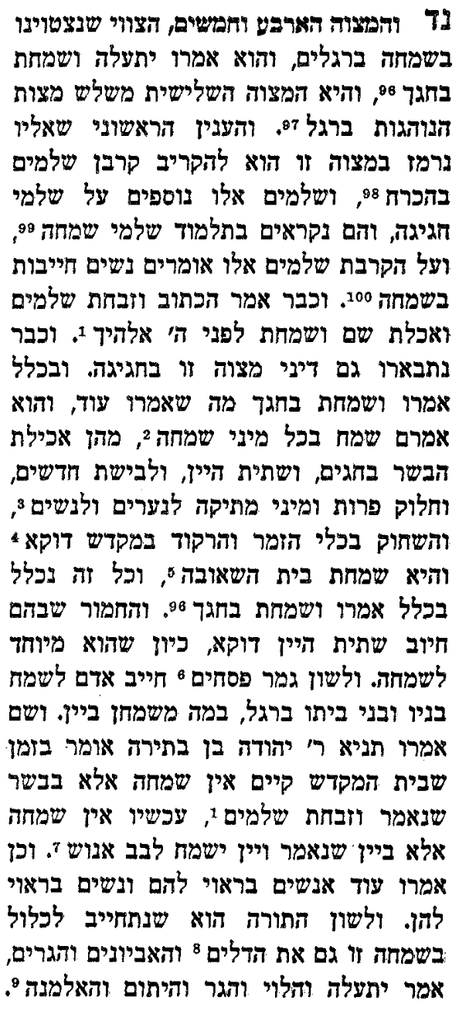
שִׁבְעַת יְמֵי הַפֶּסַח וּשְׁמוֹנַת יְמֵי הֶחָג עִם שְׁאָר יָמִים טוֹבִים כֻּלָּם אֲסוּרִים בְּהֶסְפֵּד וְתַעֲנִית. וְחַיָּב אָדָם לִהְיוֹת בָּהֶן שָׂמֵחַ וְטוֹב לֵב הוּא וּבָנָיו וְאִשְׁתּוֹ וּבְנֵי בֵּיתוֹ וְכָל הַנִּלְוִים עָלָיו שֶׁנֶּאֱמַר (דברים טז יד) "וְשָׂמַחְתָּ בְּחַגֶּךָ" וְגוֹ'. אַף עַל פִּי שֶׁהַשִּׂמְחָה הָאֲמוּרָה כָּאן הִיא קָרְבַּן שְׁלָמִים כְּמוֹ שֶׁאָנוּ מְבָאֲרִין בְּהִלְכוֹת חֲגִיגָה יֵשׁ בִּכְלַל אוֹתָהּ שִׂמְחָה לִשְׂמֹחַ הוּא וּבָנָיו וּבְנֵי בֵּיתוֹ כָּל אֶחָד כָּרָאוּי לוֹ:
It is forbidden to fast or recite eulogies on the seven days of Pesach, the eight days of Sukkot, and the other holidays. On these days, a person is obligated to be happy and in good spirits; he, his children, his wife, the members of his household, and all those who depend on him, as [Deuteronomy 16:14] states: "And you shall rejoice in your festivals."
The "rejoicing" mentioned in the verse refers to sacrificing peace offerings, as will be explained in Hilchot Chaggigah. Nevertheless, included in [this charge to] rejoice is that he, his children, and the members of his household should rejoice, each one in a manner appropriate for him.
The "rejoicing" mentioned in the verse refers to sacrificing peace offerings, as will be explained in Hilchot Chaggigah. Nevertheless, included in [this charge to] rejoice is that he, his children, and the members of his household should rejoice, each one in a manner appropriate for him.
כֵּיצַד. הַקְּטַנִּים נוֹתֵן לָהֶם קְלָיוֹת וֶאֱגוֹזִים וּמִגְדָּנוֹת. וְהַנָּשִׁים קוֹנֶה לָהֶן בְּגָדִים וְתַכְשִׁיטִין נָאִים כְּפִי מָמוֹנוֹ. וְהָאֲנָשִׁים אוֹכְלִין בָּשָׂר וְשׁוֹתִין יַיִן שֶׁאֵין שִׂמְחָה אֶלָּא בְּבָשָׂר וְאֵין שִׂמְחָה אֶלָּא בְּיַיִן. וּכְשֶׁהוּא אוֹכֵל וְשׁוֹתֶה חַיָּב לְהַאֲכִיל לַגֵּר לַיָּתוֹם וְלָאַלְמָנָה עִם שְׁאָר הָעֲנִיִּים הָאֻמְלָלִים. אֲבָל מִי שֶׁנּוֹעֵל דַּלְתוֹת חֲצֵרוֹ וְאוֹכֵל וְשׁוֹתֶה הוּא וּבָנָיו וְאִשְׁתּוֹ וְאֵינוֹ מַאֲכִיל וּמַשְׁקֶה לַעֲנִיִּים וּלְמָרֵי נֶפֶשׁ אֵין זוֹ שִׂמְחַת מִצְוָה אֶלָּא שִׂמְחַת כְּרֵסוֹ. וְעַל אֵלּוּ נֶאֱמַר (הושע ט ד) "זִבְחֵיהֶם כְּלֶחֶם אוֹנִים לָהֶם כָּל אֹכְלָיו יִטַּמָּאוּ כִּי לַחְמָם לְנַפְשָׁם". וְשִׂמְחָה כָּזוֹ קָלוֹן הִיא לָהֶם שֶׁנֶּאֱמַר (מלאכי ב ג) "וְזֵרִיתִי פֶרֶשׁ עַל פְּנֵיכֶם פֶּרֶשׁ חַגֵּיכֶם":
What is implied? Children should be given roasted seeds, nuts, and sweets. For women, one should buy attractive clothes and jewelry according to one's financial capacity. Men should eat meat and drink wine, for there is no happiness without partaking of meat,nor is there happiness without partaking of wine.
When a person eats and drinks [in celebration of a holiday], he is obligated to feed converts, orphans, widows, and others who are destitute and poor. In contrast, a person who locks the gates of his courtyard and eats and drinks with his children and his wife, without feeding the poor and the embittered, is [not indulging in] rejoicing associated with a mitzvah, but rather the rejoicing of his gut.
And with regard to such a person [the verse, Hoshea 9:4] is applied: "Their sacrifices will be like the bread of mourners, all that partake thereof shall become impure, for they [kept] their bread for themselves alone." This happiness is a disgrace for them, as [implied by Malachi 2:3]: "I will spread dung on your faces, the dung of your festival celebrations."
אַף עַל פִּי שֶׁאֲכִילָה וּשְׁתִיָּה בַּמּוֹעֲדוֹת בִּכְלַל מִצְוַת עֲשֵׂה. לֹא יִהְיֶה אוֹכֵל וְשׁוֹתֶה כָּל הַיּוֹם כֻּלּוֹ. אֶלָּא כָּךְ הִיא הַדָּת. בַּבֹּקֶר מַשְׁכִּימִין כָּל הָעָם לְבָתֵּי כְּנֵסִיּוֹת וּלְבָתֵּי מִדְרָשׁוֹת וּמִתְפַּלְּלִין וְקוֹרִין בַּתּוֹרָה בְּעִנְיַן הַיּוֹם וְחוֹזְרִין לְבָתֵּיהֶם וְאוֹכְלִין. וְהוֹלְכִין לְבָתֵּי מִדְרָשׁוֹת קוֹרִין וְשׁוֹנִין עַד חֲצִי הַיּוֹם. וְאַחַר חֲצוֹת הַיּוֹם מִתְפַּלְּלִין תְּפִלַּת הַמִּנְחָה וְחוֹזְרִין לְבָתֵּיהֶן לֶאֱכל וְלִשְׁתּוֹת שְׁאָר הַיּוֹם עַד הַלַּיְלָה:
Although eating and drinking on the holidays are included in the positive commandment [to rejoice], one should not devote the entire day to food and drink. The following is the desired practice:
In the morning, the entire people should get up and attend the synagogues and the houses of study where they pray and read a portion of the Torah pertaining to the holiday. Afterwards, they should return home and eat. Then they should go to the house of study, where they read [from the Written Law] and review [the Oral Law] until noon.
After noon, they should recite the afternoon service and return home to eat and drink for the remainder of the day until nightfall.
כְּשֶׁאָדָם אוֹכֵל וְשׁוֹתֶה וְשָׂמֵחַ בָּרֶגֶל לֹא יִמָּשֵׁךְ בְּיַיִן וּבִשְׂחוֹק וְקַלּוּת רֹאשׁ וְיֹאמַר שֶׁכָּל מִי שֶׁיּוֹסִיף בָּזֶה יַרְבֶּה בְּמִצְוַת שִׂמְחָה. שֶׁהַשִּׁכְרוּת וְהַשְּׂחוֹק הָרַבָּה וְקַלּוּת הָרֹאשׁ אֵינָהּ שִׂמְחָה אֶלָּא הוֹלְלוּת וְסִכְלוּת וְלֹא נִצְטַוֵּינוּ עַל הַהוֹלְלוּת וְהַסִּכְלוּת אֶלָּא עַל הַשִּׂמְחָה שֶׁיֵּשׁ בָּהּ עֲבוֹדַת יוֹצֵר הַכּל שֶׁנֶּאֱמַר (דברים כח מז) "תַּחַת אֲשֶׁר לֹא עָבַדְתָּ אֶת יי אֱלֹקֶיךָ בְּשִׂמְחָה וּבְטוּב לֵבָב מֵרֹב כּל". הָא לָמַדְתָּ שֶׁהָעֲבוֹדָה בְּשִׂמְחָה. וְאִי אֶפְשָׁר לַעֲבֹד אֶת הַשֵּׁם לֹא מִתּוֹךְ שְׂחוֹק וְלֹא מִתּוֹךְ קַלּוּת רֹאשׁ וְלֹא מִתּוֹךְ שִׁכְרוּת:
When a person eats, drinks, and celebrates on a festival, he should not let himself become overly drawn to drinking wine, mirth, and levity, saying, "whoever indulges in these activities more is increasing [his observance of] the mitzvah of rejoicing." For drunkenness, profuse mirth, and levity are not rejoicing; they are frivolity and foolishness.
And we were not commanded to indulge in frivolity or foolishness, but rather in rejoicing that involves the service of the Creator of all existence. Thus, [Deuteronomy 28:47] states, "Because you did not serve God, Your Lord, with happiness and a glad heart with an abundance of prosperity." This teaches us that service [of God] involves joy. And it is impossible to serve God while in the midst of levity, frivolity, or drunkenness.
And we were not commanded to indulge in frivolity or foolishness, but rather in rejoicing that involves the service of the Creator of all existence. Thus, [Deuteronomy 28:47] states, "Because you did not serve God, Your Lord, with happiness and a glad heart with an abundance of prosperity." This teaches us that service [of God] involves joy. And it is impossible to serve God while in the midst of levity, frivolity, or drunkenness.
חַיָּבִין בֵּית דִּין לְהַעֲמִיד שׁוֹטְרִים בָּרְגָלִים שֶׁיִּהְיוּ מְסַבְּבִין וּמְחַפְּשִׂין בַּגַּנּוֹת וּבַפַּרְדֵּסִים וְעַל הַנְּהָרוֹת כְּדֵי שֶׁלֹּא יִתְקַבְּצוּ לֶאֱכל וְלִשְׁתּוֹת שָׁם אֲנָשִׁים וְנָשִׁים וְיָבוֹאוּ לִידֵי עֲבֵרָה. וְכֵן יַזְהִירוּ בְּדָבָר זֶה לְכָל הָעָם כְּדֵי שֶׁלֹּא יִתְעָרְבוּ אֲנָשִׁים וְנָשִׁים בְּבָתֵּיהֶם לְשִׂמְחָה. וְלֹא יִמָּשְׁכוּ בַּיַּיִן שֶׁמָּא יָבוֹאוּ לִידֵי עֲבֵרָה:
The [Jewish] court is obligated to appoint officers who will circulate [among the people] on the festivals and check the gardens, orchards, and river banks to see that men and women do not gather there to eat or to drink, lest they [conduct themselves immodestly and come to] sin.
Similarly, they must warn the people that men and women should not mix at festive gatherings in homes, nor should they overindulge in wine, lest they be led to sin.
Similarly, they must warn the people that men and women should not mix at festive gatherings in homes, nor should they overindulge in wine, lest they be led to sin.
תָּנוּ רַבָּנַן: חַיָּיב אָדָם לְשַׂמֵּחַ בָּנָיו וּבְנֵי בֵיתוֹ בָּרֶגֶל, שֶׁנֶּאֱמַר: ״וְשָׂמַחְתָּ בְּחַגֶּךָ״. בַּמֶּה מְשַׂמְּחָם — בְּיַיִן. רַבִּי יְהוּדָה אוֹמֵר: אֲנָשִׁים בָּרָאוּי לָהֶם, וְנָשִׁים בָּרָאוּי לָהֶן. אֲנָשִׁים בָּרָאוּי לָהֶם — בְּיַיִן. וְנָשִׁים בְּמַאי? תָּנֵי רַב יוֹסֵף: בְּבָבֶל — בְּבִגְדֵי צִבְעוֹנִין, בְּאֶרֶץ יִשְׂרָאֵל — בְּבִגְדֵי פִּשְׁתָּן מְגוֹהָצִין. תַּנְיָא, רַבִּי יְהוּדָה בֶּן בְּתֵירָא אוֹמֵר: בִּזְמַן שֶׁבֵּית הַמִּקְדָּשׁ קַיָּים אֵין שִׂמְחָה אֶלָּא בְּבָשָׂר, שֶׁנֶּאֱמַר: ״וְזָבַחְתָּ שְׁלָמִים וְאָכַלְתָּ שָּׁם וְשָׂמַחְתָּ לִפְנֵי ה׳ אֱלֹהֶיךָ״, וְעַכְשָׁיו שֶׁאֵין בֵּית הַמִּקְדָּשׁ קַיָּים, אֵין שִׂמְחָה אֶלָּא בְּיַיִן, שֶׁנֶּאֱמַר: ״וְיַיִן יְשַׂמַּח לְבַב אֱנוֹשׁ״.
It was taught in a baraita: They said about Rabbi Akiva that in all his days he never said to his students that the time had come to arise from their learning in the study hall. Instead, he would continue to teach as long as they were willing to listen. This was true except for the eves of Passover and the eve of Yom Kippur, when he would stop teaching. The Gemara explains the reasons for these exceptions: On the eve of Passover, he would stop on account of the children, so that they would go to sleep during the day, so that they would not be tired and sleep at night. And on the eve of Yom Kippur, he would stop so that his students would remember to feed their children. The Sages taught: A man is obligated to gladden his children and the members of his household on a Festival, as it is stated: “And you shall rejoice on your Festival, you, and your son, and your daughter, and your manservant, and your maidservant, and the Levite, and the stranger, and the fatherless, and the widow that are within your gates” (Deuteronomy 16:14). With what should one make them rejoice? With wine. Rabbi Yehuda says: One should enable each member of his household to rejoice with an item that pleases them, men with what is fit for them and women with what is fit for them. Rabbi Yehuda elaborates: Men with what is fit for them, i.e., with wine. And as for the women, with what should one cause them to rejoice? Rav Yosef teaches: One should delight them with new clothes, in Babylonia with colored clothes and in Eretz Yisrael with the pressed linen clothes that are manufactured there. It was taught in a baraita that Rabbi Yehuda ben Beteira says: When the Temple is standing, rejoicing is only through the eating of sacrificial meat, as it is stated: “And you shall sacrifice peace-offerings and you shall eat there and you shall rejoice before the Lord your God” (Deuteronomy 27:7). And now that the Temple is not standing and one cannot eat sacrificial meat, he can fulfill the mitzva of rejoicing on a Festival only by drinking wine, as it is stated: “And wine that gladdens the heart of man” (Psalms 104:15).
חייב אדם להיות שמח וטוב לב במועד הוא ואשתו ובניו וכל הנלוים אליו כיצד משמחן הקטנים נותן להם קליות ואגוזים והנשים קונה להם בגדים ותכשיטין כפי ממונו וחייב להאכיל לגר ליתום ולאלמנה עם שאר עניים (דין תענית ביום טוב כמו בשבת ועיין לעיל סימן רפ"ח):
2. It is an obligation for a man to be happy and in good spirits on the holiday - him, his wife, his kids, and all who are with him. How should he make them happy? He should give the children nuts and the women new clothes and jewelry according to his finances. One is obligated to feed the stranger, the orphan, and the widow, along with other poor people. (The rules of fasting on a holiday are the same as for Shabbat, and see above chapter 388.)