


Commandment 31 - To Remove Hames From Our Domains


 Save
 Copy
 Add to Collection
 Export to Google Docs
 Share
(טו) שִׁבְעַ֤ת יָמִים֙ מַצּ֣וֹת תֹּאכֵ֔לוּ אַ֚ךְ בַּיּ֣וֹם הָרִאשׁ֔וֹן תַּשְׁבִּ֥יתוּ שְּׂאֹ֖ר מִבָּתֵּיכֶ֑ם כִּ֣י ׀ כׇּל־אֹכֵ֣ל חָמֵ֗ץ וְנִכְרְתָ֞ה הַנֶּ֤פֶשׁ הַהִוא֙ מִיִּשְׂרָאֵ֔ל מִיּ֥וֹם הָרִאשֹׁ֖ן עַד־י֥וֹם הַשְּׁבִעִֽי׃
(15) Seven days you shall eat unleavened bread; on the very first day you shall remove leaven from your houses, for whoever eats leavened bread from the first day to the seventh day, that person shall be cut off from Israel.
היא שצונו לבער חמץ מבתינו ביום ארבעה עשר מניסן וזו היא מצות השבתת שאור. והוא אמרו יתברך אך ביום הראשון תשביתו שאור מבתיכם. והנה התבארו דיני מצוה זו בפרק ראשון מפסחים. (בא אל פרעה, זמנים הלכות חמץ ומצה פ"ב):
That is that He commanded us to destroy chametz from our homes on the fourteenth day of Nissan. And this is the commandment of disposal of leaven. And that is His, may He be blessed, saying, "on the very first day you shall dispose of the leaven from your homes" (Exodus 12:15). And behold the laws of this commandment have already been explained in the first chapter of Pesachim (See Parashat Bo; Mishneh Torah, Leavened and Unleavened Bread 2.)
מִצְוַת עֲשֵׂה מִן הַתּוֹרָה לְהַשְׁבִּית הֶחָמֵץ קֹדֶם זְמַן אִסּוּר אֲכִילָתוֹ שֶׁנֶּאֱמַר (שמות יב טו) "בַּיּוֹם הָרִאשׁוֹן תַּשְׁבִּיתוּ שְּׂאֹר מִבָּתֵּיכֶם". וּמִפִּי הַשְּׁמוּעָה לָמְדוּ שֶׁבָּרִאשׁוֹן זֶה הוּא יוֹם אַרְבָּעָה עָשָׂר. רְאָיָה לְדָבָר זֶה מַה שֶּׁכָּתוּב בַּתּוֹרָה (שמות לד כה) "לֹא תִשְׁחַט עַל חָמֵץ דַּם זִבְחִי" כְּלוֹמַר לֹא תִּשְׁחַט הַפֶּסַח וַעֲדַיִן הֶחָמֵץ קַיָּם. וּשְׁחִיטַת הַפֶּסַח הוּא יוֹם אַרְבָּעָה עָשָׂר אַחַר חֲצוֹת:
It is a positive commandment from the Torah to destroy chametz before the time it becomes forbidden to be eaten, as [Exodus 12:15] states: "On the first day, destroy leaven from your homes." On the basis of the oral tradition, it is derived that "the first day" refers to the day of the fourteenth.Proof of this matter is the verse from the Torah [Exodus 34:25]: "Do not slaughter the blood of My sacrifice with chametz," i.e., Do not slaughter the Pesach sacrifice while chametz exists [in your possession]. The slaughter of the Pesach sacrifice was on the fourteenth after midday.
וּמַה הִיא הַשְׁבָּתָה זוֹ הָאֲמוּרָה בַּתּוֹרָה הִיא שֶׁיְּבַטֵּל הֶחָמֵץ בְּלִבּוֹ וְיַחֲשֹׁב אוֹתוֹ כְּעָפָר וְיָשִׂים בְּלִבּוֹ שֶׁאֵין בִּרְשׁוּתוֹ חָמֵץ כְּלָל. וְשֶׁכָּל חָמֵץ שֶׁבִּרְשׁוּתוֹ הֲרֵי הוּא כְּעָפָר וּכְדָבָר שֶׁאֵין בּוֹ צֹרֶךְ כְּלָל:
What is the destruction to which the Torah refers? to nullify chametz within his heart and to consider it as dust, and to resolve within his heart that he possesses no chametz at all: all the chametz in his possession being as dust and as a thing of no value whatsoever.
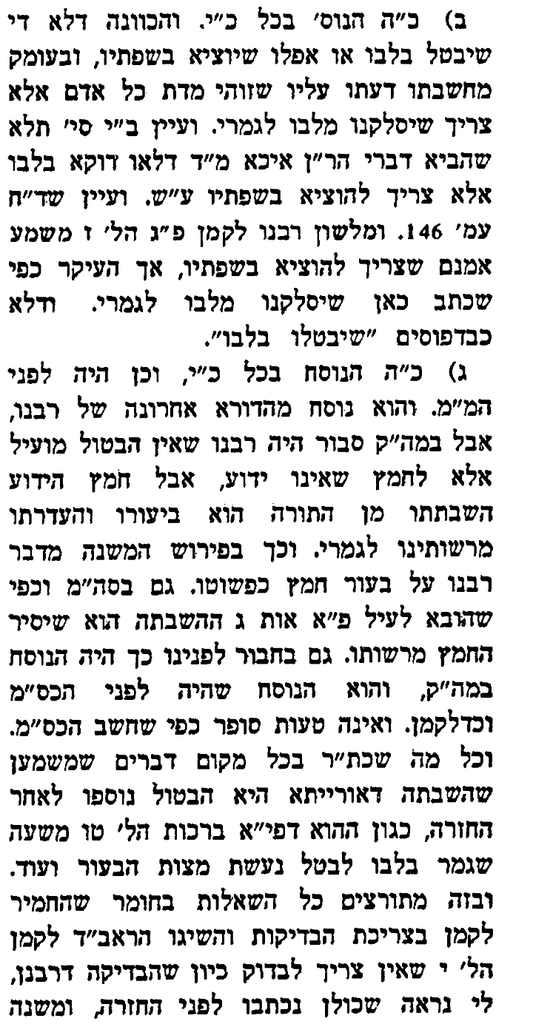
ומה היא השבתה זו האמורה בתורה היא שיסיר החמץ הידוע לו מרשותו ושאינו ידוע יבטלו בלבו וישים אותו כעפר וכו'. זו הנוסחא שבספרי רבינו שבידינו. ומשמע מפשט לשון רבינו דמדאורייתא תרתי בעינן ביעור וביטול ומפקינן לביטול מדאמרינן בספרי לא יראה לך בטל בלבך אי נמי מדכתיב תשביתו ולא כתיב תבערו או
וּכְשֶׁגּוֹמֵר לִבְדֹּק אִם בָּדַק בְּלֵיל אַרְבָּעָה עָשָׂר אוֹ בְּיוֹם אַרְבָּעָה עָשָׂר קֹדֶם שֵׁשׁ שָׁעוֹת צָרִיךְ לְבַטֵּל כָּל חָמֵץ שֶׁנִּשְׁאַר בִּרְשׁוּתוֹ וְאֵינוֹ רוֹאֵהוּ. וְיֹאמַר כָּל חָמֵץ שֶׁיֵּשׁ בִּרְשׁוּתִי שֶׁלֹּא רְאִיתִיו הֲרֵי הוּא בָּטֵל וַהֲרֵי הוּא כְּעָפָר. אֲבָל אִם בָּדַק מִתְּחִלַּת שָׁעָה שִׁשִּׁית וּלְמַעְלָה אֵינוֹ יָכוֹל לְבַטֵּל שֶׁהֲרֵי אֵינוֹ בִּרְשׁוּתוֹ שֶׁכְּבָר נֶאֱסַר בַּהֲנָיָה:
When he concludes searching, if he searched on the fourteenth at night, or on the fourteenth during the day before the sixth hour, he should nullify all the chametz that remains in his possession that he does not see.He should say: "All chametz which is in my possession that I have not seen, behold, it is nullified and must be considered as dust."However, if he searched after the beginning of the sixth hour and onward, he can no longer nullify it, for it is not in his possession, since benefiting from it is forbidden.