Commandment 32 - To Tell the Story of the Exodus on the First Night of Pesah


 Save
 Copy
 Add to Collection
 Export to Google Docs
 Share
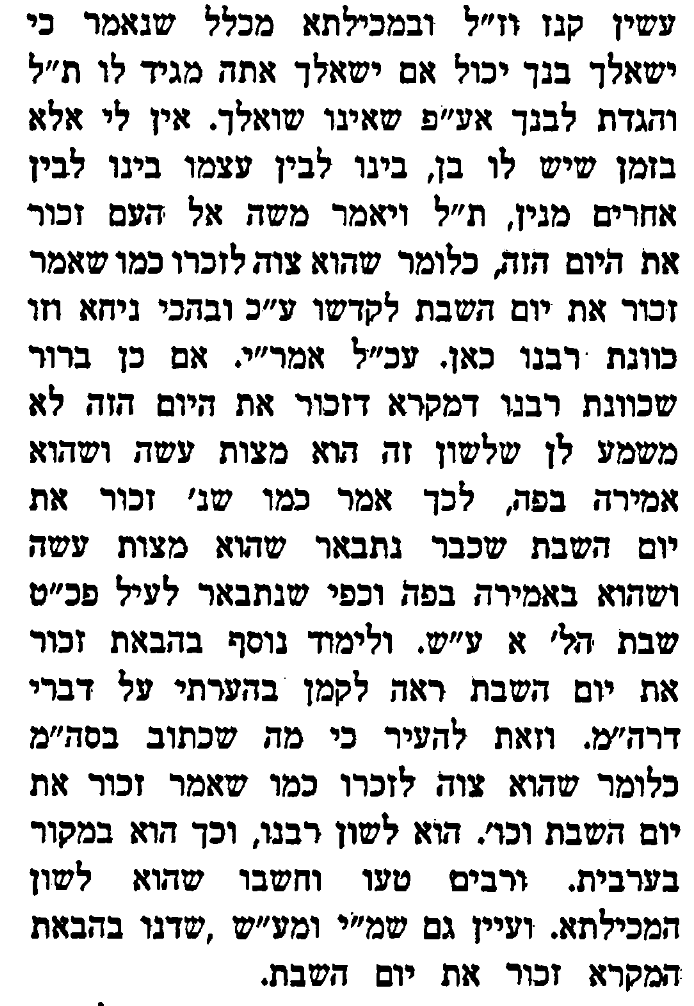
היא שצונו לספר ביציאת מצרים בליל חמשה עשר מניסן בתחלת הלילה כפי צחות לשון המספר. וכל מי שיוסיף במאמר ויאריך הדברים בהגדלת מה שעשה לנו השם ומה שעשו לנו המצרים מעול וחמס ואיך לקח השם נקמתנו מהם ולהודות לו יתעלה על כל טוב שגמלנו יהיה יותר טוב כמו שאמרו וכל המאריך לספר ביציאת מצרים הרי זה משובח, והכתוב שבא על הצווי הזה הוא אמרו והגדת לבנך ביום ההוא ובא הפירוש והגדת לבנך יכול מראש חדש תלמוד לומר ביום ההוא אי ביום ההוא יכול מבעוד יום תלמוד לומר בעבור זה לא אמרתי אלא בשעה שיש מצה ומרור מונחים לפניך כלומר מתחלת הלילה אתה מספר. ולשון מכילתא מכלל שנאמר כי ישאלך בנך יכול אם ישאלך בנך אתה מגיד לו כו' תלמוד לומר והגדת לבנך אע"פ שאינו שואלך, אין לי אלא בזמן שיש לו בן בינו לבין עצמו בינו לבין אחרים מנין תלמוד לומר ויאמר משה אל העם זכור את היום הזה, רוצה לומר שהוא צוה לזכרו כמו שאמר זכור את יום השבת. וכבר ידעת לשון אמרם ואפילו כלנו חכמים כלנו נבונים כלנו יודעים את התורה כלה מצוה עלינו לספר ביציאת מצרים. וכבר התבארו משפטי מצוה זו בסוף פסחים. (בא אל פרעה, זמנים הלכות חמץ ומצה פ"ח):
That is that He commanded us to tell about the exodus from Egypt on the night of the fifteenth of Nissan - at the beginning of the night - according to the speaker's linguistic abilities. And it is better for one to add upon the telling and stretch out the words, by magnifying that which God did for us, what the Egyptians did to us in terms of injustice and oppression and how God avenged us upon them, and to thank Him, may He be exalted, for all of the good with which He benefitted us. It is like they said, "Anyone who is expansive in his telling about the exodus from Egypt - behold, he is praiseworthy." And the verse that appears about this command is His saying, "And you shall tell your son on that day" (Exodus 13:8). And the explanation (Mekhilta d'Rabbi Yishmael 12:8) comes [to say], "'And you shall tell your son' - perhaps from Rosh Chodesh [Nissan. Hence] we learn to say, 'on that day.' Perhaps while it is still day. [Hence] we learn to say, 'for the sake of this' - when [this] matzah and bitter herbs are resting in front of you," meaning, you recount [it] at the beginning of the night." And the language of the Mekhilta (Mekhilta DeRabbi Shimon Bar Yochai 13:2) is, "It is implied from its being stated, 'when your son asks you' (Exodus 13:14) - perhaps if he asks you, you tell him, etc. [Hence] we learn to say, 'and you shall tell your son' - even though he does not ask you. I only [know] at the time that he has a son. [If he is] by himself [or] with others, from where [do I know it? Hence], we learn to say, 'And Moshe said to the people, "Remember this day"'" - meaning to say that He commanded them to remember it, just like He said, "Remember the Shabbat day" (Exodus 20:8). And you already know the language of their saying, "And even if we are all sages, all understanding, all knowing the whole Torah, it is a commandment upon us to tell about the exodus from Egypt" (Haggadah). And the regulations of this commandment have already been explained at the end of Pesachim (See Parashat Bo; Mishneh Torah, Leavened and Unleavened Bread 8.)
מִצְוַת עֲשֵׂה שֶׁל תּוֹרָה לְסַפֵּר בְּנִסִּים וְנִפְלָאוֹת שֶׁנַּעֲשׂוּ לַאֲבוֹתֵינוּ בְּמִצְרַיִם בְּלֵיל חֲמִשָּׁה עָשָׂר בְּנִיסָן שֶׁנֶּאֱמַר (שמות יג ג) "זָכוֹר אֶת הַיּוֹם הַזֶּה אֲשֶׁר יְצָאתֶם מִמִּצְרַיִם" כְּמוֹ שֶׁנֶּאֱמַר (שמות כ ח) "זָכוֹר אֶת יוֹם הַשַּׁבָּת". וּמִנַּיִן שֶׁבְּלֵיל חֲמִשָּׁה עָשָׂר תַּלְמוּד לוֹמַר (שמות יג ח) "וְהִגַּדְתָּ לְבִנְךָ בַּיּוֹם הַהוּא לֵאמֹר בַּעֲבוּר זֶה" בְּשָׁעָה שֶׁיֵּשׁ מַצָּה וּמָרוֹר מֻנָּחִים לְפָנֶיךָ. וְאַף עַל פִּי שֶׁאֵין לוֹ בֵּן. אֲפִלּוּ חֲכָמִים גְּדוֹלִים חַיָּבִים לְסַפֵּר בִּיצִיאַת מִצְרִים וְכָל הַמַּאֲרִיךְ בִּדְבָרִים שֶׁאֵרְעוּ וְשֶׁהָיוּ הֲרֵי זֶה מְשֻׁבָּח:
It is a positive commandment of the Torah to relate the miracles and wonders wrought for our ancestors in Egypt on the night of the fifteenth of Nisan, as [Exodus 13:3] states: "Remember this day, on which you left Egypt," just as [Exodus 20:8] states: "Remember the Sabbath day."From where [is it derived that this mitzvah is to be fulfilled on] the night of the fifteenth? The Torah teaches [Exodus 13:8]: "And you shall tell your son on that day, saying: 'It is because of this...' [implying that the mitzvah is to be fulfilled] when matzah and maror are placed before you.[The mitzvah applies] even though one does not have a son. Even great Sages are obligated to tell about the Exodus from Egypt. Whoever elaborates concerning the events which occurred and took place is worthy of praise.
מִצְוָה לְהוֹדִיעַ לַבָּנִים וַאֲפִלּוּ לֹא שָׁאֲלוּ שֶׁנֶּאֱמַר (שמות יג ח) "וְהִגַּדְתָּ לְבִנְךָ". לְפִי דַּעְתּוֹ שֶׁל בֵּן אָבִיו מְלַמְּדוֹ. כֵּיצַד. אִם הָיָה קָטָן אוֹ טִפֵּשׁ אוֹמֵר לוֹ בְּנִי כֻּלָּנוּ הָיִינוּ עֲבָדִים כְּמוֹ שִׁפְחָה זוֹ אוֹ כְּמוֹ עֶבֶד זֶה בְּמִצְרַיִם וּבַלַּיְלָה הַזֶּה פָּדָה אוֹתָנוּ הַקָּדוֹשׁ בָּרוּךְ הוּא וַיּוֹצִיאֵנוּ לְחֵרוּת. וְאִם הָיָה הַבֵּן גָּדוֹל וְחָכָם מוֹדִיעוֹ מַה שֶּׁאֵרַע לָנוּ בְּמִצְרַיִם וְנִסִּים שֶׁנַּעֲשׂוּ לָנוּ עַל יְדֵי משֶׁה רַבֵּנוּ הַכֹּל לְפִי דַּעְתּוֹ שֶׁל בֵּן:
It is a mitzvah to inform one's sons even though they do not ask, as [Exodus 13:8] states: "You shall tell your son."A father should teach his son according to the son's knowledge: How is this applied? If the son is young or foolish, he should tell him: "My son, in Egypt, we were all slaves like this maidservant or this slave. On this night, the Holy One, Blessed be He, redeemed us and took us out to freedom."If the son is older and wise, he should inform him what happened to us in Egypt and the miracles wrought for us by Moses, our teacher; everything according to the son's knowledge.
וְצָרִיךְ לְהַתְחִיל בִּגְנוּת וּלְסַיֵּם בְּשֶׁבַח. כֵּיצַד. מַתְחִיל וּמְסַפֵּר שֶׁבַּתְּחִלָּה הָיוּ אֲבוֹתֵינוּ בִּימֵי תֶּרַח וּמִלְּפָנָיו כּוֹפְרִים וְטוֹעִין אַחַר הַהֶבֶל וְרוֹדְפִין אַחַר עֲבוֹדַת אֱלִילִים. וּמְסַיֵּם בְּדַת הָאֱמֶת שֶׁקֵּרְבָנוּ הַמָּקוֹם לוֹ וְהִבְדִּילָנוּ מֵהָאֻמּוֹת וְקֵרְבָנוּ לְיִחוּדוֹ. וְכֵן מַתְחִיל וּמוֹדִיעַ שֶׁעֲבָדִים הָיִינוּ לְפַרְעֹה בְּמִצְרַיִם וְכָל הָרָעָה שֶׁגְּמָלָנוּ וּמְסַיֵּם בַּנִּסִּים וּבַנִּפְלָאוֹת שֶׁנַּעֲשׂוּ לָנוּ וּבְחֵרוּתֵנוּ. וְהוּא שֶׁיִּדְרשׁ מֵ"אֲרַמִּי אֹבֵד אָבִי" (דברים כו ה) עַד שֶׁיִּגְמֹר כָּל הַפָּרָשָׁה. וְכָל הַמּוֹסִיף וּמַאֲרִיךְ בִּדְרַשׁ פָּרָשָׁה זוֹ הֲרֵי זֶה מְשֻׁבָּח:
One must begin [the narrative describing our ancestors'] base [roots] and conclude with [their] praise. What does this imply? One begins relating how originally, in the age of Terach, our ancestors denied [God's existence] and strayed after vanity, pursuing idol worship. One concludes with the true faith: how the Omnipresent has drawn us close to Him, separated us from the gentiles, and drawn us near to His Oneness.Similarly, one begins by stating that we were slaves to Pharaoh in Egypt and [describing] all the evil done to us, and concludes with the miracles and wonders that were wrought upon us, and our freedom.This [implies] that one should extrapolate [the passage beginning] from [Deuteronomy 26:5]: "An Aramean sought to destroy my ancestor..." until one concludes the entire passage. Whoever adds and extends his extrapolation of this passage is praiseworthy.