


 Save
 Copy
 Add to Collection
 Export to Google Docs
 Share
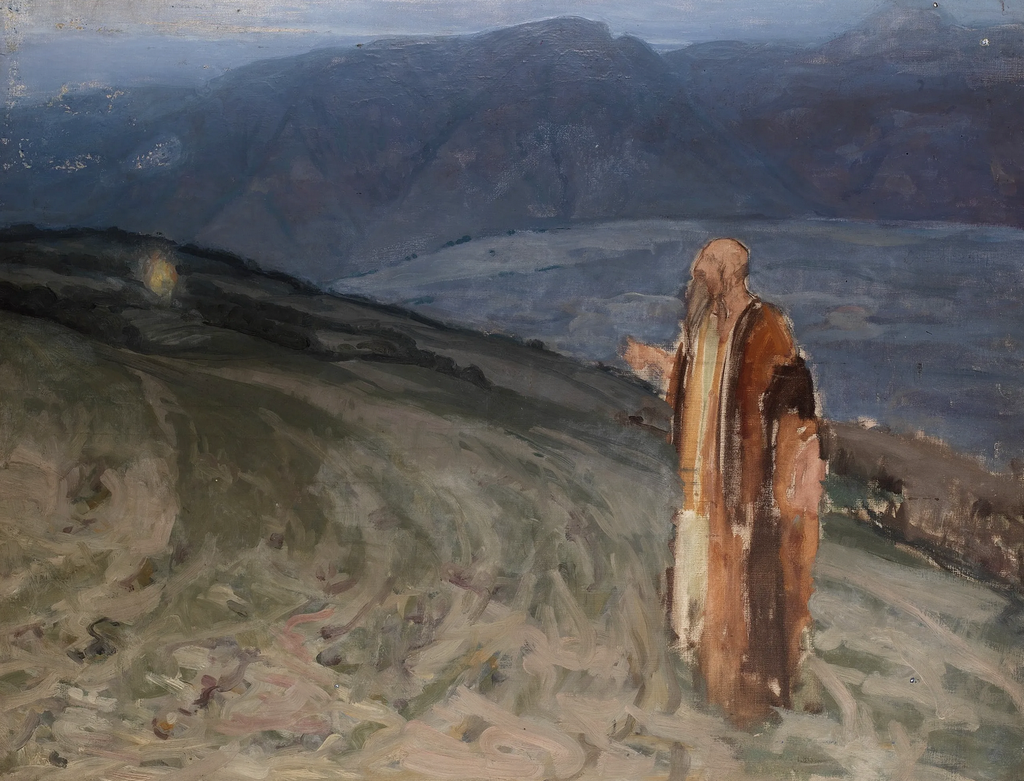
(African American painter who worked primarily in France)
(א) וּמֹשֶׁ֗ה הָיָ֥ה רֹעֶ֛ה אֶת־צֹ֛אן יִתְר֥וֹ חֹתְנ֖וֹ כֹּהֵ֣ן מִדְיָ֑ן וַיִּנְהַ֤ג אֶת־הַצֹּאן֙ אַחַ֣ר הַמִּדְבָּ֔ר וַיָּבֹ֛א אֶל־הַ֥ר הָאֱלֹקִ֖ים חֹרֵֽבָה׃(ב) וַ֠יֵּרָ֠א מַלְאַ֨ךְ ה׳ אֵלָ֛יו בְּלַבַּת־אֵ֖שׁ מִתּ֣וֹךְ הַסְּנֶ֑ה וַיַּ֗רְא וְהִנֵּ֤ה הַסְּנֶה֙ בֹּעֵ֣ר בָּאֵ֔שׁ וְהַסְּנֶ֖ה אֵינֶ֥נּוּ אֻכָּֽל׃(ג) וַיֹּ֣אמֶר מֹשֶׁ֔ה אָסֻֽרָה־נָּ֣א וְאֶרְאֶ֔ה אֶת־הַמַּרְאֶ֥ה הַגָּדֹ֖ל הַזֶּ֑ה מַדּ֖וּעַ לֹא־יִבְעַ֥ר הַסְּנֶֽה׃(ד) וַיַּ֥רְא ה׳ כִּ֣י סָ֣ר לִרְא֑וֹת וַיִּקְרָא֩ אֵלָ֨יו אֱלֹקִ֜ים מִתּ֣וֹךְ הַסְּנֶ֗ה וַיֹּ֛אמֶר מֹשֶׁ֥ה מֹשֶׁ֖ה וַיֹּ֥אמֶר הִנֵּֽנִי׃(ה) וַיֹּ֖אמֶר אַל־תִּקְרַ֣ב הֲלֹ֑ם שַׁל־נְעָלֶ֙יךָ֙ מֵעַ֣ל רַגְלֶ֔יךָ כִּ֣י הַמָּק֗וֹם אֲשֶׁ֤ר אַתָּה֙ עוֹמֵ֣ד עָלָ֔יו אַדְמַת־קֹ֖דֶשׁ הֽוּא׃(ו) וַיֹּ֗אמֶר אָנֹכִי֙ אֱלֹקֵ֣י אָבִ֔יךָ אֱלֹקֵ֧י אַבְרָהָ֛ם אֱלֹקֵ֥י יִצְחָ֖ק וֵאלֹקֵ֣י יַעֲקֹ֑ב וַיַּסְתֵּ֤ר מֹשֶׁה֙ פָּנָ֔יו כִּ֣י יָרֵ֔א מֵהַבִּ֖יט אֶל־הָאֱלֹקִֽים׃
(1) Now Moses, tending the flock of his father-in-law Jethro, the priest of Midian, drove the flock into the wilderness, and came to Horeb, the mountain of God.(2) A messenger of ה׳ appeared to him in a blazing fire out of a bush. He gazed, and there was a bush all aflame, yet the bush was not consumed.(3) Moses said, “I must turn aside to look at this marvelous sight; why doesn’t the bush burn up?”(4) When ה׳ saw that he had turned aside to look, God called to him out of the bush: “Moses! Moses!” He answered, “Here I am.”(5) And [God] said, “Do not come closer! Remove your sandals from your feet, for the place on which you stand is holy ground!”(6) and continued, “I am the God of your father’s [house]—the God of Abraham, the God of Isaac, and the God of Jacob.” And Moses hid his face, for he was afraid to look at God.
ויבא אל הר האלקים חורבה. הוא לבדו להתבודד ולהתפלל...
ויבא אל הר האלוקים חורבה. Moses, all by himself; he wanted to pray and meditate there in complete isolation and concentration....
Here, we encounter a challenging paradox for the aniconism of Judaism: since we are taught that God isn’t visible and we are not to make representations of God, then how can we see God? The Second Commandment:
Here, we encounter a challenging paradox for the aniconism of Judaism: since we are taught that God isn’t visible and we are not to make representations of God, then how can we see God? The Second Commandment:
(ד) לֹֽ֣א־תַֽעֲשֶׂ֨ה־לְךָ֥֣ פֶ֣֙סֶל֙ ׀ וְכׇל־תְּמוּנָ֔֡ה אֲשֶׁ֤֣ר בַּשָּׁמַ֣֙יִם֙ ׀ מִמַּ֔֡עַל וַֽאֲשֶׁ֥ר֩ בָּאָ֖֨רֶץ מִתָּ֑͏ַ֜חַת וַאֲשֶׁ֥ר בַּמַּ֖֣יִם ׀ מִתַּ֥֣חַת לָאָֽ֗רֶץ׃
(4) You shall not make for yourself a sculptured image, or any likeness of what is in the heavens above, or on the earth below, or in the waters under the earth.
- The experience feels numinous
- This sort of experience often occurs in solitude
- The person experiencing a numinous theophanic moment may react in a binary sort of way - "this can't be happening / I am scared or disbelieving" alternating with "I am drawn to this experience, and would like to enter more deeply into it.
https://www.academia.edu/90040477/Theophany_as_Type_Scene?uc-sb-sw=53948318
The Bible says in reference to this, “Behold, the heaven and the heaven of heavens can not contain Thee,” meaning that God does not need place to stand in....Thus we read: “And the appearance of the glory of the Lord was like devouring fire on the top of the mount”; “And behold, the glory of the Lord appeared in the cloud”; “And the angel of the Lord appeared...unto him in a flame of fire out of the midst of a bush.”...The sudden appearance of the pillar of cloud or of a flame of fire out of the midst of a bush, the bushnot being consumed, was an indication that the glory of the Lord, which could not be seen with the...senses, was there.
והסנה איננו אכל. מכאן אמרו כי אש של מעלה מעלה לולבין ושורפת ואינו אוכלת ושחורה, ואש של מטה אינה מעלה לולבין ואוכלת ואינה שורפת ואדומה, לפיכך וירא והנה הסנה בוער באש וגו':
"And the Sneh was not consumed." From this they taught that a fire originating above [i.e., heavenly, divine] is [characterized thus:] it raises lulavin, it burns, it does not consume, and it is black. But an earthly fire does not raise lulavin, does consume, does not burn, and is red. Thus, [because the fire Moses saw was a divine fire, it is written] "he looked and lo, the Sneh was burning, etc. [etc. = "but the Sneh was not consumed"]
translation Revital Somekh-Goldreich
What is “raising lulavin”? I understand this as a paradoxical expression of the new potential that can arise when old layers of experience are purified, thus releasing the inner potential for new growth and new developments. Why “lulavin” (plural of lulav)? I see an allusion here to Sukkot, our harvest festival when we wave the lulav, a ritual object. This midrash shows that in the midst of a divine fire, new growth leading to future harvest and abundance can emerge.
(ו) וְהוֹצִ֣יא כָא֣וֹר צִדְקֶ֑ךָ וּ֝מִשְׁפָּטֶ֗ךָ כַּֽצׇּהֳרָֽיִם׃
(6) The Divine will bring forth your righteousness as the light, and your justice as the noon day sun.
