




 Save
Save Copy
Copy Add to Collection
 Export to Google Docs
 Share
Share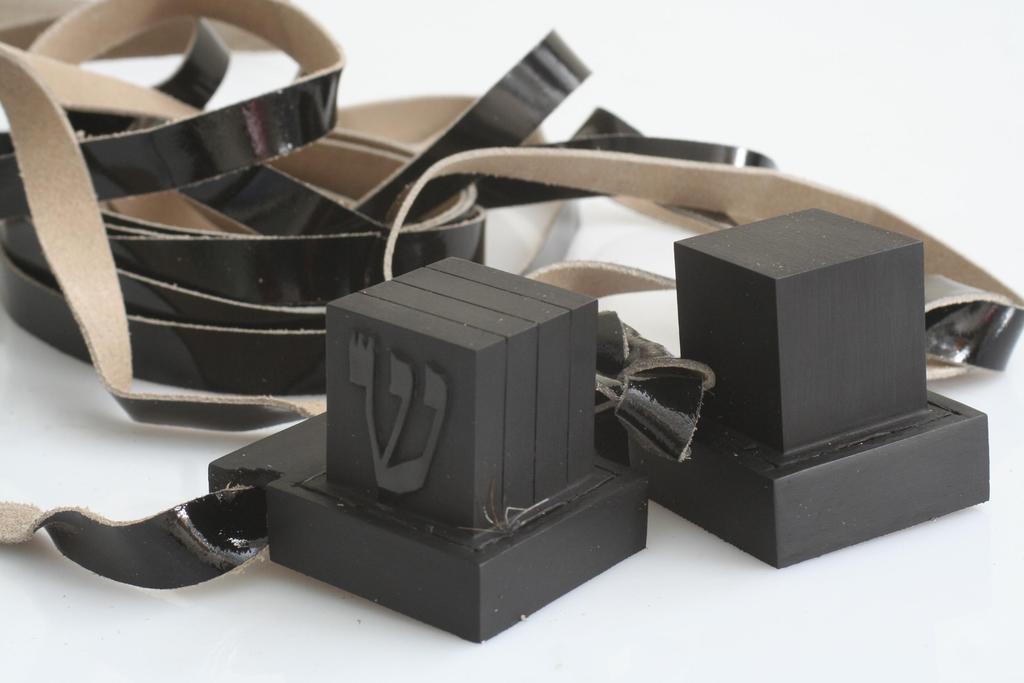
Tefillin are boxes and straps worn during morning weekday services. The Greek word for them is “phylacteries”, but that’s not a very common term (See this rant: https://youtu.be/T7HaQGnJnsE?si=MuH9tsq-L-v2N3ii). Kippah, called “yarmulke” (YAH-mah-kah) in Yiddish, is worn on top of the head either during services or all day (plural - kippot). A tallit / tallis is a prayer shawl; you can learn more about that here: https://voices.sefaria.org/sheets/733974?lang=bi
(ח) וּקְשַׁרְתָּ֥ם לְא֖וֹת עַל־יָדֶ֑ךָ וְהָי֥וּ לְטֹטָפֹ֖ת בֵּ֥ין עֵינֶֽיךָ׃
(8) Bind them [these words] as a sign on your hand and let them serve as a symbol on your forehead [literally "between your eyes"];
- When it says “these words”, it means “the sections of the Torah where tefillin are mentioned” (Deuteronomy 6:4-9 and 11:13-21, and Exodus 13:1-10 and 11-16), and you have to get all the letters right / write or it doesn’t count (Mishnah Menachot 3:7).
- We’re talking about 2 separate contraptions, one on the arm and one on the head, and if for some reason you’re missing one you still get credit for the other (but try to have both) (Mishnah Menachot 4:1).
- At least one of those boxes has 4 compartments, one for each part of the Torah that talks about tefillin (Mishnah Kelim 18:8).
- The boxes are attached to the body with straps. This is because it says “ukshartam”, “and you shall tie them”. The straps are as important as the boxes once they get tied onto the boxes in the making process of the tefillin. (Mishnah Yadayim 3:3).
- Tefillin boxes should be square and unadorned with gold (eventually they need to be black). They should go on the hairline above the midpoint of the eyes, and they should go in the inner part of the bicep so they are closer to the heart (Mishnah Megillah 4:8).
- The text in the tefillin should be written on parchment from kosher animals. When the parchment rolls are finished, they should be rolled up and tied with the hair of a kosher animal. The boxes should be sewed together with the sinews of a kosher animal. The parchment should be ruled with a reed and written on with ink. All of these are a “Halacha l’Moshe MiSinai”, an “oral prescription delivered to Moses at Mt. Sinai” (Soferim 1:1, written a bit after the Mishnah was finished).
- Tefillin come in a pair -— one for the hand / arm, called the “Tefillin shel Yad”, and one for the head, called the “Tefillin shel Rosh”.
- Each one has a box on a base, and a strap that goes through the back of the base.
- The arm tefillin has one compartment, in which sits all 4 texts rolled up on one strip of parchment, while the head tefillin has 4 compartments, each with its own strip that has one text.
- The reason for the different number of compartments is because in the V’Ahavta the arm tefillin are called an “ote” (“sign”, a singular word) while the head tefillin are called “totafot” (“frontlets”, a plural word).
- On one side of the head tefillin there’s a shin, part of “Sha-dai” (one of the names of G-d), and on the other side is a 4-legged shin. This dates back to the Geonic period (around 800-1000 CE) and the usual interpretation of this rule is that the Ten Commandments were engraved in stone and looking at the “negative space” and the “positive space” you get either a 3-legged or a 4-legged shin. Originally this was just vertical lines (a shin without the bottom) and may have been based on the positive and negative lines of the compartments when viewed from the side (hence why only on the head tefillin).
- The knot on the head tefillin makes a daled, and the knot on the arm tefillin makes a yud, thus finishing G-d’s name.
- First the tallit goes on.
- Then you put on the arm tefillin. This is because the arm tefillin is mentioned first in the V’Ahavta.
- The arm tefillin goes on your non-dominant hand because the V’Ahavta says to “Tie them” and that supposes using your dominant hand. It’s impossible to use your dominant hand to put tefillin on that same arm.
- To do that, unwrap the “Tefillin shel Yad” and take off the protective case.
- Find the loop hanging from the base of the tefillin and put your “left” hand through it so that the loop is closer to the shoulder and the box is toward the arm.
- Cinch the strap around your arm and say the blessing: Baruch ata Adonai, Eloheinu Melech HaOlam, asher kidshanu b’mitzvotav v’tzivanu l’hani-ach tefillin. Praised are You, Lord our G-d, Ruler of the universe, who has made us holy with Divine commandments and commanded us to lay tefillin.
- Then wrap the strap so that it comes down on the side closer to your body and up on the outside of your arm.
- You’ll probably wrap it 1-2 times above the elbow, but what matters is wrapping it 7 times, not touching each other, between the elbow and edge of the hand. Seven wraps either stands for the 7 days of Creation or 3 Patriarchs (Abraham, Isaac, and Jacob) and 4 Matriarchs (Sarah, Rebecca. Rachel, and Leah).
- After the 7th wrap, bring the strap from the outside edge of the hand in between the thumb and index finger and keep wrapping it over the same path to get it out of the way.
- Then unwrap the straps of the Tefillin shel Rosh and remove the protective case.
- Put the loop of the strap over your head so that the box is on the hairline and the knot is on the soft spot in the back of the head. If there’s a receding hairline happening, it should go where the original hairline was. The box should be positioned so it above the nose, thus making it “between the eyes” as it says in the V’Ahavta.
- Next say the blessing: Baruch ata Adonai, Eloheinu Melech HaOlam, asher kidshanu b’mitzvotav v’tzivanu al mitzvat tefillin. Praised are You, Lord our G-d, Ruler of the universe, who has made us holy with Divine commandments and commanded us regarding the mitzvah (commandment) of tefillin.
- Bring the two straps around so that they each go down between the shoulder and the neck.
- Finally, unwrap the strap around your hand. There are different customs for how to wrap the strap around your (non-dominant) hand, but here is one (kippah tip to Cantor Neil Schwartz):
- Looking at the back of your hand, the strap should go from the back of the hand in between the thumb and index finger. Then turn your hand palm-up and take the strap between the pinky and ring finger, then behind the ring and middle finger, up 3 times around the middle finger, down around the middle finger, down another time around the middle finger and this time keep going across the palm until it goes between the ring finger and pinky finger, then turn your hand back-side up and take the strap between the index finger and thumb. This should make the two side legs of a shin, so now take the strap under the palm and back across the back so it finishes the shin. Finally, wrap the rest of the strap along that middle part of the shin.
- While wrapping your hand, say this quote from Hosea 2:21-22 (once you can do the hand wrapping without thinking, it is much easier to say and wrap simultaneously): V’eirastich li l’olam. V’eirastich li b’tzedek uvmishpat uvchesed, uvrachamim. V’eirastich li be-emunah, v’yada’at et Adonai. I will betroth you to me forever. I will betroth you to me with righteousness, and justice, and lovingkindness, and mercy. I will betroth you to me in faithfulness, and you will know the Lord.
- Note that left-handed and Sephardic Jews have variations on all this.
- It is a whole new level of meaning to say all this while wrapping tefillin around the hand with a wedding ring (the issue of having a separation, or "chatzitzah", between the strap and the skin only applies to the arm and not to the hand, per the Mishnah Berurah 27:16)
- First undo the wrapping around the hand, and just wrap it around the middle of the hand.
- Then take off the head tefillin. Put the protective cover on it. If there’s an entire case, open up the case and have the bottom of the case go through the head loop.
- Bring the knot up so it is touching under the part of the base that sticks out. Fold the “bunny ears” over the protrusion of the base. Wrap one of the straps around that side of the base, tucking in the end, and then do the same on the other side. It should look like a “Tefillin Tank” when you’re done.
- Put the head tefillin in the tefillin bag. This way the arm tefillin will be on top in the bag, and we don’t want to pass over an opportunity to do a mitzvah (kippah tip to Noah Greenberg of Keshet-Tefillin).
- Then undo the wrapping of the strap around the hand and arm.
- Put away the arm tefillin the same way as the head tefillin, except that the knot will go next to space made for it in the protective case. Also, you will have to guess when you’ve wrapped half around one side if the case, and then cross the strap under the case to get to the other side.
- Finally, once both tefillin are in the bag, close the bag.
- During morning services, but not on Shabbat. That is because in the V’Ahavta tefillin is described as an “ote”, as sign, and in V’Shamru Shabbat is described as an “ote”, as a sign of the relationship between the Jewish people and G-d. If we wore tefillin on Shabbat, that would imply that Shabbat was not a sufficient sign.
- We also don’t wear tefillin on Festival mornings (Shavuot, the first two and last two days of Passover, the first two days of Sukkot, and Sh’mini Atzeret and Simchat Torah). Ashkenazi Jews wear them on Chol HaMoed in the middle of Passover and Sukkot; Sephardi and Hassidic Jews don’t.
- On Rosh Chodesh, we take off our tefillin before Musaf.
- On Tisha B’Av, we wear tefillin (and tallit) in the afternoon but not in the morning.
- The Sunday of the Super Bowl is considered the “World Wide Wrap”.
- Tefillin are not usually worn in the afternoon because if you have woken up, washed your hands with a blessing (this is called “negel vasser”), and then put on your tefillin, then you are wearing them in a state of holy mindfulness. This is like not talking between washing your hands and eating challah. By the afternoon, your holy mindfulness from the morning is gone.
- There is a dispute over what order the scrolls should go into the head tefillin. Most pairs follow Rashi and put them in in the order the texts appear in the Torah. Rabbeinu Tam thinks that the texts that both start with “V’haya” should go next to each other.
- For more on this, see https://www.torahmusings.com/2008/03/tefillin-rashi-and-rabbeinu-tam/
- There are also Shimusha Rabba and Ra’avad tefillin, who agree with Rashi and Rabbeinu Tam respectively but go the other directions: https://www.torahmusings.com/2011/08/tefillin-shimusha-rabba-and-raavad/
- And finally, there are other minor disputes that lead to 64 possible ways of dealing with the parchments: https://judaism.stackexchange.com/questions/78219/why-are-there-64-permutations-of-the-arrangements-of-tefillin-scrolls
- Most people just follow Rashi’s approach.
כִּי מִעֲטַף בְּצִיצִית, לֵימָא: ״בָּרוּךְ … אֲשֶׁר קִדְּשָׁנוּ בְּמִצְוֹתָיו וְצִוָּנוּ לְהִתְעַטֵּף בְּצִיצִית״. כִּי מַנַּח תְּפִילִּין אַדְּרָעֵיהּ, לֵימָא: ״בָּרוּךְ … אֲשֶׁר קִדְּשָׁנוּ בְּמִצְוֹתָיו וְצִוָּנוּ לְהַנִּיחַ תְּפִילִּין״, אַרֵישֵׁיהּ, לֵימָא: ״בָּרוּךְ … אֲשֶׁר קִדְּשָׁנוּ בְּמִצְוֹתָיו וְצִוָּנוּ עַל מִצְוַת תְּפִילִּין״.
Upon wrapping oneself in ritual fringes, one should recite: Blessed…Who has made us holy through Divine commandments and has commanded us to wrap ourselves in a garment with ritual fringes. Upon donning one's phylacteries on one's arm, one should recite: Blessed…Who has made us holy through Divine commandments and has commanded us to don phylacteries.
Upon donning phylacteries on one's head one should recite: Blessed…Who has made us holy through Divine commandments and has commanded us with regard to the mitzva of phylacteries.
- Take them off before going into the bathroom.
- Relatedly:
תָּנוּ רַבָּנַן: שָׁכַח וְשִׁמֵּשׁ מִטָּתוֹ בִּתְפִילִּין — אֵינוֹ אוֹחֵז לֹא בָּרְצוּעָה וְלֹא בַּקְּצִיצָה עַד שֶׁיִּטּוֹל יָדָיו וְיִטְּלֵם, מִפְּנֵי שֶׁהַיָּדַיִם עַסְקָנִיּוֹת הֵן.
The Sages taught in a baraita: If one forgot that one was donning phylacteries and engaged in relations with their phylacteries in place, one may grip neither the strap nor the box until one washes their hands, and only then may one remove the phylacteries. This is because the hands are active and tend to inadvertently touch parts of the body that are unclean.
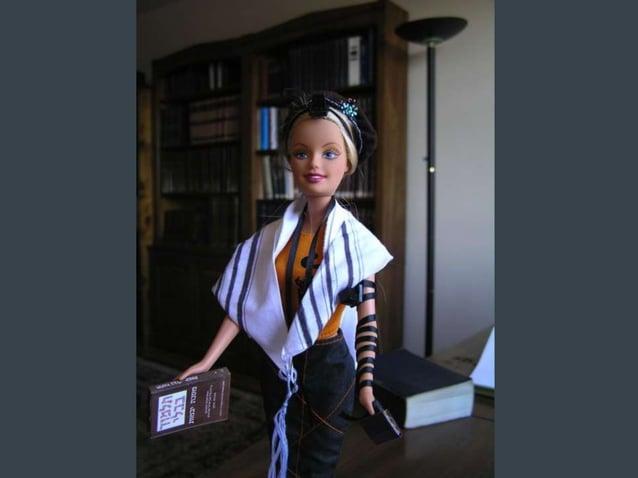

Dad: Your brother forgot his yarmulke. Put your hand on his head, please.
Son: Do I have to be my brother’s kippah?
Two bees are heading to synagogue. One says to the other, “Make sure you’ve got your kippah; we don’t want anybody to think you’re a wasp”.
- There are no kippahs in the Torah
- There are no kippahs in the rest of the Bible
- There are no kippahs in the Mishnah
- We first get some hints of kippot in the Talmud.
- Rav Huna says that he should be rewarded because he never walked more than 4 cubits with his head uncovered (Shabbat 118b:13). A cubit is from your elbow to the tip of your middle finger, or about 18 inches. “Four cubits” is sometimes referred to as “Daled amot”, using Gematria (alpha-numeric code) and Hebrew.
- Rav Nachman bar Yitzchak’s mother was told by astrologers that her son would grow up to be a thief. She had him always cover his head with a cloak so that the fear of Heaven would be on him. One day he was studying under a palm tree and the cloak fell off. He looked up, saw some dates, climbed the tree, and stole the dates with his teeth (Shabbat 156b:6).
- Ravina was studying with his teacher. Somebody walked by and didn’t cover his head. Ravina said to his teacher that the man was disrespecting said teacher. The teacher said that perhaps the man was from a city where rabbis were common, so people there didn’t cover their heads whenever they passed a rabbi because it would become ridiculous (Kiddushin 33a:16).
- Recap: One guy thought he should be rewarded for keeping his head covered, one guy’s mother wanted him to cover his head so he would have fear of Heaven and not be a thief, and one guy thought it was a sign of respect for teachers.
- You can’t read from the Torah or lead services unless you cover your head. You can do your own prayers without covering your head, but some people think you can’t do that because they say that you can’t say G-d’s name with an uncovered head (Soferim 14:15 - 750 CE).
- Torah sages have exceptional modesty and cover their heads [perhaps this means all day?] (Mishneh Torah, Human Dispositions 5:6)
- You should not pray with your head uncovered (Mishneh Torah, Prayer and the Priestly Blessing 5:5)
- Don’t walk more than 4 cubits (72 inches, or 6 feet) with your head uncovered.
- We’ve been kicked out of many places, so perhaps that is why we always keep our heads covered.
No
No, but it might send a message (intended or not) about how you do Judaism. For instance, a colorful knit (technically crocheted) kippah identifies you as being on the more traditional end of Conservative Judaism or the more modern end of Orthodox Judaism, while a black knit kippah identifies you as being “Centrist Orthodox”.
- It depends on “minhag HaMakom”, the custom of the place. If it is the custom of men to cover their heads (Conservative, Orthodox, some Reform, and some Reconstructionist synagogues), then non-Jewish men should too. If it’s optional for Jews of a certain gender in that synagogue, then it’s optional for non-Jews of that gender in that synagogue.
אָמַר רַב נַחְמָן: תֵּיתֵי לִי, דְּקַיֵּימִית שָׁלֹשׁ סְעוּדוֹת בְּשַׁבָּת. אָמַר רַב יְהוּדָה: תֵּיתֵי לִי, דְּקַיֵּימִית עִיּוּן תְּפִלָּה. אָמַר רַב הוּנָא בְּרֵיהּ דְּרַב יְהוֹשֻׁעַ: תֵּיתֵי לִי, דְּלָא סָגֵינָא אַרְבַּע אַמּוֹת בְּגִילּוּי הָרֹאשׁ. אָמַר רַב שֵׁשֶׁת: תֵּיתֵי לִי, דְּקַיֵּימִית מִצְוַת תְּפִילִּין. וְאָמַר רַב נַחְמָן: תֵּיתֵי לִי, דְּקַיֵּימִית מִצְוַת צִיצִית.
Rav Naḥman said: May I receive my reward because I fulfilled the obligation to eat three meals on Shabbat magnificently. Rav Yehuda said: May I receive my reward because I fulfilled the obligation of consideration during prayer. Rav Huna, son of Rav Yehoshua, said: May I receive my reward because I never walked four cubits with my head uncovered. Rav Sheshet said: May I receive my reward because I fulfilled the mitzva of phylacteries magnificently. And Rav Naḥman said: May I receive my reward because I fulfilled the mitzva of ritual fringes magnificently.
וּמִדְּרַב נַחְמָן בַּר יִצְחָק נָמֵי אֵין מַזָּל לְיִשְׂרָאֵל. דְּאִימֵּיהּ דְּרַב נַחְמָן בַּר יִצְחָק אָמְרִי לַהּ כַּלְדָּאֵי: בְּרִיךְ גַּנָּבָא הָוֵה. לָא שְׁבַקְתֵּיהּ גַּלּוֹיֵי רֵישֵׁיהּ. אֲמַרָה לֵיהּ: כַּסִּי רֵישָׁיךָ, כִּי הֵיכִי דְּתִיהְוֵי עֲלָךְ אֵימְתָא דִשְׁמַיָּא, וּבְעִי רַחֲמֵי. לָא הֲוָה יָדַע אַמַּאי קָאָמְרָה לֵיהּ. יוֹמָא חַד יָתֵיב קָא גָרֵיס תּוּתֵי דִיקְלָא, נְפַל גְּלִימָא מֵעִילָּוֵי רֵישֵׁיהּ, דְּלִי עֵינֵיהּ חֲזָא לְדִיקְלָא, אַלְּמֵיהּ יִצְרֵיהּ, סְלֵיק, פַּסְקֵיהּ לְקִיבּוּרָא בְּשִׁינֵּיהּ.
And from that which transpired to Rav Naḥman bar Yitzḥak as well it can be derived that there is no constellation for the Jewish people, As Chaldean astrologers told Rav Naḥman bar Yitzḥak’s mother: Your son will be a thief. She did not allow him to uncover his head. She said to her son: Cover your head so that the fear of Heaven will be upon you, and pray for Divine mercy. He did not know why she said this to him. One day he was sitting and studying beneath a palm tree that did not belong to him, and the cloak fell off of his head. He lifted his eyes and saw the palm tree. He was overcome by impulse and he climbed up and detached a bunch of dates with his teeth. Apparently, he had an inborn inclination to steal, but was able to overcome that inclination with proper education and prayer.
רָבִינָא הֲוָה יָתֵיב קַמֵּיהּ דְּרַבִּי יִרְמְיָה מִדִּיפְתִּי, חֲלַף הָהוּא גַּבְרָא קַמֵּיהּ וְלָא מִיכַּסֵּי רֵישָׁא. אָמַר: כַּמָּה חֲצִיף הָא גַּבְרָא. אֲמַר לֵיהּ: דִּלְמָא מִמָּתָא מַחְסֵיָא נִיהוּ, דְּגִיסִי בַּהּ רַבָּנַן.
The Gemara cites another incident involving honor one demonstrates for his teacher. Once, when Ravina was sitting before Rabbi Yirmeya of Difti, a certain man passed before him and did not cover his head. Ravina said: How rude is this man, who does not show respect by covering his head in honor of a rabbi. Rabbi Yirmeya of Difti said to him: Perhaps he is from the city of Mata Meḥasya, where rabbis are common and the people living there are consequently not as careful to display honor as those in other places.
קטן קורא בתורה ומתרגם אבל אינו פורס את שמע לומר יוצר אור ואינו עובר לפני התיבה ואינו נושא את כפיו: פוחח הנראים כרעיו או בגדיו פרומין או מי שראשו מגולה פורס את שמע ויש אומרים בכרעיו ובגדיו פרומים פורס אבל לא בראשו מגולה אינו רשאי להוציא אזכרה מפיו בין כך ובין כך מתרגם אבל אינו קורא בתורה ואינו עובר לפני התיבה ואינו נושא את כפיו:
A minor may read in the Torah and translate it, but he may not read the parts of the Shema‘ by reciting ‘Who formest light’; nor may he stand before the reading-desk, nor lift up his hands. A poḥeaḥ, that is one whose knees are exposed or whose clothes are torn, or one whose head is uncovered, may read the parts of the Shema‘. Others say that if a person’s knees [are exposed] or his clothes torn he may read the parts of the Shema‘, but one may not do so when his head is uncovered, since it is not permitted to utter the divine names [with uncovered head]. In either case he may translate, but not read in the Torah, nor stand before the reading-desk, nor lift up his hands.
(ו) צְנִיעוּת גְּדוֹלָה נוֹהֲגִים תַּלְמִידֵי חֲכָמִים בְּעַצְמָן. לֹא יִתְבַּזּוּ וְלֹא יִתְגַּלּוּ רֹאשָׁן וְלֹא גּוּפָן. וַאֲפִלּוּ בְּשָׁעָה שֶׁיִּכָּנֵס לְבֵית הַכִּסֵּא יְהֵא צָנוּעַ וְלֹא יְגַלֶּה בְּגָדָיו עַד שֶׁיֵּשֵׁב. וְלֹא יְקַנֵּחַ בְּיָמִין. וְיִתְרַחֵק מִכָּל אָדָם. וְיִכָּנֵס חֶדֶר לִפְנִים מֵחֶדֶר מְעָרָה לִפְנִים מִן הַמְּעָרָה וְנִפְנֶה. וְאִם נִפְנֶה אֲחוֹרֵי הַגָּדֵר יִתְרַחֵק כְּדֵי שֶׁלֹּא יִשְׁמַע חֲבֵרוֹ קוֹלוֹ אִם נִתְעַטֵּשׁ. וְאִם נִפְנֶה בְּבִקְעָה יַרְחִיק כְּדֵי שֶׁלֹּא יִרְאֶה חֲבֵרוֹ פֵּרוּעוֹ. וְלֹא יְדַבֵּר כְּשֶׁהוּא נִפְנֶה אֲפִלּוּ לְצֹרֶךְ גָּדוֹל. וּכְדֶרֶךְ שֶׁנּוֹהֵג צְנִיעוּת בַּיּוֹם בְּבֵית הַכִּסֵּא כָּךְ נוֹהֵג בַּלַּיְלָה. וּלְעוֹלָם יְלַמֵּד אָדָם עַצְמוֹ לְהִפָּנוֹת שַׁחֲרִית וְעַרְבִית בִּלְבַד כְּדֵי שֶׁלֹּא יִתְרַחֵק:
(6) Torah Sages conduct themselves with exceptional modesty. They do not demean themselves and do not bare their heads or their bodies.
Even when one enters a latrine, he should be modest and not uncover himself until he is seated. He should not wipe himself clean with the right hand. He should stay away from all others and enter a chamber beyond a chamber, a cave within a cave, and relieve himself. If he [must] relieve himself behind a fence, he should move far enough away that no one can hear the sound if he breaks wind. If he [must] relieve himself in an open area, he should be far enough off so that no one can see him baring himself.
One should not speak while relieving himself, even if there is great need. Just as he conducts himself with modesty while in the latrine by day, he should [also] do so at night.
One should always train himself to relieve himself in the early morning and after dark only, so that he [need] not go far off.
(ה) תִּקּוּן הַמַּלְבּוּשִׁים כֵּיצַד. מְתַקֵּן מַלְבּוּשָׁיו תְּחִלָּה וּמְצַיֵּן עַצְמוֹ וּמְהַדֵּר שֶׁנֶּאֱמַר הִשְׁתַּחֲווּ לַה׳ בְּהַדְרַת קֹדֶשׁ. וְלֹא יַעֲמֹד בִּתְפִלָּה בַּאֲפוּנְדָתוֹ, וְלֹא בְּרֹאשׁ מְגֻלֶּה, וְלֹא בְּרַגְלַיִם מְגֻלּוֹת אִם דֶּרֶךְ אַנְשֵׁי הַמָּקוֹם שֶׁלֹּא יַעַמְדוּ בִּפְנֵי הַגְּדוֹלִים אֶלָּא בְּבָתֵּי הָרַגְלַיִם. וּבְכָל מָקוֹם לֹא יֶאֱחֹז תְּפִלִּין בְּיָדוֹ וְסֵפֶר תּוֹרָה בִּזְרוֹעוֹ וְיִתְפַּלֵּל מִפְּנֵי שֶׁלִּבּוֹ טָרוּד בָּהֶן. וְלֹא יֶאֱחֹז כֵּלִים וּמָעוֹת בְּיָדוֹ. אֲבָל מִתְפַּלֵּל הוּא וְלוּלָב בְּיָדוֹ בִּימוֹת הֶחָג מִפְּנֵי שֶׁהוּא מִצְוַת הַיּוֹם. הָיָה מַשּׂוֹי עַל רֹאשׁוֹ וְהִגִּיעַ זְמַן תְּפִלָּה אִם הָיָה פָּחוֹת מֵאַרְבָּעָה קַבִּין מַפְשִׁילוֹ לַאֲחוֹרָיו וּמִתְפַּלֵּל בּוֹ. הָיָה אַרְבָּעָה קַבִּין מַנִּיחוֹ עַל גַּבֵּי קַרְקַע וְאַחַר כָּךְ יִתְפַּלֵּל. דֶּרֶךְ כָּל הַחֲכָמִים וְתַלְמִידֵיהֶם שֶׁלֹּא יִתְפַּלְּלוּ אֶלָּא כְּשֶׁהֵן עֲטוּפִים:
(5) Proper clothing: What is implied?
One should adjust his clothing and make himself neat and presentable before [praying], as [implied by Psalms 29:2]: "They bow to God in resplendent holiness."
One should not pray wearing [only] his undershirt, bareheaded, or barefoot - if it is the custom of the people of that place to stand before their most respected people with shoes.
In all places, one should not hold tefillin in his hand or a Sefer Torah in his arms during the Amidah, since he will worry about them. [Similarly,] one should not hold utensils or money in his hand. However, he may pray while holding his lulav on Sukkot, since it is the commandment of the day.
If one is carrying a burden of less than four kabbim on his head when the time for the Amidah arrives, he should throw it over his shoulder and pray. If it is larger than four kabbim, he should place it on the ground and then pray.
It is customary for all Sages and their students to pray only when wrapped in a tallit.
(ו) אסור לילך בקומה זקופה ולא ילך ד' אמות בגילוי הראש ויבדוק נקביו: הגה ויכסה כל גופו ולא ילך יחף (א"ז) וירגיל עצמו לפנות בוקר וערב שהוא זריזות ונקיות (הגהות מיימוני פ' ה' מה' דעות):
(6) It is forbidden to walk in an [overly] upright posture, and one should not walk [a distance of] four amot with the head uncovered (out of respect for the Divine Presence), and one should examine one's orifices [to ensure they are kept clean]. Rem"a: And one should cover his entire body, and should not go barefoot (Or Zarua). And One should accustom oneself to relieve oneself morning and evening, which is [included in the virtues of] alacrity and cleanliness (Hagahot Maimoni Chap 5 of Hilchot Deot).
Orthodox Jewish men keep their heads covered at all times, wearing a skull cap, or kippah (a Yiddish word for the cap is yarmulka). Although some Jews do not wear kippot at all, most non-Orthodox Jews wear them at prayer, in the synagogue, or when they study the Bible or Talmud. The head covering may be used to proclaim that the human being is subject to God, as did Rabbi Huna, who "never walked four cubits with uncovered head, for he used to say: the Shekhina, God's presence, resides above my head" (Kiddushin 31a). The head covering has become a symbol of Jewish self-affirmation in society.
No Jewish custom is more difficult to explain than the wearing of a hat in the synagogue. The Torah has no ruling about it. The Talmud observes simply: "Men sometimes have their heads covered, and sometimes go bareheaded; women always cover their heads; children always go bareheaded" (B.T. Nedarim 30b). This pointed to complete freedom of choice as far as men were concerned.
Male head covering may perhaps have become fixed in deliberate opposition to Christianity. Paul rebuked those kept their head covered in prayer (1 Corinthians 11:2-5). In pronounced contrast, Jews insisted that men wear hats when praying or reading from the Torah.
In the Shulchan Arukh, Jewish code of law, we find three rulings that were gathered in from ordinances issued at various times. Each is more restrictive than the one preceding, indicating a process of evolution, and, perhaps, mirroring the increasing outside pressure upon the Jews. In viewing these laws, we conclude that law and custom had remained fluid until very late in Jewish history, hardening at a period when external oppression, internal strictness, and literal interpretation reached their height.
Another explanation may be suggested. In the Middle Ages the king, as the Head of State, kept his head covered while his courtiers bared theirs as a sign of humility. In the same manner, the Torah reader, as spokesman for God, was to have his head covered, symbolically expressing the majesty of God, the Head, whose word he proclaimed. Further, to the medieval Jew, the Jew-hat was a mark of humiliation imposed by the Christian community. He may have responded by making it a badge of honor. Forced upon him as a sign of shame, it became for him an emblem of proud self-identification. In the synagogue, where he was free to develop his own pattern of conduct, he insisted on the hat, as if to say: You force us to wear a hat in the street in distinction from you. We choose to wear it in the House of God, where you remove it, for we deem ourselves royal princes rather than outcasts, and may keep our heads covered in the presence of the King of Kings. Thus the hat of humiliation was transformed into a crown of distinction, a token of self-identification, the symbol of Jewish pride and self-respect.
This emotional attachment may explain why Jews have held on to to the wearing of the hat with such tenacity. As a custom, anchored in the emotions of the people, the covering of the head has exerted a greater power than many a well-established law that has been modified or abolished. No change in Jewish practice has met with greater resistance than the rule of American Reform Judaism permitting worship with uncovered heads. In many Reform congregations, rabbis and cantors again wear kippot and their use is growing among the members -- men and women alike.
- P. 365-366
וְאָמַר רַב חֲנַנְאֵל, אָמַר רַב: תִּיתּוּרָא דִּתְפִילִּין הֲלָכָה לְמֹשֶׁה מִסִּינַי. אָמַר אַבָּיֵי: מַעְבַּרְתָּא דִּתְפִילִּין הֲלָכָה לְמֹשֶׁה מִסִּינַי. וְאָמַר אַבָּיֵי: שִׁי״ן שֶׁל תְּפִילִּין הֲלָכָה לְמֹשֶׁה מִסִּינַי. וְצָרִיךְ שֶׁיַּגִּיעַ חָרִיץ לִמְקוֹם הַתֶּפֶר, רַב דִּימִי מִנְּהַרְדְּעָא אָמַר: כֵּיוָן דְּמִנְּכַר, לָא צְרִיךְ. וְאָמַר אַבָּיֵי: הַאי קִילְפָּא דִּתְפִילִּין צָרִיךְ לְמִיבְדְּקֵיהּ, דְּדִילְמָא אִית בַּהּ רֵיעוּתָא, וּבָעֵינָא כְּתִיבָה תַּמָּה וְלֵיכָּא. רַב דִּימִי מִנְּהַרְדְּעָא אָמַר: לָא צְרִיךְ, קוּלְמוֹסָא בָּדֵיק לַהּ. אָמַר רַבִּי יִצְחָק: רְצוּעוֹת שְׁחוֹרוֹת הֲלָכָה לְמֹשֶׁה מִסִּינַי. מֵיתִיבִי: תְּפִילִּין אֵין קוֹשְׁרִין אוֹתָן אֶלָּא בְּמִינָן, בֵּין יְרוּקּוֹת בֵּין שְׁחוֹרוֹת בֵּין לְבָנוֹת, אֲדוּמּוֹת לֹא יַעֲשֶׂה, מִפְּנֵי גְּנַאי וְדָבָר אַחֵר. אָמַר רַבִּי יְהוּדָה: מַעֲשֶׂה בְּתַלְמִידוֹ שֶׁל רַבִּי עֲקִיבָא שֶׁהָיָה קוֹשֵׁר תְּפִילָּיו בִּלְשׁוֹנוֹת שֶׁל תְּכֵלֶת, וְלָא אָמַר לוֹ דָּבָר. אִיפְשָׁר אוֹתוֹ צַדִּיק רָאָה תַּלְמִידוֹ וְלֹא מִיחָה בּוֹ? אָמַר לוֹ: הֵן, לֹא רָאָה אוֹתוֹ, וְאִם רָאָה אוֹתוֹ לֹא הָיָה מַנִּיחוֹ. מַעֲשֶׂה בְּהוּרְקָנוֹס בְּנוֹ שֶׁל רַבִּי אֱלִיעֶזֶר בֶּן הוּרְקָנוֹס, שֶׁהָיָה קוֹשֵׁר תְּפִילָּיו בִּלְשׁוֹנוֹת שֶׁל אַרְגָּמָן, וְלֹא אָמַר לוֹ דָּבָר. אִיפְשָׁר אוֹתוֹ צַדִּיק רָאָה בְּנוֹ וְלֹא מִיחָה בּוֹ? אָמְרוּ לוֹ: הֵן, לֹא רָאָה אוֹתוֹ, וְאִם רָאָה אוֹתוֹ לֹא הָיָה מַנִּיחוֹ. קָתָנֵי מִיהָא, בֵּין יְרוּקּוֹת בֵּין שְׁחוֹרוֹת וּבֵין לְבָנוֹת. לָא קַשְׁיָא: כָּאן – מִבִּפְנִים, כָּאן – מִבַּחוּץ. אִי מִבִּפְנִים, מַאי גְּנַאי וְדָבָר אַחֵר אִיכָּא? זִימְנִין דְּמִתְהַפְכִין לֵיהּ. תָּנָא: תְּפִילִּין מְרוּבָּעוֹת – הֲלָכָה לְמֹשֶׁה מִסִּינַי. אָמַר רַב פָּפָּא: בְּתִפְרָן וּבַאֲלַכְסוֹנָן. לֵימָא מְסַיַּיע לֵיהּ: הָעוֹשֶׂה תְּפִילָּתוֹ עֲגוּלָּה – סַכָּנָה וְאֵין בָּהּ מִצְוָה. אָמַר רַב פָּפָּא: מַתְנִיתִין דַּעֲבִידָא כִּי אַמְגּוּזָא. אָמַר רַב הוּנָא: תְּפִילִּין, כָּל זְמַן שֶׁפְּנֵי טַבְלָא קַיֶּימֶת – כְּשֵׁירוֹת. רַב חִסְדָּא אָמַר: נִפְסְקוּ שְׁתַּיִם – כְּשֵׁירוֹת, שָׁלֹשׁ – פְּסוּלוֹת. אָמַר רָבָא: הָא דְּאָמְרַתְּ שְׁתַּיִם כְּשֵׁירוֹת, לָא אֲמַרַן אֶלָּא זֶה שֶׁלֹּא כְּנֶגֶד זֶה, אֲבָל זֶה כְּנֶגֶד זֶה – פְּסוּלוֹת. וְזֶה כְּנֶגֶד זֶה נָמֵי לָא אֲמַרַן אֶלָּא בְּחַדְתָּתָא, אֲבָל בְּעַתִּיקָתָא לֵית לַן בַּהּ. אֲמַר לֵיהּ אַבָּיֵי לְרַב יוֹסֵף: הֵיכִי דָּמְיָין חַדְתָּתָא, וְהֵיכִי דָּמְיָין עַתִּיקָתָא? אֲמַר לֵיהּ: כֹּל הֵיכָא כִּי מִיתְּלֵי בֵּיהּ בְּשִׁלְחָא וַהֲדַר חָלֵים – עַתִּיקָתָא, וְאִידַּךְ – חַדְתָּתָא. וְאִי נָמֵי כֹּל הֵיכִי דְּכִי מִיתְּלֵי בֵּיהּ בְּמִתְנָא אַתְיֵיהּ אַבָּתְרֵיהּ – חַדְתָּתָא, וְאִידָּךְ – עַתִּיקָתָא. אַבָּיֵי הֲוָה יָתֵיב קַמֵּיהּ דְּרַב יוֹסֵף, אִיפְּסִיק לֵיהּ רְצוּעָה דִּתְפִילֵּי, אֲמַר לֵיהּ: מַהוּ לְמִיקְטְרֵיהּ? אֲמַר לֵיהּ: ״וּקְשַׁרְתָּם״ כְּתִיב, שֶׁתְּהֵא קְשִׁירָה תַּמָּה. אֲמַר לֵיהּ רַב אַחָא בְּרֵיהּ דְּרַב יוֹסֵף לְרַב אָשֵׁי: מַהוּ לְמִיתְפְּרֵיהּ וְעַיֹּילֵיהּ לִתְפִירָה לְגָאו? אֲמַר: פּוֹק חֲזִי מָה עַמָּא דָּבַר. אָמַר רַב פָּפָּא: גַּרְדּוּמֵּי רְצוּעוֹת כְּשֵׁירוֹת, וְלָאו מִילְּתָא הִיא, מִדְּאָמְרִי בְּנֵי רַבִּי חִיָּיא: גַּרְדּוּמֵּי תְכֵלֶת וְגַרְדּוּמֵּי אֵזוֹב כְּשֵׁירִין. הָתָם הוּא דְּתַשְׁמִישֵׁי מִצְוָה נִינְהוּ, אֲבָל הָכָא דְּתַשְׁמִישֵׁי קְדוּשָּׁה נִינְהוּ – לָא. מִכְּלָל דְּאִית לְהוּ שִׁיעוּרָא, וְכַמָּה שִׁיעוּרַיְיהוּ? אָמַר רָמֵי בַּר חָמָא אָמַר רֵישׁ לָקִישׁ: עַד אֶצְבַּע צְרֵדָה. רַב כָּהֲנָא מַחְוֵי כָּפוּף, רַב אָשֵׁי מַחְוֵי פָּשׁוּט. רַבָּה קָטַר לְהוּ וּפָשֵׁיט וְשָׁדֵי לְהוּ, רַב אַחָא בַּר יַעֲקֹב קָטַר לְהוּ וּמְתַלֵּית לְהוּ, מָר בְּרֵיהּ דְּרַבְנָא עָבֵיד כְּדִידַן. אָמַר רַב יְהוּדָה בְּרֵיהּ דְּרַב שְׁמוּאֵל בַּר שִׁילַת מִשְּׁמֵיהּ דְּרַב: קֶשֶׁר שֶׁל תְּפִילִּין הֲלָכָה לְמֹשֶׁה מִסִּינַי. אָמַר רַב נַחְמָן: וְנוֹיֵיהֶן לְבַר. רַב אָשֵׁי הֲוָה יָתֵיב קַמֵּיהּ דְּמָר זוּטְרָא, אִיתְהַפְכָא לֵיהּ רְצוּעָה דִתְפִילִּין. אֲמַר לֵיהּ: לָא סָבַר לַהּ מָר וְנוֹיֵיהֶן לְבַר? אֲמַר לֵיהּ: לָאו אַדַּעְתַּאי. ״וְרָאוּ כׇּל עַמֵּי הָאָרֶץ כִּי שֵׁם ה׳ נִקְרָא עָלֶיךָ וְיָרְאוּ מִמֶּךָּ״, תַּנְיָא, רַבִּי אֱלִיעֶזֶר הַגָּדוֹל אוֹמֵר: אֵלּוּ תְּפִילִּין שֶׁבָּרֹאשׁ. ״וַהֲסִרֹתִי אֶת כַּפִּי וְרָאִיתָ אֶת אֲחֹרָי״, אָמַר רַב חָנָא בַּר בִּיזְנָא אָמַר רַבִּי שִׁמְעוֹן חֲסִידָא: מְלַמֵּד שֶׁהֶרְאָה לוֹ הַקָּדוֹשׁ בָּרוּךְ הוּא לְמֹשֶׁה קֶשֶׁר שֶׁל תְּפִילִּין. אָמַר רַב יְהוּדָה: קֶשֶׁר שֶׁל תְּפִילִּין צָרִיךְ שֶׁיְּהֵא לְמַעְלָה, כְּדֵי שֶׁיְּהוּ יִשְׂרָאֵל לְמַעְלָה וְלֹא לְמַטָּה, וְצָרִיךְ שֶׁיְּהֵא כְּלַפֵּי פָּנִים, כְּדֵי שֶׁיְּהוּ יִשְׂרָאֵל לְפָנִים וְלֹא לְאָחוֹר. אָמַר רַב שְׁמוּאֵל בַּר בֵּידָרֵי אָמַר רַב, וְאָמְרִי לַהּ אָמַר רַבִּי אַחָא אֲרִיכָא אָמַר רַב הוּנָא, וְאָמְרִי לַהּ אָמַר רַב מְנַשְּׁיָא אָמַר שְׁמוּאֵל: תְּפִילִּין מֵאֵימָתַי מְבָרֵךְ עֲלֵיהֶן? מִשְּׁעַת הַנָּחָתָן. אִינִי? וְהָא אָמַר רַב יְהוּדָה אָמַר שְׁמוּאֵל: כׇּל הַמִּצְוֹת כּוּלָּן מְבָרֵךְ עֲלֵיהֶן עוֹבֵר לַעֲשִׂיָּיתָן! אַבָּיֵי וְרָבָא דְּאָמְרִי תַּרְוַיְיהוּ: מִשְּׁעַת הַנָּחָה וְעַד שְׁעַת קְשִׁירָה. אָמַר רַב חִסְדָּא: סָח בֵּין תְּפִילָּה לִתְפִילָּה חוֹזֵר וּמְבָרֵךְ. סָח – אִין, לֹא סָח – לָא? וְהָא שְׁלַח רַב חִיָּיא בְּרֵיהּ דְּרַב הוּנָא מִשְּׁמֵיהּ דְּרַבִּי יוֹחָנָן: עַל תְּפִילָּה שֶׁל יָד אוֹמֵר ״בָּרוּךְ אֲשֶׁר קִדְּשָׁנוּ בְּמִצְוֹתָיו וְצִוָּנוּ לְהַנִּיחַ תְּפִילִּין״, עַל תְּפִילִּין שֶׁל רֹאשׁ אוֹמֵר ״בָּרוּךְ אֲשֶׁר קִדְּשָׁנוּ בְּמִצְוֹתָיו וְצִוָּנוּ עַל מִצְוַת תְּפִילִּין״. אַבָּיֵי וְרָבָא דְּאָמְרִי תַּרְוַיְיהוּ: לֹא סָח – מְבָרֵךְ אַחַת, סָח – מְבָרֵךְ שְׁתַּיִם. תָּנָא: סָח בֵּין תְּפִילָּה לִתְפִילָּה – עֲבֵירָה הִיא בְּיָדוֹ, וְחוֹזֵר עָלֶיהָ מֵעֶרְכֵי הַמִּלְחָמָה. תָּנָא: כְּשֶׁהוּא מַנִּיחַ – מַנִּיחַ שֶׁל יָד, וְאַחַר כָּךְ מַנִּיחַ שֶׁל רֹאשׁ, וּכְשֶׁהוּא חוֹלֵץ – חוֹלֵץ שֶׁל רֹאשׁ, וְאַחַר כָּךְ חוֹלֵץ שֶׁל יָד. בִּשְׁלָמָא כְּשֶׁהוּא מַנִּיחַ – מַנִּיחַ שֶׁל יָד וְאַחַר כָּךְ מַנִּיחַ שֶׁל רֹאשׁ, דִּכְתִיב: ״וּקְשַׁרְתָּם לְאוֹת עַל יָדֶךָ״, וַהֲדַר ״וְהָיוּ לְטוֹטָפֹת בֵּין עֵינֶיךָ״. אֶלָּא כְּשֶׁהוּא חוֹלֵץ, חוֹלֵץ שֶׁל רֹאשׁ וְאַחַר כָּךְ חוֹלֵץ שֶׁל יָד, מְנָלַן? אָמַר רַבָּה: רַב הוּנָא אַסְבְּרַאּ לִי, אָמַר קְרָא: ״וְהָיוּ לְטוֹטָפֹת בֵּין עֵינֶיךָ״, כׇּל זְמַן שֶׁבֵּין עֵינֶיךָ יְהוּ שְׁתַּיִם. תָּנוּ רַבָּנַן: תְּפִילִּין מֵאֵימָתַי מְבָרֵךְ עֲלֵיהֶן? מִשְּׁעַת הַנָּחָתָן. כֵּיצַד? הָיָה מַשְׁכִּים לָצֵאת לַדֶּרֶךְ וּמִתְיָירֵא שֶׁמָּא יֹאבֵדוּ – מַנִּיחָן, וּכְשֶׁיַּגִּיעַ זְמַנָּן מְמַשְׁמֵשׁ בָּהֶן וּמְבָרֵךְ עֲלֵיהֶן. וְעַד מָתַי מַנִּיחָן? עַד שֶׁתִּשְׁקַע הַחַמָּה. רַבִּי יַעֲקֹב אוֹמֵר: עַד שֶׁתִּכְלֶה רֶגֶל מִן הַשּׁוּק, וַחֲכָמִים אוֹמְרִים: עַד זְמַן שֵׁינָה. וּמוֹדִים חֲכָמִים לְרַבִּי יַעֲקֹב שֶׁאִם חֲלָצָן לָצֵאת לְבֵית הַכִּסֵּא אוֹ לִיכָּנֵס לְבֵית הַמֶּרְחָץ וְשָׁקְעָה חַמָּה – שׁוּב אֵינוֹ חוֹזֵר וּמַנִּיחָן. אָמַר רַב נַחְמָן: הֲלָכָה כְּרַבִּי יַעֲקֹב. רַב חִסְדָּא וְרַבָּה בַּר רַב הוּנָא מְצַלּוּ בְּהוּ בְּאוּרְתָּא. אִיכָּא דְּאָמְרִי: אֵין הֲלָכָה כְּרַבִּי יַעֲקֹב. וְהָא רַב חִסְדָּא וְרַבָּה בַּר רַב הוּנָא מְצַלּוּ בְּהוּ בְּאוּרְתָּא? הָהוּא פְּלִיגָא. וּמִי אָמַר רַבָּה בַּר רַב הוּנָא הָכִי? וְהָא אָמַר רַבָּה בַּר רַב הוּנָא: סָפֵק חֲשֵׁיכָה סָפֵק (לָא) [אֵין] חֲשֵׁיכָה – לֹא חוֹלֵץ וְלֹא מַנִּיחַ, הָא וַדַּאי חֲשֵׁיכָה – חוֹלֵץ! הָתָם בְּעֶרֶב שַׁבָּת אִיתְּמַר. מַאי קָסָבַר? אִי קָסָבַר לַיְלָה זְמַן תְּפִילִּין, שַׁבָּת נָמֵי זְמַן תְּפִילִּין. אִי קָסָבַר שַׁבָּת לָאו זְמַן תְּפִילִּין, לַיְלָה נָמֵי לָאו זְמַן תְּפִילִּין, דְּמֵהֵיכָא דְּמִמַּעֲטָא שַׁבָּת מֵהָתָם מִמַּעֲטִי לֵילוֹת. דְּתַנְיָא: ״וְשָׁמַרְתָּ אֶת הַחֻקָּה הַזֹּאת לְמוֹעֲדָהּ מִיָּמִים יָמִימָה״ – ״יָמִים״ וְלֹא לֵילוֹת, ״מִיָּמִים״ וְלֹא כׇּל יָמִים, פְּרָט לְשַׁבָּתוֹת וְיָמִים טוֹבִים, דִּבְרֵי רַבִּי יוֹסֵי הַגְּלִילִי. רַבִּי עֲקִיבָא אוֹמֵר: לֹא נֶאֶמְרָה חוּקָּה זוֹ אֶלָּא לְפֶסַח בִּלְבָד. נָפְקָא לֵיהּ מֵהֵיכָא דְּנָפְקָא לֵיהּ לְרַבִּי עֲקִיבָא, דְּתַנְיָא: רַבִּי עֲקִיבָא אוֹמֵר: יָכוֹל יַנִּיחַ אָדָם תְּפִילִּין בְּשַׁבָּתוֹת וּבְיָמִים טוֹבִים? תַּלְמוּד לוֹמַר: ״וְהָיָה לְאוֹת עַל יָדְךָ וּלְטוֹטָפֹת בֵּין עֵינֶיךָ״ – מִי שֶׁצְּרִיכִין אוֹת, יָצְאוּ שַׁבָּתוֹת וְיָמִים טוֹבִים שֶׁהֵן גּוּפָן אוֹת. אָמַר רַבִּי אֶלְעָזָר: כׇּל הַמַּנִּיחַ תְּפִילִּין אַחַר שְׁקִיעַת הַחַמָּה עוֹבֵר בַּעֲשֵׂה, וְרַבִּי יוֹחָנָן אָמַר: עוֹבֵר בְּלָאו. לֵימָא בְּרַבִּי אָבִין אָמַר רַבִּי אִילְעָא קָא מִיפַּלְגִי, דְּאָמַר רַבִּי אָבִין אָמַר רַבִּי אִילְעָא: כׇּל מָקוֹם שֶׁנֶּאֱמַר ״הִשָּׁמֶר״ ״פֶּן״ וְ״אַל״ אֵינוֹ אֶלָּא לֹא תַעֲשֶׂה. דְּמָר אִית לֵיהּ דְּרַבִּי אָבִין, וּמָר לֵית לֵיהּ דְּרַבִּי אָבִין. לָא, דְּכוּלֵּי עָלְמָא אִית לְהוּ דְּרַבִּי אָבִין אָמַר רַבִּי אִילְעָא, וְהָכָא בְּהָא קָא מִיפַּלְגִי: מָר סָבַר ״הִשָּׁמֶר״ דְּלָאו – לָאו, וְ״הִשָּׁמֶר״ דַּעֲשֵׂה – עֲשֵׂה, וּמָר סָבַר ״הִשָּׁמֶר״ דַּעֲשֵׂה נָמֵי לָאו. וְאָמַר רַבִּי אֶלְעָזָר: וְאִם לְשׇׁמְרָן – מוּתָּר. וְאָמַר רָבִינָא: הֲוָה יָתֵיבְנָא קַמֵּיהּ דְּרַב אָשֵׁי וְחָשַׁךְ, וְהִנִּיחַ תְּפִילִּין, וַאֲמַרִי לֵיהּ: לְשׇׁמְרָן קָא בָעֵי לְהוּ מָר? וַאֲמַר לִי: אִין. וַחֲזֵיתֵיהּ לְדַעְתֵּיהּ דְּלָאו לְשׇׁמְרָן הוּא בָּעֵי, קָסָבַר: הֲלָכָה וְאֵין מוֹרִין כֵּן. אָמַר רַבָּה בַּר רַב הוּנָא: חַיָּיב אָדָם לְמַשְׁמֵשׁ בַּתְּפִילִּין בְּכׇל שָׁעָה, קַל וָחוֹמֶר מִצִּיץ, וּמָה צִיץ שֶׁאֵין בּוֹ אֶלָּא אַזְכָּרָה אַחַת, אָמְרָה תּוֹרָה: ״וְהָיָה עַל מִצְחוֹ תָּמִיד״, שֶׁלֹּא (תַּסִּיחַ) [יַסִּיחַ] דַּעְתּוֹ מִמֶּנּוּ, תְּפִילִּין שֶׁיֵּשׁ בָּהֶן אַזְכָּרוֹת הַרְבֵּה, עַל אַחַת כַּמָּה וְכַמָּה! תָּנוּ רַבָּנַן: ״יָדְךָ״ – זוֹ שְׂמֹאל. אַתָּה אוֹמֵר שְׂמֹאל, אוֹ אֵינוֹ אֶלָּא יָמִין? תַּלְמוּד לוֹמַר: ״אַף יָדִי יָסְדָה אֶרֶץ וִימִינִי טִפְּחָה שָׁמָיִם״, וְאוֹמֵר: ״יָדָהּ לַיָּתֵד תִּשְׁלַחְנָה וִימִינָהּ לְהַלְמוּת עֲמֵלִים״, וְאוֹמֵר: ״לָמָּה תָשִׁיב יָדְךָ וִימִינֶךָ מִקֶּרֶב חֵיקְךָ כַלֵּה״. רַבִּי יוֹסֵי הַחוֹרָם אוֹמֵר: מָצִינוּ יָמִין שֶׁנִּקְרָא יָד, שֶׁנֶּאֱמַר: ״וַיַּרְא יוֹסֵף כִּי יָשִׁית אָבִיו יַד יְמִינוֹ״. וְאִידַּךְ – ״יַד יְמִינוֹ״ אִיקְּרִי, ״יָד״ סְתָמָא לָא אִיקְּרִי. רַבִּי נָתָן אוֹמֵר: אֵינוֹ צָרִיךְ, הֲרֵי הוּא אוֹמֵר: ״וּקְשַׁרְתָּם״ ״וּכְתַבְתָּם״ – מָה כְּתִיבָה בְּיָמִין, אַף קְשִׁירָה בְּיָמִין, וְכֵיוָן דִּקְשִׁירָה בְּיָמִין – הַנָּחָה בִּשְׂמֹאל הִיא. וְרַבִּי יוֹסֵי הַחוֹרָם, הַנָּחָה דְּבִשְׂמֹאל מְנָא לֵיהּ? נָפְקָא לֵיהּ מֵהֵיכָא דְּנָפְקָא לֵיהּ לְרַבִּי נָתָן. רַב אָשֵׁי אָמַר: מִ״יָּדְכָה״ כְּתִיב, בְּהֵ״י כֵּהָה. אֲמַר לֵיהּ רַבִּי אַבָּא לְרַב אָשֵׁי: וְאֵימָא ״יָדְךָ״ שֶׁבְּכֹחַ? אֲמַר לֵיהּ: מִי כְּתִיב בְּחֵי״ת? כְּתַנָּאֵי: ״יָדְכָה״ בְּהֵ״י – זוֹ שְׂמֹאל, אֲחֵרִים אוֹמְרִים: ״יָדְךָ״ לְרַבּוֹת אֶת הַגִּידֵּם. תַּנְיָא אִידַּךְ: אֵין לוֹ זְרוֹעַ – פָּטוּר מִן הַתְּפִילִּין, אֲחֵרִים אוֹמְרִים: ״יָדְכָה״ לְרַבּוֹת אֶת הַגִּידֵּם. תָּנוּ רַבָּנַן: אִטֵּר מַנִּיחַ תְּפִילִּין בִּימִינוֹ, שֶׁהוּא שְׂמֹאלוֹ. וְהָתַנְיָא: מַנִּיחַ בִּשְׂמֹאלוֹ שֶׁהוּא שְׂמֹאלוֹ שֶׁל כׇּל אָדָם! אֲמַר אַבָּיֵי: כִּי תַּנְיָא הָהִיא בְּשׁוֹלֵט בִּשְׁתֵּי יָדָיו. תָּנָא דְּבֵי מְנַשֶּׁה: ״עַל יָדְךָ״ – זוֹ קִיבּוֹרֶת, ״בֵּין עֵינֶיךָ״ – זוֹ קׇדְקֹד. הֵיכָא? אָמְרִי דְּבֵי רַבִּי יַנַּאי: מְקוֹם שֶׁמּוֹחוֹ שֶׁל תִּינוֹק רוֹפֵס. בְּעָא מִינֵּיהּ פְּלֵימוֹ מֵרַבִּי: מִי שֶׁיֵּשׁ לוֹ שְׁנֵי רָאשִׁים, בְּאֵיזֶה מֵהֶן מַנִּיחַ תְּפִילִּין? אֲמַר לֵיהּ: אוֹ קוּם גְּלִי, אוֹ קַבֵּל עֲלָךְ שַׁמְתָּא. אַדְּהָכִי אֲתָא הָהוּא גַּבְרָא, אֲמַר לֵיהּ: אִיתְיְלִיד לִי יָנוֹקָא דְּאִית לֵיהּ תְּרֵי רֵישֵׁי, כַּמָּה בָּעֵינָא לְמִיתַּב לְכֹהֵן? אֲתָא הָהוּא סָבָא תְּנָא לֵיהּ: חַיָּיב לִיתֵּן לוֹ עֲשָׂרָה סְלָעִים. אִינִי? וְהָתָנֵי רָמֵי בַּר חָמָא: מִתּוֹךְ שֶׁנֶּאֱמַר ״פָּדֹה תִפְדֶּה אֵת בְּכוֹר הָאָדָם״, שׁוֹמֵעַ אֲנִי אֲפִילּוּ נִטְרַף בְּתוֹךְ שְׁלֹשִׁים, תַּלְמוּד לוֹמַר ״אַךְ״ – חִלֵּק, שָׁאנֵי הָכָא דִּבְגוּלְגּוֹלֶת תְּלָא רַחֲמָנָא. אָמַר מָר: ״יָדְךָ״ זוֹ קִיבּוֹרֶת, מְנָלַן? דְּתָנוּ רַבָּנַן: ״עַל יָדְךָ״ – זוֹ גּוֹבַהּ שֶׁבַּיָּד. אַתָּה אוֹמֵר: זוֹ גּוֹבַהּ שֶׁבַּיָּד, אוֹ אֵינוֹ אֶלָּא עַל יָדְךָ מַמָּשׁ? אָמְרָה תּוֹרָה: הַנַּח תְּפִילִּין בַּיָּד וְהַנַּח תְּפִילִּין בָּרֹאשׁ, מָה לְהַלָּן בְּגוֹבַהּ שֶׁבָּרֹאשׁ – אַף כָּאן בְּגוֹבַהּ שֶׁבַּיָּד. רַבִּי אֱלִיעֶזֶר אוֹמֵר: אֵינוֹ צָרִיךְ, הֲרֵי הוּא אוֹמֵר: ״וְהָיָה לְךָ לְאוֹת״, לְךָ לְאוֹת וְלֹא לַאֲחֵרִים לְאוֹת. רַבִּי יִצְחָק אוֹמֵר: אֵינוֹ צָרִיךְ, הֲרֵי הוּא אוֹמֵר: ״וְשַׂמְתֶּם אֶת דְּבָרַי אֵלֶּה עַל לְבַבְכֶם ... וּקְשַׁרְתָּם״, שֶׁתְּהֵא שִׂימָה כְּנֶגֶד הַלֵּב. רַבִּי חִיָּיא וְרַב אַחָא בְּרֵיהּ דְּרַב אַוְיָא מְכַוֵּין וּמַנַּח לֵיהּ לַהֲדֵי לִיבֵּיהּ. רַב אָשֵׁי הֲוָה יָתֵיב קַמֵּיהּ דְּאַמֵּימָר, הֲוָה צִירְיָא בִּידֵיהּ וְקָא מִתְחַזְיָין תְּפִילִּין. אֲמַר לֵיהּ: לָא סָבַר לַהּ מָר ״לְךָ לְאוֹת״ וְלֹא לַאֲחֵרִים לְאוֹת? אֲמַר לֵיהּ: בִּמְקוֹם ״לְךָ לְאוֹת״ אִיתְּמַר. גּוֹבַהּ שֶׁבָּרֹאשׁ, מְנָלַן? דְּתָנוּ רַבָּנַן: ״בֵּין עֵינֶיךָ״ – זוֹ גּוֹבַהּ שֶׁבָּרֹאשׁ. אַתָּה אוֹמֵר זוֹ גּוֹבַהּ שֶׁבָּרֹאשׁ, אוֹ אֵינוֹ אֶלָּא בֵּין עֵינֶיךָ מַמָּשׁ? נֶאֱמַר כָּאן ״בֵּין עֵינֶיךָ״, וְנֶאֱמַר לְהַלָּן ״לֹא תָשִׂימוּ קׇרְחָה בֵּין עֵינֵיכֶם לָמֵת״. מָה לְהַלָּן בְּגוֹבַהּ שֶׁבָּרֹאשׁ, מְקוֹם שֶׁעוֹשֶׂה קׇרְחָה – אַף כָּאן בְּגוֹבַהּ שֶׁל רֹאשׁ, מְקוֹם שֶׁעוֹשֶׂה קׇרְחָה. רַבִּי יְהוּדָה אוֹמֵר: אֵינוֹ צָרִיךְ, אָמְרָה תּוֹרָה: ״הַנַּח תְּפִילִּין בַּיָּד״, ״הַנַּח תְּפִילִּין בָּרֹאשׁ״, מָה לְהַלָּן בְּמָקוֹם הָרָאוּי לִיטָּמֵא בְּנֶגַע אֶחָד, אַף כָּאן בְּמָקוֹם הָרָאוּי לִיטָּמֵא בְּנֶגַע אֶחָד. לְאַפּוֹקֵי ״בֵּין עֵינֶיךָ״, דְּאִיכָּא בָּשָׂר וְשֵׂעָר, דְּאִיכָּא שֵׂעָר לָבָן, וְאִיכָּא נָמֵי שֵׂעָר צָהוֹב.
§ And Rav Ḥananel says that Rav says: The requirement to have the titora of phylacteries, i.e., the base of phylacteries upon which the compartments rest, is a halakha transmitted to Moses from Sinai. Abaye said: The requirement to have the ma’ebarta of phylacteries, i.e., the passageway through which the straps are inserted, is a halakha transmitted to Moses from Sinai. And Abaye says: The requirement to have a letter shin protruding on the phylacteries of one’s head, which is achieved by pressing the hide into the shape of that letter, is a halakha transmitted to Moses from Sinai.Abaye further says: And there is a requirement that the furrow between each of the compartments of phylacteries of the head reach the place of the stitches, i.e., the titora, to which the compartments are sewn. Rav Dimi of Neharde’a says: Once it is noticeable that there is a furrow between each of the compartments, it is not necessary for them to reach all the way to the titora. And Abaye says: With regard to this parchment upon which one writes the passages of phylacteries, the scribe must examine it before writing, as perhaps it has a flaw, i.e., a perforation, and complete writing is required, and that requirement would not be fulfilled if a letter were perforated. Rav Dimi of Neharde’a says: No prior examination is required; rather, the quill examines it as one writes, as any perforation which the ink covers is disregarded. Rabbi Yitzḥak says: The requirement that the straps of the phylacteries be black is a halakha transmitted to Moses from Sinai. The Gemara raises an objection from a baraita: One may tie phylacteries only with straps of their same type, i.e., the straps must be made from hide, and it does not matter whether they are green, or black, or white. Nevertheless, one should not make red straps, because this is deprecatory to him, as it looks like he has wounds on his head, and also due to something else, i.e., lest people suspect him of engaging in sexual intercourse with a menstruating woman and getting blood on the straps. The Gemara cites the continuation of that baraita. Rabbi Yehuda said: There was an incident involving Rabbi Akiva’s student, who would tie his phylacteries with strips of sky-blue wool rather than hide, and Rabbi Akiva did not say anything to him. Is it possible that that righteous man saw his student doing something improper and he did not object to his conduct? Another Sage said to Rabbi Yehuda: Yes, it is possible that the student acted improperly, as Rabbi Akiva did not see him, and if he had seen him, he would not have allowed him to do so. The baraita continues: There was an incident involving Hyrcanus, the son of Rabbi Eliezer ben Hyrcanus, who would tie his phylacteries with strips of purple wool, and his father did not say anything to him. Is it possible that that righteous man saw his son doing something improper and he did not object to his conduct? The Sages said to him: Yes, it is possible that his son acted improperly, as Rabbi Eliezer did not see him, and if he had seen him, he would not have allowed him to do so. This concludes the baraita. The Gemara explains the objection from the baraita: In any event, the baraitateaches that it does not matter whether the straps are green, or black, or white, whereas Rabbi Yitzḥak maintains that it is a halakha transmitted to Moses from Sinai that the straps of the phylacteries must be black. The Gemara answers that it is not difficult. Here, the baraita is referring to the inside of the straps, which touch the body. These may be any color other than red. Conversely, there, when Rabbi Yitzḥak says that the straps of the phylacteries must be black, he is speaking of the outside of the straps. The Gemara raises a difficulty: If the baraita is discussing the inside of the straps, what deprecatory matter or problem of something else is there with straps that are red on the inside? After all, this side is not seen. The Gemara answers: Sometimes his straps become reversed, and therefore these concerns are applicable. It is taught in a baraita: The requirement that phylacteries be square is a halakha transmitted to Moses from Sinai. Rav Pappa says about this halakha: Square means along their seams and their diagonals, i.e., they must be perfectly square where the compartments are sewn to the titora. The Gemara suggests: Let us say that a mishna supports this opinion (Megilla 24b): One who fashions his phylacteries in a round shape exposes himself to danger, and it does not enable him to fulfill the mitzva of phylacteries. Rav Pappa said: This is no support, as one can say that the mishna is referring to phylacteries that are fashioned like a nut, i.e., their underside is rounded, and therefore there is a danger that if he strikes his head on a wall the underside will press into his head and injure him. By contrast, if the underside is flat one might have thought that it is fit despite the fact that it is not square. Therefore, the baraita teaches that phylacteries must be square. § Rav Huna says: With regard to phylacteries of the head, as long as the surface of outer hide is intact, i.e., it is not torn, they are fit, even if the hide between the compartments has torn. Rav Ḥisda says: If two of the walls between the compartments tore, such phylacteries are fit, but if three of these inner walls tore, they are unfit.Rava said: Concerning that which you said, that if two of the walls between the compartments tore they are fit, we said this only if the inner walls that tore are not aligned with each other, i.e., they are not adjacent to one another. But if the torn walls are aligned with each other, the phylacteries are unfit. And furthermore, even in a case where the torn walls are aligned with each other, we said that they are unfit only with regard to new phylacteries, as the hide is certainly defective. But with regard to old phylacteries, we have no problem with it, as they tore due to aging. Abaye said to Rav Yosef: What are the circumstances of new phylacteries, and what are the circumstances of old phylacteries? Rav Yosef said to him: In any case where if one holds the hide and pulls it, it returns to its place [ḥaleim], these phylacteries are considered old; and in the other case, where hide that was pulled does not return to its place, they are considered new.Alternatively, in any case where if the phylacteries are hanging by the strap the compartment follows the strap, i.e., it remains attached, these phylacteries are considered new; and in the other case, where the phylacteries would fall off, they are considered old.§ The Gemara relates: Abaye was sitting before Rav Yosef when the strap of his phylacteries tore. Abaye said to Rav Yosef: What is the halakha as to whether one may tie the strap? Rav Yosef said to him: It is written with regard to phylacteries: “And you shall bind them [ukshartam] for a sign upon your arm” (Deuteronomy 6:8), which teaches that the binding must be complete [keshira tamma], whole and beautiful, and that would not be the case with a makeshift knot. Rav Aḥa, son of Rav Yosef, said to Rav Ashi: What is the halakha as to whether one may sew a strap that tore and insert the stitching inside, so that it is not visible from the outside? Rav Ashi said to him: Go out and see what the people are doing. If the common custom is to do this, it is permitted. Rav Pappa says: The remnants of straps, i.e., what remains when part of the strap has been cut off, are fit. The Gemara comments: And it is not so, as can be derived from the fact that the sons of Rabbi Ḥiyya say: The remnants of the sky-blue wool of ritual fringes, when only a small thread remains, and likewise the remnants of the hyssop, used for the sprinkling of the purification water of the red heifer, are fit. They did not include the remnants of straps of phylacteries in this halakha. The reason for this difference is that it is there that the remnants are fit, as they are mere articles used in the performance of a mitzva; but here, phylacteries are articles of sanctity, which are of greater sanctity, and therefore their remnants are not fit. The Gemara states: From this line of inquiry one can conclude by inference that the straps of phylacteries have a minimum requisite measure. And how much is their measure? Rami bar Ḥama says that Reish Lakish says: It is until the index finger. In explanation of this size, Rav Kahana would demonstrate a bowed measure, i.e., from the tip of the middle finger until the tip of the index finger, with the fingers spread. Rav Ashi would demonstrate a straight measure, from the tip of the thumb until the tip of the index finger, with the fingers spread. The Gemara relates: Rabba would tie the straps and release them and let them fall behind him. Rav Aḥa bar Ya’akov would tie them and plait them together like a braid. Mar, son of Rabbana, would act like we do, i.e., he would let the straps fall and hang over the front of his body. Rav Yehuda, son of Rav Shmuel bar Sheilat, says in the name of Rav: The form of the knot of phylacteries, i.e., that there must be the form of a letter dalet in the knot of the phylacteries of the head and the letter yod in the knot of the phylacteries of the arm, is a halakha transmitted to Moses from Sinai. Rav Naḥman says: And their decorative side, the black side of the knot where the shape of the letter is visible, must face outward. The Gemara relates: Rav Ashi was sitting before Mar Zutra when the strap of his phylacteries became reversed. Mar Zutra said to him: Doesn’t the Master hold in accordance with the ruling that their decorative side must face outward? Rav Ashi said to him: It did not enter my mind, i.e., I did not notice. With regard to the verse: “And all the nations of the land shall see that the name of the Lord is called upon you, and they shall be afraid of you” (Deuteronomy 28:10), it is taught in a baraita that Rabbi Eliezer the Great says: This is a reference to the phylacteries of the head, upon which the name of God is written, as they demonstrate to all that the name of God is called upon the Jewish people. With regard to the statement of God to Moses: “And I will remove My hand, and you will see My back” (Exodus 33:23), Rav Ḥana bar Bizna says that Rabbi Shimon Ḥasida says: This teaches that the Holy One, Blessed be He, showed Moses the knot of the phylacteries of the head. Rav Yehuda says: The knot of phylacteries must be above, i.e., it must rest on the head rather than on the neck, in order that the Jewish people should be above and not below. And likewise it must be placed toward the front [panim], i.e., not on the sides of the head, in order that the Jewish people should be in front [lefanim] and not behind.§ Rav Shmuel bar Bideri says that Rav says, and some say that Rabbi Aḥa Arikha, i.e., Rabbi Aḥa the Tall, says that Rav Huna says, and some say that Rav Menashya says that Shmuel says: With regard to phylacteries, from when does one recite a blessing over them? From the time when one dons them on the arm and onward. The Gemara raises a difficulty: Is that so? But doesn’t Rav Yehuda say that Shmuel says: With regard to all the mitzvot, one recites a blessing over them prior to their performance? How, then, can one recite a blessing over phylacteries after donning them? Abaye and Rava both say: One recites the blessing from the time of donning the phylacteries until the time of binding them, as the binding constitutes the performance of the mitzva. § Rav Ḥisda says: If one spoke between donning the phylacteries of the arm and the phylacteries of the head, he must recite the blessing again when donning the phylacteries of the head. The Gemara notes: One can infer that if he spoke, yes, he must recite a blessing when donning the phylacteries of the head, but if he did not speak, he does not recite a blessing. The Gemara challenges this: But Rav Ḥiyya, son of Rav Huna, sent a ruling in the name of Rabbi Yoḥanan: On the phylacteries of the arm one says the blessing: Blessed are You, Lord our God, King of the Universe, Who has sanctified us through His mitzvot and commanded us to don phylacteries. On the phylacteries of the head one says the blessing: Blessed are You, Lord our God, King of the Universe, Who has sanctified us through His mitzvot and commanded us concerning the mitzva of phylacteries. This indicates that one always recites a blessing when donning the phylacteries of the head. Abaye and Rava both say, to resolve this apparent contradiction: Rabbi Yoḥanan meant that if one did not speak, he recites one blessing; if he spoke, he recites two blessings, when donning the phylacteries of the head as well as when donning the phylacteries of the arm. Concerning this, it is taught in a baraita: If one spoke between donning the phylacteries of the arm and the phylacteries of the head, he has a sin, and due to that sin he returns from the ranks of soldiers waging war. This is referring to the preparation for war, when the officers announce: “What man is there who is fearful and fainthearted? Let him go and return to his house” (Deuteronomy 20:8). The Sages explained that this is referring to one who is fearful due to his transgressions. It is further taught in a baraita: When one dons phylacteries, he first dons the phylacteries of the arm and afterward dons the phylacteries of the head. And when he removes his phylacteries, he first removes the phylacteries of the head and afterward removes the phylacteries of the arm. The Gemara asks: Granted, the ruling that when one dons phylacteries he first dons the phylacteries of the arm and afterward dons the phylacteries of the head is understood, as it is first written: “And you shall bind them for a sign upon your arm,” and then it is written: “And they shall be for frontlets between your eyes” (Deuteronomy 6:8). But from where do we derive the halakha that when he removes his phylacteries, he first removes the phylacteries of the head and afterward he removes the phylacteries of the arm? Rabba said in explanation: Rav Huna explained to me the source of this halakha. The verse states: “And you shall bind them for a sign upon your arm and they shall be for frontlets between your eyes,” and it is derived from here: As long as the phylacteries of the head are between your eyes, the number of phylacteries you are wearing shall be two.The Sages taught in a baraita: With regard to phylacteries, from when does one recite a blessing over them? From when the time arrives to don them. How so? If one is rising early to leave his home to travel on the road and is afraid lest his phylacteries become lost during the journey, he dons them even at night, despite the fact that this is not the proper time for the mitzva of phylacteries. And when the time for their mitzva arrives, in the morning, he touches them and recites a blessing over them.And until when does one wear them? Until the sun sets. Rabbi Ya’akov says: Until traffic in the marketplace ceases. And the Rabbis say: Until the time of sleep. And the Rabbis concede to Rabbi Ya’akov that if one removed them to go out to the bathroom or to enter the bathhouse and the sun set, one does not don them again.Rav Naḥman says: The halakha is in accordance with the opinion of Rabbi Ya’akov. The Gemara likewise relates that Rav Ḥisda and Rabba bar Rav Huna would pray in the evening, i.e., the evening service, with phylacteries. Some say that Rav Naḥman ruled that the halakha is not in accordance with the opinion of Rabbi Ya’akov but in accordance with the opinion of the first tanna that the mitzva of phylacteries ends at sunset. The Gemara raises a difficulty: But Rav Ḥisda and Rabba bar Rav Huna would pray in the evening with phylacteries. The Gemara explains: That opinion represented in this incident disagrees with the ruling of Rav Naḥman. The Gemara asks: And did Rabba bar Rav Huna actually say this, that the mitzva of phylacteries applies at night? But doesn’t Rabba bar Rav Huna say: If it is uncertain whether it is nightfall or whether it is not nightfall, one neither removes his phylacteries, as it is not yet definitely night, nor dons them ab initio. This indicates that if it is definitely nightfall, one removes his phylacteries. The Gemara answers: Rabba bar Rav Huna’s ruling there was stated with regard to Shabbat eve, as one may not don phylacteries on Shabbat, when the mitzva does not apply. The Gemara raises a difficulty with regard to this answer: What does Rabba bar Rav Huna hold? If he holds that night is a time when one performs the mitzva of wearing phylacteries, then Shabbat is also a time when one performs the mitzva of wearing phylacteries. If he holds that Shabbat is not a time when one performs the mitzva of wearing phylacteries, then night is also not a time when one performs the mitzva of wearing phylacteries. The reason for this statement is that from the source where Shabbat is excluded from the mitzva of phylacteries, nights are excluded from there as well. As it is taught in a baraita with regard to the end of the passage of the Torah that discusses both the mitzvot of the Paschal offering and phylacteries: “And you shall observe this ordinance in its season from year [miyamim] to year” (Exodus 13:10). This indicates that these mitzvot apply during the days [yamim] but not during the nights. Furthermore, the letter mem, meaning from, in the term: “From year [miyamim],” teaches: These mitzvot apply on some days, but not on all days. This excludes Shabbatot and Festivals, on which phylacteries are not worn. This is the statement of Rabbi Yosei HaGelili. Rabbi Akiva says: This verse, mentioning an ordinance, is stated only with regard to the Paschal offering, and it is not referring to phylacteries at all. Evidently, Rabbi Yosei HaGelili, who says that at night one is exempt from the obligation of donning phylacteries, says that on Shabbat one is exempt as well. The Gemara answers: Rabba bar Rav Huna derives the exemption from the obligation to don phylacteries on Shabbat from a different source, the source where Rabbi Akiva derives it from, as it is taught in a baraita that Rabbi Akiva says: One might have thought that a person should don phylacteries on Shabbatot and Festivals. To counter this, the verse states: “And it shall be for a sign for you on your arm, and for a remembrance between your eyes, so that God’s law shall be in your mouth; for with a strong arm God brought you out of Egypt” (Exodus 13:9). This teaches that the obligation to don phylacteries applies when the Jewish people require a sign to assert their status as God’s nation, i.e., during the week. This serves to exclude Shabbatot and Festivals, as they themselves are signs of the Jewish people’s status as God’s nation and a remembrance of the exodus from Egypt. Consequently, no further sign is required on these days. Rabbi Elazar says: Anyone who dons phylacteries after sunset violates a positive mitzva. And Rabbi Yoḥanan says: He violates a prohibition. The Gemara suggests: Let us say that these Sages disagree with regard to the principle that Rabbi Avin says that Rabbi Ile’a says. As Rabbi Avin says that Rabbi Ile’a says: Any place where it is stated in the Torah any of the terms: Observe, or: Lest, or: Do not, this means nothing other than a prohibition, as these are negative terms. The Gemara explains this suggestion: As this Sage, Rabbi Yoḥanan, is of the opinion that the ruling is in accordance with the opinion of Rabbi Avin, and therefore the verse: “And you shall observe this ordinance in its season from year to year,” from which the exclusion of nights is derived, is a prohibition, as it employs the term “observe.” And that Sage, Rabbi Elazar, is of the opinion that the ruling is not in accordance with the opinion of Rabbi Avin, and therefore the term: “And you shall observe,” is a positive mitzva. The Gemara counters: No, everyone is of the opinion that the ruling is in accordance with the opinion that Rabbi Avin says that Rabbi Ile’a says, and here they disagree with regard to this: One Sage, Rabbi Elazar, holds that the term “observe” written with regard to a prohibition has the status of a prohibition, whereas that same term “observe” written with regard to a positive mitzva has the status of a positive mitzva, as the Torah is issuing a warning to take special care in the observance of a mitzva. Accordingly, the command with regard to the positive mitzva of phylacteries is a positive mitzva. And one Sage, Rabbi Yoḥanan, holds that the term “observe” written with regard to a positive mitzva is also a prohibition.And Rabbi Elazar says: And although it is prohibited to don phylacteries at night, if one does so in order to safeguard them from theft and the like, it is permitted. And Ravina said: I was sitting before Rav Ashi and it grew dark, and he donned phylacteries. And I said to him: Does the Master need to safeguard them? And he said to me: Yes. But I saw that his intention in donning them was not that he needed to safeguard them; rather, Rav Ashi holds: This is the halakha, that night is an appropriate time for phylacteries, but a public ruling is not issued to that effect.Rabba bar Rav Huna says: A person is obligated to touch his phylacteries regularly for the entire time that he is wearing them. This is derived from an a fortiori inference from the frontplate of the High Priest, as follows: And if with regard to the frontplate, which has only one mention of God’s name, the Torah states: “And it should be always upon his forehead” (Exodus 28:38), which means that the High Priest must always be aware that the frontplate is placed on his head and that he should not be distracted from it, then with regard to phylacteries, which have numerous mentions of God’s name, all the more so one must always be aware of them. § The Sages taught with regard to the verse: “And it shall be for a sign for you on your arm [yadkha]” (Exodus 13:9), that this is referring to the left arm. Do you say it means the left arm, or is it only the right arm? The verse states: “Even My hand [yadi] has laid the foundation of the earth, and My right hand [vimini] has spread out the heavens” (Isaiah 48:13). And another verse states: “Her hand [yadah] she put to the tent pin, and her right hand [viminah] to the workmen’s hammer” (Judges 5:26), and another verse states: “Why do You withdraw Your hand [yadkha], even Your right hand [viminekha]? Draw it out of Your bosom and consume them” (Psalms 74:11). All these verses employ the term yad with regard to the left hand, and use the term yamin, literally, right, without the term yad, to indicate the right hand. Rabbi Yosei HaḤorem says: This is no proof, as we have found that the right hand is also called yad, as it is stated: “And when Joseph saw that his father was laying his right hand [yad yemino]” (Genesis 48:17). The Gemara asks: And the othertanna, who maintains that the right hand is not called yad, how does he respond to this proof? He maintains that the right hand is called “his right hand [yad yemino],” but it is not called a yad without further specification.Rabbi Natan says: This proof is not necessary, as it says: “And you shall bind them for a sign upon your arm” (Deuteronomy 6:8), and then it states: “And you shall write them upon the doorposts of your house” (Deuteronomy 6:9). This teaches that just as writing is with the right hand, as most people write with their right hands, so too, the binding of phylacteries must be performed with the right hand. And since binding is with the right hand, this means that donning is on the left arm, as one cannot bind the phylacteries with the same hand upon which he is donning them. The Gemara asks: And from where does Rabbi Yosei HaḤorem, who holds that the right hand is also called yad in the Torah, derive that donning phylacteries is on the left arm? The Gemara answers: He derives it from where Rabbi Natan derives it.Rav Ashi said: The requirement that phylacteries be donned on the left arm is derived from the verse: “It shall be for a sign upon your arm [yadkha]” (Exodus 13:16), which is written with a letter heh at the end. This is expounded as though it stated: Your weak [keha] arm. Rabbi Abba said to Rav Ashi: But one can say that yadkha should be interpreted as yadko’aḥ, with a letter ḥet at the end instead of a heh. If so, this would mean: Your arm that is of strength [shebeko’aḥ], which is the right arm. Rav Ashi said to Rabbi Abba: Is this word written with a ḥet?The Gemara notes that Rav Ashi’s opinion, that the halakha that phylacteries are donned on the left arm is derived from the term yadkha, is subject to a dispute between tanna’im, as it is taught in a baraita: Yadkha is written with a heh, indicating weakness, and this is referring to the left arm. Others say: “Your arm,” i.e., yadkha, serves to include one without a complete arm, i.e., one whose arm ends at the elbow, in the obligation to don phylacteries, as the remaining part is also categorized as a weak arm. It is taught in anotherbaraita: If one does not have a left arm, i.e., not even above the elbow, he is exempt from the mitzva of phylacteries. Others say: Yadkha serves to include one without a left arm even above the elbow, teaching that he must don phylacteries on his right arm. The Sages taught in a baraita: A left-handed person dons phylacteries on his right arm, which is equivalent to his left arm, i.e., his weaker arm. The Gemara raises a difficulty: But isn’t it taught in a baraita that a left-handed person dons phylacteries on his left arm, which is the left arm of every other person? Abaye said: When thatbaraitais taught, it is referring to one who has equal control with both his hands, i.e., an ambidextrous person. Since such an individual also uses his right hand, he dons phylacteries on his left arm. The school of Menashe taught with regard to the verse: “And you shall bind them for a sign on your arm, and they shall be as frontlets between your eyes” (Deuteronomy 6:8): “On your arm”; this is the bicep. “Between your eyes”; this is the crown of the head. The Gemara asks: Where exactly on the crown of the head are the phylacteries placed? The school of Rabbi Yannai say: Phylacteries are placed on the place where the bone above the baby’s brain is soft after birth. § The Sage Peleimu raised a dilemma before Rabbi Yehuda HaNasi: In the case of one who has two heads, on which of them does he don phylacteries? Rabbi Yehuda HaNasi said to him: Either get up and exile yourself from here or accept upon yourself excommunication for asking such a ridiculous question. In the meantime, a certain man arrived and said to Rabbi Yehuda HaNasi: A firstborn child has been born to me who has two heads. How much money must I give to the priest for the redemption of the firstborn? A certain elder came and taught him: You are obligated to give him ten sela, the requisite five for each head. The Gemara asks: Is that so? But Rami bar Ḥama teaches: Since it is stated with regard to the redemption of the firstborn: “The firstborn of man you shall redeem” (Numbers 18:15), I would derive that even if he was ravaged, e.g., by an animal, within thirty days of his birth, one should redeem him. To counter this, the verse states:“Yet the firstborn of man you shall redeem”; the addition of the word “yet” serves to differentiate and teach that there is a firstborn who is not redeemed, namely, one that was ravaged. A child with two heads is like one that was ravaged, as he will certainly not live. The Gemara answers: Here it is different, as the Merciful One makes the redemption of the firstborn dependent on his skull, as it is stated: “You shall take five shekels apiece, by the skull” (Numbers 3:47), which indicates that there is a case in which a firstborn with more than one skull must be redeemed. The Gemara returns to its discussion of the baraita: The Master says: “On your arm”; this is the bicep. The term yad can mean either hand or arm. Therefore, the Gemara asks: From where do we derive this? As the Sages taught: “On your arm [yadkha]”; this is the upper part of the arm. Do you say that this is the upper part of the arm, or is it only literally on your actual hand, i.e., on the palm of the hand? The Torah says: Don phylacteries on the yad and don phylacteries on the head; just as there, with regard to the head, it means on the upper part of the head, as will be explained, so too here, it means on the upper part of the arm.Rabbi Eliezer says: This proof is not necessary, as the verse states: “And it shall be for a sign for you upon your arm” (Exodus 13:9), which teaches: It shall be a sign for you, but not a sign for others, i.e., one must don the phylacteries of the arm in a place where they are not seen by others. This is the arm, which is usually covered, whereas the hand is usually visible. Rabbi Yitzḥak says: This proof is not necessary, as the verse states: “Therefore you shall place these words in your heart and in your soul, and you shall bind them” (Deuteronomy 11:18). This teaches that placing the words, i.e., donning the phylacteries, shall be opposite the heart, on the bicep. The Gemara relates: Rabbi Ḥiyya and Rav Aḥa, son of Rav Avya, would direct the placement of his phylacteries of the arm and don them opposite his heart. Rav Ashi was sitting before Ameimar, and there was a cut in the sleeve covering Ameimar’s arm, and as a result his phylacteries were visible, as they were not covered by a garment. Rav Ashi said to Ameimar: Doesn’t the Master hold that the phylacteries shall be a sign for you but not a sign for others? Ameimar said to him: This does not mean that phylacteries must be hidden; rather, this was stated in order to teach that they must be donned in a place that is a sign for you, i.e., the bicep, which is generally not seen, but it does not matter if in practice the phylacteries are visible. With regard to the statement of the baraita that the phylacteries of the head are donned on the upper part of the head, the Gemara asks: From where do we derive this? As the Sages taught: “Between your eyes” (Exodus 13:9); this is the upper part of the head. Do you say that this is the upper part of the head, or is it only literally between your eyes? It is stated here: “Between your eyes,” and it is stated there: “You shall not cut yourselves, nor make any baldness between your eyes for the dead” (Deuteronomy 14:1), Just as there, the phrase “between your eyes” is referring to a place on the upper part of the head, as that is a place where one can render himself bald by removing his hair, so too, the place where phylacteries are donned is on the upper part of the head, a place where one can render himself bald.Rabbi Yehuda says: This proof is not necessary, as the Torah says: Don phylacteries on the arm and don phylacteries on the head. Just as there, with regard to the phylacteries of the arm, it is referring to a place which is fit to become ritually impure with only one type of leprous mark, that of the skin, so too here, with regard to the phylacteries of the head, it is referring to a place which is fit to become ritually impure with only one type of leprous mark, that of a place of hair (see Leviticus 13:29–37). Rabbi Yehuda continues: This serves to exclude the area which is literally “between your eyes,” as there is flesh and the hair of the eyebrows present there, and therefore there is a possibility of leprosy through the growth of a white hair, which is impure according to the halakhot of leprosy of the skin (see Leviticus 13:3), and there is also a possibility of leprosy through the growth of a yellow hair, which is impure according to the halakhot of leprosy of the head or the beard (see Leviticus 13:30).
