




 Save
 Copy
 Add to Collection
 Export to Google Docs
 Share
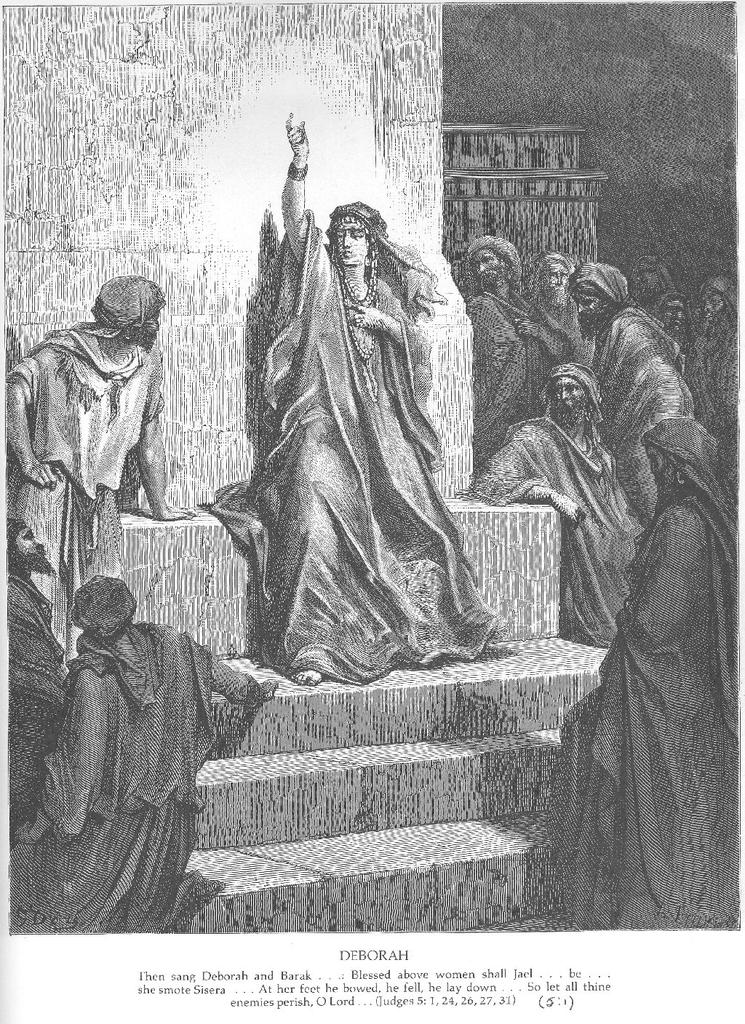
Devorah's Song by Debbie Friedman, arguably the Reform Movement's Devorah!
Verse 1:
Devorah the prophet was a judge in Israel
She sat beneath her palm tree on a hill
And people came from everywhere
Just to hear her judgments, honest and fair
Devorah, Devorah, Devorah, a mother in Israel!
(ד) וּדְבוֹרָה֙ אִשָּׁ֣ה נְבִיאָ֔ה אֵ֖שֶׁת לַפִּיד֑וֹת הִ֛יא שֹׁפְטָ֥ה אֶת־יִשְׂרָאֵ֖ל בָּעֵ֥ת הַהִֽיא׃(ה) וְ֠הִ֠יא יוֹשֶׁ֨בֶת תַּחַת־תֹּ֜מֶר דְּבוֹרָ֗ה בֵּ֧ין הָרָמָ֛ה וּבֵ֥ין בֵּֽית־אֵ֖ל בְּהַ֣ר אֶפְרָ֑יִם וַיַּעֲל֥וּ אֵלֶ֛יהָ בְּנֵ֥י יִשְׂרָאֵ֖ל לַמִּשְׁפָּֽט׃
(4) Deborah, wife of Lappidoth, was a prophet; she led Israel at that time. (5) She used to sit under the Palm of Deborah, between Ramah and Bethel in the hill country of Ephraim, and the Israelites would come to her for decisions.
(י)אֵֽשֶׁת־חַ֭יִל מִ֣י יִמְצָ֑א וְרָחֹ֖ק מִפְּנִינִ֣ים מִכְרָֽהּ׃
(10) What a rare find is a capable wife / woman of strengh! Her worth is far beyond that of rubies.
Megillah 14a:16-17
“Devorah,” as it is written, “Now Devorah a prophetess, a woman of flames” (Judges 4:4). What is meant by a woman of flames? Because she used to make wicks for the Temple. “And she sat under a palm tree” (v. 5). Why under a palm tree? — R. Shimon b. Avishalom said: [To avoid] seclusion. Another explanation is: Just as a palm tree has only one heart, so Israel in that generation had only one heart devoted to their Father in heaven.
Devorah's husband was unlearned (am ha'aretz). She said to him, "Let me make you wicks and you'll take them to the Tabernacle in Shilo; your portion will be among righteous people there and you'll merit the World to Come. He made thick wicks to increase their light, and that's why his name was Lapidot ("torches"). And God said to Devorah, "You both intended to light up the Tabernacle; I, too, will make your light shine in Israel and Judah.
Of the sixteen shoftim (judges) that served in pre-monarchic Israel, the only woman among their ranks was Deborah. She was also one of seven female prophets recorded in Tanakh who communicated directly with God. As with most of the other shoftim, little is known about her personal life: the only information the text gives us is that she was “eshet lapidot,” the wife of Lapidot (Judges 4:4). Most commentators hold that this simply means that Lapidot was the name of Deborah’s husband. Some go on to explain that he is called Lapidot, which literally means torches, because Deborah encouraged him to deliver wicks to light the Menorah in the Mishkan (Temple).
Which translation seems more plausible to you?
(נט) וַֽיְשַׁלְּח֛וּ אֶת־רִבְקָ֥ה אֲחֹתָ֖ם וְאֶת־מֵנִקְתָּ֑הּ וְאֶת־עֶ֥בֶד אַבְרָהָ֖ם וְאֶת־אֲנָשָֽׁיו׃
(59) So they sent off their sister Rebekah and her nurse along with Abraham’s servant and his men.
(ח) וַתָּ֤מָת דְּבֹרָה֙ מֵינֶ֣קֶת רִבְקָ֔ה וַתִּקָּבֵ֛ר מִתַּ֥חַת לְבֵֽית־אֵ֖ל תַּ֣חַת הָֽאַלּ֑וֹן וַיִּקְרָ֥א שְׁמ֖וֹ אַלּ֥וֹן בָּכֽוּת׃ (פ)
(8) Deborah, Rebekah’s nurse, died, and was buried under the oak below Bethel; so it was named Allon-bacuth.
(ה) וְ֠הִיא יוֹשֶׁ֨בֶת תַּֽחַת־תֹּ֜מֶר דְּבוֹרָ֗ה בֵּ֧ין הָרָמָ֛ה וּבֵ֥ין בֵּֽית־אֵ֖ל בְּהַ֣ר אֶפְרָ֑יִם וַיַּעֲל֥וּ אֵלֶ֛יהָ בְּנֵ֥י יִשְׂרָאֵ֖ל לַמִּשְׁפָּֽט׃
(5) She used to sit under the Palm of Deborah, between Ramah and Bethel in the hill country of Ephraim, and the Israelites would come to her for decisions.
(א)ותמת דבורה. מדרש כי מה שכתוב גבי דבורה
הנביאה והיא יושבת תחת תמר דבורה זהו אלון בכות דבורה דהכא:
(1) ותמת דבורה, Deborah, Rivkah’s nursemaid died (near there) the reason why we are told about this at this point may be on account of the prophetess Deborah sitting and holding court near this tree, by the grave of Deborah (Judges, 4.5.)
Deborah: Authoritative or Haughty?
(ו) וַתִּשְׁלַ֗ח וַתִּקְרָא֙ לְבָרָ֣ק בֶּן־אֲבִינֹ֔עַם מִקֶּ֖דֶשׁ נַפְתָּלִ֑י וַתֹּ֨אמֶר אֵלָ֜יו הֲלֹ֥א צִוָּ֣ה ׀ יהוה אֱלֹהֵֽי־יִשְׂרָאֵ֗ל לֵ֤ךְ וּמָֽשַׁכְתָּ֙ בְּהַ֣ר תָּב֔וֹר וְלָקַחְתָּ֣ עִמְּךָ֗ עֲשֶׂ֤רֶת אֲלָפִים֙ אִ֔ישׁ מִבְּנֵ֥י נַפְתָּלִ֖י וּמִבְּנֵ֥י זְבֻלֽוּן׃(ז) וּמָשַׁכְתִּ֨י אֵלֶ֜יךָ אֶל־נַ֣חַל קִישׁ֗וֹן אֶת־סִֽיסְרָא֙ שַׂר־צְבָ֣א יָבִ֔ין וְאֶת־רִכְבּ֖וֹ וְאֶת־הֲמוֹנ֑וֹ וּנְתַתִּ֖יהוּ בְּיָדֶֽךָ׃(ח) וַיֹּ֤אמֶר אֵלֶ֙יהָ֙ בָּרָ֔ק אִם־תֵּלְכִ֥י עִמִּ֖י וְהָלָ֑כְתִּי וְאִם־לֹ֥א תֵֽלְכִ֛י עִמִּ֖י לֹ֥א אֵלֵֽךְ׃
(6) She summoned Barak son of Abinoam, of Kedesh in Naphtali, and said to him, “The ETERNAL, the God of Israel, has commanded: Go, march up to Mount Tabor, and take with you ten thousand men of Naphtali and Zebulun. (7) And I will draw Sisera, Jabin’s army commander, with his chariots and his troops, toward you up to the Wadi Kishon; and I will deliver him into your hands.” (8) But Barak said to her, “If you will go with me, I will go; if not, I will not go.”
אמר רב נחמן לא יאה יהירותא לנשי תרתי נשי יהירן הויין וסניין שמייהו חדא שמה זיבורתא וחדא שמה כרכושתא זיבורתא כתיב בה (שופטים ד, ו) ותשלח ותקרא לברק ואילו איהי לא אזלה לגביה כרכושתא כתיב בה (מלכים ב כב, טו) אמרו לאיש ולא אמרה אמרו למלך
Rav Naḥman said: Haughtiness is not befitting a woman. And a proof to this is that there were two haughty women, whose names were identical to the names of loathsome creatures. One, Deborah, was called a hornet, as her Hebrew name, Devorah, means bee; and one, Huldah, was called a marten, as her name is the Hebrew term for that creature. From where is it known that they were haughty? With regard to Deborah, the bee, it is written: “And she sent and called Barak” (Judges 4:6), but she herself did not go to him. And with regard to Huldah, the marten, it is written: “Say to the man that sent you to me” (II Kings 22:15), but she did not say: Say to the king.
Devorah the prophet, a woman of fire, her torch in hand
She led the Israelites to victory
Barak said to Devorah I will not fight
Unless you are standing right by my side
Devorah, Devorah, Devorah, a mother in Israel!
(ט) וַתֹּ֜אמֶר הָלֹ֧ךְ אֵלֵ֣ךְ עִמָּ֗ךְ אֶ֚פֶס כִּי֩ לֹ֨א תִֽהְיֶ֜ה תִּֽפְאַרְתְּךָ֗ עַל־הַדֶּ֙רֶךְ֙ אֲשֶׁ֣ר אַתָּ֣ה הוֹלֵ֔ךְ כִּ֣י בְֽיַד־אִשָּׁ֔ה יִמְכֹּ֥ר יהוה אֶת־סִֽיסְרָ֑א וַתָּ֧קׇם דְּבוֹרָ֛ה וַתֵּ֥לֶךְ עִם־בָּרָ֖ק קֶֽדְשָׁה׃
(9) “Very well, I will go with you,” she answered. “However, there will be no glory for you in the course you are taking, for then GOD will deliver Sisera into the hands of a woman.” So Deborah went with Barak to Kedesh.
(יב) וַיַּגִּ֖דוּ לְסִֽיסְרָ֑א כִּ֥י עָלָ֛ה בָּרָ֥ק בֶּן־אֲבִינֹ֖עַם הַר־תָּבֽוֹר׃(יג) וַיַּזְעֵ֨ק סִֽיסְרָ֜א אֶת־כׇּל־רִכְבּ֗וֹ תְּשַׁ֤ע מֵאוֹת֙ רֶ֣כֶב בַּרְזֶ֔ל וְאֶת־כׇּל־הָעָ֖ם אֲשֶׁ֣ר אִתּ֑וֹ מֵחֲרֹ֥שֶׁת הַגּוֹיִ֖ם אֶל־נַ֥חַל קִישֽׁוֹן׃
(12) Sisera was informed that Barak son of Abinoam had gone up to Mount Tabor.(13) So Sisera ordered all his chariots—nine hundred iron chariots—and all the troops he had to move from Harosheth-goiim to the Wadi Kishon.
(יד) וַתֹּ֩אמֶר֩ דְּבֹרָ֨ה אֶל־בָּרָ֜ק ק֗וּם כִּ֣י זֶ֤ה הַיּוֹם֙ אֲשֶׁר֩ נָתַ֨ן יהוה אֶת־סִֽיסְרָא֙ בְּיָדֶ֔ךָ הֲלֹ֥א יהוה יָצָ֣א לְפָנֶ֑יךָ וַיֵּ֤רֶד בָּרָק֙ מֵהַ֣ר תָּב֔וֹר וַעֲשֶׂ֧רֶת אֲלָפִ֛ים אִ֖ישׁ אַחֲרָֽיו׃(טו) וַיָּ֣הׇם יהוה אֶת־סִֽיסְרָ֨א וְאֶת־כׇּל־הָרֶ֧כֶב וְאֶת־כׇּל־הַֽמַּחֲנֶ֛ה לְפִי־חֶ֖רֶב לִפְנֵ֣י בָרָ֑ק וַיֵּ֧רֶד סִֽיסְרָ֛א מֵעַ֥ל הַמֶּרְכָּבָ֖ה וַיָּ֥נׇס בְּרַגְלָֽיו׃(טז) וּבָרָ֗ק רָדַ֞ף אַחֲרֵ֤י הָרֶ֙כֶב֙ וְאַחֲרֵ֣י הַֽמַּחֲנֶ֔ה עַ֖ד חֲרֹ֣שֶׁת הַגּוֹיִ֑ם וַיִּפֹּ֞ל כׇּל־מַחֲנֵ֤ה סִֽיסְרָא֙ לְפִי־חֶ֔רֶב לֹ֥א נִשְׁאַ֖ר עַד־אֶחָֽד׃
(14) Then Deborah said to Barak, “Up! This is the day on which GOD will deliver Sisera into your hands: GOD is marching before you.” Barak charged down Mount Tabor, followed by the ten thousand men, (15) and GOD threw Sisera and all his chariots and army into a panic before the onslaught of Barak. Sisera leaped from his chariot and fled on foot (16) as Barak pursued the chariots and the soldiers as far as Harosheth-goiim. All of Sisera’s soldiers fell by the sword; not one was left.
(יז) וְסִֽיסְרָא֙ נָ֣ס בְּרַגְלָ֔יו אֶל־אֹ֣הֶל יָעֵ֔ל אֵ֖שֶׁת חֶ֣בֶר הַקֵּינִ֑י כִּ֣י שָׁל֗וֹם בֵּ֚ין יָבִ֣ין מֶלֶךְ־חָצ֔וֹר וּבֵ֕ין בֵּ֖ית חֶ֥בֶר הַקֵּינִֽי׃(יח) וַתֵּצֵ֣א יָעֵל֮ לִקְרַ֣את סִֽיסְרָא֒ וַתֹּ֣אמֶר אֵלָ֗יו סוּרָ֧ה אֲדֹנִ֛י סוּרָ֥ה אֵלַ֖י אַל־תִּירָ֑א וַיָּ֤סַר אֵלֶ֙יהָ֙ הָאֹ֔הֱלָה וַתְּכַסֵּ֖הוּ בַּשְּׂמִיכָֽה׃(יט) וַיֹּ֧אמֶר אֵלֶ֛יהָ הַשְׁקִינִי־נָ֥א מְעַט־מַ֖יִם כִּ֣י צָמֵ֑אתִי וַתִּפְתַּ֞ח אֶת־נֹ֧אוד הֶחָלָ֛ב וַתַּשְׁקֵ֖הוּ וַתְּכַסֵּֽהוּ׃(כ) וַיֹּ֣אמֶר אֵלֶ֔יהָ עֲמֹ֖ד פֶּ֣תַח הָאֹ֑הֶל וְהָיָה֩ אִם־אִ֨ישׁ יָבֹ֜א וּשְׁאֵלֵ֗ךְ וְאָמַ֛ר הֲיֵֽשׁ־פֹּ֥ה אִ֖ישׁ וְאָמַ֥רְתְּ אָֽיִן׃(כא) וַתִּקַּ֣ח יָעֵ֣ל אֵֽשֶׁת־חֶ֠בֶר אֶת־יְתַ֨ד הָאֹ֜הֶל וַתָּ֧שֶׂם אֶת־הַמַּקֶּ֣בֶת בְּיָדָ֗הּ וַתָּב֤וֹא אֵלָיו֙ בַּלָּ֔אט וַתִּתְקַ֤ע אֶת־הַיָּתֵד֙ בְּרַקָּת֔וֹ וַתִּצְנַ֖ח בָּאָ֑רֶץ וְהֽוּא־נִרְדָּ֥ם וַיָּ֖עַף וַיָּמֹֽת׃(כב) וְהִנֵּ֣ה בָרָק֮ רֹדֵ֣ף אֶת־סִֽיסְרָא֒ וַתֵּצֵ֤א יָעֵל֙ לִקְרָאת֔וֹ וַתֹּ֣אמֶר ל֔וֹ לֵ֣ךְ וְאַרְאֶ֔ךָּ אֶת־הָאִ֖ישׁ אֲשֶׁר־אַתָּ֣ה מְבַקֵּ֑שׁ וַיָּבֹ֣א אֵלֶ֔יהָ וְהִנֵּ֤ה סִֽיסְרָא֙ נֹפֵ֣ל מֵ֔ת וְהַיָּתֵ֖ד בְּרַקָּתֽוֹ׃
(17) Sisera, meanwhile, had fled on foot to the tent of Jael, wife of Heber the Kenite; for there was friendship between King Jabin of Hazor and the family of Heber the Kenite. (18) Jael came out to greet Sisera and said to him, “Come in, my lord, come in here, do not be afraid.” So he entered her tent, and she covered him with a blanket. (19) He said to her, “Please let me have some water; I am thirsty.” She opened a skin of milk and gave him some to drink; and she covered him again. (20) He said to her, “Stand at the entrance of the tent. If anybody comes and asks you if there is anybody here, say ‘No.’” (21) Then Jael wife of Heber took a tent pin and grasped the mallet. When he was fast asleep from exhaustion, she approached him stealthily and drove the pin through his temple till it went down to the ground. Thus he died.(22) Now Barak appeared in pursuit of Sisera. Jael went out to greet him and said, “Come, I will show you the man you are looking for.” He went inside with her, and there Sisera was lying dead, with the pin in his temple.
Deborah's Song
(א) וַתָּ֣שַׁר דְּבוֹרָ֔ה וּבָרָ֖ק בֶּן־אֲבִינֹ֑עַם בַּיּ֥וֹם הַה֖וּא לֵאמֹֽר׃
(1) On that day Deborah and Barak son of Abinoam sang:
R. Nechemiah says: If one takes upon himself a single mitzvah in (true) faith, he is worthy of having the Holy Spirit repose upon him. And thus do we find with Moses, David, and Devorah that (in the fulness of their faith) they chanted song and the Holy Spirit reposed upon them. ...
(כ) וַתִּקַּח֩ מִרְיָ֨ם הַנְּבִיאָ֜ה אֲח֧וֹת אַהֲרֹ֛ן אֶת־הַתֹּ֖ף בְּיָדָ֑הּ וַתֵּצֶ֤אןָ כׇֽל־הַנָּשִׁים֙ אַחֲרֶ֔יהָ בְּתֻפִּ֖ים וּבִמְחֹלֹֽת׃
(20) Then Miriam the prophet, Aaron’s sister, picked up a hand-drum,* and all the women went out after her in dance with hand-drums.
*hand-drum Trad. “timbrel,” which is often construed anachronistically as a tambourine. (As drummers, Israelite women set the tempo at public celebrations.)
(ז) חָדְל֧וּ פְרָז֛וֹן בְּיִשְׂרָאֵ֖ל חָדֵ֑לּוּ עַ֤ד שַׁקַּ֙מְתִּי֙ דְּבוֹרָ֔ה שַׁקַּ֥מְתִּי אֵ֖ם בְּיִשְׂרָאֵֽל׃
(7) Deliverance ceased,
Ceased in Israel,
Till you arose, O Deborah,
Arose, O mother, in Israel!
אמר רב יהודה אמר רב כל המתיהר אם חכם הוא חכמתו מסתלקת ממנו אם נביא הוא נבואתו מסתלקת ממנו אם חכם הוא חכמתו מסתלקת ממנו מהלל דאמר מר התחיל מקנטרן בדברים וקאמר להו הלכה זו שמעתי ושכחתי אם נביא הוא נבואתו מסתלקת ממנו מדבורה דכתיב (שופטים ה, ז) חדלו פרזון בישראל חדלו עד שקמתי דבורה שקמתי אם בישראל וגו' וכתיב (שופטים ה, יב) עורי עורי דבורה עורי עורי דברי שיר וגו'
Rav Yehuda said that Rav said: Anyone who acts haughtily, if he is a Torah scholar, his wisdom departs from him; and if he is a prophet, his prophecy departs from him. The Gemara explains: [this] is learned from Hillel, for the Master said in this baraita: That if he is a prophet his prophecy departs from him is learned from Deborah, as it is written: “The villagers ceased, they ceased in Israel, until I, Deborah, arose, I arose a mother in Israel” (Judges 5:7). For these words of self-glorification, Deborah was punished with a loss of her prophetic spirit, as it is written later that it was necessary to say to her: “Awake, awake, Deborah; awake, awake, utter a song” (Judges 5:12), because her prophecy had left her.
עוּרִ֤י עוּרִי֙ דְּבוֹרָ֔ה ע֥וּרִי ע֖וּרִי דַּבְּרִי־שִׁ֑יר ק֥וּם בָּרָ֛ק וּֽשְׁבֵ֥ה שֶׁבְיְךָ֖ בֶּן־אֲבִינֹֽעַם׃
Awake, awake, O Deborah!Awake, awake, strike up the chant!Arise, O Barak;Take your captives, O son of Abinoam!
