


 Save
 Copy
 Add to Collection
 Export to Google Docs
 Share
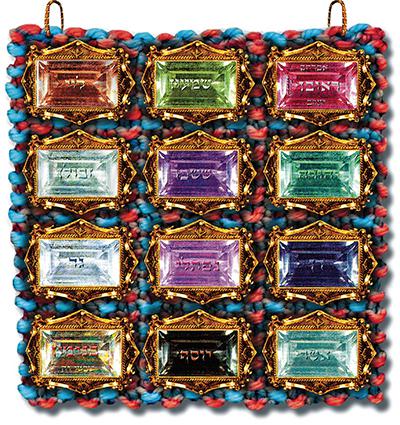
(8) The breastpiece was made in the style of the ephod: of gold, blue, purple, and crimson yarns, and fine twisted linen. (9) It was square; they made the breastpiece doubled—a span in length and a span in width, doubled. (10) They set in it four rows of stones. The first row was a row of
carnelian,
chrysolite,
and emerald;
(11) the second row:
a turquoise,
a sapphire,
and an amethyst;
(12) the third row:
a jacinth,
an agate,
and a crystal;
(13) and the fourth row:
a beryl,
a lapis lazuli,
and a jasper.
They were encircled in their mountings with frames of gold.
(14) The stones corresponded [in number] to the names of the sons of Israel: twelve, corresponding to their names; engraved like seals, each with its name, for the twelve tribes.
(1) איש על שמו EVERY ONE WITH HIS NAME — As the order in which they were born shall be the order of the stones: a sardius for Reuben, a topaz for Simeon, and so in the case of all of them.
2) Simeon
3) Levi
4) Judah
5) Dan
6) Naphtali
7) Gad
8) Asher
9) Issachar
10) Zebulun
11) Joseph
12) Benjamin.
Although we have provided a translation for these twelve stones as listed above, it is by no means definitive. We simply prefer to use these names, when faced with the alternative... that is, to present the original Hebrew names transliterated but untranslated. Our listing is rather more like a synopsis, or a sampling, representing different schools of thought. The exact, conclusive identification of these stones is actually one of the most difficult and elusive of all Temple-related studies. This is because the original Hebrew names of these stones as they appear here in the Torah are extremely obscure. They are not commonly used, and no description of the stones appears anywhere in the verses themselves. In the course of many years, as nations flourished and fell, and civilizations migrated to new lands, languages evolved and the meanings of words changed. Thus in one location, a word may have one meaning and connote a particular concept, while in another land, the same word may carry the exact opposite meaning.
Over 30 Different Opinions
Faced with this sort of situation, it becomes necessary to engage in what can be called "linguistic sleuthing" in an effort to arrive at a working conclusion. The names of these stones is particularly enigmatic: there are over 30 varying opinions as to the final identification of the 12 stones. These opinions include scholars and commentators from the entire historical spectrum of rabbinical literature and tradition, beginning with the most ancient-and therefore, in this case the most reliable opinions-those of the Aramaic translations of the Torah. And as is usual when it comes to eye-witness testimony, the information provided by Flavius Josephus is of interest and importance, since he himself was a priest who served in the Holy Temple.
In addition to the translational difficulties in this study, there are also other factors which should be taken into consideration in order to arrive at a realistic decision as to the true nature of these gems. These factors include various geological and gemological conditions and criteria, such as the respective degree of hardness and brightness of any candidate stone (since the stones are described by the sages as being both exceedingly bright, and strong as well - in order to withstand the engraving), and the regions on the earth where they can be found.
The Colors Correspond to the Tribes' Banners
In reality, the only fact which is known with absolute certainty is the color of each stone. Although absent from the Biblical passages, this is recorded by the Midrash (Bamidbar Rabbah 2:7) where it is stated that each tribe's stone on the breastplate matched the background color of its flag.
Thus even if some doubt exists with regard to the scientific classification of the gems themselves, we can still be certain as to their appearance based on the Midrashic description of their colors (again, arbitrarily using the 12 "most representative" names we have chosen for the purpose of listing them):
- Ruby - Reuben - Red
- Jade - Shimon - Green
- Agate - Levi - Red, White, and Black Striped
- Carbuncle - Judah - Bluish-Green
- Lapis-Lazuli - Issachar - Blue
- Quartz Crystal - Zevulun - Clear
- Turquoise - Dan - Blue
- Amethyst - Naftali - Purple
- Agate - Gad - Grey
- Aquamarine - Asher - Blue-Green
- Onyx - Yosef - Black
- Opal - Binyamin - A Stone Possessing All the Colors
It will be of great interest to the reader to learn that over the course of nearly a decade, scholars at the Temple Institute of Jerusalem have conducted intensive research into the identity of the breastplate's stones, in an effort to reach a working conclusion that will allow the Institute's artisans and craftsmen to actually construct a kosher breastplate, which will fulfill the Biblical requirements for the stones-and thus be able to be worn by the next High Priest.
“With the insignias” – there were insignias for each and every prince: a banner with a color for each, and every banner like the color of the gems that were on Aaron’s heart, from which the empire learned to make a banner, with colors for each and every banner. For each and every tribe, the prince’s banner was like the color of his stone.
Reuben, its stone was a ruby and its banner was dyed red, and mandrakes were depicted on it.
Simeon, [its stone was] a peridot, its banner was dyed green, and Shekhem was depicted on it.
Levi, [its stone was] an emerald, its banner was dyed one-third white, one-third black, and one-third red, and the urim and tumim were depicted on it.
Judah, [its stone was] a turquoise, the color of its banner was in its image, like the heavens, and a lion was depicted on it.
Issachar, [its stone was] a sapphire, its banner was dyed bluish-black, and the sun and the moon were depicted on it, based on: “From the children of Issachar, possessors of understanding of the times” (I Chronicles 12:33).
Zebulun, [its stone was] a clear quartz, the color of its banner, white, and a ship was depicted on it, based on: “Zebulun will dwell at the seashore, [and he shall be a shore for ships]” (Genesis 49:13).
Dan, [its stone was] a jacinth, the color of its banner was like a sapphire, and a serpent was depicted on it, based on: “Dan will be a serpent” (Genesis 49:17).
Gad, [its stone was] an agate, and the color of its banner was neither white nor black, but rather white and black intermingled, and an encampment was depicted on it, based on: “Gad will wage war by regiment” (Genesis 49:19).
Naphtali, [its stone was] an amethyst, the color of its banner was similar to clear wine whose redness is not deep, and a hind was depicted on it, based on: “Naphtali is a hind let loose” (Genesis 49:21).
Asher, [its stone was] a beryl, and the color of its banner was like the gem with which women adorn themselves, and an olive tree was depicted on it, based on: “From Asher, his bread is rich [shemena]” (Genesis 49:20).
Joseph, [its stone was] onyx, the color of its banner was exceedingly black, and it was depicted for two princes, Ephraim and Manasseh: Egypt, because they were born in Egypt. On the banner of Ephraim an ox was depicted, based on: “The firstborn of his bull [is his majesty]” (Deuteronomy 33:17); this is Joshua bin Nun, who was from the tribe of Ephraim. On the banner of Manasseh, an aurochs, based on: “And his horns are the horns of an aurochs” (Deuteronomy 33:17); this is Gideon son of Yoash, who was from the tribe of Manasseh.
Benjamin, [its stone was] a chalcedony, the color of his banner was like all the colors of the twelve colors, and a wolf was depicted on it, based on: “Benjamin is a mauling wolf” (Genesis 49:27). That is why it is stated: “With the insignias,” as each and every prince had his own sign.
ארכו של חושן שתי זרתות ורחבו זרת וכופלו לשנים נמצא זרת על זרת מרובע וקבועים בו ארבעה טורים אבן וכל אבן ואבן היה מרובע, ומפתח שמות י"ב שבטים על י"ב אבנים, ראובן היה מפותח על אבן אודם, שמעון על פטדה, וכן כולם. ומלבד י"ב שבטים שהיו כתובים על י"ב אבנים הללו היו כתובים שמות האבות אברהם יצחק יעקב ושבטי ישרון. וכסדר הזה היו כתובים ראובן א' על אודם, שמעון ב' על פטדה, לוי רה"ם על ברקת, יהודה י' על נופך, יששכר צ' על ספיר, זבולן ח' על יהלום, דן ק' יע"ק על לשם, נפתלי ב' על שבו, גד שבט"י על אחלמה, אשר יש"ר על תרשיש, יוסף ו"ן על שהם, בנימין על ישפה, הרי לך בכל אבן ואבן ששה אותיות להורות כי ששת ימי המעשה תלוים בי"ב שבטים, והיו באבני חושן ע"ב אותיות כי י"ב פעמים ששה הם ע"ב והם כנגד ע"ב אותיות של השם הגדול להורות בזה קיום העולם שנברא בע"ב שעות שהרי העולם נברא ביום שנאמר (בראשית ב ד) ביום עשות ה׳ אלקים ארץ ושמים, וששת ימי המעשה ע"ב שעות יש בהם י"ב שעות בכל יום, וזהו שאמר הכתוב (תהילים פ״ט:ג׳) אמרתי עולם חסד יבנה כמנין חס"ד, ולמדנו מזה שהעולם שנברא בע"ב שעות מתקיים בזכות השבטים שבהם ע"ב אותיות. (ב) והנה בנימין שהיה מפותח על ישפה היה מלא ולא היה בו סמך אותיות מן האבות כשאר השבטים כי לא נשתיירו מבני בנימין במעשה פלגש בגבעה כי אם שש מאות בזכות בנימין שהיה מפותח באבני החשן ששה אותיות. (ג) ודע כי נמצא כתוב בספרי חכמת הטבע כי כל האבנים היקרות שהם עקריות ושרשיות אינן אלא י"ב והם אבות לכל שאר האבנים וכל השאר מיניהם ענפיהן ותולדותיהן.
ומה שנתן אבן אודם לראובן על שם שהאדימו פניו בחטא בלהה כשבלבל יצועי אביו והודה ולא בוש, והאבן הזאת נקרא רובי"ן והוא גדל במקומות ידועים בים והוא סלע גדול ומוצאו כמוצא הכסף וכמוצא הזהב, והסלע והמוצא ההוא קורין אותו בלאש"ו, ורובינו ובלאש"ו הכל מין אחד וחתיכה אחת, אלא שהרובי"ן הוא אדום בתכלית וכן תרגומו סמקן והוא מבחר האבן כמין ענפים שבולטים ממנו ונמשכים ממנו והבלאש"ו הוא למטה ממנו מאד במעלת האדמימות, ומפני זה נקרא מבחר האבן הזאת בלשוננו אודם כי מראהו אדום כדם וסגולתו שכל אשה שנושאתו אינה מפלת לעולם נפלים ואמרו שהוא טוב לאשה המקשה לילד, ואם היו שוחקים אותו ומערבים אותו באכילה ובשתיה מועיל הרבה להריון כדודאים שמצא ראובן ששם דמות אדם ועל כן נכתב אדם חסר וי"ו להורות על אדם כי המקרא יורה עצמותו של אבן והמכתב בחסרון וי"ו יורה על פעולתו, ומפני זה היה ראובן מפותח על אבן אודם.
שמעון היה מפותח על פטדה היא אבן ירוקה ככרתי בכרכי הים, וכן תרגומו ירקן ונקרא פראשמ"א והוא מין נפך שהוא מרקד"י שהוא ג"כ ירוק ככרתי. ודע כי פראשמ"א ומרקד"י הכל מין אחד וחתיכה אחת כענין שבארתי לך ברובי"ן ובלאש"ו, אלא שהמרקד"י הוא המובחר והוא המלוקט ומחותך ממנו והוא בתכלית הירקות וזיוו מבהיק ואורו מתנוצץ עד מאד והפראשמ"א ירוקה גם כן אבל היא למטה ממנו עד מאד בין בירקות בין בזיו האור, ומה שנתנה האבן הזאת לשמעון על שם שהוריקו פניו של זמרי בן סלוא נשיא שבט שמעון וכן כל מי שחטאו משבט שמעון בבנות מואב הוריקו פניהם, וכן דרשו רז"ל סימן לעברה הדרוקן. וסגולת האבן הזאת של פטדה שהיא מקררת את הגוף וע"כ היא מצויה בארצות כוש שהם חמים ושטופי זמה וצריכים אליה לקרר אותם וזהו שכתוב (איוב כ״ח:י״ט) לא יערכנה פטדת כוש, יחס אותה לכוש שהיא מצויה בארץ כוש.
לוי היה מפותח על ברקת והוא הקרבונקל"א נקראת ברקת על שם שנוצצת כברק ומאירה כנר וכן תרגום ברקן, והוא אבן שתלה נח בתיבה ממה שכתוב (בראשית ו׳:ט״ז) צהר תעשה לתיבה והנביא קראה אקדח שנאמר (ישעיהו נ״ד:י״ב) ושעריך לאבני אקדח על שם שקודח כגחלת והוא מלשון (שם נ) קודחי אש, ונתנה ללוי מפני ששבט לוי היו מאירין בתורה כענין שנאמר (דברים ל״ג:י׳) יורו משפטיך ליעקב ותורתך לישראל, וכן משה שהיה משבט לוי כשנולד נתמלא כל הבית אורה ונאמר בו כי קרן עור פניו וכתיב (קהלת ח׳:א׳) חכמת אדם תאיר פניו, וסגולת האבן הזאת שהיא מחכימת פתי ומאירת העינים מלבד שמשתמשין בעצם גופה כמו שמשתמשין באור הנר ואומרים כי אם שוחקין אותה ומערבים במאכל ובמשתה או בשאר הסמים יועיל הרבה מאד להחכים ולפתוח הלב.
יהודה היה מפותח על נפך והוא מראקד"י ובלשון ערבי זמור"א והתרגום כולל ב' לשונות הללו וע"כ אמר אזמרגדין מורכב מלשון זמור"א ומלשון מראקד"י והאבן ירוקה ככרתי והוא ממין פראשמ"א כמו שהזכרתי ונתנה ליהודה על שם שהוריקו פניו במעשה תמר ונתגבר על יצרו והודה ולא בוש והוריקו פניו גם כן על שחשדו אביו על יוסף הוא שכתוב (בראשית ל׳:ח׳״ז:כ׳) חיה רעה אכלתהו, וכשבא לברך את בניו אמר לו (שם מט) מטרף בני עלית אז נעשו פניו זכים ומבוהקים כנפך הזה שזיוו מבהיק וכן כתוב ביהודה (שם) ידך בערף אויביך וסגולת האבן הזאת שכל מי שנושאם אויביו הופכין לו עורף ולכך נקרא נפך, וכן כתוב ביהודה ידך בעורף אויביך, וכן מצינו תגבורת מלחמת ונצחון בכל שבט יהודה, בדוד כתיב (שמואל א י״ח:ז׳) ודוד ברבבותיו, ובמשיח כתיב (ישעיהו י״א:ד׳) וברוח שפתיו ימות רשע.
יששכר על ספיר והוא הנקרא שפיל"י והוא מראה תכלת, ונתנה ליששכר לפי שהיו גדולים בחכמת התורה שנאמר (דברי הימים א י״ב:ל״ג) ומבני יששכר יודעי בינה לעתים וגו', ולוחות התורה של סנפירינון היו, וכן מצינו במתן תורה (שמות כ״ד:י׳) ותחת רגליו כמעשה לבנת הספיר. וידוע כי נפש בעלי התורה צרורה בצרור החיים תחת כסא הכבוד שכתוב בו (יחזקאל א׳:כ״ו) כמראה אבן ספיר דמות כסא, וצבע זה של תכלת אינו צבע של גאוה כצבע של אדמימות או צבע ירקות שקורין גרי"ן ששניהם צבעים של גאוה, אבל התכלת צבע של ענוה ושפלות נאה לבחורים ונאה לזקנים, וזהו שכתוב (ישעיהו נ״ז:ט״ו) מרום וקדוש אשכון ואת דכא ושפל רוח. וסגולת אבן זה שהוא טוב לאור העינים ולכך מעבירין אותו על העינים, וכן התורה מאירת עינים ואמרו האבן הזאת תועיל לכל כאב ונפיחה באיזה מקום שתהיה בגוף וכן התורה מרפאה לכל הגוף, וכן אמרו רז"ל חש בראשו יעסוק בתורה.
זבולן על יהלום והוא הנקרא פירל"א והיא לבנה כלה על שם שהכסף לבן והוא סימן לעשרו של זבולן שנאמר (בראשית מ״ט:י״ג) זבולן לחוף ימים ישכון לכך נתנה לזבולן והיא מצלחת בפרקמטיא, וסגולת האבן שמביאה שינה על האדם שכן אמר הכתוב (שם ל) הפעם יזבלני אישי.
דן על לשם והוא הנקרא אשטפסי"ס ונמצא בו פרצוף אדם מהופך על שם שהפכו שבט דן את הקערה על פיה והפכו לשם לסמל בפסל מיכה וכתיב בספר יהושע בענין חלוק הארץ (יהושע י״ט:מ״ז) ויקראו ללשם דן כשם דן אביהם כי היא שם עיר מארץ ישראל.
נפתלי על שבו והיא נקראת טורקיז"א והפרשים מתמידים לנושאה וכן תרגומו טרקיא, וסגולת האבן הזאת שהיא מושכת האדם על הרכב ומצלחת אותו בענין הרכיבה כל ימיו ולכך נקראת שבו ועל שהיא מחברת אותו אל הרכב נתנה לנפתלי שהיא לשון חבור על שם (בראשית ל) נפתולי אלקים נפתלתי.
גד על אחלמה והוא הנקרא קרישטא"ל ולכך תרגומו עין עגלא והאבן הנקרא ליאמ"ן דומה לה אלא שיש בה אדמימות, ונתנה אחלמה לגד שכשם שאחלמה והוא קרישטא"ל מצוי הרבה אצל בני אדם והכל מכירים אותו, כך שבטו של גד היו מרובין והרוגיהם נכרין הוא שכתוב (שם לג) וטרף זרוע אף קדקד, וסגולת האבן הזאת שמחזקת את הלב שלא ירך בלכתו למלחמה ולכך נקראת אחלמה מלשון חוזק וכענין שנאמר (ישעיהו ל״ח:ט״ז) ותחלימני והחייני, וכתיב (איוב ל״ט:ד׳) יחלמו בניהם ירבו בבר.
אשר על תרשיש והיא הנקראת קריאוליק"א וגוון שלה דומה לגוון השמן, ויש שפירשו שהיא האבן שצבעה תכלת ותרגומו כרום ימא שהרי גוון הים כעין תכלת, ומצינו ים ששמו תרשיש שנאמר (יונה א׳:ג׳) וימצא אניה באה תרשיש, וסגולת האבן הזאת לעכל המאכל, וכל שכן למי ששוחק אותה ומערבה במאכלו ונעשה בזה עב ושמן והוא שכתוב (בראשית מ״ט:כ׳) מאשר שמנה לחמו.
יוסף על שהם והוא נקרא אוניקל"י, וסגולת אבן זה לתת חן לאדם בעיני כל רואיו ונקראת שהם, ויש בה אותיות השם, על שם (שם לט) ויהי ה׳ את יוסף ויהי איש מצליח,וכתיב (שם) ויתן חנו בעיני שר בית הסהר ומי שנושאה בבית המלכות תועיל הרבה ויצליח ויהיו דבריו נשמעים.
בנימין על ישפה והיא הנקראת ישפי"ז והיא כלולה מגוונים הרבה אדומה שחורה ירוקה וסגולת האבן הזאת לעצור הדם ונתנה לבנימן לפי שנשתנה לבו לגוונים הרבה וחשב מחשבות במכירתו של יוסף אם יגלה הדבר לאביו אם לא ואעפ"כ נתגבר על יצרו והיה מעצור לרוחו ולא גלה הדבר לאביו, ולכך נתנה לו האבן הזאת, ונקראת ישפה שתי מלות יש פה, וזה יורה על מעלתו שאע"פ שהיה לו פה והיה לו לגלות הדבר שתק ולא גלה. אלה י"ב אבנים הקבועים בבגד החושן ואלה שמותם ושמות י"ב השבטים מפותחים בהם כסדר לידתן שבט ושבט כתוב על אבנו המיוחדת לו והכל בהשגחה גמורה וכוונה נפלאה. (ד) וראיתי בספר האבנים שחברו הפילוסוף שהאבנים צריכות טהרה וידוע מסגולתם שהנושא אותם בטומאה יתבטל כחם אליו או יחלש ואם ישוב ויטהר תחזור האבן לכחה הראשון כבתחלה, והסבה והטעם בזה לפי מעלות רוחניות הכח העליון שהאבן מושכת ממנו שהוא מדבק בטהרה ומתרחק מן הטומאה, וכן כתב החבר בחבורו, וראוי להאמין כך שהרי אין לך כל אבן ואבן מן האבנים היקרות שלא תמשך כח עליונים כענין שאמר בעשבים אין לך כל עשב ועשב מלמטה שאין לו מזל למעלה. ונמצאת למד שהכהן הגדול בבגדי האפוד והחשן היה מוקף מלפניו ומאחריו משמות י"ב שבטים, החשן אשר על לבו מלפניו היו קבועים שמות י"ב השבטים על י"ב אבניו כל שבט ושבט על אבנו גם האפוד שהיה מאחוריו על שתי כתפיו ששם שתי אבני שהם שהם קבועים בהם מפותחים י"ב שבטים ששה על אבן זו וששה על אבן זו והכהן כאשר ילבשם היה לובשם ביחד האפוד עם החשן שהרי מחובר היה זה בזה שנאמר (שמות כ״ח:כ״ח) ולא יזח החשן מעל האפוד והיה החשן על לבו מלפניו והאפוד מאחריו, וחשב האפוד היה קשור על לבו תחת החשן ושתי כתפות האפוד על ב' כתפיו ושתי עבותות הזהב יורדות מעל כתפות מכאן ומכאן ונתונות תוך טבעות החושן העליונות, ושני חוטין של תכלת מרוכסין מתחת אצילי ידיו מב' טבעות בכתפות האפוד התחתונות שהן למעלה מן החשב. (ה) ועל דרך הקבלה תמצא פליאה וחכמה נוראה בי"ב אבני חשן אלו ממה שנתן לכל אחד מן השבטים אבן אחת ידועה בגוון ידוע הכל כפי גוון מדותיהם למעלה, ראובן הרומז למדת הדין אבנו אודם ושמעון הרומז לשש קצוות אבנו פטדה וגוון שלה ירוק ככרתי, לוי הרומז לחבור השלשה שלמעלה אבנו ברקת שאורו מתלהט ומתנוצץ, יהודה הרומז לתהו שהוא קו ירוק אבנו נפך שהוא ירוק ככרתי, זבולון הרומז למדת רחמים אבנו יהלום שהיא פירל"א לבנה, יששכר לספיר שגוונו תכלת הנוטה לתכלת, דן הרומז למדת הדין כמו ראובן אבנו לשם ויש בו צורת אדם, נפתלי הרומז לזכור אבנו טורקיש"א והיא שבו ויש במינה זכר ונקבה, יוסף הרומז למדת רחמים כמו זבולון אבנו שהם שיש בה אותיות השם, בנימן הכולל מן הכל אבנו ישפה שהיא כלולה מגונים רבים, והמקום יגלה לבנו להביט מתורתו נפלאות.
...The reason that the gemstone assigned to the tribe of Reuven was the אודם was the fact that it symbolised the blush on his face when he owned up to being guilty of his misdemeanour in Bilhah’s tent. The fact that he was not ashamed to admit his guilt is a credit to him reflected by this red-coloured stone known as “rubin.” It is supposedly found in certain areas at the bottom of the sea. It is chipped of a great rock beneath the sea, and is mined similar to silver and gold. The rock is known as Balax. ...Seeing it is red, an essential colour reminding us of blood, it is reputed to have the power to protect a woman who wears this jewel against ever losing any fetus she carries. Women who wear jewelry made from this stone will give birth to babies that have been growing in their wombs for the full nine months. The stone is even supposed to have positive effects upon women who are having a difficult delivery...
Shimon’s stone פטדה, is a greenish-looking gemstone, similar to the turquoise colour of the sea in certain coastal cities. Onkelos also translates it as ירקן (emerald?)...The greenish colour symbolises the terrible sexual licentiousness committed by that tribe who had caused the face of their leader Zimri to turn green in shame (Numbers 28,14). The same happened to all the other members of the tribe of Shimon who took part in that sin at that time. The positive feature of that gemstone is that it cools the body. This may be the reason it is found in hot countries such as Nubia (the Sudan). The people in that country are especially steeped in sexual licentiousness. They need to “cool off” in order to counteract their tendencies...
The stone which bore the name of Levi was the ברקת, known popularly as carbuncle (a rounded gemstone without facets). It is so called as it flashes just like a bolt of lightning, ברק....This was the gemstone Noach hung in the ark to provide him with light....The reason this stone was chosen to symbolise Levi was that the Levites illuminate the people by teaching them spiritual illumination, i.e. Torah, “they teach Your judgments to Yaakov and Your Torah to Israel.” We also know of Moses, who was of the tribe of Levi, that the whole house was filled with light when he was born as the Midrash (Shemot Rabbah 1,24) interpreted the words in Exodus there (Exodus 2,2) that “she (his mother) saw that he was good.” Furthermore, when Moses returned from Mount Sinai with the second sets of Tablets the Torah testified that the skin of his face emitted rays of light (Exodus 34,29). The positive value of this gemstone is that it is apt to enlighten the foolish, providing him with insights he never had.
Yehudah’s name was inscribed on the gemstone called נפך. This jewel is known either as merkedy or zemurah in Arabic. Onkelos’ translation azmoragdin, (emerald) can support either one of these names. It is a greenish stone of high luster and represented his shame-facedness in accusing his daughter-in-law Tamar’s pregnancy as being the result of harlotry when he himself had fathered the child she was carrying (Genesis 38,26). Seeing that he overcame his embarrassment and made a public confession of his own involvement, this stone, i.e. its color, was chosen as appropriate for him. In addition he also had had to bear the shame, i.e. his face turning green, in the matter of having sold Joseph and his father suspecting him of this though the matter had never been spoken of.... Later, having exonerated himself from that guilt, his face was restored to its original colour after all these years. It then resembled the appearance of the emerald giving off a sparkle. It is also written of Yehudah (Genesis 49,8) “your hand is at the neck of your enemy,” and the outstanding feature of the gemstone emerald is that people wearing it experience that their enemies turn their neck towards them, i.e. that they attempt to flee. This is the reason this jewel is known as נפך. The Bible comments on Yehudah’s bravery in battle more than once...
Issachar’s name was inscribed on a jewel called ספיר, sapphire, a jewel known as sephily of a blue colour. It had been assigned to Issachar because he was extremely wise and his tribe excelled in Torah knowledge. This has been attested to in Chronicles I 12,32. We have a tradition that the Tablets with the Ten Commandments were made of sapphire (Tanchuma Ki Tissa 26). We also find another reference to this jewel in Exodus 24,10 where the vision of G’d seen by the elders and the nobles is described as their observing with their mental eyes the appearance of bricks made of sapphire. It is a well known fact that the souls of Torah scholars are part of a whole bundle of souls beneath the throne of G’d’s attribute כבוד. This is derived from Ezekiel 1,26: “as the semblance of a throne, in appearance like sapphire.” The blue color of this jewel is not like the blue which denotes haughtiness similar to certain shades of red or green; on the contrary, it is a color symbolizing humility, modesty, a character trait equally becoming to both young and old. This jewel is useful in getting rid of all manner of pains and any swelling one experiences in any part of one’s body. The Torah too is a powerful remedy for all parts of the body. We have been told in Eyruvin 54 that if someone suffers from headaches the best remedy is to immerse oneself in the study of Torah...
The name of Zevulun was inscribed on the gemstone known as יהלום, diamond. This gemstone is known as pirle, same as bedolach. It is clear, transparent. It is to remind us of “white” silver, an allusion to the material wealth of the tribe of Zevulun. We know from Yaakov’s blessing of Zevulun in Genesis 49,13 that he was a great trader sending his ships far afield in order to bring home wealth from foreign lands. It was appropriate therefore that the stone bearing his name was the diamond. The special property of the diamond for man is that it helps one to go to sleep, something Leah referred to when she (the mother of Zevulun) said after he was born: “this time my husband will make his permanent home with me” (Genesis 30,20). (Perhaps what the author meant was that possession of diamonds allows people to sleep easy as they feel emotionally and economically secure.)
The name of the tribe of Dan was inscribed on a gemstone called לשם, known as opal, or ashtefassis. It shows a human face turned upside down, reminiscent of the time when the tribe of Dan attempted to reverse the norms of Judaism by appointing for themselves a non-Levite as religious leader (Judges 18,31). We find in Joshua 19,47 that a certain town previously called Leshem was renamed Dan in commemoration of the founding father of that tribe. This city became an integral part of the land of Israel.
Naftali was inscribed on a jewel known as שבו, agate. It is commonly known as turquoise. The special property ascribed to that gemstone was that it “pulls” man while riding in carriages or riding horses and enables him to become successful as a driver or rider. This occurs through man and beast developing mutual affinity for each other while man sits in the saddle. It was appropriate for Naftali to be associated with this gemstone as at the time he was born his step-mother Rachel had said that she had prevailed in a struggle with the attribute of Justice and her sister and as a result her handmaid had born this son for her... Rachel also had to use all her abilities (she thought) in order to have a son at least through her handmaid (compare Genesis 30,8).
The gemstone bearing the name of Gad was the אחלמה, popularly known as crystal. The reason this gemstone was used to symbolize Gad was that seeing the gemstone crystal is very common and everyone is familiar with it, the members of the tribe of Gad were also widely known...
The gemstone on which the name of the tribe of Asher was inscribed is called תרשיש, better known as cariolica, topaz, chrysolite. Its color is close to that of oil (olive oil). Others say that its color is azure-blue (compare R' David Kimchi/RADAK). Onkelos translates it as כרום ימא, aquamarine. The reason is that the color of the sea resembles that of azure-blue. The name Tarshish appears also as a destination in the ship hired by the prophet Jonah, presumably because these gems could be found in that country. The special property of this topaz is to facilitate in the digestion of foods. The Torah extols Asher’s land portion within the land of Israel as being particularly full of oil, i.e. rich soil as we know from Yaakov’s blessing...
The gemstone bearing the name of the tribe of Joseph was called שהם, better known as onyx. The special property of this jewel is that its owners enjoy favor in the eyes of people. The letters in that stone also spell השם when read in a different order. This is an allusion to the verse in Genesis 39,2: “G’d was with Joseph and he became a successful man;” or, Genesis 39,24 “G’d made the warden of the prison like Joseph, etc.” Anyone who wears the jewel in the king’s palace will find that he becomes very successful and that his suggestions will be well received.
The name of the gemstone on which Binyamin’s name was inscribed was ישפה, better known as jasper. It is a multi-colored gem consisting of red, black, green. Binyamin had many contradictory thoughts about the sale of Joseph by his brothers, all of which are reflected in the different colours of the jasper. The special property of that stone is that it stops the flow of blood. The reason this gemstone was assigned to the tribe of Binyamin had to do with the founder of that tribe not being able to decide if to tell his father that Joseph was most likely alive, or to keep silent as he could not foresee how Yaakov would react to such information. In the end he controlled himself, stopped himself, and did not reveal what he knew. The word ישפה may be understood as two words, i.e. יש פה, “he has a mouth,” or words to that effect. The name of that stone alludes to the fact hat Binyamin deserved credit for keeping silent about what he knew his brothers had done to his older brother Joseph...
