


 Save
 Copy
 Add to Collection
 Export to Google Docs
 Share

Vayishlach 5785 Esau's kiss: an affiliative and healing act: "Righteousness and peace have kissed" | Sefaria
From the end of our parsha:
(ב) וְיַעֲקֹ֖ב הָלַ֣ךְ לְדַרְכּ֑וֹ וַיִּפְגְּעוּ־ב֖וֹ מַלְאֲכֵ֥י אֱלֹהִֽים׃ (ג) וַיֹּ֤אמֶר יַעֲקֹב֙ כַּאֲשֶׁ֣ר רָאָ֔ם מַחֲנֵ֥ה אֱלֹהִ֖ים זֶ֑ה וַיִּקְרָ֛א שֵֽׁם־הַמָּק֥וֹם הַה֖וּא מַֽחֲנָֽיִם׃ {פ}
(2) Jacob went on his way, and messengers of God encountered him. (3) When he saw them, Jacob said, “This is God’s camp.” So he named that place Machanaim.
(יא) וַיִּפְגַּ֨ע בַּמָּק֜וֹם וַיָּ֤לֶן שָׁם֙ כִּי־בָ֣א הַשֶּׁ֔מֶשׁ וַיִּקַּח֙ מֵאַבְנֵ֣י הַמָּק֔וֹם וַיָּ֖שֶׂם מְרַֽאֲשֹׁתָ֑יו וַיִּשְׁכַּ֖ב בַּמָּק֥וֹם הַהֽוּא׃
(11) He [Jacob] came upon a certain place and stopped there for the night, for the sun had set. Taking one of the stones of that place, he put it under his head and lay down in that place. (JPS translation)
And he lighted upon a certain place, and tarried there all night,because the sun was set; and he took of the stonesof that place, and put them for his pillows, and lay down in thatplace to sleep. (King James Version)
(יא) וַעֲרַע בְּאַתְרָא וּבָת תַּמָּן אֲרֵי עַל שִׁמְשָׁא וּנְסִיב מֵאַבְנֵי אַתְרָא וְשַׁוִּי אִסָּדוֹהִי וּשְׁכִיב בְּאַתְרָא הַהוּא:
(11) He reached the place and spent the night there because the sun had set. He took some of the stones of that place, and arranged them around his head, and lay down [to sleep] in that place.
(ב) וְיַעֲקֹ֖ב הָלַ֣ךְ לְדַרְכּ֑וֹ וַיִּפְגְּעוּ־ב֖וֹ מַלְאֲכֵ֥י אֱלֹהִֽים׃ (ג) וַיֹּ֤אמֶר יַעֲקֹב֙ כַּאֲשֶׁ֣ר רָאָ֔ם מַחֲנֵ֥ה אֱלֹהִ֖ים זֶ֑ה וַיִּקְרָ֛א שֵֽׁם־הַמָּק֥וֹם הַה֖וּא מַֽחֲנָֽיִם׃ {פ}
(2) Jacob went on his way, and messengers of God encountered him. (3) When he saw them, Jacob said, “This is God’s camp.” So he named that place Mahanaim.

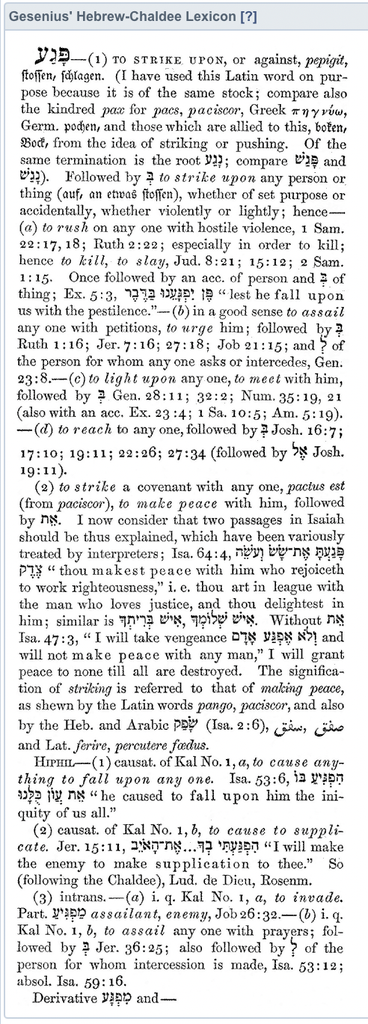
(ג) וַיֹּ֣אמְר֔וּ אֱלֹהֵ֥י הָעִבְרִ֖ים נִקְרָ֣א עָלֵ֑ינוּ נֵ֣לְכָה נָּ֡א דֶּ֩רֶךְ֩ שְׁלֹ֨שֶׁת יָמִ֜ים בַּמִּדְבָּ֗ר וְנִזְבְּחָה֙ לַֽיהוה אֱלֹהֵ֔ינוּ פֶּ֨ן־יִפְגָּעֵ֔נוּ בַּדֶּ֖בֶר א֥וֹ בֶחָֽרֶב׃
(3) They answered, “The God of the Hebrews has become manifest to us. Let us go, we pray, a distance of three days into the wilderness to sacrifice to our God יהוה, lest [God] strike us with pestilence or sword.”
(ד) כִּ֣י תִפְגַּ֞ע שׁ֧וֹר אֹֽיִבְךָ֛ א֥וֹ חֲמֹר֖וֹ תֹּעֶ֑ה הָשֵׁ֥ב תְּשִׁיבֶ֖נּוּ לֽוֹ׃ {ס}
(4) When you encounter your enemy’s ox or ass wandering, you must take it back.
(טז) וַתֹּ֤אמֶר לָהֶם֙ הָהָ֣רָה לֵּ֔כוּ פֶּֽן־יִפְגְּע֥וּ בָכֶ֖ם הָרֹֽדְפִ֑ים וְנַחְבֵּתֶ֨ם שָׁ֜מָּה שְׁלֹ֣שֶׁת יָמִ֗ים עַ֚ד שׁ֣וֹב הָרֹֽדְפִ֔ים וְאַחַ֖ר תֵּלְכ֥וּ לְדַרְכְּכֶֽם׃
(16) She [Rahab] said to them [the two Israelite scouts she has sheltered], “Make for the hills, so that the pursuers may not come upon you [with violent intent]. Stay there in hiding three days, until the pursuers return; then go your way.”
(יב) וַיֹּ֤אמְרוּ לוֹ֙ לֶאֱסׇרְךָ֣ יָרַ֔דְנוּ לְתִתְּךָ֖ בְּיַד־פְּלִשְׁתִּ֑ים וַיֹּ֤אמֶר לָהֶם֙ שִׁמְשׁ֔וֹן הִשָּׁבְע֣וּ לִ֔י פֶּֽן־תִּפְגְּע֥וּן בִּ֖י אַתֶּֽם׃
(12) “We have come down,” they told him, “to take you prisoner and to hand you over to the Philistines.” “But swear to me,” said Samson to them, “that you yourselves will not attack me.”
(טז) וַתֹּ֤אמֶר רוּת֙ אַל־תִּפְגְּעִי־בִ֔י לְעׇזְבֵ֖ךְ לָשׁ֣וּב מֵאַחֲרָ֑יִךְ כִּ֠י אֶל־אֲשֶׁ֨ר תֵּלְכִ֜י אֵלֵ֗ךְ וּבַאֲשֶׁ֤ר תָּלִ֙ינִי֙ אָלִ֔ין עַמֵּ֣ךְ עַמִּ֔י וֵאלֹהַ֖יִךְ אֱלֹהָֽי׃
(16) But Ruth replied, “Do not urge me to leave you, to turn back and not follow you. For wherever you go, I will go; wherever you lodge, I will lodge; your people shall be my people, and your God my God.
(טז) וְאַתָּ֞ה אַל־תִּתְפַּלֵּ֣ל ׀ בְּעַד־הָעָ֣ם הַזֶּ֗ה וְאַל־תִּשָּׂ֧א בַעֲדָ֛ם רִנָּ֥ה וּתְפִלָּ֖ה וְאַל־תִּפְגַּע־בִּ֑י כִּֽי־אֵינֶ֥נִּי שֹׁמֵ֖עַ אֹתָֽךְ׃
(16) As for you, do not pray for this people, do not raise a cry of prayer on their behalf, do not plead with Me; for I will not listen to you.
יַעֲקֹב תִּקֵּן תְּפִלַּת עַרְבִית, שֶׁנֶּאֱמַר: ״וַיִּפְגַּע בַּמָּקוֹם וַיָּלֶן שָׁם״, וְאֵין ״פְּגִיעָה״ אֶלָּא תְּפִלָּה, שֶׁנֶּאֱמַר: ״וְאַתָּה אַל תִּתְפַּלֵּל בְּעַד הָעָם הַזֶּה וְאַל תִּשָּׂא בַעֲדָם רִנָּה וּתְפִלָּה וְאַל תִּפְגַּע בִּי״
Jacob instituted the evening prayer, as it is stated: “And he encountered [vayifga] the place and he slept there for the sun had set” (Genesis 28:11). The word encounter means nothing other than prayer, as it is stated when God spoke to Jeremiah: “And you, do not pray on behalf of this nation and do not raise on their behalf song and prayer, and do not encounter [tifga] Me for I do not hear you” (Jeremiah 7:16). Jacob prayed during the evening, after the sun had set.
(ב) וְיַעֲקֹ֖ב הָלַ֣ךְ לְדַרְכּ֑וֹ וַיִּפְגְּעוּ־ב֖וֹ מַלְאֲכֵ֥י אֱלֹהִֽים׃ (ג) וַיֹּ֤אמֶר יַעֲקֹב֙ כַּאֲשֶׁ֣ר רָאָ֔ם מַחֲנֵ֥ה אֱלֹהִ֖ים זֶ֑ה וַיִּקְרָ֛א שֵֽׁם־הַמָּק֥וֹם הַה֖וּא מַֽחֲנָֽיִם׃ {פ}
(2) Jacob went on his way, and messengers of God encountered him. (3) When he saw them, Jacob said, “This is God’s camp.” So he named that place Mahanaim.
(א)מחנים. שְׁתֵּי מַחֲנוֹת, שֶׁל חוּצָה לָאָרֶץ שֶׁבָּאוּ עִמּוֹ עַד כָּאן וְשֶׁל אֶרֶץ יִשְׂרָאֵל שֶׁבָּאוּ לִקְרָאתוֹ (ע' תנחומא פ' וישלח):
(1) מחנים means two camps — the one consisting of the angels ministering outside the Holy Land who had come with him thus far, the other, of those ministering in the Land of Israel who had come to meet him (Midrash Tanchuma, Vayishlach 3).
(א)מַחֲנֵה אֱלֹהִים זֶה. הַמַּחֲנֶה שֶׁלִּי שֶׁפָּגְעוּ בּוֹ מַלְאֲכֵי אֱלֹהִים, אֵין סָפֵק שֶׁהוּא מַחֲנֵה אֱלֹהִים, כְּעִנְיַן "וַיִּקְרָא לַמָּקוֹם אֵל בֵּית אֵל" (בראשית כח:יט), כִּי שָׁם נִגְלוּ אֵלָיו הָאֱלֹהִים: (ב)מַחֲנָיִם. שְׁתֵּי מַחֲנוֹת – אֱלֹהִים שֶׁל מַלְאָכִים וְשֶׁלּוֹ, כְּמִשְׁפַּט סִימָן הָרַבִּים הַבָּא אַחַר פַּתָּח מִלְּעֵיל, הַמּוֹרִים עַל מִסְפַּר שְׁנַיִם, כְּמוֹ פַּעֲמַיִם, שְׁבוּעַיִם, שְׁנָתַיִם וְזוּלָתָם. חסלת פרשת ויצא.
(1) מחנה אלוהים זה. Now that the angels have seen fit to join me there can be no doubt that mine is a godly camp. Just as Yaakov had called the place where he had had the dream of the ladder Bet El, so he now referred to his camp as machaneh elokim. In either instance the reason was that he had been found worthy of a divine revelation. (2) מחנים, two camps; the camp of G’d (angels) and his own. The grammatical formulation with the plural ending following the vowel patach, the stress is on the penultimate syllable as this indicated the number 2. Parallel examples are paamayim, shevuayim, shenatayim, etc. .[the kametz here substitutes for the patach as it is the end of the sentence. Ed.]
(יג) מִֽי־הָ֭אִישׁ הֶחָפֵ֣ץ חַיִּ֑ים אֹהֵ֥ב יָ֝מִ֗ים לִרְא֥וֹת טֽוֹב׃
(יד) נְצֹ֣ר לְשׁוֹנְךָ֣ מֵרָ֑ע וּ֝שְׂפָתֶ֗יךָ מִדַּבֵּ֥ר מִרְמָֽה׃
(טו) ס֣וּר מֵ֭רָע וַעֲשֵׂה־ט֑וֹב בַּקֵּ֖שׁ שָׁל֣וֹם וְרׇדְפֵֽהוּ׃
(13) Who is the person who is eager for life, who desires years of good fortune?
(14) Guard your tongue from evil, your lips from deceitful speech. (15) Shun evil and do good, seek peace and pursue it.

