




 Save
Save Copy
Copy Add to Collection
 Export to Google Docs
 Share
Shareme, demands me, claims me: as if the invisible death faced by the
face of the other—pure otherness, separated somehow from all unity—
were "my business." As if, unknown to the other whom, in the nakedness
of his face, it already concerns, it "regarded me" before its confrontation
with me, before being the death that looks me square in my
own face. The death of the other man puts me in question, as if in that
death that is invisible to the other who exposes himself to it, /, through my eventual indifference, became the accomplice; and as if, even before
H being doomed to it myself, /had to answer for this death of the other,
and not leave the other alone in his death-bound solitude. It is precisely
W in this call to my responsibility by the face that summons me, that demands me, that claims me—it is in this questioning that the other is my neighbor. This way of demanding me, of putting me in question and of
appealing to me, to my responsibility for the death of the other, is so
irreducible a meaning that it is in terms of this that the meaning of death
must be understood, beyond the abstract dialectic of being and its nega-
tion, to which (once violence is reduced to negation and annihilation)
death is reduced. Death signifies in the concreteness of what for me is
the impossibility of abandoning the other to his aloneness, in the prohibition addressed to me of that abandonment. Its meaning begins in the
inter-human. Emmanuel Levinas, "From the One to the Other:
Transcendence and Time" in entres nous - On Thinking-of-the-Other pp. 145-146
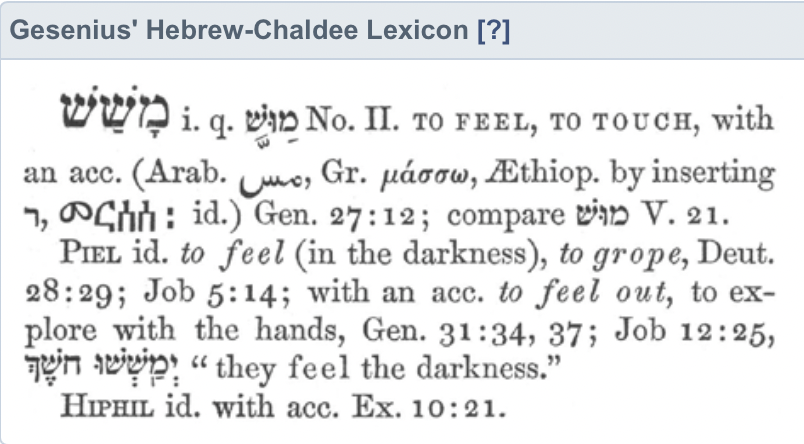
(כא) וַיֹּ֨אמֶר יהוה אֶל־מֹשֶׁ֗ה נְטֵ֤ה יָֽדְךָ֙ עַל־הַשָּׁמַ֔יִם וִ֥יהִי חֹ֖שֶׁךְ עַל־אֶ֣רֶץ מִצְרָ֑יִם וְיָמֵ֖שׁ חֹֽשֶׁךְ׃ (כב) וַיֵּ֥ט מֹשֶׁ֛ה אֶת־יָד֖וֹ עַל־הַשָּׁמָ֑יִם וַיְהִ֧י חֹֽשֶׁךְ־אֲפֵלָ֛ה בְּכׇל־אֶ֥רֶץ מִצְרַ֖יִם שְׁלֹ֥שֶׁת יָמִֽים׃ (כג) לֹֽא־רָא֞וּ אִ֣ישׁ אֶת־אָחִ֗יו וְלֹא־קָ֛מוּ אִ֥ישׁ מִתַּחְתָּ֖יו שְׁלֹ֣שֶׁת יָמִ֑ים וּֽלְכׇל־בְּנֵ֧י יִשְׂרָאֵ֛ל הָ֥יָה א֖וֹר בְּמוֹשְׁבֹתָֽם׃
(21) Then יהוה said to Moses, “Hold out your arm toward the sky that there may be darkness upon the land of Egypt, a darkness that can be touched.” (22) Moses held out his arm toward the sky and thick darkness descended upon all the land of Egypt for three days. (23) People could not see one another, and for three days no one could move about; but all the Israelites enjoyed light in their dwellings.

(כה) יְמַֽשְׁשׁוּ־חֹ֥שֶׁךְ וְלֹא־א֑וֹר וַ֝יַּתְעֵ֗ם כַּשִּׁכּֽוֹר׃
(25)They grope without light in the darkness,Made to wander as if drunk.
(א)בְּרֵאשִׁ֖ית בָּרָ֣א אֱלֹהִ֑ים אֵ֥ת הַשָּׁמַ֖יִם וְאֵ֥ת הָאָֽרֶץ׃ (ב) וְהָאָ֗רֶץ הָיְתָ֥ה תֹ֙הוּ֙ וָבֹ֔הוּ וְחֹ֖שֶׁךְ עַל־פְּנֵ֣י תְה֑וֹם וְר֣וּחַ אֱלֹהִ֔ים מְרַחֶ֖פֶת עַל־פְּנֵ֥י הַמָּֽיִם׃ (ג) וַיֹּ֥אמֶר אֱלֹהִ֖ים יְהִ֣י א֑וֹר וַֽיְהִי־אֽוֹר׃ (ד) וַיַּ֧רְא אֱלֹהִ֛ים אֶת־הָא֖וֹר כִּי־ט֑וֹב וַיַּבְדֵּ֣ל אֱלֹהִ֔ים בֵּ֥ין הָא֖וֹר וּבֵ֥ין הַחֹֽשֶׁךְ׃ (ה) וַיִּקְרָ֨א אֱלֹהִ֤ים ׀ לָאוֹר֙ י֔וֹם וְלַחֹ֖שֶׁךְ קָ֣רָא לָ֑יְלָה וַֽיְהִי־עֶ֥רֶב וַֽיְהִי־בֹ֖קֶר י֥וֹם אֶחָֽד׃ {פ}
(1) When God began to create heaven and earth— (2) the earth being unformed and void, with darkness over the surface of the deep and a wind from God sweeping over the water— (3) God said, “Let there be light”; and there was light. (4) God saw that the light was good, and God separated the light from the darkness. (5) God called the light Day and called the darkness Night. And there was evening and there was morning, a first day.
(2) וימש חשך: Hiphil von מוש. Simson bat in seiner Blindheit seinen Führer: המישני את העמדים (Richter 16, 26) lass mich die Säulen betasten, und hieße dem nach: ימש חשך, die Finsternis wird alle Ägypter "tasten" lassen, sie werden sich in keiner Weise des Augenlichtes bedienen können, und zur Erkennung von Gegenständen lediglich auf das Tastgefühl angewiesen sein. Es involviert dies allerdings, daß ihnen auch mit künstlicher Beleuchtung nicht zu helfen war. Eigentümlich ists, daß מוש zugleich auch: weichen heißt, also zugleich das Gegenteil von Tasten. Tasten bezeichnet ja die unmittelbarste Annäherung an den Gegenstand. Vergleichen wir alle Stellen, in welchen מוש weichen bedeutet, so ergibt sich, daß מוש, nicht wie סור im allgemeinen sich entfernen heißt, sondern immer nur: aus der nächsten Nähe weichen. Es kommt daher vorzugsweise nur negativ in diesem Sinne vor: לא ימוש, nicht von der Stelle weichen, nicht von etwas loslassen. Positiv von dem Lockerwerden eines eingeschlagenen Nagels: תמוש היתד התקועה (Jes. 22, 25) oder; אם ימושו החקים האלה so wenig wie die Naturgesetze je im geringsten schwankend werden usw. (Jirm. 31, 36). מוש muss somit die unmittelbarste lose Umgebung einer Sache bedeuten, ein Berühren ohne zu fassen, eine Berührung ohne Verbindung, das ist einerseits: Tasten, — ist ja Tasten, ein unsicheres Berühren, das den berührten Gegenstand immer wieder losläßt, um erst sich zu vergewissern, daß es der gesuchte sei. Es liegt darin eben so sehr ein Entfernen, als eine Annäherung zum Gegenstande — andererseits für etwas bis dahin Verbundenes: lose werden, aus der Verbindung weichen. Ganz entsprechend heißt daher auch מוץ: Hülse.
