




 Save
Save Copy
Copy Add to Collection
 Export to Google Docs
 Share
Shareשְׁנַיִם אוֹחֲזִים בַּטַּלֵּית, זֶה אוֹמֵר "אֲנִי מְצָאתִיהָ",
וְזֶה אוֹמֵר "אֲנִי מְצָאתִיהָ"; זֶה אוֹמֵר "כֻּלָּהּ שֶׁלִּי", וְזֶה אוֹמֵר "כֻּלָּהּ שֶׁלִּי",
זֶה יִשָּׁבַע שֶׁאֵין לוֹ בָהּ פָּחוּת מֵחֶצְיָהּ, וְזֶה יִשָּׁבַע שֶׁאֵין לוֹ בָהּ פָּחוּת מֵחֶצְיָהּ, וְיַחֲלֹקוּ.
זֶה אוֹמֵר "כֻּלָּהּ שֶׁלִּי", וְזֶה אוֹמֵר "חֶצְיָהּ שֶׁלִּי",
הָאוֹמֵר "כֻּלָּהּ שֶׁלִּי" יִשָּׁבַע שֶׁאֵין לוֹ בָהּ פָּחוּת מִשְׁלֹשָׁה חֲלָקִים,
וְהָאוֹמֵר "חֶצְיָהּ שֶׁלִּי" יִשָּׁבַע שֶׁאֵין לוֹ בָהּ פָּחוּת מֵרְבִיעַ,
זֶה נוֹטֵל שְׁלֹשָׁה חֲלָקִים וְזֶה נוֹטֵל רְבִיעַ.
Two people are holding a cloak. One says, “I found it” and the other says, “I found it”;
One says “It’s all mine”, and the other says, “It’s all mine”.
One swears that he doesn't own less than half of it, the other one swears that he doesn't own less than half of it, and they split.
One says, “It’s all mine” and the other says, “It’s half mine”.
The one who says, “It’s all mine” swears that he doesn’t own less than ¾ and the one who says “It’s half mine” swears that he doesn’t own less than ¼.
This one takes ¾ and the other one takes ¼.
ומה שאמר זה אומר כולה שלי הוא מדבר כשמכר המוכר הטלית לאחד משני בני אדם שהיו מצויין לפניו בדמים ידועים וכל אחד משניהם נתן לו אותן הדמים ולקח מן האחד ברצונו ומן השני אנוס וקבל אותו ממנו על דעת שיחזיר לו ונסתפק למוכר שאינו יודע לאיזה מהם מכר וכל אחד מן הלוקחין טוען מכר לי ברצונו
And what was said, "This one says all of it is mine . . ." is discussing when a seller sold the cloak to one of two people that was found in front of him for a known price and each one of them gave to him the that amount, and he took from one of them willingly and from the second against his will - but he received it from him with the intention that he would return it.
And the seller was unsure which one of them he sold to, and each one of the buyers claimed that he sold it to
me willingly.
ומעיקרנו כי הנשבע הנוטל שום דבר בשבועתו לא ישבע על יותר ממה שראוי ליטול באותה שבועה ולפיכך ישבע שאין לו בה פחות מחציה ולא ישבע שהיא כולה שלו מאחר שאינו נוטל אלא חציה ועל אלו הדינים כולם תקיש ותדין:
And from our principles, that the one who swears, who is taking something with his oath, should not swear about more than he will be allowed to take with that oath, therefore he swears he doesn't he have less than half, he does not swear that all of it belongs to him, since he is only taking half of it. And on all of these laws you can ask and you can judge.
הָיוּ שְׁנַיִם רְכוּבִים עַל גַּבֵּי בְהֵמָה, אוֹ שֶׁהָיָה אֶחָד רָכוּב וְאֶחָד מְהַלֵּךְ, זֶה אוֹמֵר "כֻּלָּהּ שֶׁלִּי", וְזֶה אוֹמֵר "כֻּלָּהּ שֶׁלִּי", זֶה יִשָּׁבַע שֶׁאֵין לוֹ בָהּ פָּחוּת מֵחֶצְיָהּ, וְזֶה יִשָּׁבַע שֶׁאֵין לוֹ בָהּ פָּחוּת מֵחֶצְיָהּ, וְיַחֲלֹקוּ.
בִּזְמַן שֶׁהֵן מוֹדִין, אוֹ שֶׁיֵּשׁ לָהֶן עֵדִים, חוֹלְקִין שֶׁלֹּא בִשְׁבוּעָה.
Two people were astride an animal, or one was astride and the other was leading; and one said, “It is all mine”, and the other said “It is all mine”; they each swear that they don’t own less than half of it and they divide it.
If they agree, or if there are witnesses, they can split the animal without an oath.
הָיָה רָכוּב עַל גַּבֵּי בְהֵמָה, וְרָאָה אֶת הַמְּצִיאָה, וְאָמַר לַחֲבֵרוֹ: "תְּנָה לִי!" וּנְטָלָהּ וְאָמַר: "אֲנִי זָכִיתִי בָהּ", זָכָה בָהּ.
אִם מִשֶּׁנְּתָנָהּ לוֹ, אָמַר: "אֲנִי זָכִיתִי בָהּ תְּחִלָּה", לֹא אָמַר כְּלוּם.
If someone was astride an animal and saw something lost and said to his fellow, “Give it to me”, and the other took it and said, “I have acquired it”, he has acquired it.
But if after he gave it to him he said, “I acquired it first”, he has said nothing.
רָאָה אֶת הַמְּצִיאָה וְנָפַל לוֹ עָלֶיהָ, וּבָא אַחֵר וְהֶחֱזִיק בָּהּ, זֶה שֶׁהֶחֱזִיק בָּהּ זָכָה בָהּ.
רָאָה אוֹתָן רָצִים אַחַר הַמְּצִיאָה, אַחַר צְבִי שָׁבוּר, אַחַר גּוֹזָלוֹת שֶׁלֹּא פֵרֵחוּ, וְאָמַר: "זָכַת לִי שָׂדִי", זָכַת לוֹ.
הָיָה צְבִי רָץ כְּדַרְכּוֹ, אוֹ שֶׁהָיוּ גוֹזָלוֹת מַפְרִיחִים, וְאָמַר:
"זָכַת לִי שָׂדִי", לֹא אָמַר כְּלוּם.
If someone saw lost property and fell upon it and someone else came along and took hold of it it, the one that took hold of it acquired it.
If a man saw people running after lost property - a deer with a broken leg, or pigeons that couldn’t fly - and he said, “My field acquires for me”, he has acquired them.
But if the deer was running normally or the pigeons were flying, and he said, “My field acquires for me”, he has said nothing.
מְצִיאַת בְּנוֹ וּבִתּוֹ הַקְּטַנִּים, עַבְדּוֹ וְשִׁפְחָתוֹ הַכְּנַעֲנִים, מְצִיאַת אִשְׁתּוֹ, הֲרֵי אֵלּוּ שֶׁלּוֹ.
מְצִיאַת בְּנוֹ וּבִתּוֹ הַגְּדוֹלִים, וְעַבְדּוֹ וְשִׁפְחָתוֹ הָעִבְרִים, מְצִיאַת אִשְׁתּוֹ שֶׁגֵּרְשָׁהּ, אַף עַל פִּי שֶׁלֹּא נָתַן לָהּ כְּתֻבָּתָהּ, הֲרֵי אֵלּוּ שֶׂלָּהֶם.
Something found by a man’s minor son or daughter, his Canaanite slave or maid, or something found by his wife belongs to him.
Something found by his adult son or daughter, or his Hebrew slave or female slave, or something found by his divorced wife, even if he has not yet given her her ketubah, belongs to them.
מָצָא שְׁטָרֵי חוֹב, אִם יֵשׁ בָּהֶם אַחְרָיוּת נְכָסִים, לֹא יַחְזִיר.
אֵין בָּהֶם אַחְרָיוּת נְכָסִים, יַחְזִיר, מִפְּנֵי שֶׁאֵין בֵּית דִּין נִפְרָעִים מֵהֶן, דִּבְרֵי רְבִּי מֵאִיר.
וַחֲכָמִים אוֹמְרִים: בֵּין כָּךְ וּבֵין כָּךְ לֹא יַחְזִיר, מִפְּנֵי שֶׁבֵּית דִּין נִפְרָעִים מֵהֶן.
If someone found documentation of a debt he should not return them if it recorded a mortgage.
If it did not record a mortgage he may return it, since the court would not enforce from them, according to Rabbi Meir.
But the Sages say: “In either case he should not return them, since the court would enforce from them.”
לֹא יַחֲזִיר. דְּחָיְשִׁינַן לְפֵרָעוֹן וְלִקְנוּנְיָא. שֶׁמָּא שְׁטָר פָּרוּעַ הוּא וּמִן הַלֹּוֶה נָפַל, וְהָא דְּקָא מוֹדֶה לֹא פָרַעְתִּי, עֵצָה שֶׁל רַמָּאוּת הִיא בֵּינֵיהֶם לִטְרֹף אֶת הַלָּקוֹחוֹת שֶׁלָּקְחוּ מִמֶּנּוּ קַרְקַע שֶׁלֹּא בְאַחֲרָיוּת, וִיחַלְּקוּהָ בֵּינֵיהֶם:
לא יחזיר – for we are suspicious of collection and conspiracy to fraud and divide the profits. Lest it was a collected/paid off document and it fell from the borrower, and when he admits: “I did not pay,” there is a council of deception between them to seize the sold mortgaged property which cannot be resorted to (in the event of non-payment) and it will be divided between them.
מָצָא גִטֵּי נָשִׁים, וְשֶׁחְרוּרֵי עֲבָדִים, דְּיַתִּיקֵי, מַתָּנָה וְשׁוֹבָרִים, הֲרֵי זֶה לֹא יַחְזִיר, שֶׁאֲנִי אוֹמֵר: כְּתוּבִים הָיוּ, וְנִמְלַךְ שֶׁלֹּא לִתְּנָן.
If someone found bills of divorce, or writs of emancipation or wills, or deeds of gifts, or receipts, he should not return them, for I might say, “they were written out, and he might have changed his mind.”
מָצָא אִגְּרוֹת שׁוּם וְאִגְּרוֹת מָזוֹן, שְׁטָרֵי חֲלִיצָה וּמֵאוּנִים, שְׁטָרֵי בֵרוּרִים, וְכָל מַעֲשֵׂה בֵית דִּין, הֲרֵי זֶה יַחְזִיר.
מָצָא בַחֲפִיסָה אוֹ בִגְלָסְקוֹמָא תַּכְרִיךְ שֶׁלִּשְׁטָרוֹת, אוֹ אֲגֻדָּה שֶׁלִּשְׁטָרוֹת,
הֲרֵי זֶה יַחְזִיר.
וְכַמָּה הִיא אֲגֻדָּה שֶׁלִּשְׁטָרוֹת? שְׁלֹשָׁה קְשׁוּרוֹת זֶה בָזֶה.
רַבָּן שִׁמְעוֹן בֶּן גַּמְלִיאֵל אוֹמֵר: אֶחָד לוֹוֶה מִשְׁלֹשָׁה, יַחְזִיר לַלּוֹוֶה; שְׁלֹשָׁה לוֹוִין מִן הָאֶחָד, יַחְזִיר לַמַּלְוֶה.
מָצָא שְׁטָר בֵּין שְׁטָרוֹתָיו, וְאֵין יָדוּעַ מַה טִּיבוֹ, יְהֵא מֻנָּח עַד שֶׁיָּבֹא אֵלִיָּהוּ.
אִם יֵשׁ עִמָּהֶן סִמְפוֹנוֹת, יַעֲשֶׂה מַה שֶּׁבְּסִמְפוֹנָן.
If a man found letters of evaluation, or letters of maintenance, or documents of halitzah or refusal, or documents of arbitration or any document of the court, he should return them
If he found documents in a satchel or bag, or a bundle of documents, he should return them.
And how many are a "bundle" of documents? Three tied up together.
Rabban Shimon ben Gamaliel says: if one borrowed from three, he should return them to the borrower. But if three borrowed from one, he should return them to the lender.
If someone found a document among his documents and does not know what is its nature, it must be left until Elijah comes.
If there were simfonot [postscripts, codicils, or notes of cancellation] with them, he should do what is stated in their simfonot.
כָּל דָּבָר הַמְּבַטֵּל דָּבָר קָרֵי סִמְפּוֹן שֶׁלּוֹ . . . וְכָתְבוּ הַתּוֹסָפוֹת דִּבְיַד הַמַּלְוֶה קָרוּי סִמְפּוֹן וּבְיַד הַלֹּוֶה שׁוֹבֵר:
Anything which cancels something is called its simfon, . . . . and Tosafot wrote that in the hand of the lender it is called a simfon and in the hand of the borrower it is called a receipt.
כִּ֣י תִפְגַּ֞ע שׁ֧וֹר אֹֽיִבְךָ֛ א֥וֹ חֲמֹר֖וֹ תֹּעֶ֑ה הָשֵׁ֥ב תְּשִׁיבֶ֖נּוּ לֽוֹ׃ {ס}
If thou meet thine enemy’s ox or his ass going astray, thou shalt surely return it to him.
לֹֽא־תִרְאֶה֩ אֶת־שׁ֨וֹר אָחִ֜יךָ א֤וֹ אֶת־שֵׂיוֹ֙ נִדָּחִ֔ים וְהִתְעַלַּמְתָּ֖ מֵהֶ֑ם הָשֵׁ֥ב תְּשִׁיבֵ֖ם לְאָחִֽיךָ׃
וְאִם־לֹ֨א קָר֥וֹב אָחִ֛יךָ אֵלֶ֖יךָ וְלֹ֣א יְדַעְתּ֑וֹ וַאֲסַפְתּוֹ֙ אֶל־תּ֣וֹךְ בֵּיתֶ֔ךָ וְהָיָ֣ה עִמְּךָ֗ עַ֣ד דְּרֹ֤שׁ אָחִ֙יךָ֙ אֹת֔וֹ וַהֲשֵׁבֹת֖וֹ לֽוֹ׃
וְכֵ֧ן תַּעֲשֶׂ֣ה לַחֲמֹר֗וֹ וְכֵ֣ן תַּעֲשֶׂה֮ לְשִׂמְלָתוֹ֒ וְכֵ֣ן תַּעֲשֶׂ֗ה לְכׇל־אֲבֵדַ֥ת אָחִ֛יךָ אֲשֶׁר־תֹּאבַ֥ד מִמֶּ֖נּוּ וּמְצָאתָ֑הּ לֹ֥א תוּכַ֖ל לְהִתְעַלֵּֽם׃ {ס}
Thou shalt not see thy brother’s ox or his sheep driven away, and hide thyself from them; thou shalt return them to thy brother.
And if thy brother be not nigh unto thee, and thou know him not, then thou shalt bring it home to thy house, and it shall be with thee until thy brother seeks it, and thou shalt return it to him.
And so shalt thou do with his ass; and so shalt thou do with his garment; and so shalt thou do with every lost thing of thy brother’s, which he hath lost, and thou hast found; thou mayest not hide thyself.
עד דרש אחיך. וְכִי תַעֲלֶה עַל דַּעְתְּךָ שֶׁיִּתְּנֵהוּ לוֹ קֹדֶם שֶׁיִּדְרְשֵׁהוּ? אֶלָּא דָּרְשֵׁהוּ שֶׁלֹּא יְהֵא רַמַּאי (בבא מציעא כ"ז; עי' ספרי):
UNTIL THY BROTHER SEEKS — But would it ever enter your mind that one could give it back before he seeks it?! Rather, thou shalt seek out information from him so that he should not be a fraudulent claimant. (Bava Metzia 27b. 28a; cf. Sifrei Devarim 223:4).
אֵלּוּ מְצִיאוֹת שֶׁלּוֹ, וְאֵלּוּ חַיָּב לְהַכְרִיז.
אֵלּוּ מְצִיאוֹת שֶׁלּוֹ: מָצָא פֵרוֹת מְפֻזָּרִין, מָעוֹת מְפֻזָּרוֹת, כְּרֵכוֹת בִּרְשׁוּת הָרַבִּים,
עִגּוּלֵי דְבֵלָה, כִּכָּרוֹת שֶׁלַּנַּחְתּוֹם, וּמַחֲרוּזוֹת שֶׁלַּדָּגִים, וַחֲתִכּוֹת שֶׁלַּבָּשָׂר, וְגִזֵּי צֶמֶר הַבָּאוֹת מִמְּדִינָתָן, וַאֲנִיצֵי פִשְׁתָּן, וּלְשׁוֹנוֹת שֶׁלָּאַרְגָּמָן, הֲרֵי אֵלּוּ שֶׁלּוֹ.
רְבִּי יְהוּדָה אוֹמֵר: כָּל שֶׁיֶּשׁ בּוֹ שִׁנּוּי, חַיָּב לְהַכְרִיז. כֵּיצַד?
מָצָא עִגּוּל וּבְתוֹכוֹ חֶרֶס, כִּכָּר וּבְתוֹכוֹ מָעוֹת.
רְבִּי שִׁמְעוֹן בֶּן אֶלְעָזָר אוֹמֵר: כָּל כְּלֵי אַנְפּוּרְיָא, אֵינוּ חַיָּב לְהַכְרִיז.
These finds belong to him and these must be announced.
These belong to him: someone found scattered fruit, scattered money, small sheaves in the public domain, cakes of figs, bakers’ loaves, strings of fish, pieces of meat, wool shearings from their country, stalks of flax and strips of purple wool, these are his.
Rabbi Judah says: “Anything which has an alteration, must be announced". How so?
Someone who found a cake with a potsherd in it or a loaf with coins in it.
Rabbi Shimon ben Elazar says: “Anpuria gear need not be announced.”
אַנְפֹּורְיָא f. (ἐμπορία) journey for business, traffic, trade; also merchandise. כלי א׳ merchant’s implements (straps, poles &c. for carrying goods). B. Mets. II, 2כלי א׳ אינו וכ׳ merchant’s implements (if found) need not be publicly announced (for return to the owner). Ib. 23ᵇ sq.; Y. B. Mets. II, beg. 8ᵇ; Tosef. ib. II, 1 (definit. of our w.). Midr. Till. to Ps. CXVIII, 20התקין א׳ שלו arranged his journey with the caravan. [Also אַנְכֹּורְיָה.]
אֶנְפּוֹרְיָא. כֵּלִים חֲדָשִׁים שֶׁלֹּא שְׂבַעְתָּן הָעַיִן וְאֵין לַבְּעָלִים בָּהֶם טְבִיעַת עַיִן. שֶׁפְּעָמִים שֶׁמַּחֲזִירִים אֲבֵדָה בִּטְבִיעוּת עֵינָא, כְּגוֹן לְצוּרְבָּא מֵרַבָּנָן דְּלֹא מְשַׁנֵּי בְּדִבּוּרֵיהּ. וְאִלּוּ הַכֵּלִים שֶׁיָּדוּעַ שֶׁאֵין לְבַעֲלֵיהֶן בָּהֶן טְבִיעוּת עַיִן אֵינוֹ חַיָּב לְהַכְרִיז. וַהֲלָכָה כְּרַבִּי שִׁמְעוֹן בֶּן אֶלְעָזָר.
וְאֵימָתַי, בִּזְמַן שֶׁמְּצָאָן אֶחָד אֶחָד. אֲבָל מְצָאָן שְׁנַיִם שְׁנַיִם חַיָּב לְהַכְרִיז, דְּמִנְיָנָא הָוֵי סִימָן. וְהַמּוֹצֵא מְצִיאָה בִּסְרַטְיָא וּפְלַטְיָא גְּדוֹלָה בְּעִיר שֶׁרֻבָּהּ נָכְרִים, אֲפִלּוּ דָּבָר שֶׁיֵּשׁ בּוֹ סִימָן אֵינוֹ חַיָּב לְהַכְרִיז.
וּבְעִיר שֶׁרֻבָּהּ יִשְׂרָאֵל, חַיָּב לְהַכְרִיז:
Anpuria. New gear that isn't familiar looking, and the owner hasn't gotten used to how they look. This is because sometimes lost items are returned just from recognizing them, for example to a scholar who doesn't lie. These items that are known that their owner's haven't become used to how they look aren't obligated to be announced. The halacha is like Rabbi Shimon son of Elazar.
When? When you find them one by one. However, if you find them two by two, you are obligated to announce, since their number is a marker. Someone who finds something in the street, or a large plaza in a city that has a non-Jewish majority, even if it [the item] has a marker, there is no obligation to announce.
And in a city with a Jewish majority, there is an obligation to announce.
וְאֵלּוּ חַיָּב לְהַכְרִיז: מָצָא פֵרוֹת בַּכֶּלִי, אוֹ כֶלִי כְמוֹת שֶׁהוּא, מָעוֹת בַּכִּיס, אוֹ כִיס כְּמוֹת שֶׁהוּא, צִבּוּרֵי פֵרוֹת, צִבּוּרֵי מָעוֹת, שְׁלֹשָׁה מַטְבֵּעוֹת זֶה עַל גַּבֵּי זֶה,
כְּרֵכוֹת בִּרְשׁוּת הַיָּחִיד, וְכִכָּרוֹת שֶׁלְּבַעַל הַבַּיִת, וְגִזֵּי צֶמֶר הַלְּקוּחוֹת מִבֵּית הָאֻמָּן, כַּדֵּי יַיִן וְכַדֵּי שֶׁמֶן, חַיָּב לְהַכְרִיז.
And these must be announced: someone found fruit in a vessel, or an empty vessel; or money in a bag, or an empty bag; piles of fruit or piles of money; three coins one on top of the other; small sheaves in the private domain; home-made loaves of bread; wool shearings as they come from the craftsman’s shop; jugs of wine or jugs of oil, these must be announced.
מָצָא אַחַר הַגָּפָה אוֹ אַחַר הַגָּדֵר גּוֹזָלוֹת מְקֻשָּׁרִים, אוֹ בִשְׁבִילִים שֶׁבַּשָּׂדוֹת, הֲרֵי זֶה לֹא יִגַּע בָּהֶן.
מָצָא כֶלִי בָאֶשְׁפּוֹת, אִם מְכֻסֶּה, לֹא יִגַּע בּוֹ, וְאִם מְגֻלֶּה, נוֹטֵל וּמַכְרִיז.
מָצָא בַגַּל אוֹ בְכֹתֶל יָשָׁן, הֲרֵי אֵלּוּ שֶׁלּוֹ.
מָצָא בְכֹתֶל חָדָשׁ, מֵחֶצְיוֹ וְלַחוּץ, שֶׁלּוֹ, מֵחֶצְיוֹ וְלִפְנִים, שֶׁלְּבַעַל הַבַּיִת.
אִם הָיָה מַשְׂכִּירוֹ לַאֲחֵרִים, אֲפִלּוּ מָצָא בְתוֹךְ הַבַּיִת, הֲרֵי אֵלּוּ שֶׁלּוֹ.
Someone who found pigeons tied together behind a wall or a fence or on footpaths in the fields may not touch them.
If he found something in a dungheap and it was covered over he may not touch it, but if it was exposed he should take and announce.
If he found in a pile of stones or in an old wall it belongs to him.
If he found it in a new wall in the outer half it belongs to him; in the inner half it belongs to the householder.
If he had hired it out to others, even if a someone found something within the house it belongs to him.
מָצָא בֶחָנוּת, הֲרֵי אֵלּוּ שֶׁלּוֹ.
בֵּין תֵּבָה לַחַנְוָנִי, הֲרֵי הֵן שֶׁלַּחַנְוָנִי.
לִפְנֵי הַשֻּׁלְחָנִי, הֲרֵי אֵלּוּ שֶׁלּוֹ.
בֵּין כִּסֵּא לַשֻּׁלְחָנִי, הֲרֵי הֵן שֶׁלַשֻּׁלְחָנִי.
לָקַח פֵּרוֹת מֵחֲבֵרוֹ, אוֹ שֶׁשִּׁלַּח לוֹ חֲבֵרוֹ פֵרוֹת, וּמָצָא בְתוֹכָן מָעוֹת, הֲרֵי אֵלּוּ שֶׁלּוֹ.
אִם הָיוּ צְרוּרִים, נוֹטֵל וּמַכְרִיז.
If he found in a shop, it belongs to him.
Between the counter and the shopkeeper, it belongs to the shopkeeper.
In front of the money-changer, it belongs to him.
Between the stool and the money-changer, it belongs to the money-changer.
If a someone bought fruit from his friend or if his friend sent him fruit, and he found coins among them, they belong to him.
If they were tied up he takes and announces.
אַף הַשִּׂמְלָה הָיְתָה בִכְלַל כָּל אֵלּוּ, וְלָמָּה יָצָאת?
לְהַקִּישׁ אֵלֶיהָ: אֶלָּא מַה הַשִּׂמְלָה מְיֻחֶדֶת, שֶׁיֶּשׁ בָּהּ סִימָנִין וְיֶשׁ לָהּ תּוֹבְעִין, וְאַף כָּל דָּבָר שֶׁיֶּשׁ בּוֹ סִימָנִין וְיֵשׁ לוֹ תוֹבְעִין, חַיָּב לְהַכְרִיז.
A garment was also included in all these things (Deut. 22:3). Why was it picked out?
To compare to it: just as a garment is unique in that it has marks and it has those who claim it, so too everything that has marks and has those who claim it must be announced.
עַד אֶמָּתַי חַיָּב לְהַכְרִיז?
עַד כְּדֵי שֶׁיֵּדְעוּ בוֹ שְׁכֵנִים. דִּבְרֵי רְבִּי מֵאִיר.
רְבִּי יְהוּדָה אוֹמֵר: שְׁלֹשָׁה רְגָלִים, וְאַחַר הָרֶגֶל הָאַחֲרוֹן שִׁבְעַת יָמִים, כְּדֵי שֶׁיֵּלֵךְ לְבֵיתוֹ שְׁלֹשָׁה, וְיַחֲזֹר שְׁלֹשָׁה,
וְיַכְרִיז יוֹם אֶחָד.
For how long must someone announce? Until all of his neighbours know of it, according to Rabbi Meir.
Rabbi Judah says: “For three festivals, and for seven days after the last festival, to allow him three days to go home, three days to return, and one day on which to proclaim.”
תָּנוּ רַבָּנַן: אֶבֶן טוֹעִן הָיְתָה בִּירוּשָׁלַיִם. כׇּל מִי שֶׁאָבְדָה לוֹ אֲבֵידָה נִפְנֶה לְשָׁם, וְכׇל מִי שֶׁמּוֹצֵא אֲבֵידָה נִפְנֶה לְשָׁם.
זֶה עוֹמֵד וּמַכְרִיז, וְזֶה עוֹמֵד וְנוֹתֵן סִימָנִין וְנוֹטְלָהּ. וְזוֹ הִיא שֶׁשָּׁנִינוּ: צְאוּ וּרְאוּ אִם נִמְחֵת אֶבֶן הַטּוֹעִן.
Our sages taught: There was a Claimant’s Stone in Jerusalem, and anyone who lost an item would be directed there and anyone who found a lost item would be directed there.
One person would stand and proclaim and the other would stand and provide its distinguishing marks and take.
And that is the place about which we taught (Ta’anit 19a): Go and see if the Claimant’s Stone has been covered over.
עַד מָתַי חַיָיב לְהַכְרִיז כול׳.
תַּנֵּי. בָּרִאשׁוֹנָה הָיוּ מַכְרִיזִין שְׁלֹשָׁה רְגָלִים וְאַחַר רֶגֶל הָאַחֲרוֹן שִׁבְעַת יָמִים כְּדֵי שֶׁיֵּלֵךְ שְׁלֹשָׁה וְיַחֲזוֹר שְׁלֹשָׁה וְיַכְרִיז יוֹם אֶחָד.
מִשֶּׁחָרַב בֵּית הַמִּקְדָּשׁ הִתְקִינוּ שֶׁיְּהוּ מַכְרִיזִין שְׁלֹשָׁה יָמִים.
מִן הַסַּכָּנָה וְאֵילַךְ הִתְקִינוּ שֶׁיְּהֵא מוֹדִיעַ לִקְרוֹבָיו וְלִשְׁכֵינָיו וְדַייוֹ.
“How long does one have to announce it?”.
It was taught: “In the beginning they used to announce for three festivals, and for seven days after the last festival, to allow him three days to go home, three days to return, and one day on which to proclaim.”
After the destruction of the Temple they instituted that one has to announce for three days.
After the danger they instituted that one has to inform his relatives and neighbours and this is enough.
ומשחרב בית המקדש התקינו שיהו מכריזין עליה ל' יום . . .
. . . . . And after the Temple was destroyed they instituted that one should announce for 30 days . . .
תָּנוּ רַבָּנַן: בָּרִאשׁוֹנָה, כׇּל מִי שֶׁמָּצָא אֲבֵידָה הָיָה מַכְרִיז עָלֶיהָ שְׁלֹשָׁה רְגָלִים, וְאַחַר רֶגֶל אַחֲרוֹן שִׁבְעַת יָמִים, כְּדֵי שֶׁיֵּלֵךְ שְׁלֹשָׁה וְיַחְזוֹר שְׁלֹשָׁה וְיַכְרִיז יוֹם אֶחָד.
מִשֶּׁחָרַב בֵּית הַמִּקְדָּשׁ, שֶׁיִּבָּנֶה בִּמְהֵרָה בְּיָמֵינוּ, הִתְקִינוּ שֶׁיְּהוּ מַכְרִיזִים בְּבָתֵּי כְנֵסִיּוֹת וּבְבָתֵּי מִדְרָשׁוֹת. וּמִשֶּׁרַבּוּ הָאַנָּסִים הִתְקִינוּ שֶׁיְּהוּ מוֹדִיעִין לִשְׁכֵינָיו וְלִמְיוּדָּעָיו וְדַיּוֹ.
It was taught: “In the beginning anyone who found a lost object used to announce for three festivals, and for seven days after the last festival, to allow him three days to go home, three days to return, and one day on which to proclaim.”
After the Temple was destroyed, may it be rebuilt speedily in our days, they instituted that they should announce in synagogues and study halls. And after the oppressors proliferated, they instituted that one should inform one's neighbors and acquaintances, and this is enough.
לֹֽא־תִרְאֶה֩ אֶת־שׁ֨וֹר אָחִ֜יךָ א֤וֹ אֶת־שֵׂיוֹ֙ נִדָּחִ֔ים וְהִתְעַלַּמְתָּ֖ מֵהֶ֑ם הָשֵׁ֥ב תְּשִׁיבֵ֖ם לְאָחִֽיךָ׃ וְאִם־לֹ֨א קָר֥וֹב אָחִ֛יךָ אֵלֶ֖יךָ וְלֹ֣א יְדַעְתּ֑וֹ וַאֲסַפְתּוֹ֙ אֶל־תּ֣וֹךְ בֵּיתֶ֔ךָ וְהָיָ֣ה עִמְּךָ֗ עַ֣ד דְּרֹ֤שׁ אָחִ֙יךָ֙ אֹת֔וֹ וַהֲשֵׁבֹת֖וֹ לֽוֹ׃
(1) You shall not see your brother's ox or sheep gone astray and ignore them, you must return them to your brother.
(2) If your brother does not live near you and you do not know him, you shall bring it home and it shall remain with you until your brother inquires about it; then you shall
return it to him.
אָמַר אֶת הָאֲבֵדָה וְלֹא אָמַר אֶת סִימָנֶיהָ, הֲרֵי זֶה לֹא יִתֵּן לוֹ.
הָרַמַּי, אַף עַל פִּי שֶׁאָמַר אֶת סִימָנֶיהָ, הֲרֵי זֶה לֹא יִתֶּן לוֹ, שֶׁנֶּאֱמַר: "עַד דְּרֹשׁ אָחִיךָ אֹתוֹ", עַד שֶׁתִּדְרֹשׁ אֶת אָחִיךָ, אִם רַמַּי הוּא, אִם אֵינוּ רַמַּי.
כָּל דָּבָר שֶׁהוּא עוֹשֶׂה וְאוֹכֵל, יַעֲשֶׂה וְיֹאכַל,
וְדָבָר שֶׁאֵינוּ עוֹשֶׂה וְאוֹכֵל, יִמָּכֵר, שֶׁנֶּאֱמַר: "וַהֲשֵׁבֹתוֹ לוֹ", רְאֵה הֵיאָךְ תְּשִׁיבֶנּוּ לוֹ.
כַּמָּה יְּהֵא בְדָמִים.
רְבִּי טַרְפוֹן אוֹמֵר: יִשְׁתַּמֵּשׁ בָּהֶן. לְפִיכָךְ, אִם אָבָדוּ, חַיָּב בְּאַחְרָיוּתָן.
רְבִּי עֲקִיבָה אוֹמֵר: לֹא יִשְׁתַּמֵּשׁ בָּהֶן. לְפִיכָךְ, אִם אָבָדוּ, אֵינוּ חַיָּב בְּאַחְרָיוּתָן.
If he said what was lost but could not describe its marks, he should not give it to him.
He should not give to a fraudster even if he does describe its marks, as it is said, “Until your brother inquires about it”, that is to say until you inquire about your brother, whether he is a fraudster or not.
Whatsoever works and eats, let it work and eat. But whatsoever does not work and eat should be sold, as it is said (Deut. 22:2): “You shall return it to him”. See how you return it to him, what shall be with the money [from the sale]?
Rabbi Tarfon says: “He may use it, therefore if it is lost he is responsible for it.”
Rabbi Akiva says: “He may not use it, therefore if it is lost he is not responsible for it.”
מָצָא סְפָרִים, קוֹרֵא בָהֶן אַחַת לִשְׁלשִׁים יוֹם. וְאִם אֵינוּ יוֹדֵעַ לִקְרוֹת, גּוֹלְלָן.
אֲבָל לֹא יְלַמֵּד בָּהֶן כַּתְּחִלָּה, וְלֹא יִקְרֵא אַחֵר עִמּוֹ.
מָצָא כְסוּת, מְנַעֲרָהּ אַחַת לִשְׁלשִׁים יוֹם, וְשׁוֹטְחָהּ לְצָרְכָהּ, אֲבָל לֹא לִכְבוֹדוֹ.
כְּלֵי כֶסֶף וּכְלֵי נְחֹשֶׁת, מִשְׁתַּמֵּשׁ בָּהֶן לְצָרְכָן, אֲבָל לֹא לְשׁוֹחֲקָן.
כְּלֵי זָהָב וּכְלֵי זְכוֹכִית, אַל יִגַּע בָּהֶן עַד שֶׁיָּבֹא אֵלִיָּהוּ.
מָצָא סַק אוֹ קֻפָּה, אִם אֵין דַּרְכּוֹ לִטּוֹל, הֲרֵי זֶה לֹא יִטֹּל.
If he found scrolls he must read them once every thirty days, and if he does not know how to read he should unroll them.
But he may not learn from them from the beginning, nor may another read with him.
If he found clothing he must shake it out once every thirty days, and spread it out for its own good, but not for his own honour.
Silver or copper vessels - he must use them for their own good but not so as to wear them out.
Vessels of gold or glass - he may not touch them until Elijah comes.
If he found a sack or a large basket or anything that is not generally carried about, he may not carry it.
לא תראה … והתעלמת. לֹא תִרְאֶה אוֹתוֹ שֶׁתִּתְעַלֵּם מִמֶּנּוּ, זֶהוּ פְּשׁוּטוֹ. וְרַבּוֹתֵינוּ אָמְרוּ פְּעָמִים שֶׁאַתָּה מִתְעַלֵּם וְכוּ' (ספרי; בבא מציעא ל'):
לא תראה … והתעלמת YOU SHALT NOT SEE … AND IGNORE — “thou shalt not see it, that thou ignore from it”, this is the plain sense of the verse. Our Rabbis, however, said there are times when you may ignore (Sifrei Devarim 225:4).
אֵי זוֹ הִיא אֲבֵדָה?
מָצָא חֲמוֹר וּפָרָה רוֹעִים בַּדֶּרֶךְ, אֵין זוֹ אֲבֵדָה.
חֲמוֹר וְכֵלָיו הֲפוּכִין, פָּרָה רָצָה בֵין הַכְּרָמִים, הֲרֵי זוֹ אֲבֵדָה.
הֶחֱזִירָהּ וּבָרְחָה, הֶחֱזִירָהּ וּבָרְחָה, אֲפִלּוּ אַרְבָּעָה וַחֲמִשָּׁה פְעָמִים, חַיָּב, שֶׁנֶּאֱמַר: "הָשֵׁב תְּשִׁיבֵם".
הָיָה בָטֵל מִן הַסֶּלַע, לֹא יֹאמַר לוֹ "תֶּן לִי סֶלַע", אֶלָּא נוֹתֵן לוֹ שְׂכָרוֹ כְפוֹעֵל.
אִם יֵשׁ שָׁם בֵּית דִּין, יַתְנֶה עִמּוֹ לִפְנֵי בֵית דִּין;
אִם אֵין שָׁם, לִפְנֵי מִי יַתְנֶה? שֶׁלּוֹ קוֹדֵם.
What is lost property?
If he found an ass or a cow grazing on the path, this does not count as lost property.
An ass with its trappings turned over, or a cow running in the vineyards, this is lost property.
He returned it and it escaped again, and he returned it and it escaped again, even four or five times, he is still obligated to return it, since it is stated (Deut. 22:1): “You shall surely return them”.
If he lost a sela, he may not say to the owner, “Give me a sela”. Rather the owner need only pay him the wages of a labourer.
If there was a court of law in the that place the finder may argue before them.
If there was no court of law, before whom can he argue? His comes first.
מְצָאָהּ בָּרֶפֶת, אֵינוּ חַיָּב בָּהּ, בִּרְשׁוּת הָרַבִּים, חַיָּב בָּהּ.
הָיְתָה בֵין הַקְּבָרוֹת, אַל יִטַּמֵּא לוֹ.
אִם אָמַר לוֹ אָבִיו "הִטַּמֵּא!" אוֹ שֶׁאָמַר לוֹ "אַל תַּחְזִיר!"
הֲרֵי זֶה לֹא יִשְׁמַע לוֹ.
פָּרַק וְטָעַן, פָּרַק וְטָעַן, אֲפִלּוּ אַרְבָּעָה וַחֲמִשָּׁה פְעָמִים, חַיָּב, שֶׁנֶּאֱמַר: "עָזֹב תַּעֲזֹב".
הָלַךְ וְיָשַׁב לוֹ, אָמַר לוֹ: "הוֹאִיל וְעָלֶיךָ מִצְוָה, אִם רָצִיתָ לִפְרֹק, פְּרֹק!" פָּטוּר, שֶׁנֶּאֱמַר "עִמּוֹ".
הָיָה זָקֵן אוֹ חוֹלֶה, חַיָּב.
מִצְוָה מִן הַתּוֹרָה לִפְרֹק, אֲבָל לֹא לִטְעֹן. רְבִּי שִׁמְעוֹן אוֹמֵר: אַף לִטְעֹן.
רְבִּי יוֹסֵה הַגָּלִילִי אוֹמֵר: הָיָה עָלָיו יָתֵר מִמַּסּוּאוֹ, אֵינוּ זָקוּק לוֹ, שֶׁנֶּאֱמַר "תַּחַת מַשָּׂאוֹ", מַסּוּי שֶׁהוּא יָכוֹל לַעֲמֹד בּוֹ.
If he found it in a stable, he is not obliged to take of it. If he found it in the public domain he is obliged to take care of it.
If it was in a cemetery he need not contract uncleanness because of it.
If his father said to him, “Contract uncleanness”, or if he said to him, “Do not return it”, he should not listen to him.
If he unloaded and reloaded, unloaded and reloaded, even four or five times, he is still obligated, for it is written (Exodus 23:5), “You must surely release with him”.
If the owner went and sat down and said, “The commandment is upon you, if you wish to unload, unload”, he is not obliged, for it is written “with him”. But if the owner was aged or sick, he is obliged.
It is a commandment from the Torah to unload but not to reload. Rabbi Shimon says, “To reload as well.”
Rabbi Yose the Galilean says, “If the beast was carrying more than its proper load he is not obliged, for it is written, “under its load”, a load which it is able to endure.
כִּֽי־תִרְאֶ֞ה חֲמ֣וֹר שֹׂנַאֲךָ֗ רֹבֵץ֙ תַּ֣חַת מַשָּׂא֔וֹ וְחָדַלְתָּ֖ מֵעֲזֹ֣ב ל֑וֹ עָזֹ֥ב תַּעֲזֹ֖ב עִמּֽוֹ׃ {ס}
If thou see the ass of someone who hates you lying under its burden and you don't release it, you shall surely release with him.
אֶ֕פֶס כִּ֛י לֹ֥א יִֽהְיֶה־בְּךָ֖ אֶבְי֑וֹן כִּֽי־בָרֵ֤ךְ יְבָֽרֶכְךָ֙ יהוה בָּאָ֕רֶץ אֲשֶׁר֙ יהוה אֱלֹהֶ֔יךָ נֹֽתֵן־לְךָ֥ נַחֲלָ֖ה לְרִשְׁתָּֽהּ׃
But there shall be no destitute among you; for the Lord shall greatly bless thee in the land which the Lord thy God gives thee for an inheritance to possess it:
אֲבֵדָתוֹ וַאֲבֵדַת אָבִיו, שֶׁלּוֹ קוֹדֶמֶת.
אֲבֵדָתוֹ וַאֲבֵדַת רַבּוֹ, שֶׁלּוֹ קוֹדֶמֶת.
אֲבֵדַת אָבִיו וַאֲבֵדַת רַבּוֹ, שֶׁלְּרַבּוֹ קוֹדֶמֶת מִשֶּׁלְּאָבִיו, שֶׁאָבִיו הֱבִיאוֹ לְחַיֵּי הָעוֹלָם הַזֶּה, וְרַבּוֹ, שֶׁלִּמְּדוֹ חָכְמָה, הֱבִיאוֹ לְחַיֵּי הָעוֹלָם הַבָּא.
אִם הָיָה אָבִיו שָׁקוּל כְּנֶגֶד רַבּוֹ, אֲבֵדַת אָבִיו קוֹדֶמֶת.
הָיָה אָבִיו אוֹ רַבּוֹ נוֹשְׂאִים מַשּׂאוּי,
מַנִּיחַ אֶת שֶׁלְּרַבּוֹ, וְאַחַר כָּךְ מַנִּיחַ אֶת שֶׁלְּאָבִיו.
הָיָה אָבִיו וְרַבּוֹ בְבֵית הַשֶּׁבִי, פּוֹדֶה אֶת רַבּוֹ, וְאַחַר כָּךְ פּוֹדֶה אֶת אָבִיו.
אֲבָל אִם הָיָה אָבִיו תַּלְמִיד חֲכָמִים,
פּוֹדֶה אֶת אָבִיו וְאַחַר כָּךְ פּוֹדֶה אֶת רַבּוֹ.
If a man found his own lost property and his father’s, his own takes priority.
His own and that of his teacher, his own takes priority.
If he found his father’s and his teacher’s, his teacher’s takes priority for his father brought him into the life of this world, but his teacher who taught him wisdom brings him into the life of the world to come.
If his father was weightier than his teacher, his father’s takes priority.
If his father and teacher each were carrying a load, he must first relieve his teacher and afterward relieve his father.
If his father and teacher were each taken captive, he must first ransom his teacher and afterward his father. But if his father was a sage, he must first ransom his father and afterward his teacher.
אֲבֵדָתוֹ קוֹדֶמֶת. דְּאָמַר קְרָא (דברים טו) אֶפֶס כִּי לֹא יִהְיֶה בְּךָ אֶבְיוֹן, הִזָּהֵר שֶׁלֹּא תִהְיֶה אַתָּה אֶבְיוֹן:
His lost item comes first. Since the verse says (Deuteronomy 15:4) "Nevertheless, there will be no destitute amongst you", you should be cautious that you don't become destitute.
דע כי אפילו לא יפרש לו זולתי דבר אחד מן המשנה נקרא רבו. אבל אינו מחויב להקדימו ולכבדו יותר מאביו כמו שנזכר באבדה ובשביה ולפרוק אלא אם כן היה רבו מובהק והוא שתהיה רוב חכמתו ממנו.
והרמז מן התורה שיש לאדם להקדים עצמו על זולתו הוא דאמר רחמנא אפס כי לא יהיה בך אביון
כאלו אמר אין אתה חייב להסיר רעה מאחר אלא כשלא יבא לך כעין אותה רעה שהסירות ממנו.
כי אם תהיה בענין שאם תתן לאביון די מחסורו תשוב אתה עני כמוהו אינך חייב לתת לו וזה שאמרו ז"ל שלך קודם לשל כל אדם:
Know that even if a person explained to him only a single matter from the Mishnah, he is called his teacher. However, he is not obligated to give him precedence or honor him more than his own father, as is mentioned regarding returning a lost object, redeeming a captive, and unloading a burden, unless he is his "distinguished teacher", meaning that most of his
wisdom comes from him.**
And the hint from the Torah that a person must give precedence to himself over others is what the Torah said: ‘Nevertheless, there shall be no destitute among you’ (Deut. 15:4).
It is as if the verse says: You are not obliged to remove harm from another unless doing so will not bring upon you a similar harm to the one you are removing from him.
For if you are in a situation where, by giving the needy person what he lacks, you would become poor like him, you are not obligated to give it. And this is what our Sages said: ‘Your own needs come before those of any other person.’”...
- Unpaid custodian - least liability
- Paid custodian or renter - some liability
- Borrower - liable for any damage
כִּֽי־יִתֵּן֩ אִ֨ישׁ אֶל־רֵעֵ֜הוּ כֶּ֤סֶף אֽוֹ־כֵלִים֙ לִשְׁמֹ֔ר וְגֻנַּ֖ב מִבֵּ֣ית הָאִ֑ישׁ אִם־יִמָּצֵ֥א הַגַּנָּ֖ב יְשַׁלֵּ֥ם שְׁנָֽיִם׃
אִם־לֹ֤א יִמָּצֵא֙ הַגַּנָּ֔ב וְנִקְרַ֥ב בַּֽעַל־הַבַּ֖יִת אֶל־הָֽאֱלֹהִ֑ים אִם־לֹ֥א שָׁלַ֛ח יָד֖וֹ בִּמְלֶ֥אכֶת רֵעֵֽהוּ׃
If a man deposits with his neighbour money or vessels to keep, and it be stolen out of the man’s house; if the thief be found, he shall pay double.
If the thief be not found, then the master of the house shall be brought to the judges, to swear that he has not put his hand to his neighbour’s goods.
הַמַּפְקִיד אֵצֶל חֲבֵרוֹ בְהֵמָה אוֹ כֵלִים, וְנִגְנָבוּ אוֹ שֶׁאָבָדוּ, שִׁלֵּם וְלֹא רָצָה לְהִשָּׁבַע, שֶׁהֲרֵי אָמְרוּ "שׁוֹמֵר חִנָּם נִשְׁבַּע וְיוֹצֵא",
נִמְצָא הַגַּנָּב, מְשַׁלֵּם תַּשְׁלוּמֵי כֶפֶל, טָבַח וּמָכַר, מְשַׁלֵּם תַּשְׁלוּמֵי אַרְבָּעָה וַחֲמִשָּׁה.
לְמִי הוּא מְשַׁלֵּם? לְמִי שֶׁהַפִּקָּדוֹן אֶצְלוֹ.
נִשְׁבַּע וְלֹא רָצָה לְשַׁלֵּם, נִמְצָא הַגַּנָּב, מְשַׁלֵּם תַּשְׁלוּמֵי כֶפֶל. טָבַח וּמָכַר, מְשַׁלֵּם תַּשְׁלוּמֵי אַרְבָּעָה וַחֲמִשָּׁה.
לְמִי הוּא מְשַׁלֵּם?
לְבַעַל הַפִּקָּדוֹן.
Someone deposited an animal or utensils in his fellow’s keeping and they were stolen or lost, and his fellow paid and did not want to take an oath – for they have taught: "an unpaid guardian may take an oath and be exempt" – if the thief is found he must pay twice and if he slaughtered or sold he must pay four or five times.
To whom does he pay? To the person who had guarded the deposited object.
He took an oath and did not want to pay, if the thief is found he must pay twice and if he slaughtered or sold he must pay four or five times.
To whom does he pay? To the owner of the deposited object.
כִּֽי־יִתֵּן֩ אִ֨ישׁ אֶל־רֵעֵ֜הוּ חֲמ֨וֹר אוֹ־שׁ֥וֹר אוֹ־שֶׂ֛ה וְכׇל־בְּהֵמָ֖ה לִשְׁמֹ֑ר וּמֵ֛ת אוֹ־נִשְׁבַּ֥ר אוֹ־נִשְׁבָּ֖ה אֵ֥ין רֹאֶֽה׃ שְׁבֻעַ֣ת יהוה תִּהְיֶה֙ בֵּ֣ין שְׁנֵיהֶ֔ם אִם־לֹ֥א שָׁלַ֛ח יָד֖וֹ בִּמְלֶ֣אכֶת רֵעֵ֑הוּ וְלָקַ֥ח בְּעָלָ֖יו וְלֹ֥א יְשַׁלֵּֽם׃
וְאִם־גָּנֹ֥ב יִגָּנֵ֖ב מֵעִמּ֑וֹ יְשַׁלֵּ֖ם לִבְעָלָֽיו׃
If a man delivers to his neighbour an ass, or an ox, or a sheep, or any beast, to keep; and it die, or be hurt, or be driven away, no man seeing it: then shall an oath of the Lord be between them both, that he has not put his hand to his neighbour’s goods; and the owner of it shall accept this, and he shall not make it good.
But if it be stolen from him, he shall make restitution to its owner.
הַשּׂוֹכֵר פָּרָה מֵחֲבֵרוֹ וְהִשְׁאִילָהּ לְאַחֵר, וּמֵתָה כְדַרְכָּהּ, יִשָּׁבַע הַשּׂוֹכֵר שֶׁמֵּתָה כְדַרְכָּהּ, וְהַשּׁוֹאֵל מְשַׁלֵּם לַשּׂוֹכֵר.
אָמַר רְבִּי יוֹסֵה: כֵּיצַד וְהַלָּה עוֹשֶׂה סְחוֹרָה בְפָרָתוֹ שֶׁלָּזֶה? אֶלָּא, תַּחֲזֹר הַפָּרָה לַבְּעָלִים.
Someone who rented a cow from his fellow and lent it to another, and it died a natural death, must swear that it died a natural death and the borrower must pay the renter.
Rabbi Yose said: “How can this one make business out of that one's cow? Rather, it returns to the owner.”
אָמַר לִשְׁנַיִם: "גָּזַלְתִּי אֶת אֶחָד מִכֶּם מָנֶה, וְאֵינִי יוֹדֵעַ אֵי זֶה מִכֶּם", "אָבִיו שֶׁלְּאֶחָד מִכֶּם הִפְקִיד לִי מָנֶה, וְאֵינִי יוֹדֵעַ אֵי זֶה הוּא", נוֹתֵן לָזֶה מָנֶה וְלָזֶה מָנֶה, שֶׁהוֹדָה מִפִּי עַצְמוֹ.
Someone said to two, “I have robbed one of you of a maneh [100 zuz] and I do not know which of you it is”, or “The father of one of you deposited with me a maneh and I do not know whose father it was”, must give each of them a maneh, since he himself admitted liability.
אָמַר לִשְׁנַיִם גָּזַלְתִּי אֶחָד מִכֶּם אוֹ אָבִיו שֶׁל אֶחָד מִכֶּם וְאֵינִי יוֹדֵעַ אֵיזֶהוּ. אִם בָּא לָצֵאת יְדֵי שָׁמַיִם חַיָּב לְשַׁלֵּם גְּזֵלָה לְכָל אֶחָד וְאֶחָד. אֲבָל בְּדִין אֵינוֹ נוֹתֵן אֶלָּא גְּזֵלָה אַחַת וְהֵן חוֹלְקִין אוֹתָהּ בֵּינֵיהֶן.
שֶׁהֲרֵי אֵין אֶחָד מֵהֶן יוֹדֵעַ שֶׁנִּגְזַל אֶלָּא זֶה בָּא וְהוֹדִיעָם. וְלֹא קָנְסוּ חֲכָמִים בְּדָבָר זֶה מִפְּנֵי שֶׁאֵין לוֹ תּוֹבֵעַ:
When a person tells two others, "I robbed one of you" - or "...one of your fathers..." - "of a maneh, but I don't know whom., if he desires to fulfill his moral and spiritual obligation, he must pay the full amount of the robbery to each of the persons. The law, however, requires only that he give the value of the robbery, and they divide it among themselves.
The rationale is that neither of them knows that he has been robbed; it is the robber himself who is notifying them. Our Sages did not impose a penalty in this instance, because no one is lodging a claim.
שְׁנַיִם שֶׁהִפְקִידוּ אֵצֶל אֶחָד, זֶה מָנֶה, וְזֶה מָאתַיִם,
זֶה אוֹמֵר "שֶׁלִּי מָאתַיִם", וְזֶה אוֹמֵר "שֶׁלִּי מָאתַיִם",
נוֹתֵן לָזֶה מָנֶה וְלָזֶה מָנֶה, וְהַשְּׁאָר יְהֵי מֻנָּח עַד שֶׁיָּבֹא אֵלִיָּהוּ.
אָמַר רְבִּי יוֹסֵה: אִם כֵּן, מַה הִפְסִיד הָרַמַּי? אֶלָּא, הַכֹּל יְהֵא מֻנָּח עַד שֶׁיָּבֹא אֵלִיָּהוּ.
Two deposited money with a third, one a maneh [100 zuz] and the other 200 zuz.
One says, "The 200 are mine" and the other says, "The 200 are mine".
He gives this one a maneh and this one a maneh and the rest remains until Elijah comes.
Rabbi Yose said: “If so, what does the deceiver lose? Rather, the whole is left until Elijah comes.”
אם נתן זה המאה וזה המאתים בשני כיסים וכל אחד משניהם טוען שהמאתים שלו ישבעו שניהם שבועת התורה ויתן מאתים לכל אחד משניהם לפי שפשע ולא כתב שם כל אחד ואחד מהם על כיסו כמו שקדם ואין הלכה כרבי יוסי:
If one gave him 100 and the other 200 in two purses and both claim that the 200 belong to them both should swear and he should give each of them 200, for he sinned in not writing down the names on the purses, and the halakha does not go according to Rabbi Yose.
כֵן שְׁנֵי כֵלִים, אֶחָד יָפֶה מָנֶה, וְאֶחָד יָפֶה אֶלֶף זוּז.
זֶה אוֹמֵר "יָפֶה שֶׁלִּי", וְזֶה אוֹמֵר "יָפֶה שֶׁלִּי",
נוֹתֵן אֶת הַקָּטָן לְאֶחָד מֵהֶן, וּמִתּוֹךְ הַגָּדוֹל נוֹתֵן דְּמֵי קָטָן לַשֵּׁנִי, וְהַשְּׁאָר יְהֵי מֻנָּח עַד שֶׁיָּבֹא אֵלִיָּהוּ.
אָמַר רְבִּי יוֹסֵה: אִם כֵּן, מַה הִפְסִיד הָרַמַּי? אֶלָּא הַכֹּל יְהֵי מֻנָּח עַד שֶׁיָּבֹא אֵלִיָּהוּ.
Similarly, two vessels, one a maneh [100 zuz] and the other 1,000 zuz.
One says, "The more valuable one is mine" and the other says, "The more valuable one is mine".
He gives the less valuable one to one of them and from the value of the more valuable one he gives the value of the lesser one to the other person, and the rest remains until Elijah comes.
Rabbi Yose says: “If so, what does the deceiver lose? Rather, the whole is left until Elijah comes.”
הַמַּפְקִיד פֵּרוֹת אֵצֶל חֲבֵרוֹ, אֲפִלּוּ הֵן אוֹבְדִין, לֹא יִגַּע בָּהֶן.
רַבָּן שִׁמְעוֹן בֶּן גַּמְלִיאֵל אוֹמֵר: יִמְכֹּר בִּפְנֵי בֵית דִּין, מִפְּנֵי הָשֵׁב אֲבֵדָה לַבְּעָלִים.
When someone deposits produce with his fellow, even if it should perish he may not touch it.
Rabban Shimon ben Gamaliel says: “He may sell it before a court of law, since he is like someone who returns a lost object to its owners.”
אֲבוּדִים. עַל יְדֵי עַכְבָּרִים אוֹ רִקָּבוֹן:
אבודים – through mice or decay
לֹא יִגַּע בָּהֶן. לְמָכְרָן, לְפִי שֶׁרוֹצֶה אָדָם בְּקַב שֶׁלּוֹ מִתִּשְׁעָה קַבִּין שֶׁל חֲבֵרוֹ, קַב שֶׁלּוֹ חָבִיב עָלָיו עַל יְדֵי שֶׁעָמֵל בּוֹ, מִתִּשְׁעָה קַבִּין שֶׁל אֲחֵרִים שֶׁיִּקַּח בִּדְמֵיהֶן אִם יִמְכְּרֵם.
לא יגע בהן – to see them since each person wants his Kab from the nine Kabim of his fellow. His Kab is beloved to him because he had toiled for it, from the nine Kabim of others that he would purchase with their monetary value if he would sell them.
הַמַּפְקִיד פֵּרוֹת אֵצֶל חֲבֵרוֹ, הֲרֵי זֶה יוֹצִיא לוֹ חֶסְרוֹנוֹת:
לַחִטִּים וְלָאֹרֶז, תִּשְׁעַת חֲצָאֵי קַבִּים לַכּוֹר; לַשְּׂעוֹרִים וְלַדֹּחַן, תִּשְׁעַת קַבִּים לַכּוֹר;
לַכֻּסְמִים וּלְזֶרַע פִּשְׁתָּן, שָׁלֹשׁ סְאִים לַכּוֹר; הַכֹּל לְפִי הַמִּדָּה, וְהַכֹּל לְפִי הַזְּמַן.
אָמַר רְבִּי יוֹחָנָן בֶּן נוּרִי: וְכִי מָה אִכְפַּת לָהֶם? הָעַכְבָּרִים אוֹכְלִין בֵּין מֵהַרְבֵּה וּבֵין מִקִּמְאָה!
אֵינוּ יוֹצִיא לוֹ חֶסְרוֹנוֹת, אֶלָּא לַכּוֹר בִּלְבַד.
רְבִּי יְהוּדָה אוֹמֵר: אִם הָיְתָה מִדָּה מְרֻבָּה, אֵינוּ יוֹצִיא לוֹ חֶסְרוֹנוֹת, מִפְּנֵי שֶׁהֵן מוֹתִירוֹת.
When someone deposits produce with his fellow, he should return it with deductions.
For wheat and rice, nine half-kabs to the kor [2.5%, there are 180 kav in a kor].
For barley and durra nine kabs to the kor.
For spelt and linseed three seahs to the kor [10%]. All is in proportion to the quantity and according to the time [it is left].
Rabbi Yochanan ben Nuri said: “But what do they care? The mice eat whether there is a lot or a little? Rather, he may exact a reduction from only one kor.
Rabbi Judah says: “If the quantity was great he may not exact any reduction, since the produce increases in bulk.”
הלכה:אָמַר רִבִּי יוֹחָנָן לָמָּה נִקְרְאוּ שְׁמָן נְמוּשׁוֹת שֶׁהֵן בָּאוֹת בְּסוֹף. אַבָּא שָׁאוּל הָיָה קוֹרֵא אוֹתָן מְשׁוּשׁוֹת. אִית תַַּנָּיֵי תַּנֵּי נְמוּשׁוֹת. וְאִית תַּנָּיֵי תַּנֵּי מְשׁוּשׁוֹת. מָאן דְּאָמַר נְמוּשׁוֹת שֶׁהֵן בָּאִין בְּסוֹף. וּמָאן דְּאָמַר מְשׁוּשׁוֹת שֶׁהֵן מְמַשְׁמְשִׁין וּבָאִין. רִבִּי חוּנָא בְשֵׁם מְנַחֵם רִבִּי יוֹחָנָן בֶּן נוּרִי הָיָה יוֹצֵא מִן הַנְּמוּשׁוֹת וּמֵבִיא פַּרְנָסָתוֹ שֶׁל כָּל הַשָּׁנָה.
HALAKHAH: Rebbi Joḥanan said, why are they called nĕmūšōt, because they come at the end. Abba Shaul used to call them “gropers.” Some formulate in the Mishnah nĕmūšōt, some formulate mĕšūšōt. He who says nĕmūšōt, because they come at the end. Those who say mĕšūšōt, because they grope to come. Rebbi Ḥuna in the name of Menaḥem: Rebbi Joḥanan ben Nuri used to go out with the second wave of seekers and returned with his needs for the entire year.
יוֹצִיא לוֹ שְׁתוּת לַיַּיִן. רְבִּי יְהוּדָה אוֹמֵר: חֹמֶשׁ.
יוֹצִיא לוֹ שְׁלשֶׁת לָגִּים שֶׁמֶן לְמֵאָה: לוֹג וּמַחְצָה שְׁמָרִים, לוֹג וּמַחְצָה בֶלַע.
אִם הָיָה שֶׁמֶן מְזֻקָּק, אֵינוּ יוֹצִיא לוֹ שְׁמָרִים.
קִנְקֵנִים יְשָׁנוֹת, אֵינוּ יוֹצִיא לוֹ בֶלַע.
רְבִּי יְהוּדָה אוֹמֵר: הַמּוֹכֵר שֶׁמֶן מְזֻקָּק לַחֲבֵרוֹ כָל יְמוֹת הַשָּׁנָה, הֲרֵי זֶה מְקַבֵּל עָלָיו לוֹג וּמַחְצָה שְׁמָרִים לְמֵאָה.
With wine he deducts one-sixth (17%). Rabbi Judah says one-fifth (20%).
With oil he deducts 3 logs in 100: 1 ½ logs for sediment and 1 ½ logs for absorption.
If the oil was refined he does not deduct for sediment.
If the jars were old he does not deduct for absorption.
Rabbi Judah says: “If someone sells to his fellow through the year, he accepts a reduction of 1 ½ logs for in 100 for sediment.
הַמַּפְקִיד חָבִית אֵצֶל חֲבֵרוֹ, וְלֹא יִחֲדוּ לָהּ הַבְּעָלִים מָקוֹם,
וְטִלְטְלָהּ וְנִשְׁבָּרָה, אִם מִתּוֹךְ יָדוֹ נִשְׁבָּרָה, לְצָרְכוֹ, חַיָּב,
לְצָרְכּהּ, פָּטוּר.
וְאִם מִשֶּׁהִנִּיחָהּ, בֵּין לְצָרְכוֹ בֵין לְצָרְכּהּ, פָּטוּר.
יִחֲדוּ לָהּ הַבְּעָלִים מָקוֹם, וְטִלְטְלָהּ וְנִשְׁבָּרָה, בֵּין מִתּוֹךְ יָדוֹ וּבֵין מִשֶּׁהִנִּיחָהּ, לְצָרְכוֹ, חַיָּב, וּלְצָרְכָהּ, פָּטוּר.
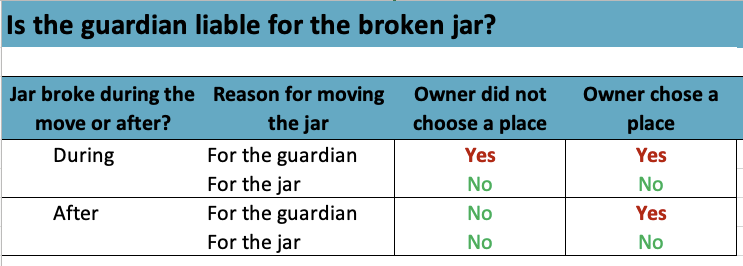
Someone a man left a jar [barrel?] with his fellow and the owners did not assign it a special place and he moved it and it broke: if it was broken while he was handling it then, if for his own sake he is liable but if for the sake of the jar, he is not liable.
But if it was broken after he had put it in place, whether he moved it for his own sake or for the sake of the jar, he is exempt.
If the owner had assigned it a special place, and the guardian moved it and it broke: Whether or not it broke while he was handling it or after he had put it in its place: if for his own sake he is liable, if for the sake of the jar, he is not liable.
הַמַּפְקִיד מָעוֹת אֵצֶל חֲבֵרוֹ, צְרָרָן וְהִפְשִׁילָן לְאַחֲרָיו, מְסָרָן לִבְנוֹ וּלְבִתּוֹ הַקְּטַנִּים, וְנָעַל בִּפְנֵיהֶם שֶׁלֹּא כָרָאוּי,
חַיָּב, שֶׁלֹּא שָׁמַר כְּדֶרֶךְ הַשּׁוֹמְרִים.
וְאִם שָׁמַר כְּדֶרֶךְ הַשּׁוֹמְרִים, פָּטוּר.
Someone who left money in his fellow’s keeping and his fellow bound it up and hung it over his back, or delivered it to his son or his daughter who were minors, or locked it up improperly.
He is liable since he did not guard in the way of guardians.
If he guarded it in the way of guardians he is exempt.
הַמַּפְקִיד מָעוֹת אֵצֶל שֻׁלְחָנִי, אִם צְרוּרִין, לֹא יִשְׁתַּמֵּשׁ בָּהֶם, לְפִיכָךְ אִם אָבְדוּ אֵינוֹ חַיָּב בְּאַחֲרָיוּתָן,
מֻתָּרִין, יִשְׁתַּמֵּשׁ בָּהֶן, לְפִיכָךְ אִם אָבְדוּ חַיָּב בְּאַחֲרָיוּתָן.
אֵצֶל בַּעַל הַבַּיִת, בֵּין צְרוּרִין וּבֵין מֻתָּרִים לֹא יִשְׁתַּמֵּשׁ בָּהֶן, לְפִיכָךְ אִם אָבְדוּ אֵינוֹ חַיָּב בְּאַחֲרָיוּתָן.
חֶנְוָנִי כְּבַעַל הַבַּיִת, דִּבְרֵי רַבִּי מֵאִיר.
רַבִּי יְהוּדָה אוֹמֵר, חֶנְוָנִי כַּשֻּׁלְחָנִי:
If a man left coins with a money-changer: if they were tied up, he may not use them. Therefore, if they were lost, he is not responsible.
If they were loose, he may use them. Therefore, ifthey were lost, he is responsible.
With a householder, whether they were loose or tied up, he may not use them. Therefore, if they were lost he is not responsible.
A shopkeeper is like a householder, according to Rabbi Meir.
Rabbi Judah says a shopkeeper is like a money-changer.
המפקיד מעות אצל שולחני אם צרורין לא ישתמש כו': צרורין הוא שיהיה קשר משונה או שישים עליהם חותם ומה שזולת זה קרואין מותרין.
ומה שאמר חייב באחריותן ואפי' לא נשתמש בהן לפי שאם נתיר להם להיות משתמש בהם נעשה שומר שכר עליהם ועוד יתבאר לך דין שומר שכר
אבל כשיהנה מהם ונשתמש בהם אפילו נאנסו חייב באחריותן לפי שנעשה עליו כמו חוב. והלכה כר"י:
Tzerurin (‘tied up’) means that the coins are bound with an unusual knot, or that he has placed a seal on them. Anything other than this is called mutarin (‘loose’).
When the Mishnah says that the money‑changer is liable for them even if he did not use them, this is because once we permit him to use the coins, he becomes a paid guardian (shomer sakhar) over them. The laws of a paid guardian will be explained later.
But when he actually benefits from them and uses them, then even if they are lost through unavoidable circumstances, he is fully liable, because his obligation becomes like a debt upon him.
And the halakhah follows Rabbi Yehudah.
כִּֽי־יִתֵּן֩ אִ֨ישׁ אֶל־רֵעֵ֜הוּ כֶּ֤סֶף אֽוֹ־כֵלִים֙ לִשְׁמֹ֔ר וְגֻנַּ֖ב מִבֵּ֣ית הָאִ֑ישׁ אִם־יִמָּצֵ֥א הַגַּנָּ֖ב יְשַׁלֵּ֥ם שְׁנָֽיִם׃
אִם־לֹ֤א יִמָּצֵא֙ הַגַּנָּ֔ב וְנִקְרַ֥ב בַּֽעַל־הַבַּ֖יִת אֶל־הָֽאֱלֹהִ֑ים אִם־לֹ֥א שָׁלַ֛ח יָד֖וֹ בִּמְלֶ֥אכֶת רֵעֵֽהוּ׃
עַֽל־כׇּל־דְּבַר־פֶּ֡שַׁע עַל־שׁ֡וֹר עַל־חֲ֠מ֠וֹר עַל־שֶׂ֨ה עַל־שַׂלְמָ֜ה עַל־כׇּל־אֲבֵדָ֗ה אֲשֶׁ֤ר יֹאמַר֙ כִּי־ה֣וּא זֶ֔ה עַ֚ד הָֽאֱלֹהִ֔ים יָבֹ֖א דְּבַר־שְׁנֵיהֶ֑ם אֲשֶׁ֤ר יַרְשִׁיעֻן֙ אֱלֹהִ֔ים יְשַׁלֵּ֥ם שְׁנַ֖יִם לְרֵעֵֽהוּ׃ {ס}
If a man shall deliver to his neighbour money or vessels to keep, and it be stolen out of the man’s house; if the thief be found, he shall pay double.
If the thief be not found, then the master of the house shall be brought to the judges, to swear that he has not put his hand to his neighbour’s goods.
For all manner of trespass, whether it be for ox, for ass, for sheep, for a garment, or for any manner of lost thing, of which one can say, This is it, the cause of both parties shall come before the judges; and whom the judges shall condemn, he shall pay double to his neighbour.
הַשּׁוֹלֵחַ יָד בְּפִקָּדוֹן, בֵּית שַׁמַּאי אוֹמְרִים, יִלְקֶה בְחָסֵר וּבְיָתֵר.
וּבֵית הִלֵּל אוֹמְרִים, כִּשְׁעַת הוֹצָאָה.
רַבִּי עֲקִיבָא אוֹמֵר, כִּשְׁעַת הַתְּבִיעָה.
הַחוֹשֵׁב לִשְׁלֹחַ יָד בְּפִקָּדוֹן, בֵּית שַׁמַּאי אוֹמְרִים, חַיָּב. וּבֵית הִלֵּל אוֹמְרִים, אֵינוֹ חַיָּב עַד שֶׁיִּשְׁלַח בּוֹ יָד, שֶׁנֶּאֱמַר אִם לֹא שָׁלַח יָדוֹ בִּמְלֶאכֶת רֵעֵהוּ.
כֵּיצַד. הִטָּה אֶת הֶחָבִית וְנָטַל הֵימֶנָּה רְבִיעִית, וְנִשְׁבְּרָה, אֵינוֹ מְשַׁלֵּם אֶלָּא רְבִיעִית.
הִגְבִּיהָהּ וְנָטַל הֵימֶנָּה רְבִיעִית, וְנִשְׁבְּרָה, מְשַׁלֵּם דְּמֵי כֻלָּהּ:
If someone puts their hand on a deposit: Beyt Shammai say he is charged for what is missing and what is added [when he gives it back].
Beyt Hillel say, "at the time at which he took it out" [from the owner's house, i.e. at the time of the deposit].
Rabbi Akiva says, "at the time when it is claimed".
Someone who expresses his intention to put their hand on a deposit: Beyt Shammai say he is liable and Bet Hillel say he is not liable until he touches it, as it says (Exodus 22:7): “If he had not put his hand onto his neighbor’s property”. How is this so? He tilted the jug and took a quarter-log of wine and the jug was then broken, he only pays the quarter-log.
If he lifted it and then took a quarter-log and the jug was then broken, he pays for the whole jug.
בֵּית שַׁמַּאי מְחַיְּבִים. דִּכְתִיב (שמות כב) עַל כָּל דְּבַר פֶּשַׁע, מִשָּׁעָה שֶׁדִּבֵּר לִשְׁלֹחַ יָד הָוֵי פוֹשֵׁעַ:
As it is written (Exodus 22:8): “For all manner of trespass" [davar] – from the time that he spoke to misappropriate, he is considered negligent.
אֵינוֹ מְשַׁלֵּם אֶלָּא רְבִיעִית. דִּשְׁלִיחוּת יָד אֵינוֹ מִתְחַיֵּב בָּאֳנָסִים עַד שֶׁיִּמְשֹׁךְ אוֹ יַגְבִּיהַּ דַּהֲוֵי קְנִיָּה:
Misappropriation does not make one liable for unavoidable accidents until he takes possession by drawing/seizing an object or lift it up which is acquisition.
וְכִֽי־תִמְכְּר֤וּ מִמְכָּר֙ לַעֲמִיתֶ֔ךָ א֥וֹ קָנֹ֖ה מִיַּ֣ד עֲמִיתֶ֑ךָ אַל־תּוֹנ֖וּ אִ֥ישׁ אֶת־אָחִֽיו׃
When you sell something to your neighbor, or buy from your neighbour's hand, you shall not wrong one another.
הַכֶּסֶף קוֹנֶה אֶת הַזָּהָב, וְהַזָּהָב אֵינוּ קוֹנֶה אֶת הַכֶּסֶף.
[הַזָּהָב קוֹנֶה אֶת הַכֶּסֶף, וְהַכֶּסֶף אֵינוּ קוֹנֶה אֶת הַזָּהָב]
הַנְּחֹשֶׁת קוֹנֵה אֶת הַכֶּסֶף, וְהַכֶּסֶף אֵינוּ קוֹנֶה אֶת הַנְּחֹשֶׁת.
מָעוֹת הָרָעוֹת קוֹנוֹת אֶת הַיָּפוֹת, וְהַיָּפוֹת אֵינָן קוֹנוֹת אֶת הָרָעוֹת.
אֲסִימוֹן קוֹנֶה אֶת הַמַּטְבֵּעַ, וְהַמַּטְבֵּעַ אֵינוּ קוֹנֶה אֶת אֲסִימוֹן.
הַמִּטַּלְטְלִין קוֹנִים אֶת הַמַּטְבֵּעַ, וְהַמַּטְבֵּעַ אֵינוּ קוֹנֶה אֶת הַמִּטַּלְטְלִים.
זֶה הַכְּלָל: כָּל הַמִּטַּלְטְלִין קוֹנִים זֶה אֶת זֶה.
Silver acquires gold, but gold does not acquire silver.
[Gold acquires silver, but silver does not acquire gold].
Copper acquires silver, but silver does not acquire copper.
Bad coins acquire good coins but good coins do not acquire bad coins.
A blank [unminted coin] acquires a minted coin, but a minted coin does not acquire a blank.
Movable property acquires coin, but coin does not acquire movable property.
This is the general rule: all types of movable property acquire each other.
כֵּיצַד? מָשַׁךְ מִמֶּנּוּ פֵרוֹת וְלֹא נָתַן לוֹ מָעוֹת, אֵינוּ יָכוֹל לַחְזֹר בּוֹ.
נָתַן לוֹ מָעוֹת וְלֹא מָשַׁךְ מִמֶּנּוּ פֵרוֹת, יָכוֹל לַחְזֹר בּוֹ.
אֲבָל אָמָרוּ: מִי שֶׁפָּרַע מֵאַנְשֵׁי דוֹר הַמַּבּוּל, עָתִיד לְהִפָּרַע מִמִּי שֶׁאֵינוּ עוֹמֵד בְּדִבּוּרוֹ.
רְבִּי שִׁמְעוֹן אוֹמֵר: כָּל שֶׁהַכֶּסֶף בְּיָדוֹ יָדוֹ לָעֶלְיוֹנָה.
How? He pulled the produce away from him but did not give him the money, he cannot retract.
He gave the money but did not pull the produce away from him, he may retract.
But they said: “He that punished the generation of the flood will punish someone who does not stand by his word.
Rabbi Shimon says: “He that has the money has the upper hand.”
הלכה:הַכֶּסֶף קוֹנֶה אֶת הַזָּהָב כול׳. זֶהוּ כְּלָלוֹ שֶׁלְּדָבָר. כָּל הַיָּרוּד מֵחֲבֵירוֹ קוֹנֶה אֶת חֲבֵירוֹ.
אָמַר רִבִּי חִיָיה בַּר אַשִּׁי.
מָאן תַּנִּיתָהּ. רִבִּי שִׁמְעוֹן בֵּרִבִּי. אָמַר לֵיהּ אָבוֹי. חֲזוֹר בָּךְ וְתַנִּי כְהָדָא. הַזָּהָב קוֹנֶה אֶת הַכֶּסֶף.
אָמַר לֵיהּ. לֵינָא חָזַר בִּי. דְּעַד דַּהֲוָה חֵילָךְ עָלַיִךְ אַתְנִיתָנִי. הַכֶּסֶף קוֹנֶה אֶת הַזָּהָב. מִילְּתֵיהּ דְּרִבִּי אָמְרָה. זָהָב כְּפֵירוֹת. מַתְנִיתָא אָמְרָה. כֶּסֶף כְּפֵירוֹת.
HALAKHAH: “Silver acquires gold,” etc. This is a principle of the matter: Anything worth less that the other acquires the other.
Rabbi Ḥiyya bar Ashi said:
Who stated this? Rabbi Simeon ben Rebbi. His father told him, change your opinion and state like this: “Gold acquires silver.” He told him, I do not change my opinion since when you were strong you instructed me to state: “Silver acquires gold.”
The word of Rebbi implies that gold is like produce. The Mishnah implies that silver is like produce.
הָהוֹנָיָה אַרְבַּע כֶּסֶף מֵעֶשְׂרִים וְאַרְבַּע כֶּסֶף לַסֶּלַע, שְׁתוּת לְמֶקַח.
עַד אֵמָּתַי מֻתָּר לְהַחְזִיר? כְּדֵי שֶׁיַּרְאֶה לַתַּגָּר אוֹ לִקְרוֹבוֹ.
הוֹרָה רְבִּי טַרְפוֹן בְּלוֹד: הָהוֹנָיָה שְׁמוֹנַת כֶּסֶף לַסֶּלַע, שְׁלִישׁ לְמֶקַח. וְשָׂמְחוּ תַגָּרֵי לוֹד.
אָמַר לָהֶם: מֻתָּר לְהַחְזִיר כָּל הַיּוֹם. אָמְרוּ: "יַנִּיח לָנוּ רְבִּי טַרְפוֹן מְקוֹמֵנוּ." וְחָזְרוּ לְדִבְרֵי חֲכָמִים.
Price-gouging is an overcharge of 4 pieces of silver out of 24 pieces of silver, which make up a sela, 1/6 of the purchase.
Until what time is it permitted to retract? Enough to show to a merchant or to his relative.
Rabbi Tarfon taught in Lod: “Price-gouging is an overcharge of 8 pieces of silver to the seller, ⅓ of the purchase price”, and the merchants of Lod celebrated.
He said to them: “It is permitted to retract all day.” They said, “Let Rabbi Tarfon leave us as we were”, and they reverted to the teaching of the Sages.
אוֹנָאָה f. (יני; cmp. הוֹנָאָה) 1)oppression, wrong.B. Mets. 58ᵇגדולה אוֹנָאַת דברים מא׳ ממון the wrong you do by means of words (wounding one’s feelings) is worse than that by pecuniary imposition. Ib. 59ᵃלעולם יהא … באוֹנָאַת אשתו וכ׳ one should always be on his guard not to wound his wife’s feeling, for as her tears are frequent אוֹנָאָתָהּ מרובה so is her sense of wrong (sensibility) deep. —2) (law) imposition, overreaching, fraudulent representation (which invalidates the transaction or requires redress); hence, redress in case of overreaching. Y. B. Mets. IV, 9ᵈ top, a. fr. whoever concludes a bargain במנת שאין לו א׳ וכ׳ with the provision that no legal redress shall be resorted to, is notwithstanding entitled to redress.—Denomin. Verb(אוֹנָה), Hithpa. הִתְאוֹנֶהto be imposed upon, to feel one’s self overreached. Y. B. Mets. IV, 9ᵈ top. בשעה שהמוכר מִתְאוֹנֶה וכ׳ if the seller sues for undue advantage taken of him, he has the privilege of redress, provided the advantage amounts to one fifth or more of the price charged; if the buyer sues &c. [In Babli the denomin. verb is אִינָּה, v. אני.]
כשיקח מה ששוה ששה בחמשה או מה ששוה ששה בשבעה או מה ששוה שבעה בששה כל אלה שתות הוא נקרא ואונאה הוא
אין הפרש בין שתות הדמים או שתות הסחורה והלוקח והמוכר יחזור כל אחד משניהם באונאה אלא שלוקח חוזר עד כדי שיראה לתגר או לקרובו והמוכר יחזור באונאה ואפי' אחר ימים רבים
וזהו מה שאמרו מוכר חוזר לעולם כי לפי שאין הסחורה אצלו אינו יודע דמיה עד שיזדמן לו שיראה כמותה לידע דמיה.
ואין הלכה כרבי טרפון:
When someone buys something which is worth six for five, or something which is worth six for seven, or something which is worth seven for six, all these are sixths and this is called "price-gouging".
There is no distinction between a sixth of money and a sixth in commerce and the buyer and the seller can equally retract on "price-gouging" except that except that the buyer can retract for as long as it takes to show the object to a merchant or to a kinsman whereas the seller can retract after many days. And this is the meaning of the expression “the seller can retract forever” for, because the object is not on his premises, he is not aware of its value until he happens to see something similar and to ascertain its value.
And the halakha does not go according to Rabbi Tarfon.
אֶחָד הַלּוֹקֵחַ וְאֶחָד הַמּוֹכֵר, יֵשׁ לָהֶם הוֹנָיָה. כַּשֵּׁם שֶׁהוֹנָיָה לַהֶדְיוֹט, כָּךְ הוֹנָיָה לַתַּגָּר.
רְבִּי יְהוּדָה אוֹמֵר: אֵין לַתַּגָּר הוֹנָיָה.
מִי שֶׁהֻטַּל עָלָיו, יָדוֹ לָעֶלְיוֹנָה, שֶׁהוּא אוֹמֵר לוֹ "תֶּן לִי אֶת מָעוֹתַי", אוֹ "תֶּן לִי מַה שֶּׁהוֹנֵיתַנִי." <אמ'>
Price-gouging applies both to the buyer and the seller and, just as it applies to an ordinary person, it applies to a merchant.
Rabbi Judah said: “The law of price-gouging does not apply to the merchant.”
He who has been subjected to it has the upper hand: if he wants he may say to the other, “Give me back my money or give me back the amount you overcharged me.”
