




 Save
Save Copy
Copy Add to Collection
 Export to Google Docs
 Share
Share
Karpas is both a section and a food eaten during that section of the Passover Seder. It is also placed on the Seder plate. Karpas is any vegetable, usually green but also potentially a baked potato due to it being affordable in Eastern Europe at Passover and having the right blessing. The vegetable is dipped in salt water or something else as such. Once the blessing has been said over the Karpas, many families bring out cut vegetables and dips to keep the edge off of hunger until dinner.
כַּרְפַּס
לוקח מן הכרפס פחות מכזית – כדי שלא יתחייב בברכה אחרונה – טובל במי מלח, מברך "בורא פרי האדמה", ומכווין לפטור בברכה גם את המרור. אוכל בלא הסבה.
בָּרוּךְ אַתָּה יהוה, אֱלֹהֵינוּ מֶלֶךְ הָעוֹלָם, בּוֹרֵא פְּרִי הָאֲדָמָה.
KARPAS
The participants wash their hands but do not say a blessing. A small quantity of greens is dipped in salt water. Say the following over the karpas: Praised
are You, LORD our God, Ruler of the Universe, who creates the fruit of the ground.
Eat without reclining.
(ו)ח֣וּר ׀כַּרְפַּ֣ס וּתְכֵ֗לֶת אָחוּז֙ בְּחַבְלֵי־ב֣וּץ וְאַרְגָּמָ֔ן עַל־גְּלִ֥ילֵי כֶ֖סֶף וְעַמּ֣וּדֵי שֵׁ֑שׁ מִטּ֣וֹת ׀ זָהָ֣ב וָכֶ֗סֶף עַ֛ל רִֽצְפַ֥ת בַּהַט־וָשֵׁ֖שׁ וְדַ֥ר וְסֹחָֽרֶת׃
(6) [There were hangings of] white cotton [karpas] and blue wool, caught up by cords of fine linen and purple wool to silver rods and alabaster columns; and there were couches of gold and silver on a pavement of marble, alabaster, mother-of-pearl, and mosaics.
(כב) וּלְקַחְתֶּ֞ם אֲגֻדַּ֣ת אֵז֗וֹב וּטְבַלְתֶּם֮ בַּדָּ֣ם אֲשֶׁר־בַּסַּף֒ וְהִגַּעְתֶּ֤ם אֶל־הַמַּשְׁקוֹף֙ וְאֶל־שְׁתֵּ֣י הַמְּזוּזֹ֔ת מִן־הַדָּ֖ם אֲשֶׁ֣ר בַּסָּ֑ף וְאַתֶּ֗ם לֹ֥א תֵצְא֛וּ אִ֥ישׁ מִפֶּֽתַח־בֵּית֖וֹ עַד־בֹּֽקֶר׃
(22) Take a bunch of hyssop, dip it in the blood that is in the basin, and apply some of the blood that is in the basin to the lintel and to the two doorposts. None of you shall go outside the door of your house until morning.
(ג) וְיִשְׂרָאֵ֗ל אָהַ֤ב אֶת־יוֹסֵף֙ מִכׇּל־בָּנָ֔יו כִּֽי־בֶן־זְקֻנִ֥ים ה֖וּא ל֑וֹ וְעָ֥שָׂה ל֖וֹ כְּתֹ֥נֶת פַּסִּֽים׃
(3) Now Israel loved Joseph best of all his sons—he was the child of his old age; and he had made him an ornamented tunic.
There is symbolic significance in these two acts. The Exodus began and ended with acts of dipping. It began when Joseph’s brothers sold him into slavery. They dipped his robe in the blood of a slaughtered goat (Gen. 37:31) and brought it to Jacob to persuade him that Joseph had been attacked and killed by a wild animal. The sale of Joseph into slavery in Egypt was the beginning of the long process through which the entire family of Jacob traveled to Egypt and eventually became slaves.The exile ended with the Israelites’ taking bunches of hyssop, dipping them in the blood of the Paschal offering, and daubing them on the door-frames of their houses (Ex. 12:22). God “passed over” these houses during the final plague, after which they went free.
The two dippings recall these events. The karpas, itself sweet, is dipped in salt and becomes sour. The maror, itself bitter, is dipped in the sweet aroset and has some of the bitterness removed. These two acts remind us that freedom, which is sweet, becomes sour when we use it to mistreat others. Slavery, which is bitter, is sweetened when collective suffering becomes human solidarity and thus a prelude to freedom.
- The only actual mention is in Megillat Esther to describe the king's palace.
- There are two other "dippings" that are later connected to karpas.
(ג) הֵבִיאוּ לְפָנָיו, מְטַבֵּל בַּחֲזֶרֶת, עַד שֶׁמַּגִּיעַ לְפַרְפֶּרֶת הַפַּת. הֵבִיאוּ לְפָנָיו מַצָּה וַחֲזֶרֶת וַחֲרֹסֶת וּשְׁנֵי תַבְשִׁילִין, אַף עַל פִּי שֶׁאֵין חֲרֹסֶת מִצְוָה. רַבִּי אֱלִיעֶזֶר בְּרַבִּי צָדוֹק אוֹמֵר, מִצְוָה. וּבַמִּקְדָּשׁ הָיוּ מְבִיאִים לְפָנָיו גּוּפוֹ שֶׁל פָּסַח:
(3) The attendants brought vegetables before the leader of the seder prior to the meal, if there were no other vegetables on the table. He dips the ḥazeret into water or vinegar, to taste some food before he reaches the dessert of the bread, i.e., the bitter herbs, which were eaten after the matza. They brought before him matza and ḥazeret and ḥaroset, and at least two cooked dishes in honor of the Festival. The tanna comments that this was the practice, although eating ḥaroset is not a mitzva but merely a custom. Rabbi Eliezer ben Tzadok says: Actually, it is a mitzva to eat ḥaroset. And in the period when the Temple stood and they offered the Paschal lamb, they brought before him the body of the Paschal lamb.
(ד) מָזְגוּ לוֹ כוֹס שֵׁנִי, וְכָאן הַבֵּן שׁוֹאֵל אָבִיו, וְאִם אֵין דַּעַת בַּבֵּן, אָבִיו מְלַמְּדוֹ, מַה נִּשְׁתַּנָּה הַלַּיְלָה הַזֶּה מִכָּל הַלֵּילוֹת, שֶׁבְּכָל הַלֵּילוֹת אָנוּ אוֹכְלִין חָמֵץ וּמַצָּה, הַלַּיְלָה הַזֶּה כֻלּוֹ מַצָּה. שֶׁבְּכָל הַלֵּילוֹת אָנוּ אוֹכְלִין שְׁאָר יְרָקוֹת, הַלַּיְלָה הַזֶּה מָרוֹר. שֶׁבְּכָל הַלֵּילוֹת אָנוּ אוֹכְלִין בָּשָׂר צָלִי, שָׁלוּק, וּמְבֻשָּׁל, הַלַּיְלָה הַזֶּה כֻלּוֹ צָלִי. שֶׁבְּכָל הַלֵּילוֹת אָנוּ מַטְבִּילִין פַּעַם אַחַת, הַלַּיְלָה הַזֶּה שְׁתֵּי פְעָמִים.
(4) The attendants poured the second cup for the leader of the seder, and here the son asks his father the questions about the differences between Passover night and a regular night. And if the son does not have the intelligence to ask questions on his own, his father teaches him the questions. The mishna lists the questions: Why is this night different from all other nights? As on all other nights we eat leavened bread and matza as preferred; on this night all our bread is matza. As on all other nights we eat other vegetables; on this night we eat bitter herbs. The mishna continues its list of the questions. When the Temple was standing one would ask: As on all other nights we eat either roasted, stewed, or cooked meat, but on this night all the meat is the roasted meat of the Paschal lamb. The final question was asked even after the destruction of the Temple: As on all other nights we dip the vegetables in a liquid during the meal only once; however, on this night we dip twice.
(א) הַפֵּגָם, וְהַיַּרְבּוּזִין הַשּׁוֹטִים, וְהַחֲלַגְלוֹגִית, כֻּסְבָּר שֶׁבֶּהָרִים, וְהַכַּרְפַּס שֶׁבַּנְּהָרוֹת, וְהַגַּרְגֵּר שֶׁל אֲפָר, פְּטוּרִין מִן הַמַּעַשְׂרוֹת, וְנִלְקָחִין מִכָּל אָדָם בַּשְּׁבִיעִית, שֶׁאֵין כַּיּוֹצֵא בָהֶם נִשְׁמָר.
(1) Rue, goosefoot, purslane, hill coriander, celery [or: water parsley], and meadow-berries, are exempt from tithes. And they may be purchased from anyone during the sabbatical year, since such produce is not usually stored.
- A vegetable is dipped in water or vinegar early in the Seder. No blessing for it is mentioned.
- There are 2 dippings during the Seder (per the Four Questions)
- "Karpas" is only mentioned in reference to a plant (either parsley or celery) but not in connection to Passover.
גְּמָ׳ אָמַר רֵישׁ לָקִישׁ: זֹאת אוֹמֶרֶת מִצְוֹת צְרִיכוֹת כַּוּוֹנָה. כֵּיוָן דְּלָא בְּעִידָּן חִיּוּבָא דְּמָרוֹר הוּא דְּאָכֵיל לֵיהּ, בְּ״בוֹרֵא פְּרִי הָאֲדָמָה״ הוּא דְּאָכֵיל לֵיהּ. וְדִילְמָא לָא אִיכַּוַּון לְמָרוֹר, הִלְכָּךְ בָּעֵי לְמֶהְדַּר לְאַטְבּוֹלֵי לְשֵׁם מָרוֹר. דְּאִי סָלְקָא דַעְתָּךְ מִצְוָה לָא בָּעֲיָא כַּוּוֹנָה, לְמָה לָךְ תְּרֵי טִיבּוּלֵי? וְהָא טַבֵּיל לֵיהּ חֲדָא זִימְנָא! מִמַּאי? דִּילְמָא: לְעוֹלָם מִצְוֹת אֵין צְרִיכוֹת כַּוּוֹנָה, וּדְקָאָמְרַתְּ תְּרֵי טִיבּוּלֵי לְמָה לִי? כִּי הֵיכִי דְּלֶיהְוֵי הֶיכֵּירָא לְתִינוֹקוֹת. וְכִי תֵימָא: אִם כֵּן לַישְׁמְעִינַן שְׁאָר יְרָקוֹת? אִי אַשְׁמְעִינַן שְׁאָר יְרָקוֹת, הֲוָה אָמֵינָא: הֵיכָא דְּאִיכָּא שְׁאָר יְרָקוֹת הוּא דְּבָעֵינַן תְּרֵי טִיבּוּלֵי, אֲבָל חֲזֶרֶת לְחוֹדֵהּ לָא בָּעֵי תְּרֵי טִיבּוּלֵי, קָמַשְׁמַע לַן דַּאֲפִילּוּ חֲזֶרֶת בָּעֵינַן תְּרֵי טִיבּוּלֵי, כִּי הֵיכִי דְּלֶיהְוֵי בֵּיהּ הֶיכֵּירָא לְתִינוֹקוֹת. וְעוֹד תַּנְיָא: אֲכָלָן דְּמַאי — יָצָא. אֲכָלָן בְּלֹא מִתְכַּוֵּין — יָצָא. אֲכָלָן לַחֲצָאִין — יָצָא. וּבִלְבַד שֶׁלֹּא יִשְׁהֶא בֵּין אֲכִילָה לַחֲבֶירְתָּהּ יוֹתֵר מִכְּדֵי אֲכִילַת פְּרָס! תַּנָּאֵי הִיא. דְּתַנְיָא, רַבִּי יוֹסֵי אוֹמֵר: אַף עַל פִּי שֶׁטִּיבֵּל בַּחֲזֶרֶת — מִצְוָה לְהָבִיא לְפָנָיו חֲזֶרֶת וַחֲרוֹסֶת וּשְׁנֵי תַבְשִׁילִין. וְאַכַּתִּי מִמַּאי? דִּילְמָא קָסָבַר רַבִּי יוֹסֵי מִצְוֹת אֵין צְרִיכוֹת כַּוָּונָה, וְהַאי דְּבָעֵינַן תְּרֵי טִיבּוּלֵי כִּי הֵיכִי דְּתִיהְוֵי הֶיכֵּירָא לְתִינוֹקוֹת. אִם כֵּן, מַאי ״מִצְוָה״?!
GEMARA:Reish Lakish said: That is to say that mitzvot require intent. One who performs a mitzva must do so with the intent to fulfill his obligation. The proof of this from the mishna is that since one does not eat the lettuce at the time of his obligation to eat bitter herbs, he eats it after reciting only one blessing: Who creates fruit of the ground. And clearly the reason is that perhaps he did not intend to fulfill his obligation to eat bitter herbs, and therefore he needs to dip it again for the purpose of bitter herbs. For if it could enter your mind that mitzvot do not require intent, why do you need two dippings? But he has already dipped the lettuce once.The Gemara rejects this contention: From where do you know that this is the case? Perhaps I can say that actually mitzvot do not require intent. And that which you said, why do I need two dippings, perhaps the reason is so that there should be a conspicuous distinction for the children, which will cause them to inquire into the difference between this night and all others. And if you say: If so, let the tanna teach us this halakha with regard to other vegetables as well, as there is no obvious reason that lettuce is chosen for this distinction. In response, I would say that had the mishna taught us about other vegetables, I would have said that it is only where there are other vegetables that one requires two dippings, one for the other vegetables and one for the bitter herbs; however, if one has only ḥazeret, he does not require two dippings, as one dipping is sufficient. Therefore, the mishna teaches us that even if one has just ḥazeret he requires two dippings, so that there be a conspicuous distinction for the children.And furthermore, it was taught in a baraita: On Passover, if one ate vegetables of doubtfully tithed produce, i.e., he bought the vegetables from an am ha’aretz, he has fulfilled his obligation. If he ate them without the intent of the mitzva, he has fulfilled his obligation. If he ate them in halves, by eating half an olive-bulk of bitter herbs, pausing, and then eating an additional half an olive-bulk, he has fulfilled his obligation. And the Gemara adds: With regard to this last case, one who eats an olive-bulk in halves, that is the halakha, provided that he does not pause between eating the first half an olive-bulk and the other half an olive-bulk more than the time it takes to eat a half-loaf of bread. If one takes longer than this amount of time, the two parts of bitter herbs cannot combine. This baraita indicates that even if one eats the bitter herbs without intention he has fulfilled his obligation, which presents a difficulty for Reish Lakish. The Gemara answers: The issue of whether or not mitzvot require intent is a dispute between tanna’im, as it was taught in a baraita: Rabbi Yosei says: Although one has already dipped the ḥazeret once, it is a mitzva to bring before him ḥazeret and ḥaroset, and two cooked dishes. Apparently, he lacked intention during his first consumption of lettuce, and therefore he must be given additional lettuce with which to fulfill his obligation. The Gemara asks: And still this is no conclusive proof, as from where do I know that Rabbi Yosei is of the opinion that mitzvot require intent? Perhaps Rabbi Yosei maintains that mitzvot do not require intent, and the reason that we require two dippings is so that there should be a conspicuous distinction for the children. The Gemara rejects this argument: If so, for what reason does Rabbi Yosei use the term mitzva? There is no mitzva from the Torah to provide a distinction to stimulate the curiosity of the young ones. The mitzva is to eat bitter herbs, and evidently this individual must return and eat them again because he lacked intention the first time.
פְּשִׁיטָא, הֵיכָא דְּאִיכָּא שְׁאָר יְרָקוֹת, מְבָרֵךְ אַשְּׁאָר יְרָקוֹת ״בּוֹרֵא פְּרִי הָאֲדָמָה״ וְאָכֵיל, וַהֲדַר מְבָרֵךְ ״עַל אֲכִילַת מָרוֹר״ וְאָכֵיל. הֵיכָא דְּלֵיכָּא אֶלָּא חַסָּא, מַאי? אָמַר רַב הוּנָא: מְבָרֵךְ מֵעִיקָּרָא אַמָּרוֹר ״בּוֹרֵא פְּרִי הָאֲדָמָה״ וְאָכֵיל, וּלְבַסּוֹף מְבָרֵךְ עֲלֵיהּ ״עַל אֲכִילַת מָרוֹר״ וְאָכֵיל. מַתְקֵיף לַהּ רַב חִסְדָּא: לְאַחַר שֶׁמִּילֵּא כְּרֵיסוֹ הֵימֶנּוּ חוֹזֵר וּמְבָרֵךְ עֲלֵיהּ? אֶלָּא אָמַר רַב חִסְדָּא: מֵעִיקָּרָא מְבָרֵךְ עֲלֵיהּ ״בּוֹרֵא פְּרִי הָאֲדָמָה״ וְ״עַל אֲכִילַת מָרוֹר״ וְאָכֵיל, וּלְבַסּוֹף אָכֵיל אֲכִילַת חַסָּא בְּלֹא בְּרָכָה. בְּסוּרְיָא עָבְדִי כְּרַב הוּנָא, וְרַב שֵׁשֶׁת בְּרֵיהּ דְּרַב יְהוֹשֻׁעַ עָבֵיד כְּרַב חִסְדָּא. וְהִלְכְתָא כְּווֹתֵיהּ דְּרַב חִסְדָּא. רַב אַחָא בְּרֵיהּ דְּרָבָא מְהַדַּר אַשְּׁאָר יְרָקוֹת לְאַפּוֹקֵי נַפְשֵׁיהּ מִפְּלוּגְתָּא.
With regard to the halakha of eating vegetables, the Gemara clarifies: It is obvious that where there are other vegetables available besides bitter herbs, at the first dipping one recites over the other vegetables the blessing: Who creates fruit of the ground, and eats, with the intention of including in this blessing the bitter herbs he will eat later. And then, at the second dipping, he recites the blessing: Commanded us over eating bitter herbs, on the lettuce and eats it. However, what is the halakha where there is only lettuce available? When should one recite each blessing? Rav Huna said: One initially recites the blessing: Who creates fruit of the ground, over the bitter herbs, i.e., the lettuce, and eats them. And ultimately, after the matza, one recites the blessing: Commanded us over eating bitter herbs, over the lettuce and eats it. Rav Ḥisda strongly objects to this opinion: Do you think that after one fills his belly with lettuce, he then recites another blessing over it? Rather, Rav Ḥisda said: Initially one recites two blessings over the lettuce: Who creates fruit of the ground, and: Commanded us over eating bitter herbs, and he eats it; and later in the seder he eats lettuce without a blessing.The Gemara comments: In Syria, they act in accordance with the opinion of Rav Huna. And Rav Sheshet, son of Rav Yehoshua, acted in accordance with the opinion of Rav Ḥisda. The Gemara summarizes: And the halakha is in accordance with the opinion of Rav Ḥisda. The Gemara relates that Rav Aḥa, son of Rava, would seek other vegetables for Passover to preclude himself from taking sides in the dispute. He first recited only the blessing: Who creates fruit of the ground, and later added the blessing: Commanded us over eating bitter herbs, thereby satisfying all opinions.
אָמַר רַבִּי אֶלְעָזָר אָמַר רַב אוֹשַׁעְיָא: כׇּל שֶׁטִּיבּוּלוֹ בְּמַשְׁקֶה — צָרִיךְ נְטִילַת יָדַיִם.
Rabbi Elazar said that Rav Oshaya said: Anything that is dipped in a liquid before it is eaten requires the ritual of washing of the hands. The obligation to wash one’s hands was instituted to preserve ritual purity and to prevent people from causing teruma food to contract ritual impurity. Hands are generally considered impure to the second degree of ritual impurity, and they confer impurity upon any liquid with which they come in contact. Liquids that become ritually impure are automatically impure to the first degree and will therefore transfer ritual impurity to any food that is dipped in them.
״חוּר כַּרְפַּס וּתְכֵלֶת״. מַאי חוּר? רַב אָמַר: חָרֵי חָרֵי, וּשְׁמוּאֵל אָמַר: מֵילָת לְבָנָה הִצִּיעַ לָהֶם. ״כַּרְפַּס״, אָמַר רַבִּי יוֹסֵי בַּר חֲנִינָא: כָּרִים שֶׁל פַּסִּים.
The verse states: “There were hangings of ḥur, karpas, and sky blue” (Esther 1:6). The Gemara asks: What is ḥur? Rav said: A fabric fashioned with many holes [ḥarei ḥarei], similar to lace. And Shmuel said: He spread out for them carpets of white wool, as the word ḥavar means white. And what is karpas? Rabbi Yosei bar Ḥanina said: Cushions [karim] of velvet [pasim].
מֵתִיב רַב שֵׁשֶׁת: וּמִן הַמּוּפְקָר שָׁלֹשׁ סְעוּדוֹת וְתוּ לָא? וּרְמִינְהִי: הַפֵּיגָם וְהַיַּרְבּוּזִין וְהַשֵּׁיטִים וַחֲלֹגְלוֹגוֹת וְהַכּוּסְבָּר שֶׁבֶּהָרִים וְהַכַּרְפַּס שֶׁבַּנְּהָרוֹת וְהַגַּרְגִּיר שֶׁל אֲפָר — פְּטוּרִין מִן הַמַּעֲשֵׂר, וְנִיקָּחִין מִכׇּל אָדָם בַּשְּׁבִיעִית, לְפִי שֶׁאֵין כַּיּוֹצֵא בָּהֶן נִשְׁמָר.
Rav Sheshet raised an objection: And is it permitted to purchase produce from an ownerless field worth only the value of three meals and no more? He raised a contradiction from a mishna (Shevi’it 9:1): Rue and sorrel, two types of herbs, and vegetables such as asparagus, purslane, coriander that is found in the mountains, water parsley of the rivers, and garden-eruca are all exempt from the requirement of tithes in all years, and they may be purchased from any person during the Sabbatical Year because there is no plant of their species that is safeguarded. These plants are not cultivated but grow wild, rendering them ownerless. Apparently, these plants that grow wild may be purchased in any quantity, even from an am ha’aretz, with no three-meal limit.
- Don't think of Maror (bitter herbs) when you dip your vegetable the first time.
- If you only have romaine lettuce, you can use it for both the vegetable and the bitter herb, but it's unclear when you say the blessing for eating the bitter herb.
- Wash your hands before dipping a food into a liquid.
- In the Book of Esther, "karpas" might mean "velvet cushions".
- "Karpas" as a plant is still probably parsley.
- "Karpas" as a term is not connected with Passover yet.
The Seder is the Jewish version of festival banquets common throughout the Greco-Roman world called symposia. These dinners began with a meal and then turned to conversation, often prompted by a rhetorical question posed regarding the food just consumed. Originally, the Seder meal was eaten first...In the second century, however, as a response to guests who "ate and ran" without staying to hear the Passover story, the meal was postponed until later in the evening...the Palestinian [Jews] did not ask why people reclined, since reclining took place at all fancy dinners in Roman society. The Babylonians added that one, since reclining was unusual where they lived. Similarly, dipping lettuce as an hors d'oeuvre was usual at Roman banquets...So Palestinians asked why [on all other nights] people dipped once, [but on this night] twice. In Babylonia, where no dipping was the rule, the question became, "Why [normally] do we never dip, whereas at the Seder, we dip twice?"
- Lawrence Hoffman in My People's Passover Haggadah p. 154-155
What does this text teach us about karpas?
(א) סֵדֶר עֲשִׂיַּת מִצְוֹת אֵלּוּ בְּלֵיל חֲמִשָּׁה עָשָׂר כָּךְ הוּא. בַּתְּחִלָּה מוֹזְגִין כּוֹס לְכָל אֶחָד וְאֶחָד וּמְבָרֵךְ בּוֹרֵא פְּרִי הַגָּפֶן וְאוֹמֵר עָלָיו קִדּוּשׁ הַיּוֹם וּזְמַן וְשׁוֹתֶה. וְאַחַר כָּךְ מְבָרֵךְ עַל נְטִילַת יָדַיִם וְנוֹטֵל יָדָיו. וּמְבִיאִין שֻׁלְחָן עָרוּךְ וְעָלָיו מָרוֹר וְיָרָק אַחֵר וּמַצָּה וַחֲרֹסֶת וְגוּפוֹ שֶׁל כֶּבֶשׂ הַפֶּסַח וּבְשַׂר חֲגִיגָה שֶׁל יוֹם אַרְבָּעָה עָשָׂר. וּבַזְּמַן הַזֶּה מְבִיאִין עַל הַשֻּׁלְחָן שְׁנֵי מִינֵי בָּשָׂר אֶחָד זֵכֶר לַפֶּסַח וְאֶחָד זֵכֶר לַחֲגִיגָה:
(ב) מַתְחִיל וּמְבָרֵךְ בּוֹרֵא פְּרִי הָאֲדָמָה וְלוֹקֵחַ יָרָק וּמְטַבֵּל אוֹתוֹ בַּחֲרֹסֶת וְאוֹכֵל כְּזַיִת הוּא וְכָל הַמְסֻבִּין עִמּוֹ כָּל אֶחָד וְאֶחָד אֵין אוֹכֵל פָּחוֹת מִכְּזַיִת. וְאַחַר כָּךְ עוֹקְרִין הַשֻּׁלְחָן מִלִּפְנֵי קוֹרֵא הַהַגָּדָה לְבַדּוֹ. וּמוֹזְגִין הַכּוֹס הַשֵּׁנִי וְכָאן הַבֵּן שׁוֹאֵל. וְאוֹמֵר הַקּוֹרֵא מַה נִּשְׁתַּנָּה הַלַּיְלָה הַזֶּה מִכָּל הַלֵּילוֹת שֶׁבְּכָל הַלֵּילוֹת אֵין אָנוּ מַטְבִּילִין אֲפִלּוּ פַּעַם אַחַת וְהַלַּיְלָה הַזֶּה שְׁתֵּי פְּעָמִים. שֶׁבְּכָל הַלֵּילוֹת אָנוּ אוֹכְלִין חָמֵץ וּמַצָּה וְהַלַּיְלָה הַזֶּה כֻּלּוֹ מַצָּה. שֶׁבְּכָל הַלֵּילוֹת אָנוּ אוֹכְלִין בְּשַׂר צָלִי שָׁלוּק וּמְבֻשָּׁל וְהַלַּיְלָה הַזֶּה כֻּלּוֹ צָלִי. שֶׁבְּכָל הַלֵּילוֹת אָנוּ אוֹכְלִין שְׁאָר יְרָקוֹת וְהַלַּיְלָה הַזֶּה מְרוֹרִים. שֶׁבְּכָל הַלֵּילוֹת אָנוּ אוֹכְלִין בֵּין יוֹשְׁבִין בֵּין מְסֻבִּין וְהַלַּיְלָה הַזֶּה כֻּלָּנוּ מְסֻבִּין:
(1) The order of the fulfillment of these mitzvot on the night of the fifteenth [of Nisan] is as follows: In the beginning, a cup [of wine] is mixed for each individual. They recite the blessing, "Borei pri hagafen" and the kiddush of the day on it, and the blessing, shehecheyanu. Then, they drink [it].
Afterwards, one recites the blessing, "al n'tilat yadayim" and washes one's hands. A set table is brought, on which are maror, another vegetable, matzah, charoset, the body of the Paschal lamb, and the meat of the festive offering of the fourteenth of Pesach. At present, we bring two types of meat on the table: one in commemoration of the Paschal sacrifice and one in commemoration of the festive offering.
(2) He begins and recites the blessing, "Borei pri ha'adamah", takes the vegetable, dips it in charoset, and eats an olive size. He and all those eating together with him, each and every one, do not eat less than an olive size.
Afterwards, the table is taken away from the person reciting the Haggadah alone. The second cup [of wine] is mixed. Here is where the son asks, and the one reciting [the Haggadah] says:
Why is this night different from all other nights?
On all other nights, we are not required to dip even once. On this night, we dip twice?
On all other nights, we eat chametz (leaven) or matzah. On this night, only matzah?
On all other nights, we eat roasted, boiled, or cooked meat. On this night we eat only roasted?
On all other nights, we eat any type of vegetables. On this night, we eat maror (bitter herbs)?
On all other nights, we eat either sitting upright or reclining. On this night, we all recline?
(יב) מִי שֶׁאֵין לוֹ יַיִן בְּלֵילֵי הַפֶּסַח מְקַדֵּשׁ עַל הַפַּת כְּדֶרֶךְ שֶׁעוֹשֶׂה בְּשַׁבָּת וְעוֹשֶׂה כָּל הַדְּבָרִים עַל הַסֵּדֶר הַזֶּה. מִי שֶׁאֵין לוֹ יָרָק אֶלָּא מָרוֹר בִּלְבַד. בַּתְּחִלָּה מְבָרֵךְ עַל הַמָּרוֹר שְׁתֵּי בְּרָכוֹת בּוֹרֵא פְּרִי הָאֲדָמָה וְעַל אֲכִילַת מָרוֹר וְאוֹכֵל. וּכְשֶׁיִּגְמֹר הַהַגָּדָה מְבָרֵךְ עַל הַמַּצָּה וְאוֹכֵל וְחוֹזֵר וְאוֹכֵל מִן הַמָּרוֹר בְּלֹא בְּרָכָה:
(12) A person who does not have any wine on the nights of Pesach recites the kiddush on bread, as he would do on the Sabbath. [Afterwards,] he carries out all the [above] matters according to this order.
A person who has no other vegetable besides bitter herbs: At the outset, he recites two blessings over the bitter herbs: borey pri ha'adamah and al achilat maror, and partakes of them. When he concludes the Haggadah, he recites the blessing over the matzah and eats it. Afterwards, he eats from the bitter herbs without reciting a blessing.
שְׁלֹשָׁה שֵׁמוֹת מִמִּין אֶחָד כֵּיצַד. כְּגוֹן כַּרְפַּס שֶׁל נְהָרוֹת וְכַרְפַּס שֶׁל אֲפָר וְכַרְפַּס שֶׁל גִּנָּה אַף עַל פִּי שֶׁכָּל אֶחָד מֵהֶן שֵׁם בִּפְנֵי עַצְמוֹ הוֹאִיל וְהֵם מִין אֶחָד מִצְטָרְפִין לְתַבֵּל:
What is meant by three species of the same type? For example, river parsley, parsley that grows in meadows, and parsley that grows in gardens. Although each of them has a distinct name, since they are of one type, they can be combined to [cause a dish to be forbidden if they] spice [it].
כָּל הָאוֹכֵל הַפַּת שֶׁמְּבָרְכִין עָלָיו הַמּוֹצִיא צָרִיךְ נְטִילַת יָדַיִם תְּחִלָּה וָסוֹף. וְאַף עַל פִּי שֶׁהִיא פַּת חֻלִּין וְאַף עַל פִּי שֶׁאֵין יָדָיו מְלֻכְלָכוֹת וְאֵינוֹ יוֹדֵעַ לָהֶן טֻמְאָה לֹא יֹאכַל עַד שֶׁיִּטּל שְׁתֵּי יָדָיו. וְכֵן כָּל דָּבָר שֶׁטִּבּוּלוֹ בְּמַשְׁקִין צָרִיךְ נְטִילַת יָדַיִם תְּחִלָּה:
Anyone who eats bread over which the blessing hamotzi is recited must wash his hands before and after partaking of it.This applies even when the bread one eats is not sacred food.
Although a person's hands are not dirty, nor is he aware that they have contracted any type of ritual impurity, he should not eat until he washes both his hands. Similarly, before [partaking of] any food dipped in liquid, one must wash one's hands.
- Karpas happens after grape juice and washing at the Seder.
- The washing has a blessing.
- After washing, then the Seder plate is brought out (including the karpas).
- The karpas is dipped in charoset.
- The dipping is referred to in the first of the Four Questions.
- If you only have bitter herbs and no other vegetable, you can say both blessings at the Karpas step, and eat more at the Maror step without a blessing.
- The word "karpas" only refers to parsley, but is not connected to Passover.
- Throughout the year, one should wash their hands before eating any food dipped in liquid.
(ה) אלו ירקות שיוצא בהם ידי חובתו חזרת עולשין תמכ' חרחבינ' (פי' מיני עשבים מרים) מרור ויוצאי' בעלין שלהן ובקלחן אבל לא בשורש אלא שבעלין אין יוצאין אא"כ הם לחים ובקלחים יוצאין בין לחים בין יבשים אבל לא כבושים ולא שלוקים ולא מבושלים וכולם מצטרפין לכזית שהוא השיעור שלהם ועיקר המצוה בחזרת ואם אין לו חזרת יחזיר אחר ראשון ראשון כפי הסדר שהם שנויים: הגה ואם אין לו אחד מאלו הירקות יקח לענה או שאר ירק מר (אגור) וחרוסת יעשה עב זכר לטיט ואח"כ נותנין בו מעט חומץ או יין אדום זכר לדם (טור) ועושין חרוסת מפירות שנמשלו בהם ישראל (תוס' פ' ע"פ) כגון תפוחים תאנים אגוזים רימונים שקדים ונותנין עליו תבלין כגון קנמון וזנגביל הדומין לתבן שהיו מגבלין בו הטיט: (טור)
(5) ...One washes their hands for the first dipping but does not recite a blessing over the washing. Then, they take a piece of karpas (less than the size of an olive), dip it in vinegar, recite the blessing Borei Peri Ha’adama (Who creates the fruit of the earth), and eat it without reciting a blessing afterward.
- First wash your hands without a blessing (year-round for this situation)
- Take less than an olive-size of "karpas" and dip it in vinegar
- Recite the "Borei pri ha'adama" blessing.
- Eat it, but don't say an "after-eating" blessing because you had less than an olive's worth.
Karpas – Strawberry Like the sumptuous chocolate egg, the strawberry symbolizes the rebirth of the world at this spring season.
Karpas – celery leaves in lemon juice (Syria/India/Iraq) (others = vinegar, salt water, lime juice)
Bananas - right blessing, raises questions
"Giving Karpas the Green Light"
The seder plate is an experiential and sensory centerpiece. Each item on the plate has significance and is integral to the story of the Exodus. I’ve labored over many versions of charoset, grated my own horseradish relish to fully convey the flavor of hardship, and served marbled and beet-stained eggs.
1 large yellow onion, minced
½ cup finely chopped flat leaf parsley
½ cup chopped fresh basil
1 tablespoon chopped fresh thyme leaves
2 teaspoons fennel seeds
8 cloves garlic, minced
2 pounds ground beef or turkey
½ cup chicken stock
¼ cup dry white wine
2 cups small pieces of matzo crackers broken with your hands (matzah meal is too fine for this)
2 pounds ground beef or turkey
4 egg yolks (yolks yield a soft melting texture)
1 tablespoon sea salt
1 teaspoon cracked black pepper
1 tablespoon apple cider vinegar
2 teaspoons freshly grated ginger
1 cup chicken stock
2 tablespoons honey
1 tablespoon potato starch mixed with 2 tablespoons water
2 teaspoons sea salt
½ teaspoons crack black pepper
Garnish: chopped flat leaf parsley, chopped fresh mint
3 bunches cilantro
2 bunches dill
3 bunches scallions, thinly sliced
¼ cup chopped dried cranberries or chopped dried cherries (this adds a pop of tartness and sweetness to the dish)
1 tablespoon dried fenugreek leaves
¾ teaspoon ground turmeric
1 teaspoon baking powder
5 eggs, lightly whisked
1 ½ teaspoons sea salt
1 teaspoon cracked black pepper
¼ cup extra virgin olive oil
Zest and juice of 1 lemon
Zest and 2 teaspoons of juice from 1 small orange
¼ cup finely chopped flat leaf parsley
3 tablespoons toasted and chopped hazelnuts, pumpkin seeds, or almonds (optional)
2 tablespoons extra virgin olive oil
Pinch of sea salt
Freshly cracked black pepper
1 ½ cups good quality extra virgin olive oil
8 large, peeled garlic cloves
1 lemon, sliced into thin rounds
Sea salt and freshly cracked black pepper
https://www.juf.org/jewish-chicago/using-parsley-and-not-sparsely/
http://www.balashon.com/2006/04/karpas.html
We all know karpas כרפס is the vegetable - often parsley or celery - eaten as a sort of appetizer at the Pesach Seder. What is the origin of the word?
There are those that claim it comes from the Persian word karafs (or karats, according to Klein), meaning parsley. Others claim that it derives from the Greek karpos, meaning "fruit of the soil." Karpos originates in the Indo-European root kerp, meaning "to gather, to harvest." Other words from the same root include "harvest", and "carpet", because it was made of unraveled, "plucked" fabric.
One very similar word that does not appear to have any etymological connection (some interesting drashot notwithstanding) is the word karpas appearing in the Book of Esther (1:6), meaning "fine cotton or linen".
I won't go into detail about that meaning of karpas, since a big post on cotton should be coming up soon. However, Mar Gavriel presents an interesting theory here, that the pronunciation of karpas the vegetable was influenced by karpas the fabric:
According to Prof. Guggenheimer (in his book The Scholar's Haggadah), the words karpas (fine white linen) and karafs (celery) are both Farsi. Whoever provided the vowel-points for the mediaeval song "Qaddêsh u-Rechatz" only knew the consonants KRPS from the Meghilla, so he vocalized them as he had found them there.
Obviously this only fits the theory that כרפס the vegetable derives from the Persian and not Greek, but it's interesting in any case.
Parsley is generally used for karpas, but other kinds of green vegetables are permitted. The green color reminds us of the onset of spring when the fields are verdant.
Some people are asking what to add to the seder plate this year. There are many creative answers. For myself, I think we already have all the symbols we need. I don't have a new "drash" (meaningful explanation) for charoset and z'roa (bone) yet, but I'll add them as they come.
* Matzah: Represents both being unprepared (“they had no time to let their dough rise”) and responding creatively to novel situations. Even though we have been caught off guard, we will respond creatively and turn our Bread of Affliction into Bread of Freedom.
* Salt water (or vinegar in some Sephardic traditions): a mild disinfectant. We will take measures to protect ourselves. We don’t need zero risk — just keep it low enough not to overwhelm our healthcare system or our own immune systems.
* The egg: The longer it’s cooked, the more rubbery it gets … under ordinary circumstances. But under true adversity, cooked for 6 hours or overnight to make huevos haminados, the egg takes on beautiful colors and is soft and creamy. So we will endure the tough and rubbery times, trusting that we will turn this time to beauty and good when we can.
* Maror: The bitter plants of the world are also among the most tenacious. Like horseradish, like dandelion, we will survive and even thrive in the face of adversity.
* Karpas: Spring green. In my family, there was always a cold boiled potato to dip in salt water, along with parsley. After I left home I learned that this was what Litvak (Lithuanian) Jews used for their ritual “hors d’oeuvre.” Who had anything green in March that far north? Karpas reminds us of the importance of short supply chains and eating locally.
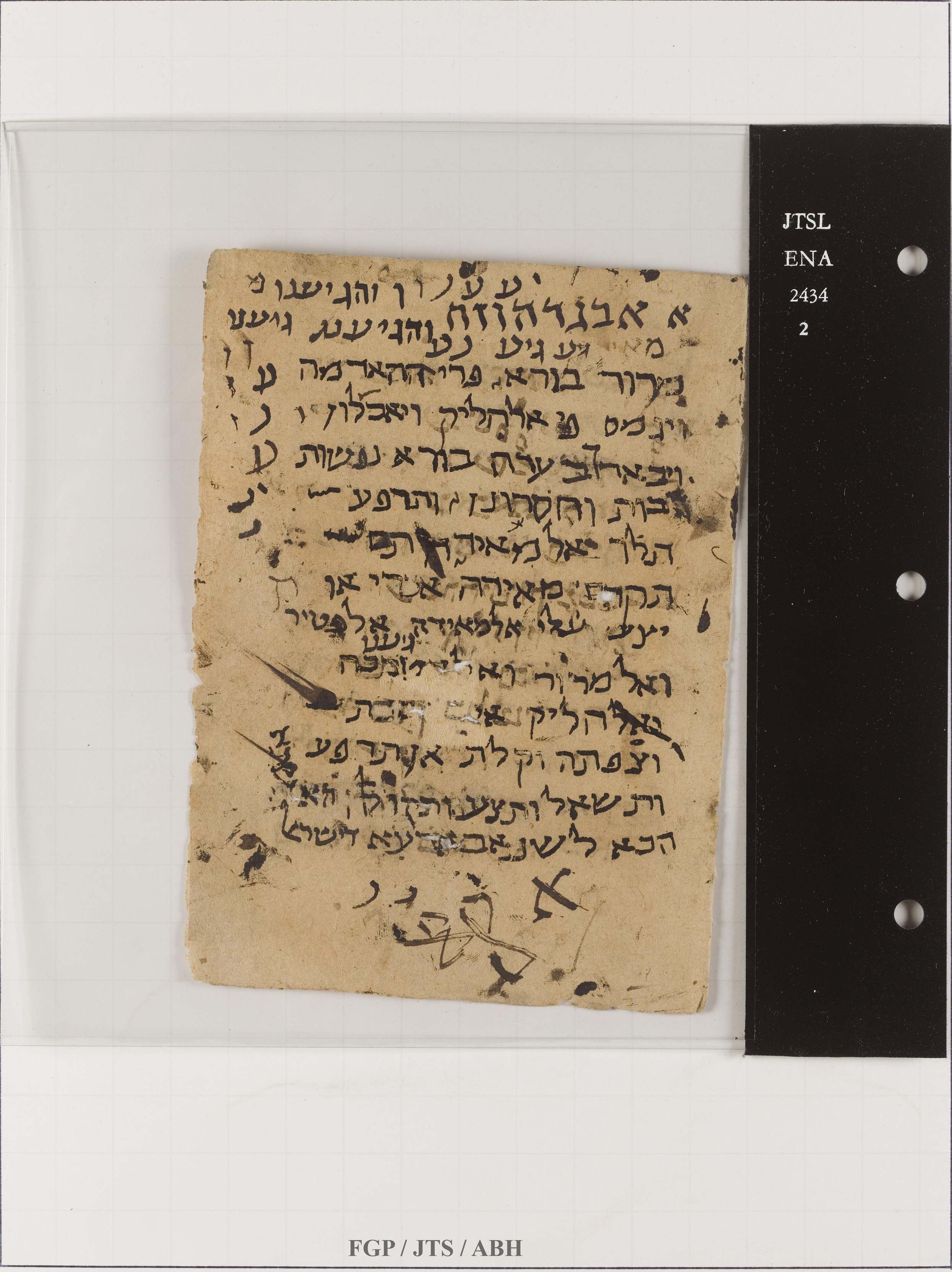
Note from Vered Raziel Kretzmer: This Haggadah became repurposed as a writing practice sheet. You can see the margins that are filled with scribbles. See also fragments 2434.1, 2434.3-6.
כַּרְפַּס
לוקח מן הכרפס פחות מכזית – כדי שלא יתחייב בברכה אחרונה – טובל במי מלח, מברך "בורא פרי האדמה", ומכווין לפטור בברכה גם את המרור. אוכל בלא הסבה.
בָּרוּךְ אַתָּה יהוה, אֱלֹהֵינוּ מֶלֶךְ הָעוֹלָם, בּוֹרֵא פְּרִי הָאֲדָמָה.
Greens.
Take from the greens less than a kazayit - so that you will not need to say the blessing after eating it; dip it into the salt water; say the blessing "who creates the fruit of the earth;" and have in mind that this blessing will also be for the bitter herbs. Eat without reclining.
Blessed are You, our God, Source of the universe, who creates the fruit of the earth.
Is there really any reason for a sprig of parsley to be on the Seder table? What is the connection between karpas and the Jewish People leaving Egypt?
Winter, with its bleak landscape and cold, short days, can lead to gloom and despondency.
In contrast, spring breeds hope. Seeds frozen in the earth rested over the winter. Now, in the spring, they awaken. Even when all is cold and dark, the indomitable force of life works beneath the surface, eventually bringing new flowers into the light of day. The first growth of spring, the first green stem to rise up, renews our trust in the stubborn and invincible force of life.
We begin the Seder by eating karpas, a breath of spring. With it, we ingest the resolute force of new life. Its color, smell, and taste remind us of the tough power of life within. We are eating the hope of nature itself.
What aspect of the natural world gives you hope? What is the most hopeful place you have ever been?
A sprig of parsley dipped in salt water. A symbol of spring and the hope for new life. This year, we add salt, symbolizing the many tears shed by those whose have lost loved ones and those whose loved ones are still missing.
The reason we eat karpas is to make the children curious and ask questions. This might seem self-defeating, because if the children ask, we would just answer that there is no depth to it, it's just to make them ask. That answer is disappointing.
Rather, we eat karpas to show that surprising odd things make people ask questions, and we can only grow by asking questions. This is how God taught Pharoh, by doing odd different things, and so we emulate this by doing odd and different things.
Note the connection between Karpas and Maror. Technically, there is even some reason to think the bracha on the karpas also covers the maror. Maror is mandated and therefore symbolizes hard things thrust upon us by nature or others that are for our own good, while Karpas sysmbolizes discipline: hard things we accept upon ourselves becuse they are good for us in the long term.

