


Danish Jews During the Holocaust


 Save
Save Copy
Copy Add to Collection
 Export to Google Docs
 Share
ShareHow and why one country saved almost all of their Jews

This is a map of Denmark. Important features to note: 1. The main body of Denmark ("Jutland") shares a border with Germany. 2. Copenhagen is on an island near Sweden. 3. Further north on that island it is even closer to Sweden.

This is a map of Denmark, zooming in on the island where Copenhagen is. Copenhagen is the green area to the left of the big yellow arrow in the middle of the map.
Danish Jews During the Holocaust "on one foot":
The Holocaust was the period of persecution for Jews between 1933 and 1945. All Jews in Europe were targeted for death by the German Nazis. This looks at what happened in Denmark during this time.
The Holocaust was the period of persecution for Jews between 1933 and 1945. All Jews in Europe were targeted for death by the German Nazis. This looks at what happened in Denmark during this time.
Jews in Denmark prior to 1933
- In 1619, King Christian IV gave a royal Danish letter of protection to Albert Dionus to run the mint in a Danish community (now in Germany).
- The Danish Jewish community traces their origins to 1622, when Christian IV sent a letter to the Portuguese Jewish community in Amsterdam to settle in Danish territory.
- The court jeweler, Mayer Goldschmidt, received permission to host religious services in his home in Copenhagen in 1684.
- Gabriel Milan was appointed governor of the Danish West Indies in 1684.
- In 1690 a police chief was fired for suggesting that Denmark should have a ghetto for the Copenhagen Jews like other European countries. Parliament then passed a resolution condemning ghettos.
- By 1787 there were 1,830 Jews in Denmark.
- The right for Jews and other non-Lutherans to practice medicine was won in 1788.
- Princess Caroline became the patron for the first school for Jewish children in 1805 (it celebrated its 200th anniversary in 2005).
- Around the time of the Napoleonic Wars, a royal decree gave Jews full citizenship in 1814.
- Concurrent with political unrest across Europe, the absolute monarchy was abolished in 1849 and the new constitution got rid of the last restrictions against Jews.
- By 1850, half of the Europeans in the Danish West Indies were Jews.
- The 1,600 Jews who were in Denmark by 1903 became known as the "Viking Jews".
- After the Kishinev pogrom in 1903, about 3,000 Eastern European Jews came to Denmark between 1904 and 1917. Another 400 Jewish refugees came after WWI. They were all eventually acculturated into the community.
- Edvard Brandes, who founded the still-running newspaper Politiken, became Minister of Finance between 1909-10 and 1913-20.
- Niels Bohr received the 1922 Nobel Prize in Physics for his model of the atom (with electrons outside of the nucleus).
- While there were occasional attempts to proselytize Jews, this was frowned upon by the Danish government and by the Danish Lutheran Church.
- In 1619, King Christian IV gave a royal Danish letter of protection to Albert Dionus to run the mint in a Danish community (now in Germany).
- The Danish Jewish community traces their origins to 1622, when Christian IV sent a letter to the Portuguese Jewish community in Amsterdam to settle in Danish territory.
- The court jeweler, Mayer Goldschmidt, received permission to host religious services in his home in Copenhagen in 1684.
- Gabriel Milan was appointed governor of the Danish West Indies in 1684.
- In 1690 a police chief was fired for suggesting that Denmark should have a ghetto for the Copenhagen Jews like other European countries. Parliament then passed a resolution condemning ghettos.
- By 1787 there were 1,830 Jews in Denmark.
- The right for Jews and other non-Lutherans to practice medicine was won in 1788.
- Princess Caroline became the patron for the first school for Jewish children in 1805 (it celebrated its 200th anniversary in 2005).
- Around the time of the Napoleonic Wars, a royal decree gave Jews full citizenship in 1814.
- Concurrent with political unrest across Europe, the absolute monarchy was abolished in 1849 and the new constitution got rid of the last restrictions against Jews.
- By 1850, half of the Europeans in the Danish West Indies were Jews.
- The 1,600 Jews who were in Denmark by 1903 became known as the "Viking Jews".
- After the Kishinev pogrom in 1903, about 3,000 Eastern European Jews came to Denmark between 1904 and 1917. Another 400 Jewish refugees came after WWI. They were all eventually acculturated into the community.
- Edvard Brandes, who founded the still-running newspaper Politiken, became Minister of Finance between 1909-10 and 1913-20.
- Niels Bohr received the 1922 Nobel Prize in Physics for his model of the atom (with electrons outside of the nucleus).
- While there were occasional attempts to proselytize Jews, this was frowned upon by the Danish government and by the Danish Lutheran Church.
1933-1943:
- In 1933, King Christian X came to the service marking the 100th anniversary of The Great Synagogue in Copenhagen. This was right around the time that Adolph Hitler had declared a boycott of Jewish stores in Germany, something that King Christian was aware of.
- In the years 1933-1940, Denmark's Jewish population of 6,300 (including 1,300 children of intermarriage) added another 1,500 or so from across Europe, but it turned away many Jews who were fleeing from Nazi Germany. This was due to a mix of reasons, including unemployment concerns coming out of the Great Depression, xenophobia, and a desire to not upset the Nazi government in Germany.
- Some of those who came were part of Youth Aliyah, getting agricultural training in Denmark before they intended to leave for the Holy Land. Of the 1,500 who passed through Denmark starting in the 1930s, 500 were still there in 1940. There were also 174 children whom the Danes got out of Germany after Kristalnacht in 1938 but hadn't yet gotten to the Holy Land by 1940.
- A Danish Nazi group published an anti-Semitic pamphlet in 1936, and the Bishop of Copenhagen published an open letter denouncing it.
- On May 1, 1939, Denmark signed a non-aggression treaty with Germany, good for 10 years.
- At 4:15 AM on April 9, 1940, Germany invaded Denmark (and Norway) by land, sea, and air. They killed 16 Danes who were trying to defend their country. King Christian X surrendered within 2 hours, realizing that this was the only way to prevent more Danes being killed.
- Hitler viewed Danes as "fellow Aryans", and he made Denmark a "model protectorate" in order to keep Danish farm products flowing toward Germany. This freed up German men from agriculture so they could fight, and provided more food to keep the German people happy. He also wanted the railroads to ship materials from Norway and Sweden.
- Recognizing that Hitler wanted the farm products and didn't want to tie down more troops than necessary (20,000 in the end, instead of the 500,000 sent to Norway), Christian X was able to negotiate for internal self-government and no anti-Jewish legislation.
- Meanwhile, ordinary Danes were very upset to wake up on April 9, 1940 and discover that their country was now occupied by German soldiers on every corner.
- Sabotage acts began almost immediately by a few people, and while the Danish government made a public appeal for calm, most people gave the Germans "den kolde skulder", a cold shoulder.
- The Jewish Community Board wanted to avoid the same problems in Germany from happening to the Danish Jews, so they sought to avoid attention on the Jewish community and agreed with the government policy of getting along.
- When King Christian X heard about yellow stars being imposed on Jews across Europe in the fall of 1941, he discussed them with Prime Minister Vilhelm Buhl and noted afterwards in his diary, "If the request was made, the right attitude would be for all of us to wear the star of David." The conversation was repeated by Buhl, and embellished by others until it became a myth that the king wore a yellow star on his (non-mythological) daily horseback rides.
- Two arson attempts were made against The Great Synagogue (1941 and 1942), but both times the Danish police prevented the attack and arrested the arsonists.
- In November 1941, Erik Scavenus, the Danish Foreign Minister, was called for a meeting with Herman Goering, the highest-ranking German military official. Goering pressured Scavenus to deal with the Jewish question in Denmark. Scavenus replied "There is no Jewish question in Denmark."
- Scavenus was called for a meeting German Minister Renthe-Fink on August 24, 1942 to implement anti-Jewish laws. Scavenus refused, saying that "The Danes would regard this as a denial of their ideals."
- The Germans started publishing an anti-Semitic newspaper in Copenhagen, but it got so few subscribers that they discontinued it.
- King Christian X turned 72 on September 26, 1942, and Hitler sent him a very flowery and flattering birthday telegram. Christian sent back a polite but short reply ("My utmost thanks. King Christian"). Hitler was furious and replaced his Danish point-person with the merciless SS "Bloodhound of Paris", Werner Best.
- Danish resistance continued to increase from 1940-1943, including the blowing up of factories providing war materials for the Germans (marine diesel engines and parts for airplanes and tanks) and the circulation of underground newspapers. One of the major groups doing this was called Holger Danske, named for a mythical figure from Danish history who would arise to save the Danes from oppression.
- The Germans allowed for a free election in March 1943, and the pro-Nazi party only won 2.1% of the vote (with 84% turnout).
- In 1933, King Christian X came to the service marking the 100th anniversary of The Great Synagogue in Copenhagen. This was right around the time that Adolph Hitler had declared a boycott of Jewish stores in Germany, something that King Christian was aware of.
- In the years 1933-1940, Denmark's Jewish population of 6,300 (including 1,300 children of intermarriage) added another 1,500 or so from across Europe, but it turned away many Jews who were fleeing from Nazi Germany. This was due to a mix of reasons, including unemployment concerns coming out of the Great Depression, xenophobia, and a desire to not upset the Nazi government in Germany.
- Some of those who came were part of Youth Aliyah, getting agricultural training in Denmark before they intended to leave for the Holy Land. Of the 1,500 who passed through Denmark starting in the 1930s, 500 were still there in 1940. There were also 174 children whom the Danes got out of Germany after Kristalnacht in 1938 but hadn't yet gotten to the Holy Land by 1940.
- A Danish Nazi group published an anti-Semitic pamphlet in 1936, and the Bishop of Copenhagen published an open letter denouncing it.
- On May 1, 1939, Denmark signed a non-aggression treaty with Germany, good for 10 years.
- At 4:15 AM on April 9, 1940, Germany invaded Denmark (and Norway) by land, sea, and air. They killed 16 Danes who were trying to defend their country. King Christian X surrendered within 2 hours, realizing that this was the only way to prevent more Danes being killed.
- Hitler viewed Danes as "fellow Aryans", and he made Denmark a "model protectorate" in order to keep Danish farm products flowing toward Germany. This freed up German men from agriculture so they could fight, and provided more food to keep the German people happy. He also wanted the railroads to ship materials from Norway and Sweden.
- Recognizing that Hitler wanted the farm products and didn't want to tie down more troops than necessary (20,000 in the end, instead of the 500,000 sent to Norway), Christian X was able to negotiate for internal self-government and no anti-Jewish legislation.
- Meanwhile, ordinary Danes were very upset to wake up on April 9, 1940 and discover that their country was now occupied by German soldiers on every corner.
- Sabotage acts began almost immediately by a few people, and while the Danish government made a public appeal for calm, most people gave the Germans "den kolde skulder", a cold shoulder.
- The Jewish Community Board wanted to avoid the same problems in Germany from happening to the Danish Jews, so they sought to avoid attention on the Jewish community and agreed with the government policy of getting along.
- When King Christian X heard about yellow stars being imposed on Jews across Europe in the fall of 1941, he discussed them with Prime Minister Vilhelm Buhl and noted afterwards in his diary, "If the request was made, the right attitude would be for all of us to wear the star of David." The conversation was repeated by Buhl, and embellished by others until it became a myth that the king wore a yellow star on his (non-mythological) daily horseback rides.
- Two arson attempts were made against The Great Synagogue (1941 and 1942), but both times the Danish police prevented the attack and arrested the arsonists.
- In November 1941, Erik Scavenus, the Danish Foreign Minister, was called for a meeting with Herman Goering, the highest-ranking German military official. Goering pressured Scavenus to deal with the Jewish question in Denmark. Scavenus replied "There is no Jewish question in Denmark."
- Scavenus was called for a meeting German Minister Renthe-Fink on August 24, 1942 to implement anti-Jewish laws. Scavenus refused, saying that "The Danes would regard this as a denial of their ideals."
- The Germans started publishing an anti-Semitic newspaper in Copenhagen, but it got so few subscribers that they discontinued it.
- King Christian X turned 72 on September 26, 1942, and Hitler sent him a very flowery and flattering birthday telegram. Christian sent back a polite but short reply ("My utmost thanks. King Christian"). Hitler was furious and replaced his Danish point-person with the merciless SS "Bloodhound of Paris", Werner Best.
- Danish resistance continued to increase from 1940-1943, including the blowing up of factories providing war materials for the Germans (marine diesel engines and parts for airplanes and tanks) and the circulation of underground newspapers. One of the major groups doing this was called Holger Danske, named for a mythical figure from Danish history who would arise to save the Danes from oppression.
- The Germans allowed for a free election in March 1943, and the pro-Nazi party only won 2.1% of the vote (with 84% turnout).
August-October 1943:
- By August 1943, the Danes could see that the war was not going well for the Germans. They had lost the Battle of Stalingrad and were getting pushed back in North Africa.
- Meanwhile, food shortages were increasing at home in Denmark.
- Danes started increasing their sabotage acts, from 122 in 1942 to 969 in 1943. This included blowing up a warship the Nazis were building.
- In August 1943, Danish workers went on strike in 17 cities and then blew up a huge hall about to become barracks for German soldiers.
- On August 28, 1943, the Germans delivered an ultimatum: No strikes, and the death penalty for people committing sabotage.
- In response, the Danish government stepped down on August 29, 1943.
- The Germans imposed direct control and declared martial law, arresting Danish soldiers.
- On September 8, 1943, Werner Best telegrammed Hitler to suggest this would be a good time to deport Denmark's Jews. On Sept. 17, Hitler approved this.
- The idea was to find the Jews at their homes when they were sitting down for their Shabbat dinners, Friday, Oct. 1.
- On September 17, the Nazis broke into the Jewish community's offices and stole the names and addresses of all the Jews in Denmark.
- The deportation was going to be carried out via ships (and a train with 40 cattle cars), so Germany's maritime attache, Georg Ferdinand Duckwitz, was told about the plan.
- Duckwitz leaked news of the plan to the Danish government, and word got to the Chief Rabbi, Marcus Melchior.
- When the Jews gathered for Rosh Hashanah services, rather than say "We must all pray for our salvation" Rabbi Melchior informed everybody of the news and urged them to find hiding spots before the round-up that night.
- Meanwhile, everyday Danes also heard about the round-ups and either warned and/or offered shelter to all the Jews they knew. This included neighbors interrupting Rosh Hashanah dinners; a bookstore owner (Morgens Staffeldt) biking around town to warn his Jewish customers; teachers and headmasters telling their Jewish students (even at Catholic schools); and an ambulance driver (Jorgen Knudsen) finding Jewish-sounding names in the phone book, driving his ambulance to their homes to warn them, and if they didn't have anywhere else to go, taking them in his ambulance to Bispebjerg Hospital where a doctor (Dr. Karl Koster ) hid them in hospital beds. Nearly 2000 Jews found shelter at this hospital, each with fake names and fake illnesses.
- Niels Bohr, the Jewish atomic scientist, was also warned. The Allies and the Axis both wanted him for his knowledge, or at least wanted to keep him from being used by the other side. He and his family left their home in Copenhagen on Rosh Hashanah evening, hid in a cottage by the coast, and were rowed to Sweden. He refused to get on a plane to fly to England until he met with the King of Sweden and got the king to agree to take in the Jews of Denmark. The king made an announcement to that end on Oct. 2nd, and then Bohr (and his family) flew to England.
- On October 1, the Nazis began their sweep, starting with shutting down the phone lines. They found almost nobody home. By the end of the night, they only managed to capture the 202 residents of Krystalgade Nursing Home, the Jewish Home for the Aged (sent on the ship that had capacity for 5,000 Jews), and 82 Jews arrested outside of Copenhagen who weren't warned in time (sent on 3 of the 40 cattle cars).
- The next day, Werner Best sent a telegram to the Nazi headquarters in Berlin that Denmark was "Judenrein", Jew-free.
- News reached Berlin of the Nazi failure, infuriating Hitler and Himmler. Adolph Eichmann was sent to Denmark on Oct. 3, but he then went to Eastern Europe before more Jews were found. He gave orders to keep up the search for the Jews.
- Yes, the Jews were hiding, and it was only a matter of time before the Nazis found them.
- For example, 80 Jews hiding in the attic of the Gilleleje Church north of Copenhagen were betrayed by a Danish woman in love with a German soldier. They were captured and deported.
- On Sunday, October 3, the Nazi government announced that the poisonous Jews were gone, and so there was no need to fear public unrest and the Danish soldiers would be released from jail. (The soldiers refused to be released under these circumstances.)
- Yet that same day, pastors in all the Lutheran churches across the country read the same message from the pulpit, decrying what had happened and urging their congregants to provide whatever aid they could to any Jews that they found. This was followed by a prayer for the safety of the Jews. The Danish Freedom Council (the joint Resistance coordinating body, functioning in lieu of the government) disseminated the same general idea in their first official message, and over 40 official protests were lodged with the German government of Denmark (from groups representing the police, army / navy, trade unions, Supreme Court, libraries, museums, engineers, teachers, judges, lawyers, etc.)
- Spontaneous, and not-coordinated plans were made by Danes across the country to smuggle the Jews to Sweden, only about 10 miles across the Oresund Strait.
- About 600 Danish boats ended up taking part -- fishing boats, but also canoes, rowboats, sailboats, kayaks, speedboats, and patrol boats -- leaving from 50 places along the coast.
- Some fishermen and boat owners did this for free; others charged between 1,000 and 10,000 kroner (monthly pay for a skilled tradesman was 400 kroner). In fairness, the fishermen were risking their boats, livelihoods, or even their lives if they ran into a German patrol boat or mine, and some fishermen did have their boats taken away after being captured by the Germans.
- Many refugees paid their own way or were paid for by others in the Jewish community, but others couldn't afford to. In those cases, the Resistance provided funding from Danes who were moved to make a difference. Two of the key Resistance members who helped with funding and moving Jews were Jorgen Kieler and Ebba Lund ("Little Red Riding Hood")
- How many were saved by each boat owner varied -- a Dane who participated in rowing in the 1936 Berlin Olympics (Knud Christiansen) rowed one Jew across at a time for three months, while Henny Sinding, the daughter of the Naval Captain in charge of resupplying the lighthouse in Oresund Strait, saved about 300 people over more than 20 trips in her boat, the Gerda III (now at the Mystic Seaport Museum in Connecticut).
- Jews were hidden near the coast until the best time for boarding the boat. Sometimes, it wasn't a good time and they had to wait another heart-pounding 24 hours.
- Families were hidden in fishing holds, covered with ropes and smelly fish to deter Germans from looking too careful down there.
- Babies were given sleeping potions to make sure they didn't cry out and attract attention when Germans boarded their boat.
- Chemists devised a mix of rabbit blood and cocaine that could be put on handkerchiefs so that if Germans boarded with dogs the dogs would want to smell the handkerchief but then not be able to smell people.
- The trip could be as short as 40 minutes, but was usually 2 hours assuming there were no German patrol boats that night.
- After a boat was seized by the Nazis when it returned with dry fishing nets, Swedes gave the Danish fishermen fresh fish and wet nets so their excuse for being out at night was more plausible.
- When the boats finally reached Sweden, Jews were welcomed, given temporary accommodations, and helped to settle in (housing, schooling, etc) until the end of the war. The Danish Ambassador to the US, Henrik Kauffmann, raised money toward this effort from Danish-Americans, and the Swedish government contributed $5 million.
- By the end of October, about 7,200 Danish Jews, plus about 700 of their non-Jewish family members, had escaped to Sweden. There were also at least 30 who drowned when their boats capsized.
- By August 1943, the Danes could see that the war was not going well for the Germans. They had lost the Battle of Stalingrad and were getting pushed back in North Africa.
- Meanwhile, food shortages were increasing at home in Denmark.
- Danes started increasing their sabotage acts, from 122 in 1942 to 969 in 1943. This included blowing up a warship the Nazis were building.
- In August 1943, Danish workers went on strike in 17 cities and then blew up a huge hall about to become barracks for German soldiers.
- On August 28, 1943, the Germans delivered an ultimatum: No strikes, and the death penalty for people committing sabotage.
- In response, the Danish government stepped down on August 29, 1943.
- The Germans imposed direct control and declared martial law, arresting Danish soldiers.
- On September 8, 1943, Werner Best telegrammed Hitler to suggest this would be a good time to deport Denmark's Jews. On Sept. 17, Hitler approved this.
- The idea was to find the Jews at their homes when they were sitting down for their Shabbat dinners, Friday, Oct. 1.
- On September 17, the Nazis broke into the Jewish community's offices and stole the names and addresses of all the Jews in Denmark.
- The deportation was going to be carried out via ships (and a train with 40 cattle cars), so Germany's maritime attache, Georg Ferdinand Duckwitz, was told about the plan.
- Duckwitz leaked news of the plan to the Danish government, and word got to the Chief Rabbi, Marcus Melchior.
- When the Jews gathered for Rosh Hashanah services, rather than say "We must all pray for our salvation" Rabbi Melchior informed everybody of the news and urged them to find hiding spots before the round-up that night.
- Meanwhile, everyday Danes also heard about the round-ups and either warned and/or offered shelter to all the Jews they knew. This included neighbors interrupting Rosh Hashanah dinners; a bookstore owner (Morgens Staffeldt) biking around town to warn his Jewish customers; teachers and headmasters telling their Jewish students (even at Catholic schools); and an ambulance driver (Jorgen Knudsen) finding Jewish-sounding names in the phone book, driving his ambulance to their homes to warn them, and if they didn't have anywhere else to go, taking them in his ambulance to Bispebjerg Hospital where a doctor (Dr. Karl Koster ) hid them in hospital beds. Nearly 2000 Jews found shelter at this hospital, each with fake names and fake illnesses.
- Niels Bohr, the Jewish atomic scientist, was also warned. The Allies and the Axis both wanted him for his knowledge, or at least wanted to keep him from being used by the other side. He and his family left their home in Copenhagen on Rosh Hashanah evening, hid in a cottage by the coast, and were rowed to Sweden. He refused to get on a plane to fly to England until he met with the King of Sweden and got the king to agree to take in the Jews of Denmark. The king made an announcement to that end on Oct. 2nd, and then Bohr (and his family) flew to England.
- On October 1, the Nazis began their sweep, starting with shutting down the phone lines. They found almost nobody home. By the end of the night, they only managed to capture the 202 residents of Krystalgade Nursing Home, the Jewish Home for the Aged (sent on the ship that had capacity for 5,000 Jews), and 82 Jews arrested outside of Copenhagen who weren't warned in time (sent on 3 of the 40 cattle cars).
- The next day, Werner Best sent a telegram to the Nazi headquarters in Berlin that Denmark was "Judenrein", Jew-free.
- News reached Berlin of the Nazi failure, infuriating Hitler and Himmler. Adolph Eichmann was sent to Denmark on Oct. 3, but he then went to Eastern Europe before more Jews were found. He gave orders to keep up the search for the Jews.
- Yes, the Jews were hiding, and it was only a matter of time before the Nazis found them.
- For example, 80 Jews hiding in the attic of the Gilleleje Church north of Copenhagen were betrayed by a Danish woman in love with a German soldier. They were captured and deported.
- On Sunday, October 3, the Nazi government announced that the poisonous Jews were gone, and so there was no need to fear public unrest and the Danish soldiers would be released from jail. (The soldiers refused to be released under these circumstances.)
- Yet that same day, pastors in all the Lutheran churches across the country read the same message from the pulpit, decrying what had happened and urging their congregants to provide whatever aid they could to any Jews that they found. This was followed by a prayer for the safety of the Jews. The Danish Freedom Council (the joint Resistance coordinating body, functioning in lieu of the government) disseminated the same general idea in their first official message, and over 40 official protests were lodged with the German government of Denmark (from groups representing the police, army / navy, trade unions, Supreme Court, libraries, museums, engineers, teachers, judges, lawyers, etc.)
- Spontaneous, and not-coordinated plans were made by Danes across the country to smuggle the Jews to Sweden, only about 10 miles across the Oresund Strait.
- About 600 Danish boats ended up taking part -- fishing boats, but also canoes, rowboats, sailboats, kayaks, speedboats, and patrol boats -- leaving from 50 places along the coast.
- Some fishermen and boat owners did this for free; others charged between 1,000 and 10,000 kroner (monthly pay for a skilled tradesman was 400 kroner). In fairness, the fishermen were risking their boats, livelihoods, or even their lives if they ran into a German patrol boat or mine, and some fishermen did have their boats taken away after being captured by the Germans.
- Many refugees paid their own way or were paid for by others in the Jewish community, but others couldn't afford to. In those cases, the Resistance provided funding from Danes who were moved to make a difference. Two of the key Resistance members who helped with funding and moving Jews were Jorgen Kieler and Ebba Lund ("Little Red Riding Hood")
- How many were saved by each boat owner varied -- a Dane who participated in rowing in the 1936 Berlin Olympics (Knud Christiansen) rowed one Jew across at a time for three months, while Henny Sinding, the daughter of the Naval Captain in charge of resupplying the lighthouse in Oresund Strait, saved about 300 people over more than 20 trips in her boat, the Gerda III (now at the Mystic Seaport Museum in Connecticut).
- Jews were hidden near the coast until the best time for boarding the boat. Sometimes, it wasn't a good time and they had to wait another heart-pounding 24 hours.
- Families were hidden in fishing holds, covered with ropes and smelly fish to deter Germans from looking too careful down there.
- Babies were given sleeping potions to make sure they didn't cry out and attract attention when Germans boarded their boat.
- Chemists devised a mix of rabbit blood and cocaine that could be put on handkerchiefs so that if Germans boarded with dogs the dogs would want to smell the handkerchief but then not be able to smell people.
- The trip could be as short as 40 minutes, but was usually 2 hours assuming there were no German patrol boats that night.
- After a boat was seized by the Nazis when it returned with dry fishing nets, Swedes gave the Danish fishermen fresh fish and wet nets so their excuse for being out at night was more plausible.
- When the boats finally reached Sweden, Jews were welcomed, given temporary accommodations, and helped to settle in (housing, schooling, etc) until the end of the war. The Danish Ambassador to the US, Henrik Kauffmann, raised money toward this effort from Danish-Americans, and the Swedish government contributed $5 million.
- By the end of October, about 7,200 Danish Jews, plus about 700 of their non-Jewish family members, had escaped to Sweden. There were also at least 30 who drowned when their boats capsized.
October 1943-May 1945
- The Nazis captured 472 Jews from Denmark and took them to Theresienstadt. This was a transit camp before Auschwitz.
- The majority of those captured with either elderly or refugees from other countries who hadn't been in Denmark as long and therefore had not forged the social connections that allowed them to be notified of the round-up.
- The trip was first by boat to Germany and then by sealed cattle car for 2-3 days. There was no food, water, or place to go to the bathroom that was provided, and some people died on the trip.
- In the first few days of November, 1943, the Danish government negotiated with the Nazis to ensure that "Danish citizens" (meaning all Jews captured in Denmark) would stay at Theresienstadt, that they could receive food parcels, and that the Danish Red Cross could inspect conditions.
- However, the Danish Jews did not know any of this, and for 18 long months lived in terror of being on the next transport.
- The food and medicine parcels did much to keep bodies and spirits going over the following year and a half. 35 Danes worked full-time on assembling these regular packages, which had to be signed for by the recipient and confirmation of receipt sent back to Denmark.
- It also helped that shortly after the Jews were sent to Theresienstadt, the Danish government entered their homes, assembled packages of their clothes that it thought they might need, and sent them to the concentration camp.
- The persistent Danish inquiries about the living conditions of their Jews probably also helped, even with the starvation and brutal treatment that all Jews got in Theresienstadt.
- After much pestering by the Danish Red Cross, the International Red Cross was allowed to visit in June 1944, accompanied by a representative of the Danish Red Cross. Although everything they saw was merely a facade and not really how life was, the Danish Jews knew that they were not forgotten. The head of the Danish Red Cross told the Danish Jews that the King sent his best regards to them and the Bishop prayed for them. The Nazis cleaned up and made physical improvements to the camp to fool the Danes, but these remained after the visit, to the benefit of the prisoners.
- Meanwhile in Denmark, sabotage continued, with the number of resisters swelling after the raid on the Jews to 40,000. Downed British pilots and some of the members of the Resistance had to be smuggled themselves to Sweden, using routes that had been developed with rescuing the Jews. The boats then returned with mail from exiled Danes and additional weapons for the Resistance. By the end of the war, 2,548 acts of sabotage were committed against factories, German military installations and ports (like the ones responsible for V-2 components), and 2,156 acts were committed against railroad lines connecting to the German forces in Norway. On D-Day, the Resistance blew up railroad tracks in Denmark, slowing down the German reinforcements to the Western Front. When the Germans called for a full division from Norway to help in the Battle of the Bulge, the Danes slowed down the trains so much that they arrived a week after the battle.
- Between October 1943 and April 1945, 53 Jews died in Theresienstadt, mostly the elderly, and mostly either en route or during the first few weeks due to malnutrition before the food packages arrived.
- On April 15, 1945, after 548 days, a Swedish Red Cross expedition of 23 "White Buses" (painted white with large Red Crosses on their roof to reduce Allied attacks) rolled into Theresienstadt to pick up the 423 Scandinavian Jews there, including a few babies born in the camp. Danish doctors and nurses were along to provide care. The Danish Jews gave their remaining food parcels and extra clothing to Jews from other countries who stayed behind.
- These Jews were sent to Sweden, but as their buses passed through Denmark they were met by hundreds of thousands of fellow Danes, waving flags and welcoming them back to Denmark.
- The war ended in Denmark on May 5, 1945. Thereafter, nearly all of the Jews returned from Sweden, where they joined the 116 Jews who had managed to stay in hiding in Denmark (a few of whom died of accidents or took their lives in the first few days of hiding). Nearly all of them found that their homes and pets had been cared for in their absence (utilities and rents / mortgages were paid by the city of Copenhagen), and often there were fresh flowers waiting to welcome them home.
- The Nazis captured 472 Jews from Denmark and took them to Theresienstadt. This was a transit camp before Auschwitz.
- The majority of those captured with either elderly or refugees from other countries who hadn't been in Denmark as long and therefore had not forged the social connections that allowed them to be notified of the round-up.
- The trip was first by boat to Germany and then by sealed cattle car for 2-3 days. There was no food, water, or place to go to the bathroom that was provided, and some people died on the trip.
- In the first few days of November, 1943, the Danish government negotiated with the Nazis to ensure that "Danish citizens" (meaning all Jews captured in Denmark) would stay at Theresienstadt, that they could receive food parcels, and that the Danish Red Cross could inspect conditions.
- However, the Danish Jews did not know any of this, and for 18 long months lived in terror of being on the next transport.
- The food and medicine parcels did much to keep bodies and spirits going over the following year and a half. 35 Danes worked full-time on assembling these regular packages, which had to be signed for by the recipient and confirmation of receipt sent back to Denmark.
- It also helped that shortly after the Jews were sent to Theresienstadt, the Danish government entered their homes, assembled packages of their clothes that it thought they might need, and sent them to the concentration camp.
- The persistent Danish inquiries about the living conditions of their Jews probably also helped, even with the starvation and brutal treatment that all Jews got in Theresienstadt.
- After much pestering by the Danish Red Cross, the International Red Cross was allowed to visit in June 1944, accompanied by a representative of the Danish Red Cross. Although everything they saw was merely a facade and not really how life was, the Danish Jews knew that they were not forgotten. The head of the Danish Red Cross told the Danish Jews that the King sent his best regards to them and the Bishop prayed for them. The Nazis cleaned up and made physical improvements to the camp to fool the Danes, but these remained after the visit, to the benefit of the prisoners.
- Meanwhile in Denmark, sabotage continued, with the number of resisters swelling after the raid on the Jews to 40,000. Downed British pilots and some of the members of the Resistance had to be smuggled themselves to Sweden, using routes that had been developed with rescuing the Jews. The boats then returned with mail from exiled Danes and additional weapons for the Resistance. By the end of the war, 2,548 acts of sabotage were committed against factories, German military installations and ports (like the ones responsible for V-2 components), and 2,156 acts were committed against railroad lines connecting to the German forces in Norway. On D-Day, the Resistance blew up railroad tracks in Denmark, slowing down the German reinforcements to the Western Front. When the Germans called for a full division from Norway to help in the Battle of the Bulge, the Danes slowed down the trains so much that they arrived a week after the battle.
- Between October 1943 and April 1945, 53 Jews died in Theresienstadt, mostly the elderly, and mostly either en route or during the first few weeks due to malnutrition before the food packages arrived.
- On April 15, 1945, after 548 days, a Swedish Red Cross expedition of 23 "White Buses" (painted white with large Red Crosses on their roof to reduce Allied attacks) rolled into Theresienstadt to pick up the 423 Scandinavian Jews there, including a few babies born in the camp. Danish doctors and nurses were along to provide care. The Danish Jews gave their remaining food parcels and extra clothing to Jews from other countries who stayed behind.
- These Jews were sent to Sweden, but as their buses passed through Denmark they were met by hundreds of thousands of fellow Danes, waving flags and welcoming them back to Denmark.
- The war ended in Denmark on May 5, 1945. Thereafter, nearly all of the Jews returned from Sweden, where they joined the 116 Jews who had managed to stay in hiding in Denmark (a few of whom died of accidents or took their lives in the first few days of hiding). Nearly all of them found that their homes and pets had been cared for in their absence (utilities and rents / mortgages were paid by the city of Copenhagen), and often there were fresh flowers waiting to welcome them home.
Post-script:
- In 1959, Reuben Mattus (a Jew) started a new ice cream company. He called it Häagen-Dazs because it sounded Danish and he wanted to honor the Danes for their rescue of the Jews.
- In 1959, Reuben Mattus (a Jew) started a new ice cream company. He called it Häagen-Dazs because it sounded Danish and he wanted to honor the Danes for their rescue of the Jews.
Why Was Denmark Different?
- About 120 Danish Jews died during the Holocaust, either at Theresienstadt, on the way there, drowning while trying to escape to Sweden, or while trying to stay hidden in Denmark. Out of the 7700 or so Jews in Denmark in 1940, this meant that 98% survived, the highest rate in Europe by far. What made Denmark different from all other countries?
- Leadership started at the top. King Christian X was beloved. The example that he set was that co-existence was one thing, but collaboration with the Nazis was not to be encouraged.
- The Nazis really wanted Danish farm products and war materials from Danish factories, so they gave the Danes a large degree of internal autonomy.
- Moreover, because there was no Danish cooperation from the government, the Nazis didn't move against the Jews until 1943.
- The Jews were integrated into Danish society, making it easier to view them within everybody's universe of obligation
- Moreover, because the Jews were integrated, both the Jews had non-Jews to ask to hide their family and non-Jews knew Jews whom they could warn.
- Relatedly, anti-Semitism was present but not highly prevalent in Denmark during WWII.
- Because the Jews knew most Danes opposed anti-Semitism, they felt like they had more people whom they could ask for help.
- In the context of the Germans imposing martial law a month prior, the attack on the Jews was both seen as an attack on Denmark in general and also a way for ordinary Danes to do something for their country.
- Relatedly, the underground papers had spread the news of Nazi atrocities, so between that and the severe food rationing this was a way for Danes to protest.
- Because the Germans had treated the Danes so well, Danish youth went into this with a spirit of adventure, not knowing how brutal Nazi reprisals could be.
- The Jews were largely concentrated in Copenhagen, so it was easier to find them.
- It was very very helpful to have a safe haven fairly close by where the Germans could not reach the Jews.
- Having fewer Jews meant that a greater percentage could be saved if the general population was willing to help.
- Many Danes went to sea on a regular basis, so there was a plausible excuse for their boats to be out (and fishing boats were out at night anyway). It was easier to hide on a fishing boat than on most land transportation.
- The Jews of Norway had been deported (and mostly killed) a year beforehand, so Scandinavians were upset about that already and Danish Jews knew to believe the warnings when they received them.
- The Swedes were neutral, but because the Germans had just lost the Battle of Stalingrad it looked like the war was swinging against them and thus the Swedes were willing to risk angering the Germans by taking the Jews.
- 90% of Danes were Lutherans and the Lutheran church took a public stand against the round-up of the Jews.
- Unlike Germany, there was a culture of hundreds of years of treating all Danes equally regardless of religion.
- Danish culture was influenced by the 19th century thinker N.F.S. Grundtvig, who taught "First a human, then a Christian", extending the universe of obligation to all people. Similarly, after the occupation began, the Union of Danish Youth was formed to keep Denmark from going fascist, and Professor Hal Koch gave a series of public lectures for them in late 1940 focused on the idea that we are our "brother's" keeper, even when they aren't Christian.
- There was a common Danish saying: “Where there is room in the heart, there is room in the house.”
- Danes didn't consider themselves extraordinary. In fact, when Yad VaShem wanted to recognize them as the "Righteous Among the Nations" in 1963, they asked to be recognized as a collective rather than individuals, because it was simply the right thing to save their fellow Danes.
- Most importantly, Danes considered Jews to be part of "us", not "them". While many of the other factors explain why the rescue was a success, this is at the root of why it was taken at all.
- About 120 Danish Jews died during the Holocaust, either at Theresienstadt, on the way there, drowning while trying to escape to Sweden, or while trying to stay hidden in Denmark. Out of the 7700 or so Jews in Denmark in 1940, this meant that 98% survived, the highest rate in Europe by far. What made Denmark different from all other countries?
- Leadership started at the top. King Christian X was beloved. The example that he set was that co-existence was one thing, but collaboration with the Nazis was not to be encouraged.
- The Nazis really wanted Danish farm products and war materials from Danish factories, so they gave the Danes a large degree of internal autonomy.
- Moreover, because there was no Danish cooperation from the government, the Nazis didn't move against the Jews until 1943.
- The Jews were integrated into Danish society, making it easier to view them within everybody's universe of obligation
- Moreover, because the Jews were integrated, both the Jews had non-Jews to ask to hide their family and non-Jews knew Jews whom they could warn.
- Relatedly, anti-Semitism was present but not highly prevalent in Denmark during WWII.
- Because the Jews knew most Danes opposed anti-Semitism, they felt like they had more people whom they could ask for help.
- In the context of the Germans imposing martial law a month prior, the attack on the Jews was both seen as an attack on Denmark in general and also a way for ordinary Danes to do something for their country.
- Relatedly, the underground papers had spread the news of Nazi atrocities, so between that and the severe food rationing this was a way for Danes to protest.
- Because the Germans had treated the Danes so well, Danish youth went into this with a spirit of adventure, not knowing how brutal Nazi reprisals could be.
- The Jews were largely concentrated in Copenhagen, so it was easier to find them.
- It was very very helpful to have a safe haven fairly close by where the Germans could not reach the Jews.
- Having fewer Jews meant that a greater percentage could be saved if the general population was willing to help.
- Many Danes went to sea on a regular basis, so there was a plausible excuse for their boats to be out (and fishing boats were out at night anyway). It was easier to hide on a fishing boat than on most land transportation.
- The Jews of Norway had been deported (and mostly killed) a year beforehand, so Scandinavians were upset about that already and Danish Jews knew to believe the warnings when they received them.
- The Swedes were neutral, but because the Germans had just lost the Battle of Stalingrad it looked like the war was swinging against them and thus the Swedes were willing to risk angering the Germans by taking the Jews.
- 90% of Danes were Lutherans and the Lutheran church took a public stand against the round-up of the Jews.
- Unlike Germany, there was a culture of hundreds of years of treating all Danes equally regardless of religion.
- Danish culture was influenced by the 19th century thinker N.F.S. Grundtvig, who taught "First a human, then a Christian", extending the universe of obligation to all people. Similarly, after the occupation began, the Union of Danish Youth was formed to keep Denmark from going fascist, and Professor Hal Koch gave a series of public lectures for them in late 1940 focused on the idea that we are our "brother's" keeper, even when they aren't Christian.
- There was a common Danish saying: “Where there is room in the heart, there is room in the house.”
- Danes didn't consider themselves extraordinary. In fact, when Yad VaShem wanted to recognize them as the "Righteous Among the Nations" in 1963, they asked to be recognized as a collective rather than individuals, because it was simply the right thing to save their fellow Danes.
- Most importantly, Danes considered Jews to be part of "us", not "them". While many of the other factors explain why the rescue was a success, this is at the root of why it was taken at all.
Relevant Exhibitions, Songs, and Videos
Fred Small released "Denmark 1943" on his 1988 album "I Will Stand Fast".
The very short version of this part of history, told with Legos in 2025.
An excellent video from the Imperial War Museum with video-footage of some of these events.
One of the Danish boats is now at the US Holocaust Museum in Washington DC, and they included it in their animated series about different artifacts that they have. This boat was run by Erling Kiaer of the “Elsinore Sewing Club” near Snekkersten and saved 1,400 Jews.
This is a true story of what happened on moonless night to get the Jews in Gilleleje to the boats. Jennifer Elvgren wrote The Whispering Town in 2014.
A set of legends about King Christian X, The Yellow Star: A Legend of King Christian X was written in 2000 by Carmen Deedy.
The Museum of Jewish Heritage (in New York) has an exhibit called "Courage to Act: Rescue in Denmark". This is a behind-the-scenes look at it, but you can see the exhibit online here: https://mjhnyc.org/danishrescue/. You can also see the Gerda III in this video: https://www.youtube.com/watch?v=3BuVSXi3HBE and see a Today Show episode about it here: https://www.youtube.com/watch?v=nuhKn9XmE9Y
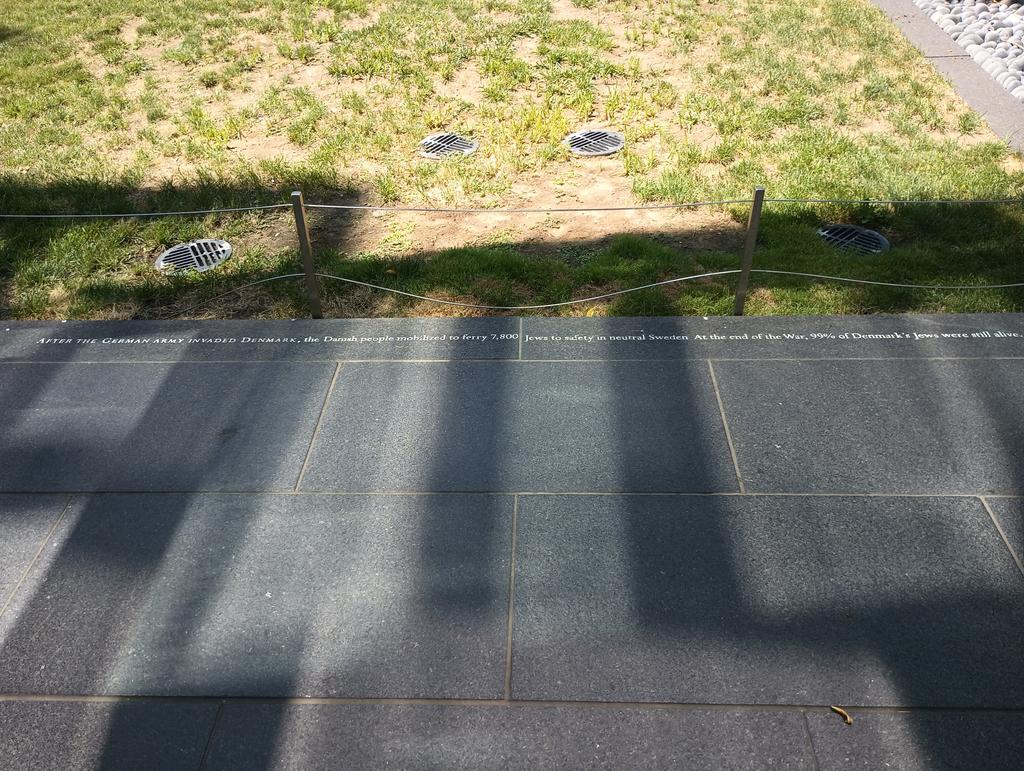
From the New England Holocaust Memorial in Boston: https://www.nehm.org/
For Further Reading:
For Further Reading:
Books for younger readers:
- The Whispering Town, by Jennifer Elvgren (picture book, good for grades K-3)
- The Yellow Star: A Legend of King Christian X, by Carmen Deedy (picture book, good for grades K-3)
- Time to be Brave, by Joan Stuchner (good for grades 2-4)
- Hour of Need, by Ralph Shayne (graphic novel, best for grades 6-12)
- Number the Stars, by Lois Lowry (good for grades 3-6)
- Call Across the Sea, by Kathy Kacer (good for grades 4-8)
- Harboring Hope, by Susan Hood (novel in verse, good for grades 5-10)
- Hitler's Canary, by Sandi Toksvig (good for grades 6-12)
- Courage and Defiance, by Deborah Hopkinson (non-fiction about the Resistance, good for grades 6-12)
- Darkness Over Denmark, by Ellen Levine (non-fiction about the Resistance, good for grades 6-12)
- Heroes of the Holocaust: True Stories of Rescues by Teens, by Allan Zullo (has a Denmark chapter, good for grades 5-12)
- Lisa’s War, by Carol Matas (good for grades 6-12; sequel Code Name: Kris follows a non-Jewish Danish resistance member from the first book)
- The Whispering Town, by Jennifer Elvgren (picture book, good for grades K-3)
- The Yellow Star: A Legend of King Christian X, by Carmen Deedy (picture book, good for grades K-3)
- Time to be Brave, by Joan Stuchner (good for grades 2-4)
- Hour of Need, by Ralph Shayne (graphic novel, best for grades 6-12)
- Number the Stars, by Lois Lowry (good for grades 3-6)
- Call Across the Sea, by Kathy Kacer (good for grades 4-8)
- Harboring Hope, by Susan Hood (novel in verse, good for grades 5-10)
- Hitler's Canary, by Sandi Toksvig (good for grades 6-12)
- Courage and Defiance, by Deborah Hopkinson (non-fiction about the Resistance, good for grades 6-12)
- Darkness Over Denmark, by Ellen Levine (non-fiction about the Resistance, good for grades 6-12)
- Heroes of the Holocaust: True Stories of Rescues by Teens, by Allan Zullo (has a Denmark chapter, good for grades 5-12)
- Lisa’s War, by Carol Matas (good for grades 6-12; sequel Code Name: Kris follows a non-Jewish Danish resistance member from the first book)
Books for Adults:
- The Rescue of Danish Jewry, by Leni Yahil
- The Rescue of Danish Jews, by Leo Goldberger
- Henny's Boat, by Howard Veisz
- In Denmark It Could Not Happen, by Herbert Pundik
- A Conspiracy of Decency, by Emmy Werner
- Beyond the Shadows, by Judy Lauder
- Countrymen, by Bo Lidegaard
- Nothing to Speak Of, by Sofie Bak
- The Jews of Denmark in the Holocaust, by Silvia Fracapane
- Rescue in Denmark, by Harold Flender
https://mjhnyc.org/blog/a-reading-list-for-courage-to-act-rescue-in-denmark/
- The Rescue of Danish Jewry, by Leni Yahil
- The Rescue of Danish Jews, by Leo Goldberger
- Henny's Boat, by Howard Veisz
- In Denmark It Could Not Happen, by Herbert Pundik
- A Conspiracy of Decency, by Emmy Werner
- Beyond the Shadows, by Judy Lauder
- Countrymen, by Bo Lidegaard
- Nothing to Speak Of, by Sofie Bak
- The Jews of Denmark in the Holocaust, by Silvia Fracapane
- Rescue in Denmark, by Harold Flender
https://mjhnyc.org/blog/a-reading-list-for-courage-to-act-rescue-in-denmark/
Resources on the pre-1933 History of Jews in Denmark:
- https://www.jewishgen.org/Scandinavia/history.htm
- https://jewishencyclopedia.com/articles/5090-denmark
- https://www.worldjewishcongress.org/en/about/communities/dk
- https://en.wikipedia.org/wiki/History_of_the_Jews_in_Denmark
- https://jewishvirtuallibrary.org/jsource/vjw/Denmark.html
- https://jguideeurope.org/en/region/denmark/
- https://www.jewmus.dk/en/udstilling/vandreudstilling
- https://www.jewishgen.org/Scandinavia/history.htm
- https://jewishencyclopedia.com/articles/5090-denmark
- https://www.worldjewishcongress.org/en/about/communities/dk
- https://en.wikipedia.org/wiki/History_of_the_Jews_in_Denmark
- https://jewishvirtuallibrary.org/jsource/vjw/Denmark.html
- https://jguideeurope.org/en/region/denmark/
- https://www.jewmus.dk/en/udstilling/vandreudstilling
Resources on the rescue of Danish Jews:-
- https://encyclopedia.ushmm.org/content/en/article/denmark
-https://www.yadvashem.org/righteous/stories/the-rescue-of-denmark-jews.html
-https://www.yadvashem.org/articles/academic/denmark-and-the-holocaust.html
-https://www.jewmus.dk/en/udstilling/flugt-og-forfoelgelse-i-det-20-aarhundrede
- https://mjhnyc.org/press/danish-jews-rescue-inspires
- https://www.holocaustrescue.org/danish-government
- https://www.holocaustrescue.org/danish-recognized-by-yad-vashem
-https://considerthesourceny.org/teaching-holocaust-and-genocide/responses-holocaust/resistance/readings/holocaust-denmark-resistance-rescue-and-moral-leadership
-https://aboutholocaust.org/en/facts/how-was-danish-civil-society-able-to-save-most-jews-in-denmark-from-deportation
- https://www.history.com/articles/wwii-danish-jews-survival-holocaust
- https://en.wikipedia.org/wiki/Rescue_of_the_Danish_Jews
- https://www.eastman.org/resistance-and-rescue
- https://holocaustresearchproject.net/nazioccupation/danishjews.html
-https://www.holocausthistoricalsociety.org.uk/education/guestarticle-resistanceindenmark.html
-https://www.ilholocaustmuseum.org/wp-content/uploads/2023/09/Hour-of-Need-Educator-Resources.pdf
- https://encyclopedia.ushmm.org/content/en/article/denmark
-https://www.yadvashem.org/righteous/stories/the-rescue-of-denmark-jews.html
-https://www.yadvashem.org/articles/academic/denmark-and-the-holocaust.html
-https://www.jewmus.dk/en/udstilling/flugt-og-forfoelgelse-i-det-20-aarhundrede
- https://mjhnyc.org/press/danish-jews-rescue-inspires
- https://www.holocaustrescue.org/danish-government
- https://www.holocaustrescue.org/danish-recognized-by-yad-vashem
-https://considerthesourceny.org/teaching-holocaust-and-genocide/responses-holocaust/resistance/readings/holocaust-denmark-resistance-rescue-and-moral-leadership
-https://aboutholocaust.org/en/facts/how-was-danish-civil-society-able-to-save-most-jews-in-denmark-from-deportation
- https://www.history.com/articles/wwii-danish-jews-survival-holocaust
- https://en.wikipedia.org/wiki/Rescue_of_the_Danish_Jews
- https://www.eastman.org/resistance-and-rescue
- https://holocaustresearchproject.net/nazioccupation/danishjews.html
-https://www.holocausthistoricalsociety.org.uk/education/guestarticle-resistanceindenmark.html
-https://www.ilholocaustmuseum.org/wp-content/uploads/2023/09/Hour-of-Need-Educator-Resources.pdf
