Save
Save Copy
Copy Add to Collection
 Export to Google Docs
 Share
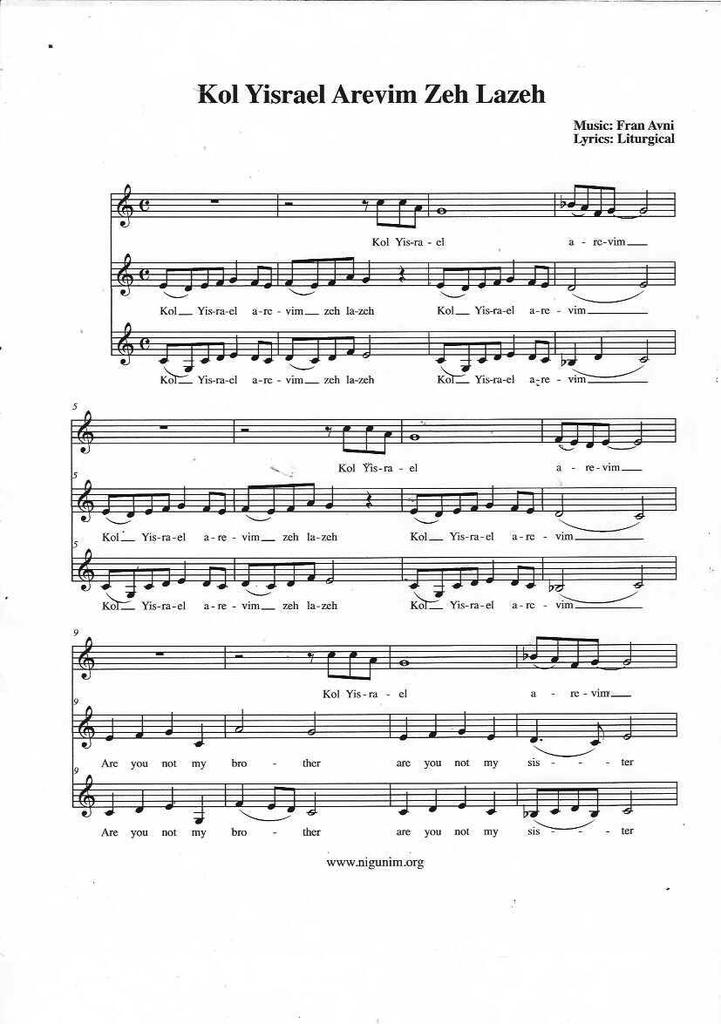
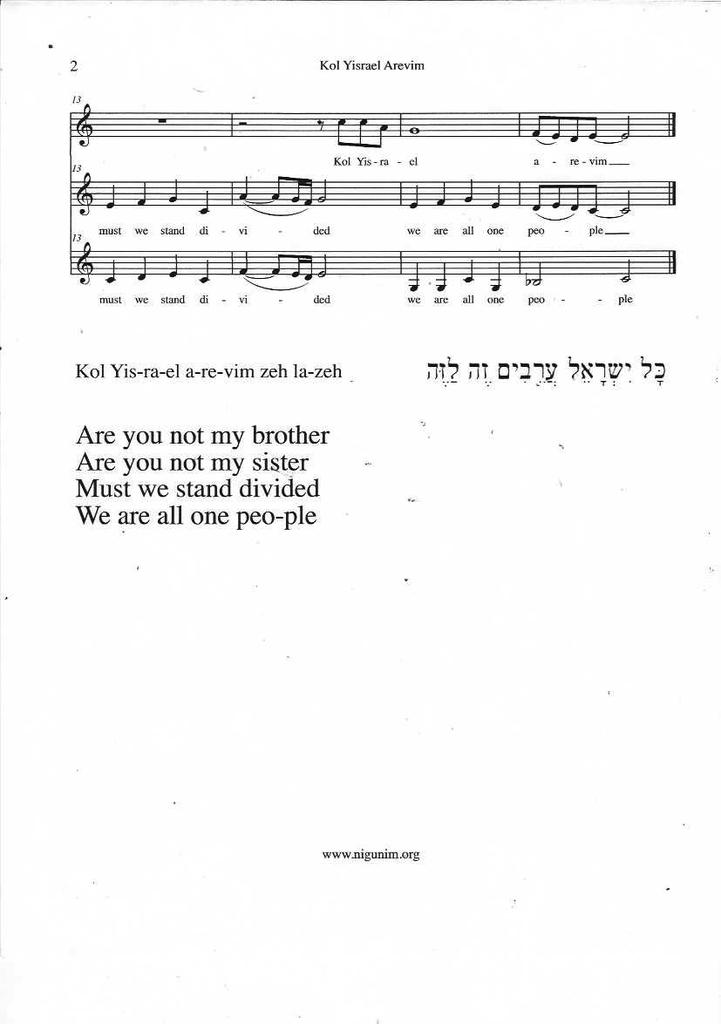
ShareThis is a saying from the Talmud that has informed Jewish behavior for the last 1500 years. In the Talmud it is “Kol Yisrael aravim zeh bazeh”, though sometimes the last word is written “lazeh” (it's not actually in the Talmud that way as far as I could tell). It connects to the aspect of Judaism that is not only a religion and a culture but also a people.
וְכׇל עֲבֵירוֹת שֶׁבַּתּוֹרָה – מִכׇּל הָעוֹלָם לָא?! וְהָכְתִיב: ״וְכָשְׁלוּ אִישׁ בְּאָחִיו״ – אִישׁ בַּעֲוֹן אָחִיו; מְלַמֵּד שֶׁכׇּל יִשְׂרָאֵל עֲרֵבִים זֶה בָּזֶה!
The Gemara asks: And with regard to all of the other transgressions in the Torah, is punishment not exacted from the entire world? But isn’t it written: “And they shall stumble one upon another” (Leviticus 26:37)? This verse is homiletically interpreted to mean that they shall stumble spiritually, one due to the iniquity of another, which teaches that the entire Jewish people are considered guarantors for one another. Apparently, any transgression makes the entire world liable to be punished.
(יד) הוּא הָיָה אוֹמֵר, אִם אֵין אֲנִי לִי, מִי לִי. וּכְשֶׁאֲנִי לְעַצְמִי, מָה אֲנִי. וְאִם לֹא עַכְשָׁיו, אֵימָתָי:
(14) Hillel [also] used to say: If I am not for myself, who is for me? But if I am for my own self [only], what am I? And if not now, when?
(טז) וַתֹּ֤אמֶר רוּת֙ אַל־תִּפְגְּעִי־בִ֔י לְעׇזְבֵ֖ךְ לָשׁ֣וּב מֵאַחֲרָ֑יִךְ כִּ֠י אֶל־אֲשֶׁ֨ר תֵּלְכִ֜י אֵלֵ֗ךְ וּבַאֲשֶׁ֤ר תָּלִ֙ינִי֙ אָלִ֔ין עַמֵּ֣ךְ עַמִּ֔י וֵאלֹהַ֖יִךְ אֱלֹהָֽי׃
(16) But Ruth replied, “Do not urge me to leave you, to turn back and not follow you. For wherever you go, I will go; wherever you lodge, I will lodge; your people shall be my people, and your God my God.
(ח) וַיֹּ֥אמֶר קַ֖יִן אֶל־הֶ֣בֶל אָחִ֑יו וַֽיְהִי֙ בִּהְיוֹתָ֣ם בַּשָּׂדֶ֔ה וַיָּ֥קׇם קַ֛יִן אֶל־הֶ֥בֶל אָחִ֖יו וַיַּהַרְגֵֽהוּ׃ (ט) וַיֹּ֤אמֶר יהוה אֶל־הַ֔יִן אֵ֖י הֶ֣בֶל אָחִ֑יךָ וַיֹּ֙אמֶר֙ לֹ֣א יָדַ֔עְתִּי הֲשֹׁמֵ֥ר אָחִ֖י אָנֹֽכִי׃ (י) וַיֹּ֖אמֶר מֶ֣ה עָשִׂ֑יתָ ק֚וֹל דְּמֵ֣י אָחִ֔יךָ צֹעֲקִ֥ים אֵלַ֖י מִן־הָֽאֲדָמָֽה׃
(8) Cain said to his brother Abel … and when they were in the field, Cain set upon his brother Abel and killed him. (9) GOD said to Cain, “Where is your brother Abel?” And he said, “I do not know. Am I my brother’s keeper?” (10) “What have you done? Hark, your brother’s blood cries out to Me from the ground!
- When Eastern European Jews came to America (roughly 1881-1924), a number of organizations to help them were set up by the Central European Jews already in the US.
- Each one focused on a specific need -— orphans, burial of poor Jews, food, etc.
- The problem was that each small organization was tapping the same pool of donors, and the donors might give to the first 10 groups but not the 11th.
- The donors weren’t happy and neither were the organizations, so in city after city they created a “Jewish Federation” system where people would give money once to the the Federation and the Federation would then give money to all the organizations under its umbrella.
- This gets at the idea of “All Jews are responsible for each other” because:
- 1. Jews are contributing money to help other Jews
- 2. The money that is raised not only goes to help Jews in the community but also to help Jews in Israel, Holocaust survivors in Eastern Europe, security needs for Jews in Argentina, etc.
- Many Jewish communities have Jewish food pantries so that kosher food is available to those who can’t afford it.
- Many also have “Free Loan” societies that provide interest-free loans to Jews in need in their communities, and/or “gemachs”, short for “G’milut Chasadim” (deeds of loving-kindness) that loan out everything from wedding dresses to bassinets.
- Some, like Chicago and Boston, take it a step further.
- For example, since 1971 “The Ark” (arkchicago.org) provides groceries, hot food, legal aid, prescriptions, doctors, dentists, therapists, spiritual services, housing resources, and employment help to Jews in need in the Chicagoland area.
- Yad Chessed provides similar things to Jews in the Boston area.
- Israel was established as a home for persecuted Jews throughout the world.
- From the very beginning, when there wasn't enough money for it anyway, Israel absorbed 600,000 North African Jews who were expelled from their homes.
- In a set of daring operations, Israel rescued persecuted Jewish communities:
- Operation Magic Carpet (1949) - Yemenite Jews
- Operation Ezra and Nehemiah (1951) - Iraqi Jews
- Operation Yachin (1961) - Moroccan Jews
- Operations Brothers (1981), Moses (1984), Joshua (1985), and Solomon (1991) - Ethiopian Jews
- In the 1990s Israel took in Jews from the former Soviet Union who were discriminated against for being Jewish
- The first 23 Jews came to what would be British North America in 1654.
- They came on the St. Catherine from Recife, now in Brazil, when the Portuguese conquered it from the Dutch.
- The Jews did not want to wait for the Inquisition to come to them, so they went to the Dutch colony of New Amsterdam.
- The governor of New Amsterdam, Peter Stuyvesant, did not want the Jews present, so he wrote to the Dutch West Indies Company (in charge of the colony) for permission to expel them.
- The Jews of Amsterdam stepped up to speak on behalf of their fellow Jews, and Stuyvesant was told to let them stay.
- The deal was that they could stay as long as they did “not become a charge on the deaconry or the Company”. Thus, from the beginning, Jews in North America took care of their fellow Jews in need, upholding their end of the deal.
- The Jews of Amsterdam sent a Torah to the Jewish community in 1655 in New Amsterdam to help them.
- In 1695, the British had taken over already and renamed the colony New York. The Jews formed the synagogue community “Shearith Israel”, getting assistance from the much larger Jewish community on the island of Curacao off of modern Venezuela.
- Shearith Israel then helped other North American synagogues that formed before the American Revolution: Savannah (1733), Philadelphia (1740), Charleston (1749), and Newport (RI) (1759)
- Most of these synagogues have a claim to fame: New York has the congregation that was established first in North America; Newport has the still-used synagogue building that was built first; Philadelphia has the oldest continually-functioning synagogue (and it hosted the other 4 congregations when they were taken over by the British).
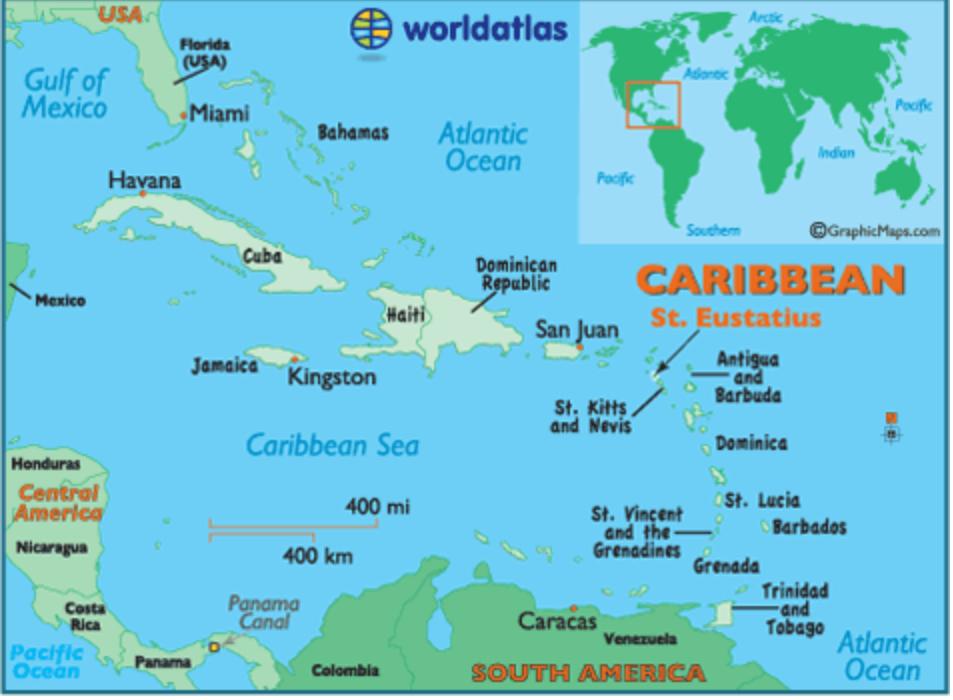
- One of the best places in the world to be a merchant in the 1700s, especially for a Jew, was the Caribbean.
- Sugar was readily available there, and many European countries took over various islands in order to have their own supply and resupply their ships for further adventures.
- Moreover, the Caribbean was a hub for trading with Europe, Africa, South America, North America, and other places in the Caribbean.
- St. Eustatius was especially popular because it was a "free port", so any ship from any country could dock and trade there.
- Until 1825, the largest Jewish communities in the New World were in the Dutch and British holdings in the Caribbean because those were the easiest places for Jews to both make a living and worship openly as Jews.
- Thus, even though St. Eustatius is an island with only 2 volcanos and a small village, it has twice as many Jews in 1776 (600) compared to New York City or Philadelphia (300 each) (other Dutch areas like Curaçao and Suriname have 4-5 times as many Jews as those cities - 12-1500).
- Most of these Jews are Sephardic, though the Ashkenazic Jews there belong to the same synagogue, Chonen Dalim (which uses the Spanish-Portuguese way of praying). They have escaped from the Iberian peninsula to Amsterdam, and from there to St. Eustatius (where they stay in touch with their previous home, like getting ritual objects from there). There’s a Jewish cemetery in St. Eustatius that is still there today (maintained by the non-Jewish community who values their Jewish past on the island).

- Women and children were there, not just male merchants.

- For more details on the Jewish history of St. Eustatius during this period, see: https://sephardicgenealogy.com/researching-sephardic-ancestry/jewish-st-eustatius/
- Therefore, St. Eustatius becomes a hub for merchants funneling supplies to the Americans.
- The Jews have trading ties around the Atlantic world, so they are even though they make up 1/3 of the European population on the island they are disproportionately involved in getting guns and ammunition, as well as food and shoes, to Washington’s army.
- Because of the Jewish and other merchants, it is in St. Eustatius’ economic interests to strengthen ties with America, especially because the British are not being good trading partners with the Dutch.
- On October 13, 1775, the Continental Congress created the Continental Navy with 4 ships.
- One of these was the Andrew Doria, whose first mission was to sail to the Dutch island of St. Eustatius in the Caribbean in order to take on military supplies.
- On November 16, 1776, the Andrew Doria, waving the “Grand Union” American flag, fired a salute as it entered the island, and under the orders of Governor Johannesburg de Graaff, Fort Orange fired a salute back, thus becoming the first foreign power to recognize the United States.
- This was highly controversial.
- St. Eustatius was the center of supplies coming to the Americans from all over the place, and the British had been pressuring the Dutch to stop this. The Dutch put out an order to cease, but the governor of the island listened to the economic concerns of his people and ignored that order, going even further by recognizing the United States.
- In order to evade British searches of ships to America, Jewish merchants sometimes disguised shipments of gunpowder as simple tea.
- American mail to Europe regularly went through St. Eustatius.
- Jonas Philips is a Jew who arrives in America as an indentured servant and works his way out of that to become a prominent merchant. He is so proud of the values in the Declaration of Independence that he sends it to his friend in Amsterdam via St. Eustatius, accompanied by a letter in Yiddish. The British confiscate it and think it’s a spy letter in a secret code.
- The Jews disproportionately sided with the Patriots, though not all, based on their economic calculations. In addition to the provisions (St. Eustatius) and the financing (Hayim Salomon), many Jews served in Washington’s army, where they got to march alongside their Christian neighbors (this didn’t happen elsewhere). Like Francis Salvador, Jews fought and died for the country. Jews made up 1/10 of 1% of the colonial population, but 100 Jewish soldiers served out of a population of 2,000.
- Admiral Sir George Rodney, commander of the British fleet in the West Indies, attacked St. Eustatius on Feb. 3, 1781 after the Dutch joined the French and Spanish in declaring war on Britain in support of the Americans.
- The goal was to stop the flow of arms and ammunition to the Americans (though by this point the French were doing most of it directly).
- He wrote about the island, “It has been more detrimental to England than all the forces of her enemies and alone had contributed to the continuance of the American war.” “Without this nest of vipers, the American Rebellion could not have subsisted”.
- While Rodney demanded a list of all the merchants in St. Eustatius with a list of their inventories, he singled out the Jews, ordering them searched and stripped of any cash or precious stones that they might have in their clothes as well as confiscating their inventories. He then had them expelled from the island on one day’s notice without any of their property, unlike the Governor whom he expelled but allowed to keep all of his belongings.
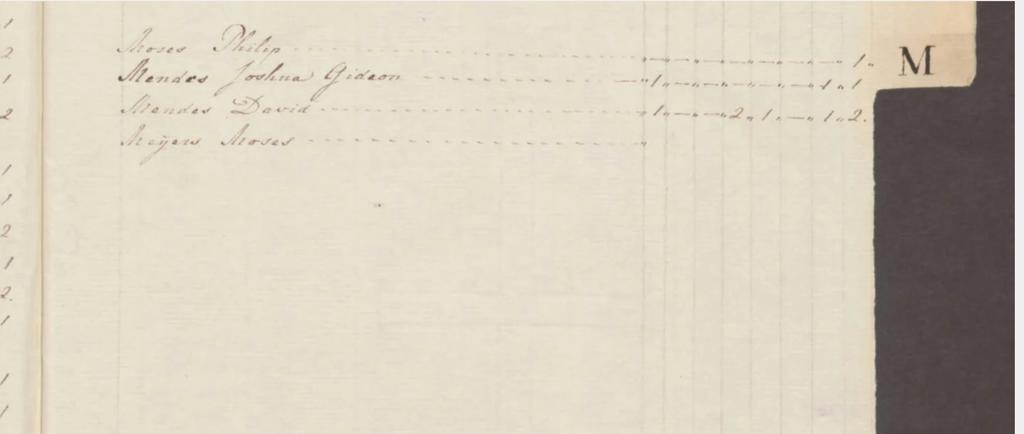
- The money and goods that Admiral Rodney takes from the Jews and others is then shipped back to England to enrich Rodney. Unfortunately for him, French ships intercept and seize the goods.
- Admiral Rodney was so consumed with his greed and revenge on St. Eustatius and on the West Indies in general that he failed to stop the French fleet that headed from the West Indies to trap Cornwallis at Yorktown
- French Admiral de Grasse, after Yorktown, reconquered St. Eustatius a few weeks later in November 1781, returning it to the Dutch in 1784 (they still have it) under whom it returned to its role in trade. Governor De Graaff returned as a private citizen in 1779 and died a rich man in 1813.
- A few Jews come back to the island after the war, but most stay in their new homes at St. Thomas, Curaçao, Amsterdam, or the United States (the war similarly decimates the Jewish community of Newport, Rhode Island).