


 Save
 Copy
 Add to Collection
 Export to Google Docs
 Share
שׁוּתָפִים שֶׁרָצוּ לַעֲשׁוֹת מְחִיצָה בֶחָצֵר, בּוֹנִים אֶת הַכֹּתֶל בָּאֶמְצַע.
מָקוֹם שֶׁנָּהֲגוּ לִבְנוֹת גָּוִיל, גָּזִית, קְפֵסִים, לְבֵנִים, בּוֹנִים, הַכֹּל כְּמִנְהַג הַמְּדִינָה.
בַּגָּוִיל, זֶה נוֹתֵן שְׁלֹשָׁה טְפָחִים, וְזֶה נוֹתֵן שְׁלֹשָׁה טְפָחִים,
וּבַגָּזִית, זֶה נוֹתֵן טִפְחַיִם וּמַחְצָה, וְזֶה נוֹתֵן טִפְחַיִם וּמַחְצָה,
וּבַקְּפֵסִים, זֶה נוֹתֵן טִפְחַיִם, [וְזֶה נוֹתֵן פְחַיִם,]
וּבַלְּבֵנִים, זֶה נוֹתֵן טֶפַח וּמַחְצָה, וְזֶה נוֹתֵן טֶפַח וּמַחְצָה.
לְפִיכָךְ, אִם נָפַל הַכֹּתֶל, הַמָּקוֹם וְהָאֲבָנִים שֶׁלִּשְׁנֵיהֶם.
Two partners who wish to make a partition in a courtyard build the wall in the middle.
In a place where the custom is to build of unshaped stones, of hewn stones, of half-bricks, or of whole bricks, so they should build it, everything is according to local custom.
Unshaped stones: one gives three handbreadths, and the other gives three handbreadths.
Hewn stones: one gives two and a half handbreadths, and the other gives two and a half handbreadths.
Half-bricks: one gives two handbreadths, [and the other gives two handbreadths].
Bricks: one gives one and a half handbreadths, and the other gives one and a half
handbreadths. Therefore, if the wall fell down the space and the stones belong to both of them.
מַאי ״מְחִיצָה״ – פְּלוּגְתָּא, דִּכְתִיב: ״וַתְּהִי מֶחֱצַת הָעֵדָה״; וְכֵיוָן דְּרָצוּ – בּוֹנִין אֶת הַכּוֹתֶל בְּעַל כּוֹרְחָן, אַלְמָא הֶיזֵּק רְאִיָּה שְׁמֵיהּ הֶיזֵּק.
What is a meḥitza? A division, as it is written: “And the division of [meḥetzat] the congregation was . .” (Numbers 31:43). Since they wished, they build a wall even against their will. Therefore, damage caused by sight is called damage.
וְכֵן בַּגִּנָּה:
מָקוֹם שֶׁנָּהֲגוּ לִגְדֹּר, [מְחַיְּבִין אוֹתוֹ,] אֲבָל בַּבִּקְעָה, מָקוֹם שֶׁנָּהֲגוּ שֶׁלֹּא לִגְדֹּר, אֵין מְחַיְּבִין אוֹתוֹ, אֶלָּא אִם רָצָה, כּוֹנֵס לְתוֹךְ שֶׁלּוֹ, וְעוֹשֶׂה חָזִית מִבַּחוּץ.
לְפִיכָךְ, אִם נָפַל הַכֹּתֶל, הַמָּקוֹם וְהָאֲבָנִים שֶׁלּוֹ.
וְאִם עָשׁוּ מִדַּעַת שְׁנֵיהֶם, בּוֹנִים אֶת הַכֹּתֶל בָּאֶמְצַע, וְעוֹשִׂין חָזִית מִכָּן וּמִכָּן.
לְפִיכָךְ, אִם נָפַל הַכֹּתֶל, הַמָּקוֹם וְהָאֲבָנִים שֶׁלִּשְׁנֵיהֶם.
The same is true with a garden: in a place where the custom is to build a fence, they can oblige him to do so, but in a valley, where it is not customary to build a fence, they cannot oblige him to do so.
But if he wants, he must gather into his own portion and build, and he puts a finishing on the outside of the wall.
Therefore if the wall falls, the place and the stones belong to him.
If they acted with each other’s consent, they should build the wall in the middle and put a finishing on both sides.
Therefore if the wall falls, the place and the stones belong to them both.
הַמַּקִּיף אֶת חֲבֵרוֹ מִשָּׁלֹשׁ רוּחוֹתָיו, גָּדַר אֶת הָרִאשׁוֹנָה וְאֶת הַשְּׁנִיָּה וְאֶת הַשְּׁלִישִׁית, אֵין מְחַיְּבִין אוֹתוֹ.
רְבִּי יוֹסֵה אוֹמֵר: אִם עָמַד וְגָדַר אֶת הָרְבִיעִית, מְגַלְגְּלִין עָלָיו אֶת הַכֹּל.
If someone surrounded his fellow on three sides, and he fenced on the first and the second and the third sides, they do not oblige him.
Rabbi Yose says: “If he rose and built a fence on the fourth side, they oblige him [roll onto him] for everything.”
מה שאמר ר' יוסי אם עמד וגדר את הרביעית מגלגלין עליו את הכל בין שהיה זה הגודר הרביעית אותו שגדר השלש רוחות בין שהיה האיש ההוא שהוקף מג' רוחותיו הוא שהקיף רוח רביעית
כיון שנבנית הרביעית ונגמרה התועלת לדעת רבי יוסי מגלגלין עליו את הכל. . . . והלכה כר' יוסי:
When Rabbi Yose said, "If he rose and built a fence on the fourth side, they oblige him", it applies equally if the fencer of the fourth side was the person that fenced off the first three directions or if it was the person that was fenced in from the three directions.
Because the fourth side is built and the objective is fulfilled, according to Rabbi Yose we oblige him to pay everything . . . . and the halakha goes according to Rabbi Yose.
כֹּתֶל חָצֵר שֶׁנָּפַל, מְחַיְּבִין אוֹתוֹ לִבְנוֹתוֹ עַד אַרְבַּע אַמּוֹת,
בְּחֶזְקַת שֶׁנָּפַל [שֶׁנָּתַן] עַד שֶׁיָּבִיא רְאָיָה שֶׁלֹּא נָּפַל [נָּתַן].
מֵאַרְבַּע אַמּוֹת וּלְמַעְלָן, אֵין מְחַיְּבִין אוֹתוֹ.
סָמַךְ לוֹ כֹתֶל אַחֵר, אַף עַל פִּי שֶׁלֹּא נָתַן עָלָיו אֶת הַתִּקְרָה, מְגַלְגְּלִין עָלָיו אֶת הַכֹּל, בְּחֶזְקַת שֶׁלֹּא נָתַן, עַד שֶׁיָּבִיא רְאָיָה שֶׁנָּתַן.
If the wall of a courtyard fell down they oblige him to build it up to a height of four cubits;
it is presumed to have fallen unless he brings proof that it did not fall [or, in the printed text, "he is presumed to have paid unless he brings proof that he has not paid"].
From four cubits or higher, they do not oblige him.
If he built another wall next to it, even if he did not put a ceiling upon it, they include him in everything; he is presumed not to have paid until he brings proof that he has.
עַד אַרְבַּע אַמּוֹת.
דִּבְהָכִי סַגִּי לֵיהּ לְהֶזֵּק רְאִיָּה:
To a height of four cubits;
This is sufficient for hezek reiah -- damage from sight [i.e. invasion of privacy].
כּוֹפִין אוֹתוֹ לִבְנוֹת בֵּית שַׁעַר וְדֶלֶת לֶחָצֵר. רַבָּן שִׁמְעוֹן בֶּן גַּמְלִיאֵל אוֹמֵר: לֹא כָל הַחֲצֵרוֹת רְאוּיוֹת לְבֵית שַׁעַר.
כּוֹפִין אוֹתוֹ לִבְנוֹת לָעִיר חוֹמָה וּדְלָתַיִם וּבְרִיחַ. רַבָּן שִׁמְעוֹן בֶּן גַּמְלִיאֵל אוֹמֵר: לֹא כָל הָעֲיָרוֹת רְאוּיוֹת לַחוֹמָה.
כַּמָּה יְהֵי בָעִיר וִיהֵא כְאַנְשֵׁי הָעִיר? שְׁנֵים עָשָׂר חֹדֶשׁ. קָנָה בָהּ בֵּית דִּירָה, הֲרֵי הוּא כְּאַנְשֵׁי הָעִיר מִיָּד.
They compel someone to participate in building a gate-house and a door for the courtyard. Rabban Shimon ben Gamaliel says: “Not all courtyards are suitable for a gate-house.”
They compel someone to participate in building a wall for the town and double doors and a bolt. Rabban Shimon ben Gamaliel says: “Not every town are suitable for a wall.”
How long must a person be in a town to be as one of the people of the town? Twelve months. If he has purchased a dwelling-place he immediately becomes as one of the people of the town.
לְמֵימְרָא דְּבֵית שַׁעַר מְעַלְּיוּתָא הִיא?! וְהָא הָהוּא חֲסִידָא דַּהֲוָה רְגִיל אֵלִיָּהוּ דַּהֲוָה מִשְׁתַּעֵי בַּהֲדֵיהּ; עֲבַד בֵּית שַׁעַר, וְתוּ לָא מִשְׁתַּעֵי בַּהֲדֵיהּ! לָא קַשְׁיָא: הָא מִגַּוַּאי, הָא מִבָּרַאי.
Is this to say that a gatehouse is a benefit? There was that pious man, with whom Elijah was accustomed to speak. He made a gatehouse and Elijah did not speak with him again.
It's not difficult: this one [in the Mishnah] is inside the courtyard, that one was outside.
גמ' ולא אישתעי בהדיה - לפי שמפסיק בעניים הצועקין ואין קולם נשמע:
Because it impedes poor people who cry out and their voice is not heard.
מגואי - לחצר גריעותא הוא לפי שדלת החצר נעול והעני צועק ובית שער שבפנים מפסיק הקול:
Inside. This is a detriment to the courtyard, because the courtyard door is locked, and the poor person stands outside calling out, but the inner gatehouse blocks the sound.”
מבראי - אינו מפסיק בפניו שהרי נכנס לתוכו וכשאין לו דלת עסקינן:
Outside. It does not impede him, since he enters it, and we are dealing with a case where it has no door.
תַּנֵּי. שָׁהָה שָׁם שְׁלֹשִׁים יוֹם הֲרֵי הוּא כְאַנְשֵׁי הָעִיר לְקוּפָּה. לִכְסוּת שִׁשָּׁה חֳדָשִׁים. לְפִסִים וּלְזִימִיּוֹת שְׁנֵים עָשָׂר חוֹדֶשׁ.
It was stated: “If he stayed there for thirty days he is like the townspeople for the charity chest. For clothing six months. For assessments and penalties twelve months.”
אֵין חוֹלְקִין אֶת הֶחָצֵר, עַד שֶׁיְּהֵא בָהּ אַרְבַּע אַמּוֹת לָזֶה וְאַרְבַּע אַמּוֹת לָזֶה.
וְלֹא אֶת הַשָּׂדֶה, עַד שֶׁיְּהֵא בָהּ תִּשְׁעַת קַבִּים לָזֶה וְתִשְׁעַת קַבִּים לָזֶה.
רְבִּי יְהוּדָה אוֹמֵר: תִּשְׁעַת חֲצָאֵי קַבִּים לָזֶה וְתִשְׁעַת חֲצָאֵי קַבִּים לָזֶה.
וְלֹא אֶת הַגַּנָּה, עַד שֶׁיְּהֵא בָהּ חֲצִי קַב לָזֶה וַחֲצִי קַב לָזֶה.
וּכְדִבְרֵי רְבִּי עֲקִיבָה, בֵּית רֹבַע.
לֹא אֶת הַטְּרִקְלִין וְלֹא אֶת הַמּוּרָן וְלֹא אֶת הַשּׁוֹבָךְ, וְלֹא אֶת הַטַּלֵּת וְלֹא אֶת הַמַּרְחֵץ וְלֹא אֶת בֵּית הַבַּד, עַד שֶׁיְּהֵא בָהֶן כְּדֵי לָזֶה וּכְדֵי לָזֶה.
[זֶה הַכְּלָל: כָּל שֶׁיֵּחָלֵק וּשְׁמוֹ עָלָיו, חוֹלְקִין,
וְאִם לָאו, אֵין חוֹלְקִין.]
אֶמָּתַי? בִּזְמַן שֶׁאֵין שְׁנֵיהֶם רוֹצִין, אֲבָל בִּזְמַן שֶׁשְּׁנֵיהֶן רוֹצִין, אֲפִלּוּ פָחוּת מִכֵּן, יַחֲלֹקוּ.
וְכִתְבֵי הַקֹּדֶשׁ, אַף עַל פִּי שֶׁשְּׁנֵיהֶן רוֹצִין, לֹא יַחֲלֹקוּ.
They do not divide a courtyard until there is four cubits for one and four cubits for the other.
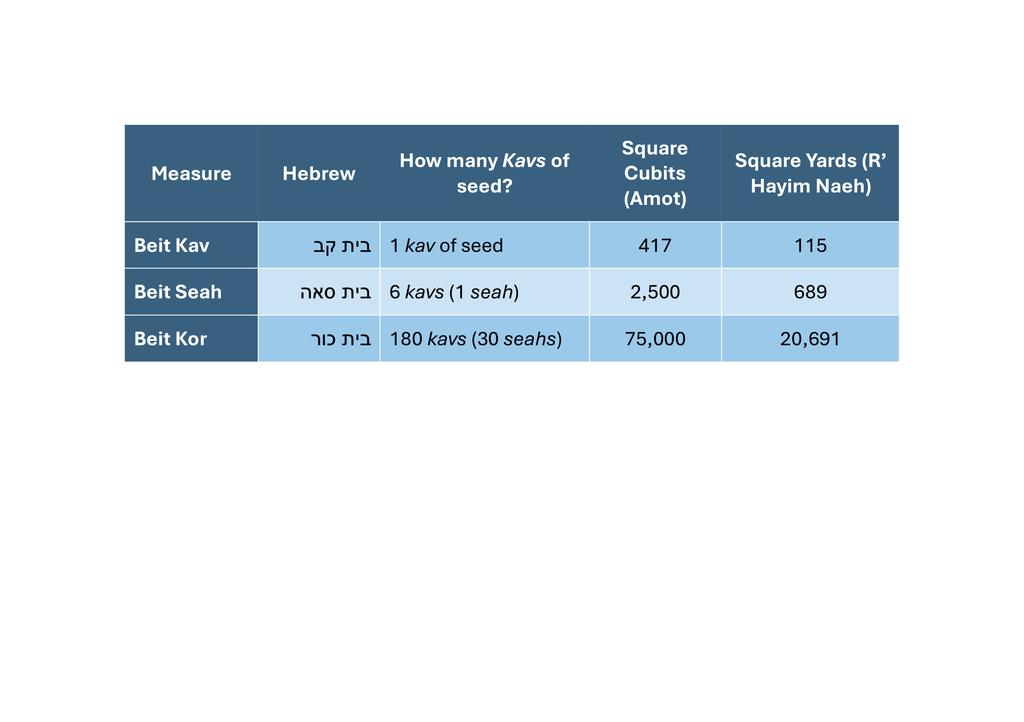
Nor a field until it has nine kavs [half an acre] for one and nine kavs for the other.
Rabbi Judah says: “Until it has nine half-kavs for one and nine half-kavs for the other.
Nor a garden until it has a half-kav [eight yards square] for one and a half-kav for the other.
Rabbi Akiva says: “A quarter-kav
Nor an dining hall, a compartment, a dovecote, a cloak, a bathhouse, or an olive-press until there is sufficient for one and the other.
[This is the general rule: whatever can be divided and is called by the same name, they divide; otherwise they do not divide.]
When is this so? When they do not both wish to. However, if both wish they can divide it even if it is smaller.
And with regards to sacred writings, they may not be divided even if both wish to.
אין חולקין את החצר עד שיהא ארבע אמות לזה כו':
הקרקעות המשותפות בבבל וכיוצא בו אין בהן דין חלוקה עד שיהיה ארבע אמות לזה וארבע אמות לזה כלומר בחצר השותפין אחר שיניח לפני פתח כל בית ובית ארבע אמות לתשמיש.
למדנו מזה כי כשיהיה בחצר שני בתים זה כנגד זה אין חולקין עד שיהיה מפתח בית זה לפתח הבית השני שש עשרה אמה ודין זה הוא בחצר שהדין בה במדינות.
אימתי בזמן ששניהם אין מרוצים אבל בזמן ששניהם מרוצים יחלוקו אף על פי שאין בחצר ארבע אמות לזה וארבע אמות לזה.
ורבי יהודה אינו חולק על חכמים אבל הוא מדבר כפי מקומו לפי שבמקום רבי יהודה היה עושה תבואה שדה של ט' חציי קבין כשדה שהיה בו תשעה קבין במקום חכמים
ובית רובע רוצה לומר מדת בית רובע הוא רביע מדת בית קב וכבר בארנו בפרק שני מכלאים שמשיחת בית רובע מאה אמה וחמש אמות וכמו כן משיחת בית תשעה קבין שלשת אלפים ושבע מאות וחמשים אמה ותשעת חציי קבין משיחת אלף ושבע מאות וחמשים אמה.
ופסק ההלכה שאין חולקין הקרקעות המשותפות אלא אם יהיה בכל אחד מהם כדי עבודת העובד יום אחד כלומר בחרישה או זריעה וכיוצא בהן.
וטרקלין ומורן מין ממיני ארמונים וכדי לזה וכדי לזה הוא שיקרא שם כל אותו דבר על כל חלק וחלק מחלקיו כגון שיהו הטרקלין כל כך גדול שיגיע לכל אחד מן השותפין בחלקו מקום שיקרא טרקלין וכן השאר.
ואם לא יתכן החלוקה באותו קרקע בין לשינוי חלקיו או שתתבטל צורתו כשהוא נחלק לקטנותו כמו שביארנו אין אחד מהם יכול לכוף את חבירו לחלוק.
אבל כופין אותו על דרך אחר שיאמר לו קנה חלקי ממני או מכור לי חלקך בכמה שהוא שוה וזה ענין גוד או אגוד ופירושו קנה לך חלקי או אני אקנה חלקך.
וכתבי הקדש אע"פ ששניהם רוצים לא יחלוקו כשהם בכרך אחד אבל כשהם כרכים הרבה מחוברים ביחד ורצו לחלוק שיקח אחד מהם ספר זה וחבירו ספר אחר אינם נמנעים:
“One does not divide a courtyard until there are four cubits for this one…”
Shared landholdings in Babylonia and similar places are not subject to forced division unless there are four cubits for one partner and four cubits for the other — meaning: in a jointly owned courtyard, after leaving four cubits in front of the entrance of each and every house for its necessary use.
From this we learn that when a courtyard contains two houses facing one another, they may not divide it unless there are sixteen cubits from the entrance of one house to the entrance of the other. This rule applies to a courtyard whose law follows the norms of settled regions.
When does this apply? When both partners do not consent. But if both partners do consent, they may divide it even if there are not four cubits for each of them.
And Rabbi Yehudah does not disagree with the Sages; rather, he speaks according to the custom of his locale. For in Rabbi Yehudah’s region, a field producing nine half kab of grain was equivalent to a field producing nine kab in the Sages’ locale.
And a beit rova means: the measure of a quarter of a beit kab. We have already explained in the second chapter of Kilayim that the area of a beit rova is 105 cubits, and likewise the area of a field of nine kab is 3,750 cubits, and the area of nine half kab is 1,750 cubits.
The legal ruling is that shared landholdings are not divided unless each partner receives enough land for the work of a single day: meaning plowing, sowing, or similar agricultural labor.
A traklin and a moran are types of large halls or palace rooms. “Enough for this one and enough for that one” means that each partner receives a portion large enough that the name of that structure still applies to each part — for example, that the traklin is large enough that each partner’s share can still be called a traklin. The same applies to the other cases.
But if the property cannot be divided — either because its parts would be unequal, or because its form would be ruined when divided due to its small size, as we have explained — then neither partner can compel the other to divide.
However, he may compel him in another way: he may say, “Buy my share from me, or sell me your share for its value.” This is the principle of gud o agud, meaning: “Acquire my share, or I will acquire yours.”
As for sacred writings, even if both partners agree, they may not divide them when they are a single scroll. But when they are multiple scrolls bound together, and they wish to divide them — one partner taking one scroll and the other taking another — they are not prevented from doing so.
לֹא יַחְפֹּר אָדָן בּוֹר סָמוּךְ לְבוֹרוֹ שֶׁלַּחֲבֵרוֹ, וְלֹא שִׁיחַ, וְלֹא מְעָרָה, וְלֹא אַמַּת הַמַּיִם,
וְלֹא נִבְרֶכֶת שֶׁלַּכּוֹבְסִים, אֶלָּא אִם כֵּן הִרְחִיק מִכֹּתְלוֹ שֶׁלַּחֲבֵרוֹ שְׁלֹשָׁה טְפָחִים, וְסָד בַּסִּיד.
מַרְחִיקִין אֶת הַגֶּפֶת וְאֶת הַזֶּבֶל, וְאֶת הַמֶּלַח וְאֶת הַסִּיד וְאֶת הַסְּלָעִים, מִכָּתְלוֹ שֶׁלַּחֲבֵרוֹ שְׁלֹשָׁה טְפָחִין, וְסָד בַּסִּיד.
מַרְחִיקִין אֶת הַזְּרָעִים, וְאֶת הַמַּחֲרֵשָׁה, וְאֶת מֵי רַגְלַיִם, מִן הַכֹּתֶל שְׁלֹשָׁה טְפָחִין.
מַרְחִיקִין אֶת הָרֵחַיִם שְׁלֹשָׁה מִן הַשָּׁכָב, שֶׁהֵן אַרְבָּעָה מִן הָרָכָב, וְאֶת הַתַּנּוּר שְׁלֹשָׁה מִן הַכִּלְיָא, שֶׁהֵן אַרְבָּעָה מִן הַשָּׂפָה.
One must not dig a cistern near his fellow’s cistern; nor a ditch, cave, water-channel, or laundry pool unless it is three handbreadths away from his fellow’s wall, and he must plaster it with lime.
One distances olive-waste, manure, salt, lime or stones three handbreadths from his fellow’s wall, and plasters it with lime.
One distances seeds, and a plow, and urine three handbreadths from the wall.
One distances the millstone three from the lower millstone and four from the upper millstone. And the oven: three from the belly of the oven and four from the rim of the oven.
לֹא יַעֲמִיד אָדָם תַּנּוּר בְּתוֹךְ הַבַּיִת, אֶלָּא אִם כֵּן יֵשׁ לוֹ עַל גַּבָּיו גֹּבַהּ אַרְבַּע אַמּוֹת.
הָיָה מַעֲמִידוֹ בָעֲלִיָּה, עַד שֶׁיְּהֵא תַחְתָּיו מַעֲזֵיבָה שְׁלֹשָׁה טְפָחִין, וּבַכִּירָה, טֶפַח.
וְאִם הִזִּיק, מְשַׁלֵּם מַה שֶּׁהִזִּיק.
רְבִּי שִׁמְעוֹן אוֹמֵר: לֹא נֶאֶמְרוּ כָל הַשֵּׁעוּרִין הָאֵלּוּ, אֶלָּא שֶׁאִם הִזִּיק, יְהֵא פָטוּר מִלְּשַׁלֵּם.
One may not put up an oven inside a house unless there is a space of four cubits above it. If he sets it up in the upper room, the flooring beneath it must be three handbreadths deep, or for a stove one handbreadth. And if it causes damage he must pay for the damage caused.
Rabbi Shimon says: “They only mentioned these measurements so that if the object caused damage he would be exempt.”
לֹא יִפְתַּח אָדָם חֲנוּת שֶׁלַּנַּחְתּוֹמִין וְשֶׁלַּצַּבָּעִין תַּחַת אוֹצָרוֹ שֶׁלַּחֲבֵרוֹ, וְלֹא רֶפֶת בָּקָר.
בֶּאֱמֶת, בַּיַּיִן הִתִּירוּ, אֲבָל לֹא רֶפֶת בָּקָר.
חֲנוּת שֶׁבֶּחָצֵר, יָכוֹל לְמַחוֹת בְּיָדוֹ לוֹמַר לוֹ: "אֵינִי יָכוֹל לִישַׁן לֹא מִקּוֹל הַנִּכְנָסִין וְלֹא מִקּוֹל הַיּוֹצְאִין!"
וְעוֹשֶׂה כֵלִין, וְיוֹצֵא וּמוֹכֵר בַּשּׁוּק; אֲבָל אֵינוּ יָכוֹל לְמַחוֹת בְּיָדוֹ וְלוֹמַר לוֹ: "אֵינִי יָכוֹל לִישַׁן, לֹא מִקּוֹל הַפַּטִּישׁ, וְלֹא מִקּוֹל הָרֵחַיִן, וְלֹא מִקּוֹל הַתִּינוֹקוֹת.
One may not open a bakery or a dyer’s shop under his fellow’s storehouse, nor a cattle stall. In truth, they have permitted wine but not a cattle stall.
A person may protest against a shop within the courtyard and say to him, “I cannot sleep because of the noise of them that go in and out.”
Someone who makes utensils, and goes outside and sells them in the market. But none may protest and say to him, “I cannot sleep because of the noise of the hammer” nor “because of the noise of the mill-stones”nor “because of the noise of children.”
וְלֹא מִקּוֹל הַתִּינוֹקוֹת. שֶׁל בֵּית רַבָּן. וְאַף עַל גַּב דְּקוֹל הַבָּא מֵחֲמַת אֲחֵרִים הוּא, לֹא מָצֵי מָחִי, מִשּׁוּם יַגְדִּיל תּוֹרָה וְיַאְדִּיר.
The noise of the school children. And even though that the sound comes on account of others, they cannot protest, because of making the Torah great and glorious.
מִי שֶׁהָיָה כָתְלוֹ סָמוּךְ לְכֹתֶל חֲבֵרוֹ, לֹא יִסְמֹךְ לוֹ כֹתֶל אַחֵר, אֶלָּא אִם כֵּן הִרְחִיק מִמֶּנּוּ אַרְבַּע אַמּוֹת.
וּבַחַלּוֹנוֹת, מִלְמַעְלָן וּמִלְּמַטָּן וּמִכְּנֶגְדָּן, אַרְבַּע אַמּוֹת.
If one’s wall was adjacent to his friend’s wall he may only build another wall adjoining it at a distance of four cubits.
And the windows, whether higher or lower than them or opposite them, four cubits.
מַרְחִיקִין אֶת הַסֻּלָּם מִן הַשּׁוֹבָךְ אַרְבַּע אַמּוֹת, כְּדֵי שֶׁלֹּא תִקְפֹּץ נְמִיָּה.
וְאֶת הַכֹּתֶל מִן הַמַּזְחֵלָה אַרְבַּע אַמּוֹת, כְּדֵי שֶׁיְּהֵא זוֹקֵף אֶת הַסֻּלָּם.
מַרְחִיקִין אֶת הַשּׁוֹבָךְ מִן הָעִיר חֲמִשִּׁים אַמָּה.
לֹא יַעֲשֶׂה אָדָם שׁוֹבָךְ בְּתוֹךְ שֶׁלּוֹ, אֶלָּא אִם כֵּן יֵשׁ לוֹ חֲמִשִּׁים אַמָּהּ לְכָל רוּחַ.
רְבִּי יְהוּדָה אוֹמֵר: בֵּית אַרְבַּעַת כּוֹרִים, מְלֹא שֶׁגֶר הַיּוֹנָה. וְאִם לְקָחוֹ, אֲפִלּוּ בֵית רֹבַע, הֲרֵי הוּא כְחֶזְקָתוֹ.
We distance the ladder four cubits away from the dovecote, so that a weasel should not jump in.
And a wall four cubits from the gutter, so that he can lean the ladder.
We distance the dovecote fifty cubits from the town, and no-one may build a dovecote in his own domain unless it extends fifty cubits in every direction. Rabbi Judah says: the space of four kors, which is the length of a pigeon’s flight. But if he had bought it and there was only a the space of a quarter-kab, he has a right to it.
נִיפוּל שֶׁנִּמְצָא בְתוֹךְ חֲמִשִּׁים אַמָּה, הֲרֵי הוּא שֶׁלְּבַעַל הַשּׁוֹבָךְ. חוּץ מֵחֲמִשִּׁים אַמָּה, הֲרֵי הוּא שֶׁלְּמוֹצְאוֹ.
נִמְצָא בֵין שְׁנֵי שׁוֹבַכּוֹת, קָרוֹב לָזֶה, שֶׁלּוֹ, וְלָזֶה, שֶׁלּוֹ מַחְצָה לְמַחְצָה, שְׁנֵיהֶם יַחֲלֹקוּ.
A fallen one found within fifty cubits belongs to the owner of the dovecote; beyond fifty cubits it belongs to the finder.
If it is found between two dovecotes: if it is nearer to this one than it belongs him and if it is nearer to the other, it belongs to him and if it is halfway they divide it.
מַרְחִיקִים אֶת הָאִילָן מִן הָעִיר עֶשְׂרִים וְחָמֵשׁ אַמָּה, הֶחָרוּב וְהַשִּׁקְמָה, חֲמִשִּׁים אַמָּה.
אַבָּא שָׁאוּל אוֹמֵר: כָּל אִילַן סְרָק, חֲמִשִּׁים אַמָּה.
אִם הָעִיר קָדְמָה, קוֹצֵץ וְאֵינוּ נוֹתֵן דָּמִים, וְאִם הָאִילָן קָדַם, קוֹצֵץ וְנוֹתֵן דָּמִים.
סָפֵק זֶה קָדַם, וְזֶה קָדַם, קוֹצֵץ וְאֵינוּ נוֹתֵן דָּמִים.
We distance a tree twenty five cubits from the town, a carob or a sycamore fifty cubits.
Abba Shaul says: “Any non-fruit-bearing tree, fifty cubits.”
If the town was there first, they cut and no value is given; if the tree was there first, they cut and give the value.
If it is in doubt which was first, they cut and no value is given.
מַרְחִיקִין אֶת הָאִילָן מִן הָעִיר. לְפִי שֶׁנּוֹי הוּא לָעִיר כְּשֶׁיֵּשׁ מֶרְחָב פָּנוּי לְפָנֶיהָ:
מרחיקין את האילן מן העיר – because it is beauty to the city (see Talmud Bava Batra 24b) when there is a wide expanse before it.
אֵיזֶהוּ אִילַן סְרָק. כָּל שֶׁאֵינוֹ עוֹשֶׂה פֵרוֹת. רַבִּי מֵאִיר אוֹמֵר, הַכֹּל אִילַן סְרָק, חוּץ מִן הַזַּיִת וְהַתְּאֵנָה. רַבִּי יוֹסֵי אוֹמֵר, כָּל שֶׁאֵין כָּמוֹהוּ נוֹטְעִין שָׂדוֹת שְׁלֵמוֹת, הֲרֵי זֶה אִילַן סְרָק:
What is a "serak" tree?Any tree which does not yield fruit. Rabbi Meir says: all trees are serak, except the olive and the fig tree. Rabbi Yose says: all trees that are not planted in whole fields, are serak trees.
מַרְחִיקִין גֹּרֶן קְבוּעָה מִן הָעִיר חֲמִשִּׁים אַמָּה.
לֹא יַעֲשֶׂה אָדָן גֹּרֶן קְבוּעָה בְתוֹךְ שֶׁלּוֹ, אֶלָּא אִם כֵּן יֵשׁ לוֹ חֲמִשִּׁים אַמָּה לְכָל רוּחַ.
מַרְחִיק מִנְּטִיעוֹתָיו שֶׁלַּחֲבֵרוֹ וּמִנִּירוֹ, כְּדֵי שֶׁלֹּא יַזִּיק.
We distance a fixed threshing floor fifty cubits of the town.
Someone should not make a fixed threshing floor in his own domain unless he has fifty cubits in every direction.
He should distance it from his fellow's plants and ploughed land so that it will not cause damage.
מַרְחִיקִים אֶת הַנְּבֵלוֹת וְאֶת הַקְּבָרוֹת, וְאֶת הַבֻּרְסְקִי מִן הָעִיר חֲמִשִּׁים אַמָּה.
וְאֵין עוֹשִׂין בֻּרְסְקִי אֶלָּא לְמִזְרַח הָעִיר.
רְבִּי עֲקִיבָה אוֹמֵר: לְכָל רוּחַ הוּא עוֹשֶׂה, חוּץ מִן מַעֲרָבָהּ,
וּמַרְחִיק חֲמִשִּׁים אַמָּה.
We distance animal carcasses, graves and tanneries fifty cubits from a town.
We only set up a tannery to the east of the town.
Rabbi Akiva says: “On any side other than the west, and we distance it fifty cubits.
מַרְחִיקִין אֶת הַמִּשְׁרָה מִן הַיָּרָק, וּמִן הַכְּרֵשִׁים וּמִן הַבְּצָלִים, וְאֶת הַחַרְדָּל מִן הַדְּבוֹרִים.
רְבִּי יוֹסֵה מַתִּיר בַּחַרְדָּל.
We distance a soaking-pool from vegetables and leeks and onions, and a mustard plant from bees.
Rabbi Yose permits the mustard plant.
מי שיגיע לו הנזק לדעת רבי יוסי עליו לעשות מחיצה בינו ובין המזיק אם הוא יכול ובזה הלכה כרבי יוסי ואם הנזק מגיע מן המזיק לניזק בלא אמצעי שר' יוסי מודה שהמזיק בכגון זה חייב להרחיק היזיקו
The person affected by the damage, according to Rabbi Yose, is obliged to build a fence between himself and the damaging object if he can, and the halakha is according to Rabbi Yose. If the damage affects him regardless, Rabbi Yose would agree that the owner of the damaging object needs to distance it.
מַרְחִיקִין אֶת הָאִילָן מִן הַבּוֹר עֶשְׂרִים וְחָמֵשׁ אַמָּה, וְהֶחָרוּב וְהַשִּׁקְמָה חֲמִשִּׁים אַמָּה, בֵּין מִלְמַעְלָה וּבֵין מִן הַצַּד.
אִם הַבּוֹר קָדַם, קוֹצֵץ וְנוֹתֵן דָּמִים, אִם הָאִילָן קָדַם, לֹא יָקֹץ. סָפֵק זֶה קָדַם, וְזֶה קָדַם, לֹא יָקֹץ.
רְבִּי יוֹסֵה אוֹמֵר: אַף עַל פִּי שֶׁהַבּוֹר קָדַם אֶת הָאִילָן, לֹא יָקֹץ, זֶה חוֹפֵר בְּתוֹךְ שֶׁלּוֹ וְזֶה נוֹטֵעַ בְּתוֹךְ שֶׁלּוֹ.
We distance a tree twenty five cubits from a cistern, or within fifty cubits if it is a carob or a sycamore, whether it is higher or whether it is on the same level.
If the cistern was there first the tree is pruned and compensation given. If the tree was there first it is not pruned. If it is in doubt which was there first, the tree is not pruned.
Rabbi Yose says: “Even if the cistern was there before the tree it should not be pruned, since this one dug within his own domain and the other planted within his own domain.”
לֹא יִטַּע אָדָם אִילָן סָמוּךְ לִשְׂדֵה חֲבֵרוֹ, אֶלָּא אִם כֵּן הִרְחִיק מִמֶּנּוּ אַרְבַּע אַמּוֹת, אֶחָד גְּפָנִים וְאֶחָד כָּל הָאִילָן.
הָיָה גָדֵר בִּנְתַּיִם, זֶה סוֹמֵךְ לַגָּדֵר [מִכָּן, וְזֶה סוֹמֵךְ לַגָּדֵר מִכָּן.]
הָיוּ שָׁרָשִׁין יצְאִין לְתוֹךְ שְׂדֵה חֲבֵרוֹ, מַעֲמִיק שְׁלֹשָׁה טְפָחִין, כְּדֵי שֶׁלֹּא יְעַכֵּב אֶת הַמַּחֲרֵשָׁה.
הָיָה חוֹפֵר בּוֹר וְשִׁיחַ וּמְעָרָה, קוֹצֵץ וְיוֹרֵד, וְהָעֵצִים שֶׁלּוֹ.
Someone can only plant a tree next to his neighbour's field if it is four cubits away, whether a vine or any other tree.
If there was a wall between, one goes up to the wall [one one side and the other on the other side].
If its roots went out into the other’s property, the other may cut them away to a depth of three handbreadths so that they shall not hinder the plough.
If he dug a cistern, trench or cave, he may cuts and digs, and the wood is his.
אִילָן שֶׁהוּא נוֹטֶה לְתוֹךְ שְׂדֵה חֲבֵרוֹ, קוֹצֵץ מְלֹא מַרְדֵּעַ עַל גַּבֵּי הַמַּחֲרֵשָׁה,
וְהֶחָרוּב וְהַשִּׁקְמָה, כְּנֶגֶד הַמִּשְׁקֹלֶת.
בֵּית הַשְּׁלָחִים וּבֵית הָאִילָן, כְּנֶגֶד הַמִּשְׁקֹלֶת.
אַבָּא שָׁאוּל אוֹמֵר: כָּל אִילַן סְרָק, כְּנֶגֶד הַמִּשְׁקֹלֶת.
A tree leaning into another’s field is pruned down to the level of an ox-goad held over the plough, and a carob or sycamore, according to the plumb-line.
Irrigated fields and woods, according to the plumb-line.
Abba Shaul says: “All trees that bear no fruit according to the plumb-line.”
אִילָן שֶׁהוּא נוֹטֶה לִרְשׁוּת הָרַבִּים, קוֹצֵץ כְּדֵי שֶׁיְּהֵא הַגָּמָל עוֹבֵר בְּרוֹכְבוֹ.
רְבִּי יְהוּדָה אוֹמֵר: טָעוּן פִּשְׁתָּן אוֹ זְמוֹרוֹת.
רְבִּי שִׁמְעוֹן אוֹמֵר: כָּל הָאִילָן, כְּנֶגֶד הַמִּשְׁקלֶת, מִפְּנֵי הַטֻּמְאָה.
A tree leaning into the public domain is pruned to allow a camel and its rider pass by.
Rabbi Judah says: “One laden with flax or bundles of branches.”
Rabbi Shimon says: “Every tree according to the plumb-line, because of impurity.
חֶזְקַת בָּתִּים, בּוֹרוֹת, שִׁיחִים, וּמְעָרוֹת, מַרְחָצָיוֹת, שׁוֹבַכּוֹת, בֵּית הַבַּדִּים,
בֵּית הַשְּׁלָחִים, וַעֲבָדִים, וְכָל שֶׁהוּא עוֹשֶׂה פֵרוֹת תָּדִיר, חֶזְקָתָן שָׁלוֹשׁ שָׁנִים וּמִיּוֹם לְיוֹם.
שְׂדֵה הַבַּעַל, חֶזְקָתָהּ שָׁלוֹשׁ שָׁנִים, וְאֵינָה מִיּוֹם לְיוֹם.
רְבִּי יִשְׁמָעֵאל אוֹמֵר: שְׁלֹשָׁה חֳדָשִׁים בָּרִאשׁוֹנָה, וּשְׁלֹשָׁה חֳדָשִׁים בָּאַחֲרוֹנָה, וּשְׁנֵים עָשָׂר חֹדֶשׁ [בָּאֶמְצַע, שְׁמֹנָה עָשָׂר חֹדֶשׁ.]
רְבִּי עֲקִיבָה אוֹמֵר: חֹדֶשׁ אֶחָד בָּרִאשֹׁנָה, וְחֹדֶשׁ אֶחָד בָּאַחֲרוֹנָה
וּשְׁנֵים עָשָׂר חֹדֶשׁ בָּאֶמְצַע, אַרְבָּעָה עָשָׂר חֹדֶשׁ.
אָמַר רְבִּי יִשְׁמָעֵאל: בַּמֵּי דְבָרִין אֲמוּרִין? בִּשְׂדֵה הַלָּבָן, אֲבָל בִּשְׂדֵה הָאִילָן, כָּנַס אֶת תְּבוּאָתוֹ, וּמָסַק אֶת זֵיתָיו, כָּנַס אֶת קַיְצוֹ,
הֲרֵי אֵלּוּ שָׁלֹשׁ שָׁנִים.
Presumption of ownership for houses, cisterns, trenches, caves, dovecotes, bath-houses, olive-presses, irrigated fields and slaves and anything which regularly produces a yield, requires three complete years.
For a field irrigated by rain water, the presumption requires three years and they need not be complete.
Rabbi Yishmael says: “Three months during the first year, and three months during the last year and twelve months [during the middle year, which makes eighteen months.]”
Rabbi Akiva says: “One month during the first year and one month during the last year and twelve months during the middle year, which makes fourteen months.”
Rabbi Yishmael said: “When does this apply? With regards to a sown field, but with an orchard, if he brought in his produce, collected the olives and gathered in his figs, this counts as three years.”
כָּל הַקַּרְקָעוֹת הַיְדוּעוֹת לבַעְלֵיהֶן אַף עַל פִּי שֶׁהֵן עַתָּה תַּחַת יַד אֲחֵרִים הֲרֵי הֵן בְּחֶזְקַת בַּעְלֵיהֶן.
All land that is known to have belonged to a person, we presume that he is the owner even though the property is now in the possession of another person.
שָׁלוֹשׁ אֲרָצוֹת לַחֲזָקָה: יְהוּדָה וְעֵבֶר הַיַּרְדֵּן וְגָלִיל.
הָיָה בִיהוּדָה וְהֶחֱזִיק בַּגָּלִיל, בַּגָּלִיל וְהֶחֱזִיק בִּיהוּדָה, אֵינָה חֲזָקָה, עַד שֶׁתְּהֵא עִמּוֹ בַמְּדִינָה.
אָמַר רְבִּי יְהוּדָה: לֹא אָמְרוּ שָׁלוֹשׁ שָׁנִים, אֶלָּא כְּדֵי שֶׁיְּהֵא בְאִסְפַּנְיָא,
יַחֲזִיק שָׁנָה, וְיֵלְכוּ וְיוֹדִיעוּהוּ שָׁנָה, וְיָבֹאוּ שָׁנָה אַחֶרֶת.
There are three regions for presumption [of possession]: Judea, beyond the Jordan and Galilee.
If the owner was in Judea and someone presumed possession in Galilee; in Galilee and he presumed possession in Judea, it is only a presumption when he is in the same region.
Rabbi Judah said: “They only specified three years so that if the owner was in Spain and someone presumed possession during one year, they could go and inform him during the next year and he could return in the third year.”
כָּל חֲזָקָה שֶׁאֵין עִמָּהּ טְעָנָה אֵינָהּ חֲזָקָה.
אָמַר לוֹ: "מָה אַתְּ עוֹשֶׂה בְתוֹךְ שֶׁלִּי?" "שֶׁלֹּא אָמַר לִי אָדָם דָּבָר", אֵינָה חֲזָקָה.
"שֶׁמָּכַרְתָּ לִי", "שֶׁנָּתַתָּ לִי מַתָּנָה", הֲרֵי זוֹ חֲזָקָה.
וְהַבָּא מִשֵּׁם יְרוּשָׁה אֵינוּ צָרִיךְ טְעָנָה.
הַשּׁוּתָפִים וְהָאֲרִיסִים וְהָאַפִּיטְרוֹפִּים, אֵין לָהֶם חֲזָקָה.
אֵין לָאִישׁ חֲזָקָה בְנִכְסֵי אִשְׁתּוֹ, וְלֹא לָאִשָּׁה חֲזָקָה בְנִכְסֵי בַעְלָהּ, וְלֹא הָאָב בְּנִכְסֵי הַבֵּן, וְלֹא הַבֵּן בְּנִכְסֵי הָאָב.
בַּמִּי דְבָרִים אֲמוּרִין? בַּמַּחֲזִיק, אֲבָל בְּנוֹתֵן מַתָּנָה, וְהָאַחִים שֶׁיַּחֲלֹקוּ, וְהַמַּחֲזִיק בְּנִכְסֵי הַגֵּר, נָעַל גָּדַר, פָּרַץ כָּל שֶׁהוּא, הֲרֵי זוֹ חֲזָקָה.
Any presumption of possession without a claim is no presumption.
He said to him: “What are you doing on my property?" and the other answered: “No one ever said anything to me”, this is no presumption.
“You sold it to me”, “You gave it to me as a gift”, this is a presumption.
Someone who inherits does not need to make a claim.
Partners, sharecroppers and guardians cannot claim presumption.
A man cannot establish ownership through presumption of his wife’s property, nor a wife of her husband’s property, nor a father of his son’s property, nor a son of his father’s property.
When is this so? When the person attempts to acquire the land through possession. But, when giving as a gift, or when brothers share, or when one claims title by presumption to the property of a convert, then if he has locked or fenced or broken down anything, this is presumption.
שְׁנַיִם מְעִידִים אוֹתוֹ שֶׁאֲכָלָהּ שָׁלוֹשׁ שָׁנִים, נִמְצְאוּ זוֹמְמִים, מְשַׁלְּמִים לוֹ אֶת הַכֹּל.
שְׁנַיִם בָּרִאשׁוֹנָה, וּשְׁנַיִם בַּשְּׁנִיָּה, וּשְׁנַיִם בַּשְּׁלִישִׁית, מְשַׁלִּים בֵּינֵיהֶן.
שְׁלֹשָׁה אָחִין וְאֶחָד מִצְטָרֵף עִמָּהֶן, הֲרֵי אֵלּוּ שָׁלוֹשׁ עֵדִיּוֹת,
וְהֵן עֵדוּת אַחַת.
If two testify that he ate from it for three years and they were found to be false witnesses, they must pay everything.
Two for the first year, two for the second, and two for the third, they pay between them.
Three brothers testify with one other included with them are three testimonies, but they are one testimony.
(טז) כִּֽי־יָק֥וּם עֵד־חָמָ֖ס בְּאִ֑ישׁ לַעֲנ֥וֹת בּ֖וֹ סָרָֽה׃ . . . (יט) וַעֲשִׂ֣יתֶם ל֔וֹ כַּאֲשֶׁ֥ר זָמַ֖ם לַעֲשׂ֣וֹת לְאָחִ֑יו...
If someone appears against another party to testify maliciously and gives incriminating yet false testimony, . . . . you shall do to the one as the one schemed to do to the other. ;
וְהֵן עֵדוּת אַחַת. לְעִנְיַן הֲזָמָה, שֶׁאִם הוּזְמוּ מְשַׁלְּשִׁין בֵּינֵיהֶן, וְאֵין נַעֲשִׂים זוֹמְמִין עַד שֶׁיּוּזְמוּ כֻּלָּן:
If they were found to be refuted, they divide up the cost between them, and they are not made false witnesses until all of them are proved to be false witnesses.
אֵלּוּ דְבָרִים שֶׁיֵּשׁ לָהֶן חֲזָקָה, וְאֵלּוּ אֵין לָהֶן חֲזָקָה:
הָיָה מַעֲמִיד בְּהֵמָה בֶחָצֵר, מַעֲמִיד תַּנּוּר וְכִירַיִם וְרֵחַיִם, וּמְגַדֵּל תַּרְנָגְלִים,
וְנוֹתֵן זִבְלוֹ בֶחָצֵר, אֵינָה חֲזָקָה.
אֲבָל עָשָׂה מְחִצָּה לִבְהֶמְתּוֹ גְבוֹהָה עֲשָׂרָה טְפָחִין, וְכֵן לַתַּנּוּר, וְכֵן לַכִּירַיִם, וְכֵן לָרֵחַיִם, הִכְנִיס תַּרְנָגְלִין לְתוֹךְ הַבַּיִת, וְעָשָׂה מָקוֹם לְזִבְלוֹ עָמֹק שְׁלֹשָׁה אוֹ גָבוֹהַּ שְׁלֹשָׁה, הֲרֵי זוֹ חֲזָקָה.
These establish the presumption of title and these do not.
If someone put a beast in a courtyard, or an oven or stoves or mill-stones, or reared fowl [in a courtyard] or put his manure in a courtyard, he does not establish presumption.
But if he built a partition for his beast ten hand-breadths high, so too for an oven, so too for a stove, so too for a mill-stone, brought chickens inside the house, or prepared for his manure a place three hand-breadths deep or three hand-breadths high, this establishes presumption of title.
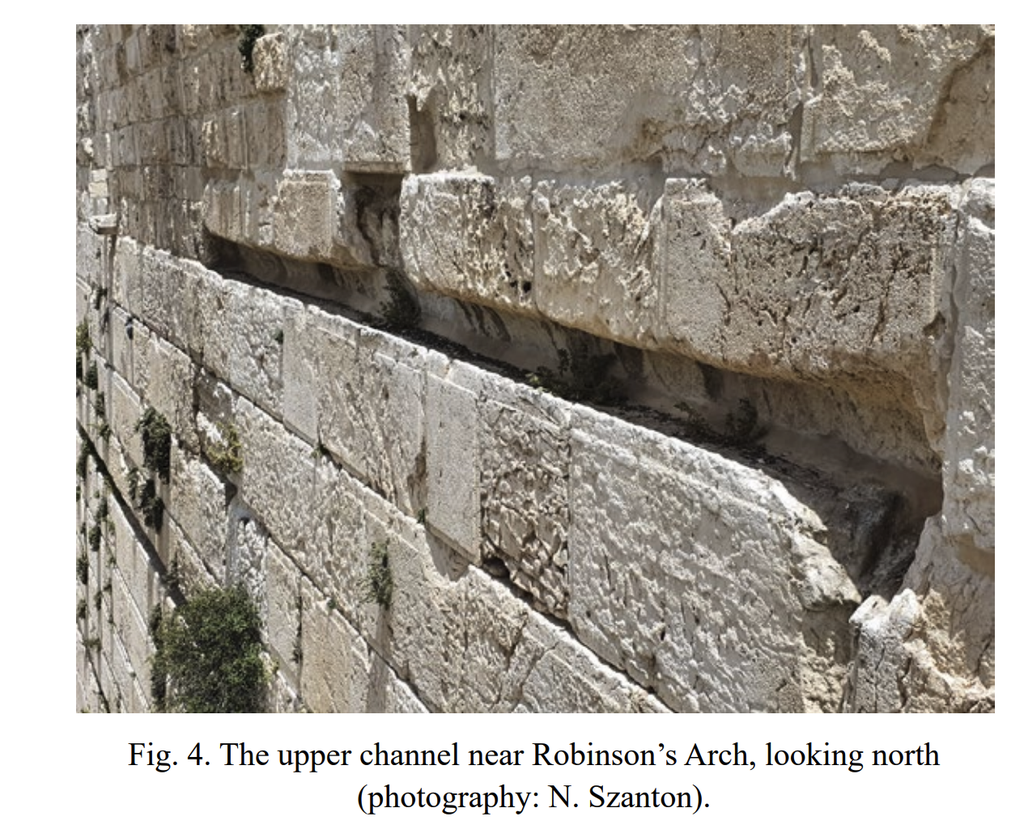
הַמַּרְזֵב, אֵין לוֹ חֲזָקָה, וְיֵשׁ לִמְקוֹמוֹ חֲזָקָה.
הַמַּזְחֵלָה, יֶשׁ לָהּ חֲזָקָה.
סֻלָּם מִצְרִי, אֵין לוֹ חֲזָקָה, חַלּוֹן מִצְרִית אֵין לָהּ, וְלַצּוֹרִית יֵשׁ לָהּ חֲזָקָה.
אֵיזוֹ הִיא חַלּוֹן מִצְרִית? כָּל שֶׁאֵין רֹאשׁוֹ שֶׁלָּאָדָם יָכוֹל לִכָּנֵס לְתוֹכָהּ.
רְבִּי יְהוּדָה אוֹמֵר: אִם יֶשׁ לָהּ מַלְבֵּן, אַף עַל פִּי שֶׁאֵין רֹאשׁוֹ שֶׁלָּאָדָם יָכוֹל לִכָּנֵס לְתוֹכָהּ, הֲרֵי זוֹ חֲזָקָה.
זִיז, עַד טֶפַח, יֵשׁ לוֹ חֲזָקָה, וְיָכוֹל לְמַחוֹת. פָּחוּת מִטֶּפַח, אֵין לוֹ חֲזָקָה, וְאֵינוּ יָכוֹל לְמַחוֹת.
A gutter spout cannot create presumption of title but the presumption of title may be claimed for its place.
A gutter can give create presumption of title.
An Egyptian ladder cannot create presumption of title; an Egyptian window cannot; but a Tyrian one can create presumption of title.
What is an Egyptian window? Any which a person's head may not enter. Rabbi Judah says: “If it has a frame, even though a person's head cannot enter, it creates presumption of title.”
A projection, if it extends a handbreadth, creates presumption of title and one can protest against it. Less than a handbreadth cannot create presumption of title and one cannot protest against it.
וַיִּשָּׂ֨א בִלְעָ֜ם אֶת־עֵינָ֗יו וַיַּרְא֙ אֶת־יִשְׂרָאֵ֔ל שֹׁכֵ֖ן לִשְׁבָטָ֑יו וַתְּהִ֥י עָלָ֖יו ר֥וּחַ אֱלֹהִֽים׃
And Balaam lifted up his eyes, and he saw Israel dwelling tribe by tribe; and the spirit of God came upon him.
לֹא יִפְתַּח אָדָם חַלּוֹנוֹתָיו לַחֲצַר שׁוּתָפִים.
לָקַח בַּיִת בֶּחָצֵר אַחֶרֶת, לֹא יִפְתָּחֶנּוּ לַחֲצַר שׁוּתָפִין.
בָּנָה עֲלִיָּה עַל גַּבֵּי בֵיתוֹ, לֹא יִפְתָּחֶנָּה לַחֲצַר שׁוּתָפִין, אֶלָּא אִם רָצָה, בּוֹנֶה אֶת חֶדֶר לִפְנִים מִבֵּיתוֹ, וּבוֹנֶה עֲלִיָּה עַל גַּבֵּי בֵיתוֹ, וּפוֹתְחָהּ לְתוֹךְ בֵּיתוֹ.
לֹא יִפְתַּח אָדָם לַחֲצַר שׁוּתָפִין פֶּתַח כְּנֶגֶד פֶּתַח, וְחַלּוֹן כְּנֶגֶד חַלּוֹן.
הָיָה קָטָן, לֹא יַעֲשֶׂנּוּ גָדוֹל. אֶחָד, לֹא יַעֲשֶׂנּוּ שְׁנַיִם.
אֲבָל פּוֹתֵחַ הוּא לִרְשׁוּת הָרַבִּים פֶּתַח כְּנֶגֶד פֶּתַח, וְחַלּוֹן כְּנֶגֶד חַלּוֹן. הָיָה קָטָן, עוֹשֶׂה אוֹתוֹ גָדוֹל. אֶחָד, עוֹשֶׂה אוֹתוֹ שְׁנַיִם.
A person should not open up windows onto a shared courtyard.
If he bought a house in another courtyard he should not open it into the shared courtyard.
If he built an upper room over his house should not open it onto the shared courtyard but, if he wishes, he may build a room within his house or build an upper room over his house and make it open into his own house.
A person should not open a door onto a shared courtyard opposite a door, or a window opposite a window.
If the window was small he may not enlarge it; if it was a single he may not make it double.
But in the public domain he may open a door opposite a door, or a window opposite a window.
If it was small he may enlarge it; if it was a single he may make it double.
אֵין עוֹשִׂין חָלָל תַּחַת רְשׁוּת הָרַבִּים, בּוֹרוֹת שִׁיחִים וּמְעָרוֹת.
רְבִּי אֱלִיעֶזֶר מַתִּיר, כְּדֵי שֶׁתְּהֵא עֲגָלָה מְהַלֶּכֶת טְעוּנָה אֲבָנִים.
אֵין מוֹצִיאִין זִיזִין וּכְצוֹצְטְרָיוֹת לִרְשׁוּת הָרַבִּים, אֶלָּא אִם רָצָה, כּוֹנֵס לְתוֹךְ שֶׁלּוֹ וּמוֹצִיא.
לָקַח חָצֵר וּבָהּ זִיזִין וּכְצוֹצְטְרָיוֹת, הֲרֵי זוֹ כְחֶזְקָתָהּ.
We don't make a cavity underneath the public domain: cisterns, trenches or caves.
Rabbi Eliezer permits if it is such that a wagon can go loaded with stones.
We don't build projections and balconies may not be built into the public domain; but if he wishes, he may withdraw within his own domain and build out from it.
If he bought a courtyard in which were already projections and balconies, his right to is presumed.
הַמּוֹכֵר אֶת הַבַּיִת, לֹא מָכַר אֶת הַיָּצִיעַ, אַף עַל פִּי שֶׁהִיא פְתוּחָה לְתוֹכוֹ, וְלֹא אֶת הַחֶדֶר שֶׁלִּפְנִים מִמֶּנּוּ, וְלֹא אֶת הַגַּג, בִּזְמַן שֶׁיֶּשׁ לוֹ מַעֲקֶה גָבוֹהַּ עֲשָׂרָה טְפָחִים.
רְבִּי יְהוּדָה אוֹמֵר: אִם יֵשׁ לוֹ צוּרַת הַפֶּתַח, אַף עַל פִּי שֶׁאֵינוּ גָבוֹהַּ עֲשָׂרָה טְפָחִין,
אֵינוּ מָכוּר.
Someone who sold a house has not sold its annexe, even though it opens into the house, nor the room that is behind, nor the roof, if it has a railing more than ten hand-breadths high.
Rabbi Judah says: “If it has an entrance shaped like a door, even if the railing is not ten hand-breadths high, it is not sold.”
לֹא אֶת הַבּוֹר, וְלֹא אֶת הַחַדּוּת, אַף עַל פִּי שֶׁכָּתַב לוֹ "עָמְקָהּ וְרוּמָהּ".
צָרִיךְ לִקַּח לוֹ דֶרֶךְ.
[דִּבְרֵי רְבִּי עֲקִיבָה. וַחֲכָמִים אוֹמְרִים: אֵינוּ צָרִיךְ לִקַּח לוֹ דֶרֶךְ.]
וּמוֹדֶה רְבִּי עֲקִיבָה, בִּזְמַן שֶׁאָמַר לוֹ "חוּץ מֵאֵלּוּ", שֶׁאֵינוּ צָרִיךְ לִקַּח לוֹ דֶרֶךְ.
מְכָרָן לְאַחֵר, רְבִּי עֲקִיבָה אוֹמֵר: אֵינוּ צָרִיךְ לִקַּח לוֹ דֶרֶךְ. וַחֲכָמִים אוֹמְרִים:
צָרִיךְ לִקַּח לוֹ דֶרֶךְ.
Nor the cistern nor the cellar, even though he had written in the deed of sale, “the depth and height”.
And he must buy a path [according to Rabbi Akiva. But the Sages say: “He need not buy himself a path.”]
And Rabbi Akiva agrees that if he had said to him, “Excepting these” that he need not buy himself a path.
If he sold them to another, Rabbi Akiva says: “He need not buy himself a path.” But the Sages say: “He must buy himself a path.”
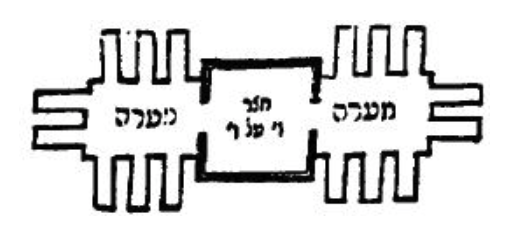
המוכר את הבית לא מכר את היציע כו':
יציע הוא חלל בין שני כותלין כגון צורה זו ומלת ממנו הוא חוזר אל הבית ואין הלכה כרבי יהודה:
הַמּוֹכֵר אֶת הַבַּיִת מָכַר אֶת הַדֶּלֶת, אֲבָל לֹא אֶת הַמַּפְתֵּחַ.
מָכַר אֶת הַמַּכְתֶּשֶׁת קְבוּעָה, אֲבָל לֹא אֶת הַמִּטַּלְטֶלֶת.
מָכַר אֶת הָאִצְטְרוֹבִיל, אֲבָל לֹא אֶת הַקָּלָת;
מָכַר תַּנּוּר, מָכַר כִּירַיִם, בִּזְמַן שֶׁאָמַר לוֹ "הוּא וְכָל מַה שֶּׁבְּתוֹכוֹ", הֲרֵי כֻלָּם מְכוּרִים.
If a person sold a house he has sold also the door, but not the key.
He has sold a permanent mortar but not a movable one.
He has sold the fixed millstone but not the collector.
He has sold the oven and he has sold the stove if he had said: “It and all that is in it, they are all sold.”
הַמּוֹכֵר אֶת הֶחָצֵר, מָכַר בָּתִּים, בּוֹרוֹת, שִׁיחִים וּמְעָרוֹת,
אֲבָל לֹא אֶת הַמִּטַּלְטְלִין.
בִּזְמַן שֶׁאָמַר לוֹ "הוּא וְכָל מַה שֶּׁבְּתוֹכָהּ", הֲרֵי כֻלָּם מְכוּרִים.
בֵּין כָּךְ וּבֵין כָּךְ, לֹא מָכַר אֶת הַמַּרְחֵץ, וְלֹא אֶת בֵּית הַבַּד שֶׁבְּתוֹכָהּ.
רְבִּי אֶלְעָזָר אוֹמֵר: הַמּוֹכֵר אֶת הֶחָצֵר, לֹא מָכַר אֶלָּא אֲוֵירָהּ שֶׁלֶּחָצֵר.
If a person sold a courtyard, he has sold its houses, cisterns, trenches and caves, but not the movable property.
If he had said: “It and all that is in it” all of them are sold. But in neither case has he sold the bath-house, or the olive press that are in it.
Rabbi Eliezer says: “If a man sold a courtyard, he has sold only the air of the courtyard.

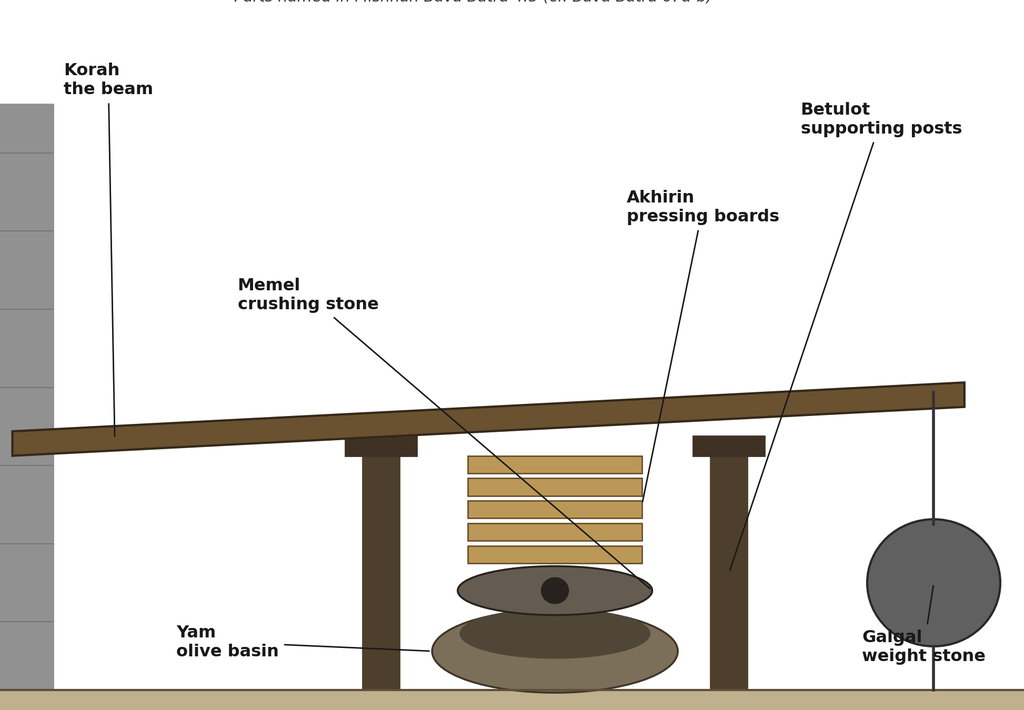
הַמּוֹכֵר אֶת בֵּית הַבַּד, מָכַר אֶת הַיָּם, וְאֶת הַמָמֵלל וְאֶת הַבְּתוּלוֹת, אֲבָל לֹא מָכַר אֶת הַכִּידוֹן, וְלֹא אֶת הַגַּלְגַּל, וְלֹא אֶת הַקּוֹרָה.
בִּזְמַן שֶׁאָמַר לוֹ "הוּא וְכָל מַה שֶּׁבְּתוֹכוֹ", הֲרֵי כֻלָּם מְכוּרִין.
רְבִּי אֶלְעָזָר אוֹמֵר: הַמּוֹכֵר אֶת בֵּית הַבַּד, מָכַר אֶת הַקּוֹרָה.
If a person sold an olive press he has sold also the vat, the crushing-stone, and the posts, but he has not sold the pressing-boards, the wheel or the beam.
But if he had said: “It and all that is in it”, all of them are sold.
Rabbi Eliezer said: “If a man sold an olive press he has sold the beam also.”
הַמּוֹכֵר אֶת הַמַּרְחֵץ, לֹא מָכַר לֹא אֶת הַנְּסָרִים, וְלֹא אֶת הַסַּפְסֵלִים, וְלֹא אֶת הַבַּלָּנִיּוֹת.
בִּזְמַן שֶׁאָמַר לוֹ ,"הִיא וְכָל מַה שֶּׁבְּתוֹכָהּ", הֲרֵי כֻלָּם מְכוּרִין.
בֵּין כָּךְ וּבֵין כָּךְ, לֹא מָכַר לֹא אֶת הַמְּגוֹרוֹת שֶׁלַּמַּיִם וְלֹא אֶת אוֹצָרוֹת שֶׁלָּעֵצִים.
If a person sold a bath house, he has not sold the planks or the benches or the curtains.
But if he had said: “It and all that is in it”, all of them are sold.
In neither case has he sold the water-cisterns or the wood-sheds.
הַמּוֹכֵר אֶת הָעִיר, מָכַר בָּתִּים, בּוֹרוֹת, שִׁיחִים וּמְעָרוֹת, מַרְחָצָיוֹת, שׁוֹבַכּוֹת, בֵּית הַבַּדִּים, וּבֵית הַשְּׁלָחִים, אֲבָל לֹא אֶת הַמִּטַּלְטְלִין.
בִּזְמַן שֶׁאָמַר לוֹ "הִיא וְכָל מַה שֶּׁבְּתוֹכָהּ", אֲפִלּו הָיוּ בָהּ בְּהֵמָה וַעֲבָדִים,
הֲרֵי כֻלָּם מְכוּרִים.
רַבָּן שִׁמְעוֹן בֶּן גַּמְלִיאֵל אוֹמֵר: הַמּוֹכֵר אֶת הָעִיר מָכַר אֶת הַסַּנְטֵר.
If a person sells a town, he has also sold the houses, cisterns, trenches, caves, bath houses, dovecotes, olive presses, and irrigated fields, but not the movable property.
But if he had said: “It and all that is in it”, even if cattle and slaves were in it, all of them are sold.
Rabban Shimon ben Gamaliel says: “If a man sold a town he has also sold the town watchman [town fields?]”
אמרו עליו על ר״ט שהיה עשיר גדול ולא היה נותן מתנות לאביונים פעם אחת מצאו רבי עקיבא אמר לו רבי רצונך שאקח לך עיר אחת או שתים [אמר לו הן] מיד עמד ר״ט ונתן לו ארבעה אלפים דינרי זהב. נטלו ר״ע חלקו לעניים.
They said of R. Ṭarfon that, although he was very wealthy, he did not give gifts to the poor.
Once R. Aḳiba met him and said to him, ‘Master, would you like me to purchase one or two cities for you?’ He immediately replied, ‘Yes’ and gave him four thousand golden dinars. R. ‘Aḳiba took it and distributed it to the poor.
סַנְטֵר, סַנְטֵיר m. (preced.) 1)guardsman, bailiff. B. Bath. IV, 7המוכר … מכר את הס׳ if one sells a township, he sells with it the sanṭer (a slave, v. אִיקוֹנוֹמוֹס); expl. ib. 68ᵃבר מחווניתא, v. מַחְוָונִיתָא; [oth. opin. ib.באגיthe fields around the town]; Tosef. ib. III, 5. Snh. 98ᵇפגע בו ס׳ a bailiff meets him (trying to contest his title to the field). Y. B. Mets. V, 10ᶜישראל שמינה … או ס׳ an Israelite who appointed a gentile his manager or guardsman. Gitt. 80ᵇאפי׳ … לשם ס׳ שבעיר even if he dates a letter of divorce from the rule of a bailiff of the town. Tanḥ. B’rakhah 6 כס׳ הזה וכ׳ like the guardsman that speaks before the king; a. e. —2)the guarded land outside of a township. B. Bath. l. c., v. supra. —3) (cmp. meanings of לֶחִי, and phrases like שמר פתחי פיך, Mic. VII, 5) [fence,] jaw, jawbone, chin. Ber. 24ᵇוכשהוא … מניח ידו על סַנְטֵרוֹ (Ms. M. סַנְטֵירוֹ) and when he yawned, he put his hand on his chin (to cover his mouth). —4) a sort of cloak, sanṭer (cmp. גּוּנְדָּא II). Treat. Der. Er. ch. XIסַנְטֵרוֹ לצדדין וקובעו וכ׳ he who walks with his sanṭer hanging sideways and his cap turned back …, belongs to the haughty.
הַמּוֹכֵר אֶת הַשָּׂדֶה, מָכַר אֶת הָאֲבָנִים שֶׁהֵן לְצָרְכָהּ, וְאֶת הַקָּנִים שֶׁבַּכֶּרֶם שֶׁהֵם לְצָרְכוֹ, וְאֶת הַתְּבוּאָה שֶׁהִיא מְחֻבֶּרֶת לַקַּרְקַע, וְאֶת מְחִצַּת הַקָּנִים שֶׁהִיא פְחוּתָה מִבֵּית רֹבַע, וְאֶת הַשּׁוֹמֵרָה שֶׁאֵינָהָ עֲשׁוּיָה בַטִּיט, וְאֶת הֶחָרוּב שֶׁאֵינוּ מֻרְכָּב, וְאֶת בְּתוּלַת שִּׁקְמָה.
If a person sells a field he has also sold the stones that are necessary to it, and the canes in a vineyard that are necessary to it, and its crop fixed to the ground, and a thicket [fence?] of reed which covers less than a quarter-kav’s space of ground, and the watchman’s hut not made with clay, and ungrafted carob trees and young sycamores.
אֲבָל לֹא מָכַר לֹא אֶת הָאֲבָנִים שֶׁאֵינָן לְצָרְכוֹ וְלֹא אֶת הַקָּנִים שֶׁבַּכֶּרֶם שֶׁאֵינָן לְצָרְכוֹ, וְלֹא אֶת הַתְּבוּאָה שֶׁהִיא תְּלוּשָׁה מִן הַקַּרְקַע.
בִּזְמַן שֶׁאָמַר לוֹ "הִיא וְכָל מַה שֶּׁבְּתוֹכָהּ", הֲרֵי כֻלָּם מְכוּרִין.
בֵּין כָּךְ וּבֵין כָּךְ. לֹא מָכַר לֹא אֶת מְחִצַּת הַקָּנִים שֶׁהִיא בֵית רֹבַע, וְלֹא אֶת הַשּׁוֹמֵרָה הָעֲשׁוּיָה בַטִּיט, וְלֹא אֶת הֶחָרוּב הַמֻּרְכָּב, וְלֹא אֶת סַדַּן הַשִּׁקְמָה.
לֹא אֶת הַבּוֹר, וְלֹא אֶת הַגַּת, וְלֹא אֶת הַשּׁוֹבָךְ, בֵּין חֲרֵבִים, בֵּין שְׁלֵמִים.
צָרִיךְ לִקַּח לוֹ דֶרֶךְ. דִּבְרֵי רְבִּי עֲקִיבָה. וַחֲכָמִים אוֹמְרִים: אֵינוּ צָרִיךְ לִקַּח לוֹ דֶרֶךְ.
מוֹדֶה רְבִּי עֲקִיבָה, בִּזְמַן שֶׁאָמַר לוֹ "חוּץ מֵאֵלּוּ", שֶׁאֵינוּ צָרִיךְ לִקַּח לוֹ דֶרֶךְ.
מְכָרָן לְאַחֵר, רְבִּי עֲקִיבָה אוֹמֵר: אֵינוּ צָרִיךְ לִקַּח לוֹ דֶרֶךְ. וַחֲכָמִים אוֹמְרִים:
צָרִיךְ לִקַּח לוֹ דֶרֶךְ.
בַּמֵּי דְבָרִין אֲמוּרִין? בְּמוֹכֵר, אֲבָל בְּנוֹתֵן מַתָּנָה, נוֹתֵן אֶת כֻּלָּם.
הָאַחִים שֶׁחָלְקוּ, זָכוּ בַשָּׂדֶה, זָכוּ בְכֻלָּם.
הַמַּחֲזִיק בְּנִכְסֵי הַגֵּר, הֶחֱזִיק בַּשָּׂדֶה, הֶחֱזִיק בְּכֻלָּם.
הַמַּקְדִּישׁ אֶת הַשָּׂדֶה, הִקְדִּישׁ אֶת כֻּלָּם.
רְבִּי שִׁמְעוֹן אוֹמֵר: הַמַּקְדִּישׁ שָׂדֶה, לֹא הִקְדִּישׁ אֶלָּא אֶת הֶחָרוּב הַמֻּרְכָּב וְאֶת סַדַּן הַשִּׁקְמָה.
But he has not sold the stones that are not necessary to it nor the canes in a vineyard that are not necessary to it nor the produce that has been picked from the ground.
If he said, “It and all that is in it” all of these are sold.
But in neither case has he sold a thicket [fence?] of reeds that covers a quarter-kav’s space of ground, nor the watchman’s hut if it was made with clay, nor a grafted carob tree nor a pruned sycamore.
Not the cistern nor the wine-press nor the dovecote, whether derelict or in use.
And he must purchase a right of access, according to Rabbi Akiva and the sages say: “He need not purchase a right of access.”
Rabbi Akiva agrees that if he had said, “Excepting these” [when he sold the field], he need not buy himself access rights.
If he sold them to another, Rabbi Akiva says: “He need not buy himself a right of access. But the Sages say: “He must buy himself a right of access.”
When? With a seller. But if he gives it as a gift, he gives everything that is in it.
Brothers who divided [an inheritance] and came into possession of a field possess everything in it.
Someone who secured title over the property of a convert, if he secured title over the field, he secured title to everything in it.
Someone who dedicated a field has dedicated everything.
Rabbi Shimon says: “If a person dedicated a field, he has dedicated only the grafted carob trees and pruned sycamores.”
הִקְדִּישׁ אֶת כֻּלָּם. דְּמַקְדִּישׁ בְּעַיִן יָפָה מַקְדִּישׁ:
Dedicated everything – Someone who dedicates, dedicates with a good eye.
הַמּוֹכֵר אֶת הַסְּפִינָה, מָכַר אֶת הַתֹּרֶן וְאֶת הַנֵּס וְאֶת הָהוֹגֵין, וְאֶת כָּל הַמְּנַהֲגִים אוֹתָהּ.
אֲבָל לֹא מָכַר לֹא אֶת הָעֲבָדִים, וְלֹא אֶת הַמַּרְצַפִּים, וְלֹא אֶת הָאַנְתִיקֵי.
בִּזְמַן שֶׁאָמַר לוֹ "הִיא וְכָל מַה שֶּׁבְּתוֹכָהּ", הֲרֵי כֻלָּם מְכוּרִין.
מָכַר אֶת הַקָּרוֹן, לֹא מָכַר אֶת הַפְּרָדוֹת; מָכַר אֶת הַפְּרָדוֹת, לֹא מָכַר אֶת הַקָּרוֹן.
מָכַר אֶת הַצֶּמֶד, לֹא מָכַר אֶת הַבָּקָר; מָכַר אֶת הַבָּקָר, לֹא אֶת הַצֶּמֶד.
רְבִּי יְהוּדָה אוֹמֵר: הַדָּמִים מוֹדִיעִין. כֵּיצַד? אָמַר לוֹ: "מְכוֹר לִי צִמְדָּךְ בְּמָאתַיִם זוּז",
הַדָּבָר יָדוּעַ שֶׁאֵין הַצֶּמֶד בְּמָאתַיִם זוּז. וַחֲכָמִים אוֹמְרִים: אֵין לַדָּמִים רְאָיָה.
.
Someone who sold a ship has also sold the mast, the sail, the anchor, and all the means of steering it.
But he has not sold the slaves, the packing-bags, or the cargo.
If he had said: “It and all that is in it” all of them are sold.
Someone who sold a wagon has not sold the mules; if he sold the mules he has not sold the wagon.
If he sold the yoke he has not sold the oxen; if he sold the oxen he has not sold the yoke.
Rabbi Judah says: “The price tells all. How is this so? If someone said to him, “Sell me your yoke for 200 zuz, it is known that no yoke costs 200 zuz.” But the sages say: “The price is not proof.”
הַמּוֹכֵר אֶת הַחֲמוֹר, לֹא מָכַר אֶת כֵּלָיו.
נַחוּם הַמָּדִי אוֹמֵר:
מָכַר אֶת כֵּלָיו.
רְבִּי יְהוּדָה אוֹמֵר: פְּעָמִים מְכוּרִין, וּפְעָמִים שֶׁאֵינָן מְכוּרִין. כֵּיצַד?
הָיָה חֲמוֹר לְפָנָיו וְכֵלָיו עָלָיו, וְאָמַר לוֹ: "מְכוֹר לִי חֲמוֹרָךְ זוֹ!" כֵּלָיו מְכוּרִים.
"חֲמוֹרָךְ הַהוּא", אֵין כֵּלָיו מְכוּרִין.
Someone who sold a donkey has not sold its gear.
Nahuma the Madi says: “He has sold its gear.”
Rabbi Judah says: “Sometimes they are sold and sometimes they are not sold. How is this so?
If the donkey was before him with its gear on it and he said, ‘Sell me this donkey of yours’, the gear is sold.
"That donkey of yours’, the gear is not sold.”
הַמּוֹכֵר אֶת הַחֲמוֹר, לֹא מָכַר אֶת הַסְּיָח. מָכַר פָּרָה, לֹא מָכַר אֶת בְּנָהּ.
מָכַר אַשְׁפּוֹת, מָכַר זִבְלָהּ.
מָכַר בּוֹר, מָכַר מֵימָיו.
מָכַר שׁוֹבָךְ, מָכַר יוֹנִים.
מָכַר כַּוֶּרֶת, מָכַר דְּבוֹרִים.
הַלּוֹקֵחַ פֵּרוֹת שׁוֹבָךְ, מַפְרִיחַ בֶּרֶךְ הָרִאשׁוֹנָה.
פֵּרוֹת כַּוֶּרֶת, נוֹטֵל שְׁלֹשָׁה נְחִילִין וּמְסָרֵס.
חַלּוֹת דְּבַשׁ, מַנִּיחַ שְׁתֵּי חַלּוֹת.
זֵיתִים לָקוֹץ, מַנִּיחַ שְׁתֵּי גְרוֹפִיּוֹת.
Someone who sold a donkey has not sold its foal.
Someone who sold a cow has not sold its calf.
If he sold a dungheap, he has sold its dung.
If he sold a cistern, he has sold its water.
If he sold a dovecote he has sold the pigeons.
If he sold a bee-hive he has sold the bees.
If someone bought the fruit of a dovecote he must let go the first pair.
The fruit of a beehive, he takes three swarms and then he makes the rest sterile [stops further swarms?].
With the honeycombs he leaves two honeycombs.
Olive trees to cut, he leaves two shoots.
הַקּוֹנֶה שתי אִילָנוֹת בְּתוֹךְ שֶׁלַּחֲבֵרוֹ, הֲרֵי זֶה לֹא קָנָה קַרְקַע.
רְבִּי מֵאִיר אוֹמֵר: קָנָה קַרְקַע.
הִגְדִּילוּ, לֹא יְשַׁפֶּה. הָעוֹלֶה מִן הַגֶּזַע, שֶׁלּוֹ; וּמִן הַשָּׁרָשִׁים, שֶׁלְּבַעַל הַקַּרְקַע. וְאִם מֵתוּ, אֵין לוֹ קַרְקַע.
קָנָה שְׁלֹשָׁה, קָנָה קַרְקַע. הִגְדִּילוּ, יְשַׁפֶּה. וְהָעוֹלֶה מִן הַשָּׁרָשִׁים, שֶׁלּוֹ.
וְאִם מֵתוּ, יֵשׁ לוֹ קַרְקַע.
Someone who bought two trees in his fellow’s land has not bought the ground.
Rabbi Meir says: “He has bought the ground”.
When they grow, he may not trim. What comes up from the stem belongs to him but what comes up from the roots belongs to the land-owner, and if they die, the ground is not his.
If he bought three trees, he has bought the ground. When they grow he may trim. What comes up from the roots belongs to him, and if they die the ground is his.
הַמּוֹכֵר אֶת הָרֹאשׁ בִּבְהֵמָה גַסָּה, לֹא מָכַר אֶת הָרַגְלַיִם; מָכַר אֶת הָרַגְלַיִם, לֹא מָכַר אֶת הָרֹאשׁ.
מָכַר אֶת הַקָּנֶה, לֹא מָכַר אֶת הַכָּבֵד; מָכַר אֶת הַכָּבֵד, לֹא מָכַר אֶת הַקָּנֶה.
אֲבָל בִּבְהֵמָה דַקָּה: מָכַר אֶת הָרֹאשׁ, מָכַר אֶת הָרַגְלַיִם; מָכַר אֶת הָרַגְלַיִם, לֹא מָכַר אֶת הָרֹאשׁ; מָכַר אֶת הַקָּנֶה, מָכַר אֶת הַכָּבֵד;
מָכַר אֶת הַכָּבֵד, לֹא מָכַר אֶת הַקָּנֶה.
Someone who sold the head of a large animal has not sold the legs. If he sold the legs, he has not sold the head.
If he sold the windpipe [lungs?] he has not sold the liver. If he sold the liver he has not sold the windpipe.
But with a small animal: if he sold the head he has sold the legs, if he sold the legs he has not sold the head.
If he sold the windpipe [lungs] he has sold the liver, if he sold the liver he has not sold the windpipe.
מָכַר אֶת הַקָּנֶה. אֶת הָרֵאָה. וְנִקְרֵאת עַל שֵׁם הַקָּנֶה שֶׁלָּהּ:
The lungs. It is called by this name because of its windpipe.
אַרְבַּע מִדּוֹת בַּמּוֹכְרִים:
מָכַר לוֹ חִטִּים יָפוֹת, וְנִמְצְאוּ רָעוֹת, הַלּוֹקֵחַ יָכוֹל לַחְזֹר בּוֹ;
רָעוֹת, וְנִמְצְאוּ יָפוֹת, הַמּוֹכֵר יָכוֹל לַחְזֹר בּוֹ;
רָעוֹת, וְנִמְצְאוּ רָעוֹת, יָפוֹת, וְנִמְצְאוּ יָפוֹת, אֵין אֶחָד מֵהֶם יָכוֹל לַחְזֹר בּוֹ.
שֶׁמָתִית <שְׁחַמְתִּית>, וְנִמְצֵאת לְבָנָה, לְבָנָה, וְנִמְצֵאת שֶׁמָתִית, <שְׁחַמְתִּית> עֵצִים שֶׁלַּזַּיִת, וְנִמְצְאוּ שֶׁלַּשִּׁקְמָה, שֶׁלַּשִּׁקְמָה, וְנִמְצְאוּ שֶׁלַּזַּיִת, יַיִן, וְנִמְצָא חֹמֶץ, חֹמֶץ, וְנִמְצָא יַיִן, שְׁנֵיהֶן יְכוּלִין לַחְזֹר בָּהֶן.
There are four rules with regards to sellers.
He sold good wheat and it turned out to be bad, the buyer can retract.
Bad wheat and it is found to be good, the seller can retract.
Bad wheat and it is found to be bad, or good wheat and it is found to be good, neither may retract.
Dark wheat and it turned out to be white, or white and it turned out to be dark, or olive wood and it turned out to be sycamore wood; or sycamore wood and it turned out to be olive wood; or wine and it turned out to be vinegar; or vinegar and it turned out to be wine; both of them may retract.
וְאַעְדִּי בְיוֹמָא הַהוּא יָת תְּיָשַׁיָּא רְגוֹלַיָּא וּרְקוֹעַיָּא וְיָת כָּל עִזַיָּא נְמוֹרְתָא וּרְקוֹעֲתָא כֹּל דִּי חִוָּר בֵּיהּ וְכָל דִּשְׁחוּם בְּאִמְּרַיָּא וִיהַב בְּיַד בְּנוֹהִי:
That day he [Lavan] removed the he-goats that were ringed and spotted, and all the she-goats that were speckled and spotted, everyone that had white in it, and all the dark ones among the sheep; and he gave them to his sons.
וַיָּ֣סַר בַּיּוֹם֩ הַה֨וּא אֶת־הַתְּיָשִׁ֜ים הָֽעֲקֻדִּ֣ים וְהַטְּלֻאִ֗ים וְאֵ֤ת כׇּל־הָֽעִזִּים֙ הַנְּקֻדּ֣וֹת וְהַטְּלֻאֹ֔ת כֹּ֤ל אֲשֶׁר־לָבָן֙ בּ֔וֹ וְכׇל־ח֖וּם בַּכְּשָׂבִ֑ים וַיִּתֵּ֖ן בְּיַד־בָּנָֽיו׃
And he removed that day the he-goats that were streaked and spotted, and all the she-goats that were speckled and spotted, every one that had white in it, and all the brown ones among the sheep, and gave them into the hand of his sons.
הַמּוֹכֵר פֵּרוֹת לַחֲבֵרוֹ, מָשַׁךְ וְלֹא מָדַד, קָנָה; מָדַד וְלֹא מָשַׁךְ, לֹא קָנָה.
אִם הָיָה פִקֵּחַ, סוֹכֵר אֶת מְקוֹמָן.
הַלּוֹקֵחַ פִּשְׁתָּן מֵחֲבֵרוֹ, הֲרֵי זֶה לֹא קָנָה, עַד שֶׁיְּטַלְטְלֶנּוּ מִמָּקוֹם לְמָקוֹם, וְאִם הָיָה בִמְחֻבָּר לַקַּרְקַע, וְתָלַשׁ כָּל שֶׁהוּא, קָנָה.
If someone sold produce to his fellow and the he drew it towards him but did not measure it out, he has acquired it. If he had measured it out but he did not draw it towards him, he has not acquired.
If he is wary he rents its space.
If someone bought flax from his fellow he has not acquired it until he has moved it from one place to another. If it was still attached to the ground, and he plucked any quantity of it, he has acquired.
הַמּוֹכֵר יַיִן וָשֶׁמֶן לַחֲבֵרוֹ, וְהוֹקִירוּ אוֹ שֶׁהוּזָלוּ, עַד שֶׁלֹּא נִתְמַלַּאת הַמִּדָּה, לַמּוֹכֵר; וּמִשֶּׁנִּתְמַלַּאת הַמִּדָּה, לַלּוֹקֵחַ.
הָיָה סַרְסוּר בֵּינֵיהֶן, נִשְׁבְּרָה הֶחָבִית, נִשְׁבְּרָה לַסַּרְסוּר.
חַיָּב לְהַטִּיף לוֹ שָׁלוֹשׁ טִפִּין.
הִרְכִּינָהּ וּמְצַאת, הֲרֵי שֶׁלַּלּוֹקֵחַ.
וְהַחַנְוָנִי חַיָּב לְהַטִּיף לוֹ שָׁלוֹשׁ טִפִּין.
רְבִּי יְהוּדָה אוֹמֵר: בְּלֵילֵי שַׁבָּת עִם חֲשֵׁכָה, פָּטוּר.
If someone sold wine or oil to his fellow, and its value rose or fell, until the measure was filled up it belongs to the seller and after the measure was filled up it belongs to the buyer [and he may refuse to buy except at the lower price].
If there was a middleman between them, and the barrel broke, it is broken for the middleman.
He must let three more drops drip.
If he then turned the measure over and drained it off, it belongs to the buyer [seller].
The shopkeeper is [not?] obligated to let three more drops drip.
Rabbi Judah says: “On erev Shabbat as it becomes dark he is exempt.”
יאהַשּׁוֹלֵחַ אֶת בְּנוֹ אֵצֶל הַחַנְוָנִי, וּמָדַד לוֹ בְאִסָּר שֶׁמֶן, וְנָתַן לוֹ אֶת הָאִסָּר;
שָׁבַר אֶת הַצְּלוֹחִית וְאִבֵּד אֶת הָאִסָּר, הַחַנְוָנִי חַיָּב.
רְבִּי יְהוּדָה פּוֹטֵר, שֶׁעַל מְנָת כֵּן שִׁלְּחוֹ.
וּמוֹדִים חֲכָמִים לִרְבִּי יְהוּדָה: בִּזְמַן שֶׁהַצְּלוֹחִית בְּיַד הַתִּינוֹק, וּמָדַד הַחַנְוָנִי לְתוֹכָהּ, הַחַנְוָנִי פָטוּר.
Someone sent his child to a shopkeeper [Rashi adds - with a pundion in his hand - a pundion is worth two issar] and he measured him out an issar of oil and gave him the issar and the child broke the flask and lost the issar, the shopkeeper is liable.
Rabbi Judah declares him exempt, since the father sent the child for this purpose.
And the Sages agree with Rabbi Judah that if the flask was in the child’s hand, and the shopkeeper measured the oil into it, the shopkeeper is exempt.
השולח את בנו אצל חנוני ופונדיון בידו כו':
זה הבן הוא קטן בשנים בלא ספק
וחכמים אומרים שלא שלח לו בנו אלא להודיעו כדי שישלח לו עם מי שראוי לשלוח לו
ולפיכך חייב החנוני כשנתן לו השמן או כשאין לו שמן ונתן לו איסר ליקח בו מזולתו
ומה שחייבו חכמים החנוני לשלם הצלוחית זהו כשיקחנה מיד הקטן למדוד בה לשאר בני אדם לפי שהוא שאלה שלא מדעת ושואל שלא מדעת חייב באחריות אותו הדבר שעבר עליו ולפיכך הוא חייב באחריות הצלוחית
אבל כשיתן השמן בה כשהיא בידו ושבר אותה התינוק הוא פטור מדמי הצלוחית. ואין הלכה כרבי יהודה:
Someone sent his child to a shopkeeper . . . .
This child is undoubtedly a minor.
The Sages hold that the father sent his son only to inform the shopkeeper so that the shopkeeper would send it to him with someone fit to carry it.
Therefore the shopkeeper is liable, whether he gave the boy the oil directly, or, lacking oil, gave him an isar to buy it elsewhere.
As for the Sages' ruling that the shopkeeper must pay for the flask – this is when he takes the flask from the minor's hand in order to measure oil from it for other customers, since this constitutes borrowing without the owner's knowledge, and someone who borrows without the owner's knowledge is liable for whatever happens to the item. He is therefore liable for the flask.
But if he puts the oil into it while it remains in the child's hand, and the child then breaks it, the shopkeeper is exempt from paying for the flask.
And the halakha does not follow Rabbi Yehuda.
לֹא־תַעֲשׂ֥וּ עָ֖וֶל בַּמִּשְׁפָּ֑ט בַּמִּדָּ֕ה בַּמִּשְׁקָ֖ל וּבַמְּשׂוּרָֽה׃ מֹ֧אזְנֵי צֶ֣דֶק אַבְנֵי־צֶ֗דֶק אֵ֥יפַת צֶ֛דֶק וְהִ֥ין צֶ֖דֶק יִהְיֶ֣ה לָכֶ֑ם אֲנִי֙ יְהֹוָ֣ה אֱלֹֽהֵיכֶ֔ם אֲשֶׁר־הוֹצֵ֥אתִי אֶתְכֶ֖ם מֵאֶ֥רֶץ מִצְרָֽיִם׃
Ye shall not do unrighteousness in judgment, in length, in weight, or in volume. Just scales, just weights, a just ephah, and a just hin, shall ye have: I am the LORD your God, who brought you out of the land of Egypt.
אֶ֣בֶן שְׁלֵמָ֤ה וָצֶ֙דֶק֙ יִֽהְיֶה־לָּ֔ךְ אֵיפָ֧ה שְׁלֵמָ֛ה וָצֶ֖דֶק יִֽהְיֶה־לָּ֑ךְ לְמַ֙עַן֙ יַאֲרִ֣יכוּ יָמֶ֔יךָ עַ֚ל הָֽאֲדָמָ֔ה אֲשֶׁר־יְהֹוָ֥ה אֱלֹהֶ֖יךָ נֹתֵ֥ן לָֽךְ׃
A perfect and just weight shalt thou have; a perfect and just ephah shalt thou have; that thy days may be long upon the land which the LORD thy God giveth thee.
הַסִּיטוֹן מְקַנֵּחַ אֶת מִדּוֹתָיו אַחַת לִשְׁלֹשִׁים יוֹם, וּבַעַל הַבַּיִת, אַחַת לִשְׁנֵים עָשָׂר חֹדֶשׁ.
רַבָּן שִׁמְעוֹן בֶּן גַּמְלִיאֵל אוֹמֵר: חִלּוּף הַדְּבָרִים.
הַחַנְוָנִי מְקַנֵּחַ אֶת מִדּוֹתָיו פַּעֲמַים בַּשַּׁבָּת, וּמְמַחֶה אֶת מִשְׁקְלוֹתָיו פַּעַם אַחַת בַּשַּׁבָּת, וּמְקַנֵּחַ מֹאזְנַיִם עַל כָּל מִשְׁקָל וּמִשְׁקָל.
The wholesaler cleans his measures once in thirty days and the householder once in twelve months.
Rabban Shimon ben Gamaliel says: “The words are the other way round.”
The shopkeeper scrubs his measures twice a week, and cleans his weights once a week, and scrubs his scales after every weighing.
אָמַר רַבָּן שִׁמְעוֹן בֶּן גַּמְלִיאֵל: בַּמֵּי דְבָרִים אֲמוּרִים?
בַּלַּח, אֲבָל בַּיָּבֵשׁ אֵינוּ צָרִיךְ.
חַיָּב לְהַכְרִיעַ לוֹ טֶפַח.
הָיָה שׁוֹקֵל לוֹ עַיִן בְּעַיִן, נוֹתֵן לוֹ גֵרוּמִים, אֶחָד לַעֲשָׂרָה בַלַּח, וְאֶחָד לְעֶשְׂרִים בַּיָּבֵשׁ.
מָקוֹם שֶׁנָּהֲגוּ לָמוֹד בַּדַּקָּה, לֹא יָמוֹד בַּגַּסָּא, בַּגַּסָּא, לֹא יָמוֹד בַּדַּקָּה;
לִמְחֹק, לֹא יִגְדֹּשׁ, לִגְדֹּשׁ, לֹא יִמְחֹק.
Rabban Shimon ben Gamaliel said: “When is this so?
With liquids, but with the dry it is not necessary.
He must let sink a handsbreadth.
If he gave him exactly, he must give him overweight, a tenth for liquid measures and a twentieth for dry measures.
In a place where the custom is to measure with small measures, he should not measure with a large one; and where the custom is to measure with large measures he should not measure with a small one.
[In a place where the custom is] to smooth down - he should not heap it up, and to heap it up, he should not smooth it down.
נוֹתֵן לוֹ אֶת גֵּרוּמָיו. הַכְרָעוֹתָיו. לְכָל עֲשָׂרָה לִיטְרָא מוֹסִיף לוֹ עֲשִׂירִית לִיטְרָא, שֶׁהוּא אֶחָד לְמֵאָה כְּשֶׁיִּמְכֹּר בַּלַּח. וּבַיָּבֵשׁ מוֹסִיף [חֲצִי] עֲשִׂירִית לִיטְרָא לְכָל עֶשְׂרִים לִיטְרָא:
For every ten liters, he adds one-tenth of a liter which is 1/100 when he sells liquid/moist.
And with dry, he adds [one-half] of one tenth of a liter to every twenty liters.
הַמּוֹכֵר פֵּרוֹת לַחֲבֵרוֹ וְלֹא צִמֵּחוּ, אֲפִלּוּ זֶרַע פִּשְׁתָּן, אֵינוּ חַיָּב בְּאַחְרָיוּתָן.
רַבָּן שִׁמְעוֹן בֶּן גַּמְלִיאֵל אוֹמֵר: זֵרְעוֹנֵי גִנָּה שֶׁאֵינָן נֶאֱכָלִין, חַיָּבִין בְּאַחְרָיוּתָן.
Someone who sold grain [produce?to his fellow which did not sprout is not responsible, even if it was flax-seed.
Rabban Shimon ben Gamaliel says: “If they were garden-seeds, which are not eaten, he is responsible.”
הַמּוֹכֵר פֵּרוֹת לַחֲבֵרוֹ, הֲרֵי זֶה מְקַבֵּל עָלָיו רֹבַע טִנֹּפֶת לִסְאָה;
תְּאֵנִים, מְקַבֵּל עָלָיו עֶשֶׂר מַתְלִיעוֹת לְמֵאָה;
מַרְתֵּף שֶׁלַּיַּיִן, מְקַבֵּל עָלָיו עֶשֶׂר קוֹסְסוֹת לְמֵאָה;
קִנְקֵנִים, בַּשָּׁרוֹן, מְקַבֵּל עָלָיו עֶשֶׂר פּוֹטְסוֹת לְמֵאָה.
If someone sold grain to his fellow, he accepts a quarter [kav] of rubbish with every seah [6 kav make a seah].
Figs, he accepts ten worm-eaten ones for every one hundred.
A cellar of wine, he accepts ten jars sour in every one hundred.
Jugs, in Sharon he accepts ten which are brittle in one hundred.
הַמּוֹכֵר יַיִן לַחֲבֵרוֹ, וְהֶחֱמִיץ, אֵינוּ חַיָּב בְּאַחְרָיוּתוֹ.
אִם יָדוּעַ שֶׁיֵּינוֹ מַחֲמִיץ, הֲרֵי זֶה מֶקַח טָעוּת.
אִם אָמַר לוֹ: "יַיִן מְבֻשָּׂם אֲנִי מוֹכֵר לָךְ", חַיָּב לְהַעֲמִיד לוֹ עַד הָעֲצֶרֶת.
יָשָׁן, מִשֶּׁלְּאֶשְׁתְּקַד [שַׁתָּא קַדְמָאָה],
מְיֻשָּׁן, מִשָּׁלֹשׁ שָׁנִים.
Someone who sold wine to his fellow which turned sour is not responsible.
But if it was known that his wine would sour, this is a mistaken purchase.
If he had said to him, “I am selling you spiced wine”, he is liable that it lasts until Shavuot.
"Old", it must be from last year’s.
"Aged", it must be from three years.
המוכר יין לחבירו והחמיץ אינו חייב כו':
ובלבד שיהיו בכלים דלוקח ויבאר עליו שיש בלבו שהוא לוקח ממנו לבשל בו מעט מעט ובכן לא יהיה המוכר חייב באחריות:
Not responsible. This is only when it is in the buyer's own vessels — which shows that his intent is to draw from it and use it up little by little, in which case the seller bears no liability for it..
הַמּוֹכֵר מָקוֹם לַחֲבֵרוֹ לִבְנוֹת לוֹ בַיִת, וְכֵן הַמְקַבֵּל מֵחֲבֵרוֹ לִבְנוֹת לוֹ בֵית חַתְנוּת לִבְנוֹ,
אוֹ לְבֵית אַלְמְנוּת לְבִתּוֹ, בּוֹנֶה אַרְבַּע אַמּוֹת עַל שֵׁשׁ. דִּבְרֵי רְבִּי עֲקִיבָה.
רְבִּי יִשְׁמָעֵאל אוֹמֵר: רֶפֶת בָּקָר הִיא זוֹ!
הָרוֹצֶה לַעֲשׁוֹת רֶפֶת בָּקָר, בּוֹנֶה אַרְבַּע אַמּוֹת עַל שֵׁשׁ. בַּיִת קָטָן, שֵׁשׁ עַל שְׁמוֹנֶה.
גָּדוֹל, שְׁמוֹנֶה עַל עֶשֶׂר. טְרִיקְלִין, עֶשֶׂר עַל עֶשֶׂר.
רוּמוֹ כַּחֲצִי אָרְכּוֹ וְכַחֲצִי רָחְבּוֹ. רְאָיָה לַדָּבָר, רַבָּן שִׁמְעוֹן בֶּן גַּמְלִיאֵל אוֹמֵר: כְּבִנְיַן הַהֵיכָל.
Someone who sold his fellow a place he build can himself a house, and similarly, if a man contracted with his fellow to build him a bridal-house for his son, or a widow’s house for his daughter, he must build it four cubits by six [2 yards x 3] according to Rabbi Akiva.
Rabbi Yishmael says: “This is a cattle-shed”.
Someone who wants to build a cattle-shed, should build it four cubits by six, a small house six by eight [3 yards x 4], a large house eight by ten [4 yards x 5]. A hall ten by ten [5 yards x 5].
The height should be half its length and half its breadth. Proof of the matter there is. Rabban Shimon ben Gamaliel says: “Like the building of the Sanctuary.[?]”
וְהַבַּ֗יִת אֲשֶׁ֨ר בָּנָ֜ה הַמֶּ֤לֶךְ שְׁלֹמֹה֙ לַיהֹוָ֔ה שִׁשִּׁים־אַמָּ֥ה אׇרְכּ֖וֹ וְעֶשְׂרִ֣ים רׇחְבּ֑וֹ וּשְׁלֹשִׁ֥ים אַמָּ֖ה קוֹמָתֽוֹ׃
And the house which king Solomon built for the LORD, its length thereof was threescore [60] cubits, and its breadth twenty cubits, and its height thirty cubits. (60 + 20)/2 = 40.
שִׁשִּׁים אַמָּה. הַהֵיכָל וְהַדְּבִיר יַחַד.
Sixty amohs. The Sanctuary and the Holy of Holies together.
וְאַרְבָּעִ֥ים בָּאַמָּ֖ה הָיָ֣ה הַבָּ֑יִת ה֖וּא הַהֵיכָ֥ל לִפְנָֽי׃
And the house, that is, the temple before [the Sanctuary], was forty cubits long.
הַהֵיכָל לִפְנָי. לִפְנֵי הַדְּבִיר לְצַד הַחוּץ.
That is the Sanctuary before it. In front of the partition towards the outside.
המוכר מקום לחבירו לבנות לו בית חתנות כו':
רפת בקר גדרות הבקר. והיכל שלמה ארכו ארבעים ורחבו עשרים ורומו שלשים וזהו חצי האורך והרחב ואמרו בגמרא שרבן שמעון בן גמליאל אפשר שהוא מסייע סברת ת"ק שרוב הבתים צריך שיהיה חצי ארכן וחצי רחבן ואפשר שהוא חולק עליו וכאילו הוא תמה תמיהת הרחקה ואומר וכי ראויים כל הבנינים שיהיו כבנין ההיכל אינו כן רק הדבר חוזר כמנהג שנוהגין שם אבל ההיכל מדותיו מאת השם יתברך:
מִי שֶׁיֶּשׁ לוֹ בוֹר לִפְנִים מִבֵּיתוֹ שֶׁלַּחֲבֵרוֹ, נִכְנָס בְּשָׁעָה שֶׁדֶּרֶךְ בְּנֵי אָדָם נִכְנָסִים,
וְיוֹצֵא בְשָׁעָה שֶׁדֶּרֶךְ בְּנֵי אָדָן יוֹצְאִים,
וְאֵינוּ מַכְנִיס אֶת בְּהֶמְתּוֹ וּמַשְׁקָהּ מִבּוֹרוֹ, אֶלָּא מְמַלֵּא וּמַשְׁקָהּ מִבַּחוּץ.
זֶה עוֹשֶׂה לוֹ פוֹתַחַת, וְזֶה עוֹשֶׂה לוֹ פוֹתַחַת.
Someone who had a cistern on the other side of his fellow’s house may go in at times when people normally go in, and may leave at times when people normally leave.
He may not bring in his cattle and and water them from his cistern, but should fill up and water them outside.
He should make a lock, and he too should each make himself a lock.
מִי שֶׁיֶּשׁ לוֹ גַנָּה לִפְנִים מִגַּנָּתוֹ שֶׁלַּחֲבֵרוֹ, נִכְנָס בְּשָׁעָה שֶׁדֶּרֶךְ בְּנֵי אָדָן נִכְנָסִים, וְיוֹצֵא בְשָׁעָה שֶׁדֶּרֶךְ בְּנֵי אָדָן יוֹצְאִין,
וְאֵינוּ מַכְנִיס לְתוֹכָהּ תַּגָּרִים, וְלֹא יִכָּנֵס מִתּוֹכָהּ לְתוֹךְ שָׂדֶה אַחֶרֶת.
וְהַחִיצוֹן זוֹרֵעַ אֶת הַדֶּרֶךְ.
נָתְנוּ לוֹ דֶרֶךְ מִן הַצַּד מִדַּעַת שְׁנֵיהֶם, נִכְנָס בְּשָׁעָה שֶׁהוּא רוֹצֶה, וּמַכְנִיס לְתוֹכָהּ תַּגָּרִים, וְלֹא יִכָּנֵס מִתּוֹכָהּ לְשָׂדֶה אַחֶרֶת,
וְזֶה וָזֶה אֵינָם רַשָּׁיִין לְזָרְעָהּ.
Someone who had a garden on the other side of his fellow’s garden may go in at times when people normally go in, and may leave at times when people normally leave.
He may not bring in merchants, nor enter from it into another field.
The outer one may plant on the path.
If they agreed to give him a path at the side, he may go in when he wishes and bring in merchants, but he may not enter from it into another field.
Neither has the right to plant on it.
מִי שֶׁהָיְתָה דֶרֶךְ הָרַבִּים עוֹבֶרֶת לְתוֹךְ שָׂדֵהוּ, וּנְטָלָהּ וְנָתַן לָהֶן מִן הַצַּד, מַה שֶּׁנָּתַן נָתַן, וְשֶׁלּוֹ לֹא הִגִּיעוֹ.
דֶּרֶךְ הַיָּחִיד, אַרְבַּע אַמּוֹת,
וְדֶרֶךְ הָרַבִּים, שֵׁשׁ עֶשְׂרֵה אַמָּה.
דֶּרֶךְ הַמֶּלֶךְ, אֵין לָהּ שֵׁעוּר,
דֶּרֶךְ הַקֶּבֶר, אֵין לָהּ שֵׁעוּר.
הַמַּעֲמָד, דַּיָּנֵי צִיפּוֹרִין אָמְרוּ: בֵּית אַרְבַּעַת קַבִּים.
If a public road passed through someone's field and he took it and gave them space by the side of the field, what he has given is given and what he has taken for himself does not become his.
A private path is four cubits.
A public path is sixteen cubits.
The king’s path has no prescribed measure.
The path to a grave has no prescribed measure.
The halting places, according to the judges of Tzippori, should be four kab’s [10 yards x 10 yards].
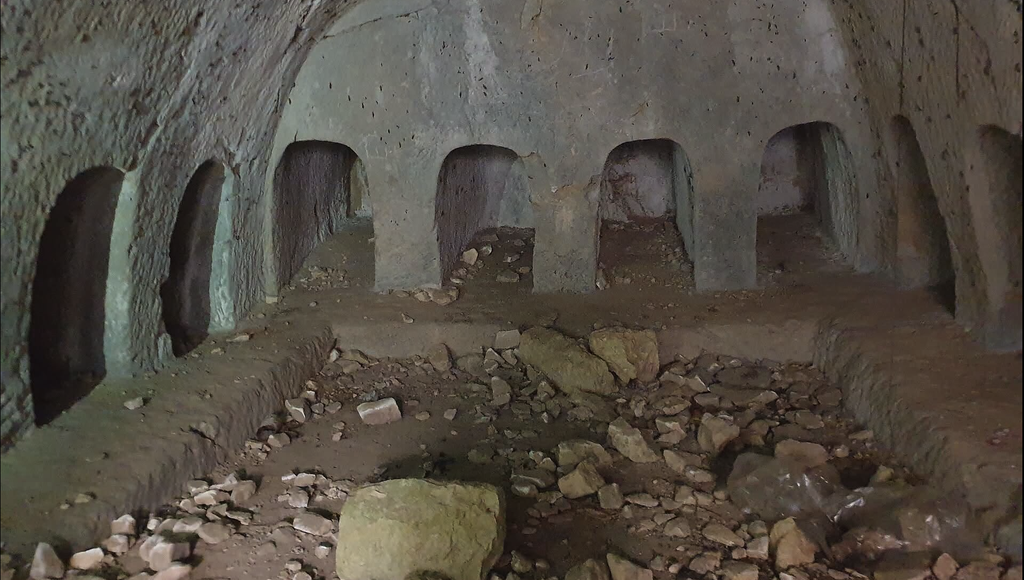
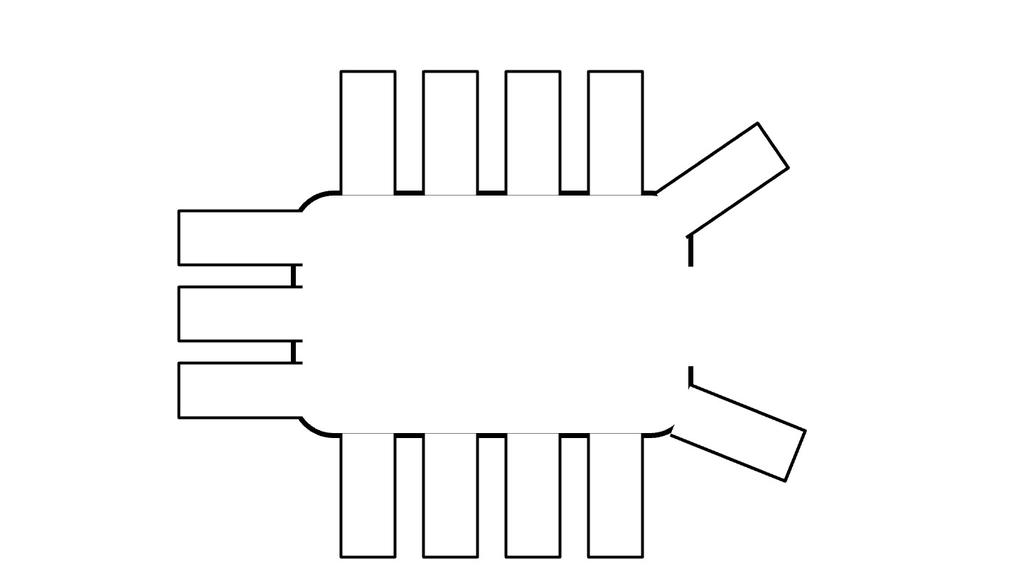
הַמּוֹכֵר מָקוֹם לַחֲבֵרוֹ לַעֲשׁוֹת לוֹ קֶבֶר, וְכֵן הַמְקַבֵּל מֵחֲבֵרוֹ לַעֲשׁוֹת לוֹ קֶבֶר, עוֹשֶׂה תוֹכָהּ שֶׁלַּמְּעָרָה אַרְבַּע אַמּוֹת עַל שֵׁשׁ, וּפוֹתֵחַ לְתוֹכָהּ שְׁמוֹנָה כֻכִּים: שְׁלֹשָׁה מִכָּן וּשְׁלֹשָׁה מִכָּן וּשְׁנַיִם מִכְּנֶגְדָּן.
וְהַכֻּכִּים, אָרְכָּן אַרְבַּע אַמּוֹת וְרוּמָן שִׁבְעָה וְרָחְבָּן שִׁשָּׁה.
רְבִּי שִׁמְעוֹן אוֹמֵר: עוֹשֶׂה תוֹכָהּ שֶׁלַּמְּעָרָה שֵׁשׁ עַל שְׁמוֹנֶה, וּפוֹתֵחַ לְתוֹכָהּ שְׁלֹשָׁה עָשָׂר כָּךְ: אַרְבָּעָה מִכָּן וְאַרְבָּעָה מִכָּן וּשְׁלֹשָׁה מִכְּנֶגְדָּן, אֶחָד מִימִין הַפֶּתַח וְאֶחָד מִן הַשְּׂמֹאל.
וְעוֹשֶׂה חָצֵר עַל פֶּתַח הַמְּעָרָה שֵׁשׁ עַל שֵׁשׁ, כִּמְלֹא מִטָּה, וּפוֹתֵחַ לְתוֹכָהּ שְׁתֵּי מְעָרוֹת, אַחַת מִכָּן וְאַחַת מִכָּן.
רְבִּי שִׁמְעוֹן אוֹמֵר: אַרְבַּע, לְאַרְבַּע רוּחוֹתֶיהָ.
רַבָּן שִׁמְעוֹן בֶּן גַּמְלִיאֵל אוֹמֵר: הַכֹּל לְפִי הַסֶּלַע.
Someone who sold his fellow a place in which to make a tomb and, similarly, someone who commissioned by his fellow to make a tomb, makes the inside of the cave four cubits by six [2 yards x 3 yards] and opens within it eight niches, three on the one side, three on the other side, and two opposite.
The niches are four cubits long, seven [handbreadths] high, and six wide [2 yards x 21 inches x 18 inches].
Rabbi Shimon says: “He makes the inside of the cave six cubits by eight [3 yards x 4 yards], and opens within it thirteen niches, four on one side, four on the other side, three opposite, one to the right of the doorway and one to the left.
He makes a courtyard at the opening of the vault, six by six, space enough for the bier and its bearers. And he may open within it two vaults, one on either side.
Rabbi Shimon says: “Four, for its four sides.”
Rabban Shimon ben Gamaliel says: “All according to the rock.”
הָאוֹמֵר לַחֲבֵרוֹ: "בֵּית כּוֹר עָפָר אֲנִי מוֹכֵר לָךְ", הָיוּ שָׁם נְקָעִים עֲמֻקִּים עֲשָׂרָה טְפָחִים, אוֹ סְלָעִים גְּבוֹהִין עֲשָׂרָה טְפָחִין אֵינָן נִמְדָּדִין עִמָּהּ.
פָּחוּת מִכֵּן, נִמְדָּדִין עִמָּהּ.
וְאִם אָמַר לוֹ: "כְּבֵית כּוֹר", אֲפִלּוּ הָיוּ שָׁם נְקָעִים עֲמֻקִּים יָתֵר מֵעֲשָׂרָה טְפָחִין, אוֹ סְלָעִין גְּבוֹהִין יָתֵר מֵעֲשָׂרָה טְפָחִין, הֲרֵי אֵלּוּ נִמְדָּדִין עִמָּהּ.
If someone said to his fellow, “I sell you a kor’s space of soil”, and it contained crevices ten handbreadths deep or rocks ten handbreadths high, these are not measured with it [i.e., not included in the measure].
Less than this, they are measured with it.
If he said to him, “About a kor’s space of soil”, even if it contained crevices deeper than ten handbreadths or rocks higher than ten handbreadths, they are measured with it.
"בֵּית כּוֹר עָפָר אֲנִי מוֹכֵר לָךְ, מִדָּה בַחֶבֶל".
פָּחַת כָּל שֶׁהוּא, יְנַכֶּה. אוֹ הוֹתִיר כָּל שֶׁהוּא, יַחְזִיר.
אִם אָמַר לוֹ: "אִם חָסֵר, אִם יָתֵר", אֲפִלּוּ פָחַת רֹבַע לִסְאָה אוֹ הוֹתִיר רֹבַע לִסְאָה, הִגִּיעוֹ.
יוֹתֵר מִכֵּן, יַעֲשֶׂה חֶשְׁבּוֹן.
מַה הוּא מַחְזִיר לוֹ? מָעוֹת. אִם רָצָה, מַחְזִיר לוֹ קַרְקַע.
וְלָמָּה אָמְרוּ 'מַחְזִיר לוֹ מָעוֹת'? אֶלָּא לְיַפּוֹת כֹּחוֹ שֶׁלַּמּוֹכֵר, שֶׁאִם שִׁיֵּר בַּשָּׂדֶה בֵית תִּשְׁעַת קַבִּים, וּבַגַּנָּה בֵית חֲצִי קַב, וּכְדִבְרֵי רְבִּי עֲקִיבָה בֵית רֹבַע, מַחְזִיר לוֹ אֶת הַקַּרְקַע.
לֹא אֶת הָרֹבַע בִּלְבַד הוּא מַחְזִיר לוֹ, אֶת כָּל הַמּוֹתָר.
"I sell you a kor’s space of soil as measured by a rope”.
If he gave him anything less, he deducts; and if he gave him anything more, he returns.
But if he said, “More or less”, even if he gave a quarter [kav] per seah less, or a quarter [kav] per seah more [1/24], it becomes his; more than this, he makes a calculation.
What does he give him back? Money. If he wants, he gives him back land.
And why did they say "He gives him back money"? To enhance the power of the seller.
In there remained in the field nine kav's space 1/20], or, in a garden, a half-kav's space, or according to Rabbi Akiva a quarter-kav's space, the buyer must give back to him land.
And not only must he give back the quarter-kav's space, but all of the surplus.
"מִדָּה בַחֶבֶל אִם חָסֵר אִם יָתֵר", בִּטֵּל "אִם חָסֵר וְאִם יָתֵר" "מִדָּה בַחֶבֶל",
"אִם חָסֵר וְאִם יָתֵר, מִדָּה בַחֶבֶל", בִּטֵּל "מִדָּה בַחֶבֶל" "אִם חָסֵר וְאֶת אִם יָתֵר", כְּדִבְרֵי בֶן נַנָּס.
בְּסִימָנִין וּבִמְצָרָיו, פַּחַת שְׁתוּת, הִגִּיעוֹ, עַד שְׁתוּת, יְנַכֶּה.
“I sell you as measured by the rope, more or less” the condition “more or less” makes voids the condition “as measured by the rope”.
“More or less, as measured by the rope”, the condition “as measured by the rope” makes void the condition “more or less”, according to Ben Nanas.
"By its marks and its boundaries”, and the difference was less than a sixth, the sale stands. As much a sixth he deducts.
ינכה יפחות מן הדמים שיעור מה שחסר מן המדה
ואין הלכה כבן ננס אבל יקח הלוקח בכגון זה הדבר כולו הפחות שבשעורין וזהו שאמר הלך אחר הפחות שבלשונות.
"'He shall deduct'. He shall reduce from the price the amount by which it falls short of the measure.
And the halakha is not like Ben Nanas; rather, in such a case the buyer takes the whole matter according to the lesser of the two assessments — and this is what is meant by 'follow the lesser of the two expressions.'"
...
הָאוֹמֵר לַחֲבֵרוֹ: "חֲצִי שָׂדִי אֲנִי מוֹכֵר לָךְ",
מְשַׁמְּנִים בֵּינֵיהֶן, וְנוֹטֵל חֲצִי שָׂדֵהוּ.
"חֶצְיָהּ בַּדָּרוֹם אֲנִי מוֹכֵר לָךְ", מְשַׁמְּנִין בֵּינֵיהֶם, וְנוֹטֵל חֶצְיָהּ בַּדָּרוֹם.
וּמְקַבֵּל עָלָיו מְקוֹם הַגָּדֵר, וְחָרִיץ [וּ]בֶן חָרִיץ.
כַּמָּה הוּא חָרִיץ? שִׁשָּׁה טְפָחִין.
וּבֶן חָרִיץ? שְׁלֹשָׁה.
If someone says to his fellow, “I am selling you half of my field”, we value between them and he takes half of his field.
"I am selling you its southern half”, we value between them, and the buyer takes its southern half.
He accepts responsibility for space for the fence and the large and small ditches.
How large is the large ditch? Six handbreadths.
And the small ditch? Three handbreadths.
מְשַׁמְּנִין בֵּינֵיהֶן. רוֹאִין הַמָּקוֹם הַשָּׁמֵן שֶׁבְּשָׂדֶה זוֹ, וְנוֹטֵל אוֹתוֹ הַמּוֹכֵר, דְּיַד לוֹקֵחַ עַל הַתַּחְתּוֹנָה. וּכְנֶגְדּוֹ נוֹתֵן לַלּוֹקֵחַ מִן הַמָּקוֹם הַגָּרוּעַ כְּמוֹ שֶׁשָּׁוֶה הַמָּקוֹם הַשָּׁמֵן שֶׁנָּטַל הַמּוֹכֵר. דְּכִי קָאָמַר לֵיהּ חֲצִי שָׂדֶה אֲנִי מוֹכֵר לְךָ, כְּדֵי דְּמֵי חֲצִי שָׂדֶה קָאָמַר לֵיהּ.
They see the place of the fatter part of the field, and the seller takes that part, for the hand of the purchaser is at a disadvantage, and, corresponding to it, he gives to the buyer an equally-valuable part of the worse part.
For when he said to him (i.e., the purchaser): “I am selling you one-half of the field,” he meant half the value of the field.
וַתִּקְרַ֜בְנָה בְּנ֣וֹת צְלׇפְחָ֗ד בֶּן־חֵ֤פֶר בֶּן־גִּלְעָד֙ בֶּן־מָכִ֣יר בֶּן־מְנַשֶּׁ֔ה לְמִשְׁפְּחֹ֖ת מְנַשֶּׁ֣ה בֶן־יוֹסֵ֑ף וְאֵ֙לֶּה֙ שְׁמ֣וֹת בְּנֹתָ֔יו מַחְלָ֣ה נֹעָ֔ה וְחׇגְלָ֥ה וּמִלְכָּ֖ה וְתִרְצָֽה׃ וַֽתַּעֲמֹ֜דְנָה לִפְנֵ֣י מֹשֶׁ֗ה וְלִפְנֵי֙ אֶלְעָזָ֣ר הַכֹּהֵ֔ן וְלִפְנֵ֥י הַנְּשִׂיאִ֖ם וְכׇל־הָעֵדָ֑ה פֶּ֥תַח אֹֽהֶל־מוֹעֵ֖ד לֵאמֹֽר׃ אָבִ֘ינוּ֮ מֵ֣ת בַּמִּדְבָּר֒ וְה֨וּא לֹא־הָיָ֜ה בְּת֣וֹךְ הָעֵדָ֗ה הַנּוֹעָדִ֛ים עַל־יְהֹוָ֖ה בַּעֲדַת־קֹ֑רַח כִּֽי־בְחֶטְא֣וֹ מֵ֔ת וּבָנִ֖ים לֹא־הָ֥יוּ לֽוֹ׃ לָ֣מָּה יִגָּרַ֤ע שֵׁם־אָבִ֙ינוּ֙ מִתּ֣וֹךְ מִשְׁפַּחְתּ֔וֹ כִּ֛י אֵ֥ין ל֖וֹ בֵּ֑ן תְּנָה־לָּ֣נוּ אֲחֻזָּ֔ה בְּת֖וֹךְ אֲחֵ֥י אָבִֽינוּ׃ וַיַּקְרֵ֥ב מֹשֶׁ֛ה אֶת־מִשְׁפָּטָ֖ן לִפְנֵ֥י יְהֹוָֽה׃ {פ}
(1) The daughters of Zelophehad, of Manassite family—son of Hepher son of Gilead son of Machir son of Manasseh son of Joseph—came forward. The names of the daughters were Mahlah, Noah, Hoglah, Milcah, and Tirzah. (2) They stood before Moses, Eleazar the priest, the chieftains, and the whole assembly, at the entrance of the Tent of Meeting, and they said, (3) “Our father died in the wilderness. He was not one of the faction, Korah’s faction, that banded together against the Lord, but died for his own sin; and he has left no sons. (4) Let not our father’s name be lost to his clan just because he had no son! Give us a holding among our father’s kinsmen!” (5) And Moshe brought their suit to the Lord...
וַיֹּ֥אמֶר יְהֹוָ֖ה אֶל־מֹשֶׁ֥ה לֵּאמֹֽר׃ כֵּ֗ן בְּנ֣וֹת צְלׇפְחָד֮ דֹּבְרֹת֒ נָתֹ֨ן תִּתֵּ֤ן לָהֶם֙ אֲחֻזַּ֣ת נַחֲלָ֔ה בְּת֖וֹךְ אֲחֵ֣י אֲבִיהֶ֑ם וְהַֽעֲבַרְתָּ֛ אֶת־נַחֲלַ֥ת אֲבִיהֶ֖ן לָהֶֽן׃ וְאֶל־בְּנֵ֥י יִשְׂרָאֵ֖ל תְּדַבֵּ֣ר לֵאמֹ֑ר
אִ֣ישׁ כִּֽי־יָמ֗וּת וּבֵן֙ אֵ֣ין ל֔וֹ וְהַֽעֲבַרְתֶּ֥ם אֶת־נַחֲלָת֖וֹ לְבִתּֽוֹ׃
וְאִם־אֵ֥ין ל֖וֹ בַּ֑ת וּנְתַתֶּ֥ם אֶת־נַחֲלָת֖וֹ לְאֶחָֽיו׃
וְאִם־אֵ֥ין ל֖וֹ אַחִ֑ים וּנְתַתֶּ֥ם אֶת־נַחֲלָת֖וֹ לַאֲחֵ֥י אָבִֽיו׃
וְאִם־אֵ֣ין אַחִים֮ לְאָבִיו֒ וּנְתַתֶּ֣ם אֶת־נַחֲלָת֗וֹ לִשְׁאֵר֞וֹ הַקָּרֹ֥ב אֵלָ֛יו מִמִּשְׁפַּחְתּ֖וֹ וְיָרַ֣שׁ אֹתָ֑הּ
וְֽהָ֨יְתָ֜ה לִבְנֵ֤י יִשְׂרָאֵל֙ לְחֻקַּ֣ת מִשְׁפָּ֔ט כַּאֲשֶׁ֛ר צִוָּ֥ה יְהֹוָ֖ה אֶת־מֹשֶֽׁה׃ {פ}
And the Lord said to Moses, “The plea of Zelophehad’s daughters is just: you shall give them a hereditary holding among their father’s kinsmen; transfer their father’s share to them.
“Further, speak to the people of Israel saying:
‘If a man dies without leaving a son, you shall transfer his property to his daughter.
(9) If he has no daughter, you shall assign his property to his brothers.
(10) If he has no brothers, you shall assign his property to his father’s brothers.
(11) And if his father has no brothers, then ye shall give his inheritance unto his kinsman that is next to him of his family, and he shall possess it.
And it shall be unto the children of Israel a statute of judgment, as the LORD commanded Moses.’
.
יֵשׁ נוֹחֲלִים וּמַנְחִילִים, נוֹחֲלִים וְלֹא מַנְחִילִים, מַנְחִילִים וְלֹא נוֹחֲלִים, לֹא נוֹחֲלִים וְלֹא מַנְחִילִים.
אֵלּוּ נוֹחֲלִים וּמַנְחִילִים: הָאָב אֶת הַבָּנִים, וְהַבָּנִים אֶת הָאָב, וְהָאַחִים מִן הָאָב נוֹחֲלִים וּמַנְחִילִים.
הָאִישׁ אֶת אִמּוֹ, וְהָאִישׁ אֶת אִשְׁתּוֹ, וּבְנֵי אַחְיוֹת נוֹחֲלִים וְלֹא מַנְחִילִין.
הָאִשָּׁה אֶת בְּנָהּ, וְהָאִשָּׁה אֶת בַּעְלָהּ, וַאֲחֵי הָאֵם מַנְחִילִים וְלֹא נוֹחֲלִים.
וְהָאַחִים מִן הָאֵם לֹא נוֹחֲלִין וְלֹא מַנְחִילִים.
There are those who inherit and bequeath, there are those who inherit but do not bequeath, there are those who bequeath but do not inherit and there are those who neither bequeath nor inherit.
These inherit and bequeath: a father as to his sons and sons as to their father and brothers from the father, these inherit and bequeath.
A man as to his mother, and a man as to his wife, and the sons of sisters, inherit but do not bequeath.
A woman as to her sons, and a wife as to her husband, and brothers of the mother, bequeath but do not inherit.
And brothers from the mother neither inherit nor bequeath.
כל המשנה הזאת מבוארת וירושת האב קבלנו מפי השמועה וכן ירושת הבעל לאשתו
All this Mishnah is clear.
The inheritance of the father we have learned from the tradition, . and similarly the inheritance of a husband from his wife . . . .
סֵדֶר נְחָלוֹת כָּךְ הוּא: "אִישׁ כִּי יָמוּת וּבֵן אֵין לוֹ, וְהַעֲבַרְתֶּם אֶת נַחֲלָתוֹ לְבִתּוֹ".
הַבֵּן קוֹדֵם לַבַּת, כָּל יוֹצְאֵי יְרֵכוֹ שֶׁלַּבֵּן קוֹדְמִין לַבַּת.
בַּת קוֹדֶמֶת לָאַחִים, וְכָל יוֹצְאֵי יְרֵכָהּ שֶׁלַּבַּת קוֹדְמִין לָאַחִים.
הָאַחִים קוֹדְמִין לַאֲחֵי הָאָב, כָּל יוֹצְאֵי יְרֵכָן שֶׁלָּאַחִין קוֹדְמִין לַאֲחֵי הָאָב.
זֶה הַכְּלָל: כָּל הַקּוֹדֵם בַּנַּחֲלָה, יוֹצְאֵי יְרֵכוֹ קוֹדְמִין.
וְהָאָב קוֹדֵם לְכָל יוֹצְאֵי יְרֵכוֹ.
This is the order of inheritance: “If a man dies without leaving a son, you shall transfer his property to his daughter”.
The son precedes the daughter, and all the son’s offspring precede the daughter.
The daughter precedes the brothers and the daughters’ offspring precede the brothers'.’
Brothers precede the father’s brothers and the brothers’ offspring precede the father’s brothers.
This is the general rule: whosoever has precedence in inheritance, his offspring also has precedence.
The father has precedence over all his offspring.
בְּנוֹת צְלָפְחָד נָטְלוּ שְׁלֹשָׁה חֲלָקִין בַּנַּחֲלָה:
חֵלֶק אֲבִיהֶן, שֶׁהָיָה עִם יוֹצְאֵי מִצְרַיִם, וְחֶלְקוֹ עִם אֶחָיו בְּנִכְסֵי חֵפֶר,
וְשֶׁהָיָה בְכוֹר, נָטַל שְׁנֵי חֲלָקִים.
The daughters of Zelophehad took three portions of the inheritance.
The portion of their father who was among those who came out of Egypt; and his portion among his brothers from the property of Hepher; and, in that he was a first-born, he took a double portion.
כֵּ֗ן בְּנ֣וֹת צְלׇפְחָד֮ דֹּבְרֹת֒ נָתֹ֨ן תִּתֵּ֤ן לָהֶם֙ אֲחֻזַּ֣ת נַחֲלָ֔ה בְּת֖וֹךְ אֲחֵ֣י אֲבִיהֶ֑ם וְהַֽעֲבַרְתָּ֛ אֶת־נַחֲלַ֥ת אֲבִיהֶ֖ן לָהֶֽן׃
’The daughters of Zelophehad speak right: you shall certainly give them a possession of inheritance among their father’s brothers and you shall transfer the inheritance of their father to them.
נתן תתן. שְׁנֵי חֲלָקִים, חֵלֶק אֲבִיהֶן שֶׁהָיָה מִיּוֹצְאֵי מִצְרַיִם, וְחֶלְקוֹ עִם אֶחָיו בְּנִכְסֵי חֵפֶר (בבא בתרא קי"ח):
You shall certainly give. The portion of their father who was among those who came out of Egypt, and his portion that he had together with his brothers from the property of his father Hefer (Bava Batra 118b).
אֶחָד הַבֵּן וְאֶחָד הַבַּת בַּנַּחֲלָה, אֶלָּא שֶׁהַבֵּן נוֹטֵל פִּי שְׁנַיִם בְּנִכְסֵי הָאָב,
וְאֵינוּ נוֹטֵל פִּי שְׁנַיִם בְּנִכְסֵי הָאֵם.
וְהַבָּנוֹת נִזּוֹנוֹת מִנִּכְסֵי הָאָב, וְאֵינָן נִזּוֹנוֹת מִנִּכְסֵי הָאֵם.
Both the son and the daughter are included in inheritance, but the son takes a double portion of the father’s property and he does not take a double portion of the mother’s property.
And the daughters are maintained from the father’s property, but not maintained from the mother’s property.
הָאוֹמֵר: "אִישׁ פְּלוֹנִי בְנִי בְכוֹר לֹא יִטֹּל פִּי שְׁנַיִם", "אִישׁ פְּלוֹנִי בְנִי, לֹא יִירַשׁ עִם אֶחָיו", לֹא אָמַר כְּלוּם, שֶׁהִתְנָה עַל הַכָּתוּב שֶׁבַּתּוֹרָה.
הַמְחַלֵּק נְכָסָיו עַל פִּיו, רִבָּה לְאֶחָד וּמִעֵט לְאֶחָד, הִשְׁוָה לָהֶן אֶת הַבְּכוֹר, דְּבָרָיו קַיָּמִין.
וְאִם אָמַר "מִשֵּׁם יְרֻשָּׁה", לֹא אָמַר כְּלוּם.
כָּתַב בֵּין בַּתְּחִלָּה וּבֵין בָּאֶמְצַע וּבֵין בַּסּוֹף: "מִשֵּׁם מַתָּנָה", דְבָרָיו קַיָּמִין.
הָאוֹמֵר: "אִישׁ פְּלוֹנִי יִירָשֵׁנִי", בְּמָקוֹם שֶׁיֶּשׁ בַּת, "בִּתִּי תִירָשֵׁנִי", בְּמָקוֹם שֶׁיֶּשׁ בֵּן, לֹא אָמַר כְּלוּם, שֶׁהִתְנָה עַל הַכָּתוּב שֶׁבַּתּוֹרָה.
רְבִּי יוֹחָנָן בֶּן בְּרוֹקָה אוֹמֵר: אִם אָמַר עַל מִי שֶׁהוּא רָאוּי לוֹ לִירֻשָּׁה, דְּבָרָיו קַיָּמִין, וְעַל מִי שֶׁאֵינוּ רָאוּי לוֹ לִירֻשָּׁה, אֵין דְּבָרָיו קַיָּמִין.
הַכּוֹתֵב נְכָסָיו לַאֲחֵרִים, וְהִנִּיחַ אֶת בָּנָיו, מַה שֶּׁעָשָׂה עָשׁוּי, אֲבָל אֵין רוּחַ חֲכָמִים נוֹחָה מִמֶּנּוּ.
רַבָּן שִׁמְעוֹן בֶּן גַּמְלִיאֵל אוֹמֵר: אִם לֹא הָיוּ בָנָיו נוֹהֲגִין כַּשּׁוּרָה,
זָכוּר לָטוֹב.
Someone who says, “Such and such, my firstborn son, shall not receive double”, or “Such and such, my son, shall not inherit with his brothers”, has said nothing, for he has made a condition contrary to what is written in the Torah.
If someone apportioned his property to his sons by word of mouth, and gave much to one and little to another, or made them equal to the firstborn, his words are valid.
But if he had said “by inheritance”, he has said nothing.
If he had written down, whether at the beginning or in the middle or at the end [of his will] that it should be as a gift, his words are valid.
Someone who says, “Such and such a man shall inherit from me” and he has a daughter; or “My daughter shall inherit from me”, and he has a son, has said nothing, for he has made a condition contrary to what is written in the Torah.
Rabbi Johanan ben Baroka says: “If he said this of one that was qualified to inherit from him, his words are valid, but if of one that was not qualified to inherit from him his words do not remain valid.”
If a man wrote away his property to others and passed over his sons, what he has done is done, but the Sages are not comfortable with it. Rabban Shimon ben Gamaliel says: “If has sons did not behave properly, it should be counted to his credit.”
דְּבָרָיו קַיָּמִין. דִּכְתִיב (דברים כא) וְהָיָה בְּיוֹם הַנְחִילוֹ אֶת בָּנָיו, הַתּוֹרָה נָתְנָה רְשׁוּת לָאָב לְהַנְחִיל לַבָּנִים לְמִי שֶׁיִּרְצֶה.
וּמוֹדֶה רַבִּי יוֹחָנָן דְּעַל אָח בִּמְקוֹם בַּת וְעַל בַּת בִּמְקוֹם בֵּן, לֹא אָמַר כְּלוּם, שֶׁאֵין הַבַּת רְאוּיָה לִירַשׁ בִּמְקוֹם בֵּן, וְלֹא הָאָח בִּמְקוֹם בַּת.
וְכֵן מוֹדֶה רַבִּי יוֹחָנָן, שֶׁאִם הִשְׁוָה אֶת הַבְּכוֹר לַבָּנִים לֹא אָמַר כְּלוּם, דִּכְתִיב (שם) לֹא יוּכַל לְבַכֵּר וְכוּ'.
וַהֲלָכָה כְּרַבִּי יוֹחָנָן בֶּן בְּרוֹקָה:
"His words stand" — as it is written (Deuteronomy 21:16), "And it shall be, on the day that he causes his sons to inherit" — the Torah gave the father authority to bequeath to his sons however he wishes [i.e. to reallocate shares among those eligible]
And Rabbi Yochanan agrees that regarding a brother in place of a daughter, or a daughter in place of a son, he has said nothing — since a daughter is not eligible to inherit in place of a son, nor is a brother eligible to inherit in place of a daughter.
Rabbi Yochanan likewise agrees that if he equated the firstborn with the other sons, he has said nothing, as it is written (Deuteronomy 21:16), "he may not treat as firstborn..." [a beloved son who was not the first-born].
And the halakha follows Rabbi Yochanan ben Beroka.
הָאוֹמֵר: "זֶה בְנִי" נֶאֱמָן,
"זֶה אָחִי" אֵינוּ נֶאֱמָן, יִטֹּל עִמּוֹ בְחֶלְקוֹ.
מֵת, יַחְזְרוּ נְכָסִים לִמְקוֹמָם. נָפְלוּ לוֹ נְכָסִים מִמָּקוֹם אַחֵר, יִירְשׁוּ אֶחָיו עִמּוֹ.
מִי שֶׁמֵּת, וְנִמְצֵאת דְּיַתִּיקֵי קְשׁוּרָה עַל יְרֵכוֹ, הֲרֵי זוֹ אֵינָה כְּלוּם.
זִכָּה בָהּ לְאַחֵר, בֵּין מִן הַיּוֹרְשִׁין וּבֵין שֶׁאֵינָן מִן הַיּוֹרְשִׁין, דְּבָרָיו קַיָּמִין.
Someone who says “This is my son” is believed.
“This is my brother”, he is not believed, but he can take with him in his portion.
If he died the property returns to their place. If he inherited from elsewhere, his brothers inherit with him.
If someone died and a will was found bound to his thigh, this counts as nothing.
But if he had given it to another, whether of one of his heirs or someone who was not one of his heirs, his words are valid.
זֶה בְּנִי נֶאֱמָן. לְיוֹרְשׁוֹ וְלִפְטֹר אֶת אִשְׁתּוֹ מִן הַיִּבּוּם:
This is my son – to bequeath to him and to exempt his wife from yibum.
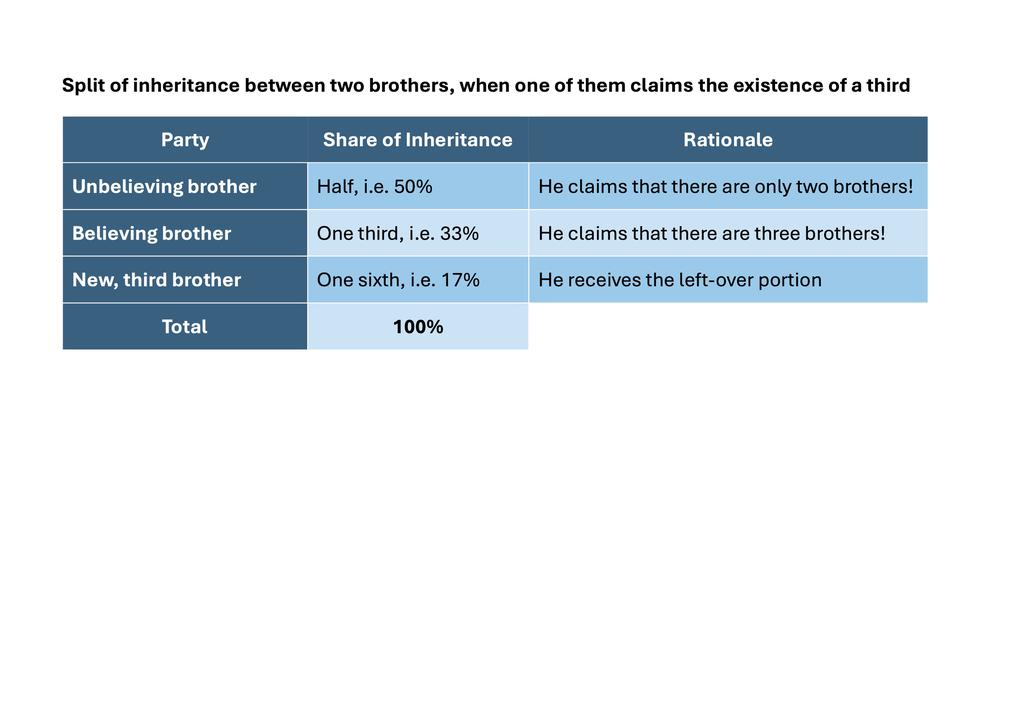
קְשׁוּרָה עַל יְרֵכוֹ. דְּלֵיכָּא לְמֵימַר אַחֵר כְּתָבָהּ וּנְתָנָהּ שָׁם, אֲפִלּוּ הָכִי הֲרֵי זוֹ אֵינָהּ כְּלוּם, שֶׁהֲרֵי לֹא גָּמַר לְהַקְנוֹת אֶלָּא בְּקַבָּלַת הַשְּׁטָר, וְאֵין שְׁטָר לְאַחַר מִיתָה:
Bound to his thigh – That is not to say that someone else wrote it and placed it there. But even so it is worthless, for execution on occurs on the receipt of a document, and a document cannot be executed posthumously.
הַכּוֹתֵב נְכָסָיו לְבָנָיו, צָרִיךְ שֶׁיִּכְתֹּב "מֵהַיּוֹם לְאַחַר מוֹתִי" דִּבְרֵי רְבִּי יְהוּדָה.
וּרְבִּי יוֹסֵה אוֹמֵר: אֵינוּ צָרִיךְ.
הַכּוֹתֵב נְכָסָיו לִבְנוֹ לְאַחַר מוֹתוֹ, הָאָב אֵינוּ יָכוֹל לִמְכֹּר, מִפְּנֵי שֶׁהֵן כְּתוּבִין לַבֵּן, וְהַבֵּן אֵינוּ יָכוֹל לִמְכֹּר,
מִפְּנֵי שֶׁהֵן בִּרְשׁוּת הָאָב.
מָכַר הָאָב, מְכוּרִין עַד שֶׁיָּמוּת.
מָכַר הַבֵּן, אֵין לַלּוֹקֵחַ בָּהֶן כְּלוּם עַד שֶׁיָּמוּת הָאָב.
הָאָב תּוֹלֵשׁ וּמַאֲכִיל לְכָל מִי שֶׁיִּרְצֶה; וּמַה שֶּׁהִנִּיחַ תָּלוּשׁ, הֲרֵי הוּא שֶׁלַּיּוֹרְשִׁים.
הִנִּיחַ בָּנִים גְּדוֹלִים וּקְטַנִּים, אֵין הַגְּדוֹלִים מִתְפַּרְנְסִין עַל יְדֵי קְטַנִּים, וְלֹא קְטַנִּים נִזּוֹנִים עַל הַגְּדוֹלִים, אֶלָּא חוֹלְקִים בְּשָׁוֶה.
נָשְׂאוּ גְּדוֹלִים, יִשְׂאוּ קְטַנִּים.
וְאִם אָמְרוּ הַקְּטַנִּים:
"הֲרֵי אָנוּ נוֹשְׂאִים כְּדֶרֶךְ שֶׁנְּשָׂאתֶם אַתֶּם", אֵין שׁוֹמְעִין לָהֶן, אֶלָּא מַה שֶּׁנָּתַן לָהֶן אֲבִיהֶן, נָתַן.
Someone who writes over his property to his children he must write, “From today and after my death”, according to Rabbi Judah.
Rabbi Yose says, “He need not do so.”
If someone writes over his possessions to his son for after his death, the father cannot sell since they written over to the son, and the son cannot sell since they are in the possession of the father.
If the father sold, they are sold only until he dies.
If the son sold, the buyer has no claim until the father dies.
The father harvests and feeds whoever he wishes, and anything he has left harvested [in the field] belongs to his heirs.
If he left elder and younger sons, the elder ones may not maintain themselves at the expense of the younger ones, nor are the younger sons fed at the cost of the elder ones, rather they share equally.
If the elder sons married, the younger sons may marry.
If the younger sons said, “We will marry in the way you married”, they do not listen to them, for what their father gave them, he has given.
הִנִּיחַ בָּנוֹת גְּדוֹלוֹת וּקְטַנּוֹת, אֵין הַגְּדוֹלוֹת מִתְפַּרְנְסוֹת עַל הַקְּטַנּוֹת, וְלֹא הַקְּטַנּוֹת נִזּוֹנוֹת עַל הַגְּדוֹלוֹת, אֶלָּא חוֹלְקוֹת בְּשָׁוֶה.
זֶה חֹמֶר בַּבָּנוֹת מִבַּבָּנִים, שֶׁהַבָּנוֹת נִזּוֹנוֹת עַל הַבָּנִים, וְאֵינָן נִזּוֹנוֹת עַל הַבָּנוֹת.
If he left elder and younger daughters, the elder ones may not maintain themselves at the expense of the younger ones, nor are the younger sons fed at the cost of the elder ones, rather they rather they all share alike.
Greater stringency applies to daughters than to sons, since daughters can claim maintenance at the cost of the sons, but they cannot claim maintenance at the cost of the daughters.
נִזּוֹנִים. אֲכִילָה וּשְׁתִיָּה. לְפִי שֶׁמְּזוֹנוֹת הַקְּטַנִּים מְרֻבִּים מִשֶּׁל גְּדוֹלִים, שֶׁאוֹכְלִים פְּעָמִים רַבּוֹת וּמְפַזְּרִים.
Fed – food and drink, because the food of the younger children is greater than that of the older children, who eat many times and scatter.
מִי שֶׁמֵּת, וְהִנִּיחַ בָּנִים וּבָנוֹת, בִּזְמַן שֶׁהַנְּכָסִין מְרֻבִּין, הַבָּנִים יִירָשׁוּ, וְהַבָּנוֹת יִזּוֹנוּ.
בִּזְמַן שֶׁהַנְּכָסִין מְמֻעָטִין, הַבָּנוֹת יִזּוֹנוּ, וְהַבָּנִים יִשְׁאֲלוּ עַל הַפְּתָחִים.
אַדְמוֹן אוֹמֵר: בִּשְׂבִיל שֶׁאֲנִי זָכָר הִפְסַדְתִּי?
אָמַר רַבָּן גַּמְלִיאֵל: רוֹאֶה אָנִי אֶת דִּבְרֵי אַדְמוֹן.
Someone who died and left sons and daughters, if the property was ample the sons inherit and the daughters are maintained. But if the property was small the daughters are maintained and the sons go beg from door to door.
Admon says: “The son may say, ‘Must I lose out because I am a man?’”.
Rabban Gamaliel said: “I can see Admon’s opinion.”
מִי שֶׁמֵּת. שֶׁהַנְּכָסִים מְרֻבִּים. כְּדֵי שֶׁיִּזּוֹנוּ הַבָּנִים וְהַבָּנוֹת עַד שֶׁיִּבְגְּרוּ הַבָּנוֹת:
If the property was ample. To support the sons and daughters until the daughters come of age.
הִנִּיחַ בָּנִים וּבָנוֹת וְטוֹמְטוֹם, בִּזְמַן שֶׁהַנְּכָסִין מְרֻבִּין, הַזְּכָרִים דּוֹחִין אוֹתוֹ אֵצֶל הַנְּקֵבוֹת. בִּזְמַן שֶׁהַנְּכָסִים מְמֻעָטִין, הַנְּקֵבוֹת דּוֹחוֹת אוֹתוֹ אֵצֶל הַזְּכָרִים.
הָאוֹמֵר: "אִם יָלְדָה אִשְׁתִּי זָכָר, יִטֹּל מָנֶה", אִם יָלְדָה זָכָר, נוֹטֵל מָנֶה.
"וְאִם נְקֵבָה, מָאתַיִם", יָלְדָה נְקֵבָה, נוֹטֶלֶת מָאתַיִם.
"אִם זָכָר, מָנֶה, אִם נְקֵבָה, מָאתַיִם", יָלְדָה זָכָר וּנְקֵבָה, הַזָּכָר נוֹטֵל מָנֶה, וְהַנְּקֵבָה מָאתַיִם.
יָלְדָה טוֹמְטוֹם, אֵינוּ נוֹטֵל.
אִם אָמַר: "כָּל מַה שֶּׁתֵּלֵד אִשְׁתִּי יִטֹּל", הֲרֵי זֶה יִטֹּל.
אִם אֵין שָׁם יוֹרֵשׁ אֶלָּא הוּא, יוֹרֵשׁ אֶת הַכֹּל.
He left sons and daughters and a tumtum, if the property was great the males may push him onto the females; if the property was small the females may thrust him onto the males.
If someone said, “If my wife shall bear a male he shall take 100 zuz”, and she had a male, he takes 100 zuz.
“If a female she shall take 200 zuz”, and she had a female, she takes 200 zuz.
“If a male, 100 zuz and if a female, 200 zuz” and she had a male and a female, the male takes 100 zuz and the female 200 zuz.
If she bore a tumtum he does not take.
But if he said, “Whatever my wife shall bear shall take . . . ", he takes.
If he was the only heir, he inherits everything.
ר' יוסי אומר אנדרוגינוס בריה לעצמו ולא יכלו חכמים להכריע עליו אם איש הוא אם אשה הוא אבל טומטום אינו כן אלא או ספק איש או ספק אשה.
Rabbi Yosei says, an androgynous is a unique creation unto himself and the Sages were unable to render a decision about him, whether he is a man or woman, but this is not so with a tumtum, as to whom there is only a doubt whether he is a man or a woman.
וזה שאמר ילדה טומטום אינו נוטל כלום דחוי הוא אבל נוטל כפחות משניהם וסלקא דעתין שהטומטום בריה בפני עצמה ואינו ממין האדם השלם ולפיכך לא יירש ואפילו היה הוא לבדו.
קא משמע לן שאין הדבר אלא אם אין לו יורש אלא הוא יורש את הכל:
And this saying, 'If she bore a tumtum, he takes nothing' is not to be taken at face value; rather, he takes like the lesser of the two.
And shouldn't consider that a tumtum might be a creature unto itself and not of the same species as a complete human being, and therefore would not inherit, even if he were the only one. We therefore learn that this is not so; rather, if he has no heir other than him, he inherits everything.
הִנִּיחַ בָּנִים גְּדוֹלִים וּקְטַנִּים, הִשְׁבִּיחוּ גְדוֹלִים אֶת הַנְּכָסִים, הִשְׁבִּיחוּ לָאֶמְצַע.
אִם אָמְרוּ: "רְאוּ מַה שֶּׁהִנִּיחַ לָנוּ אַבָּא, הֲרֵי אָנוּ עוֹשִׂין וְאוֹכְלִין", הִשְׁבִּיחוּ לְעַצְמָן.
וְכֵן הָאִשָּׁה שֶׁהִשְׁבִּיחָה אֶת הַנְּכָסִין, הִשְׁבִּיחָה לָאֶמְצַע.
אִם אָמְרָה: "רְאוּ מַה שֶּׁהִנִּיחַ לִי בַעֲלִי, הֲרֵי אֲנִי עוֹשָׂה וְאוֹכֶלֶת", הִשְׁבִּיחָה לְעַצְמָהּ.
If someone left elder sons and younger sons, and the elder ones improved the property, they improve it for the middle [the common benefit].
If they said, “See what our father has left us, we will work and eat”, they improve it for themselves.
So, too, if a woman improved the property, she improves it for the middle [the common benefit].
If she said, “See what my husband left to me, lo, I will work and eat”, she improves it for herself.
הֶאָחִים הַשּׁוּתָפִים שֶׁנָּפַל אֶחָד מֵהֶן לָאֻמָּנוּת, נָפַל לָאֶמְצַע.
חָלָה וְנִתְרַפָּא, נִתְרַפָּא מִשֶּׁלְּעַצְמוֹ.
הָאַחִים שֶׁעָשׁוּ מִקְצָתָן שׁוֹשְׁבִינוּת בְּחַיֵּי הָאָב, חָזְרָה הַשּׁוֹשְׁבִינוּת, חָזְרָה לָאֶמְצַע, שֶׁהַשּׁוֹשְׁבִינוּת נִגְבֵּית בְּבֵית דִּין.
אֲבָל הַשּׁוֹלֵחַ לַחֲבֵרוֹ כַדֵּי יַיִן וְכַדֵּי שֶׁמֶן, אֵינָן נִגְבִּים בְּבֵית דִּין, מִפְּנֵי שֶׁהֵן גְּמִילוּת חֲסָדִים.
If brothers were partners and one of them fell into a public office, it falls to the middle [the common benefit].
If one got sick and healed, his healing is at his own expense.
If some of the brothers in their father’s lifetime had made a present as groomsmens' presents and the present was returned, it is returned to the middle [the common benefit], for the groomsmen’s gift can be recovered in a court of law.
But if he sent his fellow jars of wine or jars of oil, they cannot be recovered through a court of law, since they count as a charitable deed.
אחין השותפין שנפל אחד מהן לאומנות כו':האחין שעשו מקצתן שושבינות בחיי האב כו':
זו האומנות עבודת המלך היתה והוא שהוציא על עבדי המלך מן האמצע כדי שיבא לו ריוח מן המלך אותה התועלת לאמצע הואיל שבא התועלת ההיא בשביל מה שהוציא מן האמצע אבל אם עשה סחורה לעצמו או עשה מלאכה והרויח אותו הריוח הוא לו לבדו:
The "public office" is a state position. He spent money on the servants of the king from the common part of the estate to obtain profit from the king to the estate . . . . if he had been in business on his own or had done his own work he would have kept the profit.
שׁוּשְׁבִינוּת. דֶּרֶךְ שׁוּשְׁבִינוּת נוֹטֵל סְעוּדָה וְדוֹרוֹן לַחֻפָּה וְאוֹכֵל עִמּוֹ, וְזֶה חוֹזֵר וְעוֹשֶׂה כֵן לָזֶה גַּם כֵּן כְּשֶׁיִּשָּׂא אִשָּׁה. .
– it is the manner of wedding gifts that one takes a meal and a gift to the wedding and eats with him, and the other returns and does the same for that one when he marries a woman.
הַשּׁוֹלֵחַ סִבְלוֹנוֹת לְבֵית חָמִיו, שִׁלַּח שָׁם בְּמֵאָה מָנֶה, וְאָכַל שָׁם סְעוֹדַת חָתָן אֲפִלּוּ בְדִינָר, אֵינָן נִגְבִּין.
לֹא אָכַל שָׁם סְעוֹדַת חָתָן, הֲרֵי אֵלּוּ נִגְבִּים.
שִׁלַּח סִבְלוֹנוֹת מְרֻבִּים, כְּדֵי שֶׁיָּבוֹאוּ עִמָּהּ לְבֵית בַּעְלָהּ, הֲרֵי אֵלּוּ נִגְבִּין.
סִבְלוֹנוֹת מְמֻעָטִין, כְּדֵי שֶׁתִּשְׁתַּמֵשׁ בָּהֶן וְהִיא בְּבֵית אָבִיהָ, אֵינָן נִגְבִּין.
If someone sent betrothal gifts to his father-in-law’s house, and sent there 100 maneh [10,000 dinar] and ate a betrothal meal of but one dinar, they are not recoverable.
If he did not eat a betrothal meal, they are recoverable.
If he sent many betrothal gifts, for her to return with them to his house they are recoverable.
A few betrothal gifts for her to use in her father’s house are not recoverable.
אֵינָן נִגְבִּין. אִם מֵת הוּא אוֹ מֵתָה הִיא אוֹ שֶׁבָּא לְגָרְשָׁהּ. דְּמֵחֲמַת חִבַּת שִׂמְחַת אֲכִילָה מָחַל. וְדַוְקָא שֶׁאָכַל בְּדִינָר, אֲבָל אָכַל פָּחוֹת מִדִּינָר לֹא מָחַל וְגוֹבֶה הַסִּבְלוֹנוֹת:
If he dies or she dies, or he comes to divorce her. For on account of his love and joy at the feast he pardoned, and especially when he ate a dinar’s worth, but if he at less than a dinar, he did not pardon and he collects the nuptial gifts.
תָּא שְׁמַע, דְּאָמַר רַב יְהוּדָה אָמַר שְׁמוּאֵל: מַעֲשֶׂה בְּאָדָם אֶחָד שֶׁשִּׁגֵּר לְבֵית חָמִיו מֵאָה קְרוֹנוֹת שֶׁל כַּדֵּי יַיִן וְשֶׁל כַּדֵּי שֶׁמֶן וְשֶׁל כְּלֵי כֶסֶף וְשֶׁל כְּלֵי זָהָב וְשֶׁל כְּלִי מֵילָת; וְרָכַב בְּשִׂמְחָתוֹ, וְהָלַךְ וְעָמַד עַל פֶּתַח בֵּית חָמִיו; וְהוֹצִיאוּ כּוֹס שֶׁל חַמִּין וְשָׁתָה, וּמֵת.
וְזוֹ הֲלָכָה הֶעֱלָה רַבִּי אַחָא שַׂר הַבִּירָה לִפְנֵי חֲכָמִים לְאוּשָׁא, וְאָמְרוּ: סִבְלוֹנוֹת הָעֲשׂוּיִן לִיבְלוֹת – אֵין נִגְבִּין, וְשֶׁאֵין עֲשׂוּיִן לִיבְלוֹת – נִגְבִּין. שְׁמַע מִינַּהּ: אֲפִילּוּ שָׁתָה.
Come and hear, as Rav Yehuda says that Shmuel says: Once upon a time, someone sent to his father-in-law’s house one hundred wagons of jars of wine and of jars of oil, and silver vessels, and gold vessels and garments of fine wool [milat]. And he rode over in his state of joy and went and stood by the entrance to his father-in-law’s house. And they brought out to him a cup of hot drink and he drank. And he died.
Rabbi Aḥa Sar HaBira raised this halakha before the Sages in Usha, and they said: presents that are typically consumed are not collected, and those that are not typically consumed are collected. Learn from this: even if he drank.
.
שָׁכֵיב מְרַע שֶׁכָּתַב נְכָסָיו לַאֲחֵרִים, וְשִׁיֵּר קַרְקַע כָּל שֶׁהוּא,
מַתָּנָתוֹ קַיֶּמֶת.
לֹא שִׁיֵּר קַרְקַע כָּל שֶׁהוּא, אֵין מַתָּנָתוֹ קַיֶּמֶת.
לֹא כָתַב בָּהּ "שָׁכֵיב מְרַע", הוּא אוֹמֵר: "שָׁכֵיב מְרַע הָיִיתִי",
וְהֵן אוֹמְרִים: "בָּרִי הָיָה", צָרִיךְ לְהָבִיא רְאָיָה שֶׁהָיָה שָׁכֵיב מְרַע. דִּבְרֵי רְבִּי מֵאִיר.
וַחֲכָמִים אוֹמְרִים: הַמּוֹצִיא מֵחֲבֵרוֹ, עָלָיו הָרְאָיָה.
If a dying man wrote over his property to others and kept back any land whatsoever, his gift remains [evenif he recovers].
If he did not keep back any land whatsoever, his gift does not remain.
He did not write, “who lies dying”, but he says "I was lying dying" and they said that he was healthy, he must bring proof that he had been dying, according to Rabbi Meir.
But the sages say: “He who makes a claim against his fellow bears the burden of proof.”
הַמַּחֲלִיק נְכָסָיו עַל פִּיו, רְבִּי אֱלִיעֶזֶר אוֹמֵר: אֶחָד בָּרִיא וְאֶחָד מְסֻכָּן, נְכָסִים שֶׁיֵּשׁ לָהֶן אַחְרָיוּת נִקְנִים בַּכֶּסֶף וּבִשְׁטָר וּבַחֲזָקָה, וְשֶׁאֵין לָהֶן אַחְרָיוּת, אֵינָן נִקְנִים אֶלָּא בִמְשִׁיכָה.
אָמְרוּ לוֹ: מַעֲשֶׂה בְאִמָּן שֶׁלִּבְנֵי רוֹכֵל, שֶׁהָיְתָה חוֹלָה. אָמְרָה:
"תִּנָּתֵן כְוִנְתִּי לְבִתִּי!" וְהִיא בִשְׁנֵים עָשָׂר מָנֶה.
מֵתָה, וְקִיְּמוּ אֶת דְּבָרֶיהָ.
אָמַר לָהֶן: בְּנֵי רוֹכֵל, תִּקְבְּרֵם אִמָּם!
חֲכָמִים אוֹמְרִים: בַּשַּׁבָּת, דְּבָרָיו קַיָּמִים, מִפְּנֵי שֶׁאֵינוּ יָכוֹל לִכְתֹּב, אֲבָל לֹא בַחוֹל.
רְבִּי יְהוֹשֻׁעַ אוֹמֵר: בַּשַּׁבָּת אָמָרוּ, קַל וָחֹמֶר בַּחוֹל.
כַּיּוֹצֵא בוֹ: זָכִים לַקָּטָן, וְאֵין זָכִים בַּגָּדוֹל. וּרְבִּי יְהוֹשֻׁעַ אוֹמֵר: בַּקָּטוֹן אָמָרוּ, קַל וָחֹמֶר בַּגָּדוֹל.
If a man divided his property orally, Rabbi Eliezer says: “Whether he was healthy or at the point of death, property for which there is security can be acquired only by money, by a document or by possession; property for which there is no security [movable objects] can be acquired only by being pulled.
They said to him: “It once happened that the mother of the sons of Rokhel was sick and said, ‘Give my brooch to my daughter’, and it was worth twelve maneh [1,200 dinars] and she died and they fulfilled her words.
He said to them: “May their mother bury the sons of Rokhel.”
The Sages say: “On a Sabbath his words remain valid, since he cannot write, but not on a weekday.”
Rabbi Joshua says: “If they have said this on the Sabbath, how much more so on a weekday.”
Similarly, others may acquire possession on behalf of a minor, but not on behalf of an adult.
Rabbi Joshua says: “If they have stated this rule with regards to a minor, how much more so does the rule apply to an adult.
נָפַל הַבַּיִת עָלָיו וְעַל אָבִיו, עָלָיו וְעַל מוֹרִישָׂיו, וְהָיְתָה עָלָיו כְּתֻבַּת אִשָּׁה וּבַעַל חוֹב,
יוֹרְשֵׁי הָאָב אוֹמְרִים: "הַבֵּן מֵת רִאשׁוֹן, וְאַחַר כָּךְ מֵת הָאָב."
וּבַעֲלֵי הַחוֹב אוֹמְרִים: "הָאָב מֵת רִאשׁוֹן, וְאַחַר כָּךְ מֵת הַבֵּן."
בֵּית שַׁמַּי אוֹמְרִים: יַחֲלֹקוּ. וּבֵית הֶלֵּל אוֹמְרִים: נְכָסִים כְּחֶזְקָתָן.
A house fell down on a man and his father, or upon a man and someone from whom he inherits, and he was liable for his wife’s ketubah and to a creditor.
The father’s heirs say, “The son died first and the father died afterwards”.
The creditors say, “The father died first and the son died afterwards.”
The School of Shammai says: “They should divide” and the School of Hillel says: “The property retains its former status".
נָפַל הַבַּיִת עָלָיו וְעַל אִשְׁתּוֹ
יוֹרְשֵׁי הַבַּעַל אוֹמְרִים: "הָאִשָּׁה מֵתָה רִאשׁוֹן, וְאַחַר כָּךְ מֵת הַבַּעַל",
וְיוֹרְשֵׁי הָאִשָּׁה אוֹמְרִים: "הַבַּעַל מֵת רִאשׁוֹן, וְאַחַר כָּךְ מֵתָה הִיא",
בֵּית שַׁמַּי אוֹמְרִים: יַחֲלֹקוּ; וּבֵית הֶלֵּל אוֹמְרִים: נְכָסִים כְּחֶזְקָתָן.
כְּתֻבָּה בְחֶזְקַת יוֹרְשֵׁי הַבַּעַל, נְכָסִין הַנִּכְנָסִין וְהַיּוֹצְאִין עִמָּהּ, בְּחֶזְקַת יוֹרְשֵׁי הָאָב.
A house fell down on a man and his wife.
The husband’s heirs say, “The wife died first and the husband died afterwards”
The wife’s heirs say, “The husband died first and the wife died afterwards”.
The School of Shammai says: “They should divide” and the School of Hillel says: “The property retains its former status"
The ketubah with the husband's heirs and property that goes in and out with her father's heirs.
נָפַל הַבַּיִת עָלָיו וְעַל אִמּוֹ, אֵלּוּ וָאֵלּוּ מוֹדִין שֶׁיַּחֲלֹקוּ.
אָמַר רְבִּי עֲקִיבָה: מוֹדֶה אֲנִי בָזֶה שֶׁהַנִּכְנָסִין כְּחֶזְקָתָן.
אָמַר לוֹ בֶן עַזַּי: עַל הַחֲלוּקִין אָנוּ מִצְטָעֲרִים, אֶלָּא שֶׁבָּאתָ לַחֲלֹק עָלֵינוּ אֶת הַשָּׁוִים!
If a house fell down on a man and his mother, they both agree that they should divide.
Rabbi Akiva said: “I agree here, that the property remains in its former status.”
Ben Azzai said to him: “We are distressed over disagreements, and you have come to disagree with us where they agree.”
גֵּט פָּשׁוּט, עֵדָיו מִתּוֹכוֹ, מְקֻשָּׁר, עֵדָיו מֵאֲחוֹרָיו.
פָּשׁוּט שֶׁכָּתְבוּ עֵדָיו מֵאֲחוֹרָיו, מְקֻשָּׁר שֶׁכָּתְבוּ עֵדָיו מִתּוֹכוֹ, שְׁנֵיהֶן פְּסוּלִים.
רְבִּי חֲנַנְיָה בֶן גַּמְלִיאֵל אוֹמֵר: מְקֻשָּׁר שֶׁכָּתְבוּ עֵדָיו מִתּוֹכוֹ, כָּשֵׁר, מִפְּנֵי שֶׁהוּא יָכוֹל לַעֲשׁוֹתוֹ פָשׁוּט.
רַבָּן שִׁמְעוֹן בֶּן גַּמְלִיאֵל אוֹמֵר: הַכֹּל כְּמִנְהַג הַמְּדִינָה.
A simple document has the signatures within (at the bottom of the page); a sewn document has signatures behind [each fold].
A simple document whose witnesses signed behind, or a sewn document whose witnesses signed within, are both invalid.
Rabbi Hananya ben Gamaliel says: “A sewn document whose witnesses signed within is valid since it can be made into a simple document.” Rabban Shimon ben Gamaliel says: “Everything should follow local custom.”
גֵּט פָּשׁוּט, עֵדָיו בִּשְׁנַיִם, מְקֻשָּׁר, בִּשְׁלֹשָׁה.
פָּשׁוּט שֶׁכָּתוּב בּוֹ שְׁנֵי עֵדָיו שְׁנֵיהֶם פְּסוּלִין.
כָּתַב בּוֹ: "זוּזִין מְאָה, דִּי הִמּוֹ סְלָעִין עֶשְׂרִין", אֵין לוֹ אֶלָּא עֶשְׂרִין;
"זוּזִין מְאָה דִּי הִמּוֹ סְלָעִין תְּלָתִין", אֵין לוֹ אֶלָּא [מָנֶה?]
"כְּסַף זוּזִין דִּי אִנּוּן", וְנִמְחָקוּ, אֵין פָּחוּת מִשְּׁנַיִם.
"כֶּסֶף סִלְעִין דִּי אִנּוּן", וְנִמְחָקוּ, אֵין פָּחוּת מִשְּׁתַיִם.
"דְּרָכוֹנוֹת דִּי אִנּוּן", וְנִמְחָקוּ, אֵין פָּחוּת מִשְּׁנַיִם.
כָּתוּב בּוֹ מִלְמַעְלָה "מָנֶה", וּמִלְּמַטָּה "מָאתַיִם", מִלְמַעְלָה "מָאתַיִם", וּמִלְּמַטָּה "מָנֶה", הַכֹּל הוֹלֵךְ אַחַר הַתַּחְתּוֹן.
וְאִם כֵּן, לָמָּה כוֹתְבִין אֶת הָעֶלְיוֹן? שֶׁאִם תִּמָּחֵק אוֹת אַחַת מִן הַתַּחְתּוֹן, יִלְמַד מִן הָעֶלְיוֹן.
A simple document requires two witnesses; a sewn document requires three.
If a simple document has only one witness, or a sewn document has only two, they are both invalid.
If it was written in a debt document: “100 zuz which are 20 sela”, he can claim only 20;
“100 zuz which are 30 sela” he can claim only [a maneh?].
“Silver zuzim which are …”, and the rest was erased, at least two zuzim.
“Silver selas which are …”, and the rest was erased, at least two selas.
“Darics which are …”, and the rest was erased, at least two darics.
If at the top was written a “maneh” and at the bottom “200 zuz”, or “200 zuz” at the top and “maneh” at the bottom, everything goes according to the bottom amount.
If so, why is the figure written at the top of the document? So that, if a letter of the lower figure was erased, they can learn from the upper figure.
גט פשוט עדיו בשנים ומקושר בשלשה כו':כתוב בו זוזין מאה דאינון סלעין עשרין כו':
הודיענו כי כמו שגט פשוט בעד אחד פסול מדאורייתא כך גט מקושר פסול בשני עדים וכבר בארנו כי גט שם לכל שטר ולכך אמר כתוב בו. ואלה הזוזין הנזכרים בכאן הם דינרים שיש ארבעה מהם בסלע כמו שזכרנו פעמים כי הסלע ארבעה דינרין:
Just as a simple document is invalid with only one witness, from the Torah, similarly a sewn document with only two witnesses is invalid. And we have already explained that the word "get" refers to any written document and that is why we refer to "writing" in it. And the zuz mentioned here are dinars which are 4 to a sela as we have mentioned a few times; a sela is 4 dinars.
כּוֹתְבִין גֵּט לָאִישׁ אַף עַל פִּי שֶׁאֵין אִשְׁתּוֹ עִמּוֹ, וְהַשּׁוֹבֵר לָאִשָּׁה אַף עַל פִּי שֶׁאֵין בַּעְלָהּ עִמָּהּ, וּבִלְבַד שֶׁיְּהֵא מַכִּירָהּ.
וְהַבַּעַל נוֹתֵן שָׂכָר.
כּוֹתְבִין שְׁטָר לַלֹּוֶה אַף עַל פִּי שֶׁאֵין הַמַּלְוֶה עִמּוֹ, וְאֵין כּוֹתְבִין לַמַּלְוֶה, עַד שֶׁיְּהֵא הַלֹּוֶה עִמּוֹ.
וְהַלֹּוֶה נוֹתֵן שָׂכָר.
כּוֹתְבִין שְׁטָר לַמּוֹכֵר אַף עַל פִּי שֶׁאֵין הַלּוֹקֵחַ עִמּוֹ, אֵין כּוֹתְבִין לַלּוֹקֵחַ, עַד שֶׁיְּהֵא הַמּוֹכֵר עִמּוֹ.
וְהַלּוֹקֵחַ נוֹתֵן אֶת הַשָּׂכָר.
One may write a get [a deed of divorce] for a man even if his wife is not with him, or a receipt for a wife even if her husband is not with her, provided that he knows them.
And the husband pays the fee.
One may write out a document for a debtor even though the creditor is not with him, but they may not write out a document a the creditor unless the debtor is with him. And the borrower pays the fee.
One may write out a deed for the seller although the buyer is not with him, but they may not write it out for the buyer unless the seller is with him.
And the buyer pays the fee.
יכול לגרשה בלא דעתה:
הגה ואפי' אין לו לשלם לה הכתובה ונדונייתה אינה יכולה לעכב משום זה הגרושין אלא תתגרש ותתבע אותו מה שחייב לה (תשובת הרא"ש וריב"ש) וכל זה מדינא אבל ר"ג החרים שלא לגרש אשה שלא מדעתה אם לא שעברה על דת וכמו שנתבאר לעיל סי' קט"ו
ואפי' אם רוצה ליתן לה הכתובה אין לגרשה בזמן הזה שלא מדעתה (סמ"ק סי' קפ"ד)
עבר וגירשה בע"כ בזמן הזה ונשאת שוב אין האיש נקרא עבריין (כל בו) גירשה מדעתה ונמצא פסול בגט יכול אח"כ לגרשה בע"כ (ג"ז שם)
He is allowed to divorce her without her knowledge.
Rem"a: And even if he cannot pay her ketubah or dowry, she cannot prevent it since this is a divorce. Rather she divorces and claims what he is obligated to her (Teshuvat HaRosh, and Rivash). And all this is the law, but Rabbeinu Gershom decreed that one cannot divorce a woman without her knowledge if she has not violated religious practice, as is explained above (Siman 115).
And even if he wants to give her the ketubah, he cannot divorce her nowadays without her knowledge (Smak Siman 184).
If he transgressed and divorced her against her will, and she remarried, the man is not called a sinner (Kol Bo). If he divorced her with her knowledge, and the get was found to be invalid, he is able to divorce her afterwards against her will (ibid.).
אֵין כּוֹתְבִין שְׁטָרֵי אֵרוּסִים וְנִשּׂוּאִים, אֶלָּא מִדַּעַת שְׁנֵיהֶן.
וְהֶחָתָן נוֹתֵן שָׂכָר.
שְׁטָרֵי אֲרִיסוּת וְקַבְּלָנוּת, אֶלָּא מִדַּעַת שְׁנֵיהֶן.
וְהַמְקַבֵּל נוֹתֵן שָׂכָר.
שְׁטָרֵי בֵרוּרִים וְכָל מַעֲשֵׂה בֵית דִּין, אֶלָּא מִדַּעַת שְׁנֵיהֶם.
וּשְׁנֵיהֶם נוֹתְנִים אֶת הַשָּׂכָר.
רַבָּן שִׁמְעוֹן בֶּן גַּמְלִיאֵל אוֹמֵר: לִשְׁנֵיהֶם כּוֹתְבִין שְׁנַיִם, לָזֶה לְעַצְמוֹ, וְלָזֶה לְעַצְמוֹ.
They may not write documents of betrothal or marriage except with the consent of both parties. And the bridegroom pays the fee.
Nor documents of tenancy and sharecropping, except with the consent of both parties. And the tenant pays the fee.
Nor documents of arbitration or any action of the court, except with the consent of both parties.
And both parties pay the fee.
Rabban Shimon ben Gamaliel says: “Two documents are written, for the two of them, one for him and one for him.”
דִּינֵי מָמוֹנוֹת, בִּשְׁלֹשָׁה. זֶה בּוֹרֵר לוֹ אֶחָד וְזֶה בּוֹרֵר לוֹ אֶחָד, וּשְׁנֵיהֶן בּוֹרְרִין לָהֶן עוֹד אֶחָד, דִּבְרֵי רַבִּי מֵאִיר.
Financial cases by three.This one selects [borer] one and this one selects [borer] one and the two of them select [borerin] one more, according to Rabbi Meir.
מִי שֶׁפָּרַע מִקְצָת חוֹבוֹ וְהִשְׁלִישׁ אֶת שְׁטָרוֹ, אָמַר לוֹ: אִם לֹא נָתַתִּי לָךְ מִכָּן וְעַד יוֹם פְּלוֹנִי, תֶּן לוֹ שְׁטָרוֹ",
הִגִּיעַ זְמַן וְלֹא נָתַן, רְבִּי יוֹסֵה אוֹמֵר: יִתֵּן.
וּרְבִּי יְהוּדָה אוֹמֵר: לֹא יִתֵּן.
If a man paid part of his debt and gave the debt document to a third party, saying to him, “If I have not paid you by such and such a day, give him back his document” . . . . [meaning that the borrower would again be liable for the whole loan and lose his previous payment.]
The time came and he had not paid, Rabbi Yose says: “He should give.”
And Rabbi Judah says: “He should not give.”
וְהִשְׁלִישׁ אֶת שְׁטָרוֹ. הַמַּלְוֶה וְהַלֹּוֶה מָסְרוּ הַשְּׁטָר בְּיַד שָׁלִישׁ. שֶׁטֹּרַח הָיָה לָהֶם לִכְתֹּב שׁוֹבֵר וְסָמְכוּ עַל הַשָּׁלִישׁ:
He third-partied his document – the lender and the borrower transferred the document to the hand of a third-party for it was a trouble for them to write a receipt and they relied upon the third party.
ואין מתקיים מזה כלום ואינו ראוי בשום פנים אלא א"כ נטל קנין על זה בב"ד חשוב ויתפוס זכיותיו באותו ב"ד . . . ואין שום ב"ד חשוב אלא כשיהיו סמוכין בארץ ישראל כמו שנבאר עוד:
This is only valid if he executes it before an important bet din . . . and there is no important bet din other than one ordained in the Land of Israel as we shall explain later on.
מִי שֶׁנִּמְחַק שְׁטָר חוֹבוֹ, מַעֲמִיד עָלָיו עֵדִים, וּבָא לִפְנֵי בֵית דִּין, וְהֵן עוֹשִׂין לוֹ קִיּוּם:
"אִישׁ פְּלוֹנִי בֶן אִישׁ פְּלוֹנִי, נִמְחַק שְׁטָרוֹ בְּיוֹם פְּלוֹנִי, וּפְלוֹנִי וּפְלוֹנִי עֵדָיו."
מִי שֶׁפָּרַע מִקְצָת חוֹבוֹ, רְבִּי יְהוּדָה אוֹמֵר: יַחֲלִיף.
וּרְבִּי יוֹסֵה אוֹמֵר: יִכְתֹּב שׁוֹבֶר.
אָמַר רְבִּי יְהוּדָה: נִמְצָא זֶה צָרִיךְ לִהְיוֹת שׁוֹמֵר שׁוֹבָרוֹ מִן הָעַכְבָּר.
אָמַר לוֹ רְבִּי יוֹסֵה: כָּךְ יָפֶה לוֹ, וְאַל יֵרַע כֹּחוֹ שֶׁלָּזֶה.
If a man’s debt document was erased, he must produce witnesses and come before the court and they make this attestation for him:
“So and so, the son of so and so, his debt document was erased on such and such a day, and so and so and so and so are his witnesses.”
If someone had repaid part of his debt, Rabbi Judah says: “He should exchange.”
And Rabbi Yose says: “He should write a receipt.”
Rabbi Judah said: “It works out that this one will have to guard his receipt from mice.”
Rabbi Yose said to him: “That’s good for him, this one's strength shouldn't be degraded.
ולא ירע כחו של זה הוא רומז אל המלוה . . . והלכה כרבי יוסי וכותבין שובר:
This one's power shouln't be degraded - this refers to the lender . . . .and the halakha goes according to Rabbi Yose and they write a receipt.
שְׁנֵי אַחִים, אֶחָד עָנִי וְאֶחָד עָשִׁיר, וְהִנִּיחַ לָהֶן אֲבִיהֶן מַרְחֵץ וּבֵית הַבַּד
עֲשָׂאָן לְשָׂכָר, עֲשָׂאָן לָאֶמְצַע; עֲשָׂאָן לְעַצְמוֹ, זֶה עָשִׁיר אוֹמֵר לֶעָנִי: "קַח לְךָ עֲבָדִים וְיִרְחֲצוּ בַמֶּרְחָץ, קַח לְךָ זֵיתִים וּבֹא וַעֲשֵׂם בְּבֵית הַבַּד."
שְׁנַיִם שֶׁהָיוּ בָעִיר, וְשֵׁם אֶחָד יוֹסֵה בֶן שִׁמְעוֹן וְשֵׁם אֶחָד יוֹסֵה בֶן שִׁמְעוֹן, אֵינָן יְכוּלִים לְהוֹצִיא שְׁטַר חוֹב זֶה עַל זֶה, וְלֹא אַחֵר יָכוֹל לְהוֹצִיא עֲלֵיהֶם שְׁטַר חוֹב.
נִמְצָא לְאֶחָד בֵּין שְׁטָרוֹתָיו שְׁטָרוֹ שֶׁלְּיוֹסֵה בֶן שִׁמְעוֹן פָּרוּעַ, שְׁטָרוֹת כֻּלָּם פְּרוּעִין.
כֵּיצַד יַעֲשׁוּ? יַשְׁלִישׁוּ.
אִם הָיוּ מְשֻׁלָּשִׁים, יִכְתֹּב סִימָן.
אִם הָיוּ סִימָנִין, יִכְתֹּב בָּהֶן [כהן].
הָאוֹמֵר לִבְנוֹ: "שְׁטָר בֵּין שְׁטָרוֹתָי פָּרוּעַ", וְאֵין יָדוּעַ אֵי זֶה הוּא, שְׁטָרוֹת כֻּלָּם פְּרוּעִים.
נִמְצָא לְאֶחָד שֵׁם שְׁנַיִם, הַגָּדוֹל פָּרוּעַ וְהַקָּטוֹן אֵינוּ פָרוּעַ.
הַמַּלְוֶה אֶת חֲבֵרוֹ עַל יְדֵי עָרָב, לֹא יִפָּרַע מִן הֶעָרָב.
אִם אָמַר: "עַל מְנָת שֶׁאֶפָּרַע מִמִּי שֶׁאֶרְצֶה", יִפָּרַע מִן הֶעָרָב.
רַבָּן שִׁמְעוֹן בֶּן גַּמְלִיאֵל אוֹמֵר:
אִם יֵשׁ נְכָסִים לַלֹּוֶה, בֵּין כָּךְ וּבֵין כָּךְ לֹא יִפָּרַע מִן הֶעָרָב.
כַּיּוֹצֵא בוֹ אָמַר רַבָּן שִׁמְעוֹן בֶּן גַּמְלִיאֵל:
אַף הֶעָרָב לָאִשָּׁה בִכְתֻבָּתָהּ,
וְהָיָה בַעְלָהּ מְגָרְשָׁהּ,
יַדִּיר הֲנָיָה,
שֶׁמֵּא יַעֲשׁוּ קְנוּנִיָא עַל נְכָסָיו שֶׁלָּזֶה,
וְיַחְזִיר אֶת אִשְׁתּוֹ.
Two brothers, one poor and one rich, and their father left them a bath house or an olive press.
If the father made them for hire, the profit is split equally. But if he made them for their own sake, the rich brother may say to the poor brother, “Buy for yourself slaves and they can wash in the bath house” or “Buy for yourself olives and prepare them in the olive press.”
Two in the same town, one’s name was Yoseh ben Shimon and one's name was Yoseh ben of Shimon, neither can bring forth a debt document on the other, and another person cannot bring forth a debt document against them.
And if some person finds amongst his documents a document that states, “The document of Yoseh ben Shimon is paid”, both their documents are paid.
What should they do? They should write their names to the third generation. And if the names are the same through the third generation, they should give themselves a sign. And if their signs are the same, they should write [in them? - bahen] [Cohen? - cohen].
If someone said to his son, “One of my debt documents is paid and I do not know which one”, all are deemed to be paid.
If somone's name was found twice, then the large one is paid and the small one is not paid.
Someone who lent money to his fellow on a guarantee may not enforce [immediately] against the guarantor.
But if he had said, “On condition that I may enforce on whoever I wish”, he may enforce on the guarantor.
Rabban Shimon ben Gamaliel says: “If the borrower had property, in neither case can he enforce on the guarantor.”
Similarly, Rabban Shimon ben Gamaliel used to say: “If someone was a guarantor for a woman’s ketubah and her husband divorced her, the husband must vow to derive no further benefit from her, lest they conspire against his property [the guarantor's] and take his wife back.”
קַח לְךָ עֲבָדִים. שֶׁיְּחַמְּמוּ לְךָ הַמֶּרְחָץ. . . יָכוֹל לְמֵימַר גּוֹד אוֹ אֱגוֹד, כְּלוֹמַר מְכֹר לִי חֶלְקְךָ אוֹ אֲנִי אֶמְכֹּר לְךָ חֶלְקִי, שָׁאנֵי הָכָא, שֶׁאֵין הֶעָנִי יָכוֹל לוֹמַר אֱגוֹד, שֶׁאֵין לוֹ בַּמֶּה לִקְנוֹת:
"Buy yourself slaves" – that they should warm up for you the bathhouse . . . One can say, “I will make a wall or I will divide it,” meaning to say, “sell me your part or I will sell [to you] my part. But it is different here because the poor person cannot say, “I will divide it” because he has nothing with which to buy.”
לֹא יִפָּרַע מִן הֶעָרֵב. תְּחִלָּה, עַד שֶׁיִּתְבַּע אֶת הַלֹּוֶה לַדִּין וִיחַיְּבוּ אוֹתוֹ בֵּית דִּין, וְאִם אֵין לוֹ מַה לְּשַׁלֵּם אָז יִפָּרַע מִן הֶעָרֵב:
May not enforce against the guarantor – at first, until the borrower is brought to court, and the Jewish court makes him liable; and if he doesn’t have anything with which to pay, then he can collect from the guarantor.
הַמַּלְוֶה אֶת חֲבֵרוֹ בִּשְׁטָר, גּוֹבֶה מִנְּכָסִים מְשֻׁעְבָּדִים. עַל יְדֵי עֵדִים, גוֹבֶה מִנְּכָסִים בְּנֵי חוֹרִין. הוֹצִיא עָלָיו כְּתַב יָדוֹ שֶׁהוּא חַיָּב לוֹ, גּוֹבֶה מִנְּכָסִים בְּנֵי חוֹרִין. עָרֵב הַיּוֹצֵא לְאַחַר חִתּוּם שְׁטָרוֹת, גּוֹבֶה מִנְּכָסִים בְּנֵי חוֹרִין. מַעֲשֶׂה בָא לִפְנֵי רַבִּי יִשְׁמָעֵאל וְאָמַר, גּוֹבֶה מִנְּכָסִים בְּנֵי חוֹרִין. אָמַר לוֹ בֶּן נַנָּס, אֵינוֹ גוֹבֶה לֹא מִנְּכָסִים מְשֻׁעְבָּדִים וְלֹא מִנְּכָסִים בְּנֵי חוֹרִין. אָמַר לוֹ, לָמָּה. אָמַר לוֹ, הֲרֵי הַחוֹנֵק אֶת אֶחָד בַּשּׁוּק וּמְצָאוֹ חֲבֵרוֹ וְאָמַר לוֹ הַנַּח לוֹ, פָּטוּר, שֶׁלֹּא עַל אֱמוּנָתוֹ הִלְוָהוּ. אֶלָּא אֵיזֶהוּ עָרֵב שֶׁהוּא חַיָּב, הַלְוֵהוּ וַאֲנִי נוֹתֵן לְךָ, חַיָּב, שֶׁכֵּן עַל אֱמוּנָתוֹ הִלְוָהוּ. אָמַר רַבִּי יִשְׁמָעֵאל, הָרוֹצֶה שֶׁיַּחְכִּים, יַעֲסוֹק בְּדִינֵי מָמוֹנוֹת, שֶׁאֵין לְךָ מִקְצוֹעַ בַּתּוֹרָה גָּדוֹל מֵהֶן, שֶׁהֵן כְּמַעְיָן הַנּוֹבֵעַ. וְהָרוֹצֶה שֶׁיַּעֲסוֹק בְּדִינֵי מָמוֹנוֹת, יְשַׁמֵּשׁ אֶת שִׁמְעוֹן בֶּן נַנָּס:
If a man lent his fellow money by using a document, he may recover the debt from mortgaged property. But if he had lent only before witnesses (and not through a document), he may recover the debt only from unmortgaged property. If the [creditor] brought forth [a loan document] upon which appeared his (the debtor’s) signature as evidence that he was indebted to him, the creditor may recover the debt only from unmortgaged property. If a man signed as a guarantor after the signatures of witnesses, the creditor may recover the debt only from [the guarantor’s] unmortgaged property. Such a case came before Rabbi Yishmael and he said, “He may recover only from unmortgaged property”. Ben Nanos said to him: “He may recover the debt neither from mortgaged nor unmortgaged property.” He said to him: “Why?” He answered, “If a man seized a debtor by the throat in the street and his fellow found him and said ‘Leave him alone (and I will pay), he is not liable, since not through trust in him did the creditor lend the debtor money.” Rather which type of guarantor is liable? [If a man said], “Lend him money and I will pay thee”, he is liable, for he lent him the money through his trust in the guarantor. And Rabbi Yishmael said, “He who wants to be wise let him occupy himself with cases dealing with monetary matters, for there is no greater branch of Torah than this; for they are like a welling fountain; and he who wishes to occupy himself with laws concerning monetary matters, let him serve [as a pupil] of Shimon ben Nanos.
הַמַּלְוֶה אֶת חֲבֵרוֹ בִשְׁטָר, גּוֹבֶה מִנְּכָסִים מְשֻׁעְבָּדִים.
עַל יְדֵי עֵדִים, גּוֹבֶה מִנְּכָסִים בְּנֵי חוֹרִים.
הוֹצִיא עָלָיו כְּתַב יָדוֹ שֶׁהוּא חַיָּב לוֹ, גוֹבֶה מִנְּכָסִים בְּנֵי חוֹרִים.
וְהֶעָרָב שֶׁהוּא יוֹצֵא לְאַחַר חִתּוּם שְׁטָרוֹת, גּוֹבֶה מִנְּכָסִים בְּנֵי חוֹרִים.
מַעֲשֶׂה בָא לִפְנֵי רְבִּי יִשְׁמָעֵאל וְאָמַר: גּוֹבֶה מִנְּכָסִים בְּנֵי חוֹרִים.
אָמַר לוֹ בֶן נַנָּס: אֵינוּ גוֹבֶה לֹא מִנְּכָסִים מְשֻׁעְבָּדִים, וְלֹא מִנְּכָסִים בְּנֵי חוֹרִים.
אָמַר לוֹ: לָמָּה?
אָמַר לוֹ: הֲרֵי הַחוֹנֵק אֶת אֶחָד בַּשּׁוּק, אָמַר לוֹ "הַנַּח לוֹ וַאֲנִי נוֹתֵן לָךְ!" פָּטוּר, שֶׁלֹּא עַל אֻמָּנוּתוֹ הִלְוָהוּ.
וְאֵי זֶה הוּא הֶעָרָב שֶׁהוּא חַיָּב לוֹ?
אָמַר לוֹ "הַלְוֵהוּ וַאֲנִי נוֹתֵן לָךְ", חַיָּב, שֶׁכֵּן עַל מְנַת הִלְוָהוּ.
אָמַר רְבִּי יִשְׁמָעֵאל: הָרוֹצֶה לְהַחְכִּים, יַעֲסֹק בְּדִינֵי מָמוֹנוֹת, שֶׁאֵין מִקְצוֹעַ בַּתּוֹרָה גָדוֹל מֵהֶן, שֶׁהֵן כְּמַעְיָן נוֹבֵעַ.
וְהָרוֹצֶה לַעֲסֹק בְּדִינֵי מָמוֹנוֹת, יְשַׁמֵּשׁ אֶת שִׁמְעוֹן בֶּן נַנָּס.
Someone who lent his fellow money on a document enforces repayment from mortgaged property.
On witnesses, he enforces repayment from unencumbered property.
If he brought out his signature that he was indebted to him, he enforces from unencumbered property.
And a guarantor who signed after the signatures of the witnesses enforces from unencumbered property.
A case came before Rabbi Yishmael and he said, “He enforces from unencumbered property”.
Ben Nanos said to him: “He may neither enforce from mortgaged nor from unencumbered property.”
He said to him: “Why?”
He answered, “Look, someone seizes a person by the throat in the street and he said ‘Leave him alone and I will give to you', he is not liable, since he did not lend against his business.”
Which guarantor is he liable to?
“Lend him money and I will give you”, he is liable, for he lent him the money on that basis.
Rabbi Yishmael said, “Someone who wants to be wise should occupy himself with civil laws for there is no greater profession in Torah than this; they are like a swelling fountain.
And someone who wishes to occupy himself with civil laws should serve Shimon ben Nanos.
הֲדְרָן עֲלָךְ מַסֶּכֶת בָּבָא בָּתְרָא וְהֲדְרָךְ עֲלָן. דַּעְתָּן עֲלָךְ מַסֶּכֶת בָּבָא בָּתְרָא וְדַעְתָּךְ עֲלָן. לָא נִתְנְשֵׁי מִינָךְ מַסֶּכֶת בָּבָא בָּתְרָא וְלֹא תִתְנְשֵׁי מִינָן, לָא בְּעָלְמָא הָדֵין וְלֹא בְּעָלְמָא דְאַָתֵי:
We will return to you, Tractate Bava Batra, and you will return to us.
Our mind is on you, Tractate Bava Batra, and your mind is on us.
We will not forget you, Tractate Bava Batra, and you will not forget us - not in this world and not in the world to come.
