


 Save
 Copy
 Add to Collection
 Export to Google Docs
 Share
סֻכָּה שֶׁהִיא גְבוֹהָה לְמַעְלָה מֵעֶשְׂרִים אַמָּה, פְּסוּלָה. רַבִּי יְהוּדָה מַכְשִׁיר. וְשֶׁאֵינָהּ גְּבוֹהָה עֲשָׂרָה טְפָחִים, וְשֶׁאֵין לָהּ שְׁלֹשָׁה דְּפָנוֹת, וְשֶׁחַמָּתָהּ מְרֻבָּה מִצִּלָּתָהּ, פְּסוּלָה.
A sukka, i.e., its roofing, which is the main and most crucial element of the mitzva, that is more than twenty cubits high is unfit. Rabbi Yehuda deems it fit. Similarly, a sukka that is not even ten handbreadths high, and one that does not have three walls, and one whose sunlight that passes through its roofing is greater than its shade are unfit.
מַאי שְׁנָא גַּבֵּי סוּכָּה דְּתָנֵי פְּסוּלָה, וּמַאי שְׁנָא גַּבֵּי מָבוֹי דְּתָנֵי תַּקַּנְתָּא? סוּכָּה דְּאוֹרָיְיתָא, תָּנֵי פְּסוּלָה. מָבוֹי דְּרַבָּנַן, תָּנֵי תַּקַּנְתָּא. וְאִיבָּעֵית אֵימָא: בִּדְאוֹרָיְיתָא נָמֵי תָּנֵי תַּקַּנְתָּא, מִיהוּ סוּכָּה דִּנְפִישִׁי מִילָּתַהּ — פָּסֵיק וְתָנֵי פְּסוּלָה, מָבוֹי דְּלָא נְפִישׁ מִילֵּיהּ — תָּנֵי תַּקַּנְתָּא.
Given the seeming similarity between the two cases, that of the sukka and that of the alleyway, the Gemara asks: What is different with regard to a sukka where the mishna teaches that it is unfit, and what is different with regard to an alleyway where the mishna teaches the method of rectification, that one must diminish the height of the cross beam? Why was a solution not suggested in the case of a sukka? The Gemara answers: With regard to sukka, since it is a mitzva by Torah law, the mishna teaches that it is unfit, as, if it is not constructed in the proper manner, no mitzva is fulfilled. However, with regard to an alleyway, where the entire prohibition of carrying is only by rabbinic law, the mishna teaches the method of rectification, as the cross beam comes only to rectify a rabbinic prohibition but does not involve a mitzva by Torah law. The Gemara suggests an alternative explanation: And if you wish, say instead that even with regard to matters prohibited by Torah law, it would have been appropriate for the mishna to teach a method of rectification. However, with regard to sukka, whose matters are numerous, it categorically teaches that it is unfit. With regard to an alleyway, however, whose matters are not numerous, the mishna teaches the method of rectification. Once the height is diminished, it is permitted to carry in the alleyway.
אָמַר רַבָּה, דְּאָמַר קְרָא: ״לְמַעַן יֵדְעוּ דוֹרוֹתֵיכֶם כִּי בַסּוּכּוֹת הוֹשַׁבְתִּי אֶת בְּנֵי יִשְׂרָאֵל״, עַד עֶשְׂרִים אַמָּה, אָדָם יוֹדֵעַ שֶׁהוּא דָּר בַּסּוּכָּה, לְמַעְלָה מֵעֶשְׂרִים אַמָּה — אֵין אָדָם יוֹדֵעַ שֶׁדָּר בַּסּוּכָּה, מִשּׁוּם דְּלָא שָׁלְטָא בַּהּ עֵינָא.
Rabba said that it is derived as the verse states: “So that your future generations will know that I caused the children of Israel to reside in sukkot when I took them out of the land of Egypt” (Leviticus 23:43). In a sukkaup to twenty cubits high, even without a concerted effort, a person is aware that he is residing in a sukka. His eye catches sight of the roofing, evoking the sukka and its associated mitzvot. However, in a sukka that is more than twenty cubits high, a person is not aware that he is residing in a sukka because his eye does not involuntarily catch sight of the roof, as at that height, without a concerted effort one would not notice the roofing.
רַבִּי זֵירָא אָמַר מֵהָכָא: ״וְסוּכָּה תִּהְיֶה לְצֵל יוֹמָם מֵחוֹרֶב״, עַד עֶשְׂרִים אַמָּה אָדָם יוֹשֵׁב בְּצֵל סוּכָּה, לְמַעְלָה מֵעֶשְׂרִים אַמָּה — אֵין אָדָם יוֹשֵׁב בְּצֵל סוּכָּה אֶלָּא בְּצֵל דְּפָנוֹת.
Rabbi Zeira said that it is derived from here: The verse states: “And there shall be a sukka for shade in the daytime from the heat, and for refuge and cover from storm and from rain” (Isaiah 4:6). In a sukkaup to twenty cubits high, a person is sitting in the shade of the sukka, i.e., the shade of the roofing; in a sukka that is more than twenty cubits high, a person is not sitting in the shade of the roofing of the sukka but rather in the shade of the walls of the sukka, as their considerable height provides constant shade, rendering the shade of the roofing irrelevant.
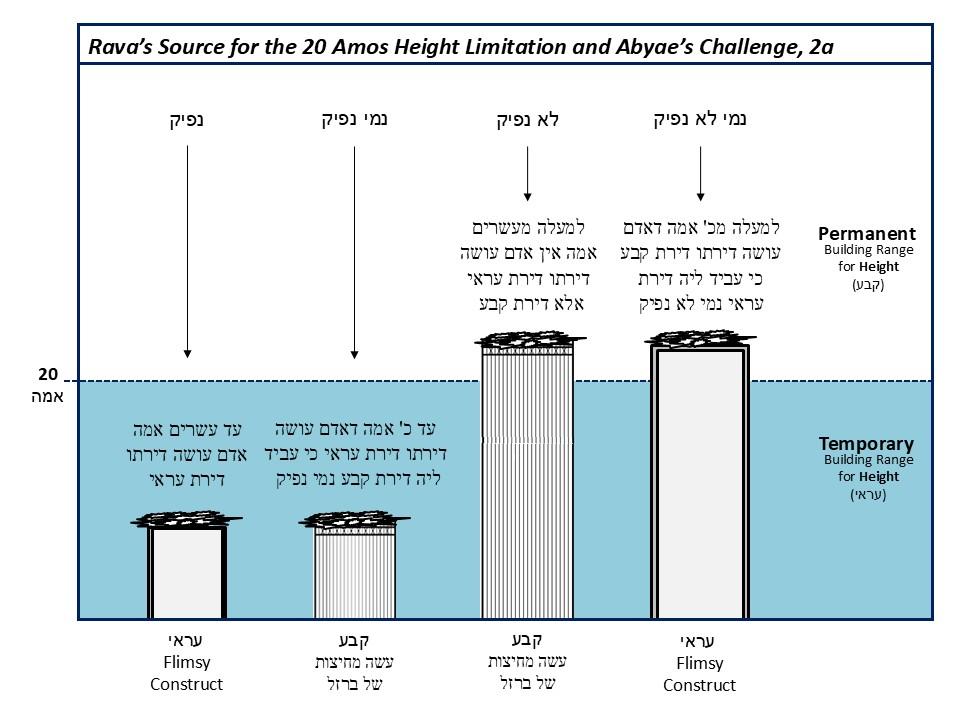
וְרָבָא אָמַר, מֵהָכָא: ״בַּסּוּכּוֹת תֵּשְׁבוּ שִׁבְעַת יָמִים״. אָמְרָה תּוֹרָה: כׇּל שִׁבְעַת הַיָּמִים צֵא מִדִּירַת קֶבַע וְשֵׁב בְּדִירַת עֲרַאי. עַד עֶשְׂרִים אַמָּה אָדָם עוֹשֶׂה דִּירָתוֹ דִּירַת עֲרַאי, לְמַעְלָה מֵעֶשְׂרִים אַמָּה — אֵין אָדָם עוֹשֶׂה דִּירָתוֹ דִּירַת עֲרַאי אֶלָּא דִּירַת קֶבַע.
Rava said that the halakha is derived from here: “In sukkot shall you reside seven days” (Leviticus 23:42). The Torah said: For the entire seven days, emerge from the permanent residence in which you reside year round and reside in a temporary residence, the sukka. In constructing a sukkaup to twenty cubits high, a person can render his residence a temporary residence, as up to that height one can construct a structure that is not sturdy; however, in constructing a sukkaabove twenty cubits high, one cannot render his residence a temporary residence; rather, he must construct a sturdy permanent residence, which is unfit for use as a sukka.
אֲמַר לֵיהּ אַבָּיֵי: אֶלָּא מֵעַתָּה, עָשָׂה מְחִיצוֹת שֶׁל בַּרְזֶל וְסִיכֵּךְ עַל גַּבָּן, הָכִי נָמֵי דְּלָא הָוֵי סוּכָּה?
Abaye said to him: But if that is so, then if he constructed a sukka with steel partitions and placed roofing over them, so too, there, say that it would not be a fit sukka, as any sukka constructed as a permanent residence would be unfit. However, there is no opinion that deems a sukka of that sort unfit.
אֲמַר לֵיהּ, הָכִי קָאָמֵינָא לָךְ: עַד עֶשְׂרִים אַמָּה דְּאָדָם עוֹשֶׂה דִּירָתוֹ דִּירַת עֲרַאי, כִּי עָבֵיד לֵיהּ דִּירַת קֶבַע, נָמֵי נָפֵיק. לְמַעְלָה מֵעֶשְׂרִים אַמָּה, דְּאָדָם עוֹשֶׂה דִּירָתוֹ דִּירַת קֶבַע, כִּי עָבֵיד לֵיהּ דִּירַת עֲרַאי, נָמֵי לָא נָפֵיק.
Rava said to him in response that this is what I am saying to you: In a case where one constructs a sukka up to twenty cubits high, a height that a person typically constructs a temporary residence, when he constructs a structure of that height that is sturdy like a permanent residence, he also fulfills his obligation. However, in a case where one constructs a sukka more than twenty cubits high, a height that a person typically constructs a permanent residence, even when he constructs it in a less sturdy fashion like a temporary residence, he does not fulfill his obligation.
כְּמַאן אָזְלָא הָא דְּאָמַר רַבִּי יֹאשִׁיָּה אָמַר רַב: מַחְלוֹקֶת בְּשֶׁאֵין דְּפָנוֹת מַגִּיעוֹת לַסְּכָךְ, אֲבָל דְּפָנוֹת מַגִּיעוֹת לַסְּכָךְ — אֲפִילּוּ לְמַעְלָה מֵעֶשְׂרִים אַמָּה כְּשֵׁרָה. כְּמַאן?
§ The Gemara asks: In accordance with whose opinion is that which Rabbi Yoshiya said that Rav said: The dispute between Rabbi Yehuda and the Rabbis with regard to the fitness of a sukka more than twenty cubits high is specifically in a case where the walls of the sukkado not reach up to the roofing; however, in a case where the walls of the sukkareach up to the roofing, the Rabbis concede that even if the roofing is more than twenty cubits high, it is fit. In accordance with whose opinion is it?
כְּמַאן אָזְלָא הָא דְּאָמַר רַב הוּנָא אָמַר רַב: מַחְלוֹקֶת בְּשֶׁאֵין בָּהּ אֶלָּא אַרְבַּע אַמּוֹת עַל אַרְבַּע אַמּוֹת, אֲבָל יֵשׁ בָּהּ יוֹתֵר מֵאַרְבַּע אַמּוֹת עַל אַרְבַּע אַמּוֹת — אֲפִילּוּ לְמַעְלָה מֵעֶשְׂרִים אַמָּה כְּשֵׁרָה. כְּמַאן?
The Gemara asks: In accordance with whose opinion is that which Rav Huna said that Rav said: The dispute between Rabbi Yehuda and the Rabbis with regard to the fitness of a sukka more than twenty cubits high is specifically in a case where there is not an area of four cubits by four cubits in the sukka; however, in a case where there is an area of more than four cubits by four cubits in the sukka, the Rabbis concede that even if the roofing is more than twenty cubits high, it is fit. In accordance with whose opinion is it?
כְּמַאן אָזְלָא הָא דְּאָמַר רַב חָנָן בַּר רַבָּה אָמַר רַב: מַחְלוֹקֶת בְּשֶׁאֵינָהּ מַחְזֶקֶת אֶלָּא כְּדֵי רֹאשׁוֹ וְרוּבּוֹ וְשׁוּלְחָנוֹ, אֲבָל מַחְזֶקֶת יוֹתֵר מִכְּדֵי רֹאשׁוֹ וְרוּבּוֹ וְשׁוּלְחָנוֹ — אֲפִילּוּ לְמַעְלָה מֵעֶשְׂרִים אַמָּה כְּשֵׁרָה. כְּמַאן — דְּלָא כְּחַד.
The Gemara asks: In accordance with whose opinion is that which Rav Ḥanan bar Rabba said that Rav said: The dispute between Rabbi Yehuda and the Rabbis with regard to the fitness of a sukka more than twenty cubits high is specifically in a case where the sukka is only large enough to hold one’s head, most of his body, and his table, as, if the sukka were smaller, it would not qualify as a sukka; however, in a case where it is sufficiently large to hold more than one’s head, most of his body, and his table, even if it is more than twenty cubits high, it is fit. In accordance with whose opinion is it? It is not in accordance with the opinion of any one of them. This statement cannot be explained according to any of the rationales for the fact that a sukka more than twenty cubits high is unfit.
אָמַר רַבִּי יְהוּדָה: מַעֲשֶׂה בְּהֵילֶנִי הַמַּלְכָּה בְּלוֹד שֶׁהָיְתָה סוּכָּתָהּ גְּבוֹהָה מֵעֶשְׂרִים אַמָּה, וְהָיוּ זְקֵנִים נִכְנָסִין וְיוֹצְאִין לְשָׁם וְלֹא אָמְרוּ לָהּ דָּבָר. אָמְרוּ לוֹ: מִשָּׁם רְאָיָיה? אִשָּׁה הָיְתָה וּפְטוּרָה מִן הַסּוּכָּה. אָמַר לָהֶן: וַהֲלֹא שִׁבְעָה בָּנִים הֲווֹ לָהּ, וְעוֹד: כׇּל מַעֲשֶׂיהָ לֹא עָשְׂתָה אֶלָּא עַל פִּי חֲכָמִים.
Rabbi Yehuda said: There was an incident involving Queen Helene in Lod where her sukka was more than twenty cubits high, and the Elders were entering and exiting the sukkaand did not say anything to her about the sukka not being fit.
The Rabbis said to him: Is there proof from there? She was, after all, a woman and therefore exempt from the mitzva of sukka. Consequently, the fact that her sukka was not fit did not warrant a comment from the Elders.
Rabbi Yehuda said to them in response: Didn’t she have seven sons and therefore require a fit sukka? And furthermore, she performed all of her actions only in accordance with the directives of the Sages.
אָמַר רַב שְׁמוּאֵל בַּר יִצְחָק: הֲלָכָה, צְרִיכָה שֶׁתְּהֵא מַחְזֶקֶת רֹאשׁוֹ וְרוּבּוֹ וְשׁוּלְחָנוֹ. אֲמַר לֵיהּ רַבִּי אַבָּא: כְּמַאן, כְּבֵית שַׁמַּאי? אֲמַר לֵיהּ: אֶלָּא כְּמַאן?! אִיכָּא דְּאָמְרִי, אָמַר רַבִּי אַבָּא: דַּאֲמַר לָךְ מַנִּי? אֲמַר לֵיהּ: בֵּית שַׁמַּאי הִיא, וְלָא תְּזוּז מִינַּהּ. מַתְקֵיף לַהּ רַב נַחְמָן בַּר יִצְחָק: מִמַּאי דְּבֵית שַׁמַּאי וּבֵית הִלֵּל בְּסוּכָּה קְטַנָּה פְּלִיגִי? דִּלְמָא בְּסוּכָּה גְּדוֹלָה פְּלִיגִי, וּכְגוֹן דְּיָתֵיב אַפּוּמָּא דִּמְטוּלְּתָא וְשׁוּלְחָנוֹ בְּתוֹךְ הַבַּיִת. דְּבֵית שַׁמַּאי סָבְרִי: גָּזְרִינַן שֶׁמָּא יִמָּשֵׁךְ אַחַר שׁוּלְחָנוֹ, וּבֵית הִלֵּל סָבְרִי: לָא גָּזְרִינַן.
§ Rav Shmuel bar Yitzḥak said: The halakha is that one’s sukka must be large enough to hold his head, and most of his body, and his table. Rabbi Abba said to him, astonished: In accordance with whose opinion did you rule? Was it in accordance with the opinion of Beit Shammai? This is the subject of a dispute between Beit Shammai and Beit Hillel, and according to Beit Hillel it is sufficient for the sukka to be large enough to hold one’s head and most of his body; it need not be large enough to hold his table as well. The halakhic ruling that you issued is in accordance with the opinion of Beit Shammai, despite the fact that in disputes between Beit Shammai and Beit Hillel, the halakha is in accordance with the opinion of Beit Hillel. Rav Shmuel bar Yitzḥak said to him: Rather, in accordance with whose opinion should I rule? Yes, my ruling is in accordance with the opinion of Beit Shammai because in this case that is the halakha. Some say that the exchange between the amora’im was slightly different. Rabbi Abba said: Who stated that opinion to you? Rav Shmuel bar Yitzḥak said to him: It was Beit Shammai, and nevertheless do not budge from it, as that is the established halakha. Based on either version of the exchange, there is a dispute between Beit Shammai and Beit Hillel with regard to the minimum measure of a small sukka. Rav Naḥman bar Yitzḥak strongly objects to this assumption: From where do you conclude that Beit Shammai and Beit Hillel disagree with regard to the minimum measure of a small sukka? Perhaps it is with regard to a large sukka that they disagree, and in a case where one is sitting at the entrance of the sukka and his table is inside the house. As Beit Shammai hold that we issue a decree to prohibit one from sitting that way lest he be drawn after his table while eating, to the extent that his head and most of his body will be inside the house and not inside the sukka. And Beit Hillel hold that we do not issue that decree.
אָמַר מָר: פָּטוּר מִן הַמְּזוּזָה, וּמִן הַמַּעֲקֶה, וְאֵין מִטַּמֵּא בִּנְגָעִים, וְאֵינוֹ נֶחְלָט בְּבָתֵּי עָרֵי חוֹמָה, וְאֵין חוֹזְרִין עָלָיו מֵעוֹרְכֵי הַמִּלְחָמָה. מַאי טַעְמָא? דְּ״בַיִת״ כְּתִיב בְּהוּ בְּכוּלְּהוּ.
§ The Gemara briefly discusses the halakhot listed in the baraita: The Master said that a house in which there is an area of less than four by four cubits it is exempt from the mitzva of placing a mezuza on its doorpost, and it is exempt from the obligation of establishing a parapet around its roof, and it does not become ritually impure with leprosy of the house. And its sale is not rendered final in the same manner as the sale of houses within walled cities, and one does not return from the ranks of soldiers waging war for a house that size. What is the reason for these halakhot? It is due to the fact that “house” is written in the Torah with regard to all these halakhot. The legal status of a structure with an area of less than four by four cubits is not that of a house.
אָמַר אַבָּיֵי: רַבִּי, וְרַבִּי יֹאשִׁיָּה, וְרַבִּי יְהוּדָה, וְרַבִּי שִׁמְעוֹן, וְרַבָּן גַּמְלִיאֵל, וּבֵית שַׁמַּאי, וְרַבִּי אֱלִיעֶזֶר, וַאֲחֵרִים — כּוּלְּהוּ סְבִירָא לְהוּ: סוּכָּה דִּירַת קֶבַע בָּעֵינַן.
Abaye said: Rabbi Yehuda HaNasi, and Rabbi Yoshiya, and Rabbi Yehuda, and Rabbi Shimon, and Rabban Gamliel, and Beit Shammai, and Rabbi Eliezer, and Aḥerim all hold that we require the sukka to be sturdy and fit for dwelling like a permanent residence.
רַבִּי יְהוּדָה דִּתְנַן סוּכָּה שֶׁהִיא גְּבוֹהָה לְמַעְלָה מֵעֶשְׂרִים אַמָּה פְּסוּלָה רַבִּי יְהוּדָה מַכְשִׁיר
Rabbi Yehuda also holds that a sukka must be a permanent residence, as we learned in the mishna: A sukka that is more than twenty cubits high is unfit; Rabbi Yehuda deems it fit.
מַתְנִי׳ כׇּל שִׁבְעַת הַיָּמִים אָדָם עוֹשֶׂה סוּכָּתוֹ קֶבַע, וּבֵיתוֹ עֲרַאי. יָרְדוּ
MISHNA: All seven days of Sukkot, a person renders his sukka his permanent residence and his house his temporary residence.