Nitzavim 5786 - Learning from the large lamed in Deuteronomy 29:27: lessons about transforming enmity to affiliation
An unusual letter and extraordinary points (puncta extraordinaria) here and also in Parashat Vayishlach
To paraphrase Pirkei Avot 4:1: Who is wise? One who learns from every letter...
In Parashat Nitzavim we have the only instance in an entire Torah scroll of a lamed that is written in an unusual way: in Deuteronomy 29:27 the lamed in the verb וַיַּשְׁלִכֵ֛ם is written larger than usual:

(כז) וַיִּתְּשֵׁ֤ם יְהֹוָה֙ מֵעַ֣ל אַדְמָתָ֔ם בְּאַ֥ף וּבְחֵמָ֖ה וּבְקֶ֣צֶף גָּד֑וֹל וַיַּשְׁלִכֵ֛ם אֶל־אֶ֥רֶץ אַחֶ֖רֶת כַּיּ֥וֹם הַזֶּֽה׃

(27) GOD uprooted them from their soil in anger, fury, and great wrath, and cast them into another land, as is still the case.”

As I've written elsewhere, whenever I come upon an ususual letter or unusual markings in a Torah scroll, I am strongly drawn to explore them, to engage with them, to wrestle with them. Like a cairn along a trail these scribal variations indicate to me that there is a path worth taking. Like the call of the shofar, unusual letters and markings in a Torah scroll arouse my attention and awaken me to a more intense level of inquiry.
When a sofer (a scribe preparing a Torah scroll) perfectly writes a lamed, she is twice as tall as ordinary square letters (like mem or dalet). Here is how a "normally sized" lamed looks when it is written in a Torah scroll:
User uploaded image
Here in our parsha we have the only unusually written lamed in an entire Torah scroll. What can we learn from her?
What is the letter lamed?
The Sefer Yetzirah (the "Book of Creation" or "Book of Formation"), the earliest known Kabbalistic text, explores the cosmic and mystical meanings of the letters of the Hebrew alphabet, explaining that God created the universe through 32 paths of secret wisdom, which combine the 22 letters of the Hebrew alphabet and the 10 basic numbers (called sefirot).

(ד) אלו עשרים ושתים אותיות שבהם יסד הקב"ה יה יהוה צבאות אלהים חיים אלהי ישראל רם ונשא שוכן עד וקדוש שמו מרום וקדוש הוא:

(4) The Holy One, Blessed Is He, YAH, ADONAI of Hosts, Living God, God of Israel, High and Exalted, Dwelling Ever Above, Holy Is His Name, Lofty and Holy Is He—These are the Twenty-Two Letters with which He founded.

The letter lamed is considered one of the twelve "simple letters" which are said to "extend outwards and go on forever and ever and ever—They are the Arms of the World."
ומרחיבין והולכין עד עדי עד והם זרועות עולם.
"He made the letter Lamed reign, and bound to it a crown, and formed with it Libra in the World, and Tishri in the Year..." Note: a special connection between lamed and Tishrei, the month we are coming to, the month of Rosh Hashanah and Yom Kippur.
In my personal study of this letter, it has been clear to me that her up-reaching arm and crown, traversing so much space, also teaches about traversing time. I've discovered that lamed is a generous teacher and partner.
Here in our parsha we not only have this large lamed, we also have - in the very next verse - another occurrence of unique scribal markings: in 29:28 there are eleven distinct dots (the longest array in Torah) above the words לָנוּ וּלְבָנֵינוּ עַד (Lanu u-le-vaneinu 'ad - "to us and to our children, until..."):

(כח) הַנִּ֨סְתָּרֹ֔ת לַיהֹוָ֖ה אֱלֹהֵ֑ינוּ וְהַנִּגְלֹ֞ת לָ֤ׄנׄוּׄ וּׄלְׄבָׄנֵ֙ׄיׄנׄוּ֙ׄ עַׄד־עוֹלָ֔ם לַעֲשׂ֕וֹת אֶת־כׇּל־דִּבְרֵ֖י הַתּוֹרָ֥ה הַזֹּֽאת׃ {ס}

(28) Concealed acts concern the ETERNAL our God; but with overt acts, it is for us and our children ever to apply all the provisions of this Teaching.

Please see my earlier commentary on Parashat Nitzavim for an exploraiton of the special markings - punch extraodinaria/ extraordinary points - above the marked words here in this cryptic Verse 28:
Here, I am turning to our large lamed in 29:27. Remember, it is taught that the letter lamed is a teacher; and here we have the only large lamed amongst the 304,805 letters in a Torah scroll:

(כז) וַיִּתְּשֵׁ֤ם יְהֹוָה֙ מֵעַ֣ל אַדְמָתָ֔ם בְּאַ֥ף וּבְחֵמָ֖ה וּבְקֶ֣צֶף גָּד֑וֹל וַיַּשְׁלִכֵ֛ם אֶל־אֶ֥רֶץ אַחֶ֖רֶת כַּיּ֥וֹם הַזֶּֽה׃

(27) GOD uprooted them from their soil in anger, fury, and great wrath, and cast them into another land, as is still the case.”

The large lamed is in the word vayishlachem... וַיַּשְׁלִכֵ֛ם ... he cast them into, cast them out into, sent them out, threw them out into....
With this verb there can be a quality of neglecting, even despising:

(יז) וְ֭אַתָּה שָׂנֵ֣אתָ מוּסָ֑ר וַתַּשְׁלֵ֖ךְ דְּבָרַ֣י אַחֲרֶֽיךָ׃

(17)seeing that you spurn My discipline,and brush My words aside?

(יז) הִנֵּ֥ה לְשָׁל֖וֹם מַר־לִ֣י מָ֑ר וְאַתָּ֞ה חָשַׁ֤קְתָּ נַפְשִׁי֙ מִשַּׁ֣חַת בְּלִ֔י כִּ֥י הִשְׁלַ֛כְתָּ אַחֲרֵ֥י גֵוְךָ֖ כׇּל־חֲטָאָֽי׃

(17)Truly, it was for my own goodThat I had such great bitterness:You saved my lifeFrom the pit of destruction,For You have cast behind Your backAll my offenses.

(כו) וַיַּמְר֨וּ וַֽיִּמְרְד֜וּ בָּ֗ךְ וַיַּשְׁלִ֤כוּ אֶת־תּוֹרָֽתְךָ֙ אַחֲרֵ֣י גַוָּ֔ם וְאֶת־נְבִיאֶ֣יךָ הָרָ֔גוּ אֲשֶׁר־הֵעִ֥ידוּ בָ֖ם לַהֲשִׁיבָ֣ם אֵלֶ֑יךָ וַֽיַּעֲשׂ֔וּ נֶאָצ֖וֹת גְּדוֹלֹֽת׃

(26) Then, defying You, they rebelled; they cast Your Teaching behind their back. They killed Your prophets who admonished them to turn them back to You; they committed great impieties.

The context for this verse is the preceding many verses - indeed, even the preceding parshiot, Parashat Ki Teiztzei and Ki Tavo, which detail the shocking fate that awaits those who go against the covenant.

(יז) פֶּן־יֵ֣שׁ בָּ֠כֶ֠ם אִ֣ישׁ אֽוֹ־אִשָּׁ֞ה א֧וֹ מִשְׁפָּחָ֣ה אוֹ־שֵׁ֗בֶט אֲשֶׁר֩ לְבָב֨וֹ פֹנֶ֤ה הַיּוֹם֙ מֵעִם֙ יְהֹוָ֣ה אֱלֹהֵ֔ינוּ לָלֶ֣כֶת לַעֲבֹ֔ד אֶת־אֱלֹהֵ֖י הַגּוֹיִ֣ם הָהֵ֑ם פֶּן־יֵ֣שׁ בָּכֶ֗ם שֹׁ֛רֶשׁ פֹּרֶ֥ה רֹ֖אשׁ וְלַעֲנָֽה׃

(17) Perchance there is among you some man or woman, or some clan or tribe, whose heart is even now turning away from the ETERNAL our God to go and worship the gods of those nations—perchance there is among you a stock sprouting poison weed and wormwood.
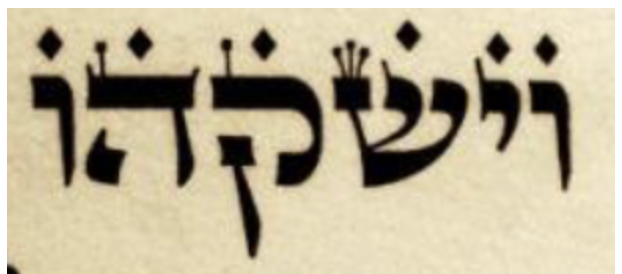
vayishlachem... וַיַּשְׁלִכֵ֛ם ... he cast them into, cast them out into, sent them out, threw them out into, hurled them out into ....
This year, today, as I study this verse and write this commentary (31 August 2026 | 18 Elul 5786), a new idea comes: I find myself thinking of Parashat Vayishlach, soon to be encountered again, in the Book of Genesis; we will be reading Vayishlach in 5787 in 12 weeks, starting Saturday, November 28, 2026 (18 Kislev 5787 on th secular calendar).
Admittedly the verbal roots of vayishlachem וַיַּשְׁלִכֵ֛ם and vayishlach וַיִּשְׁלַח share only two of their three letters: √שלך versus √שלח. Nevertheless, I suggest that we listen to the resonances between them: they form a natural pair, with phonetic, thematic, and semantic connections, indicating progressive degrees of physical separation (sending --> throwing or hurling).
Our verb in Nitzavim has an attribute of throwing away, disconnecting, even repudiating. The verb in Vayishlach on the other hand connotes an ongoing connection with the people who are sent - for example, sending a messenger. These verbal roots are diverge by just one letter, and a phonetically very similar letter at that. Casting away in a sense of repudiation and disconnection versus sending out in the context of a continuing relationship.
Vayishlach... let us allow ourselves to be drawn into the intertexual connection between this week's parsha and Parashat Vayishlach. Let us allow ourselves to muse on the connection between these two aurally identical words - one meaning to hurl away, the other meaning to send forth with the intention of maintaining a connection.
Recall that in Parashat Vayishlach - "and he sent" - Jacob is sending emissaries to his long-estranged brother Esau in advance of their reunion, which Jacob is dreading and fearing. And further: recall that in Parashat Vayishlach, there is another instance of puncta extraordinaria, which also on my reading carry a powerful message. The word there with the unusual markings is: "and he kissed" (Esau kissing Jacob at the moment of their reunion).
User uploaded image

(ד) וַיָּ֨רׇץ עֵשָׂ֤ו לִקְרָאתוֹ֙ וַֽיְחַבְּקֵ֔הוּ וַיִּפֹּ֥ל עַל־צַוָּארָ֖ו וַׄיִּׄשָּׁׄקֵ֑ׄהׄוּׄ וַיִּבְכּֽוּ׃

(4) Esau ran to greet him. He embraced him and, falling on his neck, he kissed him; and they wept.

Please see my commentary on Parashat Vayishlach from earlier this year, in which I explore the transformative elements of Jacob and Esau's reunion; I consider this earlier Torah portion (from the Book of Genesis) to contain an important teaching about reconciliation; please see my commentary which arises from an exploration of extraordinary points in that parsha:
Transforming enmity and destruction to affiliation and healing: at this time of widespread violence, disregard for the value of human life and for the most fundamental values of justice... these are transformations that are urgently needed at this time.
As we approach the end of 5786 and the start of 5787, may our teshuva include this element of transformation, in our personal and in our civic lives. May we transform enmity to affiliation.

(יא) כִּ֚י הַמִּצְוָ֣ה הַזֹּ֔את אֲשֶׁ֛ר אָנֹכִ֥י מְצַוְּךָ֖ הַיּ֑וֹם לֹא־נִפְלֵ֥את הִוא֙ מִמְּךָ֔ וְלֹ֥א רְחֹקָ֖ה הִֽוא׃ (יב) לֹ֥א בַשָּׁמַ֖יִם הִ֑וא לֵאמֹ֗ר מִ֣י יַעֲלֶה־לָּ֤נוּ הַשָּׁמַ֙יְמָה֙ וְיִקָּחֶ֣הָ לָּ֔נוּ וְיַשְׁמִעֵ֥נוּ אֹתָ֖הּ וְנַעֲשֶֽׂנָּה׃ (יג) וְלֹא־מֵעֵ֥בֶר לַיָּ֖ם הִ֑וא לֵאמֹ֗ר מִ֣י יַעֲבׇר־לָ֜נוּ אֶל־עֵ֤בֶר הַיָּם֙ וְיִקָּחֶ֣הָ לָּ֔נוּ וְיַשְׁמִעֵ֥נוּ אֹתָ֖הּ וְנַעֲשֶֽׂנָּה׃ (יד) כִּֽי־קָר֥וֹב אֵלֶ֛יךָ הַדָּבָ֖ר מְאֹ֑ד בְּפִ֥יךָ וּבִֽלְבָבְךָ֖ לַעֲשֹׂתֽוֹ׃ {ס}

(11) Surely, this Instruction that I enjoin upon you this day is not too baffling for you, nor is it beyond reach. (12) It is not in the heavens, that you should say, “Who among us can go up to the heavens and get it for us and impart it to us, that we may observe it?” (13) Neither is it beyond the sea, that you should say, “Who among us can cross to the other side of the sea and get it for us and impart it to us, that we may observe it?” (14) No, the thing is very close to you, in your mouth and in your heart, to observe it.

(יא) חֶסֶד־וֶאֱמֶ֥ת נִפְגָּ֑שׁוּ צֶ֖דֶק וְשָׁל֣וֹם נָשָֽׁקוּ׃

(11) Faithfulness and truth meet; righteousness and peace have kissed.
