




 Save
Save Copy
Copy Add to Collection
 Export to Google Docs
 Share
Share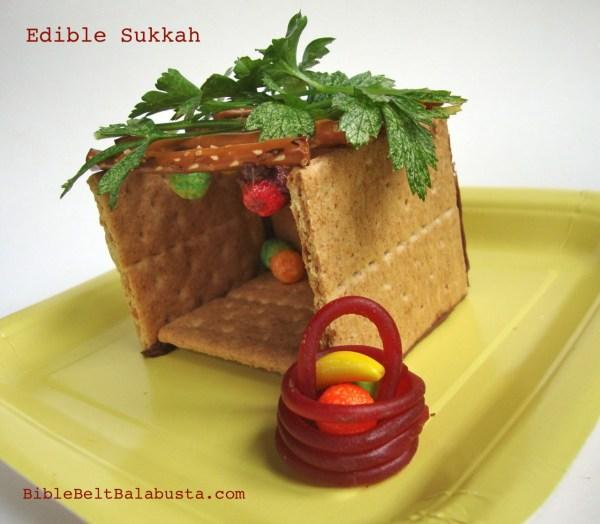
A sukkah is a hut. Jews build it for the fall holiday of Sukkot (“Sukkot” = plural of “sukkah”). The root of “sukkah” is ס.כ.כ., meaning “to cover”, from whence we also get the term "schach" (which is what goes on a sukkah's top).
Q: What is the blessing for sitting on bubble gum?
A: Baruch Ata...Leisheiv bazuka
Traditionally, you start putting up a sukkah right after you break your fast on Yom Kippur. In the end, the goal is to have it built before Sukkot starts. For many families, when they build it is dependent on when they have enough time between Yom Kippur and Sukkot. The sukkah stays up through Simchat Torah (because right after Sukkot ends we go into more "chag" when you can't take down the sukkah). There is no blessing for putting up a sukkah because the commandment is to use it, not to build it (which is why using the synagogue sukkah works too).
We build a sukkah because it says so in the Torah:
(מב) בַּסֻּכֹּ֥ת תֵּשְׁב֖וּ שִׁבְעַ֣ת יָמִ֑ים כׇּל־הָֽאֶזְרָח֙ בְּיִשְׂרָאֵ֔ל יֵשְׁב֖וּ בַּסֻּכֹּֽת׃ (מג) לְמַ֘עַן֮ יֵדְע֣וּ דֹרֹֽתֵיכֶם֒ כִּ֣י בַסֻּכּ֗וֹת הוֹשַׁ֙בְתִּי֙ אֶת־בְּנֵ֣י יִשְׂרָאֵ֔ל בְּהוֹצִיאִ֥י אוֹתָ֖ם מֵאֶ֣רֶץ מִצְרָ֑יִם אֲנִ֖י יְהֹוָ֥ה אֱלֹהֵיכֶֽם׃
(42) You shall live in booths seven days; all citizens in Israel shall live in booths, (43) in order that future generations may know that I made the Israelite people live in booths when I brought them out of the land of Egypt—I the ETERNAL your God.
No. There is no archeological evidence, which makes sense because the Israelites presumably took their shelters with them into the Land of Israel and because natural materials would have decomposed by now. There is also no other mention in the Bible of the Israelites building these huts until the Jews return from Babylonia (Nehemiah 8:13-18 - https://www.thetorah.com/article/sukkot-in-ezra-nehemiah-and-the-date-of-the-torah). These leads to a dispute in the Talmud (Sukkah 11b:15) about whether these were actual huts (Rabbi Akiba) or "clouds of glory" (Rabbi Eliezer). Given that this was part of a larger discussion about what you can use for the roof of the sukkah, the matter is unresolved.
The Bible doesn't tell us any more than we have seen already. The Mishnah wants to properly fulfill the commandments of the Torah, so there is much discussion about all parts of the sukkah. The roof of the sukkah is called the "skhakh". We learn that it must provide more shade than sun, that you can't just put your sukkah under a tree (or a trailing vine) and have that count, that it must be from something that was growing but isn't now, and that bundles of straw or brushwood don't count unless you untie them (Mishnah Sukkah 1:1, 2, 4, 5). Practically speaking, what you use depends on where you live. If you live near farms, you can make arrangements to get dried cornstalks. If you live in a tropical area, you can gather palm branches. If you live in a place where branches of other trees are available, you can use those. You can also unroll a bamboo mat, assuming it's not something that you use for sleeping on (Mishnah Sukkot 1:11).
It doesn't really matter. You can use wood planks, you can use wooden / metal / PVC pipe posts and then spread a tarp or other cloth between them, it doesn't matter. You could also use one side of an existing building as one wall of your sukkah. However, it is unclear whether you could use an elephant as the wall of a sukkah -- it depends on factors like whether the elephant is tied in place so it doesn't walk away (Sukkah 23a:7-23b:1)
You can have 2.5, 3, or 4 walls (Sukkah 6b:7). If you have 4 walls, make sure that it's possible to get into the sukkah. One way to remember how many walls you can have is based on the Hebrew letters that make up the word "sukkah": the samech has 4 sides, the kaf has 3 sides, and the hey has 2.5 sides.
According to "Rabbi" Seuss (really Rabbi Arthur Gould), they are:
You can build it very small (1)
You can build it very tall (2)
You can build it very large (3)
You can build it on a barge
You can build it on a ship (4)
Or on a roof but please don't slip (5)
You can build it in an alley (6)
You shouldn't build it in a valley (7)
You can build it on a wagon (8)
You can build it on a dragon (9)
You can make the skakh of wood (10)
Would you, could you, yes you should
Make the skakh from leaves of tree
You shouldn't bend it at the knee (11)
Build your Sukkah tall or short
No Sukkah is built in the Temple Court
You can build it somewhat soon
You cannot build it in the month of June (12)
If your Sukkah is well made
You'll have the right amount of shade
You can build it very wide
You can not build it on its side
Build if your name is Jim
Or Bob or Sam or even Tim
Build it if your name is Sue
Do you build it, yes you do!
From the Sukkah you can roam
But you should treat it as your home (13)
You can invite some special guests
Don't stay in it if there are pests
You can sleep upon some rugs
Don't you build it where there're bugs
If in the Sukkah it should rain
To stay there would be such a pain(14)
And if it should be very cold
Stay there only if you're bold
So build a Sukkah one and all
Make it large or make it small
Sukkah rules are short and snappy
Enjoy Sukkot, rejoice, be happy!
Footnotes available here: https://www.vbs.org/worship/meet-our-clergy/rabbi-joshua-hoffman/blog/dr-seuss-explains-rules-sukkah
It's the idea of "hiddur mitzvah", beautifying the commandment. This comes from a line in Exodus (15:2) - "This is my G-d whom I will glorify", which the Rabbis interpret to mean "Do commandments as beautifully as possible" (Shabbat 133b:5). Thus, you can do Kiddush in any cup which doesn't have holes, but it's preferable to do it in a nice "Kiddush Cup". Similarly, you have built a sukkah even if there are no paper chains, but it's better if you decorate it in some way (and it’s a great way to engage kids and/or friends/neighbors if you do an Open House not on the first 2 days of the holiday). Pro tip: Political mailers make great paper-chain material -- they are free, sturdy, and you can either enjoy seeing your favorite politicians or cutting up the mail from the ones you don't like. An environmentally-friendly (and rain-friendly) alternative to paper chains is cutting strips of scrap cloth (like things that develop holes which you can't fix) and tying cloth chains.
You are supposed to eat in the Sukkah. If you don't have one, use one at synagogue (Sukkah 27b:5). Some people will read or even sleep in the Sukkah. Note that if it is raining or there are stinging insects in the sukkah, you are not obligated to stay in the sukkah (Mishnah Sukkah 2:9). Some communities will hold their weekday morning service in the sukkah.
(יד) בָּרוּךְ אַתָּה יהוה אֱלֹהֵֽינוּ מֶֽלֶךְ הָעוֹלָם
אֲשֶׁר קִדְּשָֽׁנוּ בְּמִצְוֹתָיו וְצִוָּֽנוּ לֵישֵׁב בַּסֻּכָּה.
(14) בָּרוּךְ Blessed are You, LORD our God, Ruler of the Universe,
who has made us holy though Divine commandments, and has commanded us to dwell in the sukkah.
It is traditional to invite ushpizin and ushpizot, Biblical guests, with new guests each night. The ushpizin are Abraham, Isaac, Jacob, Joseph, Moses, Aaron, and David (all shepherds). The ushpizot are less-defined, but one list is Sarah, Miriam, Deborah, Hannah, Abigail, Huldah, and Esther (the Talmud's list of prophetesses - Megillah 14a:13). This reminds us to invite actual people to eat with us in our / the synagogue sukkah, as well as our own historical or personal people whom we want to symbolically invite into the sukkah. Sometimes winged stinging insects come too -- these could be considered "ush-bee-zin".
There is also the custom of doing a "sukkah hop", an organized visit to multiple sukkahs in a given area, eating a little snack at each one.


The requirement to eat in the sukkah is only for the 7 days of Sukkot. Right after Sukkot ends, Sh’mini Atzeret begins. The consensus is to eat in the sukkah on Sh’mini Atzeret but not say a blessing (Shulchan Arukh, Orach Chayim 668:1). After Simchat Torah, it is ideal to take down the sukkah as soon as possible, so usually within a week.

The Sukkah of the Signs, also known as The Homeless House project, was constructed in New York City’s Union Square, as part of Sukkah City. For two days the structure, made of nearly 300 signs collected from indigent across the U.S., was visited by over 150,000 people.Like traditional sukkahs, which recall the 40 years of wandering after exodus in the biblical story, The Sukkah of the Signs calls attention to the contemporary state of homelessness. By purchasing homeless signs from the individuals who made them, we also contributed to the short term needs of people living on the street and a meal for someone who might not otherwise be able to eat today in honor of the primary and traditional role of sukkah, which is a feast of bounty, of hospitality, and of welcoming strangers. The frame of our sukkah tapers as it moves up toward the sky to draw the eye up and also to provide a smaller framework for the shingles that are less than 4 handbreadths—relating directly to the presence and scale of the hand in each of the handmade signs. Like the signs, the schach used to cover the roof was also collected from the street. Clippings from plants in Union Square Park and from the studio where the sukkah was constructed in Brooklyn create a dappling of light on the interior of the sukkah. The Ushpizin are the Homeless.
Sh’elah What is the liberal Jewish definition of the mitzvah of sukkah? Can a non-traditional structure (such as a tent) be considered a sukkah for us? Does eating meals outdoors suffice? (Rabbi Judith Z. Abrams, Houston, Texas)
T’shuvah Like Pesach, the festival of Sukkot is the occasion for much detailed discussion in the halakhic literature. In particular, a plethora of information awaits anyone seeking instruction concerning the size, shape, structure, and material for the making of a sukkah.[1] Our task is to consider these rules in the context of contemporary Reform Jewish practice. Does Reform Judaism insist upon all the traditional requirements, or can the goals and purposes of sukkah observance be met through the use of structures that do not meet these requirements? Indeed, does the Reform Jewish idea of sukkah necessitate a physical structure of any kind?
The Halakhah. We begin with the definition of a sukkah presented in the halakhic literature. The sukkah is a temporary structure (dirat ar`ai) which becomes the functional equivalent of one’s home during the festival.[2] Thus, the height of a sukkah may not exceed twenty cubits, since to build it that high would require that the walls be sturdy enough to support a permanent structure (dirat keva`).[3] Nor may the height be lower than ten handbreadths, for such a structure would be considered dirah seruchah, unfit for even temporary habitation.[4] The area of the sukkah must be sufficient to allow an individual to eat a meal within it.[5] The `ikar, or essence of the sukkah rests in the s’khakh, the material which serves as its roof or covering.[6] The s’khakh must consist of detached vegetation that cannot contract ritual impurity, and there must be enough of it so that the amount of shadow it casts exceeds the amount of sunlight which enters the sukkah.[7] The walls of the sukkah (there must be at least three), by contrast, may be constructed out of any material, so long as they are sturdy enough to withstand a normal wind.[8] The walls, if they are anchored in the roof of the sukkah, must extend to within three handbreadths of the ground.[9] The sukkah must have a roof; should the walls come together in the manner of a conical hut, the structure is not a valid sukkah.[10] Reform Perspectives.
It should be obvious from the foregoing that the suggestions raised in the sh’elah are not halakhically acceptable. A tent, because it has neither roof nor s’khakh, is an invalid sukkah (sukkah p’sulah), and eating one’s meals outdoors hardly qualifies, since the minimal definition of a sukkah requires a structure with roof and walls. Yet the question asks us to look beyond the halakhic tradition and to reexamine the very parameters of this mitzvah. Reform Judaism, after all, has long championed the cause of “creative ritual” and has introduced many fundamental innovations into the corpus of Jewish religious observance. Perhaps there is good reason why we ought to do so in this case.
For the sake of clarity, let us formulate the question as follows. It is a fact that many, indeed most Reform Jews, do not construct sukkot and thus do not fulfill the mitzvah of sukkah in its traditional sense. On the other hand, these Jews might well be prepared to observe the festival in some other, arguably related manner. Though not everyone will wish to purchase or erect a sukkah, there are those (families with young children, for example) who would find it enjoyable to eat festive meals in their camping tents. And many who are unable or unwilling to build a sukkah would presumably be quite willing to eat outdoors, particularly if the early fall weather is pleasant. Though their practice would be decidedly non-traditional, these individuals would be willing to leave their permanent homes to take their meals in “temporary dwellings”. Would this not fulfill the mitzvah of sukkah for liberal Jews? Would it not meet the intent, the essential purpose of the observance, by calling to mind the miracles which God did for us when we came out of Egypt?[11] Indeed, given that the rabbinic tradition is divided over whether God actually caused our ancestors to “dwell in booths” in the desert,[12] do we really need to construct huts in accordance with a long list of concrete halakhic specifications in order to remember the wilderness experience?
The question challenges us to consider the meaning of ritual observance in Reform Judaism. Is ritual, in and of itself, ever a “necessity” for us? Does a traditional practice possess any obligatory force above and beyond the moral or religious meaning it conveys? Put in this way, we believe the answer to the question is “yes”. And that means that the answer to the present sh’elah is “no”: it does not fulfill the mitzvah of sukkah to eat outdoors, or in a tent, or in some other non-traditional manner.
Jewish religious life, for us no less than for other Jews, expresses itself through the practice of concrete rituals and observances. These observances, to be sure, carry “messages” of universal moral significance, but the messages do not exist for us as Jews in the absence of the rituals. For example, Shabbat communicates the values of rest, of physical and spiritual refreshment, of human dignity, of appreciation of God’s creative labors and so forth. These values, which are hardly unique to Judaism, can be transmitted and taught in any number of ways. The institution of the Jewish Sabbath is our particular way of transmitting and teaching them. Marked off by kiddush and havdalah, colored by festive meals and songs that express `oneg and kavod, given content by a special liturgy and by a complex of permitted and prohibited activities, Shabbat not only allows us to rehearse its “message”; it stirs us to remember who and what we are as a people. The same is true with Passover. We could absorb the message of the holiday by simply contemplating the themes of slavery and liberation. But that does not suffice for us, because our Passover is not Passover without matzah, the haggadah, the seder and its special foods and spirit. It is through these concrete observances, rituals by which the Jewish people has come to express its understanding of itself as an historical religious community, that we identify ourselves with their experience. Surely we would not suggest that liberal Jews could somehow “fulfill” the mitzvot of Shabbat and Passover by stripping these special times of the very rituals that make them special, that make them Jewish. And just as surely, we do not think that liberal Jews can “fulfill” the mitzvah of sukkah by substituting some non-traditional approximation for the age-old Jewish observance.
It is true that Reform Judaism has radically altered or done away with many traditional observances. When we have done so, however, we have tended to justify our decision on the grounds that the observance in question was fatally flawed, no longer in keeping with the spirit of modern culture and civilization, or objectionable on moral or aesthetic grounds.[13] We do not find the mitzvah of sukkah problematic by any of these considerations,[14] nor do we believe that the temper of the times demands a new, more “progressive” definition of this observance.[15] We know that it can be somewhat burdensome to build a sukkah or to travel to one, but this “burden” is hardly a crushing one. The availability of prefabricated sukkot in a variety of price ranges enables most households to erect such a structure with a minimum of muss and fuss. Moreover, synagogues and other communal institutions erect sukkot on their premises, making it relatively easy for those who do not have their own sukkot to observe the mitzvah.
None of this is to say that there is no value in non-traditional styles of observance. On the contrary: Jewish tradition recognizes that even a less-than-perfect performance of a mitzvah can bring merit to its doer.[16] We would by all means encourage our people to mark the seasons of the Jewish year to whatever extent they can. If one cannot build a sukkah, one might purchase a lulav and etrog; if one cannot do that, one can attend festival services at the synagogue. In addition, our tendency toward creative approaches to liturgy should prove that we Reform Jews certainly do not oppose the search for new and innovative ways of celebrating Jewish life. In response to the present sh’elah, we might say that it is better for Jews to consciously and explicitly mark the occasion of Sukkot by eating outdoors or in a tent than for them to ignore the holiday entirely by doing nothing at all to observe it. But to repeat: this is not the mitzvah of sukkah, and it is better still for our people to come to fulfill that mitzvah in the way that Jews have over the course of many centuries come to fulfill it.
The choice, as we see it, is between two definitions of rabbinic responsibility. On the one hand, we can decide that our role is to tell our people that they may be satisfied with ersatz Jewish rituals or with whatever level of observance they are able to reach at the moment. On the other, while we validate their good intentions, we can resolve to teach, to lead, and to encourage them to adopt into their lives those forms of Jewish observance that, while resonating with our modern temperament, have become emblematic of Torah, of our people’s particular religious experience in its search for God. We think that the second alternative is the better one.
C.C.A.R. Responsa Committee
Gunther Plaut, Chair,
Mark Washofsky, Co-Chair
Joan S. Friedman
Jerome Malino
Richard Rheins
Daniel Schiff
Faedra L. Weiss
Moshe Zemer
NOTES
[1] The texts are centered chiefly in the Talmudic tractate Sukkah; the law is codified by the Rambam in Yad, Hilkhot Shofar veSukkah veLulav, chs. 4-6, and by Karo and Isserles in Shulchan Arukh Orach Chayim chs. 625-669.
[2] Lev. 23:42 reads: “you shall dwell in sukkot for seven days”; from this, the tradition derives that one should live in the sukkah precisely as one lives the rest of the year in one’s home (teishvu ke`ein taduru; BT. Sukkah 28b).
[3] This reasoning follows the opinion of Rava, Sukkah 2a, who holds that the essence of a sukkah is that it is a temporary structure. R. Zeira, ad loc., offers a competing theory: a sukkah requires shade (cf. Isaiah 4:6), and if the height of the walls exceeds twenty cubits, one dwells in the shade of the walls rather than that of the s’khakh.
[4] M. Sukkah 1:1; BT. Sukkah 2a; Yad, Hilkhot Sukkah 4:1; SA, OC 633:1.
[5] “The sukkah must contain one’s head, the major part of one’s body, and one’s table”; this area is generally rendered as “seven square handbreadths” (BT. Sukkah 3a; Yad, Hilkhot Sukkah 4:1; OC 634:1).
[6] Rashi, BT. Sukkah 2a, s.v. v’shechamatah.
[7] M. Sukkah 1:1 and 1:4; Yad, Hilkhot Sukkah 5:1; SA, OC 629 and 631. A sukkah may not as a rule be built under a tree, since its shade will derive from that tree and its branches (M. Sukkah 1:2; Yad, Hilkhot Sukkah 5:12. For special circumstances see SA, OC 626:1.).
[8] M. Sukkah 1:1 and 1:5; Yad, Hilkhot Sukkah 4:2 and 4:16; SA, OC 630:1ff.
[9] M. Sukkah 1:9; Yad, Hilkhot Sukkah 4:4; SA, OC 630:9.
[10] See M. Sukkah 1:11 and BT. Sukkah 19b; Yad, Hilkhot Sukkah 4:7; SA, OC 631:10.
[11] See Sefer Ha-Chinukh, # 325.
[12] See BT. Sukkah 11b. The dispute concerns the meaning of the sukkot mentioned in Lev. 23:43. R. Akiva reads the word in its concrete sense: “booths”. But R. Eliezer understands it to mean `ananei kavod, “clouds of glory.”
[13] Much could be said about all of these; this is not, however, the occasion for detailed discussion. We would mention only that the phenomenon of “adjustments” in ritual practice did not start with Reform Judaism. It is in fact the very history of Jewish tradition. Our own subject is a case in point: while the original definition of the commandment to dwell in the sukkah required that one sleep in the sukkah during the entire festival, the climatic conditions of northern and eastern Europe led to the removal of this requirement. See Arukh HaShulchan, OC639, pars. 11- 13.
[14] That a sukkah is not a terribly aesthetic or “nice” place for modern, upper-middle-class Jews to dine is hardly a valid objection; the whole point of “living” in a temporary dwelling is to leave our comfortable lifestyles behind, however briefly.
[15] This is not to say that we do not believe in the possibility of a progressive understanding of our tradition. Rabbi Solomon B. Freehof taught us that Reform responsa ought to be written in a “liberally affirmative” spirit. We do not share the passion of many contemporary Orthodox poskim to forbid new ideas or to insist upon ever-increasing levels of ritual stringency, absolute precision in measurement, etc. We interpret broadly rather than narrowly, and proudly so. In this case, however, a “broad” construction of the kind discussed would mean altering the mitzvah of sukkah beyond recognition.
[16] See M. B’rakhot 1:2: one who recites the morning Sh’ma later than its appointed time nonetheless receives the reward “of one who reads (the Sh’ma) in the Torah.”
וְסֻכָּ֛ה תִּֽהְיֶ֥ה לְצֵל־יוֹמָ֖ם מֵחֹ֑רֶב וּלְמַחְסֶה֙ וּלְמִסְתּ֔וֹר מִזֶּ֖רֶם וּמִמָּטָֽר׃ {פ}
And there shall be a sukkah for daily shade from the heat, and for a refuge, and for a place of shelter from storm and from rain.
(ה) כִּ֤י יִצְפְּנֵ֨נִי ׀ בְּסֻכֹּה֮ בְּי֢וֹם רָ֫עָ֥ה יַ֭סְתִּרֵנִי בְּסֵ֣תֶר אׇהֳל֑וֹ בְּ֝צ֗וּר יְרוֹמְמֵֽנִי׃
(5)I will be sheltered in God’s pavilion on an evil day, granted the protection of God’s tent,and raised up high upon a rock.
(ה) וַיֵּצֵ֤א יוֹנָה֙ מִן־הָעִ֔יר וַיֵּ֖שֶׁב מִקֶּ֣דֶם לָעִ֑יר וַיַּ֩עַשׂ֩ ל֨וֹ שָׁ֜ם סֻכָּ֗ה וַיֵּ֤שֶׁב תַּחְתֶּ֙יהָ֙ בַּצֵּ֔ל עַ֚ד אֲשֶׁ֣ר יִרְאֶ֔ה מַה־יִּהְיֶ֖ה בָּעִֽיר׃
(5) Now Jonah had left the city and found a place east of the city. He made a booth there and sat under it in the shade, until he should see what happened to the city.
(א) סֻכָּה שֶׁהִיא גְבוֹהָה לְמַעְלָה מֵעֶשְׂרִים אַמָּה, פְּסוּלָה. רַבִּי יְהוּדָה מַכְשִׁיר. וְשֶׁאֵינָהּ גְּבוֹהָה עֲשָׂרָה טְפָחִים, וְשֶׁאֵין לָהּ שְׁלֹשָׁה דְּפָנוֹת, וְשֶׁחַמָּתָהּ מְרֻבָּה מִצִּלָּתָהּ, פְּסוּלָה. סֻכָּה יְשָׁנָה, בֵּית שַׁמַּאי פּוֹסְלִין, וּבֵית הִלֵּל מַכְשִׁירִין. וְאֵיזוֹ הִיא סֻכָּה יְשָׁנָה, כָּל שֶׁעֲשָׂאָהּ קֹדֶם לֶחָג שְׁלשִׁים יוֹם. אֲבָל אִם עֲשָׂאָהּ לְשֵׁם חָג, אֲפִלּוּ מִתְּחִלַּת הַשָּׁנָה, כְּשֵׁרָה:
(1)A sukka, i.e., its roofing, which is the main and most crucial element of the mitzva, that is more than twenty cubits high is unfit. Rabbi Yehuda deems it fit. Similarly, a sukkathat is not even ten handbreadths high, and one that does not have three walls, and one whose sunlight that passes through its roofing is greater than its shade are unfit. With regard to an old sukka, Beit Shammai deem it unfit for the mitzva of sukkaand Beit Hillel deem it fit. And which is considered an old sukka? It is any booth that one established thirty days or more prior to the Festival without expressly designating that it was for the mitzva of sukka. In that case, the assumption is that he constructed it for some other purpose. However, if he established it expressly for the sake of the festival of Sukkot, even if he constructed it at the beginning of the previous year, it is fit for use in the fulfillment of the mitzva of sukka, even according to Beit Shammai.
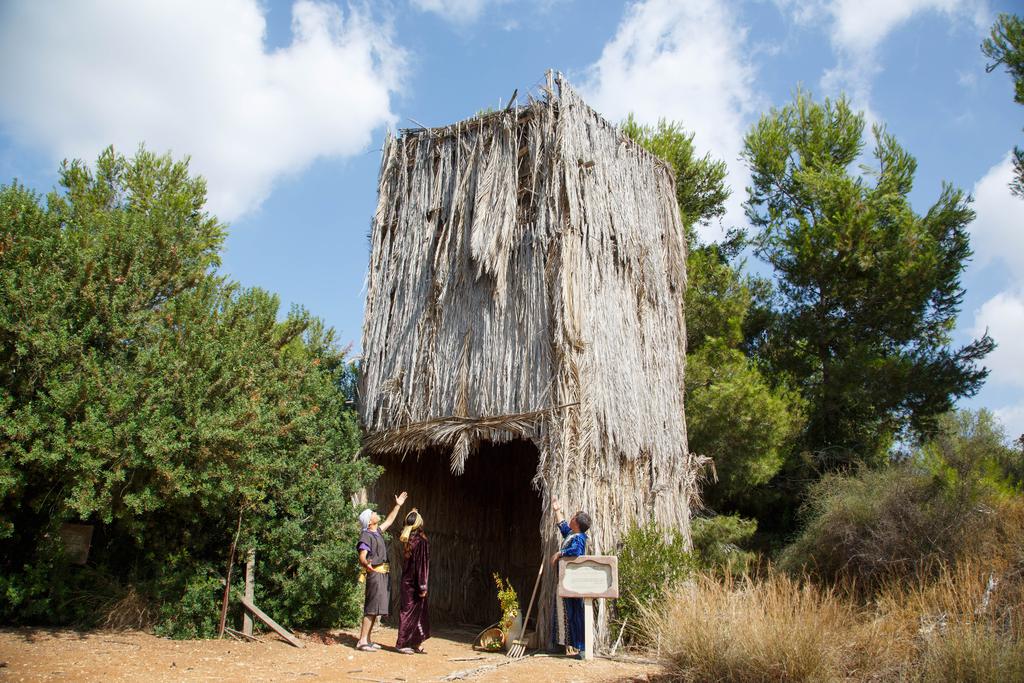
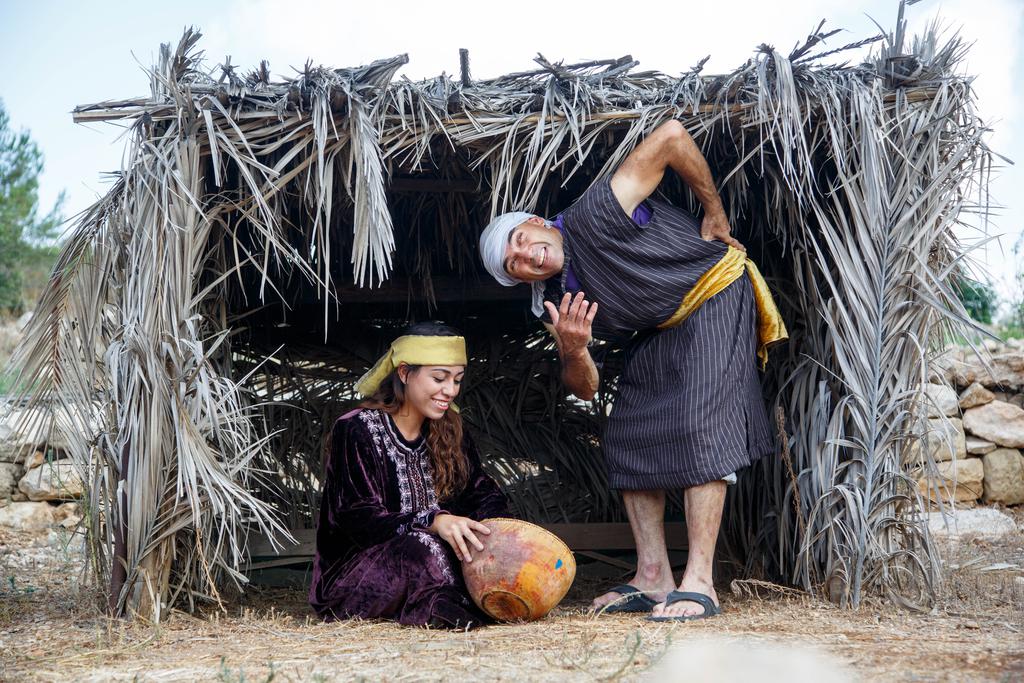
How do you think it would feel to sit in the very short sukkah?
(ב) הָעוֹשֶׂה סֻכָּתוֹ תַחַת הָאִילָן, כְּאִלּוּ עֲשָׂאָהּ בְּתוֹךְ הַבָּיִת. סֻכָּה עַל גַּבֵּי סֻכָּה, הָעֶלְיוֹנָה כְשֵׁרָה, וְהַתַּחְתּוֹנָה פְּסוּלָה. רַבִּי יְהוּדָה אוֹמֵר, אִם אֵין דִּיּוּרִין בָּעֶלְיוֹנָה, הַתַּחְתּוֹנָה כְּשֵׁרָה:
(2) With regard to one who establishes his sukka beneath a tree, it is as though he established it inside the house and it is unfit. If one established a sukka atop another sukka, the upper sukka is fit and the lower sukka is unfit. Rabbi Yehuda says: If there are no residents in the upper sukka, the lower sukka is fit.
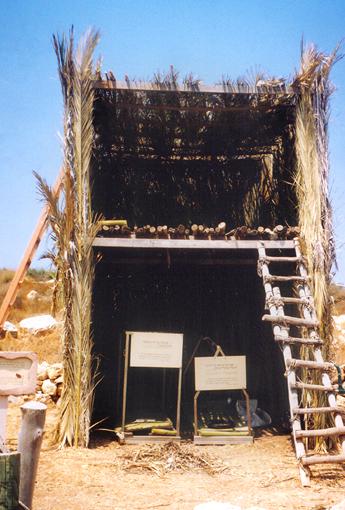
(ג) פֵּרַס עָלֶיהָ סָדִין מִפְּנֵי הַחַמָּה, אוֹ תַּחְתֶּיהָ מִפְּנֵי הַנְּשָׁר, אוֹ שֶׁפֵּרַס עַל גַּבֵּי הַקִּינוֹף, פְּסוּלָה.
(3) If one spread a sheet over the roofing as protection for those sitting in the sukka due to the sun, or if one spread a sheet beneath the roofing as protection due to the falling leaves, or if one spread a sheet as a canopy over the frame of a four-post [kinof] bed, the area in the sukka beneath the sheets is unfit.
(ג) פֵּרַס עָלֶיהָ סָדִין מִפְּנֵי הַחַמָּה, אוֹ תַּחְתֶּיהָ מִפְּנֵי הַנְּשָׁר, אוֹ שֶׁפֵּרַס עַל גַּבֵּי הַקִּינוֹף, פְּסוּלָה. אֲבָל פּוֹרֵס הוּא עַל גַּבֵּי נַקְלִיטֵי הַמִּטָּה:
(3) If one spread a sheet over the roofing as protection for those sitting in the sukkadue to the sun, or if one spread a sheet beneath the roofing as protection due to the falling leaves, or if one spread a sheet as a canopy over the frame of a four-post [kinof] bed, the area in the sukka beneath the sheets is unfit. In the first two cases, because the sheet is susceptible to ritual impurity, it renders the otherwise fit roofing unfit. In the case of the canopy, one is not sitting under the roofing of the sukka; rather, he is sitting inside a tent. However, one may spread the sheet over the frame of a two-post [naklitei] bed, which has one post in the middle of each end of the bed. When spreading the sheet over the posts it forms an inclined rather than a flat roof, and a tent with an inclined roof is not considered a significant structure.
Below is the “Sukkah'ed Sukkah” from Neot Kedumim.
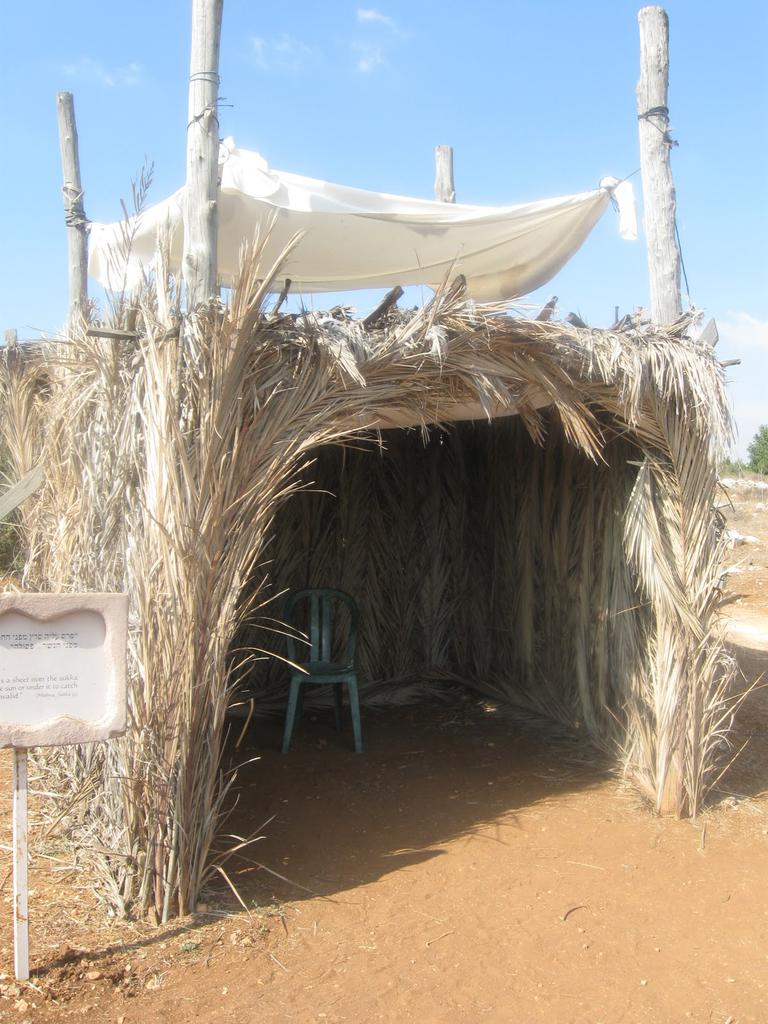
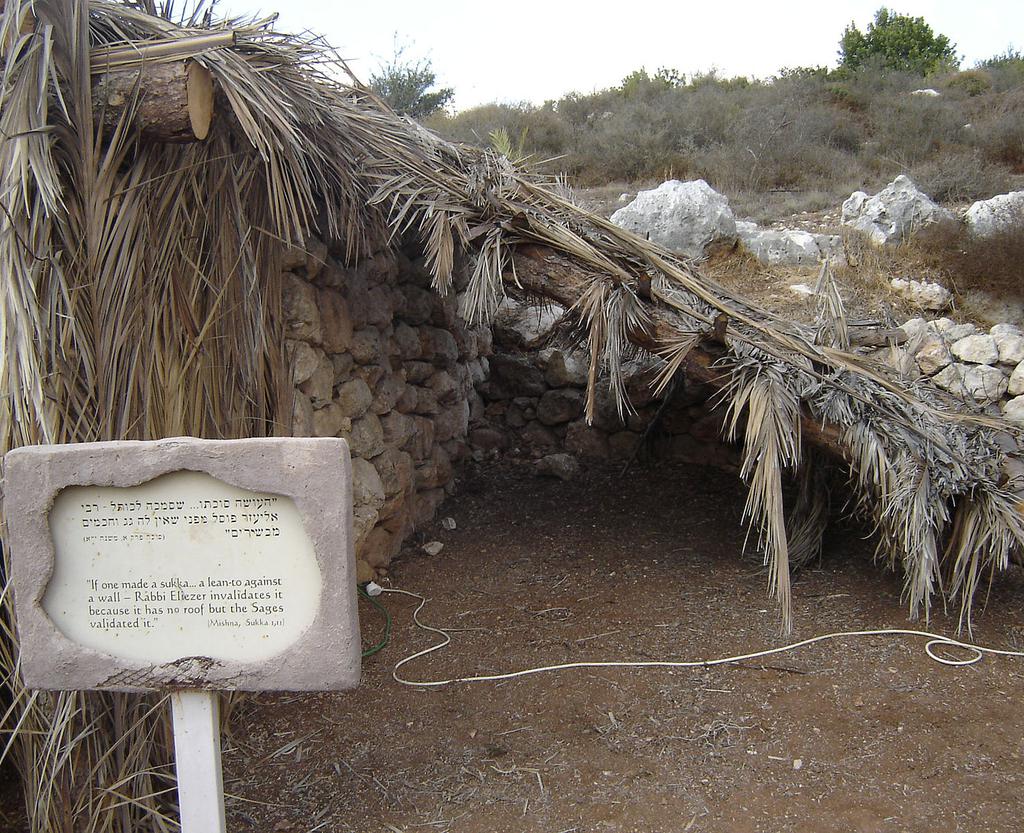
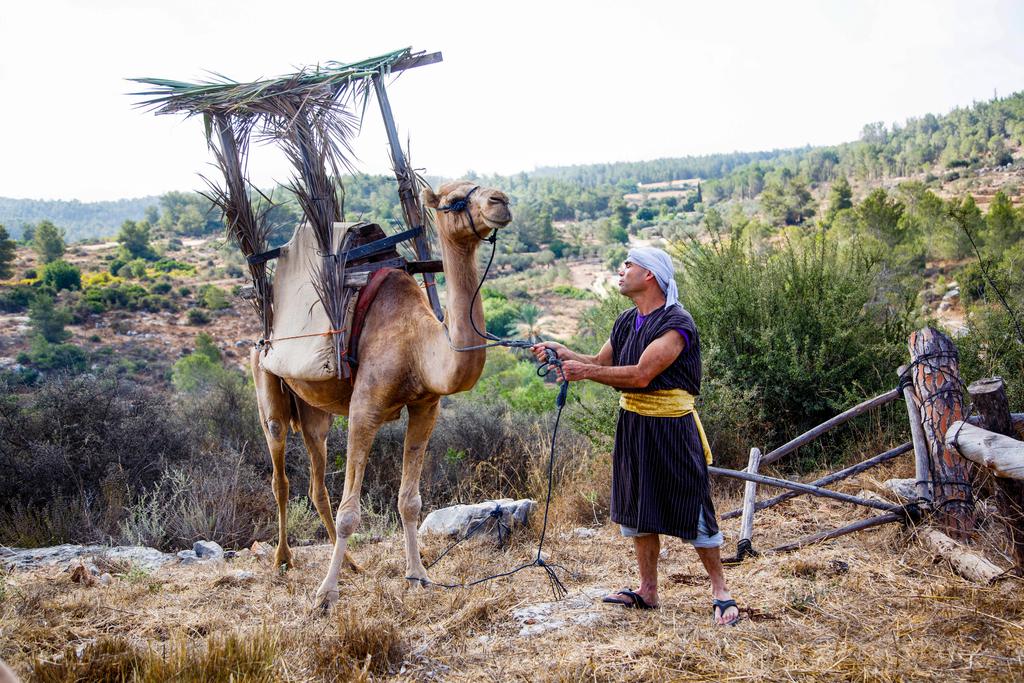
הָעוֹשֶׂה סֻכָּתוֹ...בְּרֹאשׁ הָאִילָן אוֹ עַל גַּבֵּי גָמָל, כְּשֵׁרָה, וְאֵין עוֹלִין לָהּ בְּיוֹם טוֹב.
In the case of one who establishes his sukkaat the top of a tree or atop a camel, the sukkais fit, but one may not ascend and enter it on the first Festival day because the Sages prohibit climbing or using trees or animals on the Festival.
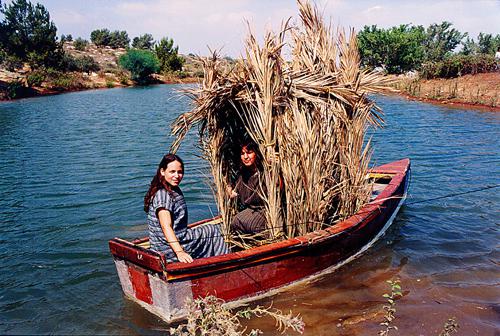
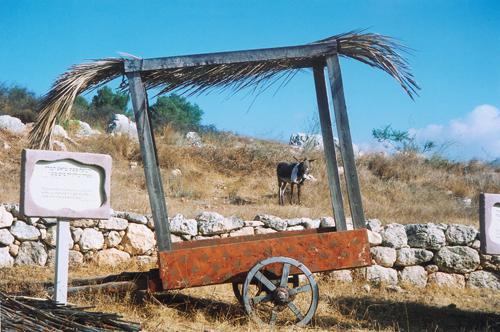
(ג) הָעוֹשֶׂה סֻכָּתוֹ בְּרֹאשׁ הָעֲגָלָה אוֹ בְּרֹאשׁ הַסְּפִינָה, כְּשֵׁרָה, וְעוֹלִין לָהּ בְּיוֹם טוֹב. בְּרֹאשׁ הָאִילָן אוֹ עַל גַּבֵּי גָמָל, כְּשֵׁרָה, וְאֵין עוֹלִין לָהּ בְּיוֹם טוֹב.
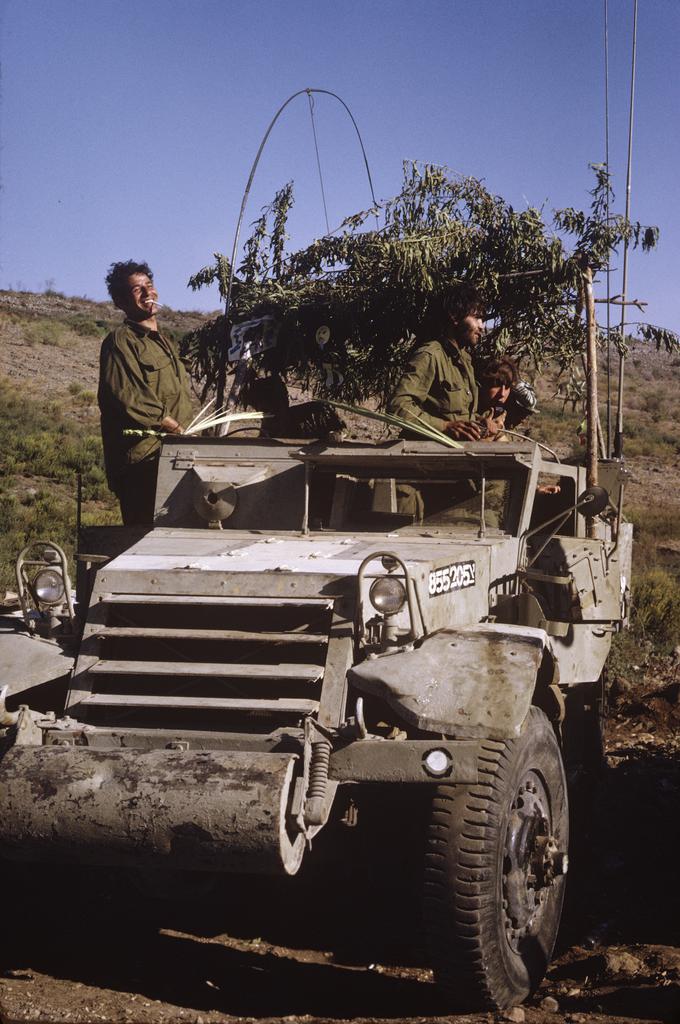
(3) In the case of one who establishes his sukka at the top of the wagon or at the top of the ship, although it is portable it is fit, as it is sufficient for a sukka to be a temporary residence. And one may ascend and enter it even on the first Festival day.
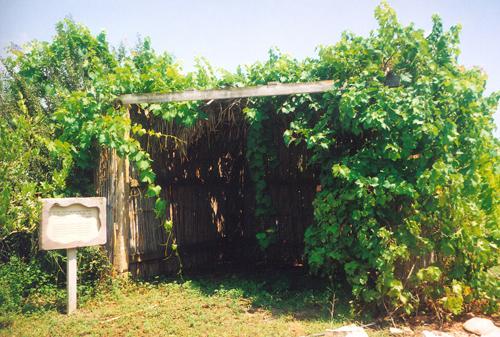
(ד) הִדְלָה עָלֶיהָ אֶת הַגֶּפֶן וְאֶת הַדְּלַעַת וְאֶת הַקִּסּוֹם וְסִכֵּךְ עַל גַּבָּהּ, פְּסוּלָה. וְאִם הָיָה סִכּוּךְ הַרְבֵּה מֵהֶן, אוֹ שֶׁקְּצָצָן, כְּשֵׁרָה. זֶה הַכְּלָל, כֹּל שֶׁהוּא מְקַבֵּל טֻמְאָה וְאֵין גִּדּוּלוֹ מִן הָאָרֶץ, אֵין מְסַכְּכִין בּוֹ. וְכָל דָּבָר שֶׁאֵינוֹ מְקַבֵּל טֻמְאָה וְגִדּוּלוֹ מִן הָאָרֶץ, מְסַכְּכִין בּוֹ:
(4) If one trellised climbing plants such as a grapevine, or gourd plant, or ivy [kissos], over a sukka while they were still attached to the ground, and then added roofing atop them, the sukka is unfit. If the amount of fit roofing was greater than the plants attached to the ground, or if he cut the climbing plants so that they were no longer attached to the ground, it is fit.This is the principle with regard to the roofing of a sukka: Anything that is susceptible to ritual impurity, e.g., vessels, or its growth is not from the ground, e.g., animal hides, one may not roof his sukkawith it. And anything that is not susceptible to ritual impurity and its growth is from the ground, one may roof his sukkawith it.
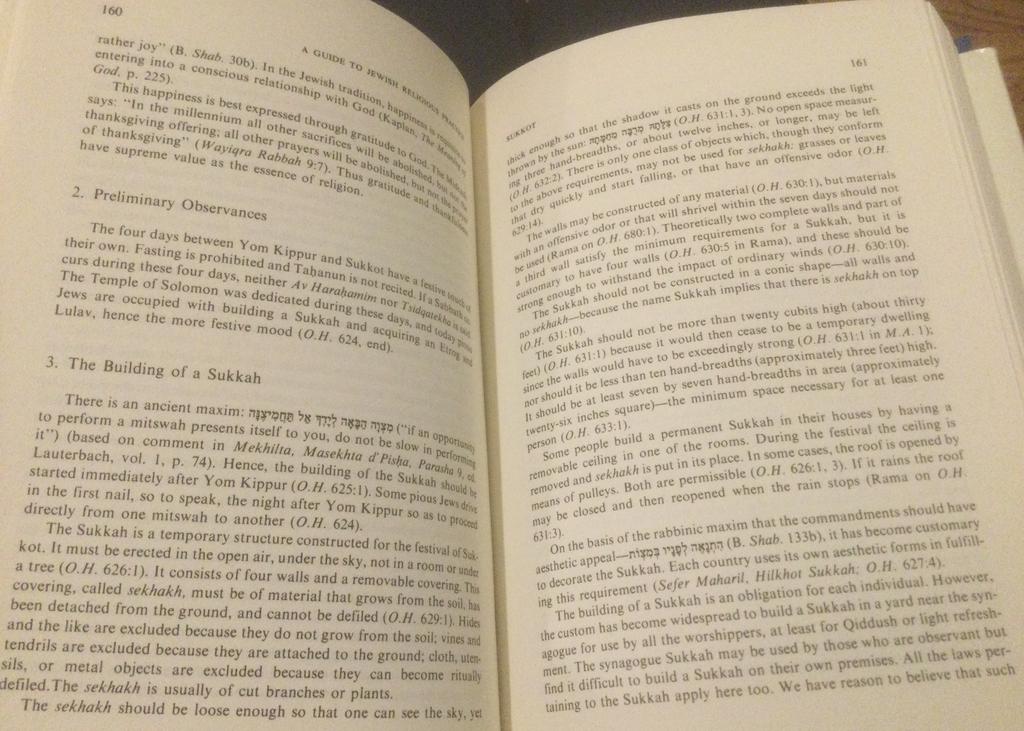
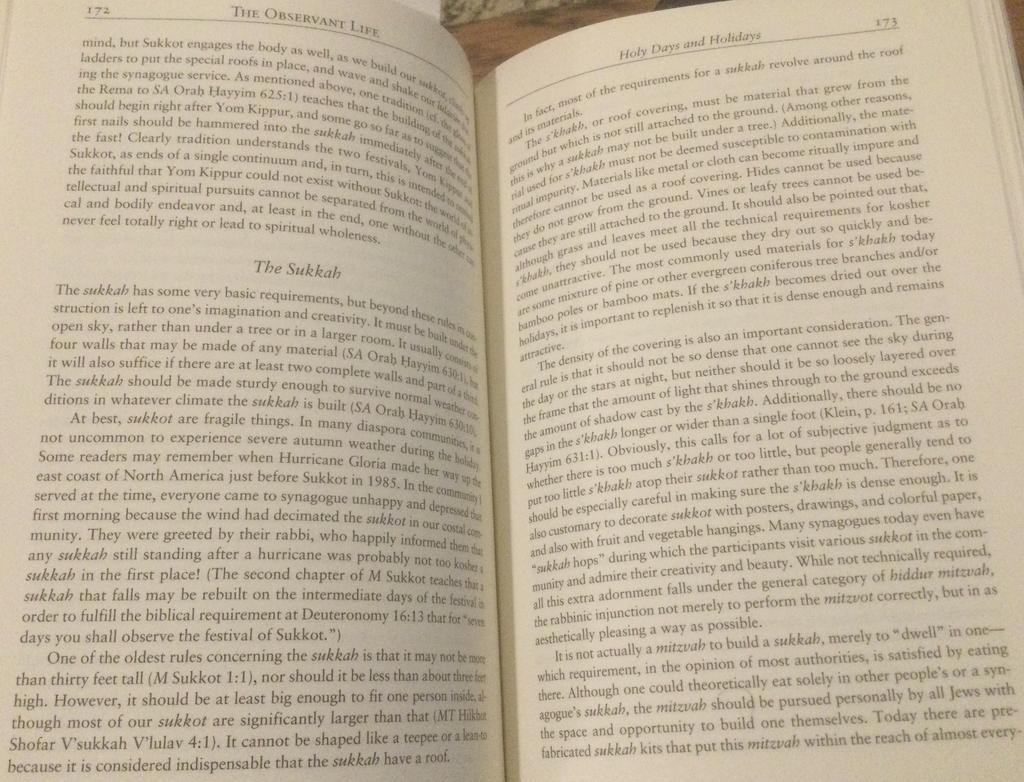
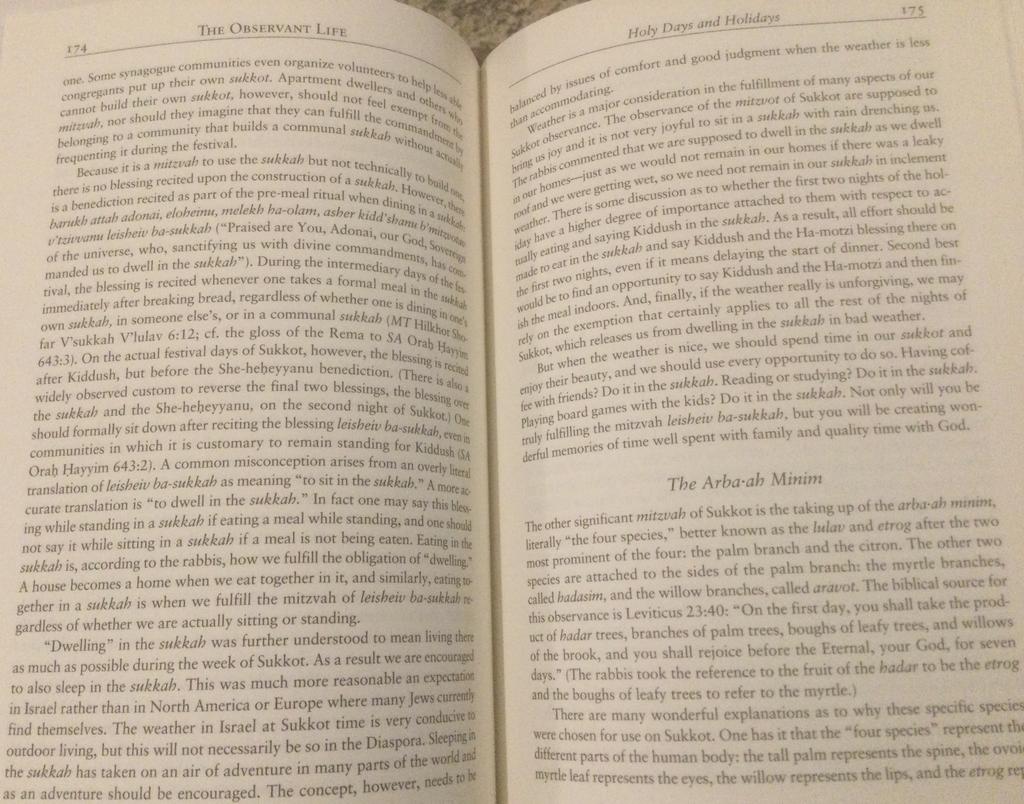
"This is a commandment we fulfill not with a gesture or a word, but with our entire body. We sit in the sukkah with our entire body. Only our entire body is capable of knowing what it felt like to leave the burden of Egyptian oppression behind, to let go of it. Egypt in Hebrew is Mitzraim. The root of this word is tzar, a narrowness. Egypt was the narrow place. Only the entire body can know what it felt like to be pushed from a place of dire constriction and into a wilderness, a spacious, open world. Only the body can know what it felt like to be born. Only the body can know the fullness of joy, and this is a commandment that can only be fulfilled with joy. [...]And when we speak of joy here, we are not speaking of fun. Joy is a deep release of the soul, and it includes death and pain. Joy is any feeling fully felt, any experience we give our whole being to. We are conditioned to choose pleasure and to reject pain, but the truth is, any moment of our life fully inhabited, any feeling fully felt, any immersion in the full depth of life, can be the source of deep joy.”
