Parashat Vaera 5778: A World Without Hope
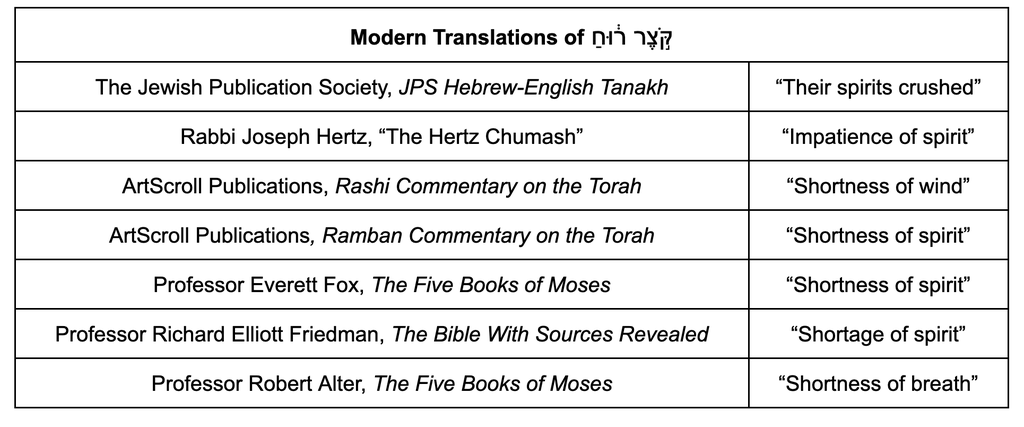
What is the significance of the term קֹּ֣צֶר ר֔וּחַ?

(ט) וַיְדַבֵּ֥ר מֹשֶׁ֛ה כֵּ֖ן אֶל־בְּנֵ֣י יִשְׂרָאֵ֑ל וְלֹ֤א שָֽׁמְעוּ֙ אֶל־מֹשֶׁ֔ה מִקֹּ֣צֶר ר֔וּחַ וּמֵעֲבֹדָ֖ה קָשָֽׁה׃ {פ}

(9) But when Moses told this to the Israelites, they would not listen to Moses, their spirits crushed by cruel bondage.

1. Out of Breath

מקצר רוח. כָּל מִי שֶׁהוּא מֵצֵר, רוּחוֹ וּנְשִׁימָתוֹ קְצָרָה, וְאֵינוֹ יָכוֹל לְהַאֲרִיךְ בִּנְשִׁימָתוֹ:

(2) מקצר רוח THROUGH ANGUISH (lit. shortness) OF SPIRIT — If one is in anguish his breath comes in short gasps and he cannot draw long breaths.

Robert Alter, The Five Books of Moses: A Translation With Commentary, 341: "The Hebrew ruah can mean “breath,” “wind,” or “spirit.” This translation follows Rashi’s understanding of the phrase, a construction that is attractive because of its concreteness: the slaves, groaning under hard bondage--a condition made all the harder by Moses’s bungled intervention--can scarcely catch their breath and so are in no mood to listen to Moses..."
2. Out of Patience

(א)מִקֹּצֶר רוּחַ וּמֵעֲבֹדָה קָשָׁה לֹא בַּעֲבוּר שֶׁלֹּא יַאֲמִינוּ בַּה' וּבִנְבִיאוֹ, רַק שֶׁלֹּא הִטּוּ אֹזֶן לִדְבָרָיו מִקֹּצֶר רוּחַ, כְּאָדָם שֶׁתִּקְצַר נַפְשׁוֹ בַּעֲמָלוֹ, וְלֹא יִרְצֶה לִחְיוֹת רֶגַע בְּצַעֲרוֹ, מִדַּעְתּוֹ שֶׁיִּרְוַח לוֹ אַחֲרֵי כֵן, וְקֹצֶר הָרוּחַ הוּא פַּחְדָּם שֶׁלֹּא יַהַרְגֵם פַּרְעֹה בַּחֶרֶב כַּאֲשֶׁר אָמְרוּ שׁוֹטְרֵיהֶם אֶל מֹשֶׁה, וַעֲבוֹדָה קָשָׁה, הוּא הַדֹּחַק שֶׁהָיוּ הַנּוֹגְשִׂים אָצִים בָּהֶם וְלֹא יִתְּנוּם לִשְׁמֹעַ דָּבָר וְלַחְשֹׁב בּוֹ:

(1) BUT THEY HEARKENED NOT UNTO MOSES FOR IMPATIENCE OF SPIRIT, AND FOR CRUEL BONDAGE. It was not because they did not believe in G-d and in His prophet [that they hearkened not]. Rather, they paid no attention to his words because of impatience of spirit, as a person whose soul is grieved on account of his misery and who does not want to live another moment in his suffering even though he knows that he will be relieved later. The “impatience of spirit” was their fear that Pharaoh would put them to death, as their officers said to Moses, and the “cruel bondage” was the pressure, for the taskmasters pressed upon them and hurried them [in their daily task], which gave them no chance to hear anything and consider it.

Nahum M. Sarna, The JPS Torah Commentary: Exodus, 32: "Literally, “from shortness of spirit.” Hebrew ruah is the spiritual and psychic energy that motivates action. Its absence or attenuation signifies atrophy of the will."
3. Out of Vision

מִקֹּצֶר רוּחַ. כִּי לֹא נֶאֶמְנָה אֶת אֵל רוּחָם, וְלֹא נָתְנוּ לֵב לְהִתְבּוֹנֵן.

(2) מקצר רוח, for it did not appear believable to their present state of mind, so that their heart could not assimilate such a promise.
Avivah Gottlieb Zornberg, The Particulars of Rapture: Reflections on Exodus, 82: "This is the message that Moses brings to the people. But, once again, there is the paralyzing jolt of failure. All God’s bounteous synonyms for redemption are met with blankness: “Moses spoke thus (ken- in just this way) to the children of Israel, but they did not listen to Moses, out of shortness of spirit and hard labor” (6:9). The narrative grinds heavily to a halt."
4. One of a Kind Word
User uploaded image
5. A World Without Hope
Ben H. Winters, Underground Airlines: A Novel, 158: "Sometimes it’s possible, just barely possible, to imagine a version of this world different from the existing one, a world in which there is true justice, heroic honesty, a clear perception possessed by each individual about how to treat all the others. Sometimes I swear I could see it, glittering in the pavement, glowing between the words in a stranger’s sentence, a green, impossible vision—the world as it was meant to be, like a mist around the world as it is. The real world was a trap, though, and I couldn’t escape it..."
Alan Mittleman, Hope in a Democratic Age: Philosophy, Religion, and Political Theory, 125-126: "Hope undergirds a life of increased depth in the present and it expects a life of both individual and collective fulfilment in the future. Both present and future are crucial. In the present, hope strengthens a way of life oriented towards confidence in and trusting reliance on God, that is, a life of faith. Hope in the present is coordinate with fortitude and courage to withstand (or alleviate) suffering. It correlates with gratitude for life, despite its hardships. It intuits a link between the human experience of life and a transcendent source of sacred meaning that orients and informs the human experience of life. Hope, as a quality of life lived in the present, endows life with both depth and transcendence; it enhances the vertical axis of life....Biblical hope also points towards the future. It awaits or anticipates the fulfillment of the promises of God in concrete time. Hope, in this sense, moves along a horizontal axis…Hope along this dimension directs the gaze to a mysteriously deferred future, inviting speculation about when and how it will arrive."
