Save
Save Copy
Copy Add to Collection
 Export to Google Docs
 Share
Share
10 Cheshvan 5777 | November 11, 2016
Parshat Lech Lecha
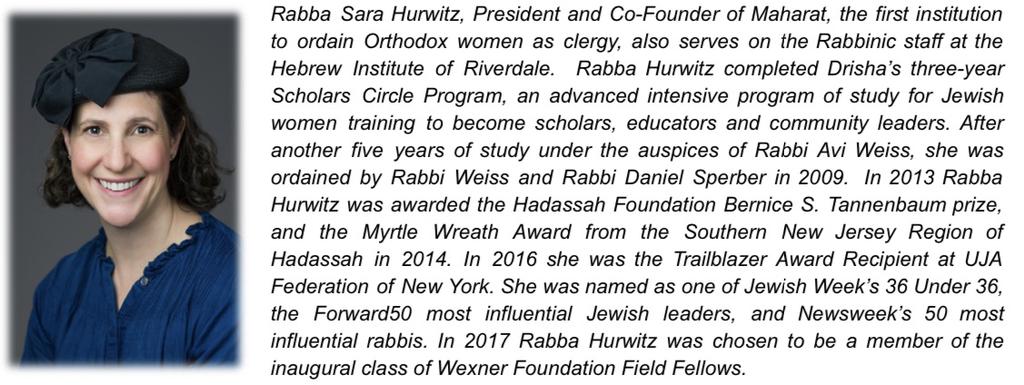
Rabba Sara Hurwitz
President and Co-Founder
Hillary Clinton planned to give her acceptance speech at the Javits Center, a building purposefully selected because it has a glass ceiling. The imagery was not lost on me. This would have been a ceiling shattering moment in our history.
And, while the ceiling now has “18 million cracks” in it, and girls around the world know that they too can run for president, that highest ceiling, for now, remains intact.
I am familiar with the phrase -- women who work towards changing the status quo, are often referred to as “ceiling breakers.” But, I have begun to wonder if, perhaps, in order to move forward from this tumultuous and divisive election, we need a new metaphor, a new mold to shake up and change the status quo. If we cannot shatter the glass ceiling, we must get up and go, and leave the building all together. This is our lech lecha moment. Our opportunity to create a new destiny.
In one of the most famous phrases in the Torah, God instructs Avram:
לֶךְ־לְךָ֛ מֵאַרְצְךָ֥ וּמִמּֽוֹלַדְתְּךָ֖ וּמִבֵּ֣ית אָבִ֑יךָ אֶל־הָאָ֖רֶץ אֲשֶׁ֥ר אַרְאֶֽךָּ׃
"Go forth from your land and from your birthplace and from your father's house, to the land that I will show you"
In order to really leave, to begin a journey anew, God acknowledges that Avram must leave his land, birthplace and his father’s house. The order, at first seems illogical since, geographically, when one leaves, first he must step out of his house, then traverse through his neighborhood (birthplace), and lastly he leaves his city (the land). However, emotionally, it is much harder to break ties and leave your home, your bayit. And yet, leaving the house behind, though it may be the hardest step, is crucial to begin a renewed journey. As Rashi explains, God tells Avram to create distance, and truly sever ties with his home.
מארצך... התרחק עוד משם וצא מבית אביך.
“From your land”... Distance yourself more from there and leave your father’s house.
And, Avram does not immediately enter into another physical space:
וַיִּסַּ֣ע אַבְרָ֔ם הָל֥וֹךְ וְנָס֖וֹעַ
Then Abram traveled, continually
He went from place to place, pitching his tent for a few days at a time and experiencing the world at large as he made his way towards Jerusalem. Avram left his home and began a journey that would allow him to create a new destiny, leaving behind the mold of his past, the culture and beliefs of his father’s home. He began walking towards a place that would be filled with God’s promises of protection, peace, and justice.
However, one may argue that Avram didn’t actually do anything. He was simply following God’s command: lech lecha -- get up and go. And yet, a well-known midrash subverts the verse, making Avram the initiator of his new destiny.
אָמַר רַבִּי יִצְחָק מָשָׁל לְאֶחָד שֶׁהָיָה עוֹבֵר מִמָּקוֹם לְמָקוֹם, וְרָאָה בִּירָה אַחַת דּוֹלֶקֶת, אָמַר תֹּאמַר שֶׁהַבִּירָה הַזּוֹ בְּלֹא מַנְהִיג, הֵצִיץ עָלָיו בַּעַל הַבִּירָה, אָמַר לוֹ אֲנִי הוּא בַּעַל הַבִּירָה. כָּךְ לְפִי שֶׁהָיָה אָבִינוּ אַבְרָהָם אוֹמֵר תֹּאמַר שֶׁהָעוֹלָם הַזֶּה בְּלֹא מַנְהִיג, הֵצִיץ עָלָיו הַקָּדוֹשׁ בָּרוּךְ הוּא וְאָמַר לוֹ אֲנִי הוּא בַּעַל הָעוֹלָם. (תהלים מה, יב): וְיִתְאָו הַמֶּלֶךְ יָפְיֵךְ כִּי הוּא אֲדֹנַיִךְ. וְיִתְאָו הַמֶּלֶךְ יָפְיֵךְ, לְיַפּוֹתֵךְ בָּעוֹלָם, (תהלים מה, יב): וְהִשְׁתַּחֲוִי לוֹ, הֱוֵי וַיֹּאמֶר ה' אֶל אַבְרָם.
Rabbi Yitzchak said: this may be compared to a man who was traveling from place to place when he saw a bira doleket/castle in flames. He said, "Is it possible that this castle lacks a person to look after it? The owner of the building looked out and said, “I am the owner of the castle.” Similarly, because Abraham our father said, “Is it possible that this castle has no guide, no one to look after it?," the Holy Blessed One looked out and said to him, “I am the Master of the Universe.” … Hence, God said to Avraham, Lech Lecha (Bereishit Rabbah 39:1).
A man is traveling from place to place, on the road. He looks up, and sees a castle on fire. And so too, Avram sees his world, his father’s home, has gone awry. Without a caretaker, the flames burn wildly, threatening to destroy its surroundings. Avram’s question, “is it possible that this castle has no guide?” catalyzes God into action. The way of the world, Avram implies, is no longer sustainable. Something must change. God hears Avram and has an awakening. ”I am the Master of the world,” God realizes, and sends Avram away from the bira doleket, the burning castle, into the world. Avram sees the fire and then God acts. Lech lecha. Begin the journey anew. Break free from what you know, and seek a new destiny.
Like Avram, we can no longer patiently stay in the castle, waiting for glass ceilings to break. The world demands more of us. And so, with one foot in front of the other, I walk. I walk towards a future where I can be a catalyst of change. I walk with a renewed sense of responsibility to bring moral justice into the world. I walk with a commitment to lead with love and chesed (kindness). I walk into a future that is unknown, but knowing that I am guided and guarded by the divine. I walk, seeking partners to walk forwards with me.
I no longer need to shatter glass ceilings. I want to create and shape a new destiny.