Save
Save Copy
Copy Add to Collection
 Export to Google Docs
 Share
Share(ג) וְאַשְׁבִּ֣יעֲךָ֔ בַּֽיהוה אֱלֹהֵ֣י הַשָּׁמַ֔יִם וֵֽאלֹהֵ֖י הָאָ֑רֶץ אֲשֶׁ֨ר לֹֽא־תִקַּ֤ח אִשָּׁה֙ לִבְנִ֔י מִבְּנוֹת֙ הַֽכְּנַעֲנִ֔י אֲשֶׁ֥ר אָנֹכִ֖י יוֹשֵׁ֥ב בְּקִרְבּֽוֹ׃ (ד) כִּ֧י אֶל־אַרְצִ֛י וְאֶל־מוֹלַדְתִּ֖י תֵּלֵ֑ךְ וְלָקַחְתָּ֥ אִשָּׁ֖ה לִבְנִ֥י לְיִצְחָֽק׃
(3) and I will make you swear by יהוה, the God of heaven and the God of the earth, that you will not take a wife for my son from the daughters of the Canaanites among whom I dwell, (4) but will go to the land of my birth and get a wife for my son Isaac.”
(יב) וַיֹּאמַ֓ר ׀ יהוה אֱלֹהֵי֙ אֲדֹנִ֣י אַבְרָהָ֔ם הַקְרֵה־נָ֥א לְפָנַ֖י הַיּ֑וֹם וַעֲשֵׂה־חֶ֕סֶד עִ֖ם אֲדֹנִ֥י אַבְרָהָֽם׃ (יג) הִנֵּ֛ה אָנֹכִ֥י נִצָּ֖ב עַל־עֵ֣ין הַמָּ֑יִם וּבְנוֹת֙ אַנְשֵׁ֣י הָעִ֔יר יֹצְאֹ֖ת לִשְׁאֹ֥ב מָֽיִם׃ (יד) וְהָיָ֣ה הַֽנַּעֲרָ֗ אֲשֶׁ֨ר אֹמַ֤ר אֵלֶ֙יהָ֙ הַטִּי־נָ֤א כַדֵּךְ֙ וְאֶשְׁתֶּ֔ה וְאָמְרָ֣ה שְׁתֵ֔ה וְגַם־גְּמַלֶּ֖יךָ אַשְׁקֶ֑ה אֹתָ֤הּ הֹכַ֙חְתָּ֙ לְעַבְדְּךָ֣ לְיִצְחָ֔ק וּבָ֣הּ אֵדַ֔ע כִּי־עָשִׂ֥יתָ חֶ֖סֶד עִם־אֲדֹנִֽי׃
(12) And he said, “O יהוה, God of my master Abraham’s [house], grant me good fortune this day, and deal graciously with my master Abraham: (13) Here I stand by the spring as the daughters of the townspeople come out to draw water; (14) let the maiden to whom I say, ‘Please, lower your jar that I may drink,’ and who replies, ‘Drink, and I will also water your camels’—let her be the one whom You have decreed for Your servant Isaac. Thereby shall I know that You have dealt graciously with my master.”
Rebecca is the ideal mate for Isaac, because together they unite all the branches of the Terahite clan that will climax with Jacob = Israel.
She runs home laden with gifts to tell “her mother’s house” about the encounter. Her brother Laban invites the servant to stay with them. The servant proceeds to recount his commission and its fulfillment; the family agrees to the match and as an afterthought, Rebecca is consulted and agrees to go to Canaan. It is only when they reach Canaan that she meets and marries Isaac.
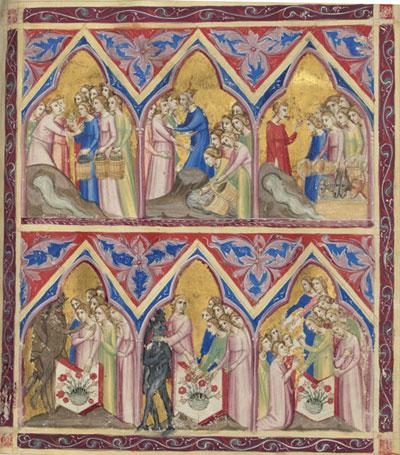
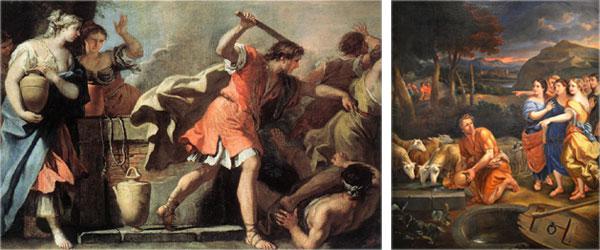
In the account, the servant dominates both action and speech, whereas in the art, as we shall now see, Rebecca takes center stage. In fact, women star in much of the artwork on this story. Possibly, this is because Rebecca, alone among the Matriarchs, is designated a virgin and therefore prefigures the Virgin Mary in Christian interpretation.
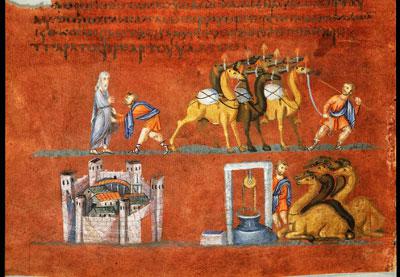
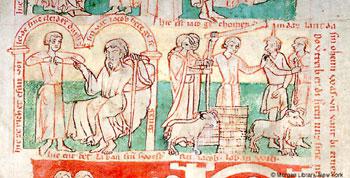
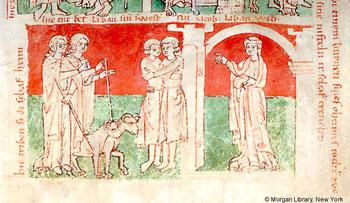
Apparently produced in Syria in the seventh century, the manuscript was painted on calf skin which gives it an unusual pinkish tone. Originally it comprised approximately ninety-six folios, most of which were lost over the years. Just part of our story (Genesis 24: 1 - 31) is detailed within three separate folios of the remaining twenty-four, indicating the special importance of the account.
In the first folio, Abraham commissions the servant, who travels with the camels, arriving at the well outside Harran.
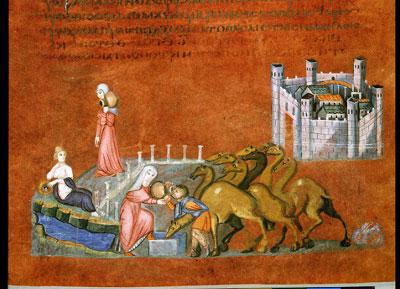
In the third folio, the sprite appears again behind Rebecca, who is receiving gifts from the servant.
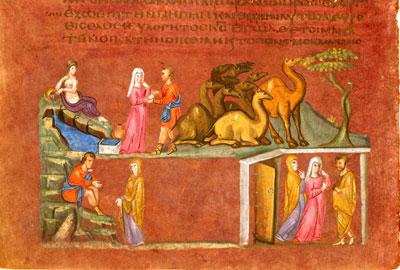

Four elements in the Vienna Genesis raise questions:
- Why would a Christian document feature a pagan water spirit?
- Who is the woman inside the house with Rebecca and Laban?
- Why is it this woman who greets the servant, rather than Laban, as in the text?
- How can we account for the divergences in the Vienna Genesis from the biblical text, which it quotes at length above the pictures?
With regard to the woman in the house, art historians maintain that she is Rebecca’s mother (although this woman is never named nor does she have a significant role in the biblical text). Perhaps this figure represents “her mother’s house” (see above, Genesis 24:28).
Concerning the woman who replaces Laban as the greeter of Abraham’s servant, some scholars hypothesize an unknown apocryphal retelling of the story. We suggest that this is yet another example of the highlighting of women in the Vienna Genesis.
As mentioned above, Rebecca is seen in Christian commentary as the model of the Virgin Mary. Therefore, the artist of the Vienna Genesis enriched the biblical story by stressing Rebecca’s role and adding female characters.
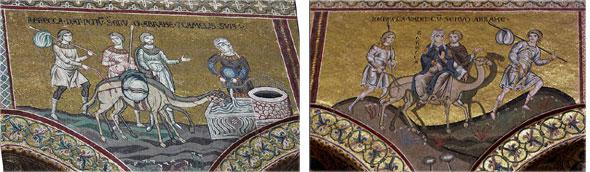
An additional departure is the picturing of the return journey: we have no other example of this scene in art. We might have expected a portrayal of the meeting between Rebecca and Isaac. Again, Rebecca’s journey avoids any intimacy with a male. She is traveling home with three men, but without any physical contact.
It should be further noted that Rebecca appears three more times in the Monreale mosaics, in the theft of the blessing (Genesis 28). Once again, she stars because of the Christian typology as the Virgin Mary.
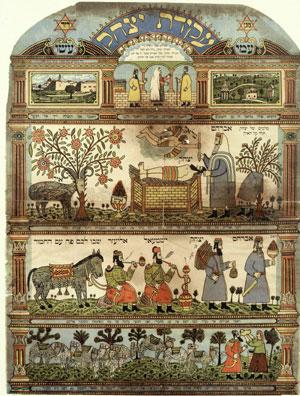
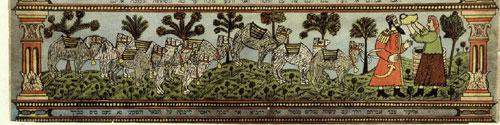
The story of Rebecca’s betrothal is separated from the Akedah by an entire chapter and Isaac only appears marginally in Genesis 24. But it is in Genesis 24 that the patriarchal line, which could have ended at Moriah, is ensured. Therefore, it is a fitting and necessary continuation of the Akedah.
Mizrahi’s inclusion of Genesis 24 in his painting of the akedah also helps to explain why Isaac himself was not sent to find his bride. In the folk motif, the stranger who asks for water is usually a disguised god or his representative. Abraham’s servant is told that God will accompany him and he (the servant) asks God to “deal graciously with [Abraham]” by causing a girl to offer him water. Thus, while God does not figure openly in Genesis 24, He is working behind the scenes and particularly through Abraham’s servant. This is not the story of a young man seeking (or coincidentally finding) a bride, but of God intervening in human affairs to achieve His desired end.
(ט) עוֹדֶ֖נּוּ מְדַבֵּ֣ר עִמָּ֑ם וְרָחֵ֣ל ׀ בָּ֗אָה עִם־הַצֹּאן֙ אֲשֶׁ֣ר לְאָבִ֔יהָ כִּ֥י רֹעָ֖ה הִֽוא׃ (י) וַיְהִ֡י כַּאֲשֶׁר֩ רָאָ֨ה יַעֲקֹ֜ב אֶת־רָחֵ֗ל בַּת־לָבָן֙ אֲחִ֣י אִמּ֔וֹ וְאֶת־צֹ֥אן לָבָ֖ן אֲחִ֣י אִמּ֑וֹ וַיִּגַּ֣שׁ יַעֲקֹ֗ב וַיָּ֤גֶל אֶת־הָאֶ֙בֶן֙ מֵעַל֙ פִּ֣י הַבְּאֵ֔ר וַיַּ֕שְׁקְ אֶת־צֹ֥אן לָבָ֖ן אֲחִ֥י אִמּֽוֹ׃ (יא) וַיִּשַּׁ֥ק יַעֲקֹ֖ב לְרָחֵ֑ל וַיִּשָּׂ֥א אֶת־קֹל֖וֹ וַיֵּֽבְךְּ׃ (יב) וַיַּגֵּ֨ד יַעֲקֹ֜ב לְרָחֵ֗ל כִּ֣י אֲחִ֤י אָבִ֙יהָ֙ ה֔וּא וְכִ֥י בֶן־רִבְקָ֖ה ה֑וּא וַתָּ֖רׇץ וַתַּגֵּ֥ד לְאָבִֽיהָ׃ (יג) וַיְהִי֩ כִשְׁמֹ֨עַ לָבָ֜ן אֶת־שֵׁ֣מַע ׀ יַעֲקֹ֣ב בֶּן־אֲחֹת֗וֹ וַיָּ֤רׇץ לִקְרָאתוֹ֙ וַיְחַבֶּק־לוֹ֙ וַיְנַשֶּׁק־ל֔וֹ וַיְבִיאֵ֖הוּ אֶל־בֵּית֑וֹ וַיְסַפֵּ֣ר לְלָבָ֔ן אֵ֥ת כׇּל־הַדְּבָרִ֖ים הָאֵֽלֶּה׃ (יד) וַיֹּ֤אמֶר לוֹ֙ לָבָ֔ן אַ֛ךְ עַצְמִ֥י וּבְשָׂרִ֖י אָ֑תָּה וַיֵּ֥שֶׁב עִמּ֖וֹ חֹ֥דֶשׁ יָמִֽים׃
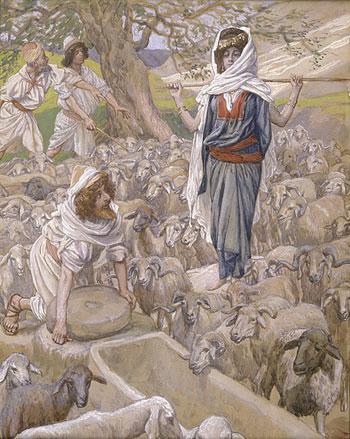
(9) While he was still speaking with them, Rachel came with her father’s flock—for she was its shepherd. (10) And when Jacob saw Rachel, the daughter of his uncle Laban, and the flock of his uncle Laban, Jacob went up and rolled the stone off the mouth of the well, and watered the flock of his uncle Laban. (11) Then Jacob kissed Rachel, and broke into tears. (12) Jacob told Rachel that he was her father’s kinsman, that he was Rebekah’s son; and she ran and told her father. (13) On hearing the news of his sister’s son Jacob, Laban ran to greet him; he embraced him and kissed him, and took him into his house. He told Laban all that had happened, (14) and Laban said to him, “You are truly my bone and flesh.” When he had stayed with him a month’s time,
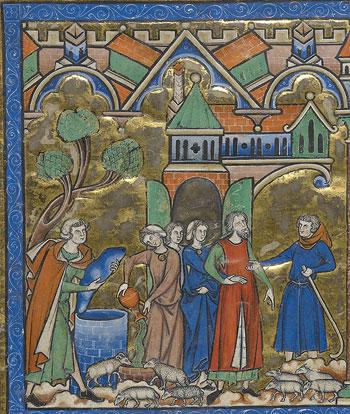
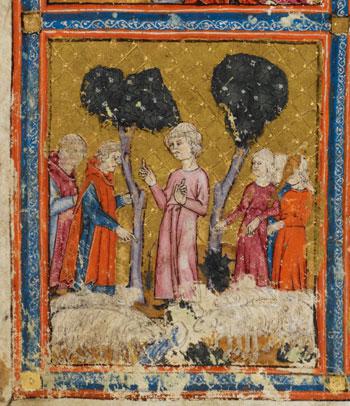
This painting stages two events, separated in time by about a month. On the left, the traveler meets the bride to be, removes the stone from the mouth of the well while, contrary to the text, the bride waters her flocks. This divergence from the text may be due to a conflation of the Jacob-Rachel story with the story of Rebecca. On the right, Jacob, now in shepherds’ clothing, asks for the hand of Rachel. The position of hands tells two stories: 1) Laban’s enthusiastic approval of the match and 2) the job offer to his future son-in-law. The older sister, in the background and unmentioned in the text, foreshadows the deception that will take place, when Leah is substituted for Rachel on the bridal night.