
Yitro 5786 At high altitude - a riff on eagles' wings and mercy
Cultivating a preference for peace at this critical moment in history

(ג) וּמֹשֶׁ֥ה עָלָ֖ה אֶל־הָאֱלֹהִ֑ים וַיִּקְרָ֨א אֵלָ֤יו יהוה מִן־הָהָ֣ר לֵאמֹ֔ר כֹּ֤ה תֹאמַר֙ לְבֵ֣ית יַעֲקֹ֔ב וְתַגֵּ֖יד לִבְנֵ֥י יִשְׂרָאֵֽל׃ (ד) אַתֶּ֣ם רְאִיתֶ֔ם אֲשֶׁ֥ר עָשִׂ֖יתִי לְמִצְרָ֑יִם וָאֶשָּׂ֤א אֶתְכֶם֙ עַל־כַּנְפֵ֣י נְשָׁרִ֔ים וָאָבִ֥א אֶתְכֶ֖ם אֵלָֽי׃

(3) and Moses went up to God. The ETERNAL called to him from the mountain, saying, “Thus shall you say to the house of Jacob and declare to the children of Israel: (4) ‘You have seen what I did to the Egyptians, how I bore you on eagles’ wings and brought you to Me.

User uploaded image
It is February 5, 2026; it is 18 Shevat 5786. Shevat... a time in the Jewish year when we are especially aware of new growth, of the promise of what can blossom and bloom.
It is February 5, 2026; it is 18 Shevat 5786. There is disbeleif, distress, and despair all around us. In so many corners - from Minneapolis to Chicago to Gaza City to Darfur to Kiev to our nation's capitol to your city or to mine -the most basic fundaments of ethics and morality have dissolved before our incredulous - or complicit - eyes. The long-standing treaty between the US and Russia forestalling the development of nuclear weapons expired seven hours ago, as I write this.
What are our obligations to other human beings? To individuals, to communities, to our beautiful and suffering planet?
Our awareness of the the most basic ethical underpinnings of civilization s rightfully should be center stage for us this week as we study Parashat Yitro, the Torah portion in which the Ten Utterances / Commandments are first revealed.
What is a just and righteous perspective for each of us to have at this tragic and critical time in history?
This year as I study Parashat Yitro I am particularly drawn to the two verses above, from the start of the portion. I will share my musings with you.
"how I bore you on eagles' wings" - וָאֶשָּׂ֤א אֶתְכֶם֙ עַל־כַּנְפֵ֣י נְשָׁרִ֔ים
"and brought you to Me" - וָאָבִ֥א אֶתְכֶ֖ם אֵלָֽי
To be borne, to be carried, on the wings of an eagle and brought to God... what does this mean? What can it mean for us today?
The verb translated here (as it often is) as "I bore [you - plural]" - אֶשָּׂ֤א - has many shades of meaning: here in binyan qal, from the verbal root √נשא:
to lift
to lift up
to bear
to carry
to carry off
to support
to sustain
to endure
to take
to take away
So this phrase could also be translated as: I carried you, I lifted you, I lifted you up, I supported you, I sustained you, I took you away,
Interestingly this verb can also mean "to forgive": I forgave you/ I endured your actions.
(Please look for my upcoming commentary on Parashat Ki Tissa in which I will also explore this verb, and these interconnected ideas, in the context of teshuva.)
Being lifted up, out of oppression and slavery, on the wings of eagles... what would this be like?
As a Jew, when I think of "wings", I usually first think of the wings of the Divine Presence, the wings of the Shekinah, invoked in the prayer El Malei Rachamim (offered only at funerals and during Yizkor):
אֵל מָלֵא רַחֲמִים שׁוֹכֵן בַּמְּרוֹמִים, הַמְצֵא מְנוּחָה נְכוֹנָה עַל כַּנְפֵי הַשְּׁכִינָה בְּמַעֲלַת קְדוֹשִׁים וּטְהוֹרִים כְּזֹהַר הָרָקִיעַ מַזְהִירִים אֶת נִשְׁמַת...
God who is full of mercy and dwells on high, provide a true rest on the wings of the Divine Presence amongst the holy and pure ones who shine as brightly as the brilliance of the sky to the soul of (the name of deceased)...
...a true rest on the wings of the Divine Presence... I have always found this profoundly moving and comforting.
What are those wings like? What would it be like to join with pure being soaring on the wings of the Shekinah?
And are these the same wings as the "eagles' wings" on which we are carried out of oppression and slavery, on which we are "brought to God"?
Would we have an endless perspective? Would we have the scope to perceive understand the grand design of Creation, how everything fits together, how things makes sense...
The only other occurrence of the metaphor of an eagle in the Torah, comes in the Book of Deuteronomy, in Parashat Ha'azinu, in Moses' final words:

(יא) כְּנֶ֙שֶׁר֙ יָעִ֣יר קִנּ֔וֹ עַל־גּוֹזָלָ֖יו יְרַחֵ֑ף יִפְרֹ֤שׂ כְּנָפָיו֙ יִקָּחֵ֔הוּ יִשָּׂאֵ֖הוּ עַל־אֶבְרָתֽוֹ׃

(11)Like an eagle who rouses its nestlings, Gliding down to its young, So did [God] spread wings and take them, Bear them along on pinions;

From here, our thoughts may travel back to the very start of the Torah, as we are intertexutally pulled by the rare word in Tanakh, יְרַחֵ֑ף:

(א)בְּרֵאשִׁ֖ית בָּרָ֣א אֱלֹהִ֑ים אֵ֥ת הַשָּׁמַ֖יִם וְאֵ֥ת הָאָֽרֶץ׃ (ב) וְהָאָ֗רֶץ הָיְתָ֥ה תֹ֙הוּ֙ וָבֹ֔הוּ וְחֹ֖שֶׁךְ עַל־פְּנֵ֣י תְה֑וֹם וְר֣וּחַ אֱלֹהִ֔ים מְרַחֶ֖פֶת עַל־פְּנֵ֥י הַמָּֽיִם׃ (ג) וַיֹּ֥אמֶר אֱלֹהִ֖ים יְהִ֣י א֑וֹר וַֽיְהִי־אֽוֹר׃

(1) When God began to create heaven and earth— (2) the earth being unformed and void, with darkness over the surface of the deep and a wind from God sweeping over the water— (3) God said, “Let there be light”; and there was light.

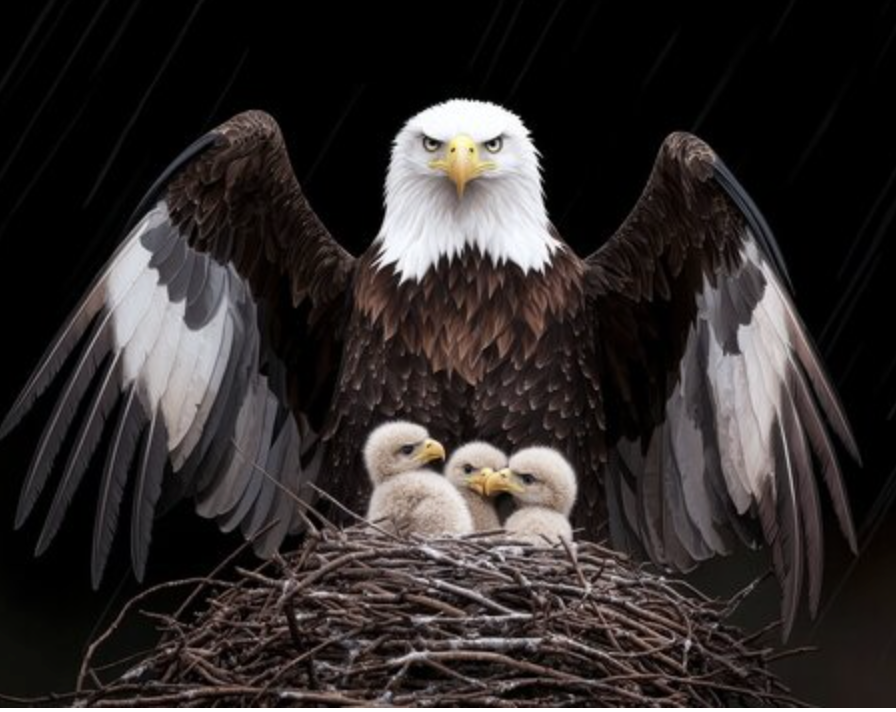
An eagle fluttering over her nest, protecting and nurturing her young; the Divine presence hovering over the primordial waters... interconnectedness of our Torah; interconnectedness of all of creation, and of us, with God.
As a citizen of the US, I am accustomed to seeing an image of an eagle on the "Great Seal of the United States":
User uploaded image
It is said that the "Founding Fathers" wanted a symbol that would convey strength, unity, and independence; the eagle holds an olive branch (signifying peace) in its right talon and thirteen arrows (signifiying war) in its left, representing the original thirteen colonies; notably,e the eagle's head is turned toward the olive branch, signifying a preference for peace.
Let's notice that "eagles's wings" is in the plural - as if to say - I bore you on the wings of many eagles. Why? An idea, today: there are a multitude of ways that we humans experience the Divine. There is not just one way.
In Kabbalah, the eagle is associated with the attribute of rachamim - mercy (and note that rachamim brings us back to El Malei Rachamim, and the wings of the Shekinah referred to there):

(א) (שמות י״ט:ד׳) אַתֶּם רְאִיתֶם אֲשֶׁר עָשִׂיתִי לְמִצְרָיִם וְאֶשָּׁא אֶתְכֶם עַל כַּנְפֵי נְשָׁרִים. מַאי כַּנְפֵי נְשָׁרִים. אָמַר רִבִּי יְהוּדָה בְּרַחֲמֵי. דִּכְתִּיב, (דברים לכ) כְּנֶשֶׁר יָעִיר קִנּוֹ וְגוֹ'. וְהַיְינוּ רָזָא דְּאָמַר ר' שִׁמְעוֹן, (משלי ל׳:י״ט) דֶּרֶךְ הַנֶּשֶׁר בַּשָּׁמַיִם. מַאי בַּשָּׁמַיִם. בְּרַחֲמֵי. מַה נֶשֶׁר אִשְׁתְּכַח בְּרַחֲמֵי עַל בְּנוֹי, וְדִינָא לְגַבֵּי אַחֲרָנִין. כַּךְ קוּדְשָׁא בְּרִיךְ הוּא אִשְׁתְּכַח בְּרַחֲמֵי לְגַבֵּי יִשְׂרָאֵל, וְדִינָא לְגַבֵּי עַמִּין עוֹבְדֵי עֲבוֹדַת כּוֹכָבִים וּמַזָּלוֹת.

(1)YE HAVE SEEN WHAT I DID UNTO THE EGYPTIANS. AND HOW I BARE YOU ON EAGLES’ WINGS. What do “eagles’ wings” denote? According to R. Judah, the “eagles” are a symbol of mercy, as it says: “As an eagle stirreth up her nest, fluttereth over her young, spreadeth abroad her wings, taketh them, beareth them on her wings, so the Lord…” (Deut. 32, 11). As the eagle watches lovingly over its own young, but is cruel towards others, so does the Holy One manifest His loving mercy to Israel and His severe judgement to the heathen nations. R. Simeon found the same indication in the verse: “The way of an eagle in the heavens” (Prov. 30, 19).

An informative text: helpful, and also problematic: "As the eagle watches lovingly over its own young, but is cruel towards others, so does the Holy One manifest His loving mercy to Israel and His severe judgement to the heathen nations."
This polarity - "we [the children of Israel] are worthy of love and care / others will be judged harshly" - demands consideration, interrogation, transformation.
In Kabbalah, the attribute of rachamim is associated with the sefira of Tiferet (beauty, glory, splendor):
User uploaded image
"Tiferet is the central Sefirah of the emotional structure of the soul, situated at the heart of the Tree of Life Diagram. It balances the expansive force of Chesed with the restrictive energy of Gevurah.Tiferet is often translated as “beauty,” but in authentic Kabbalistic language, it refers to the harmony created through the proper integration of opposites. It is not merely a quality of aesthetics or niceness, it is the manifestation of Divine truth in a balanced form, where both kindness and judgment find their proper measure. Without Tiferet, the world would tilt into chaos or cruelty. With it, the Divine order is revealed with clarity and stability.The Arizal, in Etz Chaim, Shaar HaKelalim, explains that Tiferet is the Sefirah in which Chesed and Gevurah are sweetened and harmonized: “תפארת היא קו האמצעי הכולל חסד וגבורה כאחד, והיא נקראת רחמים” (“Tiferet is the middle column that includes Chesed and Gevurah together, and it is called Rachamim”). This middle path is not a compromise, it is a dynamic alignment of forces that reveals a deeper order. From this place, both judgment and mercy are elevated, and higher consciousness can flow into the lower worlds. In our lives, Tiferet shows up as clarity, integrity, and the ability to unify opposing drives without losing oneself in either."
When we engage in exceptionalism and "othering", we cannot possibly be cultivating the atribute of rachamim. Hatred and injustice have now clearly brought humanity to the very brink of annihilation. This is a polarity - us / them - that we must urgently interrogate and transform.
Bulletin of the Atomic ScientistsIt is now 85 seconds to midnight
"A year ago, we warned that the world was perilously close to global disaster and that any delay in reversing course increased the probability of catastrophe. Rather than heed this warning, Russia, China, the United States, and other major countries have instead become increasingly aggressive, adversarial, and nationalistic. Hard-won global understandings are collapsing, accelerating a winner-takes-all great power competition and undermining the international cooperation critical to reducing the risks of nuclear war, climate change, the misuse of biotechnology, the potential threat of artificial intelligence, and other apocalyptic dangers. Far too many leaders have grown complacent and indifferent, in many cases adopting rhetoric and policies that accelerate rather than mitigate these existential risks. Because of this failure of leadership, the Bulletin of the Atomic Scientists Science and Security Board today sets the Doomsday Clock at 85 seconds to midnight, the closest it has ever been to catastrophe."
In Parashat Yitro, we read that the children of Israel are being brought to the place where they will engage in a covenantal relationship based on the Decalogue, the Ten Utterances / Commandments, which arguably are the fundament of our understanding of ethics.

(ד) מְנָלָן דְּנֶשֶׁר רַחֲמֵי אִקְרֵי. דִּכְתִּיב דֶּרֶךְ הַנֶּשֶׁר בַּשָּׁמַיִם. בַּשָּׁמַיִם מַמָּשׁ. וּבְגִינֵי כַּךְ אַרְיֵה לִימִינָא. שׁוֹר לִשְׂמָאלָא. נֶשֶׁר בֵּינַיְיהוּ וְאָחִיד לוֹן. אָדָם כָּלִיל כֻּלְּהוּ, וְכֹלָּא אִתְּכְּלִילָן בֵּיהּ, דִּכְתִּיב וְעַל דְּמוּת הַכִּסֵּא דְּמוּת כְּמַרְאֵה אָדָם עָלָיו מִלְּמַעְלָה.

(4) and the expression, “the way of an eagle in the heavens” is thus to be taken literally, for love (mercy) is, as it were, in the centre of heaven. Hence the lion is at the right, the ox at the left, and the eagle between, uniting them. As for “man”, he comprises all, as it is written: “And upon the likeness of the throne was the likeness as the appearance of a man above upon it” (Ezek. 1, 26).’

At this urgently critical time in history, may we study and embody "the way of an eagle in heaven", taking actions from the centering attribute of rachamim.

(יח) שְׁלֹשָׁ֣ה הֵ֭מָּה נִפְלְא֣וּ מִמֶּ֑נִּי (וארבע)[וְ֝אַרְבָּעָ֗ה] לֹ֣א יְדַעְתִּֽים׃ (יט) דֶּ֤רֶךְ הַנֶּ֨שֶׁר ׀ בַּשָּׁמַיִם֮ דֶּ֥רֶךְ נָחָ֗שׁ עֲלֵ֫י־צ֥וּר דֶּרֶךְ־אֳנִיָּ֥ה בְלֶב־יָ֑ם...

(18)Three things are beyond me; Four I cannot fathom:

(19)How an eagle makes its way over the sky; How a snake makes its way over a rock; How a ship makes its way through the high seas...
Let us dare to understand and embody the unfathomable; let us act on our preference for peace (like the eagle on the Great Seal of the United States, with its face turned toward the olive branch); let us take action based on our deeply held understanding of the most basic of ethical principles.
User uploaded image

(כח) הֲל֨וֹא יָדַ֜עְתָּ אִם־לֹ֣א שָׁמַ֗עְתָּ אֱלֹהֵ֨י עוֹלָ֤ם ׀ יהוה בּוֹרֵא֙ קְצ֣וֹת הָאָ֔רֶץ לֹ֥א יִיעַ֖ף וְלֹ֣א יִיגָ֑ע אֵ֥ין חֵ֖קֶר לִתְבוּנָתֽוֹ׃ (כט) נֹתֵ֥ן לַיָּעֵ֖ף כֹּ֑חַ וּלְאֵ֥ין אוֹנִ֖ים עׇצְמָ֥ה יַרְבֶּֽה׃ (ל) וְיִעֲפ֥וּ נְעָרִ֖ים וְיִגָ֑עוּ וּבַחוּרִ֖ים כָּשׁ֥וֹל יִכָּשֵֽׁלוּ׃ (לא) וְקוֹיֵ֤ יהוה יַחֲלִ֣יפוּ כֹ֔חַ יַעֲל֥וּ אֵ֖בֶר כַּנְּשָׁרִ֑ים יָר֙וּצוּ֙ וְלֹ֣א יִיגָ֔עוּ יֵלְכ֖וּ וְלֹ֥א יִיעָֽפוּ׃ {ס}

(28)Do you not know? Have you not heard? The ETERNAL is God from of old, Creator of the earth from end to end, Who never grows faint or weary, Whose wisdom cannot be fathomed—

(29)Who gives strength to the weary, Fresh vigor to the spent.

(30)Youths may grow faint and weary, And young men stumble and fall;(31) But they who trust in GOD shall renew their strength
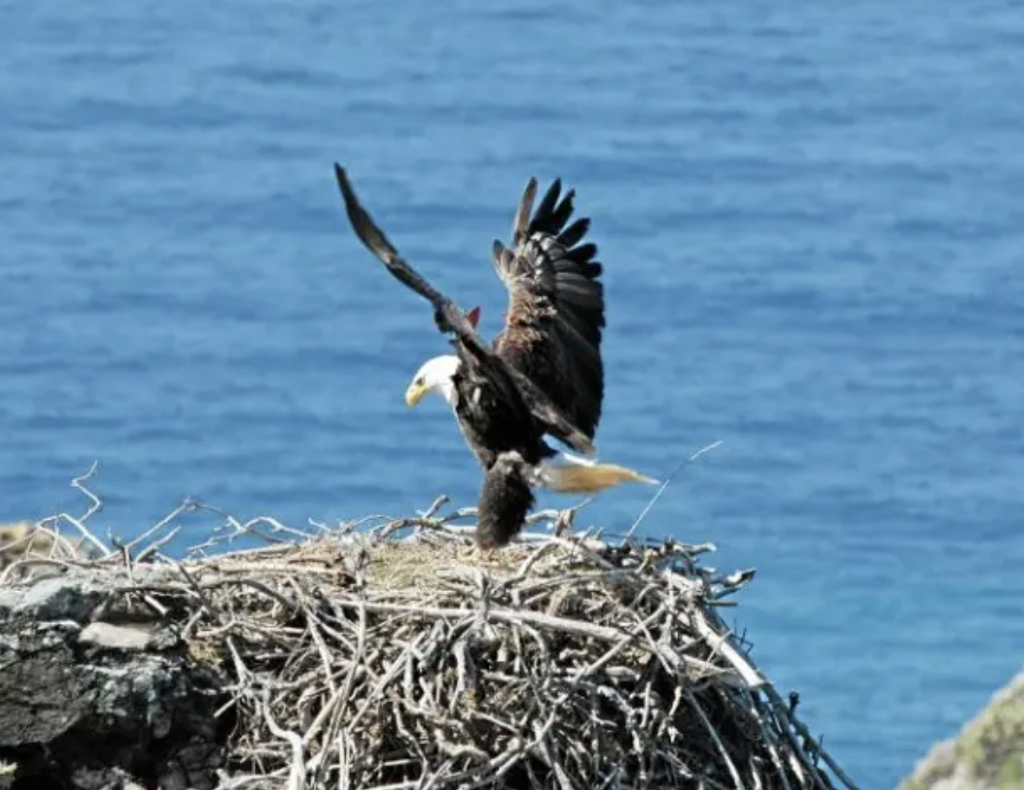
As eagles grow new plumes: They shall run and not grow weary, They shall march and not grow faint.
User uploaded image
