




 Save
Save Copy
Copy Add to Collection
 Export to Google Docs
 Share
ShareNehama Leibowitz, Studies in Devarim, on Ki Teitzei "Remember Amalek" p. 253.
(יז)זָכ֕וֹר אֵ֛ת אֲשֶׁר־עָשָׂ֥ה לְךָ֖ עֲמָלֵ֑ק בַּדֶּ֖רֶךְ בְּצֵאתְכֶ֥ם מִמִּצְרָֽיִם׃ (יח) אֲשֶׁ֨ר קָֽרְךָ֜ בַּדֶּ֗רֶךְ וַיְזַנֵּ֤ב בְּךָ֙ כׇּל־הַנֶּחֱשָׁלִ֣ים אַֽחֲרֶ֔יךָ וְאַתָּ֖ה עָיֵ֣ף וְיָגֵ֑עַ וְלֹ֥א יָרֵ֖א אֱלֹהִֽים׃ (יט) וְהָיָ֡ה בְּהָנִ֣יחַ יהוה אֱלֹהֶ֣יךָ ׀ לְ֠ךָ֠ מִכׇּל־אֹ֨יְבֶ֜יךָ מִסָּבִ֗יב בָּאָ֙רֶץ֙ אֲשֶׁ֣ר יְהֹוָה־אֱ֠לֹהֶ֠יךָ נֹתֵ֨ן לְךָ֤ נַחֲלָה֙ לְרִשְׁתָּ֔הּ תִּמְחֶה֙ אֶת־זֵ֣כֶר עֲמָלֵ֔ק מִתַּ֖חַת הַשָּׁמָ֑יִם לֹ֖א תִּשְׁכָּֽח׃ {פ}
(17) Remember what Amalek did to you on your journey, after you left Egypt— (18) how, undeterred by fear of God, he surprised you on the march, when you were famished and weary, and cut down all the stragglers in your rear. (19) Therefore, when the ETERNAL your God grants you safety from all your enemies around you, in the land that the ETERNAL your God is giving you as a hereditary portion, you shall blot out the memory of Amalek from under heaven. Do not forget!
do not forget to forget
do not remember to remember...
Does this make sense?
"In your time of travail, you were abused most cruelly; therefore, remember to be as cruel as you can to descendants of those who were so cruel to you. What's more: actually: find a way to entirely forget."
(ה) וַיַּכּ֤וּ הַיְּהוּדִים֙ בְּכׇל־אֹ֣יְבֵיהֶ֔ם מַכַּת־חֶ֥רֶב וְהֶ֖רֶג וְאַבְדָ֑ן וַיַּֽעֲשׂ֥וּ בְשֹׂנְאֵיהֶ֖ם כִּרְצוֹנָֽם׃ (ו) וּבְשׁוּשַׁ֣ן הַבִּירָ֗ה הָרְג֤וּ הַיְּהוּדִים֙ וְאַבֵּ֔ד חֲמֵ֥שׁ מֵא֖וֹת אִֽישׁ׃
(5) So the Jews struck at their enemies with the sword, slaying and destroying; they wreaked their will upon their enemies. (6) In the fortress Shushan the Jews killed a total of five hundred of them.
(טו) וַיִּֽקָּהֲל֞וּ (היהודיים)[הַיְּהוּדִ֣ים] אֲשֶׁר־בְּשׁוּשָׁ֗ן גַּ֠ם בְּי֣וֹם אַרְבָּעָ֤ה עָשָׂר֙ לְחֹ֣דֶשׁ אֲדָ֔ר וַיַּֽהַרְג֣וּ בְשׁוּשָׁ֔ן שְׁלֹ֥שׁ מֵא֖וֹת אִ֑ישׁ וּבַ֨בִּזָּ֔ה לֹ֥א שָׁלְח֖וּ אֶת־יָדָֽם׃ (טז) וּשְׁאָ֣ר הַיְּהוּדִ֡ים אֲשֶׁר֩ בִּמְדִינ֨וֹת הַמֶּ֜לֶךְ נִקְהֲל֣וּ ׀ וְעָמֹ֣ד עַל־נַפְשָׁ֗ם וְנ֙וֹחַ֙ מֵאֹ֣יְבֵיהֶ֔ם וְהָרוֹג֙ בְּשֹׂ֣נְאֵיהֶ֔ם חֲמִשָּׁ֥ה וְשִׁבְעִ֖ים אָ֑לֶף וּבַ֨בִּזָּ֔ה לֹ֥א שָֽׁלְח֖וּ אֶת־יָדָֽם׃ (יז) בְּיוֹם־שְׁלוֹשָׁ֥ה עָשָׂ֖ר לְחֹ֣דֶשׁ אֲדָ֑ר וְנ֗וֹחַ בְּאַרְבָּעָ֤ה עָשָׂר֙ בּ֔וֹ וְעָשֹׂ֣ה אֹת֔וֹ י֖וֹם מִשְׁתֶּ֥ה וְשִׂמְחָֽה׃
(15) and the Jews in Shushan mustered again on the fourteenth day of Adar and slew three hundred men in Shushan. But they did not lay hands on the spoil. (16) The rest of the Jews, those in the king’s provinces, likewise mustered and fought for their lives. They disposed of their enemies, killing seventy-five thousand of their foes; but they did not lay hands on the spoil. (17) That was on the thirteenth day of the month of Adar; and they rested on the fourteenth day and made it a day of feasting and merrymaking.
Vayishlach 5785 Esau's kiss: an affiliative and healing act: "Righteousness and peace have kissed".
In Parashat Vayishlach, the extraordinary markings on וַׄיִּׄשָּׁׄקֵ֑ׄהׄוּׄ - "and he [Esau] kissed him [Jacob]" - point us toward a way to transform enmity to affiliation.]
"Although 70 years have passed since the Nazi Holocaust, the after effects resulting from it and centuries of Jewish oppression persist in Jewish tribal identity and in the mechanisms for its survival. In much the same way that PTSD affects individuals who have suffered life-threatening situations, a history of collective trauma has produced within Jewish psyches symptoms such as hypervigilance, reactivity, and a sense of profound danger in the world. The author proposes that such sedimented responses form a Jewish cultural complex with a hypermuscular defense system armed against further psychic attacks. Healing involves a restoration of the feeling function and a return to the rich body of Jewish ethical principles that balance personal security with compassion for self and other."
"On the way to the cinema [to view a 2015 documentary by a Dutch filmmaker about a trauma treatment intervention to address winter-time suffering in Gaza, entitled "Shivering in Gaza"], a taxi driver told me that the documentary must not be screened as it portrays Israel in a shameful way. When I said that the film is about trauma treatment in Gaza, he told me that Palestinians do not suffer from trauma because they are not human. His statement demonstrates the split that divides humans and non-humans, projecting the shadow onto the Palestinians. Neumann (1990) described the shadow as containing everything bad or sick, asocial, ugly, useless, sexual, animalistic, and infantile, everything that is opposed to the self-perception of a civilized human. The taxi driver’s statement can be viewed as a representation of this split, attributing the non-human parts of the self to the Palestinians. This statement holds a component of reality denial, and calls for understanding of the reason for this disavowal." (p. 20) (emphasis added)
"When our Shadow Makes us Blind and Deaf to Suffering: The power of a cultural complex in Israel." JUNGIANEUM/Yearbook 2022
מָחָה√
(Qal) to wipe, to blot out, obliterate, to destroy
to blot out, exterminate; also to strike
(Niphal) to be wiped out, to be blotted out to be exterminated
(Hiphil) to blot out (from memory)
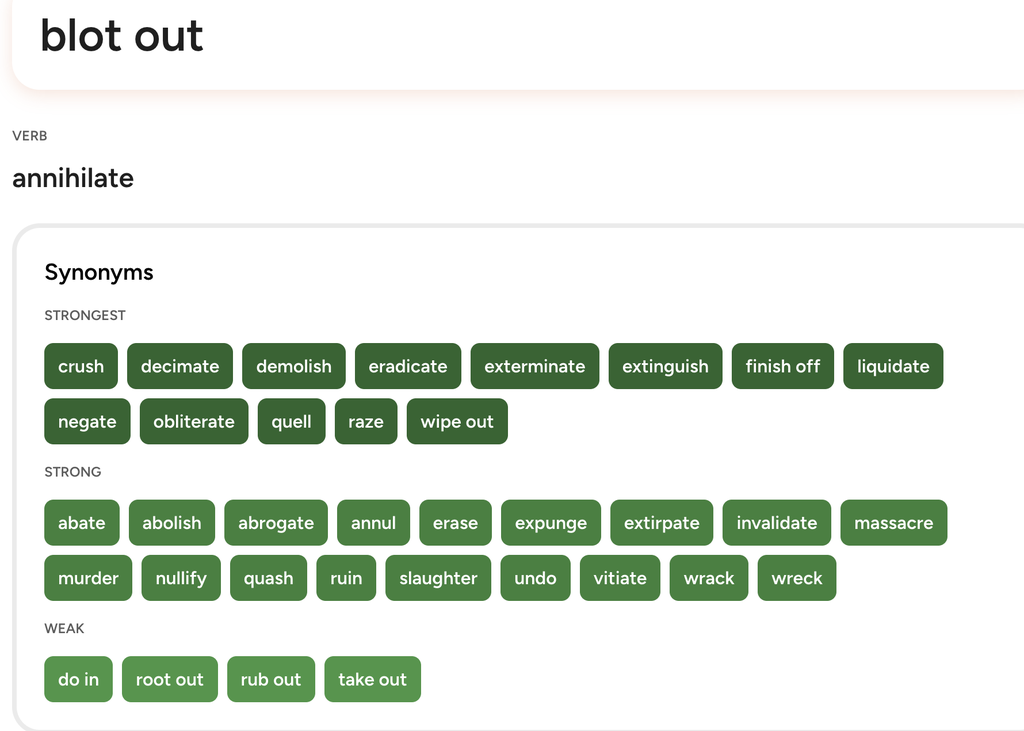
I ask myself: do I want to remember to:
crush
decimate
demolish
eradicate
exterminate
extinguish
finish off
liquidate
obliterate
etc etc
any other humans beings?
"C.G. Jung’s concept of the shadow relates to a part of the psyche that consists of the tendencies the ego considers to be unwanted (Jung, CW [Collected Works] 9.I,1959/1968, p. 284, para.513). These are the parts that we judge to be bad and shameful. On a collective level, the culture’s unwanted characteristics develop throughout the history of the group and are expressed in the values of the culture, as well as in cultural products such as myths, legends, and art (Neumann, 1990). The group’s unwanted parts become the content of the shadow, projected in order to eliminate all that is bad and evil and maintain the goodness and cohesion of the group (Shalit, 2004). The archetypal shadow is the dark side of culture and of human nature, repressed and rejected from the light of consciousness, and considered evil (Jung, CW 9I,1959/1968, para. 567, p. 322). This evil is what the ego experiences as harmful and damaging to its continuity and sense of safety. The ego, as the center of conscious personality, developed within the collective values that are transmitted through education, and identifies with those values, thus experiencing contradictions to them as threatening, and therefore evil (Neumann, 1990)."
"In the archetypal experience of evil... evil entails being swept away by one-sidedness, by only one single pattern of behavior." (p. 147)
(ג) הֲיֵלְכ֥וּ שְׁנַ֖יִם יַחְדָּ֑ו בִּלְתִּ֖י אִם־נוֹעָֽדוּ׃
(3) Can two walk together without actually having met? (my translation)
(יא) חֶסֶד־וֶאֱמֶ֥ת נִפְגָּ֑שׁוּ צֶ֖דֶק וְשָׁל֣וֹם נָשָֽׁקוּ׃
(11) Faithfulness and truth have met; righteousness and peace have kissed. (my translation)
(ג) כִּֽי־אָמַ֗רְתִּי ע֭וֹלָם חֶ֣סֶד יִבָּנֶ֑ה שָׁמַ֓יִם ׀ תָּכִ֖ן אֱמוּנָתְךָ֣ בָהֶֽם׃
(3) Indeed, I have said in my heart: “The world shall be built on love; You will establish Your faithfulness in the very heavens.” (my translation)
