




 Save
Save Copy
Copy Add to Collection
 Export to Google Docs
 Share
Share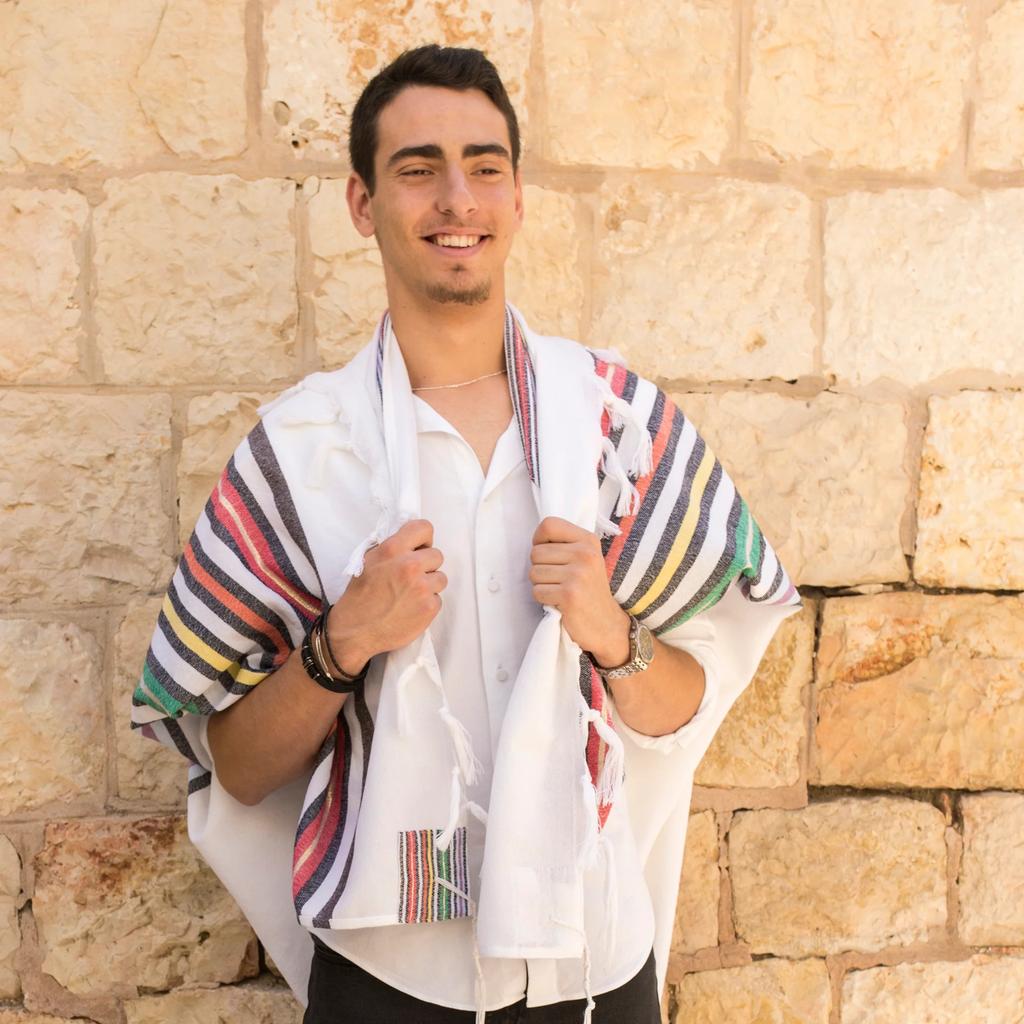
[Ed. Note: The knots on a tallis aren't supposed to come out - DS]
Vayomer is a prayer in the morning and evening service, named for the first word in the prayer (like most prayers are). It comes from Numbers 15:37-41 (the Maftir for Parashat Shelach Lecha). A tallit is a prayer shawl, and a tallis is the Yiddish word for tallit, and either way it is usually carried in a nice "tallis / tallit bag". Pro tip: Put your name inside your bag in case it gets misplaced. Some people say that wearing a tallit feels like a hug from G-d.
Part 1: Vayomer
(לז) וַיֹּ֥אמֶר יהוה אֶל־מֹשֶׁ֥ה לֵּאמֹֽר׃ (לח) דַּבֵּ֞ר אֶל־בְּנֵ֤י יִשְׂרָאֵל֙ וְאָמַרְתָּ֣ אֲלֵהֶ֔ם וְעָשׂ֨וּ לָהֶ֥ם צִיצִ֛ת עַל־כַּנְפֵ֥י בִגְדֵיהֶ֖ם לְדֹרֹתָ֑ם וְנָ֥תְנ֛וּ עַל־צִיצִ֥ת הַכָּנָ֖ף פְּתִ֥יל תְּכֵֽלֶת׃ (לט) וְהָיָ֣ה לָכֶם֮ לְצִיצִת֒ וּרְאִיתֶ֣ם אֹת֗וֹ וּזְכַרְתֶּם֙ אֶת־כׇּל־מִצְוֺ֣ת יהוה וַעֲשִׂיתֶ֖ם אֹתָ֑ם וְלֹֽא־תָת֜וּרוּ אַחֲרֵ֤י לְבַבְכֶם֙ וְאַחֲרֵ֣י עֵֽינֵיכֶ֔ם אֲשֶׁר־אַתֶּ֥ם זֹנִ֖ים אַחֲרֵיהֶֽם׃ (מ) לְמַ֣עַן תִּזְכְּר֔וּ וַעֲשִׂיתֶ֖ם אֶת־כׇּל־מִצְוֺתָ֑י וִהְיִיתֶ֥ם קְדֹשִׁ֖ים לֵאלֹֽהֵיכֶֽם׃ (מא) אֲנִ֞י יהוה אֱלֹֽהֵיכֶ֗ם אֲשֶׁ֨ר הוֹצֵ֤אתִי אֶתְכֶם֙ מֵאֶ֣רֶץ מִצְרַ֔יִם לִהְי֥וֹת לָכֶ֖ם לֵאלֹהִ֑ים אֲנִ֖י יהוה אֱלֹהֵיכֶֽם׃ {פ} אמת
(37) GOD said to Moses as follows: (38) Speak to the Israelite people and instruct them to make for themselves fringes on the corners of their garments throughout the ages; let them attach a cord of blue to the fringe at each corner. (39) That shall be your fringe; look at it and recall all GOD’s commandments and observe them, so that you do not follow your heart and eyes in your urge to stray. (40) Thus you shall be reminded to observe all My commandments and to be holy to your God. (41) I am the ETERNAL your God, who brought you out of the land of Egypt to be your God: I, your ETERNAL God.
According to the Mishnah, Vayomer is the 3rd paragraph of the Shema:
(ב) אָמַר רַבִּי יְהוֹשֻׁעַ בֶּן קָרְחָה, לָמָּה קָדְמָה שְׁמַע לִוְהָיָה אִם שָׁמֹעַ, אֶלָּא כְדֵי שֶׁיְּקַבֵּל עָלָיו עֹל מַלְכוּת שָׁמַיִם תְּחִלָּה, וְאַחַר כָּךְ יְקַבֵּל עָלָיו עֹל מִצְוֹת. וְהָיָה אִם שָׁמֹעַ לְוַיֹּאמֶר, שֶׁוְהָיָה אִם שָׁמֹעַ נוֹהֵג בַּיּוֹם וּבַלַּיְלָה, וַיֹּאמֶר אֵינוֹ נוֹהֵג אֶלָּא בַּיּוֹם:
(2)Rabbi Yehoshua ben Korḥa said: Why, in the mitzva of the recitation of Shema, did the portion of Shema precede that of VeHaya im Shamoa? This is so that one will first accept upon himself the yoke of the kingdom of Heaven, the awareness of God and God’s unity, and only then accept upon himself the yoke of the mitzvot, which appears in the paragraph of VeHaya im Shamoa. Why did VeHaya im Shamoa precede VaYomer? Because the paragraph of VeHaya im Shamoa is practiced both by day and by night, while VaYomer, which discusses the mitzva of ritual fringes, is only practiced during the day.
(א) אָמַר לָהֶם הַמְמֻנֶּה, בָּרְכוּ בְרָכָה אֶחַת, וְהֵן בֵּרְכוּ. קָרְאוּ עֲשֶׂרֶת הַדְּבָרִים, שְׁמַע, וְהָיָה אִם שָׁמֹעַ, וַיֹּאמֶר. בֵּרְכוּ אֶת הָעָם שָׁלשׁ בְּרָכוֹת, אֱמֶת וְיַצִּיב, וַעֲבוֹדָה, וּבִרְכַּת כֹּהֲנִים. וּבְשַׁבָּת מוֹסִיפִין בְּרָכָה אַחַת לַמִּשְׁמָר הַיּוֹצֵא:
(1) After the priests completed laying the parts of the daily offering on the ramp, they went to the Chamber of Hewn Stone to recite Shema. The appointed priest who oversaw the lotteries in the Temple said to the priests: Recite a single blessing of the blessings that accompany Shema. And the members of the priestly watch recited a blessing, and then they recited the Ten Commandments, Shema (see Deuteronomy 6:4–9), VeHaya im Shamoa (see Deuteronomy 11:13–21), and VaYomer (see Numbers 15:37–41), the standard formula of Shema. Additionally, they blessed with the people three blessings. These blessings were: True and Firm [Emet Veyatziv], the blessing of redemption [Mi Chamocha] recited after Shema; and the blessing of the Temple service [Avodah], which is also a blessing recited in the Amida prayer; and the Priestly Benediction, recited in the form of a prayer, without the lifting of hands that usually accompanies that blessing (Tosafot). And on Shabbat, when the new priestly watch would begin its service, the priests would add one blessing recited by the outgoing priestly watch, that love, fraternity, peace, and friendship should exist among the priests of the incoming watch.
- Vayomer is the third paragraph of the Shema. It is said in the morning and evening service before the set of paragraphs that culminate in the redemption prayer of Mi Chamocha.
- In the evening service, Vayomer is traditionally said silently, with only the last 2 words followed by "Emet" (truth) being said out loud by the shaliach tzibur (prayer leader). The way the end is chanted will change depending on whether it is a weekday, Shabbat evening, Festival (Passover, Sukkot, and Shavuot), or High Holiday evening, because nusach (traditional chanting) helps to indicate time.
- In the morning service, it depends on minhag hamakom (the custom of the place) whether Vayomer is said out loud by everybody or said silently; again "Emet" is added at the end.
- When it is not said silently, Vayomer is usually chanted with Torah trope.
- Also, when the Reform movement started in the 1800s there was a push to get rid of distinctive Jewish practices like wearing a tallit. Although many now wear a tallit in Reform synagogues today, one result is that Reform siddurim (prayerbooks) go straight from the end of the V'Ahavta paragraph of the Shema to the second half of Vayomer, starting at "L'ma'an tizk'ru". This makes it seem as though mezuzah and tefillin fulfil the role of reminding us of the commandments rather than tzitzit.
- Since the late Middle Ages it has been customary to gather the 4 tzitzit from the corners and kiss them every time the word "tzitzit" is said, as well as at the very end.
- There is also a custom to emphasize the "z" in "tizk'ru" ("you will remember") so it doesn't sound like "tisk'ru" ("you will be rewarded").
- In short, Vayomer is saying that we should put tzitzit (fringes) on the corners of our clothes so that when we look at them we'll remember to do G-d's commandments, like a visual aid. Deuteronomy 22:12 clarifies that this only applies to garments with 4 corners (or, if there are more, pick the 4 corner-most corners).
- One of the fringes in each tzitzit is supposed to be blue. However, according to Tractate Tzitzit 1:10 (one of the minor tractates of the Talmud), this can only come from the hilazon (Murex / Hexaplex trunculus) snail, which was overhunted and therefore unavailable for centuries.
- This is the same snail that produced the purple dye associated with Phoenician royalty, thus implying that all of the Jewish people had been promoted from slaves to royalty.
- Rabbi Michael Siegel suggests that having 1 blue strand among the white ones reminds us of the importance of keeping our individuality, even in a group.
- Some Biblical scholars say that only free people in ancient times got to wear fringes on their garments, and this was a way of distinguishing in the marketplace who was a slave and who was free. Therefore, G-d is saying "I took you out of slavery, so now that you're free you should dress that way" (kippah tip to the Reconstructionist Kol HaNeshama siddur).
- Other scholars say that different fringe styles indicated whom people belonged to, so G-d is therefore saying, "I got you out of slavery in Egypt, and now I am the L-rd your G-d, so you should dress the way I tell you to."
- Rashi, the great French commentator from the 11th century, asked how looking at the tzitzit was supposed to remind somebody of all the commandments. His answer is that Gematria (alpha-numeric value) of "tzitzit" is 600, there are 5 knots, and there are 8 strings (4 strings doubled-over), so that adds up to 613. (Rashi on Numbers 15:39:1). His math holds whether you are looking at Ashkenazic or Sephardic tzitzit tying methods.
- However, Chizkuni (France, 1200s) points out that there’s missing yud in how the Torah spells “tzitzit”, so really Rashi’s math is off by 10. He resolves this by noticing that the 3rd “tzitzit” is preceded by the letter lamed, which has a value of 30, and this can be divided by the 3 instances of “tzitzit” to supply the missing 10 each time.
- The word "follow" ("taturu") is the same word used in the incident of the spies earlier in the same parasha of Shelach Lecha (Numbers 13). There, the spies were misled by their eyes and hearts into erroneous conclusions. It hardly seems accidental that this same verb appears 2 chapters later to warn against that.
- The word "zonim" (prostituting yourselves) comes up 4 times in the Bible. Besides this one, it's also in Leviticus 17:7 and 20:5, and Ezekiel 20:30. In all of the other cases, it refers to faithlessness with other gods.
- The rabbis pick up on the term "zonim" in connection with tzitzit and tell the following story in the Babylonian Talmud (Menachot 44a:3-11):
תַּנְיָא, אָמַר רַבִּי נָתָן: אֵין לָךְ כׇּל מִצְוָה קַלָּה שֶׁכְּתוּבָה בְּתוֹרָה, שֶׁאֵין מַתַּן שְׂכָרָהּ בְּעוֹלָם הַזֶּה, וְלָעוֹלָם הַבָּא אֵינִי יוֹדֵעַ כַּמָּה. צֵא וּלְמַד מִמִּצְוַת צִיצִית. מַעֲשֶׂה בְּאָדָם אֶחָד שֶׁהָיָה זָהִיר בְּמִצְוַת צִיצִית, שָׁמַע שֶׁיֵּשׁ זוֹנָה בִּכְרַכֵּי הַיָּם שֶׁנּוֹטֶלֶת אַרְבַּע מֵאוֹת זְהוּבִים בִּשְׂכָרָהּ, שִׁיגֵּר לָהּ אַרְבַּע מֵאוֹת זְהוּבִים וְקָבַע לָהּ זְמַן, כְּשֶׁהִגִּיעַ זְמַנּוֹ, בָּא וְיָשַׁב עַל הַפֶּתַח. נִכְנְסָה שִׁפְחָתָהּ וְאָמְרָה לָהּ: אוֹתוֹ אָדָם שֶׁשִּׁיגֵּר לִיךְ אַרְבַּע מֵאוֹת זְהוּבִים בָּא וְיָשַׁב עַל הַפֶּתַח. אָמְרָה הִיא: יִכָּנֵס. נִכְנַס, הִצִּיעָה לוֹ שֶׁבַע מִטּוֹת, שֵׁשׁ שֶׁל כֶּסֶף וְאַחַת שֶׁל זָהָב, וּבֵין כׇּל אַחַת וְאַחַת סוּלָּם שֶׁל כֶּסֶף, וְעֶלְיוֹנָה שֶׁל זָהָב. עָלְתָה וְיָשְׁבָה עַל גַּבֵּי עֶלְיוֹנָה כְּשֶׁהִיא עֲרוּמָּה, וְאַף הוּא עָלָה לֵישֵׁב עָרוֹם כְּנֶגְדָּהּ, בָּאוּ אַרְבַּע צִיצִיּוֹתָיו וְטָפְחוּ לוֹ עַל פָּנָיו, נִשְׁמַט וְיָשַׁב לוֹ עַל גַּבֵּי קַרְקַע, וְאַף הִיא נִשְׁמְטָה וְיָשְׁבָה עַל גַּבֵּי קַרְקַע. אָמְרָה לוֹ: גַּפָּהּ שֶׁל רוֹמִי, שֶׁאֵינִי מַנִּיחָתְךָ עַד שֶׁתֹּאמַר לִי מָה מוּם רָאִיתָ בִּי. אָמַר לָהּ: הָעֲבוֹדָה, שֶׁלֹּא רָאִיתִי אִשָּׁה יָפֶה כְּמוֹתֵךְ, אֶלָּא מִצְוָה אַחַת צִיוָּנוּ יהוה אֱלֹהֵינוּ וְצִיצִית שְׁמָהּ, וּכְתִיב בָּהּ: ״אֲנִי יהוה אֱלֹהֵיכֶם״ שְׁתֵּי פְעָמִים – אֲנִי הוּא שֶׁעָתִיד לִיפָּרַע, וַאֲנִי הוּא שֶׁעָתִיד לְשַׁלֵּם שָׂכָר. עַכְשָׁיו נִדְמוּ עָלַי כְּאַרְבָּעָה עֵדִים. אָמְרָה לוֹ: אֵינִי (מניחך) [מַנִּיחָתְךָ] עַד שֶׁתֹּאמַר לִי מָה שִׁמְךָ, וּמָה שֵׁם עִירְךָ, וּמָה שֵׁם רַבְּךָ, וּמָה שֵׁם מִדְרָשְׁךָ שֶׁאַתָּה לָמֵד בּוֹ תּוֹרָה. כָּתַב וְנָתַן בְּיָדָהּ. עָמְדָה וְחִילְּקָהּ כׇּל נְכָסֶיהָ, שְׁלִישׁ לַמַּלְכוּת, וּשְׁלִישׁ לַעֲנִיִּים, וּשְׁלִישׁ נָטְלָה בְּיָדָהּ, חוּץ מֵאוֹתָן מַצָּעוֹת. וּבָאת לְבֵית מִדְרָשׁוֹ שֶׁל רַבִּי חִיָּיא. אָמְרָה לוֹ: רַבִּי, צַוֵּה עָלַי וְיַעֲשׂוּנִי גִּיּוֹרֶת. אָמַר לָהּ: בִּתִּי, שֶׁמָּא עֵינַיִךְ נָתַתְּ בְּאֶחָד מִן הַתַּלְמִידִים. הוֹצִיאָהּ כְּתָב מִיָּדָהּ וְנָתְנָה לוֹ. אָמַר לָהּ: לְכִי זְכִי בְּמִקָּחִךְ. אוֹתָן מַצָּעוֹת שֶׁהִצִּיעָה לוֹ בְּאִיסּוּר, הִצִּיעָה לוֹ בְּהֶיתֵּר. זֶה מַתַּן שְׂכָרוֹ בָּעוֹלָם הַזֶּה, וְלָעוֹלָם הַבָּא אֵינִי יוֹדֵעַ כַּמָּה.
It is taught in a baraita that Rabbi Natan says: There is no mitzva, however minor, that is written in the Torah, for which there is no reward given in this world; and in the World-to-Come I do not know how much reward is given. Go and learn from the following incident concerning the mitzva of ritual fringes. There was an incident involving a certain man who was diligent about the mitzva of ritual fringes. This man heard that there was a prostitute in one of the cities overseas who took four hundred gold coins as her payment. He sent her four hundred gold coins and fixed a time to meet with her. When his time came, he came and sat at the entrance to her house. The maidservant of that prostitute entered and said to her: That man who sent you four hundred gold coins came and sat at the entrance. She said: Let him enter. He entered. She arranged seven beds for him, six of silver and one of gold. Between each and every one of them there was a ladder made of silver, and the top bed was the one that was made of gold. She went up and sat naked on the top bed, and he too went up in order to sit naked facing her. In the meantime, his four ritual fringes came and slapped him on his face. He dropped down and sat himself on the ground, and she also dropped down and sat on the ground. She said to him: I take an oath by the gappa of Rome that I will not allow you to go until you tell me what defect you saw in me. He said to her: I take an oath by the Temple service that I never saw a woman as beautiful as you. But there is one mitzva that the Lord, our God, commanded us, and its name is ritual fringes, and in the passage where it is commanded, it is written twice: “I am the Lord your God” (Numbers 15:41). The doubling of this phrase indicates: I am the one who will punish those who transgress My mitzvot, and I am the one who will reward those who fulfill them. Now, said the man, the four sets of ritual fringes appeared to me as if they were four witnesses who will testify against me. She said to him: I will not allow you to go until you tell me: What is your name, and what is the name of your city, and what is the name of your teacher, and what is the name of the study hall in which you studied Torah? He wrote the information and placed it in her hand. She arose and divided all of her property, giving one-third as a bribe to the government, one-third to the poor, and she took one-third with her in her possession, in addition to those beds of gold and silver. She came to the study hall of Rabbi Ḥiyya and said to him: My teacher, instruct your students concerning me and have them make me a convert. Rabbi Ḥiyya said to her: My daughter, perhaps you set your sights on one of the students and that is why you want to convert? She took the note the student had given her from her hand and gave it to Rabbi Ḥiyya. He said to her: Go take possession of your purchase. Those beds that she had arranged for him in a prohibited fashion, she now arranged for him in a permitted fashion. The Gemara completes its point about the reward of mitzvot and points out how this story illustrates the concept: This is the reward given to him in this world, and with regard to the World-to-Come, I do not know how much reward he will be given.
Part 2: The History and Anatomy of the Tallis
- The Torah is pretty clear that you should put tzitzit on 4-cornered garments.
- That was easy enough to do in Biblical times when people wore outer garments that had 4 corners.
- Yet fashions changed, and the Jews met other people wearing other types of clothing.
- A dilemma developed: How could the Jews participate in "modern" fashions and secular society, and yet still maintain the dictates of their faith?
- By the time the Babylonian Talmud was completed (circa 500 CE), an answer was developed:
״וַיַּעֲבוֹר יהוה עַל פָּנָיו וַיִּקְרָא״. אָמַר רַבִּי יוֹחָנָן: אִלְמָלֵא מִקְרָא כָּתוּב, אִי אֶפְשָׁר לְאוֹמְרוֹ. מְלַמֵּד שֶׁנִּתְעַטֵּף הַקָּדוֹשׁ בָּרוּךְ הוּא כִּשְׁלִיחַ צִבּוּר, וְהֶרְאָה לוֹ לְמֹשֶׁה סֵדֶר תְּפִלָּה. אָמַר לוֹ: כׇּל זְמַן שֶׁיִּשְׂרָאֵל חוֹטְאִין — יַעֲשׂוּ לְפָנַי כַּסֵּדֶר הַזֶּה וַאֲנִי מוֹחֵל לָהֶם.
§ The verse states: “And the Lord passed by before him, and proclaimed” (Exodus 34:6). Rabbi Yoḥanan said: Were it not explicitly written in the verse, it would be impossible to say this, as it would be insulting to God’s honor. The verse teaches that the Holy One, Blessed be He, wrapped Himself in a prayer shawl like a prayer leader and showed Moses the structure of the order of the prayer. He said to him: Whenever the Jewish people sin, let them act before Me in accordance with this order. Let the prayer leader wrap himself in a prayer shawl and publicly recite the thirteen attributes of mercy, and I will forgive them.
- It's a balancing act, because by making a new garment and putting tzitzit on that, Jews could be both Jewish and members of secular society.
- Some also balance this by wearing an undergarment with tzitzit sticking out from that (or occasionally tucked in). That's called a "tallit katan" (or “arba kanfot”) and it's worn throughout the day.
- In places where it is not safe to be visibly Jewish, everybody agrees that tzitzit should be tucked in because of Pikuach Nefesh (the saving of a life trumps all Jewish rules except for 3, and tzitzit do not fall in the categories of murder, rape, or idolatry).
- There are two schools of thought on who gets to wear a "tallit gadol" (the prayer shawl). One says that only married men get to wear it. The other says that it's contingent on Jewish adulthood.
- The idea that you get it at 13 has a nice symbolism, because that's when one starts to become responsible for their own Jewish journey, and the idea of balancing one's secular self with one's Jewish self is well-represented through the tallit.
- Whether women get to wear a tallit is debated. The Talmud says yes:
רַב יְהוּדָה רָמֵי תְּכֵילְתָּא לְפַרְזוּמָא דְּאִינָשֵׁי בֵּיתֵיהּ, וּמְבָרֵךְ כֹּל צַפְרָא ״לְהִתְעַטֵּף בַּצִּיצִית״. מִדְּרָמֵי, קָסָבַר: מִצְוַת עֲשֵׂה שֶׁלֹּא הַזְּמַן גְּרָמָא הוּא, אַמַּאי מְבָרֵךְ כֹּל צַפְרָא וְצַפְרָא? כְּרַבִּי, דְּתַנְיָא: תְּפִילִּין כׇּל זְמַן שֶׁמַּנִּיחָן מְבָרֵךְ עֲלֵיהֶן, דִּבְרֵי רַבִּי. אִי הָכִי, כֹּל שַׁעְתָּא נָמֵי! רַב יְהוּדָה אִינִישׁ צְנִיעָא הֲוָה, וְלָא שָׁרֵי לֵיהּ לִגְלִימֵיהּ כּוּלֵּיהּ יוֹמָא. וּמַאי שְׁנָא מִצַּפְרָא? כִּי מְשַׁנֵּי מִכְּסוּת לַיְלָה לִכְסוּת יוֹם. תָּנוּ רַבָּנַן: הַכֹּל חַיָּיבִין בְּצִיצִית, כֹּהֲנִים, לְוִיִּם וְיִשְׂרְאֵלִים, גֵּרִים, נָשִׁים וַעֲבָדִים. רַבִּי שִׁמְעוֹן פּוֹטֵר בְּנָשִׁים, מִפְּנֵי שֶׁמִּצְוַת עֲשֵׂה שֶׁהַזְּמַן גְּרָמָאּ הוּא, וְכׇל מִצְוַת עֲשֵׂה שֶׁהַזְּמַן גְּרָמָאּ נָשִׁים פְּטוּרוֹת.
§ Rav Yehuda would affix white and sky-blue strings to the garment [pirzuma] of his wife. And every morning he would recite the blessing: To wrap ourselves in garments with ritual fringes.The Gemara asks: From the fact that he would affix ritual fringes to his wife’s garments, it is apparent that he holds that the obligation of ritual fringes is a positive mitzva that is not time-bound, and therefore women are also obligated in it. But if that is his opinion, why did he recite the blessing on ritual fringes each and every morning? In order for the mitzva to not be time-bound, it must apply at night, in which case a new blessing should not be recited in the morning. The Gemara answers: Rav Yehuda was acting in accordance with the opinion of Rabbi Yehuda HaNasi, as it is taught in a baraita: With regard to phylacteries, every time one dons them he recites the blessing over them, even several times in one day; this is the statement of Rabbi Yehuda HaNasi. The Gemara asks: If so, he should have also recited a blessing every time that he took the cloak off and put it back on, and not merely once a day in the morning. The Gemara answers: Rav Yehuda was a modest man and he did not remove his cloak the entire day. The Gemara asks: In what way is it different from the morning, i.e., why did he recite a blessing in the morning? The Gemara answers: He recited the blessing in the morning when he changed from a nighttime garment to a daytime garment.§ The Sages taught in a baraita: Everyone is obligated in the mitzva of ritual fringes, including priests, Levites, Israelites, converts, women, and Canaanite slaves. Rabbi Shimon deems women exempt, because the mitzva of ritual fringes is a positive, time-bound mitzva, and women are exempt from every positive, time-bound mitzva.
- The Shulchan Aruch also says that women can wear a tallit:
(ב) נשים ועבדים פטורים מפני שהיא מצות עשה שהזמן גרמא: הגה ומ"מ אם רוצים לעטפו ולברך עליו הרשות בידם כמו בשאר מצות עשה שהזמן גרמא [תוס' והרא"ש והר"ן פ"ב דר"ה ופ"ק דקידושין] אך מחזי כיוהרא לכן אין להן ללבוש ציצית הואיל ואינו חובת גברא [אגור סי' כ"ז] פי' אינו חייב לקנות לו טלית כדי שיתחייב בציצית. ולקמן בסימן י"ט אמר כשיש לו טלית מארבע כנפות ולובשו] טומטום ואנדרוגינוס חייבין מספק ויתעטפו בלא ברכה: [פי' טומטום לא נודע אם הוא זכר או נקיבה ואנדרוגינוס יש לו זכרות ונקבות] [הגה ולפי מה שנהגו נשים לברך במצות עשה שהזמן גרמא גם הם יברכו] [דברי עצמו]:
(2) Women and slaves are exempt [from wearing tzitzit] because it is a time-dependent commandment. Rem"a: And if they wish to wrap [in tzitzit] and say the blessing on them it is up to them to do so as with all time-dependent commandments (Tosafot and the Rosh and the Ran, Chapter 2, Rosh Hashanah, First Chapter of Kiddushin). However, it looks as if they are doing it to appear more observant than others, therefore, they should not wear tzitzit, as it is not a commandment of the person [rather of the object] (Agur Section 27). [And for slaves] This means we do not have to buy him a tallit in order that he be required to wear tzitzit as we see in Chapter 19 it says when he has a shawl with four corners he should wear it.The requirement for a tumtum and an androgynous is doubtful and so they should wrap without a blessing (Explanation: a tumtum does not know whether he/she is male/female, and an androgynous has both male and female genitals).Rem"a: And since it is our custom that women should say the blessing when they fulfill time-dependent commandments so should they (Divrei Atzmo)
- A tallit has several parts. The first is the cloth. What design is on the cloth is irrelevant. Stripes are common but not necessary. White is often a main part of the color scheme, but it doesn’t need to be (Shulchan Arukh, Orach Chayim 9:5).
- The second is the atarah (except for Chabad). The atarah is the collar, and its purpose is to tell you which was is up. It's also good for indicating if your tallis is lopsided. Often the tallit blessing is on the atarah, but it can have a Biblical verse, a person's Hebrew name, or nothing at all. It just needs to be a separate piece of cloth along the long side of the tallis.
- The third are decorative fringes along the bottoms. These are not necessary and, while they might connect to the bells at the bottom of the High Priest’s robe, they aren’t necessary for a tallis to be ”kosher” / fit (even the Talmud agrees - Shabbat 139b:4).
- Finally, we have the tzitzit, the fringes required by the Torah in the Vayomer paragraph (Numbers 15:37-41). The Shulchan Arukh gives instructions for tying them (Shulchan Arukh, Orach Chayim 11:14).
(יד) יקח ד' חוטים מצד זה וד' מצד זה ויקשור שני פעמים זה על גב זה ואח"כ יכרוך חוט הארוך סביב השבעה קצת כריכות וקושר שני פעמים זה על גב זה וחוזר וכורך וכן יעשה עד שישלים לחמשה קשרים כפולים וארבעה אוירים ביניהם מלאים כריכות אין שיעור לכריכות רק שיהי' כל הכרוך והקשרים רוחב ארבעה גודלים והענף שמנה גודלים: (הגה ואם האריך הציצית יראה ששלישיתו יהיה גדיל וב' חלקים ענף) (רמב"ם פ"א) נוהגים לכרוך באויר ראשון ז' כריכות ובשני ט' ובשלישי י"א וברביעי י"ג שעולים כלם ארבעים כמנין יהוה אחד שעולים ל"ט ועם השם הם ארבעים נהגו לעשות בסוף כל חוט קשר כדי שיעמוד בשזירתו:
(14) You should take 4 threads on one side and 4 threads on the other side and tie them two times, making a double knot. Afterwards, you should use wrap the longest thread around the 7 others with a little wrapping and then make a double knot. Then repeat and wrap. This should be repeated until 5 double knots are made with the 4 spaces between them filled with windings. There is no שׁיעור (set measurement) for wrapping other than the fact that all the wrapping and the knots must be 4 thumb widths wide and the branch (protruding threads) 8 thumb widths. [If the Tzitzit are longer, one should make sure that one the tassels should be (at the minimum) one third of the length and the branch should be two thirds of the length.] It is the custom to have 7 wrappings in the first space, 9 in the second space, 11 in the third, and 13 in the fourth. They all add up to 40 corresponding to the numerical value of “השׁם אחד” (G-d is one) which is actually 39 and by adding G-d (since G-d is one, you add one), it makes 40. It is customary to tie a knot at the end of every thread so that they should remain intertwined.
- Different people have different customs. Some pull the tallit over the head so they can have a conversation with G-d before saying the blessing.
- The tallit comes in a bigger form (closer to a blanket) and a smaller form (closer to a scarf). In the smaller form, it doesn't matter if one folds the tallis hot-dog style ("half-position") before putting it on, or even does that a second time ("quarter-position") -- it's a matter of personal preference.
- The bigger form can be put on through pinching one of the left stripes with the right hand and running the left index finger inside the same stripe until hitting a crease, then, still holding on, laying it over your shoulder. The process is repeated on the other side. This yields a sharp-looking tallis, though it does require careful folding (paying attention to the mountains and valleys of the fold) in order to maintain the creases. Other people put it on in other ways.
- However the tallis is put on, there is a blessing said:
(ד)בָּרוּךְ אַתָּה יהוה אֱלֹהֵֽינוּ מֶֽלֶךְ הָעוֹלָם אֲשֶׁר קִדְּ֒שָֽׁנוּ בְּמִצְוֹתָיו וְצִוָּנוּ לְהִתְעַטֵּף בַּצִּיצִית:
(4) Praised are You, Lord our God, Ruler of the Universe, Who sanctified us with Divine commandments and commanded us to enwrap ourselves with tzitzit.
- Some say this blessing while still wrapped in the tallit, then kiss the ends of the atarah and make sure it's not lopsided (and then fold back the sides of the bigger tallis). Others do it other ways.
- If it is a weekday morning, the tefillin are put on after the tallis.
- A tallis is worn during all morning services except on Tisha B'Av (Shulchan Arukh, Orach Chayim 555:1)
- A tallis is not worn at the afternoon or evening service except on Tisha B'Av afternoon and the Kol Nidrei service at the beginning of Yom Kippur evening (ideally put on while it is still daylight). If somebody is leading afternoon or evening services, they will probably wear a tallis; ditto for reading Torah or having an aliyah in the afternoon.
- The reason for wearing a tallis only in the morning usually is because Vayomer says that we should look at the tzitzit and remember to do G-d's commandments, and in a time before electric lighting that was very hard to do at night.
- If you need to go to the bathroom while wearing a tallis, take it off before going in. Many synagogues have hooks by the bathroom for this purpose.
- At the end of the Ahava Rabba prayer before the Shema, we gather our 4 tzitzit when we say "And bring us in peace from the 4 corners of the earth" ("Vahavi'einu l'shalom mei-arba kanfot ha'aretz"). This is a custom dating back to the late Middle Ages.
- These tzitzit are then kissed when we say "tzitzit" 3 times during Vayomer, again at the end when the leader says "Adoshem Elokeichem Emet", and again at the end of the next paragraph at the word "Kayamet" (kissy-kayemet). They are dropped 4 words later ("Udvarav chayim v'kayamim ne'emanin"). (Kitzur Shulchan Arukh 17:7)
- A lesser-known custom is to gather the front two tzitzit at the beginning of the prayer Baruch She'amar, and then kiss them at the end of the blessing at the end (after "m'hulal batishbachot"). This symbolically combines love and awe of G-d in our hearts. (Magen Avraham 51:1)
- We also use the tzitzit to kiss the Torah when we go up for an aliyah and the Torah reader shows us where they are beginning (and again when they finish). If it is Mincha (the afternoon service) and the person isn't wearing a tallis, or if they are female and don't choose to, then they would touch the Torah's belt to the spot in the Torah and kiss that.
- Some people use a tallis to kiss the Torah when it is marched around at the beginning and end of the Torah service. Pro tip: You can get a further reach to the Torah if you use a siddur (prayerbook).
- A tallis can be used at the top if a chuppah (marriage canopy), or to hold over children for their aliyah on Simchat Torah. There is also a Sephardic custom to drape a tallis over both people when they are getting married under a chuppah.
- After a tallit can no longer be used, the tzitzit are cut off, it is wrapped in a cloth, and buried.
- A few options:
- 1. Pass it down within the family. There's something very tangible about a connection to a specific ancestor when you are wearing something that they wore.
- 2. Donate it to a synagogue.
- 3. Donate it to Heritage Judaica. Heritage Judaica was started by Adam Schwartz as a way to connect people who have unwanted Judaica with people who want it (https://www.jewishagency.org/giving-old-judaica-a-new-life/; https://www.ansheemet.org/events/heritage-judaica-chicago/; https://tcjewfolk.com/ctp_directory/heritage-judaica/). There are several chapters around the country that have rehomed thousands of pieces of Judaica -- if you are interested in starting your own chapter, email me ([email protected]) and I'll get you in touch with the founder.
- 4. Get buried in it. If somebody dies, sometimes they are buried in their tallis after one of the tzitzit is cut off. Much like organ donation, there are other options besides this.
- The First Zionist Congress was about to start in Basel, Switzerland in 1897 and there wasn’t a flag yet. Theodore Herzl entrusted David Wolfsohn to come up with one. The story goes that David was walking past the Great Synagogue in Basel and was inspired by seeing a tallis. He wrote to Herzl:
- “We have a flag—and it is blue and white. The talit with which we wrap ourselves when we pray: that is our symbol. Let us take this talit from its bag and unroll it before the eyes of Israel and the eyes of all nations…“
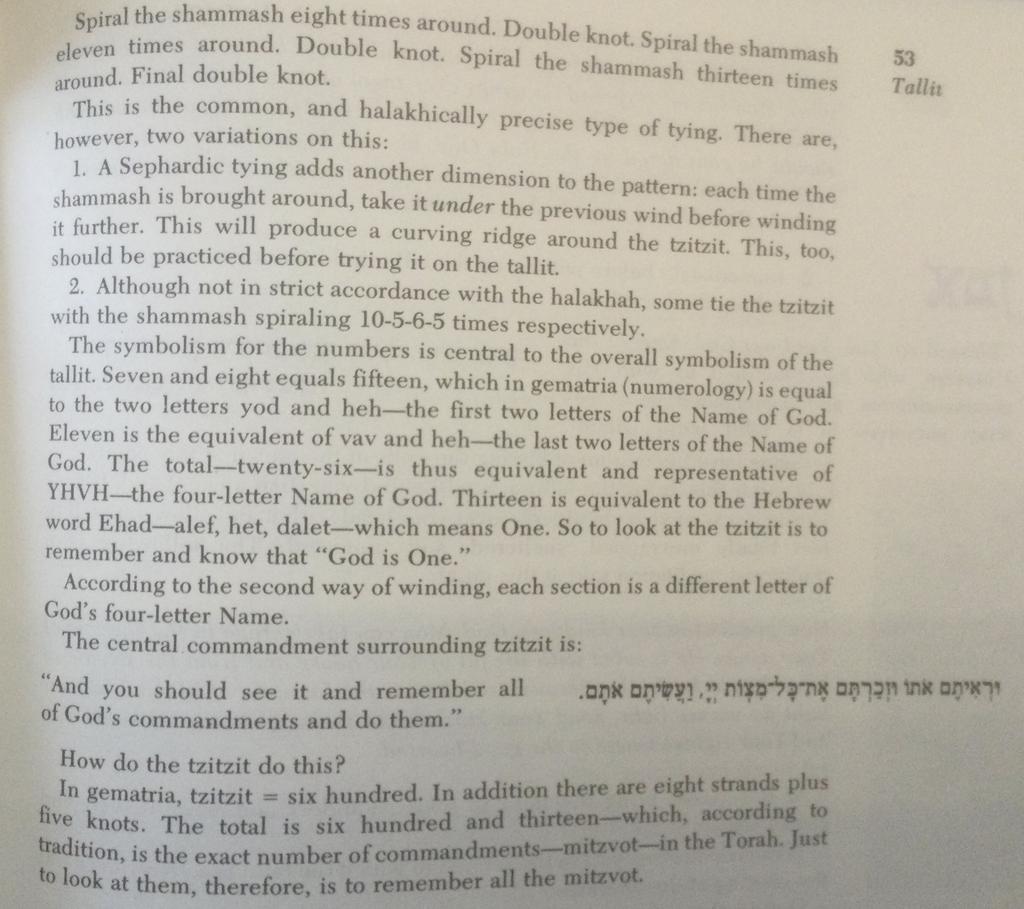
Appendix A: How to Tie Tzitzit (from The First Jewish Catalogue, 1973)

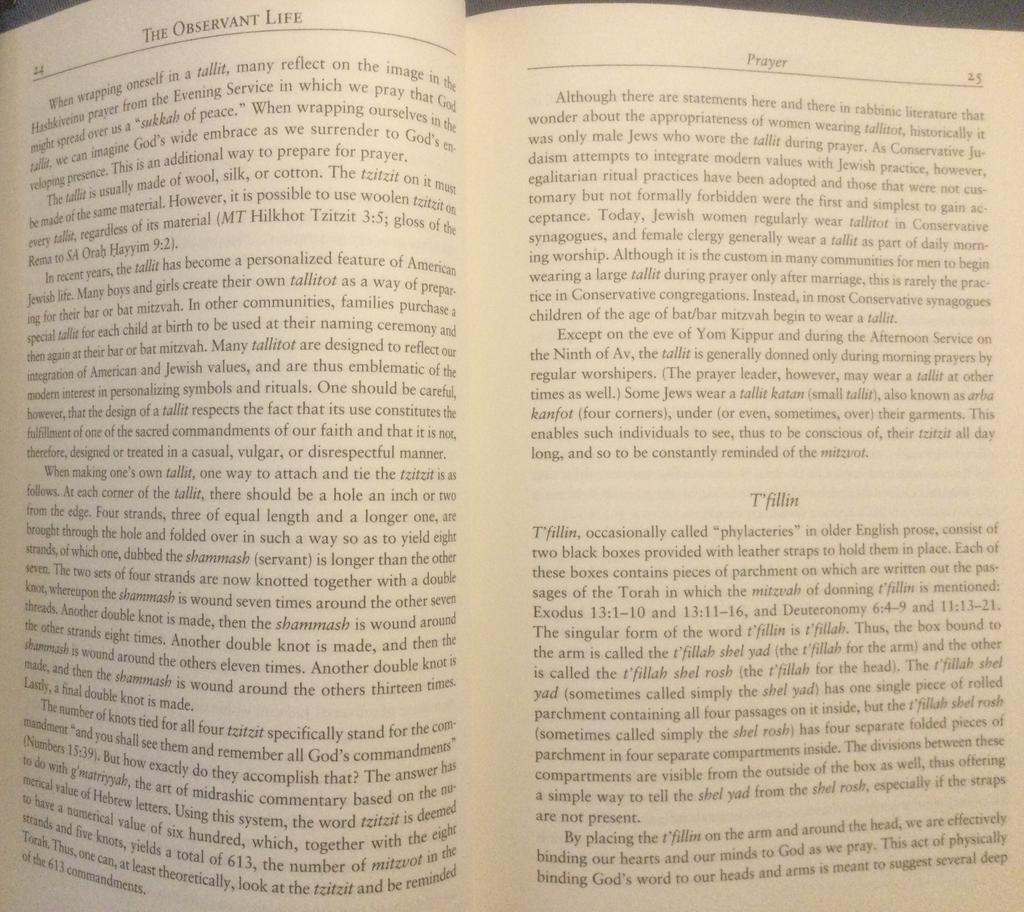
Appendix B: The Observant Life (2012)
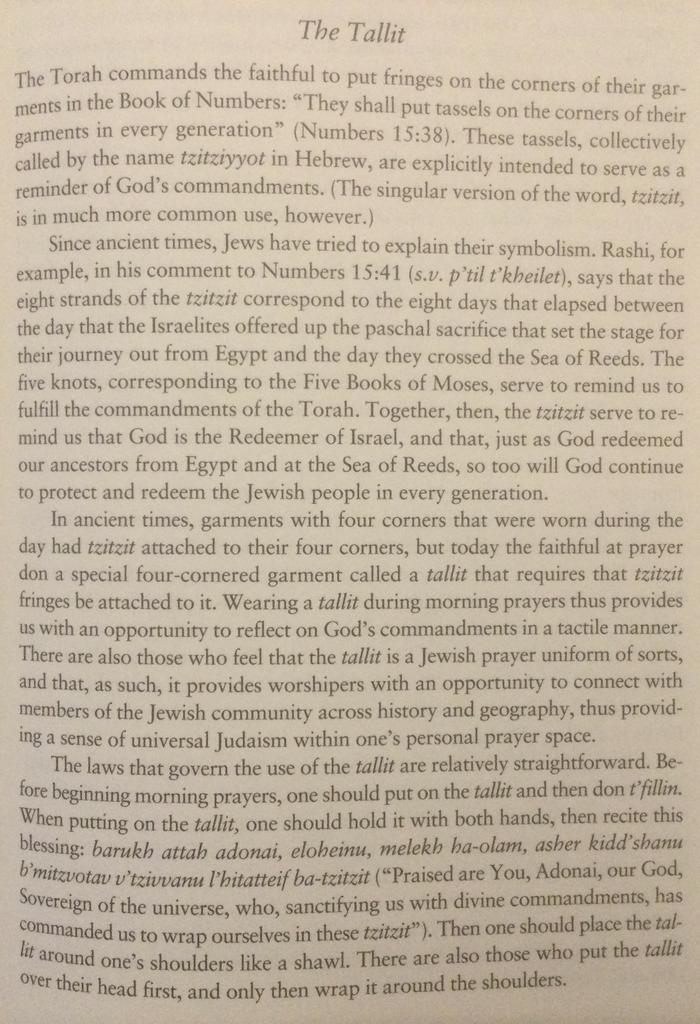
Appendix C: Tallit Texts
הציצית ניתנה בתוך ג׳ אצבעות של כנף יתר מכאן פסולה ניתנה בפתיל פסולה בין טפח לפתיל כשרה ר׳ אליעזר בן יעקב פוסל קצצה וחיברה כשרה ר״מ פוסל עשאה בפני עצמה כשרה :
[Each] zizith is inserted [in a hole] within three finger-[breadths] of [each] corner; farther away than this is invalid If it was inserted in the border, it is invalid; if between a handbreadth [from the edge] and the border, it is valid. R. Eliezer b. Jacob declares it to be invalid. [If a strip less than three finger-breadths in length] was cut off [from a ṭallith] and then rejoined to it, [the ṭallith] is valid. R. Meir declares it to be invalid. [If the detached part] was made into [a smaller ṭallith] on its own, it is valid.
הצובע טלית לעצמו אם (לכסות) [לנסות] בה הרי זו פסולה צבעה אפילו ארבעה וחמשה פעמים פסולה שאין צובעין תכלת אלא בחלזון חלזון למה הוא דומה בריאתו דומה לדג וגופו דומה לרקיע ואינו עולה אלא (לשבע) [לשבעים] שנים לפיכך דמיו ביוקר:
Should a man dye [the zizith of] a ṭallith for himself, they are invalid for religious use if he intended to test [the dye]. If he dyed them [with an ordinary dye], even four or five times, they are invalid, since the blue [of the zizith] must be dyed only with that of ḥillazon. What does the ḥillazon resemble? In its formation it resembles a fish and [the colour of] its body resembles [the blueness of] the sky. Its appearance is a very rare occurrence and consequently it is very costly.
(ח) מֻתָּר לָאָדָם לִלְבּשׁ צִיצִית בַּלַּיְלָה בֵּין בְּחל בֵּין בְּשַׁבָּת וְאַף עַל פִּי שֶׁאֵינוֹ זְמַנָּהּ וּבִלְבַד שֶׁלֹּא יְבָרֵךְ. וּמֵאֵימָתַי יְבָרֵךְ עַל הַצִּיצִית בַּשַּׁחַר. מִשֶּׁיַּכִּיר בֵּין תְּכֵלֶת שֶׁבָּהּ לַלָּבָן שֶׁבָּהּ. וְכֵיצַד מְבָרֵךְ עָלֶיהָ. בָּרוּךְ אַתָּה יְיָ׳ אֱלֹהֵינוּ מֶלֶךְ הָעוֹלָם אֲשֶׁר קִדְּשָׁנוּ בְּמִצְוֹתָיו וְצִוָּנוּ לְהִתְעַטֵּף בְּצִיצִית. וְכָל זְמַן שֶׁמִּתְעַטֵּף בָּהּ בַּיּוֹם מְבָרֵךְ עָלֶיהָ קֹדֶם שֶׁיִּתְעַטֵּף. וְאֵינוֹ מְבָרֵךְ עַל הַצִּיצִית בִּשְׁעַת עֲשִׂיָּתָהּ מִפְּנֵי שֶׁסּוֹף הַמִּצְוָה הוּא שֶׁיִּתְעַטֵּף בָּהּ:
(8) A person is permitted to wear tzitzit at night, both during the weekdays and on the Sabbath, even though this is not the time when the mitzvah should be fulfilled, provided he does not recite a blessing.
When should the blessing over tzitzit be recited in the morning? When [the sun has risen so] that one can differentiate between the strands of techelet and those which are white.
Which blessing should be recited upon it? "Praised are You, God, our Lord, Ruler of the universe, who has sanctified us with Divine commandments and commanded us to wrap ourselves with tzitzit." Whenever a person wraps himself in tzitzit during the day, he should recite the blessing before doing so.
No blessing should be recited on the tzitzit when making them, because the ultimate purpose of the mitzvah is that one should wrap oneself in [a tallit].
(ה) י"א שצריך לעשו' הציצי' מצבע הטלית והמדקדקים נוהגים כן: הגה והאשכנזים אין נוהגים לעשות הציציות רק לבנים אף בבגדים צבועים ואין לשנות [ת"ה סימן מ"ו]:
(5) Some say that it's necessary that the colour of the tzitzit and tallit are the same, and those who are particular are accustomed to practice this way. REMA: and Ashkenazim are accustomed to make only white tzitzit, even for coloured garments, and there is no need to change [the custom]
(ד) מותר ליטול טלית חבירו ולברך עליה ובלבד שיקפל אותה אם מצאה מקופלת: הגה וה"ה בתפילין (נ"י פרק הספינה) אבל אסור ללמוד מספרים של חבירו בלא דעתו דחיישינן שמא יקרע אותם בלמודו נ"י הלכות קטנות:
(4) It is permissible to take his friend's טלית and to recite the blessing on it, as long as he folds it [when he is finished] if he found it folded. Rem"a: And the same law apply's regarding תפילין (Nemukei Yoseph in Perek Ha'sfina (Bava Batra Chapter 5)). But it is forbidden to learn from holy books of his friend without his knowledge, for we are concerned that he will tear them (ie. the pages in the book) while he is learning [from them] (Nimukei Yosef - Halachot Ketanot)
Appendix D: The Origin of the Word "Tallit"
- Rabbi Reuben Chaim Klein, “What’s In a Word”, Korach 5785 Part 2
