


 Save
 Copy
 Add to Collection
 Export to Google Docs
 Share

(כא) וַיַּפֵּל֩ יקוק אֱלֹקִ֧ים ׀ תַּרְדֵּמָ֛ה עַל־הָאָדָ֖ם וַיִּישָׁ֑ן וַיִּקַּ֗ח אַחַת֙ מִצַּלְעֹתָ֔יו וַיִּסְגֹּ֥ר בָּשָׂ֖ר תַּחְתֶּֽנָּה׃
(21) So the GOD cast a deep sleep upon HaAdam; and, while [the Adam] slept, GOD took one of [Adam's] Tzalot and closed up the flesh at that spot.
(ו) וַיִּקַּח אַחַת מִצַּלְעֹתָיו (בראשית ב, כא), רַבִּי שְׁמוּאֵל בַּר נַחְמָן אָמַר מִן סִטְרוֹהִי, הֵיךְ מַה דְּאַתְּ אָמַר (שמות כו, כ): וּלְצֶלַע הַמִּשְׁכָּן. וּשְׁמוּאֵל אָמַר עִלְעָא חָדָא מִבֵּין שְׁתֵּי צַלְעוֹתָיו נָטַל,
(6) "And [GOD] took one of [Adam's]Tzalot." Rabbi Shmuel bar Nachman said: from one of [Adam's] sides, as it says: "And for the side of the tabernacle." (Exodus 26:20).
פַּרְצוֹף
m. (an adapt. of πρόσωπον, as if it were פרץ אף) face, visage, front. Yeb. XVI, 3 פ׳ פנים the full face, v. חוֹטָם. Ib. 120ᵃ פ׳ פנים ולא פדחת if the face is left, but without the forehead. Erub. 18ᵃ, v. דִּיפְּרוֹסוֹף. Ber. 61ᵃ (ref. to הצלע, Gen. II, 22) חד אמר פ׳ one says, it means one of the two faces of Adam (v. דִּיפְּרוֹסוֹף). Snh. 103ᵇ בתחלה … פ׳ אחד וכ׳ first he made it (the idol) with one face, and afterwards with four. Yoma 72ᵇ רוקם פ׳ אחד וכ׳ by roḳem (Ex. XXVIII, 39) needlework is meant and therefore one front (design on one side), by ḥoshebh (ib. 15) embroidery is meant and therefore two fronts (designs on both sides); a. fr.—Pl. פַּרְצוּפִים, פַּרְצוּפִין, פַּרְצוּפוֹת. Ib. שני פ׳; Tosef. Shek. III, 14 שתי פ׳ (fem.). Ab. Zar. 42ᵇ כל הפ׳ מותרין וכ׳ you are permitted to sculpture all faces except the human face. Ib. 12ᵃ פ׳ המקלחין מים וכ׳ sculptures of human faces which throw forth water in the large cities (fountains). Y. ib. III, 42ᶜ bot. היו חותמין בפַרְסוֹפוֹת used seals on which human faces were engraven. Ib. כל פרס׳ היו בירושלם וכ׳ all kinds of statuary existed in Jerusalem except human faces. Y. Snh. IV, 22ᵇ bot. שינה פַּרְצוֹפוֹתֵיהֶן the Lord made the faces of men to differ from one another; a. fr.
(יט) וְאַרְבָּעִים֙ אַדְנֵי־כֶ֔סֶף תַּעֲשֶׂ֕ה תַּ֖חַת עֶשְׂרִ֣ים הַקָּ֑רֶשׁ שְׁנֵ֨י אֲדָנִ֜ים תַּֽחַת־הַקֶּ֤רֶשׁ הָאֶחָד֙ לִשְׁתֵּ֣י יְדֹתָ֔יו וּשְׁנֵ֧י אֲדָנִ֛ים תַּֽחַת־הַקֶּ֥רֶשׁ הָאֶחָ֖ד לִשְׁתֵּ֥י יְדֹתָֽיו׃ (כ)וּלְצֶ֧לַע הַמִּשְׁכָּ֛ן הַשֵּׁנִ֖ית לִפְאַ֣ת צָפ֑וֹן עֶשְׂרִ֖ים קָֽרֶשׁ׃ (כא) וְאַרְבָּעִ֥ים אַדְנֵיהֶ֖ם כָּ֑סֶף שְׁנֵ֣י אֲדָנִ֗ים תַּ֚חַת הַקֶּ֣רֶשׁ הָֽאֶחָ֔ד וּשְׁנֵ֣י אֲדָנִ֔ים תַּ֖חַת הַקֶּ֥רֶשׁ הָאֶחָֽד׃ (כב) וּֽלְיַרְכְּתֵ֥י הַמִּשְׁכָּ֖ן יָ֑מָּה תַּעֲשֶׂ֖ה שִׁשָּׁ֥ה קְרָשִֽׁים׃
(19) making forty silver sockets under the twenty planks, two sockets under the one plank for its two tenons and two sockets under each following plank for its two tenons; (20) and for the other Tzela wall of the Tabernacle, on the north side, twenty planks, (21) with their forty silver sockets, two sockets under the one plank and two sockets under each following plank. (22) And for the rear of the Tabernacle, to the west, make six planks;
(כ) וּלְצֶ֧לַע הַמִּשְׁכָּ֛ן הַשֵּׁנִ֖ית לִפְאַ֣ת צָפ֑וֹן עֶשְׂרִ֖ים קָֽרֶשׁ׃
(20) and for the other Tzela of the Tabernacle, on the north side, twenty planks,
(א)מצלעותיו מִסְּטָרָיו, כְּמוֹ וּלְצֶלַע הַמִּשְׁכָּן (שמות כ"ו), זֶהוּ שֶׁאָמְרוּ שׁנֵי פַרְצוּפִים נִבְרְאוּ (עירובין י"ז):
(1) מצלעותיו — The word means of [Adam's] sides, similar to (Exodus 26:20) ולצלע המשכן “and for the second side of the tabernacle”; that is what the Sages said (Eruvin 18a): They were created with two partzufim.
אָדָם
m. (b. h.) man, pr. n. m. Adam, frequ. א׳ הראשון (abbr. אה"ר). Gen. R. s. 17; a. fr.—ספרו של, ספרא דאה"ר אה"ר the (allegorical) book of Adam containing all generations and their leaders from beginning to resurrection, i.e. destinies of humanity. Ex. R. s. 40 beg. B. Mets. 85ᵇ bot.
א"ר ירמיה בן אלעזר דיו פרצוף פנים היה לו לאדם הראשון שנאמר (תהלים קלט, ה) אחור וקדם צרתני כתיב (בראשית ב, כב) ויבן יקוק אלקים את הצלע וגו'
Rabbi Yirmeya ben Elazar said: The first adam doubly-front-faced [deyopartzufi panim]. As it is stated: “You have formed me behind and before” (Psalms 139:5). And it is written: “And God fashioned the tzela..." (Genesis 2:22).
(כב) וַיִּבֶן֩ יקוק אֱלֹקִ֧ים ׀ אֶֽת־הַצֵּלָ֛ע אֲשֶׁר־לָקַ֥ח מִן־הָֽאָדָ֖ם לְאִשָּׁ֑ה וַיְבִאֶ֖הָ אֶל־הָֽאָדָֽם׃
(22) And God fashioned the tzela that God had taken from the adam into a woman; and He brought her to the man.
(א) וַ֭יַּעַן בִּלְדַּ֥ד הַשֻּׁחִ֗י וַיֹּאמַֽר׃ (ב) עַד־אָ֤נָה ׀ תְּשִׂימ֣וּן קִנְצֵ֣י לְמִלִּ֑ין תָּ֝בִ֗ינוּ וְאַחַ֥ר נְדַבֵּֽר׃ (ה) גַּ֤ם א֣וֹר רְשָׁעִ֣ים יִדְעָ֑ךְ וְלֹֽא־יִ֝גַּ֗הּ שְׁבִ֣יב אִשּֽׁוֹ׃ (ו) א֭וֹר חָשַׁ֣ךְ בְּאָהֳל֑וֹ וְ֝נֵר֗וֹ עָלָ֥יו יִדְעָֽךְ׃ (ט) יֹאחֵ֣ז בְּעָקֵ֣ב פָּ֑ח יַחֲזֵ֖ק עָלָ֣יו צַמִּֽים׃ (י) טָמ֣וּן בָּאָ֣רֶץ חַבְל֑וֹ וּ֝מַלְכֻּדְתּ֗וֹ עֲלֵ֣י נָתִֽיב׃ (יא) סָ֭בִיב בִּֽעֲתֻ֣הוּ בַלָּה֑וֹת וֶהֱפִיצֻ֥הוּ לְרַגְלָֽיו׃ (יב) יְהִי־רָעֵ֥ב אֹנ֑וֹ וְ֝אֵ֗יד נָכ֥וֹן לְצַלְעֽוֹ׃
(1) Then Bildad the Shuhite said in reply: (2) How long? Put an end to talk! Consider, and then we shall speak. (5) Indeed, the light of the wicked fails; The flame of his fire does not shine. (6) The light in his tent darkens; His lamp fails him.(9) The trap seizes his heel; The noose tightens on him. (10) The rope for him lies hidden on the ground; His snare, on the path. (11) Terrors assault him on all sides And send his feet flying. (12) His progeny hunger; Disaster awaits his Tzela.
His trouble shall be ravenous, And calamity shall be ready for his fall.
English Revised Version
His strength shall be hunger-bitten and calamity shall be ready for his halting.
πτῶμα δὲ αὐτῷ ἡτοίμασται ἐξαίσιον.
Brenton Septuagint Translation
vex him with distressing hunger: and a signal destruction has been prepared for him.
Adtenuetur fame robur eius, et inedia invadat costas illius.
Let his strength be wasted with famine, and let hunger invade his ribs
His strength shall be hungerbitten, and destruction shall be ready at his side.
New King James Version
His strength is starved, And destruction is ready at his side.
(כו) וַיֹּ֣אמֶר אֱלֹקִ֔ים נַֽעֲשֶׂ֥ה אָדָ֛ם בְּצַלְמֵ֖נוּ כִּדְמוּתֵ֑נוּ וְיִרְדּוּ֩ בִדְגַ֨ת הַיָּ֜ם וּבְע֣וֹף הַשָּׁמַ֗יִם וּבַבְּהֵמָה֙ וּבְכָל־הָאָ֔רֶץ וּבְכָל־הָרֶ֖מֶשׂ הָֽרֹמֵ֥שׂ עַל־הָאָֽרֶץ׃ (כז) וַיִּבְרָ֨א אֱלֹקִ֤ים ׀ אֶת־הָֽאָדָם֙ בְּצַלְמ֔וֹ בְּצֶ֥לֶם אֱלֹקִ֖ים בָּרָ֣א אֹת֑וֹ זָכָ֥ר וּנְקֵבָ֖ה בָּרָ֥א אֹתָֽם׃
(26) And God said, “Let us make adam in our image, after our likeness. (27) And God created adam in God's image, in the image of God did God created Oto [pronoun 3rd person singular, male/non-specific]; male and female did God created Otam [pronoun 3rd person plural, male/non-specific].
(א) זֶ֣ה סֵ֔פֶר תּוֹלְדֹ֖ת אָדָ֑ם בְּי֗וֹם בְּרֹ֤א אֱלֹקִים֙ אָדָ֔ם בִּדְמ֥וּת אֱלֹקִ֖ים עָשָׂ֥ה אֹתֽוֹ׃ (ב) זָכָ֥ר וּנְקֵבָ֖ה בְּרָאָ֑ם וַיְבָ֣רֶךְ אֹתָ֗ם וַיִּקְרָ֤א אֶת־שְׁמָם֙ אָדָ֔ם בְּי֖וֹם הִבָּֽרְאָֽם׃
This is the book of the unfolding of humanity from the date God created humanity, created humanity in the likeness of God, male and female God created them, and blessed them and called their name – this male and female creation – Adam, on the day they were created. [my trans]
בֶּן עֲזַאי אוֹמֵר זֶה סֵפֶר תּוֹלְדֹת אָדָם, זֶה כְּלַל גָּדוֹל בַּתּוֹרָה, רַבִּי עֲקִיבָא אוֹמֵר (ויקרא יט, יח): וְאָהַבְתָּ לְרֵעֲךָ כָּמוֹךָ, זֶה כְּלַל גָּדוֹל בַּתּוֹרָה, שֶׁלֹא תֹאמַר הוֹאִיל וְנִתְבַּזֵּיתִי יִתְבַּזֶה חֲבֵרִי עִמִּי, הוֹאִיל וְנִתְקַלַּלְתִּי יִתְקַלֵּל חֲבֵרִי עִמִּי. אָמַר רַבִּי תַּנְחוּמָא אִם עָשִׂיתָ כֵּן דַּע לְמִי אַתָּה מְבַזֶּה בִּדְמוּת אֱלֹקִים עָשָׂה אוֹתוֹ.
Ben Azzai said: “These are the generations of Adam" is a great principle in the Torah. Rabbi Akiva said: "This is a great principle of the Torah: 'You shall love your neighbor as yourself,' (Lev. 19:18). meaning that one should not say, 'Since I am scorned, I should scorn my fellow as well; since I have been cursed, I will curse my fellow as well.'" Rabbi Tanchuma says, “If you do this -- know that God made the person you put to shame in His own image."
(ה) וַיִּבֶן֩ עַל־קִ֨יר הַבַּ֤יִת יצוע [יָצִ֙יעַ֙] סָבִ֔יב אֶת־קִיר֤וֹת הַבַּ֙יִת֙ סָבִ֔יב לַֽהֵיכָ֖ל וְלַדְּבִ֑יר וַיַּ֥עַשׂ צְלָע֖וֹת סָבִֽיב׃ (ו) היצוע [הַיָּצִ֨יעַ] הַתַּחְתֹּנָ֜ה חָמֵ֧שׁ בָּאַמָּ֣ה רָחְבָּ֗הּ וְהַתִּֽיכֹנָה֙ שֵׁ֤שׁ בָּֽאַמָּה֙ רָחְבָּ֔הּ וְהַ֨שְּׁלִישִׁ֔ית שֶׁ֥בַע בָּאַמָּ֖ה רָחְבָּ֑הּ כִּ֡י מִגְרָעוֹת֩ נָתַ֨ן לַבַּ֤יִת סָבִיב֙ ח֔וּצָה לְבִלְתִּ֖י אֲחֹ֥ז בְּקִֽירוֹת־הַבָּֽיִת׃
(5) Against the outside wall of the House—the outside walls of the House enclosing the Great Hall and the Shrine—he built a storied structure; and he made Tzlaot all around. (6) The lowest story was 5 cubits wide, the middle one 6 cubits wide, and the third 7 cubits wide; for he had provided recesses around the outside of the House so as not to penetrate the walls of the House.
(יג) וַיֵּ֧לֶךְ דָּוִ֛ד וַאֲנָשָׁ֖יו בַּדָּ֑רֶךְ (ס) וְשִׁמְעִ֡י הֹלֵךְ֩ בְּצֵ֨לַע הָהָ֜ר לְעֻמָּת֗וֹ הָלוֹךְ֙ וַיְקַלֵּ֔ל וַיְסַקֵּ֤ל בָּֽאֲבָנִים֙ לְעֻמָּת֔וֹ וְעִפַּ֖ר בֶּעָפָֽר׃ (פ)
(13) David and his men continued on their way, while Shimi walked on the Tzela of the hill, insulting him as he walked, and throwing stones at him and flinging dirt.
(ג)לצלעו. לאשתו ע״ש שנאמר ויבן וגו׳ את הצלע וגו׳ לאשה (בראשית ב):
His wife, according to the verse, 'and He fashioned ... the Tzela ... for a woman. (Gen 2)
(ב) לצלעו - כמו: ולצלע המשכן.
As in 'The side of the Tabernacle'
πτωμα δε αυτω ητοιμασται εξαισιον
vex him with distressing hunger: and a signal destruction has been prepared for him.
Vulgate
adtenuetur fame robur eius et inedia invadat costas illius
His strength shall be wasted with famine, and let hunger invade his ribs
His strengthe be maad feble bi hungur; and pouert asaile hise ribbis.
King James BibleHis strength shall be hungerbitten, and destruction shall be ready at his side.English Revised VersionHis strength shall be hunger-bitten and calamity shall be ready for his halting.
JPS Tanakh 1917His trouble shall be ravenous, And calamity shall be ready for his fall.
GOD'S WORD TranslationHunger undermines his strength. Disaster is waiting beside him.
(לב) וַיִּֽזְרַֽח־ל֣וֹ הַשֶּׁ֔מֶשׁ כַּאֲשֶׁ֥ר עָבַ֖ר אֶת־פְּנוּאֵ֑ל וְה֥וּא צֹלֵ֖עַ עַל־יְרֵכֽוֹ׃
(32) The sun rose upon [Jacob] as he passed Penuel, and he was Tzela-ing on his hip.
The verb “to limp” (צלע) is taken from the same three letters as “rib” (צלע) because it involves walking on the side, just as the ribs encase the abdomen from the sides.
(י) כִּ֣י שָׁמַ֜עְתִּי דִּבַּ֣ת רַבִּים֮ מָג֣וֹר מִסָּבִיב֒ הַגִּ֙ידוּ֙ וְנַגִּידֶ֔נּוּ כֹּ֚ל אֱנ֣וֹשׁ שְׁלוֹמִ֔י שֹׁמְרֵ֖י צַלְעִ֑י אוּלַ֤י יְפֻתֶּה֙ וְנ֣וּכְלָה ל֔וֹ וְנִקְחָ֥ה נִקְמָתֵ֖נוּ מִמֶּֽנּוּ׃
(10) I heard the whispers of the crowd— Terror all around: “Inform! Let us inform against him!” All the people who [say they wish for] my well-being, the [supposed] guardians of my Tzela are waiting for me to stumble: “Perhaps he can be entrapped, And we can prevail against him And take our vengeance on him.”
(ד)שומרי צלעי. מצפים שברי:
They expect my brokenness
(ד)צלעי. ענין חגר ופסח ויאמר על המכשול והתקלה וכן ובצלעי שמחו (תהלים לה):
An issue of being encompassed (=belt) or defect, he is speaking about the stumbling block or trouble - as in the verse ...
(טו) וּבְצַלְעִי֮ שָׂמְח֪וּ וְֽנֶאֱ֫סָ֥פוּ נֶאֶסְפ֬וּ עָלַ֣י נֵ֭כִים וְלֹ֣א יָדַ֑עְתִּי קָֽרְע֥וּ וְלֹא־דָֽמּוּ׃
(15) But when I Tzela, they gleefully gather; wretches gather against me, I know not why; they tear at me without end.
(ו) בַּיּ֨וֹם הַה֜וּא נְאֻם־יקוק אֹֽסְפָה֙ הַצֹּ֣לֵעָ֔ה וְהַנִּדָּחָ֖ה אֲקַבֵּ֑צָה וַאֲשֶׁ֖ר הֲרֵעֹֽתִי׃ (ז) וְשַׂמְתִּ֤י אֶת־הַצֹּֽלֵעָה֙ לִשְׁאֵרִ֔ית וְהַנַּהֲלָאָ֖ה לְג֣וֹי עָצ֑וּם וּמָלַ֨ךְ יקוק עֲלֵיהֶם֙ בְּהַ֣ר צִיּ֔וֹן מֵעַתָּ֖ה וְעַד־עוֹלָֽם׃ (פ)
(6) In that day —declares the LORD— I will assemble the Tzolea, and will gather the outcast And those I have treated harshly; (7) And I will turn the Tzolea into a remnant [this is a good thing!] And the expelled into a populous nation. And the LORD will reign over them on Mount Zion Now and for evermore.

(א) אֵלּוּ טְרֵפוֹת בַּבְּהֵמָה. נְקוּבַת הַוֶּשֶׁט, וּפְסוּקַת הַגַּרְגֶּרֶת, נִקַּב קְרוּם שֶׁל מֹחַ, נִקַּב הַלֵּב לְבֵית חֲלָלוֹ, נִשְׁבְּרָה הַשִּׁדְרָה וְנִפְסַק הַחוּט שֶׁלָּהּ, נִטַּל הַכָּבֵד וְלֹא נִשְׁתַּיֵּר הֵימֶנּוּ כְלוּם, ...רַבִּי יְהוּדָה אוֹמֵר, הַגְּדוֹלָה טֶפַח, וְהַקְּטַנָּה בְּרֻבָּהּ. הַמְסֵס וּבֵית הַכּוֹסוֹת שֶׁנִּקְּבוּ לַחוּץ, נָפְלָה מִן הַגַּג, נִשְׁתַּבְּרוּ רֹב צַלְעוֹתֶיהָ, וּדְרוּסַת הַזְּאֵב. רַבִּי יְהוּדָה אוֹמֵר, דְּרוּסַת הַזְּאֵב בַּדַּקָּה, וּדְרוּסַת אֲרִי בַּגַּסָּה, דְּרוּסַת הַנֵּץ בָּעוֹף הַדַּק, וּדְרוּסַת הַגַּס בָּעוֹף הַגָּס. זֶה הַכְּלָל, כֹּל שֶׁאֵין כָּמוֹהָ חַיָּה, טְרֵפָה:
(1) The following [defects] render cattle terefah:If the esophagus was pierced; If the windpipe severed; If the membrane of the brain was pierced; If the heart was pierced as far as its cavity thereof; If the spine was broken and the cord severed; If the liver was gone and none of it remained...Rabbi Judah says...If the animal fell from the roof; If most of its Tzalaot were fractured; Or if it was mauled by a wolf ...This is the rule: if an animal with a similar defect could not continue to live, it is terefah.


Plato's Symposium, Speech of Aristophanes c. C4 BCE
In the second place, the primaeval man was round, his back and sides forming a circle; and he had four hands and four feet, one head with two faces, looking opposite ways, set on a round neck and precisely alike; also four ears, two privy members, and the remainder to correspond. He could walk upright as men now do, backwards or forwards as he pleased, and he could also roll over and over at a great pace, turning on his four hands and four feet, eight in all, like tumblers going over and over with their legs in the air; this was when he wanted to run fast.


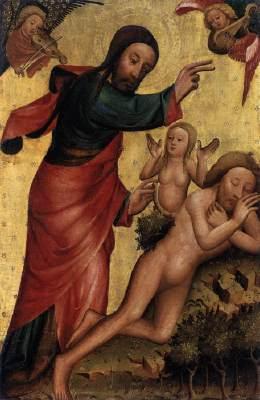
The Grabow Altarpiece was painted by Master Bertram around 1379-1383. Originally located in St. Petri church, it is now in the Hamburger Kunsthalle in Hamburg, Germany.

The Liber Chronicarum by Hartmann Schedel printed in Nuremberg by Anton Koberger in 1493, or Nuremberg Chronicle as it is generally called, is one of the most important German incunables and the most extensively illustrated book of the 15th century.


The Bible moralisée known as Vienna 2554 from the Austrian National Library is the most famous and one of the earliest of what is a relatively small genre. Each of its thousand-plus miniatures is framed within a medallion, a presentation common to Gothic stained glass, which are then arranged on each page into two parallel columns of four. A top-right detail from folio 2v is shown above: the Creation of Eve as a prefiguration of the Birth of the Church.
The Bible itself allows for this extrapolation, as when, for example, God says in Isaiah 42:14, “I will cry out like a woman in labor; I will gasp and pant,” a possible prophecy of the pangs Jesus would endure on the cross. And John’s mention of the “blood and water” that gushed from Christ’s side wound could allude to the amniotic fluids of birth. Eighteenth-century Moravian piety centralized the importance of the side wound as a symbol of salvation, lauding it as a “motherly womb,” [2] a descriptor reinforced by the many devotional images Moravians produced of the wound isolated from Christ’s body and resembling female anatomy. (This had precedence in late medieval French and English manuscripts.
But not only is Christ our mother, he is also our spouse, much like Adam was both “mother” and spouse to Eve. Just as the first Eve sprung to life from a tear in her husband’s flesh, so did the church come into being out of the torn flesh of Christ. Were it not for Christ’s death, our union with him would not be possible; the church would not exist.


Leon Underwood, d. 1975 (influence on Henry Moore)

Is that something you can help with?
Where is the work? If it is viewable in London, I would love to see it. Or are there other photographs available?

It looks, both from the Birth of Eve that you hold, and another Underwood work, that Underwood might have been aware of that rabbinic tradition – which also has a foothold in Plato’s Symposium. But it’s not clear from the view of the sculpture on your site.


Interview with Marsha RoweCreative Review 28/5/2015
The name Spare Rib started as a joke, with its play on words about the Biblical Eve fashioned out of Adam’s rib, implying that a woman had no independence from the beginning of time. This held the witty, subversive connotations we had been looking for. Once Rosie [Boycott, co-founder] had agreed with me on the name, she and I worked with two designers, Kate Hepburn and Sally Doust, who created the overall design of the magazine.


פַּרְצוֹף m. (an adapt. of πρόσωπον, as if it were פרץ אף) face, visage, front. Yeb. XVI, 3פ׳ פנים the full face, v. חוֹטָם. Ib. 120ᵃפ׳ פנים ולא פדחת if the face is left, but without the forehead. Erub. 18ᵃ, v. דִּיפְּרוֹסוֹף. Ber. 61ᵃ (ref. to הצלע, Gen. II, 22) חד אמר פ׳ one says, it means one of the two faces of Adam (v. דִּיפְּרוֹסוֹף). Snh. 103ᵇבתחלה … פ׳ אחד וכ׳ first he made it (the idol) with one face, and afterwards with four. Yoma 72ᵇרוקם פ׳ אחד וכ׳ by roḳem (Ex. XXVIII, 39) needlework is meant and therefore one front (design on one side), by ḥoshebh (ib. 15) embroidery is meant and therefore two fronts (designs on both sides); a. fr.—Pl. פַּרְצוּפִים, פַּרְצוּפִין, פַּרְצוּפוֹת. Ib. שני פ׳; Tosef. Shek. III, 14שתי פ׳ (fem.). Ab. Zar. 42ᵇכל הפ׳ מותרין וכ׳ you are permitted to sculpture all faces except the human face. Ib. 12ᵃפ׳ המקלחין מים וכ׳ sculptures of human faces which throw forth water in the large cities (fountains). Y. ib. III, 42ᶜ bot. היו חותמין בפַרְסוֹפוֹת used seals on which human faces were engraven. Ib.כל פרס׳ היו בירושלם וכ׳ all kinds of statuary existed in Jerusalem except human faces. Y. Snh. IV, 22ᵇ bot. שינה פַּרְצוֹפוֹתֵיהֶן the Lord made the faces of men to differ from one another; a. fr.