


Israel: The Conflict & Empathy


 Save
Save Copy
Copy Add to Collection
 Export to Google Docs
 Share
ShareTeaching empathy in a time of conflict in Israel and around the world, to teens or young adults.
Watch 0:00-3:39
1. What is Jonah talking about here?
2. When is a time you might have had a hard time taking ownership over something you have done wrong?
3. Why is this so hard to do?
4. What are the different types of bias’ Jonah describes?
Blind spot bias- when a person is easily able to find fault in the thinking of others but not their own allowing them to subconsciously Overlook any evidence that doesn't support their own already established ideas
Confirmation Bias- confirmation bias where we give more weight to information that supports what we already believe again mistakenly thinking ourselves objective fair
Shortcut empathy- we as a modern-day Western Society grossly over exaggerate our natural ability to be empathetic while at the same time underestimating the effort required to actually empathize.
(remember- definition of empathy is: the ability to understand and share the feelings of another.)
5. Do you feel like you fall into one of these biases or know people who do?
6. Do you agree with Jonah’s “Shortcut empathy”? Why or why not?
7. Do you find it hard to have empathy for someone who thinks differently than you? Why or why not?
Watch 3:40-6:30
1. What kind of power might that give you to be able to be empathetic in your understandings with people who might not agree with your point of view?
2. Jonah went into detail about reaching out to a Palestinian woman who posted pro-hamas content on her social media. Before he messaged her, he really tried to have empathy and put himself in her shoes, but didn't hear back from her. Have you ever had a time that this has happened to you, especially since Oct. 7th?
Watch Roni Keidar: Peace Activist, October 7th Survivor & Netivah HaAsara Resident
1. What does this video make you feel? Why?
2. What struck you the most from what Roni Keidar said about those living in Gaza?
Watch
1. This interview was taken just days after Oct. 7th and Roni still shows empathy towards those in Gaza. Even after all she has witnessed and been through personally, why do you think she is still having empathy towards those who hurt Israel?
2. How do you think empathy plays into the viewpoint on peace Roni holds?
3. Have you ever been able to have empathy in a situation where someone has wronged you?
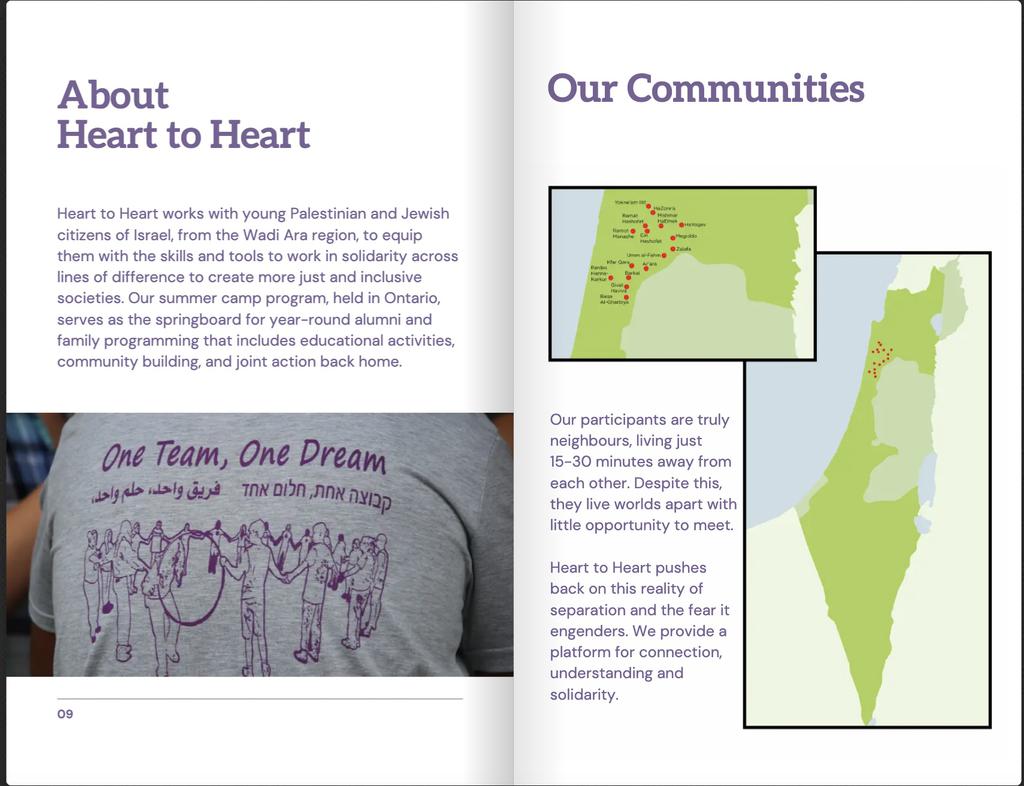
Heart to Heart works with young Palestinian and Jewish citizens of Israel, from the Wadi Ara region, to equip them with the skills and tools to work in solidarity across lines of difference to create more just and inclusive societies.
Watch 9:06-12:17
- How do you feel about a camp in Canada that brings Israelis and Palestinians together?
- Why do you think they have the camp in North America, and not closer to home?
- Tamar recounts her time at camp with Heart to Heart, she mentions an activity where Israelis & Arabs answer questions and listen to each other. How do you think this breaks down barriers? fear? misconceptions?
- Can you think of a time you really listened to someone with a differing viewpoint? How did it feel and what did you walk away with?
A piece of text that is important to remember:
Read the text below these questions:
1. What is this text saying?
2. While both are saying the same thing, it is slightly different. Which one would you choose after our conversations around empathy? Why?
3. Why might we have moved away from using the 2nd text, and you more often hear the first text quoted?
4. Do you think this text can help motivate us to not have shortcut empathy? Why or why not?
משנה: כֵּיצַד מְאַייְמִין עַל עֵדֵי נְפָשׁוֹת הָיוּ מַכְנִיסִין אוֹתָן וּמְאַייְמִין עֲלֵיהֶן שֶׁמָּא תֹאמְרוּ מֵאֹמֶד וּמִשְּׁמוּעָה עֵד מִפִּי עֵד וּמִפִּי אָדָם נֶאֱמָן שְׁמַעְתֶּם אוֹ שֶׁמָּא אֵי אַתֶּם יוֹדְעִין שֶׁסּוֹפֵינוּ לִבְדּוֹק אֶתְכֶם בִּדְרִישָׁה וּבַחֲקִירָה. הֱווּ יוֹדְעִין שֶׁלֹּא כְדִינֵי מָמוֹנוֹת דִּינֵי נְפָשׁוֹת. דִּינֵי מָמוֹנוֹת אָדָם נוֹתֵן מָמוֹן וּמִתְכַּפֵּר לוֹ. דִּינֵי נְפָשׁוֹת דָּמוֹ וְדַם זַרְעִיּוֹתָיו תְּלוּיִין בּוֹ עַד סוֹף כָּל־הַדּוֹרוֹת. שֶׁכֵּן מָצִינוּ בְקַיִן כְּשֶׁהָרַג אֶת אָחִיו שֶׁנֶּאֱמַר בּוֹ ק֤וֹל דְּמֵ֣י אָחִ֔יךָ צֹֽעֲקִ֥ים אֵלַי֭ מִן־הָֽאֲדָמָֽה׃ אֵינוֹ אוֹמֵר דַּם אָחִיךָ אֶלָּא דְּמֵי אָחִיךָ דָּמוֹ וְדַם זַרְעִיּוֹתָיו. דָּבָר אַחֵר דְּמֵי אָחִיךָ שֶׁהָיָה דָמוֹ מוּשְׁלָךְ עַל הָעֵצִים וְעַל הָאֲבָנִים. לְפִיכָךְ נִבְרָא הָאָדָם יְחִידִי בָעוֹלָם לְלַמֵּד שֶׁכָּל־הַמְאַבֵּד נֶפֶשׁ אַחַת מַעֲלִין עָלָיו כְּאִילּוּ אִיבֵּד עוֹלָם מָלֵא. וְכָל־הַמְקַייֵם נֶפֶשׁ אַחַת מַעֲלִין עָלָיו כְּאִילּוּ קִייֵם עוֹלָם מָלֵא. וּמִפְּנֵי שְׁלוֹם הַבִּרְיוֹת, שֶׁלֹּא יֹאמַר אָדָם לַחֲבֵרוֹ אַבָּא גָדוֹל מֵאָבִיךָ וְשֶׁלֹּא יְהוּ הַמִּינִין אוֹמְרִים הַרְבֵּה רְשׁוּיוֹת יֵשׁ בַּשָּׁמָיִם. וּלְהַגִּיד גְּדוּלָּתוֹ שֶׁל מֶלֶךְ מַלְכֵי הַמְּלָכִים הַקָּדוֹשׁ בָּרוּךְ הוּא שֶׁאָדָם טוֹבֵעַ כַּמָּה מַטְבְּעוֹת בְּחוֹתָם אֶחָד וְכוּלָּן דּוֹמִין זֶה לָזֶה. וּמֶלֶךְ מַלְכֵי הַמְּלָכִים הַקָּדוֹשׁ בָּרוּךְ הוּא טָבַע כָּל־אָדָם בְּחוֹתָמוֹ שֶׁל אָדָם הָרִאשׁוֹן וְאֵין אֶחָד דּוֹמֶה לַחֲבֵרוֹ. לְפִיכָךְ כָּל־אֶחָד וְאֶחָד חַייָב לוֹמַר בִּשְׁבִילִי נִבְרָא הָעוֹלָם. וְשֶׁמָּא תֹאמְרוּ מַה לָּנוּ וְלַצָּרָה הַזֹּאת וַהֲלֹא כְבָר נֶאֱמַר וְה֣וּא עֵ֔ד א֥וֹ רָאָה֭ א֣וֹ יָדָ֑ע וְגו׳. שֶׁמָּא תֹאמְרוּ מַה לָּנוּ לָחוּב בְּדָמוֹ שֶׁל זֶה וַהֲלֹא כְבָר נֶאֱמַר וּבַֽאֲבֹ֖ד רְשָׁעִ֣ים רִנָּֽה׃
Therefore man was created single in the world to teach that for anybody who destroys a single life it is counted as if he destroyed an entire world, and for anybody who preserves a single life it is counted as if he preserved an entire world. And because of peace among men, that nobody could say to another, my father was greater than your father.
כֵּיצַד מְאַיְּמִין אֶת הָעֵדִים עַל עֵדֵי נְפָשׁוֹת, הָיוּ מַכְנִיסִין אוֹתָן וּמְאַיְּמִין עֲלֵיהֶן. שֶׁמָּא תֹאמְרוּ מֵאֹמֶד, וּמִשְּׁמוּעָה, עֵד מִפִּי עֵד וּמִפִּי אָדָם נֶאֱמָן שָׁמַעְנוּ, אוֹ שֶׁמָּא אִי אַתֶּם יוֹדְעִין שֶׁסּוֹפֵנוּ לִבְדֹּק אֶתְכֶם בִּדְרִישָׁה וּבַחֲקִירָה. הֱווּ יוֹדְעִין שֶׁלֹּא כְדִינֵי מָמוֹנוֹת דִּינֵי נְפָשׁוֹת. דִּינֵי מָמוֹנוֹת, אָדָם נוֹתֵן מָמוֹן וּמִתְכַּפֵּר לוֹ. דִּינֵי נְפָשׁוֹת, דָּמוֹ וְדַם זַרְעִיּוֹתָיו תְּלוּיִין בּוֹ עַד סוֹף הָעוֹלָם, שֶׁכֵּן מָצִינוּ בְקַיִן שֶׁהָרַג אֶת אָחִיו, שֶׁנֶּאֱמַר (בראשית ד) דְּמֵי אָחִיךָ צֹעֲקִים, אֵינוֹ אוֹמֵר דַּם אָחִיךָ אֶלָּא דְּמֵי אָחִיךָ, דָּמוֹ וְדַם זַרְעִיּוֹתָיו. דָּבָר אַחֵר, דְּמֵי אָחִיךָ, שֶׁהָיָה דָמוֹ מֻשְׁלָךְ עַל הָעֵצִים וְעַל הָאֲבָנִים. לְפִיכָךְ נִבְרָא אָדָם יְחִידִי, לְלַמֶּדְךָ, שֶׁכָּל הַמְאַבֵּד נֶפֶשׁ אַחַת מִיִּשְׂרָאֵל, מַעֲלֶה עָלָיו הַכָּתוּב כְּאִלּוּ אִבֵּד עוֹלָם מָלֵא. וְכָל הַמְקַיֵּם נֶפֶשׁ אַחַת מִיִּשְׂרָאֵל, מַעֲלֶה עָלָיו הַכָּתוּב כְּאִלּוּ קִיֵּם עוֹלָם מָלֵא. וּמִפְּנֵי שְׁלוֹם הַבְּרִיּוֹת, שֶׁלֹּא יֹאמַר אָדָם לַחֲבֵרוֹ אַבָּא גָדוֹל מֵאָבִיךָ. וְשֶׁלֹּא יְהוּ מִינִין אוֹמְרִים, הַרְבֵּה רָשֻׁיּוֹת בַּשָּׁמָיִם. וּלְהַגִּיד גְּדֻלָּתוֹ שֶׁל הַקָּדוֹשׁ בָּרוּךְ הוּא, שֶׁאָדָם טוֹבֵעַ כַּמָּה מַטְבְּעוֹת בְּחוֹתָם אֶחָד וְכֻלָּן דּוֹמִין זֶה לָזֶה, וּמֶלֶךְ מַלְכֵי הַמְּלָכִים הַקָּדוֹשׁ בָּרוּךְ הוּא טָבַע כָּל אָדָם בְּחוֹתָמוֹ שֶׁל אָדָם הָרִאשׁוֹן וְאֵין אֶחָד מֵהֶן דּוֹמֶה לַחֲבֵרוֹ. לְפִיכָךְ כָּל אֶחָד וְאֶחָד חַיָּב לוֹמַר, בִּשְׁבִילִי נִבְרָא הָעוֹלָם. וְשֶׁמָּא תֹאמְרוּ מַה לָּנוּ וְלַצָּרָה הַזֹּאת, וַהֲלֹא כְבָר נֶאֱמַר (ויקרא ה) וְהוּא עֵד אוֹ רָאָה אוֹ יָדָע אִם לוֹא יַגִּיד וְגוֹ'. וְשֶׁמָּא תֹאמְרוּ מַה לָּנוּ לָחוּב בְּדָמוֹ שֶׁל זֶה, וַהֲלֹא כְבָר נֶאֱמַר (משלי יא) וּבַאֲבֹד רְשָׁעִים רִנָּה:
Therefore, Adam the first man was created alone, to teach you that with regard to anyone who destroys one soul from the Jewish people, i.e., kills one Jew, the verse ascribes him blame as if he destroyed an entire world, as Adam was one person, from whom the population of an entire world came forth. And conversely, anyone who sustains one soul from the Jewish people, the verse ascribes him credit as if he sustained an entire world. The mishna cites another reason Adam the first man was created alone: And this was done due to the importance of maintaining peace among people, so that one person will not say to another: My father, i.e., progenitor, is greater than your father.
