




 Save
Save Copy
Copy Add to Collection
 Export to Google Docs
 Share
ShareSpotify | Apple Podcasts | YouTube
Link to Substack post: here
know anything to say and only knows to offer God the unbroken promptings of his heart. God receives them as a king receives the singing of a nightingale in his gardens at twilight, a singing that sounds sweeter to him than the homage of the princes in his throne-room. The Hasidic legend cannot give enough examples of the favour that shines on the undivided person and of the power of his service. One of these we shall set down here.
bewildered. But the Baal-Shem raised himself above them and spoke, “The judgement is suspended, and wrath is dispelled from the face of the earth.” THE LEGEND OF THE BAAL-SHEM, MARTIN BUBER, 1955
(ח) וַיּוּשַׁ֞ב אֶת־מֹשֶׁ֤ה וְאֶֽת־אַהֲרֹן֙ אֶל־פַּרְעֹ֔ה וַיֹּ֣אמֶר אֲלֵהֶ֔ם לְכ֥וּ עִבְד֖וּ אֶת־יהוה אֱלֹהֵיכֶ֑ם מִ֥י וָמִ֖י הַהֹלְכִֽים׃ (ט) וַיֹּ֣אמֶר מֹשֶׁ֔ה בִּנְעָרֵ֥ינוּ וּבִזְקֵנֵ֖ינוּ נֵלֵ֑ךְ בְּבָנֵ֨ינוּ וּבִבְנוֹתֵ֜נוּ בְּצֹאנֵ֤נוּ וּבִבְקָרֵ֙נוּ֙ נֵלֵ֔ךְ כִּ֥י חַג־יהוה לָֽנוּ׃ (י) וַיֹּ֣אמֶר אֲלֵהֶ֗ם יְהִ֨י כֵ֤ן יהוה עִמָּכֶ֔ם כַּאֲשֶׁ֛ר אֲשַׁלַּ֥ח אֶתְכֶ֖ם וְאֶֽת־טַפְּכֶ֑ם רְא֕וּ כִּ֥י רָעָ֖ה נֶ֥גֶד פְּנֵיכֶֽם׃ (יא) לֹ֣א כֵ֗ן לְכֽוּ־נָ֤א * הַגְּבָרִים֙ וְעִבְד֣וּ אֶת־יהוה כִּ֥י אֹתָ֖הּ אַתֶּ֣ם מְבַקְשִׁ֑ים וַיְגָ֣רֶשׁ אֹתָ֔ם מֵאֵ֖ת פְּנֵ֥י פַרְעֹֽה׃ {ס}
(8) So Moses and Aaron were brought back to Pharaoh and he said to them, “Go, worship your God יהוה ! Who are the ones to go?” (9) Moses replied, “We will all go—regardless of social station —we will go with our sons and daughters, our flocks and herds; for we must observe יהוה’s festival.” (10) But he said to them, “יהוה be with you—the same as I mean to let your dependents go with you! Clearly, you are bent on mischief. (11) No! You gentlemen go and worship יהוה, since that is what you want.” And they were expelled from Pharaoh’s presence. [JPS Contemporary Torah Translation 2006]
Moshe said: *Moshe said … : The answer is rhythmical, almost ritual.
With our young ones, *With our young ones … : The addition of children and animals to the request of Moshe makes Pharaoh suspect that they will not come back. with our elders we will go,
with our sons and with our daughters,
with our sheep and with our oxen we will go—
for it is YHWH’S pilgrimage-festival for us. [Everett Fox]
“regardless of social station.” Literally, “with our underlings and with our elders” or “with our youths and with our old folks”; the Hebrew terms can refer either to socioeconomic status or to age.
2. servant, retainer (c. 105 times): a. = personal attendant, household servant, Nu 22:22 (J), Ju 7:10, 11; 19:3; 1 S 9:3f. 2 K 4:12, 25 + often b. = retainer, follower Gn 14:24; 1 S 25:5f.; 2 S 2:14f.; 1 K 20:14f.; 2 K 19:6 = Is 37:6, Jb 1:15, 16, 17; Ne 4:10, 17 + often—Zc 11:16 is corrupt, cf. We Now.—
Note. נער occurs in Pent. as Kt with Qr perpet. נַעֲרָה q.v.
In a secular and modern context, the phrase is the standard Hebrew equivalent of the English "Who's Who." It is used to categorize influential figures in specific fields:
Biographical Lexicons: Notable titles include
מי ומי בישראל (Who’s Who in Israel)
מי ומי בכנסת (Who’s Who in the Knesset)
or lists of contributors in academic and literary journals.
(א)מִי וָמִי הַהוֹלְכִים הָיָה פַּרְעֹה רוֹצֶה שֶׁיֵּלְכוּ רָאשֵׁיהֶם זִקְנֵיהֶם וְשׁוֹטְרֵיהֶם, אֲנָשִׁים אֲשֶׁר נִקְּבוּ בְּשֵׁמוֹת; וּמֹשֶׁה עָנָהוּ כִּי גַּם הַבָּנִים וְהַבָּנוֹת יֵלְכוּ כִּי חַג יהוה לָנוּ, וּמִצְוָה עַל כֻּלָּנוּ לָחֹג לְפָנָיו,
(1) BUT WHO ARE THEY THAT SHALL GO? Pharaoh desired that their leaders, elders, and officers should go, men that are pointed out by name. Moses answered him that also the sons and daughters will go, “for we must hold a feast unto the Eternal, and it is mandatory upon us all to take part in the feast.”
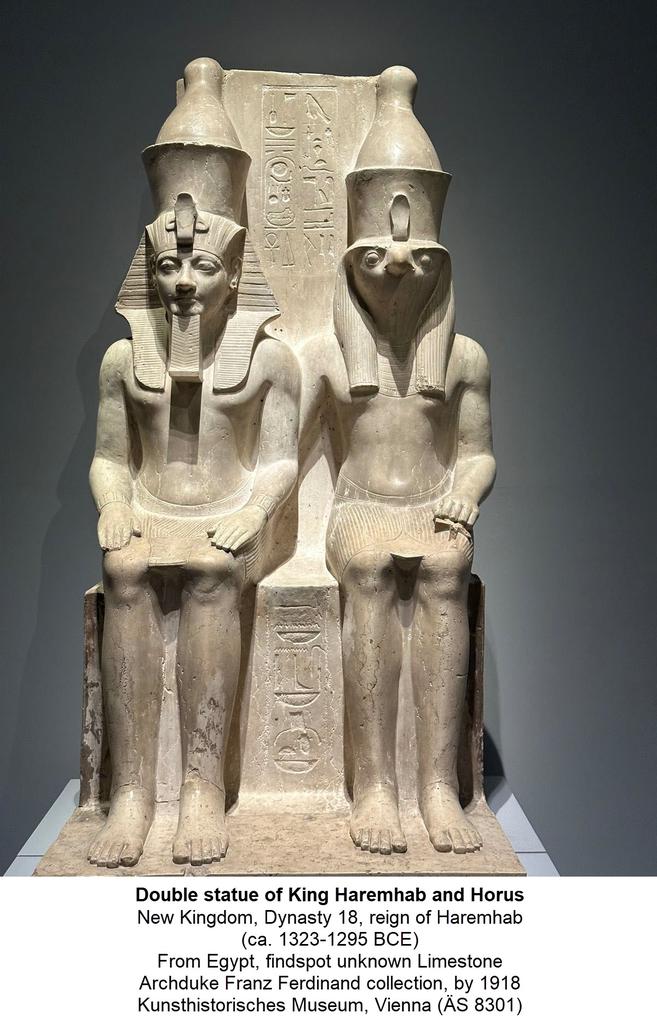
Both god and pharaoh wear the double crown representing
dominion over a united Egypt. The statue might have been
intended to help legitimize Haremhab’s reign, which came
at the end of a period of complicated successions. It
embodies the belief that the mortal king Haremhab was
fulfilling the role of the mythical king Horus, whose just
rule also came after a period of strife.
(א) וַיֹּ֤אמֶר יהוה אֶל־מֹשֶׁ֔ה רְאֵ֛ה נְתַתִּ֥יךָ אֱלֹהִ֖ים לְפַרְעֹ֑ה וְאַהֲרֹ֥ן אָחִ֖יךָ יִהְיֶ֥ה נְבִיאֶֽךָ׃
(1) יהוה replied to Moses, “See, I place you in the role of God to Pharaoh, with your brother Aaron as your prophet.
ראה נתתיך אלהים. ודרשו רז"ל ראה נתתיך אלהים לפרעה פרעה היה עושה עצמו אלוה שנאמר (יחזקאל כ״ט:ג׳) לי יאורי ואני עשיתיני, אמר לו הקב"ה כלפי שהוא עושה עצמו אלוה הודיעהו שאינו כלום הריני עושה אותך אלוה עליו.
ראה נתתיך אלהים, Shemot Rabbah 8,1 understands the words אלוהים לפרעה as “Pharaoh appointed himself as god.” He did this by claiming “the Nile is mine because I have created it “(Ezekiel 29,3). In response to this arrogance G’d told Moses that he was nothing, but that on the contrary, He would show him that Moses would be his “god.”
עמדתו של משה היא שביהדות יש לכל אדם באשר הוא מערכת אישית כלפי הקב"ה. לאור זאת לכל אחד ואחד יש צורך להיות שותף בחוויית העבודה. עמדה זו משקפת ומעוגנת היטב בכמה מקומות בתורה.
במצוות הקהל קובעת התורה:
הַקְהֵ֣ל אֶת־הָעָ֗ם הָֽאֲנָשִׁ֤ים וְהַנָּשִׁים֙ וְהַטַּ֔ף וְגֵרְךָ֖ אֲשֶׁ֣ר בִּשְׁעָרֶ֑יךָ לְמַ֨עַן יִשְׁמְע֜וּ וּלְמַ֣עַן יִלְמְד֗וּ וְיָֽרְאוּ֙ אֶת־יהוה אֱלֹהֵיכֶ֔ם וְשָׁמְר֣וּ לַעֲשׂ֔וֹת אֶת־כׇּל־דִּבְרֵ֖י הַתּוֹרָ֥ה הַזֹּֽאת׃
Assemble the people,
the men, the women, and the little-ones,
and your sojourner who is within your gates,
in order that they may hearken, in order that they may learn
and have-awe-for YHWH your God,
and take care to observe all the words of this Instruction;
ובדומה בשעת הכניסה בברית בערבות מואב, לקראת כניסתם של ישראל לארץ נאמר:
(ט) אַתֶּ֨ם נִצָּבִ֤ים הַיּוֹם֙ כֻּלְּכֶ֔ם לִפְנֵ֖י יהוה אֱלֹהֵיכֶ֑ם רָאשֵׁיכֶ֣ם שִׁבְטֵיכֶ֗ם זִקְנֵיכֶם֙ וְשֹׁ֣טְרֵיכֶ֔ם כֹּ֖ל אִ֥ישׁ יִשְׂרָאֵֽל׃ (י) טַפְּכֶ֣ם נְשֵׁיכֶ֔ם וְגֵ֣רְךָ֔ אֲשֶׁ֖ר בְּקֶ֣רֶב מַחֲנֶ֑יךָ מֵחֹטֵ֣ב עֵצֶ֔יךָ עַ֖ד שֹׁאֵ֥ב מֵימֶֽיךָ׃
(9) You stand this day, all of you, before your God יהוה —your tribal heads, your elders, and your officials, every householder in Israel, (10) your children, your wives, even the stranger within your camp, from woodchopper to waterdrawer—
And so too with regard to the obligation to rejoice on the festival:
(יד) וְשָׂמַחְתָּ֖ בְּחַגֶּ֑ךָ אַתָּ֨ה וּבִנְךָ֤ וּבִתֶּ֙ךָ֙ וְעַבְדְּךָ֣ וַאֲמָתֶ֔ךָ וְהַלֵּוִ֗י וְהַגֵּ֛ר וְהַיָּת֥וֹם וְהָאַלְמָנָ֖ה אֲשֶׁ֥ר בִּשְׁעָרֶֽיךָ׃
(14) You shall rejoice in your festival, with your son and daughter, your male and female slave, the [family of the] Levite, the stranger, the fatherless, and the widow in your communities.
לפי גישתו של פרעה, שהֵדיה נשמעים לרוב גם בחוגים רבים בני ימינו, עבודת יהוה והכניסה להיכלו הם עניין אקסקלוסיבי, "למוזמנים בלבד". לגברים בלבד. פרי באושים של עץ הדרה. "לכו עבדו את יהוה א-לוהיכם, מי ומי ההולכים?".
פרעה מבטא כאן את תפישתו המעוותת לגבי הדת ונושאיה. אם מטרת היציאה ממצרים היא עבודת יהוה, הרי שזכות זו שייכת רק למתי מעט: לרבנים, לכוהני הדת, לשמשיהם ול"אנ"ש-אנשי שלומם".
פרעה מבקש ממשה שיכין לו את רשימת ה"מי ומי", האנשים החשובים שיהיו ראויים להשתתף במעשה הפולחן הדתי. פרעה רוצה שהאירוע יהיה אקסקלוסיבי, "לפי הזמנות בלבד", ממש כפי שהמצרים נוהגים באירועים שלהם.
לפי הבנתם של פרעה וממשיכי דרכו, עבודת יהוה היא עניין מגדרי ומגזרי. על רקע זה, בולט ומובן עוד יותר ציוויו של פרעה (י, יא): "לכו נא הגברים ועבדו את יהוה, כי אותה אתם מבקשים!".
אכן, המודל המכיל, של משה רבנו, אינו רק מקנה זכויות. הוא יוצר גם חובות. תופשי התורה ומורי הדרך, חייבים למצוא פתרונות, במסגרת ההלכה, להדרתן של הנשים מה"בתים" השונים.
Indeed, Moses our teacher’s inclusive model does not grant rights alone; it also creates obligations. Those who bear the Torah and serve as guides must find solutions, within the framework of halakhah, to the exclusion of women from the various “houses.” See: "With our Sons and Daughters, Professor Aviad HaCohen (President of the Sha'arei Science and Law Academic Center) 7th of Elul, 5774 (August 27, 2020
(יח) וַיַּסֵּ֨ב אֱלֹהִ֧ים ׀ אֶת־הָעָ֛ם דֶּ֥רֶךְ הַמִּדְבָּ֖ר יַם־ס֑וּף וַחֲמֻשִׁ֛ים עָל֥וּ בְנֵי־יִשְׂרָאֵ֖ל מֵאֶ֥רֶץ מִצְרָֽיִם׃
(18) So God led the people round about, by way of the wilderness at the Sea of Reeds. Now the Israelites went up armed out of the land of Egypt.
(ג)וחמשים. דָּבָר אַחֵר, חֲמֻשִׁים אֶחָד מֵחֲמִשָּׁה יָצְאוּ וְאַרְבָּעָה חֲלָקִים מֵתוּ בִּשְׁלֹשֶׁת יְמֵי אֲפֵלָה (מכילתא):
(3) וחמשים — Another explanation of חמשים is: only one out of five (חמשה) went forth from Egypt, and four parts of the people died during the three days of darkness because they were unworthy of being delivered (Mekhilta; cf. Rashi on 10:22).
(ה) דָּבָר אַחֵר, וַיֵּצֵא בֶּן אִשָּׁה יִשְׂרְאֵלִית, ...רַב הוּנָא אָמַר בְּשֵׁם בַּר קַפָּרָא בִּשְׁבִיל אַרְבָּעָה דְּבָרִים נִגְאֲלוּ יִשְׂרָאֵל מִמִצְרַיִם, שֶׁלֹּא שִׁנּוּ אֶת שְׁמָם וְאֶת לְשׁוֹנָם וְלֹא אָמְרוּ לָשׁוֹן הָרָע, וְלֹא נִמְצָא בֵּינֵיהֶם אֶחָד מֵהֶן פָּרוּץ בְּעֶרְוָה. לֹא שִׁנּוּ אֶת שְׁמָן רְאוּבֵן וְשִׁמְעוֹן נָחֲתִין, רְאוּבֵן וְשִׁמְעוֹן סָלְקִין, לֹא הָיוּ קוֹרִין לִיהוּדָה רוּפָּא וְלֹא לִרְאוּבֵן לוּלְיָאנִי וְלֹא לְיוֹסֵף לֵיסְטֵיס וְלֹא לְבִנְיָמִין אֲלֶכְּסַנְדְּרִי. לֹא שִׁנּוּ אֶת לְשׁוֹנָם, לְהַלָּן כְּתִיב (בראשית יד, יג): וַיָּבֹא הַפָּלִיט וַיַּגֵּד לְאַבְרָהָם הָעִבְרִי, וְכָאן (שמות ה, ג): וַיֹּאמְרוּ אֱלֹהֵי הָעִבְרִים נִקְרָא עָלֵינוּ, וּכְתִיב (בראשית מה, יב): כִּי פִי הַמְדַבֵּר אֲלֵיכֶם, בְּלָשׁוֹן הַקֹּדֶשׁ.
(5) Another matter: “The son of an Israelite woman…went out” – Rav Huna said in the name of bar Kappara: Due to four matters, Israel was redeemed from Egypt: Because they did not change their name, their language, they did not speak slander, and there was not one among them who was found to be steeped in licentiousness. They did not change their name; Reuben and Simeon descended [to Egypt], and Reuben and Simeon ascended. They did not call Judah Rupa, nor Reuben Luleyani, nor Joseph Leisteis, and nor Benjamin Alexandri.
They did not change their language. There it is written: “The survivor came and told Abram the Hebrew” (Genesis 14:13), and here: “They said: The God of the Hebrews called upon us” (Exodus 5:3); and it is written: “That it is my mouth that is speaking to you” (Genesis 45:12) – in the sacred tongue.
